
If you have recently bought an existing shop, restaurant, or workshop from a previous owner and now need funding for stock, machinery, or working capital, this guide explains exactly how banks evaluate Mudra loan applications for purchased businesses and what you must prepare before visiting the branch.
Key Takeaways
Buyers of existing shops, restaurants, factories, franchises, and other micro units can get a Mudra loan under Pradhan Mantri Mudra Yojana (PMMY) if ownership and business continuity are clearly proven. Banks usually consider mudra loans up to ₹10 lakh for such purchased businesses, but only when all ownership transfer documents, licences, and GST/Udyam records are updated in the new owner’s name. No collateral is required for loans under ₹10 lakh, making this a collateral-free business loan option for micro-enterprises.
- Branch managers carefully verify whether the business is really running, whether the sale is genuine, and whether any old liabilities of the previous owner can affect loan recovery.
- Strong paperwork – purchase agreement, rent agreement with NOC, updated GST/Udyam, municipal/shop licence, bank statements, photos, and invoices – greatly increases chances of approval.
- A realistic project report prepared with proper cash flow projections is often the difference between sanction and rejection.
- Mudra loans are distributed under the Pradhan Mantri MUDRA Yojana (PMMY) and are provided by commercial banks, small finance banks, non banking financial companies, and micro finance institutions.
Table of Contents
Understanding Mudra Loan and PMMY for Purchased Businesses
Pradhan Mantri Mudra Yojana was launched on April 8, 2015, to give collateral-free credit to small businesses and micro units in India. The scheme integrates small micro-units into the formal credit system through easy access to financial assistance. Mudra stands for Micro Units Development and Refinance Agency, which acts as a refinance agency supporting financial institutions that lend to micro enterprises.
A mudra loan is a type of business loan available for working capital, equipment purchases, and expansion of non-farm, non corporate small enterprises. Mudra loans are not available for agriculture-related businesses. Eligible businesses include sole proprietorships and partnerships.
The four categories under the mudra scheme are:
- Shishu loans: up to ₹50,000 for startups and very small units
- Kishore: ₹50,001 to ₹5 lakh for businesses looking to expand
- Tarun: ₹5 lakh to ₹10 lakh for established businesses needing higher funds
- Tarun Plus: ₹10 lakh to ₹20 lakh for entrepreneurs who have availed and successfully repaid previous Tarun loans
Purchased businesses usually fall under Kishore or Tarun when they require funds for stock replenishment, renovation, or machinery. The interest rate is not fixed by government; each bank sets its own rate based on the borrower profile. Applicants can apply online through portals like JanSamarth, but for purchased businesses, physical discussion with the branch manager is usually more effective.

What Is a Purchased Business? (With Practical Examples)
A purchased business means an existing running unit taken over from a previous owner, instead of starting a new business from zero. Banks treat such cases differently because they examine both old and new owner details before approving any loan amount.
Practical examples include:
- Purchase of a kirana shop in Indore
- Takeover of a small manufacturing unit in an industrial shed or commercial complex
- Buying an existing restaurant in a rented premises
- Acquisition of a medical store, mobile shop, beauty parlour, garage, or fabrication workshop
- Taking over a franchise outlet
This differs from a new startup because existing customers, old stock, employees, past sales records, and older licences are already in place – all of which now need to be shifted into the buyer’s name.
Ownership can happen through sale of business as a going concern, transfer of partnership share, transfer of assets and goodwill, or purchase of only business assets with fresh business registration. Each structure changes the documents required. For risk assessment, banks look at business continuity at the same address – supported by rent agreement, utility bills, and municipal licence – not just the paper sale deed.
Can a Purchased Business Get a Mudra Loan? How Banks Really Look at It
Yes. Under mantri mudra yojana PMMY, a purchased business is generally eligible for a mudra loan up to ₹10 lakh (maximum loan under Tarun), as long as the new owner is legally recognised and the business is actually operational.
Key eligibility points:
- Applicants must be Indian citizens aged between 18 and 65 years
- The business must be a non-farm small business activity (trading, manufacturing, or services)
- The loan must fall within Shishu, Kishore, or Tarun limits
- Applicants must not have defaulted on any bank loans to qualify
- Clear KYC including PAN, aadhaar card, and address proof is mandatory
Banks become cautious when the transfer is very recent (say, 15–30 days before applying), when there is no financial history in the new owner’s name, or when licences have not yet been updated.
Business age matters in practice. A 7-year-old grocery shop with continuous electricity bills, GST returns, and stock records gives better comfort than a shop whose shutters were closed for months and suddenly got sold just before loan application.
Previous owner’s history also affects the case. Old NPAs, unpaid GST or municipal dues, unresolved disputes with landlord, or pending court cases make the branch manager ask for more clarity and additional documents. Where the earlier proprietor already had a Mudra loan on the same beneficiary micro unit, banks usually insist on closing that liability before approving a fresh loan for the buyer.
Why Banks Verify Ownership and Business Continuity So Carefully
In Mudra loan cases for purchased businesses, ownership proof and business continuity are more important than income projections. The bank’s main risk is whether the applicant is the real owner with genuine control over assets.
Common risks banks want to avoid:
- Fake sale agreements prepared only to get funding
- Benami transactions where the real operator is someone else
- Disputed shops where multiple people claim ownership
- Closed units shown as “running businesses”
From the branch manager’s practical angle, they are personally answerable if a Mudra loan turns NPA due to fake documents. So they cross-check sale deeds, rent agreements, landlord NOCs, and shop & establishment registrations very strictly.
Paper transfer without updating GST registration, Udyam registration, trade licence, or industry-specific licences (drug licence for medical stores, FSSAI for restaurants) makes the bank doubt genuineness. Inconsistent address proof – for example, business address different on electricity bill, GST certificate, and rent agreement – often leads to delay or rejection.
Documents Banks Usually Expect for Mudra Loan on a Purchased Business
For bank officers, strong documents are proof that the purchase is genuine, the business is legally owned, and operations are actually happening. Here is what you need to submit:
Ownership transfer documents:
- Business purchase agreement, sale deed, or notarised transfer agreement (registered documents carry more weight)
- Banks often call the previous owner to confirm signatures and sale terms
Business premises documents:
- Rent agreement in buyer’s name with landlord’s NOC addressed to the bank
- Latest electricity bill and property tax receipt
- For rented business premises, mismatch of landlord name and property papers is a common query
Registration and licence updates:
- GST registration amendment showing new proprietor’s PAN and Aadhaar
- Udyam Registration update, Shop & Establishment certificate, trade licence, municipal registration
- Industry-specific licences (FSSAI, drug licence, factory licence) as applicable
KYC and personal documents:
- PAN, Aadhaar, and a valid photo identity proof (passport, voter ID)
- Residential address proof
- Income proof includes the latest Income Tax Return where available
- You must submit a completed Mudra application form
Business continuity proofs:
- A bank statement from the last six months (or twelve months if available)
- Purchase and sales invoices in the new owner’s name
- Stock records, list of major customers and suppliers
- Photographs of shop with signboard in new owner’s name
- Proof of business continuity is necessary – this is non-negotiable
Additional declarations:
- Seller’s declaration that all liabilities (old loans, GST dues, security charges) have been settled
- NOC from old lender if any charge existed
- Clear note on how goodwill and stock were valued
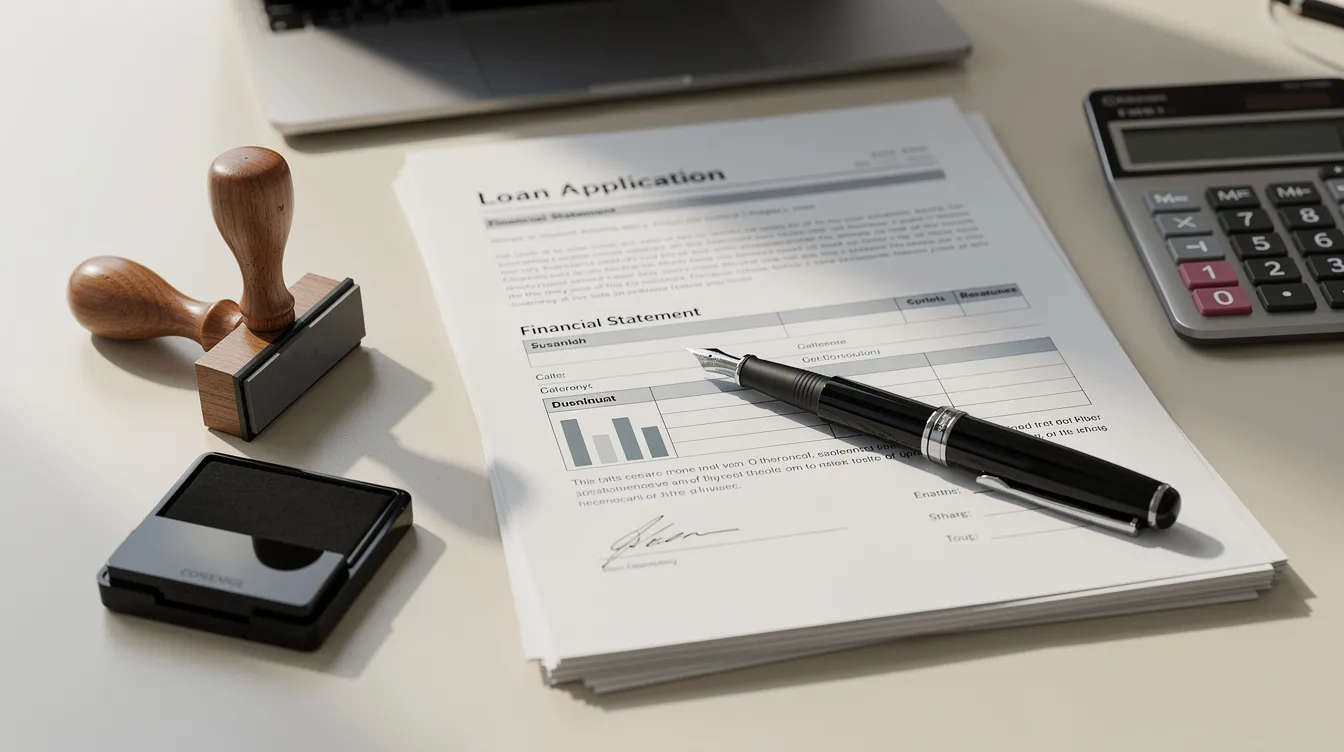
How Banks Verify a Purchased Business Before Sanctioning Mudra Loan
Here is the step-by-step business verification process that branch managers and field officers typically follow:
- Application review: Officer checks the form, loan purpose (working capital, machinery, renovation), requested amount, and matches it with business scale and expected cash flow.
- Document verification: Bank compares PAN, Aadhaar, address proof, purchase agreement, rent agreement, GST certificate, and other documents. They verify details on GST portal and Udyam portal to ensure the new owner’s name and correct address appear.
- Site inspection: Field officer visits the shop or unit, checks signboard, asks questions to staff, verifies stock and machinery, observes customer movement, and takes geo-tagged photos. A business not operational during inspection leads to adverse reports.
- Telephone verification: Officer may call the buyer, the landlord to confirm the rent agreement and NOC, and the previous owner to confirm sale terms and handover date.
- Financial assessment: Using bank statements, approximate GST turnover, and simple CMA-style projections, the officer checks if expected cash flow is enough to pay the proposed EMI at current interest rate. The repayment tenure for Mudra loans is up to 5 years.
- Sanction decision: Based on risk rating, documentation strength, continuity of business, and the applicant’s banking behaviour, the branch prepares a note recommending full sanction, reduced amount, or rejection.
Common Reasons for Rejection and How to Improve Approval Chances
Many strong purchased businesses face rejection not because the business is bad, but because ownership and continuity are not properly documented. Here are the most common issues with practical solutions:
- Ownership documents incomplete: Missing sale deed or unsigned transfer agreement makes the bank uncomfortable. Get a properly drafted document showing details of assets, stock, and goodwill. Where possible, register it.
- Licences and GST not transferred: If GST registration, Udyam Registration, or trade licence still show the previous owner, banks keep the loan on hold. Update all registrations before or parallel to your loan application.
- Business not operational: Closed shutters, no stock, disconnected electricity, or zero recent invoices lead to adverse site inspection reports. Ensure the business is visibly running and generating bills before inviting inspection.
- Previous owner’s unresolved issues: Earlier Mudra loan, CC limit, GST turnover mismatches, or legal disputes still pending can block your application. Obtain written NOCs, loan closure letters, and attach these with your file.
- Weak project report: Copied or unrealistic project reports often lead to rejection. Prepare a simple but realistic report and basic CMA data with help of a CA, clearly explaining how EMI will be paid from monthly cash profit.
- Poor banking habits: Maintain clean bank statements – no frequent cheque returns, avoid heavy unexplained cash withdrawals – for at least 3–6 months before applying. Banks now check banking habits very closely for Mudra loans.

Frequently Asked Questions (FAQ) on Mudra Loan for Purchased Businesses
Below are direct answers to common doubts that entrepreneurs have when seeking a Mudra loan for a purchased business.
Q1. Can I apply for a Mudra loan immediately after purchasing a business?
Technically it is allowed, but banks prefer to see basic continuity proofs in the buyer’s name – updated GST, new invoices, and a month or two of business banking. Waiting 30–60 days while completing all documents and generating transactions often improves approval chances significantly.
Q2. Is a registered sale deed compulsory to get a Mudra loan on a purchased shop or unit?
Banks can consider even an unregistered agreement in some small cases, but a registered sale deed or properly stamped transfer agreement gives much stronger comfort. When documents are weak, banks may reduce the loan amount or reject the application to avoid legal risk.
Q3. What if some licences are still in the previous owner’s name at the time of application?
You should at least submit proof of having applied for transfer or amendment (application receipts, acknowledgement numbers). Many banks keep the loan “in principle approved” but release funds only after seeing updated licences. Complete all transfers as early as possible.
Q4. Will the bank talk to the previous owner during Mudra loan processing?
In many purchased-business cases, field officers do call or visit the seller to confirm sale price, handover date, pending dues, and whether any other loan is running on the same business. This is normal verification. Keep the seller informed and cooperative.
Q5. Can I use Mudra loan funds to pay the remaining purchase consideration to the seller?
Officially, Mudra loan funds should be used for business purposes such as stock, machinery, renovation, or working capital. While some banks may indirectly allow a part of the amount for settling purchase dues, they generally prefer to see the primary use linked to future income generation and may ask for utilisation proofs later. The government of India designed this scheme so that the beneficiary micro unit can grow, not simply to settle purchase transactions.
- Can Bank Reduce Mudra Loan Amount Without Your Consent? Complete Practical Guide (2026)


- What to Do If You Cannot Pay Your Mudra Loan EMI (2026 Guide)

- Can a Bank Refuse a Mudra Loan Because the Target Is Completed? Complete Guide (2026)

- Bank Refused My Mudra Loan Application – What Are My Rights?

- Mudra Loan for Used Vehicles (2026): Eligibility, Documents, Bank Rules & Complete Guide

- Rejected Mudra Loan – What to Do Next? Appeal Process Explained (2026)

- Mudra Loan Project Report Madhya Pradesh – Bank-Ready DPR & CMA Guide

- Project Report for Mudra Loan Maharashtra: Complete Guide for MSMEs, Startups and Small Businesses (2026)

- Mudra Loan Uttar Pradesh: Complete Guide for MSMEs, Startups and Small Businesses (2026)

- Mudra Loan Bihar 2026: Eligibility, Documents, Online Application Process & Project Report Guide

- Jan Samarth Mudra Loan 2026: Complete Guide to Online Application, Eligibility, Documents & Approval Process

- MSME Mudra Loan: Complete Guide for Small Businesses, Startups & Manufacturing Units in India (2026)

- Is the Mudra Loan Subsidy Real or Fake? Get the Facts Here

- Mudra Loan Without CIBIL Score: How to Qualify and Apply

- Mudra Loan for Used Machine (2026 Guide) – Eligibility, Documents, Valuation & Approval Tips