
When you walk into a bank to apply for a Mudra loan, one of the first things the officer evaluates is where your business operates. Many entrepreneurs assume that owning a factory or a fancy office is the only way to qualify. That is simply not true. Whether you run a manufacturing unit from a rented industrial shed or a consultancy from a commercial complex, your business location plays a specific role in how banks assess your Mudra loan application under Pradhan Mantri Mudra Yojana (PMMY).
Let me walk you through exactly how banks evaluate business premises, what documents you need, and how to avoid common rejection triggers.
Key Takeaways
- Businesses operating from industrial sheds, factory units, warehouses, and commercial complexes are generally eligible for mudra loans under the pradhan mantri mudra yojana, provided the business is genuine, operational, and properly documented. Indian citizens aged between 18 to 65 years can apply for non-farm income-generating activities.
- Ownership of the premises is not compulsory. Banks routinely accept owned, rented, leased, or licensed premises. What matters is that documents like a rent agreement, electricity bill, and business registrations such as GST and Udyam all reflect the same address.
- Banks verify mudra loan industrial shed eligibility through physical site inspection, photographs, neighbour enquiries, and cross-checking declared business activity against documents. Applicants must have a clean credit history without defaults to qualify.
- Common rejection reasons include empty sheds, fake addresses, residential premises shown as commercial, and missing lease agreements. Most of these issues can be corrected within one to three months with proper planning.
- As CA Manish Gugliya, with over 20 years in MSME finance, I strongly recommend preparing a proper project report, CMA data, and fully aligned premises documents before starting the loan application. Mudra loans are available from banks, NBFCs, and MFIs, and offer collateral-free financing up to ₹20 lakh with no processing fee charged.
Table of Contents
Understanding Business Premises under Mudra Loan (Industrial Sheds & Commercial Complexes)
Banks under the Pradhan Mantri Mudra Yojana PMMY examine business location carefully before sanctioning a loan. They want to see a real, functioning beneficiary micro unit rather than just papers. The proposed activity must match what they find on the ground.
Here is how common business premises types break down:
| Premises Type | Typical Businesses | Mudra Eligibility |
|---|---|---|
| Industrial shed (tin, RCC, pre-engineered) | Manufacturing, fabrication, food processing, packaging | Strong eligibility |
| Industrial estate / MSME cluster | Small factories, engineering units, workshops | Very strong (clear industrial zoning) |
| Commercial complex / office tower | CA offices, IT firms, coaching centres, clinics | Eligible with proper documentation |
| Shopping complex / market building | Retail shops, salons, pharmacies, restaurants | Eligible |
| Co-working / shared office space | Consultants, digital agencies, startups | Eligible with valid agreement |
Mudra loans are classified into four categories: Shishu loans offer up to ₹50,000, Kishore loans range from ₹50,001 to ₹5 lakh, Tarun loans range from ₹5 lakh to ₹10 lakh, and the newer Tarun Plus loans range from ₹10 lakh to ₹20 lakh. Loan amounts range from ₹50,000 to ₹20 lakh based on category. The scheme covers non-corporate, non farm small enterprises engaged in manufacturing, trading, and services. Agricultural businesses are not eligible for mudra loans. No collateral is required for loans up to ₹10 lakh.
Banks are not rigid about the type of building. Their concern is whether the location suits the declared business activity and whether documents are in order.
Are Businesses in Industrial Sheds Eligible for Mudra Loan?
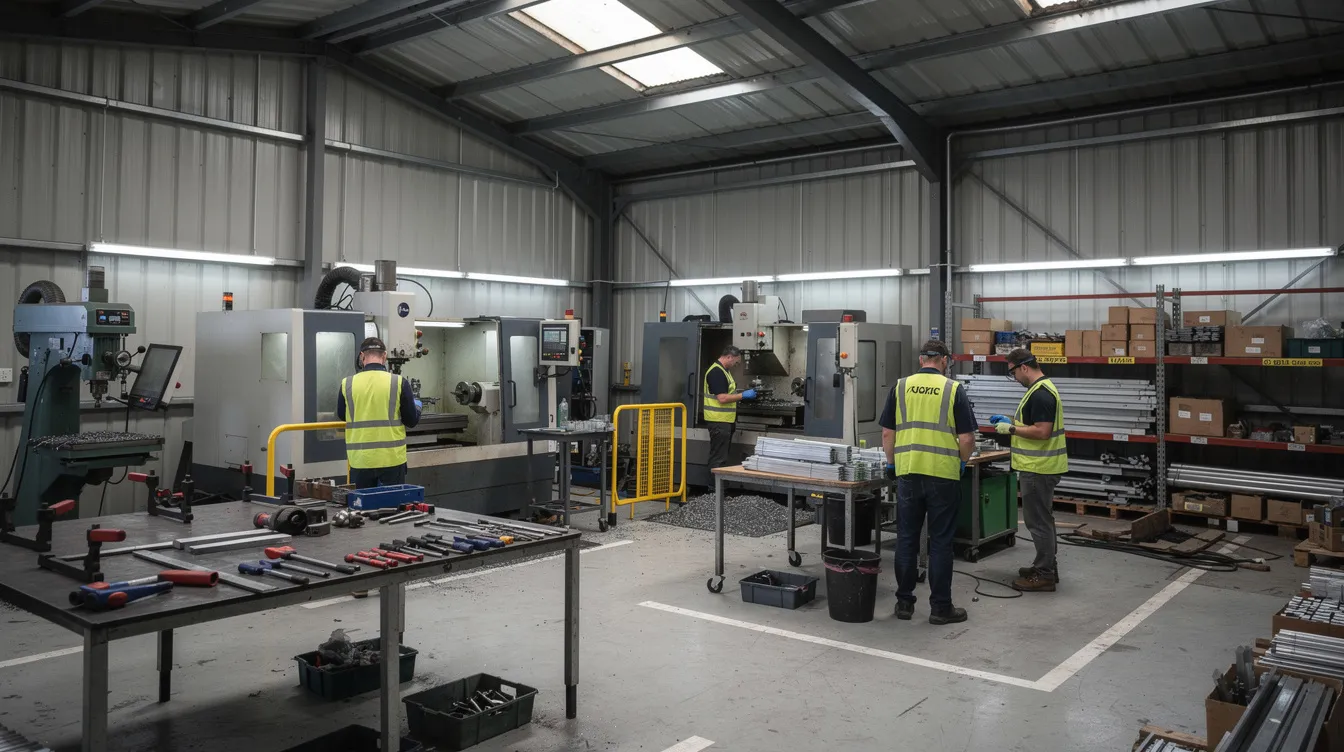
Manufacturing units and workshops operating from legally permitted industrial sheds, factory units, and small warehouses are fully eligible under mudra loan industrial shed eligibility, subject to normal applicant and business eligibility criteria.
Typical industrial shed businesses that successfully obtain mudra loans include:
- Fabrication and engineering job work units
- CNC and lathe workshops, auto component manufacturers
- Small food processing units (spice grinding, namkeen, flour mills)
- Packaging, textile, and garment units
- Furniture manufacturing and plastic product making
- Vehicle repair and auto workshops
Banks look favourably at industrial sheds because they indicate serious investment in machinery, labour, and stock. These micro enterprises engaged in manufacturing usually seek Kishore or Tarun limits for capital assets and working capital.
Both new and existing units can apply. New units require a detailed project report and quotations for machinery. Lenders require a detailed project report for funding the construction of a shed, and project plans must include the purpose of the industrial shed and its location. Mudra loans can cover costs associated with constructing an industrial shed if it supports a micro-enterprise. Existing units must show past turnover through bank statements, GST returns, or sales records.
For documentation, banks typically need a registered sale deed or long-term lease deed, allotment letter for government industrial estates, property tax receipt, electricity bill, and municipal trade licence or factory licence. Proof of ownership or lease agreement for land is required for construction. Banks verify mudra loan factory shed eligibility by physically visiting the shed and inspecting machinery, stock, and signage.
Are Businesses in Commercial Complexes & Commercial Buildings Eligible?
Service businesses, offices, and small retailers running from commercial complexes, office towers, and shopping complexes are normally eligible for mudra loans. Various financial institutions finance thousands of such cases every year.
Service and professional businesses commonly financed: CA and CS offices, consultancy firms, IT companies, digital marketing agencies, coaching centres, medical and dental clinics, architects, interior designers, insurance advisors, travel agencies, and small BPOs.
Retail businesses in commercial buildings: Mobile shops, garment showrooms, hardware stores, pharmacies, salons and spas, small restaurants, bakeries, and stationery shops.
Banks verify operational activities by checking whether the office or shop is open during working hours, whether staff is present, scanning billing software, and confirming that displayed activity matches the loan application. In multi-storey buildings, banks ask for exact unit number, floor, and wing details.
Co-working spaces and shared office premises are also accepted by many banks if the applicant has a valid agreement with the co-working provider and some permanent branding like a desk name plate or cabin sign. Residential premises converted to commercial use may create complications, but properly approved mixed-use buildings are generally accepted if all licences and registrations carry the same address.

Owned vs Rented Business Premises: What Banks Actually Look At
One of the biggest myths is that only owned premises are acceptable. In practice, mudra loan rented industrial shed and rented commercial office cases are routine. Whether owned or rented, what banks care about is genuine, documented occupation.
For owned premises, banks require: registered sale deed, allotment or possession letter, mutation or khata extract, and latest property tax receipt.
For rented premises, banks expect: a properly executed rent agreement or lease deed (preferably registered for tenures beyond 11 months), recent rent receipts, and utility bills matching the address. The rent agreement should clearly mention the tenant’s business name and exact area.
For licensed or leave-and-licence premises, common in metro cities, the licence agreement and society NOC help establish comfort.
Banks cross-check consistency of address across GST registration, Udyam Registration, Shop and Establishment Registration, and bank account records. Inconsistent addresses are a leading cause of delay and rejection under mudra loan business premises eligibility. Update your GST and Udyam with the correct address at least a few weeks before submitting the loan application.
Whether you own or rent affects collateral discussions only in larger loans. For mudra loans under PMMY, collateral-free financing is available up to ₹20 lakh, but stable and documented occupation of premises remains crucial.
Documents Banks Usually Ask For to Prove Business Premises
Even though mudra loans are marketed as simple business loans without collateral, banks still need strong mudra loan business address proof to satisfy internal audit and RBI norms. You must submit KYC documents and a business plan along with premises proof. Identity and address proof are typically required documentation. Document requirements may include utility bills, tax receipts, and identification documents along with other documents relevant to your business registration.
Core premises documents:
- Ownership documents (sale deed, allotment letter, conveyance deed)
- Rent agreement or lease deed with clear dates and rent amount
- Latest electricity bill (even in landlord’s name if address matches)
- Property tax receipt from the local body
Business operation proof at the same address:
- GST Registration certificate
- Udyam Registration
- Shop and Establishment Registration or municipal trade licence
- FSSAI licence for food businesses, factory licence for manufacturing
- Pollution consent where applicable
Visual evidence: Banks frequently ask for photographs of the business signboard, entry gate, machinery, stock, office interior, and sometimes a short video for the field investigation report.
Maintain a single “premises file” combining all these documents. It makes life easier for both you and the bank officer during processing.
How Banks Verify Business Location for Mudra Loans (Site Inspection & Verification)
Every serious mudra loan, especially Kishore and Tarun categories, involves a site visit. Banks focus on mudra loan business location verification to ensure that turnover, stock, and machinery claimed in the project report actually exist.
For industrial sheds: The field officer notes GPS location, checks external building name and shed number, confirms the business name on board, inspects machinery, observes production activity, and estimates scale relative to the requested loan amount.
Stock verification: Officers look at raw material and finished goods, ask approximate value and turnover cycle, and compare with bank statements or GST returns to judge whether the working capital requirement is realistic.
For commercial offices: The officer checks whether the office is functional, looks at furniture, computers, staff presence, and may view recent invoices to confirm activity.
Neighbour verification is common. Officers informally ask nearby unit owners whether the business has been running consistently and whether shutters stay open regularly.
Banks also validate address proof by matching on-site findings with KYC documents and GST certificates. Any mismatch requires clarification or updated documents. You can learn more about how banks conduct the overall verification process to prepare accordingly.

Factors That Improve Mudra Loan Eligibility for Industrial & Commercial Premises
While premises type matters, overall eligibility is also assessed based on how professional and active the business appears. Here is a concise checklist:
- Operational strength: Regular working hours, visible production or service activity, minimum 6-12 months of consistent transactions in the business bank account, and proper billing to customers
- Documentation strength: GST and Udyam reflecting the correct address, up-to-date trade or factory licence, rent agreement renewed on time, no address discrepancy across KYC and loan application
- Physical cues: Clear business signage, properly arranged machinery and stock, basic safety measures, bookkeeping files maintained on-site
- Financial readiness: Applicants who have successfully repaid previous loans enjoy stronger eligibility. A satisfactory credit track record and clean cash flow through the business account matter. Avoid cheque bounces and ensure EMIs of existing loans are paid on time, since negative banking habits can cause rejection even when premises are perfect
- Project report: For higher limits, prepare a realistic business plan with term loan and working capital breakup and financial projections. Interest rates for mudra loans are generally lower than traditional loans, making the finance accessible for small businesses
Combining genuine activity, compliant documents, and a well-organised premises results in faster sanction and better terms under the mudra scheme.
Common Premises-Related Reasons for Mudra Loan Rejection & Practical Solutions
Many otherwise eligible borrowers face rejection not because their business idea is weak, but because the premises appears doubtful during verification.
| Rejection Reason | What to Do Instead |
|---|---|
| Empty industrial shed, machines not installed | Apply only after setting up basic machinery and initial stock |
| Fake or temporary office address | Operate from actual premises with real staff and signage |
| Residential premises shown as commercial | Shift to legal commercial or industrial space, or obtain municipal conversion permission |
| Missing or unregistered lease agreement | Sign a clear written agreement for at least 11 months, preferably registered |
| Inconsistent address across documents | Standardise address on GST, Udyam, bank account, and KYC a few weeks before applying |
| No business signboard visible | Display a permanent name board showing business name and address |
In a well-documented fraud case in Vadodara, a ₹7.5 lakh mudra loan was sanctioned without proper pre-inspection; later audit revealed pledged assets did not exist. This underscores why banks take site inspection seriously and why applicants should ensure their premises genuinely reflects business activity.
Most of these issues can be corrected within one to three months. A well-prepared file with updated premises documents significantly reduces rejection chances during mudra loan appraisal. Mudra loans are intended for income-generating activities, not for real estate investment, so ensure your application clearly shows productive business use.
Frequently Asked Questions on Mudra Loan Industrial Shed & Commercial Premises Eligibility
These answers address practical doubts for entrepreneurs using rented or shared premises, covering eligibility criteria not fully discussed above.
Can I get a Mudra loan from a rented industrial shed or factory shed?
Yes. Rented sheds are fully acceptable as long as your rent agreement, landlord documents, and business registrations like GST and Udyam all match the shed address. Banks process thousands of mudra loan rented industrial shed applications every year. The loan can cover machinery, working capital, or even costs associated with setting up the unit. You can also apply online through the JanSamarth portal for easy access to the application process.
Will the bank always inspect my industrial shed or commercial office?
Physical site visits are very common for loans above the Shishu level. For Kishore and Tarun categories, expect a field officer to visit your premises, verify machinery, check stock, and confirm your business signboard. Mudra loans can be processed quickly, often within a few days after successful verification, but the inspection step is rarely skipped for amounts above ₹50,000. Approval can take a few days once all documentation and verification are complete.
Do I need GST Registration to prove my business address?
GST is highly preferred for businesses with turnover above the threshold and serves as a strong reference point for address verification. However, very small shishu loans may rely on other proofs like Shop and Establishment Registration, Udyam, and municipal trade licences. For Kishore and Tarun categories, having GST registration significantly strengthens your file. Mudra loans support various business activities like manufacturing and services, and each activity type may need specific registrations beyond GST. Individual borrowers without educational qualification barriers can apply, as no educational qualification is required under the scheme.
Can I shift my business to a new industrial shed after taking the Mudra loan?
Shifting is possible but must be formally communicated to the bank or financial institution. You will need to submit updated address proofs, fresh utility bills, and potentially undergo a new inspection. The assets created from the loan extended should remain traceable. Failing to inform the bank about a location change can trigger concerns during re-verification and may affect your credit standing.
Is a co-working or shared commercial office acceptable for Mudra loan?
Many commercial banks and small finance banks accept co-working premises if you have a valid service agreement with the provider and can demonstrate independent business activity. Some branding elements like a cabin sign, name plate, or listing on the reception directory help establish credibility. The micro units development and refinance agency framework under the mudra stands structure supports small enterprises across diverse premises types, so a shared setup does not automatically disqualify your application as long as the necessary skills and business operations are clearly visible. The scheme launched in 2015 has evolved to accommodate modern business setups, and eligible businesses include non-farm small enterprises operating from virtually any legitimate commercial or industrial premises.
- Can Bank Reduce Mudra Loan Amount Without Your Consent? Complete Practical Guide (2026)


- What to Do If You Cannot Pay Your Mudra Loan EMI (2026 Guide)

- Can a Bank Refuse a Mudra Loan Because the Target Is Completed? Complete Guide (2026)

- Bank Refused My Mudra Loan Application – What Are My Rights?

- Mudra Loan for Used Vehicles (2026): Eligibility, Documents, Bank Rules & Complete Guide

- Rejected Mudra Loan – What to Do Next? Appeal Process Explained (2026)

- Mudra Loan Project Report Madhya Pradesh – Bank-Ready DPR & CMA Guide

- Project Report for Mudra Loan Maharashtra: Complete Guide for MSMEs, Startups and Small Businesses (2026)

- Mudra Loan Uttar Pradesh: Complete Guide for MSMEs, Startups and Small Businesses (2026)

- Mudra Loan Bihar 2026: Eligibility, Documents, Online Application Process & Project Report Guide

- Jan Samarth Mudra Loan 2026: Complete Guide to Online Application, Eligibility, Documents & Approval Process

- MSME Mudra Loan: Complete Guide for Small Businesses, Startups & Manufacturing Units in India (2026)

- Is the Mudra Loan Subsidy Real or Fake? Get the Facts Here

- Mudra Loan Without CIBIL Score: How to Qualify and Apply

- Mudra Loan for Used Machine (2026 Guide) – Eligibility, Documents, Valuation & Approval Tips