
If you run more than one business and wonder whether you can get a Mudra Loan for each, you are not alone. This is one of the most common questions I receive as a practicing Chartered Accountant advising micro and small enterprises on bank funding. Let me walk you through exactly how banks look at multiple business owners under Pradhan Mantri Mudra Yojana, what gets approved, and what gets rejected.
Key Takeaways
One person can legally own multiple businesses in India and may be eligible for more than one Mudra Loan. However, Pradhan Mantri Mudra Yojana PMMY itself does not strictly ban a borrower from taking mudra loans for different businesses – banks club all loans linked to the same PAN and Aadhaar before sanctioning a new one. The final approval depends on repayment capacity, overall financial exposure, and business viability.
- Existing Mudra Loan conduct (timely EMIs, no defaults, no cheque bounce) strongly influences whether a second loan is sanctioned.
- Artificial business splitting – creating fake proprietorships or duplicate GST registrations to claim multiple loans up to 10 lakh – usually gets caught during verification and can lead to rejection or fraud flagging.
- Banks assess combined income, cash flow, and DSCR across all businesses before approving another Mudra Loan.
- In this guide you will learn: core PMMY eligibility criteria, how lenders check multiple businesses, typical approval and rejection scenarios, and practical steps to improve Mudra Loan approval chances.
Table of Contents
Understanding Basic Mudra Loan / PMMY Eligibility
The Pradhan Mantri Mudra Yojana was a scheme launched on 8 April 2015 to provide financial assistance and collateral-free credit to non corporate, non farm small enterprises. MUDRA stands for Micro Units Development and Refinance Agency, and the mudra scheme channels funds through commercial banks, small finance banks, NBFCs, MFIs, and various financial institutions to reach the beneficiary micro unit directly.
PMMY loans are classified into four categories based on the growth stage of the business:
- Shishu – shishu loans offer up to ₹50,000 for startups and early-phase micro enterprises
- Kishore – ranges from ₹50,001 to 5 lakh for businesses ready to expand
- Tarun – provides 5 lakh to 10 lakh for established units needing larger working capital or machinery
- Tarun Plus – ranges from 10 lakh to ₹20 lakh, available only to entrepreneurs who have successfully repaid a previous Tarun loan
Basic eligibility criteria:
- Indian citizen aged between 18 to 65 years
- Running or starting a non farm sector income-generating business in manufacturing (e.g., small fabrication unit), trading (e.g., kirana shop), or services (e.g., salon, online seller)
- Eligible businesses include shop owners, vendors, and service providers; agricultural businesses growing crops are not eligible, but allied activities like dairy, cold storage, or agri-equipment servicing qualify
- Applicant types: individual proprietors, partnership firms, LLPs, private limited companies, and small businesses registered under Udyam
- You can apply for a Mudra loan online or visit your nearest bank branch; loans are processed quickly if documents are complete
Loans up to 10 lakh are available under PMMY with no collateral required. Interest rates for Mudra loans are deregulated – they vary based on the bank and loan category and are usually lower than traditional loans, though fixed interest rates for PM Mudra Yojana can reach up to 21% in some cases. Banks like HDFC Bank and public sector banks process these under their MSME product offerings.
Important: Approval for a Mudra loan is not guaranteed upon meeting the eligibility criteria. Banks separately evaluate income, CIBIL, documents, and business viability. This distinction between eligibility and approval is critical when you own multiple businesses.
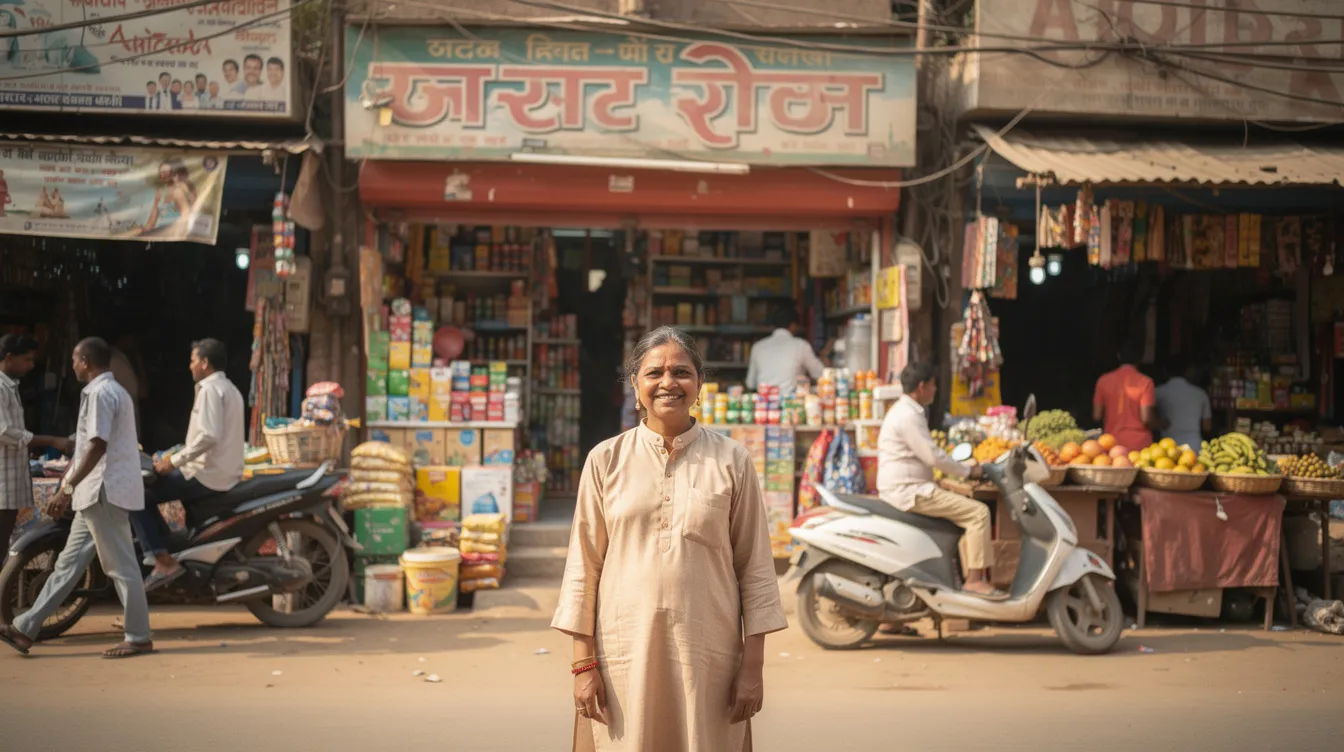
Owning Multiple Businesses in India – Legal and Practical Scenarios
Under Indian law, one person can legally own or co-own several businesses mapped to the same PAN. Common structures include:
- Multiple sole proprietorships under one PAN with different trade names and GST numbers
- Being a partner in two different partnership firms
- Being a director or shareholder in more than one private limited company or LLP
- Having multiple GST registrations for different states or business verticals
Practical example: An entrepreneur running a small garment manufacturing unit, a separate retail shop, and an online marketplace store on Amazon – each with separate bank accounts, invoices, and Udyam registrations.
For Mudra Loan purposes, banks look at both the applicant-level profile (PAN, Aadhaar, CIBIL, total liabilities) and business-level details (turnover, profit, bank statements, licenses). Multiple businesses owned by the same individuals are seen together, not in isolation. Mixing transactions of many businesses in one savings account creates confusion – each business should ideally have a separate current account so the banker can understand cash flows clearly.
Can One Person Apply for More Than One Mudra Loan?
Technically, yes. A person can apply for a Mudra Loan for more than one business or for business expansion after repaying an earlier loan. But there is no automatic right to get two mudra loans – each case is decided by the lending bank’s policy and risk assessment. Loan funds must be used for income generation activities like purchasing machinery or expansion, and banks evaluate the viability of the business plan and financial health before approval.
Banks use PAN, Aadhaar, and CIBIL to see all existing loans across different banks. Even if one Mudra Loan is with Bank A and the second application goes to Bank B, both show up in the credit report. Lenders check the applicant’s overall financial exposure including existing obligations. The maximum funding limit across businesses is capped based on the primary application – under PMMY norms, cumulative Mudra exposure per borrower or enterprise should not exceed ₹20 lakh.
Key factors influencing approval:
- Total outstanding loans (home loan, vehicle loan, credit cards)
- Existing EMI-to-income ratio and FOIR limits (EMIs normally should not exceed 50–60% of net income)
- Past delays, defaults, or high existing debt
- Whether the previous Mudra Loan business purpose has been genuinely achieved
- Banks are more comfortable upgrading an existing good borrower from Shishu to Kishore or Tarun for expansion than sanctioning completely separate loans for multiple new units simultaneously
When Banks Approve or Reject Mudra Loans for Multiple Business Owners
As a practicing CA, I regularly see both approvals and rejections for “Mudra Loan for second business” applications. Decisions follow consistent risk patterns.
Typical approval situations:
- Separate, already-operational businesses with clear bank statements and profit in ITRs
- Good CIBIL score (720+), no EMI bounce, reasonable promoter contribution
- Example: a trader with a fully repaid ₹3 lakh Kishore loan now seeking a ₹7 lakh Tarun loan for a second retail outlet
- Strong average monthly balance, GST returns matching bank turnover, and proper documentation like rent agreement, licenses, and machinery quotations supporting genuine expansion
Common rejection scenarios:
- Existing Mudra default or restructuring – banks treat this as a non-eligible applicant signal
- Many cheque returns and cash withdrawals indicating negative banking habits
- High existing EMI burden where DSCR is weak
- Showing almost the same business twice with a minor name change – artificial splitting
- Business not operational or with negligible turnover during site inspection
- All partners must not be loan defaulters to qualify for mudra loans in a partnership structure; the loan application process assesses the collective creditworthiness of all partners, and identification proofs are required for all partners
Banks fund multiple businesses of the same person only when combined income and cash flow clearly support all EMIs and documents prove each business is real, distinct, and viable.
How Banks Verify Multiple Businesses, Calculate Repayment Capacity, and What Documents You Need
Modern Mudra Loan screening is data-driven. Lenders cross-check every data point to build a full picture of all businesses and obligations linked to the applicant.
Key verification checks:
- PAN and Aadhaar matching across application and KYC
- CIBIL report for existing Mudra and other loans
- GST portal data versus declared turnover – any GST turnover mismatch triggers scrutiny
- Udyam Registration details
- Business verification process including site inspection for manufacturing units and service businesses
- Bank account conduct review for credit needs assessment
How repayment capacity is calculated:
The banker looks at net profit plus owner’s salary, adds back depreciation, and compares against total existing EMIs plus proposed Mudra EMI.
| Parameter | Comfortable Case | Risky Case |
|---|---|---|
| Monthly net income | ₹60,000 | ₹60,000 |
| Existing EMIs | ₹12,000 | ₹28,000 |
| Proposed Mudra EMI | ₹9,000 | ₹12,000 |
| FOIR | 35% ✅ | 67% ❌ |
| Likely outcome | Approved | Rejected |
Documents required:
- Personal KYC: Aadhaar, PAN, address proof – required documents include identity proof and address proof
- Business proof: GST certificate, shop license, Udyam Registration, rent agreement
- Financials: Last 6–12 months bank statements, 2–3 years ITR and financial statements, existing loan statements – documentation includes financial statements, identity proof, and project reports
- Project papers: Project report, CMA data, machinery quotations for assets being purchased
You can apply through banks, NBFCs, or MFIs. Many government portals now let you apply online for easy access to the scheme. Submit complete documents to avoid delays.

Case Studies, Common Mistakes, Improvement Tips, Professional Advice & FAQ
Here are real-world styled scenarios, common pitfalls, and practical advice to strengthen your multiple business Mudra Loan eligibility.
Case studies:
- Approved: Entrepreneur with a profitable garment shop and a food stall – strong cash flow, clean CIBIL, separate accounts – got a second Tarun loan approved
- Rejected: Borrower with existing Shishu default refused new Mudra despite another viable business
- Reduced sanction: Person with three small businesses but weak combined cash flow – bank reduced the loan amount significantly
- Approved with documentation: Owner with proper segregation of accounts and a detailed project report obtained Mudra Loan for expansion
- Rejected – artificial splitting: Applicant tried splitting businesses across family members – rejected after site inspection and document mismatch
Common mistakes:
- Hiding existing loans from the bank
- Inflating turnover or creating a GST mismatch
- Mixing different businesses’ money in one personal account
- Unrealistic project reports copied from the internet
- Inconsistent addresses or business proofs
Actionable improvement tips:
- Maintain excellent repayment record on all loans and credit cards
- Keep CIBIL above 700 by avoiding multiple loan enquiries
- Prepare a customized project report and CMA data for each business – fill in realistic projections
- Keep GST and ITR filings up to date
- Maintain separate current accounts per business
- Avoid cheque bounces to protect your banking conduct
- Ensure reasonable promoter contribution (margin money)
- Close or reduce high-cost loans before applying for another Mudra Loan
My advice as CA Manish Gugliya: Seek a second Mudra Loan only when your first unit is stable and profitable. Bankers think in terms of risk – they want to see honesty, documentation quality, and realistic cash-flow based planning. A well-prepared applicant with two genuine businesses will always get better treatment than someone trying to game the system with artificial structures. The mudra scheme and government initiatives like PMMY exist to signify trust in entrepreneurs and help small businesses access funding for growth – use that opportunity wisely. No subsidy replaces sound business planning. Whether you availed a Shishu loan earlier or are now at the Tarun phase, the ministry and banks want to see entrepreneurs who expand responsibly.
Frequently Asked Questions
Can a proprietor and a partnership with the same person both get Mudra Loans?
Yes, if the proprietorship and partnership have different PANs (the firm has its own PAN), banks may consider them separately. However, your personal credit history and liabilities as a partner will still be reviewed. The bank evaluates total exposure across all entities linked to you.
Can different banks finance different businesses under PMMY?
Technically possible, but both loans will appear on your CIBIL report. The second bank will see the first loan and assess whether your combined repayment capacity supports both EMIs. Multiple business Mudra Loan eligibility depends on aggregate exposure, not which bank you approach.
Can I apply again after fully repaying an earlier Mudra Loan?
Absolutely. In fact, successful repayment strengthens your case. Entrepreneurs who have availed and successfully repaid a Tarun loan can even qualify for Tarun Plus loans between 10 lakh and ₹20 lakh – a category introduced in Budget 2024–25 specifically to reward good repayment conduct.
Do multiple GST registrations automatically improve eligibility?
No. Multiple GST registrations prove that separate businesses exist, but they do not automatically improve loan eligibility. Banks still evaluate each business’s turnover, profitability, and your overall repayment capacity independently. What matters is genuine, verifiable revenue – not just registration numbers.
Can one person get two Mudra Loans at the same time?
It is not explicitly prohibited, but banks rarely sanction two active Mudra Loans simultaneously to the same borrower unless both businesses demonstrate independent viability and total exposure stays within PMMY limits. Strong documentation, separate accounts, and healthy cash flow across both units are essential.
- Can Bank Reduce Mudra Loan Amount Without Your Consent? Complete Practical Guide (2026)


- What to Do If You Cannot Pay Your Mudra Loan EMI (2026 Guide)

- Can a Bank Refuse a Mudra Loan Because the Target Is Completed? Complete Guide (2026)

- Bank Refused My Mudra Loan Application – What Are My Rights?

- Mudra Loan for Used Vehicles (2026): Eligibility, Documents, Bank Rules & Complete Guide

- Rejected Mudra Loan – What to Do Next? Appeal Process Explained (2026)

- Mudra Loan Project Report Madhya Pradesh – Bank-Ready DPR & CMA Guide

- Project Report for Mudra Loan Maharashtra: Complete Guide for MSMEs, Startups and Small Businesses (2026)

- Mudra Loan Uttar Pradesh: Complete Guide for MSMEs, Startups and Small Businesses (2026)

- Mudra Loan Bihar 2026: Eligibility, Documents, Online Application Process & Project Report Guide

- Jan Samarth Mudra Loan 2026: Complete Guide to Online Application, Eligibility, Documents & Approval Process

- MSME Mudra Loan: Complete Guide for Small Businesses, Startups & Manufacturing Units in India (2026)

- Is the Mudra Loan Subsidy Real or Fake? Get the Facts Here

- Mudra Loan Without CIBIL Score: How to Qualify and Apply

- Mudra Loan for Used Machine (2026 Guide) – Eligibility, Documents, Valuation & Approval Tips