Key Takeaways
- Growth equity funding for manufacturing companies provides expansion capital to already profitable, established manufacturers; it does not target early-stage startups or loss-making businesses. Investors acquire minority stakes (typically 10-30%) while promoters retain operational control.
- This capital funds capacity expansion, automation, new production lines, and entry into new markets for manufacturers with stable EBITDA and positive cash flow. Growth equity targets established manufacturing companies with scalable models and clear profitability paths.
- Investors evaluate plant-level economics, ROCE, cash flow management, governance quality, customer diversification, and clear exit visibility over a 5-7 year horizon before committing funds.
- A well-prepared investor-ready Detailed Project Report (DPR), realistic financial projections, and defensible business valuation are prerequisites for serious growth equity discussions with private equity funds, family offices, or strategic investors.
- Project Report Bank, led by CA Manish Gugliya (FCA, DISA, ICAI), supports manufacturing promoters with customised DPRs, financial models, valuations, and fundraising advisory. The engagement improves investment readiness but does not guarantee funding.
What Is Growth Equity Funding for Manufacturing Companies?
Growth equity refers to minority or significant minority equity capital invested into already profitable, operating manufacturing companies to finance business expansion. The capital goes toward capacity addition, automation, quality certifications, new product lines, or geographic expansion. Growth equity typically involves minority stake investments in mid-sized manufacturing companies, usually in the range of 10-30%, allowing the promoter to retain operational control while bringing in investor governance, board representation, and structured reporting.
This differs from startup venture capital in a fundamental way. Venture capital accepts unproven business models, negative EBITDA, and product-development risk. Growth equity requires proven product mixes, repeat customer orders, stable cash flow, and existing manufacturing assets. Investors look for established growth-stage companies with strong revenue and profit potential, not experimental ideas.
Growth equity provides capital without requiring total control of the business. Investors expect returns through capital appreciation and dividends over a 5-7 year holding period, not through fixed interest payments. The return comes from enterprise value growth driven by business expansion, margin improvement, and eventual exit via IPO or strategic sale. This makes growth equity permanent capital; unlike working capital business loans or term loans, there is no fixed EMI or repayment pressure. However, it permanently dilutes promoter ownership.
Why Profitable Manufacturing Companies Need Growth Equity
MSMEs account for 45% of India’s manufacturing output, and many mid-market manufacturers reach a stage where internal accruals and bank finance cannot fund the next phase of growth. A ₹150-crore auto-components manufacturer running at 85% capacity utilisation, for instance, may need ₹50-70 crore for a new production line. Retained profits might cover ₹10-15 crore. Bank term loans can fill part of the gap but add repayment pressure. Manufacturing companies need continuous capital for machinery and infrastructure, and manufacturers often face challenges in accessing timely funding when expansion windows are narrow.
The major uses of growth capital in manufacturing include:
- Greenfield or brownfield factory setup and additional manufacturing units
- New production lines and equipment purchases for scaling operations
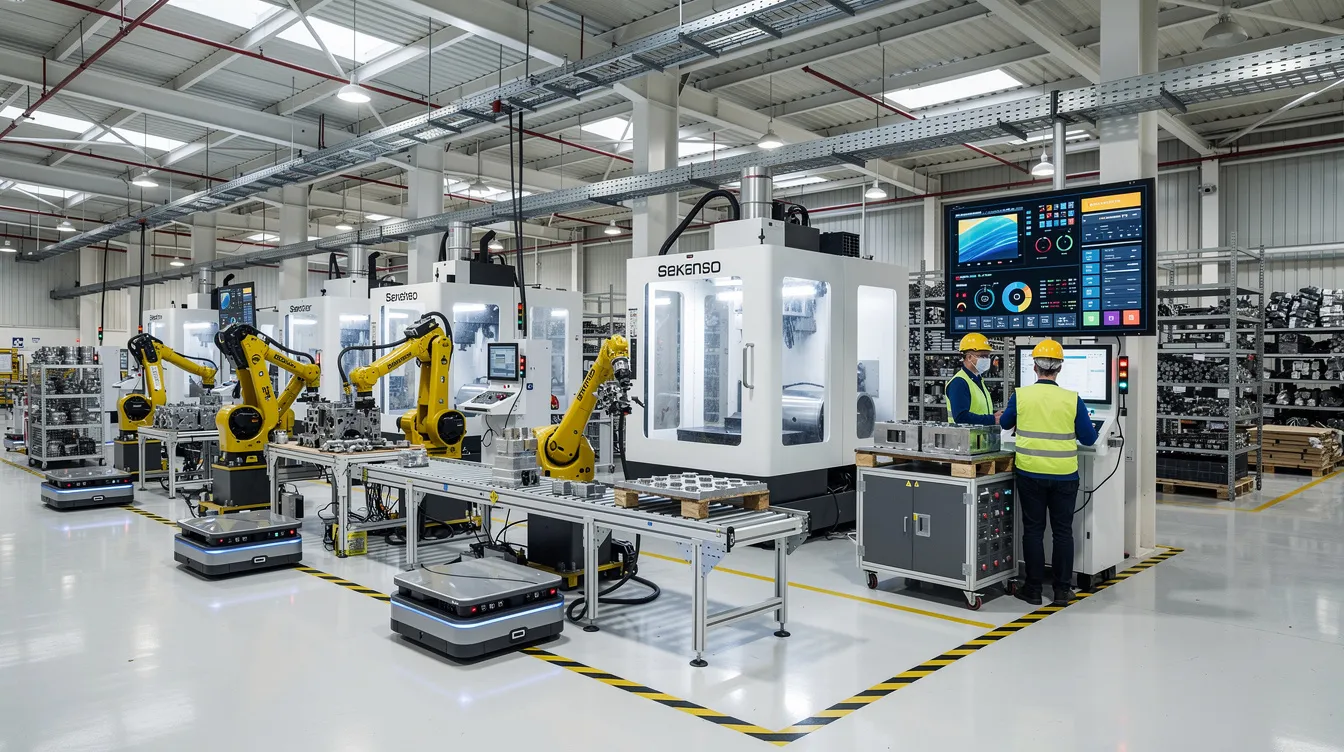
- Automation, Industry 4.0 upgrades, and production efficiency improvements
- Backward and forward integration (in-house component manufacturing, captive packaging, own distribution)
- Export-oriented manufacturing requiring global certifications, export inventory, and extended receivable cycles
- Working capital support associated with expansion, especially for large export orders
Manufacturing companies often require substantial capital to scale production facilities. Project finance is ideal for expansions and upgrades in manufacturing, but pure debt can over-leverage the balance sheet when the project has a long gestation period.
India is emerging as a global manufacturing hub, supported by government initiatives such as Production Linked Incentive (PLI) schemes across sectors. The Make in India initiative promotes manufacturing through grants and incentives, and government schemes can lower the cost of project expansions for manufacturers. Government grants support manufacturing businesses without repayment obligations, though they often have strict eligibility criteria for applicants. These policy tailwinds create expansion opportunities, but MSMEs face challenges accessing traditional bank loans due to collateral requirements, making growth equity an attractive choice for sufficient funding.
Rising domestic demand, infrastructure development, and supply-chain diversification away from single-source countries are creating order pipelines that profitable manufacturers cannot fulfil without major investments. Growth equity bridges the gap between what the business generates internally and what the expansion requires.
Which Manufacturing Companies Are Suitable for Growth Equity Investment?
No single revenue or EBITDA threshold applies across all growth equity investors. A ₹30-crore turnover packaging manufacturer and a ₹300-crore specialty chemicals producer can both attract growth capital if the underlying business quality supports it.
Investors favour these commercial traits: consistent year-on-year revenue growth (12-20% CAGR over 3-5 years), healthy EBITDA margins relative to the specific manufacturing sector, repeat orders from diversified customers, and a credible expansion plan tied to identifiable demand.
On the financial side, positive operating cash flow, controlled cash conversion cycle, ROCE above 15-20%, and strong financial history are central evaluation criteria. A manufacturer with reported accounting profits but poor cash flow due to frozen receivables or excess inventory will face hard questions.
Operational indicators matter as much as financial ones. Investors look for capacity utilisation above 70-75%, scope to expand within existing land, production efficiency driven by lean manufacturing practices, and quality certifications (ISO, FSSAI, BIS, or sector-specific standards). A strong financial health profile across these dimensions makes the manufacturer investable.
Promoter and governance aspects carry weight: a promoter with 10+ years of manufacturing sector experience, succession clarity, audited financial statements, statutory compliance, and openness to investor reporting. Risk factors investors scrutinise include high customer or supplier concentration (no single customer exceeding 25-30% of revenue), dependence on a single geography, cyclicality in end-user industries, and regulatory or environmental risks.
Growth Equity Funding vs Bank Loans vs Promoter Capital
Most manufacturing expansion is financed through a combination of promoter contribution, bank term loans, and sometimes external equity. Each source has distinct implications for ownership, cash flow, and risk.
| Parameter | Growth Equity | Bank Term Loan / Working Capital Loan | Promoter Capital |
|---|---|---|---|
| Repayment obligation | None; no fixed EMI | Fixed EMIs; interest and principal on schedule | None |
| Cost of capital | Higher (equity cost); shared upside | Lower interest rates; but fixed obligation | Opportunity cost of retained earnings |
| Ownership dilution | Yes; investor takes stake | No dilution | No dilution |
| Control and governance | Board seats, reporting covenants | Bank rarely demands control; standard covenants | Full control |
| Collateral / security | Typically none; effectively collateral free business loans from promoter’s perspective | Traditional banks often require collateral for manufacturing loans | Not applicable |
| Cash flow impact | No regular cash outflows; dividends optional | Regular outflows reduce available cash | No immediate outflows |
| Best suited for | Large capex with long payback, uncertain new markets, strategic support needs | Stable, predictable cash flows; asset-backed, moderate expansions | Smaller investments; preserving ownership |
Manufacturing loans often come with flexible terms and lower interest rates compared to equity cost, but they create repayment pressure on cash flow. Repayment options in project finance are structured to ensure sustainability, yet adding more term loans when debt/EBITDA is already stretched can stress the DSCR below safe levels.
Equipment financing uses existing machinery as collateral to avoid equity dilution, and venture debt can finance equipment purchases without diluting equity. Unsecured business loans provide quick access to funds for smaller operational needs. Interest-free funding options are available for certain manufacturing businesses through government grants, though eligibility criteria apply. Manufacturing loans can fund machinery purchases and operational costs, making them the first choice for predictable, moderate-scale expansion.
For a mid-market manufacturer, a balanced capital structure might combine a bank term loan covering 40-50% of project cost, promoter contribution of 20-30%, and minority growth equity of 20-30%. This keeps DSCR comfortable while providing sufficient funding for growth.
Types of Investors Providing Growth Capital to Indian Manufacturers
Manufacturing firms typically navigate a distinct landscape of growth equity and specialized private equity. Different investor categories bring varying cheque sizes, return expectations, and involvement levels.
Private equity funds focusing on mid-market and growth equity prefer scalable businesses with clear exit options (IPO, strategic sale) and strong governance. Private equity firms offer governance standards and operational expertise alongside capital. Manufacturing businesses can raise growth equity capital from private equity firms and specialized funds, with deal sizes often ranging from ₹50 crore to ₹400 crore in advanced manufacturing.
Family offices and HNIs are often more flexible on governance and exit horizon. They may back niche or regionally strong manufacturers where they understand the sector or promoter. Angel investors provide capital in exchange for equity or debt, typically at earlier stages or smaller amounts. Crowdfunding raises small amounts from many people online but is rarely suitable for mid-market manufacturing capex.
Strategic and corporate investors invest to secure supply chains, gain technology access, or enter adjacencies. They add operational synergies but want strategic alignment with their broader business.
Sector-focused funds specialise in manufacturing verticals such as aerospace, defence, precision engineering, or energy transition. Their domain expertise supports process improvement, export compliance, and quality certifications. Each portfolio company benefits from the fund’s sector network.
Manufacturing promoters should align deal expectations, control rights, and time horizons with the right investor category. Chasing only the highest valuation without considering partnership quality leads to deal failures and protracted negotiations.
How Much Growth Equity Can a Manufacturing Company Raise?
The quantum of growth equity depends on project cost, company valuation, available debt capacity, and the promoter’s acceptable dilution. There is no generic “market standard” amount.
Investors estimate deployable capital by examining current enterprise value (a multiple of EBITDA), planned expansion size, projected equity IRR, and the funding gap after promoter contribution and bank debt. Targeted funding depends on business goals such as expansion and technology upgrades. Structured finance combines multiple funding sources for high-value projects, and growth equity fills the portion that debt and internal accruals cannot cover.
Consider this illustrative capital structure for a manufacturing expansion:
| Component | Amount (₹ crore) | Share of Project Cost |
|---|---|---|
| Total expansion capex | 60 | 100% |
| Promoter contribution | 15 | 25% |
| Bank term loan | 30 | 50% |
| External growth equity | 15 | 25% |
At this structure, post-expansion debt/EBITDA remains moderate, DSCR stays above 1.3x in the base case, and the promoter dilutes less than 10% depending on pre-money valuation. These are illustrative figures; each transaction requires detailed project finance modelling.
How Investors Evaluate Profitable Manufacturing Companies
Serious investors use a structured framework combining historical performance, plant-level metrics, and forward projections. Manufacturers should prepare clean financial statements to attract institutional investors.
Historical financial metrics: 3-5 years of audited revenue, EBITDA, PAT, and gross margins. Investors adjust for one-off items to assess “quality of earnings.” Strong financial history is crucial for securing manufacturing loans and equity alike. Manufacturers should showcase competitive advantages in their investment proposition.
Operational metrics: capacity utilisation by product line, yield and wastage percentages, production bottlenecks, cost per unit trends, and operational efficiency indicators. Plants running at 75-90% of production capacity with room to expand score well.
Cash flow and working capital: receivable days, inventory days, payable days, and the overall cash conversion cycle. These affect bank limits, cash flow management, and the ability to service both debt and investor return expectations. Speeding up customer payments improves cash flow. Avoiding excess stock helps free up cash for operations.
Balance sheet indicators: leverage ratios (debt/EBITDA), interest-coverage ratio, DSCR, and ROCE. Growth equity investors prefer headroom to raise or refinance debt where needed.
| Evaluation Category | What Investors Check | Risk Flag |
|---|---|---|
| Market & demand | Order book, customer diversification, export share | Single customer >25-30% of revenue |
| Operations | Capacity utilisation, certifications, plant condition | Below 70% utilisation without clear demand pipeline |
| Financials | EBITDA margins, ROCE, cash flow, working capital cycle | EBITDA margin below 10%; poor cash conversion |
| Legal & compliance | Statutory filings, environmental clearances, tax disputes | Pending litigation; unresolved tax demands |
| Management | Promoter track record, succession, MIS quality | No succession plan; weak reporting systems |
| Exit route | IPO readiness, strategic buyer interest, comparable valuations | No realistic exit path within 5-7 years |
Business Valuation and Equity Dilution in Growth Equity Funding
For profitable manufacturing companies, the two most common valuation approaches are EBITDA multiples (market comparables) and discounted cash flow (DCF). EBITDA multiples are used more frequently for mid-market deals because they are transparent and benchmarkable.
Enterprise value (EV) equals EBITDA multiplied by the applicable multiple. Equity value equals EV minus net debt. Pre-money valuation refers to equity value before the new investment; post-money valuation includes the new capital. The investor’s stake equals their investment divided by post-money equity value.
Typical EV/EBITDA multiples for Indian manufacturing companies, per industry data, fall in these bands: general industrials at 4-6x, specialised or export-oriented manufacturers at 5-8x, and specialty chemicals or high-margin industrials at 8-10x.
Numerical illustration (all figures assumed for explanation only):
| Item | Value |
|---|---|
| FY 2025-26 EBITDA | ₹20 crore |
| EV/EBITDA multiple (specialised engineering) | 6x |
| Enterprise value | ₹120 crore |
| Net debt | ₹20 crore |
| Pre-money equity value | ₹100 crore |
| New equity investment | ₹25 crore |
| Post-money equity value | ₹125 crore |
| Investor stake | 20% (25/125) |
| Promoter retains | 80% |
If the multiple were 8x (due to exceptional margins and export revenue), pre-money equity would be ₹140 crore, and ₹25 crore would buy only 15.1% (25/165). Promoters who overestimate valuation without supporting metrics face investor pushback or deal breakdown.
Practical negotiation covers more than valuation. Board rights, affirmative voting rights, liquidation preferences, and anti-dilution protections all affect the real economics of the deal. Promoters should balance valuation ambition against deal certainty and partnership quality.
Financial Projections Required for Manufacturing Growth Equity
From a Chartered Accountant’s perspective, well-structured financial projections are the backbone of any growth equity proposal for manufacturing business expansion. Investors often require detailed financial planning for project evaluations, and vague or unsupported numbers derail discussions.
The investment thesis should articulate how new capital will translate into revenue growth. Core components investors expect:
- Project cost break-up and means of finance (debt, equity, promoter funds)
- Production and sales volume assumptions by product category over 5-7 years, derived from capacity, capacity utilisation ramp-up, product mix, and realistic selling prices
- Cost structure modelling: raw materials consumption norms, power and fuel, labour, maintenance, and overheads, showing how economies of scale may improve EBITDA margins
- Working capital requirement estimates, projected bank limits, and cash flow statements
- Project IRR, equity IRR, payback period, DSCR, and sensitivity analysis under adverse scenarios
Business plans should include detailed financial projections and cash flow analysis. Project finance funds large-scale manufacturing projects based on cash flow, not asset value alone. Sensitivity analysis testing lower realisations, slower capacity ramp-up, and raw materials cost increases helps investors assess downside risk.
Importance of an Investor-Ready DPR for Manufacturing Expansion
An investor-ready DPR goes far beyond a standard bank loan project report. It addresses technical, commercial, and financial questions that equity investors raise before committing capital.
A detailed business plan is essential for MSME loan approval; for equity funding, the bar is higher. The DPR should include: detailed product descriptions, manufacturing process flow, plant layout, machinery specifications with supplier quotes, utilities and infrastructure development needs, and a project implementation schedule.
Market analysis must cover target segments, demand-supply assessment, competition profiling, pricing strategy, and export potential. Financial sections must include project cost, means of finance, projected P&L, cash flow, balance sheet, working capital assessment, break-even analysis, ROI, IRR, and DSCR aligned with realistic assumptions.
Risk analysis elements that investors expect: raw materials price volatility, regulatory changes, technology obsolescence, foreign exchange exposure for exporters, and scenario/sensitivity analysis. Project Report Bank specialises in customised, investor-ready DPRs for manufacturing companies, and such DPRs improve the quality of investor discussions. They do not guarantee funding.
Step-by-Step Process to Raise Growth Equity in India
This roadmap covers the practical sequence from initial planning through deal closure:
- Internal feasibility assessment: evaluate expansion economics, capital requirement, and whether equity is needed alongside debt
- Financial clean-up: prepare or update 3-5 years of audited financials; resolve compliance gaps, pending statutory filings, and tax disputes
- Financial modelling: develop detailed project finance model with production-linked revenue projections, working capital assessment, and DSCR analysis
- DPR and pitch deck: prepare an investor-ready DPR and presentation aligned to the expansion narrative
- Business valuation: prepare indicative valuation and dilution analysis using defensible multiples and assumptions
- Investor identification: shortlist suitable PE funds, family offices, or strategic investors based on ticket size, sector focus, and mandate alignment
- Management presentations: conduct initial outreach using summarised DPR insights and concise investment thesis
- Term sheet negotiation: receive and negotiate terms covering valuation, investment structure, governance rights, and exit provisions
- Due diligence: financial, legal, commercial, and technical due diligence by investors, including plant visits and management interviews. Due diligence examines operational and commercial aspects of manufacturing businesses in detail
- Definitive agreements: finalise share subscription agreement and shareholders’ agreement
- Regulatory approvals: complete corporate and regulatory approvals
- Drawdown and reporting: funds disbursed against project milestones; ongoing investor reporting post-investment
Timelines vary from 4 to 9 months. No fundraising outcome is guaranteed. Investor decisions depend on company fundamentals, market conditions, and the application process quality.

Common Reasons Growth Equity Investors Reject Manufacturing Proposals
Many profitable manufacturers fail to close equity deals due to avoidable issues. Understanding why investors reject proposals helps promoters prepare.
Financial red flags: aggressive volume or price assumptions without supporting order book data, historically weak cash flow despite accounting profits, leverage already stretched to DSCR levels below 1.2x, and inconsistent or unaudited financial statements.
Governance concerns: incomplete statutory filings, unresolved tax disputes, related-party transactions without transparency, weak MIS and reporting, and lack of succession planning. Supply chain disruptions can impact manufacturing MSMEs; investors also scrutinise supply chain resilience and seasonal fluctuations that affect revenue predictability.
Strategic gaps: over-reliance on one or two key customers, absence of clear competitive differentiation, limited addressable market in the target geography, and unclear execution plan for the proposed expansion.
Valuation issues: unrealistic promoter expectations relative to sector peers, unwillingness to provide reasonable investor rights, or reluctance to accept any dilution while seeking large capital. Promoters who revise their DPR after initial rejection with realistic assumptions and stronger documentation often improve their chances.
Constructive steps: engage professional advisors early, stress-test every projection assumption, address compliance gaps before investor conversations, and approach only those investors whose mandate matches the company’s profile and stage.
Illustrative Case Study: Growth Equity for a Profitable Manufacturing Company
This hypothetical example illustrates how a mid-market Indian manufacturer might structure a growth equity transaction. All figures are assumed for explanation only.
Company profile (FY 2025-26): A specialty engineering goods manufacturer with turnover of ₹180 crore, EBITDA margin of 16% (EBITDA ₹28.8 crore), existing plant capacity utilisation at 85%, export share of 30%, and net debt of ₹20 crore. ROCE is 18%. The business has grown at 15% CAGR over the past four years with diversified customers across auto, industrial, and defence sectors.
Proposed expansion: A new production line costing ₹60 crore, covering plant and machinery, building modifications, utility upgrades, pre-operative expenses, and margin for additional working capital. The expansion targets 40% incremental capacity.
Funding plan:
| Source | Amount (₹ crore) | Share |
|---|---|---|
| Promoter contribution | 15 | 25% |
| Bank term loan | 30 | 50% |
| External growth equity | 15 | 25% |
Valuation and dilution: At 6x EBITDA, enterprise value equals ₹172.8 crore. Subtracting net debt of ₹20 crore gives pre-money equity of ₹152.8 crore. The ₹15 crore equity injection results in post-money equity of ₹167.8 crore, and investor stake of 8.94%. Promoter retains approximately 91%.
Projected results (FY 2028-29, stabilised capacity): Revenue of ₹260 crore, EBITDA margin of 18% (EBITDA ₹46.8 crore), ROCE of 20-22%. Conservative equity IRR for the investor: 20-25%. Optimistic scenario: 30-35%. These are projections based on stated assumptions, not guaranteed returns.
MSMEs account for 45% of India’s manufacturing output, and deals of this scale are increasingly common as the manufacturing sector matures and more mid-market companies seek growth capital to drive growth and enter new markets.
When Should Manufacturing Promoters Choose Growth Equity Instead of Additional Bank Debt?
Adding more debt when leverage is already at 2.5-3x EBITDA compresses DSCR and leaves no room for cash flow variability. For large one-time capex with long payback or uncertain new product lines, equity absorbs risk that fixed-EMI debt cannot.
Growth equity is more appropriate when: existing leverage ratios are high, future cash flows are uncertain or cyclical, the expansion requires strategic support beyond money (exports, technology, branding), or the promoter wants to reduce personal guarantees. Banks require collateral for most manufacturing loans, and growth equity removes that constraint.
Bank debt alone may suffice when: incremental capex is relatively small, cash flows are stable and predictable, strong asset collateral coverage exists, and DSCR remains comfortable after increased borrowing.
Growth equity can de-risk promoters personally. Rather than pledging personal assets for a ₹50-crore expansion loan, a blended structure with ₹30 crore debt and ₹20 crore equity reduces both repayment pressure and collateral exposure. This improves resilience during downturns and provides long term growth flexibility.
Optimizing cash flow can also reduce the need for external funding. Extending payables provides more cash flow flexibility, cutting non-essential spending enhances cash flow management, and maintaining lean inventory frees up working capital. Business owners who improve operational efficiency before approaching investors demonstrate the financial discipline that makes their company an attractive choice for growth equity.
Alternative financing options exist alongside growth equity. Equipment financing, venture debt, lending options from NBFCs and fintech platforms like Kinara Capital, and invoice factoring (which provides immediate cash against unpaid invoices) each serve specific funding needs. The right funding approach combines these options based on the business needs and expansion scale.
How ProjectReportBank.com Supports Manufacturing Companies Seeking Growth Equity
Project Report Bank is a Chartered Accountant-led project finance advisory platform focused on manufacturing and MSME projects across India, led by CA Manish Gugliya with over 20 years of professional experience in project reports, financial modelling, and business advisory.
Services relevant to growth equity funding include: preparation of detailed, investor-ready DPRs for manufacturing expansion covering technical feasibility, plant layout, machinery selection, and implementation planning. The firm develops robust financial projections and models covering project cost, means of finance, profitability, cash flow, DSCR, IRR, and sensitivity analysis tailored to each manufacturing segment.
Professional support extends to business valuation, capital-structure planning, and equity dilution analysis, helping promoters negotiate on informed and realistic terms. Documentation deliverables include information memorandums, investor presentations, and pitch decks aligned with the DPR.
Project Report Bank improves investment readiness and project clarity. It does not guarantee that any specific investor will fund the project; funding decisions remain with investors and depend on market conditions and company fundamentals.
Frequently Asked Questions
Can a profitable manufacturing SME with ₹50-200 crore turnover raise ₹10-25 crore in equity?
Yes, provided the business demonstrates consistent profitability, positive operating cash flow, and a defensible expansion plan. Deal sizes in Indian manufacturing growth equity range from ₹50 crore to ₹400 crore per investment at the institutional PE level, and smaller amounts from family offices or HNIs. The key is not turnover alone but EBITDA quality, ROCE, and growth visibility. MSME business loans support small manufacturers for operational costs, but for expansion-scale capital, growth equity or structured finance is more appropriate.
Is growth equity a collateral free business loan?
Growth equity is not a loan at all. It is a sale of ownership stake. No collateral is required, and there are no fixed repayments. However, the investor becomes a co-owner and expects capital appreciation over 5-7 years. This is fundamentally different from business loans, where the lender has no ownership but demands collateral and periodic repayment.
What documents do investors need before committing to a manufacturing company?
Investors require 3-5 years of audited financial statements, detailed MIS, bank statements, order book and customer contracts, plant details and capacity data, statutory filings, existing loan documents, and a preliminary or final investor-ready DPR. Microfinance banks offer loans up to Rs. 1 crore for micro-enterprises with minimal documentation, but equity investors at the growth stage expect thorough documentation.
Can equity funding and bank loans be combined for one expansion project?
This is standard practice. Most manufacturing expansions combine promoter capital, bank term loans, working capital limits, and external equity. Investors view parallel bank debt positively when DSCR remains above 1.3x and leverage stays within 2-3x EBITDA. The combined structure lowers the weighted average cost of capital while keeping sufficient funding in place. Government schemes, including the India initiative programs and Production Linked Incentive schemes, can further reduce the net project cost. Programs like the SR&ED Program offer tax credits for eligible R&D activities that can offset development costs.
How long does growth equity fundraising typically take in India?
From preparation to closing, the process takes 4-9 months. Key promoter actions to avoid delays: have audited financials ready, resolve compliance gaps before outreach, respond quickly during due diligence, and prepare a growing business narrative backed by verifiable data rather than aspirational projections. Grant funding through government grants can supplement the capital structure but follows a separate application process with its own timelines.
Conclusion: Preparing a Manufacturing Business for Growth Equity Investment
Growth equity funding for manufacturing companies works when business fundamentals, documentation, and valuation logic hold up under investor scrutiny. The manufacturing sector in India presents real opportunities for significant growth through capacity expansion, automation, and entry into new markets. Sustainable growth, however, requires more than ambition; it requires defensible projections, healthy cash flow, realistic assumptions, and transparent financial reporting.
Manufacturing business owners planning expansion in the ₹5 crore to ₹100 crore+ range should treat growth equity as a long-term partnership and strategic decision, not a substitute for weak cash flow management or a way to avoid business discipline. Job creation, industrial growth, and economic growth follow from well-planned expansion, not from inflated projections.
For manufacturing promoters planning business expansion: Project Report Bank provides investor-ready DPRs, financial projections, business valuations, and fundraising advisory, starting from ₹75,000. Connect via WhatsApp on ProjectReportBank.com with your company name, manufacturing sector, current turnover, proposed expansion investment, approximate equity funding requirement, project location, and brief expansion plan.
CA Manish Gugliya, FCA, DISA (ICAI) Chartered Accountant and Project Finance Advisor ProjectReportBank.com
Disclaimer: This article is for informational purposes only and does not constitute personalised financial, investment, or legal advice. All numerical illustrations are hypothetical and based on stated assumptions. Actual investment outcomes depend on company-specific circumstances, investor decisions, and market conditions. Manufacturing promoters should seek professional guidance before making funding decisions.