Private equity due diligence for manufacturing companies in India is not a routine accounting exercise. It is a structured, multi-layered investigation that determines whether a manufacturing business deserves the valuation its promoters expect and the capital its expansion plans require.
Key Takeaways
- Even a profitable manufacturing business with strong FY 2024–25 numbers can face valuation reductions of 15–30% if quality-of-earnings adjustments, working capital inefficiencies or compliance gaps surface during the diligence process.
- Financial due diligence and commercial due diligence serve distinct purposes: the first validates historical financial data and earnings quality; the second tests whether market demand, competitive positioning and customer relationships can sustain projected growth.
- Manufacturing-specific factors such as capacity utilisation below 70%, deferred maintenance capex, raw material price volatility, environmental assessments and power cost exposure can materially change an investor’s view of the company’s financial health and future margins.
- A structured due diligence checklist backed by reconciled balance sheet data, robust monthly MIS and an investor-ready DPR significantly improves deal preparedness and reduces timeline friction.
- Promoters who proactively address compliance gaps, document customer contracts and prepare realistic financial projections position themselves for stronger valuation outcomes and smoother transactions.
- Project Report Bank, a Chartered Accountant-led advisory platform, helps manufacturing promoters prepare investor-ready DPRs, financial models and information packs for private equity discussions – without claiming to conduct buy-side diligence on behalf of funds.
Introduction: When a “Strong” Manufacturing Business Fails Due Diligence
Consider a mid-sized auto components manufacturer in Gujarat. FY 2024–25 turnover is approximately ₹220 crore. The reported EBITDA margin stands at 16%. Capacity utilisation is around 80%. The promoter has operated the business for over two decades, exports to three countries and services several large OEMs. On paper, this looks like a compelling investment opportunity.
Initial interest from PE fund managers is positive. Preliminary meetings go well. A term sheet is issued.
Then thorough due diligence begins.

The diligence process uncovers several issues. Revenue recognition in March 2025 appears aggressive, with goods dispatched but not yet accepted by customers counted as sales. The top three OEM customers contribute over 70% of revenue, creating significant customer concentration risk. Debtor days have stretched to 65 against an industry norm of 50. Approximately ₹2 crore per year of routine maintenance capex has been deferred over three years, inflating reported profits. A related-party lease payment is below market rate.
These findings reduce “maintainable EBITDA” from the reported ₹35 crore to approximately ₹29 crore. The investor applies a lower valuation multiple given customer concentration and governance concerns. The proposed transaction terms change materially – or the deal stalls.
This scenario is neither unusual nor extreme. It reflects the reality of private equity financial due diligence India transactions encounter regularly. Understanding how the broader equity fundraising process works, and where due diligence sits within it, is essential for any manufacturing promoter planning institutional capital.
This article covers the complete diligence process – financial due diligence, commercial due diligence for manufacturing businesses, manufacturing-specific checks, valuation impact, red flags and how promoters can prepare with an investor-ready Detailed Project Report.
What Is Private Equity Due Diligence for Manufacturing Companies?
Private equity due diligence for manufacturing companies is a comprehensive evaluation conducted by investors – or by promoters proactively – before committing capital into a manufacturing business. The diligence involves examining historical financial records, earnings quality, commercial sustainability, operational capability, legal risks, tax compliance and environmental factors specific to the manufacturing sector.
In buy-side due diligence, the investor commissions independent advisers to investigate the target company. In vendor due diligence, the promoter engages advisers to prepare a credible diligence report in advance, anticipating investor questions and addressing potential issues before they become deal-breakers.
Private equity due diligence for manufacturing involves operational reality and sustainability of margins – not just accounting profit. Manufacturing companies require sector-specific investigation because of plant-heavy balance sheets, higher working capital requirements, labour and safety laws, pollution control norms and state-level industrial regulations.
Intellectual property verification is essential in manufacturing due diligence, particularly for companies with proprietary processes, patented technologies or specialised production methods. Intellectual property rights, including trademarks and design registrations, form part of the overall assessment.
| Type of Due Diligence | Key Questions for Manufacturing | Principal Documents |
|---|---|---|
| Financial | Is EBITDA sustainable? Are financial statements accurate? | Audited accounts, trial balances, MIS, bank statements |
| Commercial | Is market demand real? Can margins be maintained? | Customer contracts, order books, market analysis reports |
| Legal | Are contracts enforceable? Is there pending litigation? | Material contracts, litigation register, statutory registers |
| Tax | Are GST/income tax positions defensible? Are there contingent tax liabilities? | Tax returns, assessment orders, transfer pricing documentation |
| Operational/Technical | Can the plant deliver projected output? | Production records, maintenance records, capacity reports |
| Environmental | Are environmental clearances valid? Any contamination risks? | SPCB consents, EHS audit reports, environmental assessments |
Certain sectors require additional licences – for instance, pharmaceutical manufacturers need approval from CDSCO, and food processors require FSSAI registration.
Financial Due Diligence of Manufacturing Companies
Financial due diligence examines historical financial statements for accuracy, validates reported financial metrics, analyses earnings quality, and identifies financial risks that could affect the proposed transaction. PE investors typically review at least three to five years of audited financial statements alongside detailed monthly management accounts for the latest 12–24 months.
Key metrics include gross margin, EBITDA, and cash conversion cycles. Financial due diligence identifies undisclosed liabilities affecting deal value and assesses working capital needs and trends in payables and receivables.
A. Historical Financial Performance
Investors analyse audited income statement, balance sheet and cash flow data to understand revenue growth trajectories, gross margin trends, EBITDA and PAT patterns over three to five years.
- Shifts in product mix, export versus domestic revenue, and segment-wise profitability receive close attention, especially in diversified manufacturing businesses.
- Reconciliation between audited accounts and management MIS is examined for cut-off differences, classification variations and unrecorded provisions.
- Related-party transactions, intra-group sales, management fees and unusual accounting entries that inflate revenue or suppress expenses are identified and quantified.
- Consistency in depreciation policies, inventory valuation methods and provisioning norms is verified, since changes in these policies can materially distort reported profits.
- Past performance across economic cycles helps investors assess whether margins are structurally sound or temporarily elevated.
B. Quality of Earnings and EBITDA Normalisation
The distinction between reported EBITDA and adjusted (normalised or “maintainable”) EBITDA is central to manufacturing company financial due diligence.
Quality of earnings assessments identify customer concentration risks and strip out distortions. Typical adjustments include:
- Non-recurring income (e.g., profit on sale of surplus land or old machinery)
- One-off costs (e.g., plant shutdown, legal settlements)
- Promoter remuneration above or below market benchmarks
- Unrecorded expenses such as deferred maintenance
- Related-party pricing not at arm’s length
Illustrative Example:
| Item | ₹ Crore |
|---|---|
| Reported EBITDA (FY 2024–25) | 35.00 |
| Less: Non-recurring land sale gain | (3.00) |
| Less: Deferred maintenance (annual normalisation) | (2.00) |
| Less: Excess promoter salary over market | (1.00) |
| Maintainable EBITDA | 29.00 |
EBITDA Margin (%) = (EBITDA ÷ Revenue) × 100
EBITDA-to-operating-cash-flow conversion is examined carefully. Weak conversion – where accounting profits appear strong but cash flow is absorbed by rising receivables and inventory – signals poor earnings quality.
C. Working Capital Due Diligence
Working capital management is crucial for financial health in manufacturing companies. Indian manufacturing companies frequently report debtor days of 50–60, inventory days around 80, and creditor days of 45–50, resulting in net working capital days of approximately 80–100.
Key formulas:
- Debtor Days = (Average Trade Receivables ÷ Revenue) × 365
- Inventory Days = (Average Inventory ÷ Cost of Goods Sold) × 365
- Creditor Days = (Average Trade Payables ÷ Purchases) × 365
- Cash Conversion Cycle = Debtor Days + Inventory Days − Creditor Days
Example: A manufacturer with debtor days of 65, inventory days of 90, and creditor days of 45 has a cash conversion cycle of 110 days. If the investor considers 80 days “normal” for the sub-sector, the excess working capital tied up becomes a valuation adjustment.
Investors review inventory ageing (raw material, WIP, finished goods), identify slow-moving and obsolete stock, and evaluate provisioning practices. Creditor patterns, supplier concentration and reliance on extended credit are examined for hidden liabilities and cash flow risks.
D. Debt and Financial Liabilities
Financial due diligence identifies all bank term loans, cash credit facilities, bill discounting, external commercial borrowings and vendor financing arrangements.
- Loan agreements, security documents, EMI schedules and DSCR covenants are reviewed for compliance and refinancing risk.
- Debt-like items often missed in simple balance sheet reviews include long-outstanding statutory dues, deferred vendor payments, customer advances, lease liabilities under Ind AS, and guarantees issued to group entities.
- Contingent liabilities – including tax demands, pending litigation and guarantees – can crystallise post-investment and influence valuation or indemnity requirements.
- Risk allocation in transaction documents often addresses these hidden liabilities through specific indemnity and disclosure obligations from the promoter side.
Net Debt = Total Financial Debt − Cash and Cash Equivalents
E. Tax and Compliance Interfaces
Financial due diligence interacts with tax compliance but is not a substitute for full-scope tax or legal due diligence performed by specialised professionals.
- GST returns are reconciled with the income statement to verify turnover, input tax credit positions and classification risks (e.g., inverted duty structures, HSN classification disputes).
- Income tax aspects include review of filed returns, major assessments, TDS compliances and outstanding tax demands or appeals.
- Manufacturing entities must comply with the Companies Act, 2013, and unreconciled statutory filings between MCA records and books of account are red flags requiring further investigation.
- Promoters should regularise major compliance gaps before bringing in investors. Project Report Bank’s advisory focus is on aligning financial records, projections and project reports with realistic tax assumptions – not on providing legal opinions.
Commercial Due Diligence for Manufacturing Businesses
Commercial due diligence for manufacturing businesses examines whether the manufacturing company’s revenue, profit margins and growth projections are commercially sustainable in the context of its market position.
- Market analysis evaluates industry trends and competitive dynamics. Understanding market position helps identify potential growth opportunities and validates or challenges management’s growth assumptions.
- Analyzing the competitive landscape is key during market due diligence. The company’s market share analysis indicates pricing power and customer loyalty.
- Assessing customer concentration reveals revenue stability risks. Businesses should evaluate their customer relationships for stickiness and switching costs to minimise churn risk. Investors discount projections not backed by firm orders or framework agreements.
- Product-wise revenue and contribution margin analysis identifies high-margin versus low-margin lines and potential scope for rationalisation.
- Raw material sourcing concentration, price volatility (steel, polymers, agricultural inputs) and pass-through mechanisms in supplier contracts and customer agreements are closely examined.
- Supply chain assessments identify vendor dependency risks. Single-source suppliers can disrupt production if unavailable. Supply chain evaluations include lead times and payment terms. Assessing vendor contracts helps ensure operational continuity. Supply chain risks can significantly impact manufacturing efficiency.
- Export exposure to markets like the EU, US or Middle East is evaluated for currency risks, regulatory compliance and trade barriers. Export-oriented manufacturers with repeat business in regulated markets often command premium valuation multiples.
Independent feasibility studies help validate commercial assumptions and capacity expansion decisions, particularly for large brownfield projects.
Manufacturing-Specific Due Diligence Factors
Beyond pure financial metrics, manufacturing due diligence assesses production operations before transactions. Operational due diligence assesses production capabilities and efficiency, and identifies operational risks and inefficiencies in business processes.
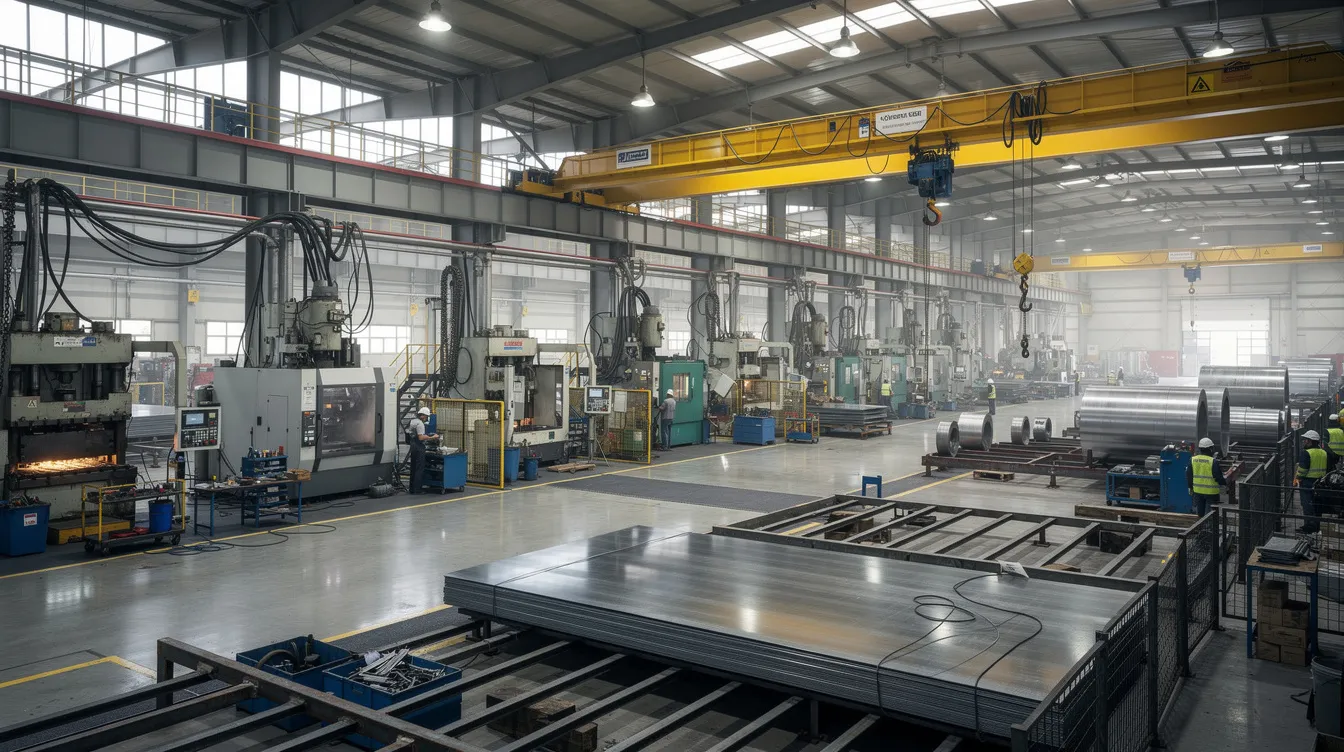
- Capacity analysis: Installed versus effective production capacity, nameplate ratings versus actual throughput, and capacity utilisation trends by product line and shift. Capacity utilization indicates whether a plant can grow without heavy capital expenditure.
- Bottleneck identification: A single critical machine, furnace or utility constraint can limit output even when other lines appear underutilised.
- Yields and wastage: Product-wise yields, scrap percentages, rework rates and quality rejection costs feed directly into conversion costs and EBITDA margins. Production workflows reveal how effectively raw materials are converted to goods.
- Machinery and maintenance: Age profile, OEM brands, maintenance history and the split between routine maintenance capex and major replacement capex over the next 3–5 years. Due diligence identifies required capital expenditures post-acquisition. Deferred maintenance, as illustrated earlier, can materially reduce maintainable earnings.
- Quality control measures impact defect rates and customer satisfaction. Operational efficiency is measured using metrics such as overall equipment effectiveness and labour productivity.
- Cost drivers: Electricity tariffs, fuel (furnace oil, gas, diesel), direct and indirect labour, logistics and freight are benchmarked against industry norms. Capacity utilisation below 70% tends to significantly reduce margin levels.
- Environmental and factory compliance: Manufacturing companies require valid factory licences under the Factories Act. Environmental compliance includes obtaining consent from the State Pollution Control Board. Non-compliance with environmental laws can lead to penalties or closure orders. Environmental liabilities include potential soil or groundwater contamination risks.
- Labour law compliance must be reviewed for manufacturing entities employing large workforces. Operational assessments include evaluating supply chain management and workforce stability.
Financial and commercial diligence teams use inputs from technical reviews, but these do not replace specialist plant audits or environmental assessments.
Private Equity Due Diligence Process in India
The private equity investment due diligence process in India typically takes 60 to 90 days for mid-market manufacturing deals. Due diligence typically takes 60 to 90 days for comprehensive analysis, though well-prepared companies with organised data rooms can shorten this timeline.
Typical stages:
- Initial screening and NDA – Investor evaluates fit with investment thesis and strategic alignment.
- Preliminary information request – Basic financial data, company overview, market position.
- Data room preparation – Promoter organises financial records, compliance records, contracts and operational data.
- Financial information collection and verification – Audited accounts, MIS, trial balances are gathered and cross-checked.
- Quality of earnings assessment – Adjusted EBITDA, non-recurring items, margin sustainability.
- Working capital and net debt analysis – Normalised working capital, cash conversion, debt-like items.
- Commercial and market assessment – Customer validation, market analysis, competitive positioning.
- Management interviews – Clarification of assumptions, business model, expansion plans.
- Draft findings and red flag review – Consolidated diligence report with issue matrix, proposed adjustments.
- Final diligence report and investment decision – Presentation to Investment Committee for approval.
Many workstreams run in parallel. Diligence scope and depth may vary depending on whether the deal is a minority investment or a control buyout, with control transactions typically requiring deeper operational access. Such transactions generally involve more demanding governance and reporting expectations.
Documents Required for Private Equity Financial and Commercial Due Diligence
A practical due diligence checklist for Indian manufacturing businesses covers the following categories:
Essential Documents:
- Audited financial statements (P&L, balance sheet, cash flow) for 3–5 years
- Detailed trial balances and general ledgers
- Monthly management accounts for the latest 12–24 months
- Revenue reports by product, customer and geography
- GST returns and reconciliation with books
- Income tax returns, assessment orders, TDS records and statutory filings
- Bank statements, loan agreements, sanction letters, collateral details
- Fixed asset registers, capex project files and depreciation schedules
- Inventory records (item-wise and age-wise stock reports)
- Debtor and creditor ageing reports
- Customer-wise and product-wise sales data for 24–36 months
- Material contracts with major customers and suppliers
- Production and capacity utilisation records
Additional Documents (depending on scope):
- Standard cost sheets, BOMs, scrap reports and quality reports
- Plant maintenance logs and maintenance records
- Vendor contracts and supply chain contracts
- Export documentation, foreign exchange exposure reports and transfer pricing documentation
- Environmental clearances and EHS audit reports
- Business plans and five-to-seven-year financial projections
- Sensitivity analysis and a professionally prepared investor-ready DPR
- Statutory registers and compliance records
Manufacturing projects often require detailed project reports to secure financing and assess feasibility. Prospective buyers and fund managers increasingly request these documents to validate the promoter’s growth story.
How Due Diligence Findings Affect Private Equity Valuation
Valuation in private equity deals is built on maintainable EBITDA, an agreed valuation multiple, and adjustments for net debt and normalised working capital. The diligence report directly influences each component.
Quality-of-earnings analysis may reduce – or occasionally increase – maintainable EBITDA. Enterprise value (EV) is computed as maintainable EBITDA multiplied by the agreed multiple. Equity value is derived after deducting net debt and adjusting for surplus or deficit working capital and other debt-like items.
Illustrative Valuation (Hypothetical – Not a Market Benchmark):
| Component | ₹ Crore |
|---|---|
| Maintainable EBITDA | 29.00 |
| EV/EBITDA Multiple (assumed 5×) | – |
| Enterprise Value | 145.00 |
| Less: Net Debt | (18.00) |
| Less: Working Capital Adjustment (excess NWC) | (5.00) |
| Derived Equity Value | 122.00 |
In Indian mid-market manufacturing, auto components businesses of ₹10–50 crore turnover transact at EV/EBITDA multiples of 4×–6×, while specialty chemicals and export-oriented manufacturers can reach 6×–10×.
Commercial uncertainties – customer concentration, unproven expansion plans, regulatory risks – can lead to lower multiples, earn-outs or protective deal structures even when historical financial due diligence appears clean. The financial position of the business at closing, including whether the investment aligns with a primary or secondary share sale, also affects how valuation impact flows to the company versus exiting shareholders.
Investment decisions ultimately depend on negotiated terms, and these figures are illustrative, not benchmarks.
Common Private Equity Due Diligence Red Flags in Manufacturing
Red flags are findings in the diligence report that materially affect deal terms, valuation or investment feasibility. Due diligence investors encounter these issues frequently in manufacturing acquisitions.
| Red Flag | Investor Concern | Promoter Corrective Action |
|---|---|---|
| Aggressive revenue recognition | Overstated earnings, financial data unreliable | Reconcile revenue with delivery and acceptance records |
| High customer concentration | Revenue dependency, operational risks | Strengthen customer diversification, secure framework agreements |
| Excessive inventory levels | Working capital inefficiency, obsolescence risk | Validate stock, implement age-wise controls |
| Weak cash conversion | Poor earnings quality despite accounting profits | Investigate receivables, improve collections |
| Unreliable financial projections | Forecast credibility undermined | Rebuild assumptions with evidence-based inputs |
| Related-party inconsistencies | Governance concerns, legal liabilities | Improve disclosure, formalise arm’s-length terms |
Manufacturing-specific red flags:
- Chronic under-reporting of scrap or wastage rates
- Undocumented job-work relationships
- Non-functional or obsolete critical machines
- Repeated environmental notices from SPCB
- Unapproved plant expansions without regulatory compliance
- Large unreconciled advances or stock at third-party locations without confirmations
- Missing or outdated vendor relationships documentation
- Contractual obligations that are informal rather than written
Promoters should treat early feedback from advisers as an opportunity to mitigate risk before formal diligence begins.
Case Study – Hypothetical Due Diligence of an Indian Manufacturing Company
This is an illustrative case. It does not represent an actual transaction or client assignment of Project Report Bank.
Company Profile: A specialty packaging materials manufacturer in Maharashtra with FY 2024–25 turnover of approximately ₹180 crore and reported EBITDA margin of 18%. The promoter seeks growth equity of approximately ₹70 crore for a new production line.
Starting Position:
- Current capacity utilisation: 82%
- Top 5 customers: 68% of revenue
- Working capital cycle: Debtor days 58, inventory days 85, creditor days 42 → Cash conversion cycle: 101 days
- Existing term loans: ₹22 crore; cash credit utilisation: ₹15 crore
Financial Due Diligence Adjustments:
| Item | ₹ Crore |
|---|---|
| Reported EBITDA | 32.40 |
| Less: Non-recurring export incentive (one-time scheme) | (1.80) |
| Less: Under-provisioned maintenance capex | (1.50) |
| Less: Related-party rent below market | (0.60) |
| Maintainable EBITDA | 28.50 |
Commercial Due Diligence Findings:
- Market growth for specialty packaging is 8–10% annually, supporting expansion
- Competitive positioning is strong in the domestic market but pricing pressure from two larger competitors limits pricing power
- Proposed capacity expansion assumes 75% utilisation by Year 2, which diligence considers optimistic given sales pipeline visibility
Key Investor Concerns:
- Over-optimistic sales ramp-up for the new line
- Dependence on a single imported polymer for 40% of raw material requirements
- One pending environmental clearance for existing plant operations – an unresolved compliance gap
Corrective Actions:
- Promoter regularises environmental consents and factory licences
- Renegotiates two customer contracts with volume commitments
- Introduces alternative raw material supplier qualification
- Commissions an independent DPR and financial model to revalidate expansion economics with conservative assumptions
Outcome: The PE investor proceeds with a revised structure – a slightly lower initial valuation (6× maintainable EBITDA instead of the promoter’s expected 7×), with a milestone-based second tranche linked to achieving projected capacity utilisation. The deal closes successfully because the promoter demonstrated governance improvements and realistic projections.
How Manufacturing Promoters Can Prepare Before Private Equity Due Diligence
Promoters should begin preparation at least 6–12 months before actively seeking PE investment.
- Clean accounting records: Ensure all years since at least FY 2020–21 are audited with clean opinions. Reconcile audited accounts with GST returns, income tax filings and MCA statutory filings.
- Establish robust MIS: Monthly product-wise and customer-wise profitability, plant-wise capacity utilisation and detailed working capital dashboards.
- Document contracts: Formalise key customer and vendor relationships with written agreements, pricing formulas and framework orders. Do not rely solely on informal understandings.
- Prepare realistic projections: Bottom-up financial projections supported by clear assumptions, sensitivity tests and scenario analysis that can withstand scrutiny from due diligence investors and fund managers.
- Address compliance gaps: Regularise pending statutory registrations, missing environmental consents or outdated factory licences before inviting investors.
- Investor-ready DPR: Convert technical expansion ideas into structured, bankable documentation through investor-ready DPR preparation and professional financial modelling.
Role of Investor-Ready DPR and Financial Projections in Due Diligence
While audited financial statements show past performance, private equity investors require a credible forward-looking story. A well-prepared DPR for manufacturing expansion typically includes project cost estimates (land, building, machinery, utilities, pre-operative expenses), means of finance, implementation schedule, production processes description, capacity planning and market analysis.
Integrated financial projections across five to seven years combine projected profit and loss, balance sheet and cash flows, reflecting realistic capacity ramp-up, working capital requirements, DSCR, IRR, payback period and sensitivity to volume, price and cost changes.
Well-prepared projections help investors test downside scenarios and help promoters understand the financial impact of different funding structures. They also help establish the financial world context within which the business operates – showing where the company sits against industry benchmarks.
Preparing these documents is part of getting the company ready for diligence. It is distinct from independent buy-side due diligence, which the diligence requires the investor to conduct independently.
A strong DPR supports growth equity and institutional funding conversations by providing the evidence base that investors need to validate the promoter’s expansion thesis.
Professional Support for Manufacturing Businesses Seeking Private Equity
Project Report Bank is a Chartered Accountant-led professional project finance and manufacturing advisory platform headed by CA Manish Gugliya, FCA, DISA (ICAI), with more than 20 years of professional experience.
The platform supports manufacturing promoters through customised DPRs, CMA Data, financial modelling, feasibility studies, profitability analysis and investor-ready documentation. The diligence acts as a filter that separates well-prepared companies from those that are not – and structured documentation can make a significant difference.
Project Report Bank does not guarantee funding or act as the investor’s due diligence provider. However, its structured documentation and financial analysis can significantly improve a promoter’s readiness for private equity diligence.
Planning to Raise Private Equity for Your Manufacturing Business?
If you are a serious promoter of a mid-sized or large Indian manufacturing business planning substantial expansion, diversification or institutional equity fundraising, explore Investor-Ready DPR and Fundraising Assistance or reach out through the website’s WhatsApp contact option for a preliminary discussion of your requirements.
Frequently Asked Questions
The following FAQs address common practical queries from manufacturing promoters about private equity due diligence that are not fully covered in the main sections.
How long does private equity financial and commercial due diligence usually take for an Indian manufacturing company?
For mid-market manufacturing deals, diligence typically takes 60 to 90 days. Complex multi-plant or cross-border structures may require longer. Key factors influencing duration include data availability, quality of audited accounts, number of parallel workstreams (financial, commercial, legal, tax, environmental) and complexity of regulatory approvals. Having audited financials, reconciled tax records and an organised data room can materially shorten timelines and improve investor confidence.
What is the difference between financial due diligence and commercial due diligence in manufacturing?
Financial due diligence focuses on validating historical numbers – EBITDA quality, margins, working capital, debt and identifying hidden liabilities – and assessing earnings quality. Commercial due diligence tests market demand, competitive position, pricing power and long-term sustainability of the business model. Both are necessary for a comprehensive evaluation, and weaknesses in one area frequently affect conclusions in the other.
How does working capital influence private equity valuation in manufacturing businesses?
Manufacturing companies typically have substantial funds tied up in inventory and receivables. Investors compute a “normalised” working capital level based on historical patterns. If actual working capital at closing exceeds this normal level, the excess is treated as additional capital requirement and may reduce equity value. Efficient working capital management – optimised inventory, strong collections, prudent credit terms – supports better cash conversion and therefore stronger valuation outcomes.
Should promoters conduct their own pre-due-diligence review before inviting private equity investors?
It is sensible for promoters to conduct an internal or adviser-led vendor-style review to identify gaps in accounting, documentation, compliance and projections before approaching investors. Foreign investment considerations, Securities and Exchange Board requirements (where applicable) and exchange board regulations may add additional layers. Such preparation, supported by professional DPRs and financial modelling, reduces friction but does not replace the buy-side due diligence that PE funds will conduct independently.
What are the most common avoidable red flags in manufacturing due diligence?
Common avoidable issues include unreconciled GST returns, informal customer arrangements without written contracts, missing fixed-asset registers, unrecorded scrap, outdated or non-renewed pollution control consents, and inadequate documentation of vendor relationships. Addressing these in advance not only reduces friction during the diligence process but also demonstrates sound governance and promoter seriousness to potential investors.