Key Takeaways
- To meet serious business investors in India, promoters should focus on structured channels such as industry associations (CII, FICCI, ASSOCHAM), state investment summits, curated investor networking events and sector-specific trade fairs rather than random business gatherings.
- For projects requiring ₹5–50+ crore in investment, the most productive venues include industry association roundtables, Global Investors Summits organised by state governments, manufacturing exhibitions and closed-door investor-founder meetups in cities like Mumbai, Delhi-NCR and Bengaluru.
- Preparation is as important as the venue: investors prefer proposals with clear financial projections, a detailed business plan, a bankable Detailed Project Report and a realistic valuation.
- Different investor categories-angel investors, venture capital firms, family offices, private equity funds and strategic industrial partners-operate through different networking channels, and promoters must match their project stage and capital requirement accordingly.
- Project Report Bank, led by CA Manish Gugliya, helps promoters become investor-ready through professional DPR preparation, financial modelling and pitch documentation, but does not guarantee funding or specific investor introductions.
Introduction – Why Finding Genuine Business Investors Requires the Right Networking Strategy
Many Indian entrepreneurs attend dozens of conferences, exchange hundreds of visiting cards and still struggle to meet genuine investors who can write cheques of ₹5 crore, ₹10 crore, ₹25 crore or more. The problem is rarely a shortage of events. The problem is a lack of strategy.
Where to meet business investors in India is a question that requires a structured answer. Serious investors-whether angel investors, venture capitalists, family offices or strategic partners-are not found at random networking dinners. They are found through industry associations like CII, FICCI and ASSOCHAM, at business investor conferences in India, curated investor networking events, sectoral trade fairs and through professional referrals from Chartered Accountants, lawyers and investment advisors.
It is important to distinguish between four distinct activities: networking (meeting people), investor identification (finding who actually invests), investor qualification (checking fit and seriousness) and fundraising (negotiating terms and closing). Many promoters conflate all four. Collecting visiting cards without investor-business compatibility and financial preparation rarely leads to funding.
Before aggressively pursuing investors, promoters should ensure they have a realistic business plan, defensible financial projections and a Detailed Project Report that can withstand scrutiny. Traditional business loans require an established credit history; equity financing involves selling shares for funding. Both paths demand professional documentation. The fundraising process begins long before the first investor meeting.
Where to Meet Business Investors in India – Major Networking Channels
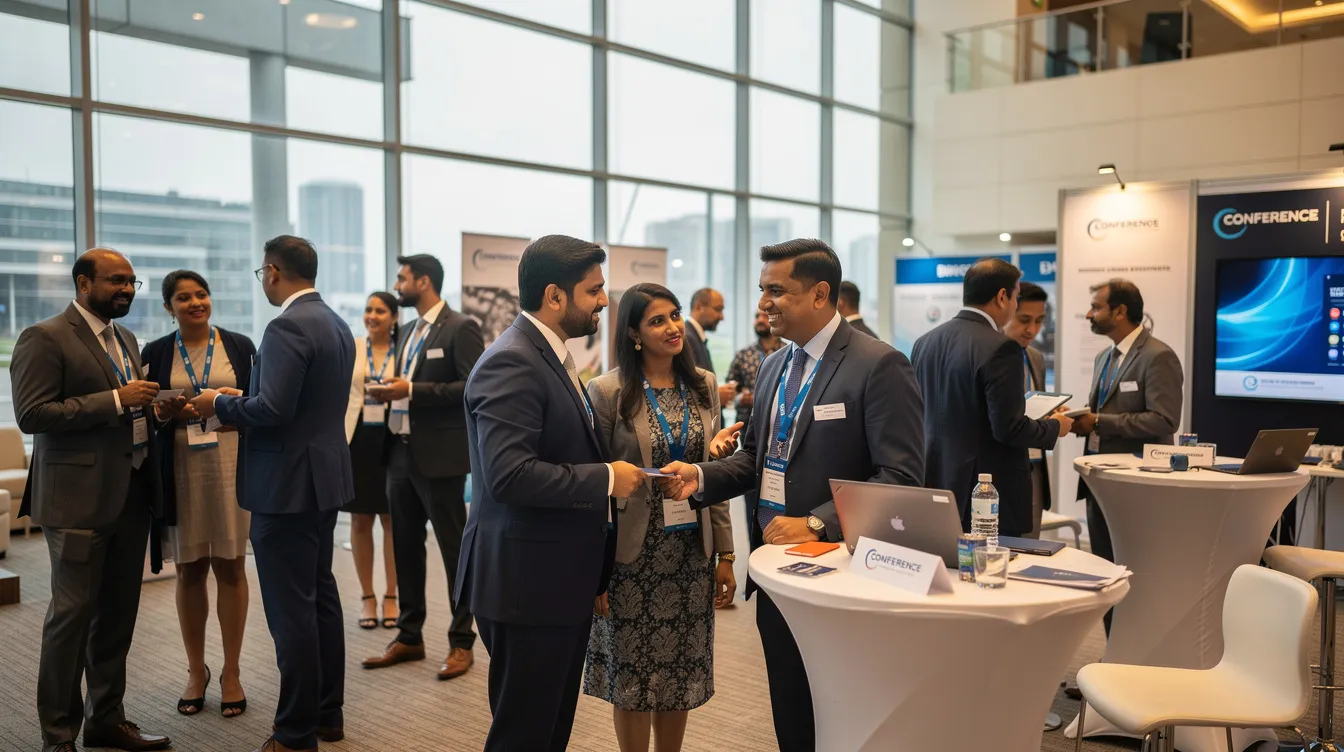
The principal offline channels for meeting investors include industry associations, chambers of commerce, investment conferences and summits, startup and angel investor networks, manufacturing exhibitions, sector-specific trade fairs, professional referrals from CAs and consultants, family office circles, international business chambers and curated investor-founder sessions. Targeting startup hubs helps meet business investors in India, and networking events in cities like Delhi, Mumbai and Bengaluru facilitate the majority of investor connections.
The choice of channel must align with project scale, sector, stage and the type of capital required-whether seed funding for an early idea or growth equity for a scaled manufacturing operation.
| Networking Channel | Best Suited For | Typical Investor Profile | Relationship Depth |
|---|---|---|---|
| Industry associations (CII, FICCI, ASSOCHAM) | MSMEs, manufacturing, established businesses | Strategic investors, HNIs, corporates | High |
| State Global Investors Summits | Large industrial projects (₹50 crore+) | Global investors, sovereign funds, corporates | Medium |
| Angel networks and VC forums | Startups, early-stage tech | Angel investors, venture capital firms | Medium–High |
| Sector-specific trade fairs and exhibitions | Manufacturing, food processing, engineering | Strategic partners, distributors, industrial groups | High |
| Professional referrals (CAs, lawyers) | All stages | HNIs, family offices, private equity | High |
| Curated investor-founder meetups | Growth-stage companies | PE, family offices, venture capitalists | High |
| International chambers (Indo-German, Indo-US) | Export, JV, technology transfer | Foreign principals, global corporates | Medium |
| Crowdfunding platforms | Consumer products, creative projects | Individual backers | Low |
Crowdfunding platforms like Kickstarter allow pre-sales for funding, though this model suits consumer-facing products rather than capital-intensive industrial projects. Meanwhile, finding private investors through professional referrals and business networks is often more productive than cold approaches for serious manufacturing promoters.
Industry Associations for Finding Investors in India
Industry associations are not formal funding agencies. However, they are powerful environments where promoters, strategic investors and senior corporate decision-makers regularly interact. You should target investors who fund specific industry sectors and geographic locations, and associations help narrow that focus.
The major national bodies include:
- Confederation of Indian Industry (CII) – Founded in 1895, CII has extensive sector councils, investment summits and a history of hosting investor-friendly events across manufacturing, technology, infrastructure and services.
- Federation of Indian Chambers of Commerce and Industry (FICCI) – Frequently involved in policy advocacy and investment facilitation, often co-sponsoring events with state governments.
- ASSOCHAM – Known for programmes like “Investor Connect,” which offers curated startup-investor matchups with one-on-one meetings involving VCs, angel networks and family offices.
- PHD Chamber of Commerce and Industry – Regionally strong in Delhi-NCR, particularly for MSMEs and small manufacturing enterprises.
Regional and city chambers-Bombay Chamber, Madras Chamber and state-level bodies-connect MSMEs with local banks, HNIs and private equity networking India events. Sector-specific manufacturing associations (auto-components, chemicals, textiles, food processing) and export promotion councils attract strategic business investors, trading houses and export-focused financiers.
To use membership effectively: actively attend monthly roundtables, volunteer for sector committees, request curated introductions through office-bearers and showcase projects when panel opportunities arise. However, membership alone does not guarantee investor access. When conversations arise, you need bankable numbers, a project feasibility study and clear financial projections.
Business Investor Conferences and Investment Summits in India
Business investor conferences in India encompass a wide range: sectoral summits, startup-investor forums, state Global Investors Summits, VC/PE conclaves and corporate innovation days. Annual tech summits are vital networking opportunities for investors and promoters alike. Government-backed platforms facilitate connections between entrepreneurs and investors, and initiatives like Startup India connect entrepreneurs with domestic and global venture funds. Incubators also help startups access resources and seed funding through structured programmes.
Typical event ecosystems include:
- TiE entrepreneurship events and similar forums for startups and growth companies
- Startup India ecosystem events and state-supported startup conclaves
- CII and FICCI industry conferences-the CII Partnership Summit 2025 attracted approximately 3,000 delegates and reported investment-intent announcements of around INR 11 lakh crore
- Global Investors Summits organised periodically by states such as Gujarat, Uttar Pradesh, Madhya Pradesh, Tamil Nadu and Telangana for large industrial investment
- PE/VC conferences hosted by industry bodies or media groups
- Technology and innovation forums for SaaS, AI, fintech and deeptech
| Event Type | Typical Investor Ticket Size | Preferred Sectors |
|---|---|---|
| Startup-focused events (TiE, Startup India) | ₹50 lakh – ₹10 crore | Technology, consumer, fintech |
| Industrial investment summits (state GIS) | ₹50 crore – ₹1,000+ crore | Manufacturing, infrastructure, energy |
| PE/VC conclaves | ₹10 crore – ₹200+ crore | Growth-stage across sectors |
Before paying participation fees, promoters should check past investor participation lists, match sector focus with their project, verify organisers’ credibility and assess whether the event offers curated one-to-one meetings. I would recommend researching active investors and their investment preferences before registering, so you know whom to target at the venue.
How Manufacturing and Industrial Promoters Can Meet Strategic Investors
Strategic investors differ fundamentally from purely financial investors. A strategic investor may be an existing manufacturer, distributor, EPC company, machinery supplier or foreign principal who brings not just money but also market access, technology or off-take commitments. This is distinct from venture capital firms or private equity funds that primarily contribute capital and governance.
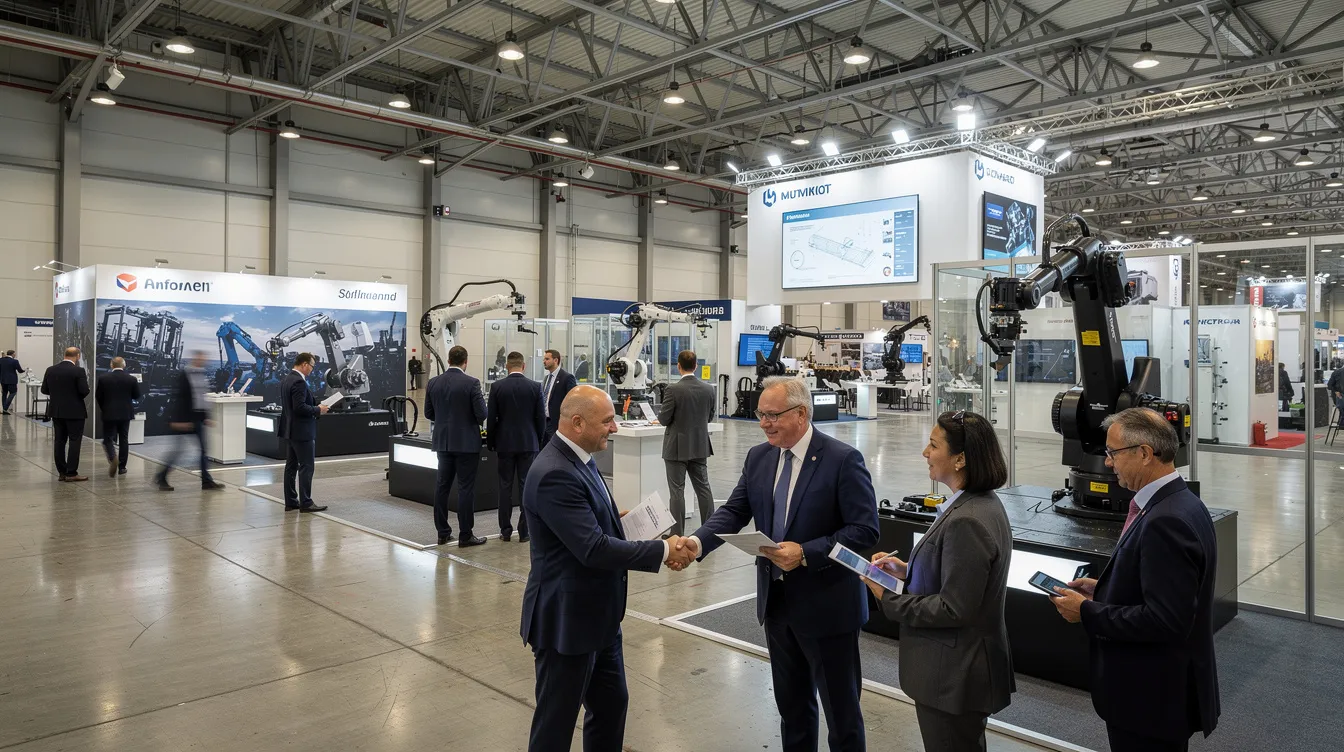
Industry-specific trade fairs attract potential investors, and for manufacturing and industrial projects above ₹5–50 crore, the most relevant offline channels include:
- Large machinery and industrial technology exhibitions in Mumbai, Delhi-NCR, Pune, Ahmedabad, Chennai and Hyderabad
- Food processing and agro-processing fairs supported by APEDA, MOFPI or state agencies
- Renewable energy, EV, infrastructure and engineering expos with corporate and fund participation
- Vendor development programmes run by PSUs and large corporates where supply-chain partners are actively sought
- Export-oriented conferences where global buyers, trading houses and industrial groups attend
Such events can lead to strategic partnerships combining equity with off-take agreements, joint ventures with domestic or overseas manufacturers and long-term supply or buy-back arrangements that reduce project risk and attract additional financial investors.
Promoters should carry an investor-ready DPR summarising project cost, means of finance, DSCR analysis, IRR and payback period. Customised project reports are essential for attracting investment in projects of this scale-they demonstrate seriousness and financial discipline. For detailed guidance on this topic, promoters may also explore resources on finding investors for new business projects in India.
How to Meet HNIs, Family Offices, Angel Investors and Private Equity Investors
Identifying the right type of investor is essential based on business stage. Four broad categories of equity investors operate in India, each with different ticket sizes, risk appetites and expectations.
The number of single-family offices in India grew from approximately 45 in 2018 to over 300 by 2024, with the largest concentrations in Maharashtra (~66), Delhi-NCR (~46) and Karnataka (~27). Understanding funding stages helps target the right category:
- At the pre-seed stage, small funding amounts are typical, often from personal networks
- Seed stage involves validating product demand with a prototype-angel investors typically invest at this early stage, and angel investors provide funding without seeking ownership in many cases
- Series A stage focuses on growing user base and revenue, attracting venture capital
- Series B stage indicates fast market growth and increasing revenues, drawing growth-stage PE
- An IPO is for companies with a strong profit track record
Where to meet each group:
- HNIs: City business forums, private banking events, community business associations and curated closed-door meetups
- Family offices: PE/VC conferences, wealth management events and via professional advisors such as CAs and lawyers
- Angel investors: The Indian Angel Network is one of the oldest structured groups of business angels, and the Indian startup ecosystem relies on formal angel networks for early-stage capital. Establishing angel investor relationships is key for early-stage funding through networks, startup pitch days and investor meetups
- VC/PE funds: Sector-focused conferences, deal-making events and formal outreach. Venture capitalists invest in high-growth potential businesses and seek scale
Equity financing involves selling shares for funding, and promoters should understand the difference between minority stakes and majority control before approaching any investor category. I would advise promoters to study how to identify the right investors for your business before initiating outreach.
How to Prepare Before Attending Investor Networking Events
The difference between a productive investor meeting and a wasted trip often comes down to preparation. Formal documentation is critical for business valuation and fundraising efforts. Use data-driven insights to support your funding request rather than relying on verbal descriptions of your opportunity.
Essential Documents and Analyses
- One-page investment teaser or executive summary
- A concise investor pitch deck (10–15 slides)-a pitch deck should be concise and visually appealing
- Preliminary financial projections (P&L, cash flow, balance sheet) for at least 5–7 years
- Detailed Project Report and CMA Data for bankable manufacturing projects
- A working business plan narrative covering model, market, operations and team-include a detailed business plan in your investor proposal
- Basic valuation range with supporting reasoning
- Clear project cost, means of finance and promoter contribution plan
Risk and Sensitivity Preparedness
- Identify key technical, market and financial risks
- Summarise mitigation strategies for each
- Show sensitivity of IRR and DSCR to changes in price, volume and raw-material cost
Serious angel investors, venture capitalists and family offices expect transparency on assumptions. Generic or copy-paste projections reduce credibility. Project Report Bank can assist in preparing investor-ready DPR and fundraising assistance so that entrepreneurs walk into investor networking events in India with professional material.
How to Introduce Your Business to Investors at Conferences
Corridor conversations, roundtable discussions and structured networking breaks typically allow 30 to 60 seconds for a first impression. Tailor your proposal to match investor interests and criteria rather than delivering a generic monologue.
Structure of an Effective Introduction
- Who you are: Promoter background in one sentence
- What the business does: Sector and value proposition
- Key numbers: Capacity, revenue potential, margins
- Funding requirement: Equity ask and proposed structure
- Next step: Request for a meeting, not an immediate commitment
Worked Example
“I am Rakesh Sharma, a food-processing entrepreneur with 12 years of experience in the spice industry. We are setting up a ₹25 crore integrated spice-processing plant in Rajasthan with 40% promoter contribution, ₹8 crore proposed as term loan and ₹7 crore as equity from an investor. Our DPR projects an IRR of 22% and full debt repayment within six years. I would welcome the opportunity to share our project feasibility study and discuss how we might align with your investment interest.”
This approach communicates scale, preparedness and professionalism. Investors respond better to clarity, specific numbers and risk awareness than to superlative claims about disruption or guaranteed returns.

How to Build Genuine Investor Relationships After Networking Events
Actual fundraising often begins after the event. Continuous follow-up with potential investors improves chances of securing funding, and establishing professional relationships with investors enhances funding opportunities over time. The hallway introduction is merely an opening.
Stepwise Follow-Up Process
- Same-day recording of investor names, organisations, sectors and brief conversation notes
- Desktop research to confirm fit-sector, ticket size, investment stage
- Personalised email or LinkedIn message referencing the conversation, attaching a one-page teaser
- Scheduling a structured call or meeting for deeper discussion
- Sharing detailed DPR and financials only after establishing mutual interest or an NDA
Maintain a simple investor outreach tracker-a spreadsheet capturing status, feedback, interest level and next actions. This supports disciplined, long-term relationship building and feeds naturally into building a targeted investor list for equity funding.
Sample Follow-Up Email
Subject: Following Up – ₹25 Crore Spice Processing Project Discussion at [Event Name]
Dear Mr./Ms. [Name],
It was a pleasure speaking with you at [Event Name] on [Date]. As discussed, we are setting up a ₹25 crore spice-processing facility in Rajasthan and are seeking ₹7 crore in equity investment.
I have attached a one-page project summary for your reference. Should this align with your investment focus, I would welcome the opportunity to share our Detailed Project Report and financial projections at your convenience.
Looking forward to hearing from you.
Regards, [Promoter Name]
Investor Networking Events vs Online Investor Platforms
Promoters today can combine offline events with digital channels like online platforms and investor databases in India to broaden their reach. OpenVC, for instance, connects founders with 20,000+ verified investors, and cold outreach via OpenVC reportedly has a 40% reply rate. Crowdfunding allows funding in exchange for product access on platforms suited to consumer-facing businesses.
| Parameter | In-Person Events | Online Platforms |
|---|---|---|
| Credibility and trust | High (face-to-face verification) | Medium (requires independent verification) |
| Relationship depth | High | Low–Medium |
| Geographic reach | Limited to event location | National and global |
| Sector targeting | Strong at specialised events | Varies by platform |
| Cost | Moderate–High (travel, registration) | Low–Moderate |
| Suitability for manufacturing | Strong | Limited |
| Suitability for startups | Good at startup-focused events | Strong |
| Long-term fundraising potential | High with follow-up | Medium |
A combined approach works best: targeted, high-quality event participation plus disciplined, data-driven online research and outreach.
How to Identify Genuine Investors and Avoid Funding Scams
The fundraising ecosystem in India unfortunately includes intermediaries and so-called investors who extract upfront fees without delivering genuine investor access. Promoters must exercise due diligence before engaging.
Red Flags
- No verifiable investment history or corporate presence
- Reluctance to share basic KYC or firm details
- Demands for substantial advance fees before any real investor interaction
- Promises of 100% funding regardless of project quality
- Pressure to sign one-sided mandates without process clarity
Basic Due Diligence Steps
- Verify registration of investor entities with SEBI, the Reserve Bank or the Registrar of Companies
- Review publicly available portfolio or deal announcements
- Cross-check references from known professionals-your CA or legal counsel can often help
- Ensure fee structures are transparent and tied to real work performed
Never share sensitive technology, pricing or proprietary process details without basic safeguards. Neither advisors nor events can guarantee investment outcomes, but professional guidance reduces the risk of wasting time and money on fraudulent parties.
Practical 30-Day Investor Networking Action Plan
This plan addresses how to meet investors for business funding in a structured, time-bound manner.
Week 1: Foundation
- Define ideal investor profile: ticket size, sector, geography, type (angel investors, VC, PE, strategic)
- Refine project summary, business plan and one-page investor teaser
- Shortlist 2–3 relevant industry associations and chambers for membership or event participation
Week 2: Research and Targeting
- Identify upcoming business investor conferences in India and sectoral exhibitions over the next 3–6 months
- Shortlist 30–40 potential investors by researching active investors and their preferences
- Finalise pitch deck and key financial numbers
Week 3: Outreach and Registration
- Register for one or two priority events
- Request curated meetings or speed-networking slots where available
- Begin polite outreach to selected investors via email or LinkedIn with teaser and request for conversation
Week 4: Execute and Follow Up
- Attend at least one networking event or focused meeting day
- Conduct disciplined follow-up with every meaningful new contact
- Update investor tracker and refine approach based on feedback received
The goal is a small pool of truly qualified, interested active investors rather than hundreds of superficial contacts.
How CA Manish Gugliya Helps Businesses Prepare for Investor Meetings
In my practice, I have observed that promoters who approach investors with professionally structured financial documentation receive fundamentally different responses from those who arrive with rough estimates and verbal descriptions.
Through Project Report Bank, my team and I provide:
- Investor-ready Detailed Project Reports covering project cost, means of finance, DSCR, IRR, ROI and sensitivity analysis
- Financial projections and financial modelling tailored to manufacturing, MSME and service-sector projects
- Project feasibility and business viability assessments with commercial, technical and financial analysis
- Business valuation assessments for equity structuring and negotiation
- Investor pitch deck preparation
- Equity-debt mix analysis and loan structuring guidance
These services improve documentation quality and preparation for discussions with angel investors, venture capital firms, strategic investors and family offices. They do not guarantee that investors will fund the project.
Serious promoters planning to approach investors can explore fundraising advisory and investor outreach support via the Project Report Bank website or initiate an enquiry through WhatsApp for a structured discussion.
Frequently Asked Questions
These FAQs address practical doubts about meeting investors in India that the main sections may not fully cover.
Must small-town promoters travel to Mumbai, Delhi or Bengaluru to meet investors?
Not always, though these cities host the highest concentration of family offices, venture capital firms and angel networks. State-level Global Investors Summits, regional chamber events and sector-specific trade fairs held in Tier-2 cities can provide meaningful investor access. Online platforms also allow initial outreach regardless of geography. However, for projects above ₹10–25 crore, at least some travel to metro events is practically necessary to gain access to institutional and growth-stage private capital.
How early should a business start networking with investors before actually needing funds?
Ideally, 6 to 12 months before the expected fundraising timeline. Building genuine investor relationships takes time-multiple interactions, trust development and progressive sharing of information. Approaching investors only when money is urgently needed weakens the promoter’s negotiating position. Start attending relevant industry association events and investor conferences well in advance of your funding requirement.
Is it acceptable to attend investor events without a finalised valuation?
Yes, provided you have a clear project summary, preliminary financial projections and a realistic understanding of the investment you need. A finalised valuation is important for negotiation but not essential for initial conversations. What matters is that you can articulate the opportunity, the capital requirement and the expected financial performance with confidence.
How should manufacturing promoters handle NDAs and data rooms?
Share only summary-level information (investment teaser, high-level financials) during initial discussions. Detailed technology, proprietary process details and sensitive cost structures should be shared only after mutual interest is established and, where appropriate, after signing a non-disclosure agreement. Your CA or legal counsel should review any NDA before execution.
What should a promoter do if an investor wants majority equity or extensive board control?
This is a commercial negotiation point, not necessarily a red flag. However, promoters must understand the implications for operational control, future fundraising and exit terms before agreeing. Seek professional advice from your Chartered Accountant and legal counsel. Evaluate whether the investor’s strategic value-market access, technical capability, network-justifies the governance terms. Never accept terms under pressure without independent review.
Conclusion – Effective Investor Networking Begins With Preparation
Where to meet business investors in India is ultimately about three things: the right channels-associations, conferences, exhibitions and curated investor networking events; the right investors-aligned by sector, ticket size and stage; and the right preparation-a defensible DPR, realistic projections, a credible valuation and clear risk analysis.
Long-term relationships, transparency and financial discipline create more value than one-off opportunistic pitches. The ecosystem rewards promoters who invest in preparation before investing in networking.
If you are an Indian entrepreneur, MSME owner or manufacturing project promoter planning a project of ₹5–50+ crore and want to assess your investor-readiness, I welcome a professional conversation. You can reach Project Report Bank through our website or initiate an enquiry via WhatsApp for a structured discussion on project finance, investor documentation and fundraising preparation.
CA Manish Gugliya, FCA, DISA (ICAI), is a practising Chartered Accountant since 2006 and proprietor of Manish Gugliya & Company, Chartered Accountants. Through ProjectReportBank.com, he provides professional advisory services in Detailed Project Reports, project finance, CMA Data, financial modelling, business valuation, feasibility studies and investor-readiness preparation for entrepreneurs, MSMEs, manufacturers and project promoters across India. He has over 20 years of experience advising businesses on project planning, bank finance and equity funding preparation.