Key Takeaways
- Large-scale soybean crushing plant setup cost in India is determined by capacity (300 to 2,000 TPD), land and civil construction, solvent extraction machinery, utilities, and working capital for seasonal soybean procurement. Capital expenditure covers machinery, construction, land, and utilities for the processing plant.
- For integrated 1,000 TPD-class crushing and solvent extraction plants, total project outlay can fall in a broad band of ₹80 to ₹120 crore or more, depending on technology, location, refinery integration, and supplier quotations. Final figures must be validated through a detailed plant project report.
- Raw materials cost (soybean procurement) typically accounts for 85 to 90% of total operating expenses, so procurement strategy and crushing margin management matter far more than marginal savings on machinery or utilities.
- Bankability is judged on DSCR, projected cash flows, working capital discipline, and sensitivity to crushing margin fluctuations; not on accounting profit or simple ROI alone.
- A customised, professionally prepared soybean crushing plant DPR and financial model, prepared by Project Report Bank under CA Manish Gugliya, is essential before committing capital or approaching banks.
Introduction: Why Soybean Crushing Economics Matter More Than Machinery
India imports over 55% of its edible oil requirement, and soybean oil holds a place among the five most consumed cooking oil varieties in the country. Soybean meal, used as poultry feed and animal feed in dairy and aquaculture, is also one of India’s notable agri-export commodities. The global soybean market was valued at USD 167 billion in 2025 and is projected to reach USD 286.73 billion by 2034, underlining rising demand across food products, feed, and biodiesel production segments.
The soybean crushing plant setup cost for a large-scale unit is not simply a sum of machinery prices. It is an investment decision linked to procurement logistics, market access for oil and meal, capacity utilisation, and the promoter’s ability to manage commodity risk. Crushing capacity alone does not guarantee profit: profitability depends on the crushing margin (combined oil and meal realisation minus landed soybean cost), plant utilisation, recovery efficiency, and disciplined cash-flow management.
This article, written from the perspective of CA Manish Gugliya (FCA, DISA ICAI), walks through plant capacity choices, capital expenditure, operating costs, working capital, financial projections, and risk analysis, with specific reference to Indian conditions in 2025 and 2026.
Understanding the Large-Scale Soybean Crushing Business
Industrial soybean processing in India involves receiving cleaned soya beans, extracting oil, producing soybean meal (also called soybean meal or de-oiled cake) for animal feed, and handling hulls and by-products. Soybean processing varies widely based on daily capacity and extraction technology. Small scale plants process 5 to 20 tons per day; medium scale plants process 50 to 100 tons per day; and large scale plants can process over 200 tons per day. Large industrial soybean processing facilities can exceed 1,000 tons per day in capacity.
Crude soybean oil production is the primary output of crushing and solvent extraction. The crude oil is sold either to independent refiners or processed in an in-house oil processing plant to produce refined, bleached, and deodorised (RBD) soybean oil. Soybean oil is rich in polyunsaturated fatty acids like linoleic acid, and demand for soybean oil is driven by health conscious consumers. Globally, 66% of U.S. soybean oil is consumed by the food industry, with industrial applications including biodiesel production.
Soybean meal (44 to 48% protein) and high-protein de-oiled cake are key revenue drivers. Typical domestic uses include poultry feed, dairy feed, and aquaculture, with export markets in Southeast Asia and West Asia. Commercial grade soya DOC plants have lower CAPEX requirements compared to integrated oil and meal complexes.
Extraction machines vary by method: expeller or solvent extraction. Mechanical pressing can recover less oil than solvent extraction for soybeans. For large-scale projects (300 to 2,000 TPD), pre-press plus solvent extraction or full preparation plus solvent extraction is the standard configuration. Different extraction technologies yield varying amounts of oil, influencing project feasibility and the choice between a mini oil mill versus a full solvent extraction facility.
The three functional segments are: (a) crushing and preparation (cleaning, dehulling, cracking, conditioning, flaking, pre-pressing), (b) solvent extraction and desolventising-toasting (DT), and (c) downstream refining (neutralisation, bleaching, dewaxing, deodorisation), which can be in-house or outsourced.
Soybean Crushing Plant Capacity and Investment Planning
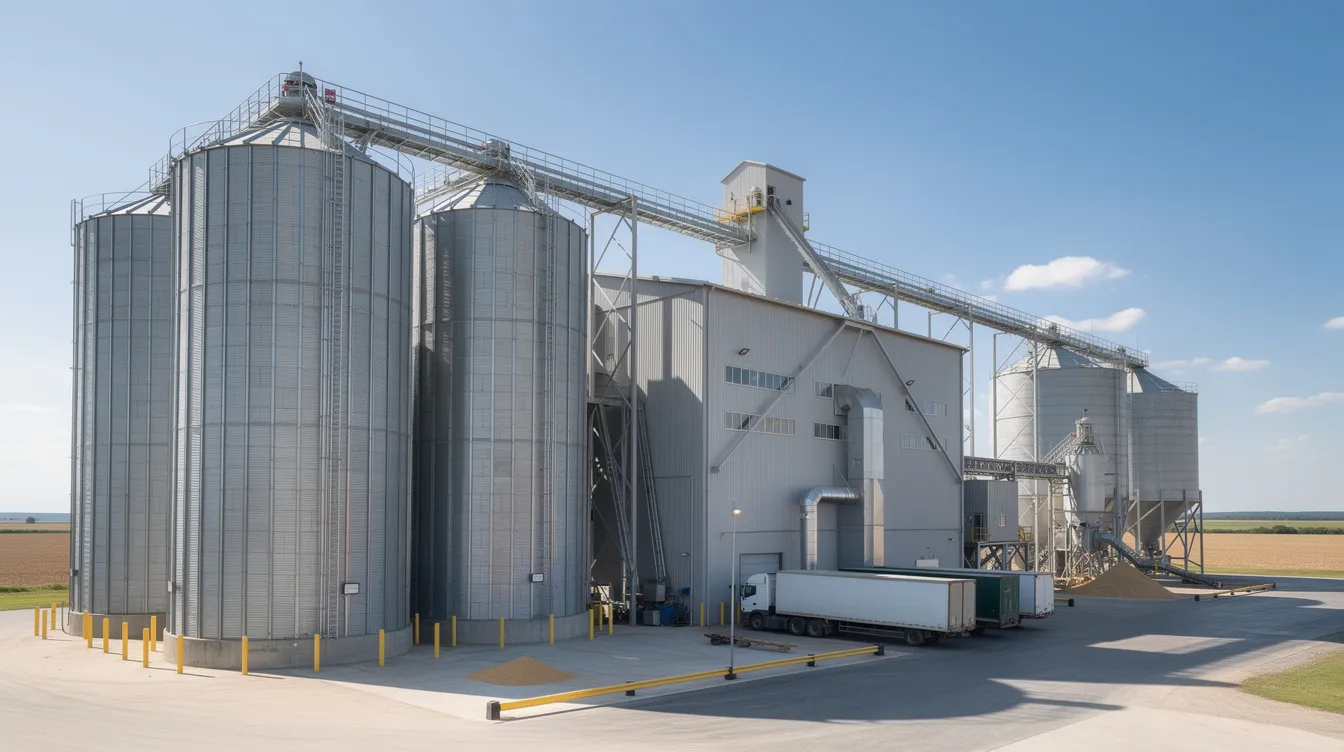
Plant capacity must be aligned with local soybean availability, road and rail connectivity, proximity to feed manufacturers and refiners, and the promoter’s equity and financing capability. A medium-sized plant generally has a processing capacity of 200 to 500 tons per day. Annual production capacity for large plants ranges from 100,000 to 500,000 MT depending on utilisation.
| Capacity (TPD) | Annual Throughput at 70% Utilisation (MT) | Annual Throughput at 85% Utilisation (MT) | Land Requirement (Approx.) | Investment Intensity |
|---|---|---|---|---|
| 300 | 76,650 | 93,075 | 2 to 3 acres | Medium |
| 500 | 1,27,750 | 1,55,125 | 3 to 5 acres | Medium-High |
| 1,000 | 2,55,500 | 3,10,250 | 5 to 8 acres | High |
| 1,500 | 3,83,250 | 4,65,375 | 7 to 10 acres | Very High |
| 2,000 | 5,11,000 | 6,20,500 | 10 to 14 acres | Very High |
(Assumes 365 operating days/year; actual operating days may be 300 to 330.)
Plants of 300 to 500 TPD suit regional agro-processors, while 1,000 to 2,000 TPD plants suit corporate or large MSME groups with established procurement networks. Economies of scale deliver lower per-MT fixed costs, better negotiating power with soybean suppliers and feed buyers, and more efficient use of boilers and automation. Constraints of oversizing include dependence on consistent soybean supply within a 200 to 300 km radius, higher working capital blocked in inventory, and sharper impact of reduced utilisation on DSCR. Capacity selection should flow from a formal feasibility study and a soybean crushing plant project report rather than supplier-driven persuasion.
Large-Scale Soybean Crushing Plant Setup Cost in India
Setting up a soybean crushing and oil processing plant involves significant capital expenditure. The soybean crushing plant setup cost must be estimated from supplier quotations, civil estimates, and location-specific assumptions rather than generic benchmarks. Capital investment can vary widely depending on equipment choices and plant automation levels.
Major CAPEX heads include:
- Industrial land and site development (boundary wall, roads, drainage, levelling). Land costs typically account for 10% to 20% of total investment.
- Factory buildings and civil construction for process blocks, warehouses, and administrative facilities. Civil works often represent 20 to 30% of fixed capital.
- Raw soybean receiving and storage: weighbridges, unloading pits, silos or godowns with aeration. Storage tanks are needed for raw and refined oil.
- Cleaning and grading equipment: destoners, magnet separators, and aspiration systems.
- Dehulling, cracking, conditioning, and flaking systems designed for uniform flake quality.
- Pre-pressing systems (where adopted): screw presses, cookers, and cake conveyors.
- Solvent extraction plant: extractor, DT, evaporators, condensers, and solvent recovery.
- Meal handling: cooling, grinding, screening, and bulk packing systems.
- Crude oil handling: filtration, degumming, and storage tanks with nitrogen blanketing where required.
- Utilities: boilers, thermic fluid heaters, cooling towers, water treatment, and steam systems. Utilities and infrastructure costs can comprise about 10% to 15% of project budgets, and estimating utility consumption is crucial for budget accuracy.
- Electrical systems: HT/LT panels, transformers, DG sets.
- Pollution control and safety: effluent treatment systems, air emission control, fire suppression, and solvent vapour recovery.
- Laboratory and QC equipment for oil, meal, and solvent residue testing.
- Automation: PLC/SCADA, instrumentation, load cells, and safety interlocks.
- Installation, commissioning, engineering consultancy, and statutory approvals.
Pre-operative expenses include project development fees, salaries during implementation, trial run costs, and interest during construction (IDC). A contingency of 5 to 10% of core plant and machinery plus civil cost should cover design changes and price variations. Margin money for working capital is treated as part of total project cost and must be planned at the DPR stage. A small soybean processing plant, by contrast, costs about $7,000 to $8,000 at the most basic scale; the difference illustrates the order-of-magnitude gap between cottage-level oil pressing and industrial solvent extraction.
Capacity-Wise Investment Comparison
The table below presents illustrative investment ranges for soybean crushing plant setup cost in India, based on 2025 to 2026 cost levels. These are not quotations.
| Capacity (TPD) | Fixed Capital (₹ Crore) Crushing + SE | Optional Refinery Block (₹ Crore) | Margin Money for WC (₹ Crore) | Total Project Outlay Range (₹ Crore) |
|---|---|---|---|---|
| 300 | 18 to 35 | 4 to 8 | 8 to 15 | 26 to 50+ |
| 500 | 30 to 55 | 6 to 12 | 14 to 28 | 44 to 83+ |
| 1,000 | 55 to 95 | 10 to 20 | 25 to 50 | 80 to 145+ |
| 1,500 | 80 to 130 | 14 to 28 | 35 to 65 | 115 to 195+ |
| 2,000 | 100 to 170 | 18 to 35 | 45 to 85 | 145 to 260+ |
Assumptions: Land acquired in an agro-industrial cluster in Madhya Pradesh or Maharashtra; standard solvent extraction technology with moderate automation; no fiscal incentives factored in; costs stated in 2025 price levels for conceptual planning. Reference data for 500 TPD plants (₹41 to 70 crore total) and 100 TPD plants (₹5 to 12 crore machinery) have been scaled for larger capacities.
Banks and investors look at total project cost, not just plant and machinery cost. Underestimating margin money for working capital is one of the most frequent causes of financial stress in soybean crushing projects. Serious promoters must obtain project-specific quotations and layout-based civil estimates through a customised DPR.
Machinery and Processing Technology
The choice of technology impacts both soybean crushing plant setup cost and long-term operating economics through energy efficiency, oil recovery, uptime, and solvent losses. Processing methods affect the quality of soybean oil and meal produced.
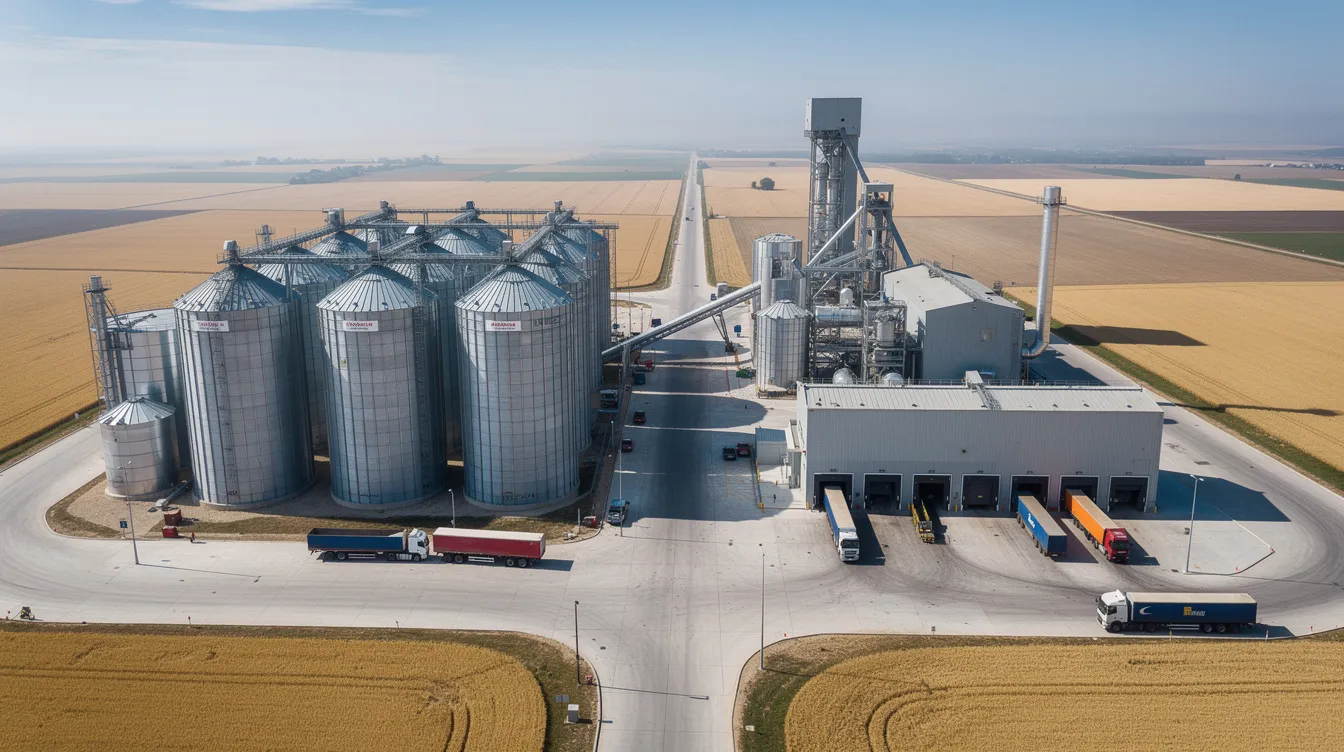
Major machinery sections include: seed cleaning and preparation (vibrating screens, destoners, magnetic separators); dehulling and hull separation; conditioning and flaking machines producing thin, uniform flakes; continuous solvent extractor (rotocel or loop type) designed for adequate residence time and percolation; desolventiser-toaster (DT) and meal dryer-cooler; and solvent recovery with multiple-effect evaporators, condensers, and mineral oil scrubbers.
According to published machinery cost breakdowns, the extraction section accounts for 25 to 30% of machinery cost, while the DT and meal handling section accounts for 20 to 25%.
PLC/SCADA-based automation controls temperature profiles, minimises solvent losses (well-designed plants achieve 1.0 to 1.5 litres hexane loss per tonne), ensures consistent quality, and reduces operator error. Explosion-proof electrical fittings, nitrogen blanketing, static control earthing, and adherence to PESO-related guidelines for solvent handling are non-negotiable engineering requirements.
Preventive maintenance, spare-parts stocking, and energy-efficient drives (VFDs) optimise total cost of ownership over 10 to 15 years, covering machinery requirements and technology requirements for the project’s full life.
Soybean Crushing Plant Process Flow
The manufacturing process follows a defined sequence of various unit operations and unit operations involved in soybean processing:
- Receiving: truck weighbridge, sampling, moisture checks
- Cleaning: removal of stones, dust, and ferrous metals
- Drying/Conditioning: when incoming soybeans have moisture above the processing range
- Cracking and Dehulling: aspiration removes hulls and reduces fibre content in meal
- Conditioning and Flaking: achieving optimal flake thickness (typically 0.25 to 0.35 mm) for efficient solvent penetration
- Optional Pre-Pressing: in a pre-press plus solvent extraction configuration
- Solvent Extraction: flakes or pre-pressed cake contact hexane solvent in counter-current flow
- Desolventising and Toasting: residual hexane is removed from meal; urease activity is controlled below 0.2 on 10% moisture basis
- Meal Drying and Cooling: grinding where specific granulometry is required for feed applications
- Crude Oil Recovery: miscella evaporation, stripping, and crude oil storage. Refining removes impurities from crude soybean oil.
Downstream oil refining (degumming, neutralisation, bleaching, dewaxing, deodorisation) is part of the soybean oil processing plant but may or may not be integrated. Storage conditions must prevent soybean oil from going rancid or oxidising. Equipment sizing and heat/mass balance are technology-provider-specific and must be finalised before freezing total CAPEX.
Soybean Processing Yield and Product Recovery
Financial modelling depends on realistic yield assumptions. Soybeans contain 18 to 20% oil and 36 to 40% protein. Raw material quality impacts soybean oil and meal quality directly.
Typical yield ranges for Indian soybeans:
- Crude oil recovery: 17 to 19% by weight
- Soybean meal/DOC yield: 75 to 80% (including moisture adjustments)
- Hull and by-products: 3 to 5%
- Process losses and moisture change: 2 to 3%
Soybean meal is a major product, constituting about 80% of the seed output.
Illustrative Mass Balance for 1,000 MT of Soybeans (18% oil content, 12% moisture):
| Output | Quantity (MT) | Notes |
|---|---|---|
| Crude Soybean Oil | 175 | ~17.5% recovery at standard efficiency |
| De-Oiled Meal (at 12% moisture) | 770 | Residual oil in meal <0.7% |
| Hulls | 35 | Separated during dehulling |
| Process Loss / Moisture Change | 20 | Hexane loss, dust, handling losses |
| Total | 1,000 | Reconciled with input |
Higher oil-content beans and better process control improve oil yield and crushing margin. Inadequate dehulling reduces meal quality. Excessive toasting degrades protein even if yield mass is unchanged.
Operating Cost of a Large-Scale Soybean Crushing Plant
Operating costs divide into variable costs (linked to tonnes crushed) and fixed costs (less sensitive to throughput).
Variable costs per MT of soybeans processed:
- Raw soybean procurement: ₹45,000 to ₹66,000/MT (depending on market; this is the main raw material)
- Inward freight and handling: ₹300 to ₹600/MT
- Power (25 to 40 kWh/MT at ₹7 to ₹9/kWh): ₹200 to ₹350/MT
- Steam and fuel (250 to 350 kg steam/MT): ₹350 to ₹500/MT
- Solvent makeup: ₹30 to ₹50/MT
- Packaging requirements and outbound logistics: ₹200 to ₹400/MT
Fixed and semifixed costs:
- Salaries and wages (human resource requirements for technical, administrative, and marketing staff)
- Repairs and maintenance: 1.5 to 3% of P&M cost per annum
- Insurance for plant and stocks
- Factory overheads and statutory compliance
Soybean procurement typically accounts for 70% to 85% of total operating costs. Processing and other costs (excluding raw material) approximate ₹2,500/MT according to recent crush parity calculations. Packaging and logistics costs add to total operating expenses. The actual cost structure will differ by region and energy mix, and must be calibrated in the project’s CMA Data and income and expenditure projections.
Soybean Crushing Margin and Revenue Model
The crushing margin (or gross product spread) equals the combined value of crude soybean oil, soybean meal, and hulls/by-products minus the cost of soybeans on a per-MT basis. The revenue model has three main streams: sale of crude or refined soybean oil, sale of soybean meal/DOC, and sale of hulls/by-products.
Illustrative Per-MT Crushing Margin Calculation:
| Item | Assumption | Value (₹/MT soybean) |
|---|---|---|
| Crude oil (17.5% yield × ₹1,39,000/MT) | Revenue | 24,325 |
| Soybean meal (77% yield × ₹56,500/MT) | Revenue | 43,505 |
| Hulls (3.5% yield × ₹12,000/MT) | Revenue | 420 |
| Total Revenue | 68,250 | |
| Soybean purchase cost | (63,000) | |
| Variable processing cost | (2,500) | |
| Contribution Margin | 2,750 | |
| Fixed costs allocated per MT | (1,200) | |
| EBITDA per MT | 1,550 |
Gross profit margins for soybean processing typically range between 10 and 20%, depending on the commodity cycle. Soybean oil processing offers steady profit margins due to dual product sales (oil and meal). Raw material costs fluctuate based on seasonal harvest prices and global commodity markets.
Positive gross product spread does not guarantee net profit because of interest, depreciation, and underutilisation risk. The pricing mechanism for oil and meal is linked to import parity, global demand, and domestic feed industry dynamics. Some large processors use hedging on commodity exchanges; this requires treasury capability and is not risk-free.
Working Capital Requirements
Large-scale soybean crushing plants are highly working-capital-intensive. Working capital is essential for sustaining operations during seasonal soybean procurement periods. Key components include raw soybean inventory, work-in-process and finished goods inventory, trade receivables, trade payables, and minimum cash balances.
Illustrative Working Capital Assessment for a 1,000 TPD Plant:
| Component | Days | Amount (₹ Crore, Approx.) |
|---|---|---|
| Raw soybean inventory | 30 days | 55 to 65 |
| Oil and meal inventory | 10 days | 7 to 10 |
| Trade receivables | 15 days | 10 to 14 |
| Gross Working Capital | 72 to 89 | |
| Less: Trade payables | 7 days | (12 to 16) |
| Net Working Capital | 60 to 73 | |
| Bank finance (75% margin on stocks, 60% on debtors) | 45 to 55 | |
| Promoter margin money | 15 to 20 |
Banks compute drawing power based on stock statements and receivable ageing. The distinction between fund-based limits (cash credit, WCDL) and non-fund-based limits (LCs for procurement) is important. Inadequate working capital results in sub-optimal utilisation even when the plant is technically sound. For a similar analysis framework applied to dairy projects, see dairy plant working capital requirement and bank finance.
Financial Projections and Project Economics
A structured 5 to 7 year financial model is essential for every soybean crushing plant. Realistic capacity utilisation ramp-up (55 to 60% in year 1, rising to 80 to 85% by year 4) must be built in. Financial projections include ROI, profitability, and long-term sustainability assessments.
Illustrative Projection Summary (1,000 TPD Plant):
| Parameter | Year 1 | Year 3 | Year 5 |
|---|---|---|---|
| Utilisation (%) | 55 | 78 | 85 |
| Revenue (₹ Crore) | 960 | 1,410 | 1,580 |
| Total Operating Cost (₹ Crore) | 920 | 1,330 | 1,480 |
| EBITDA (₹ Crore) | 40 | 80 | 100 |
| Interest (₹ Crore) | 12 | 9 | 6 |
| Depreciation (₹ Crore) | 8 | 8 | 8 |
| PAT (₹ Crore) | 15 | 47 | 64 |
| DSCR | 1.15 | 1.85 | 2.50 |
(Illustrative only. Actual figures depend on project-specific assumptions.)
Drafting a bankable financial model is a key part of project planning for new facilities. The model should calculate project IRR, equity IRR, payback period, break-even capacity utilisation, and net present value. Each soybean crushing plant DPR must use location-specific procurement, logistics, and market data rather than fixed “industry-standard” figures. Profit projections and profit and loss account projections must be internally consistent.
ROI, IRR, DSCR and Bankability
ROI measures average accounting profit over investment. IRR is the discount rate at which the net present value of cash flows equals zero. DSCR is the ratio of cash available for debt service to term-loan obligations in a given year.
Indian banks typically require minimum average DSCR of 1.2 to 1.5 for soybean crushing projects. Promoter equity of 25 to 35% is standard. Lenders test whether the project can withstand lower-than-expected crushing margins without defaulting. High ROI on paper is insufficient if DSCR is weak. A project showing 18% accounting ROI can still have a DSCR below 1.0 if financed with 80% debt. For detailed discussion on how DSCR and loan repayment capacity are evaluated for agro-processing projects, see related advisory content.
Most well-run soybean processing plants see positive ROI within a few years of stabilised operations. Strong internal accruals and prudent dividend policy ensure long-term bankability.
Sensitivity Analysis and Major Investment Risks
Soybean crushing is exposed to commodity price cycles. Promoters and lenders must review downside scenarios before financial closure.
Key risk factors:
- Higher soybean procurement prices without corresponding rise in oil/meal prices (margin compression)
- Drop in soybean oil or meal realisations due to cheaper imports or soft global prices
- Lower-than-planned capacity utilisation from procurement challenges or breakdowns
- Lower oil recovery or higher solvent loss than design guarantees
- Sharp increase in power, fuel, or transport costs
- Currency swings affecting export realisations
- Credit risk on large feed mill customers
Three-Scenario Impact on Key Metrics (1,000 TPD Plant):
| Metric | Optimistic | Base Case | Downside |
|---|---|---|---|
| Crushing Margin (₹/MT) | 3,200 | 2,750 | 1,800 |
| Average DSCR | 2.10 | 1.65 | 1.05 |
| Project IRR | 22% | 17% | 9% |
| Payback (years) | 4.5 | 6.0 | 9+ |
Risk mitigation includes diversified customer base, long-term supply arrangements, prudent inventory limits, and conservative leverage. For a comparable sensitivity framework, see dairy project sensitivity and risk analysis.
Bank Finance and Detailed Project Report Requirements
A bankable DPR should cover: promoter profile and financial strength; industry trends and comprehensive market overview with market analysis and market segmentation; justification for plant capacity and location; technical feasibility and process flow; detailed plant setup cost; means of finance (term loan, promoter equity, project funding sources); working capital assessment; projected financial statements for 5 to 7 years; DSCR analysis, break-even, IRR, sensitivity analysis, and risk mitigation. Investor-ready documentation is crucial for obtaining funding.
CMA Data preparation aligned with the DPR is essential for bank appraisals. Projections are based on assumptions and market conditions known at the time of preparation. Neither Project Report Bank nor any professional adviser can guarantee future performance, margins, or loan sanction.
Licences, Approvals and Regulatory Requirements
Exact requirements depend on state, local authorities, and plant configuration. Key regulatory procedures include:
- Entity formation (Company, LLP), PAN, GST registration, Udyam registration where applicable
- Land use and building plan approvals from local authorities or industrial development corporations
- Factory licence under the Factories Act
- Consent to establish and consent to operate from State Pollution Control Board; effluent treatment systems are a necessary part of infrastructure
- FSSAI licence for food-grade oil and meal; key certifications required include food safety and HACCP or ISO where buyers demand them
- Fire safety NOC for storage tanks and warehouses
- Boiler registration and periodic inspection
- PESO-related compliance for hexane storage and handling
- Electrical safety approvals; quality control protocols ensure compliance with safety and quality standards
- Labour law compliances (ESI, PF, minimum wages)
- IEC for export of soybean meal if planned
No promoter should rely on generic online lists for statutory compliance. A project-specific compliance checklist should be prepared during the DPR stage itself.
Location Selection and Soybean Procurement Strategy
In soybean crushing, proximity to raw material is often more important than proximity to end consumers. Freight on soybeans is bulkier and more expensive relative to value. Major soybean-growing states include Madhya Pradesh (the largest producer), Maharashtra, Rajasthan, and parts of Telangana and Karnataka.
Location factors: access to major mandis and APMC yards; road and rail connectivity for inbound soybeans and outbound meal/oil; availability and cost of industrial land, power, water, and labour. Transportation requirements and infrastructure requirements must be analysed in the feasibility study.
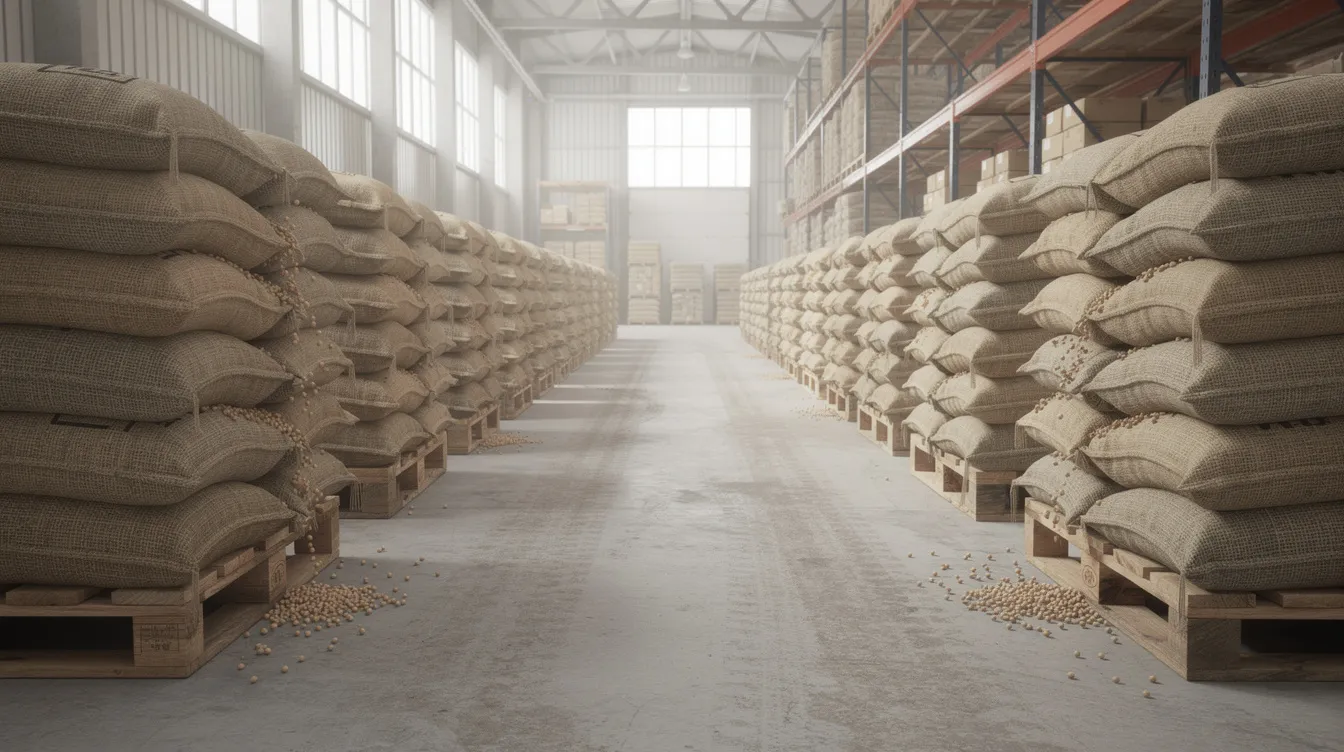
Procurement strategy elements include: a mix of direct purchases from farmers/FPOs and mandi-based procurement; quality control at procurement (moisture, impurities, foreign matter); and raw material requirements planning with storage options (silos vs warehouses). For a steady supply of raw material, plants must plan for seasonal procurement peaks. Distance to ports like Kandla, Mundra, or Jawaharlal Nehru Port matters for export-oriented meal plants. Competition for soybeans in concentrated geographies requires long-term procurement planning.
Common Mistakes in Large-Scale Soybean Crushing Projects
Based on feasibility and appraisal assignments across the soybean processing industry:
- Overestimating oil and meal recovery percentages beyond what technology providers guarantee
- Assuming 80%+ utilisation in year one without accounting for ramp-up and commissioning delays
- Under-budgeting working capital and relying on bank limits that may not fully materialise
- Ignoring direct and indirect costs of logistics for soybeans, oil, and meal, eroding crushing margins
- Selecting plant capacity on vendor persuasion rather than procurement analysis and market analysis
- Mis-timing the project relative to crop cycles and price trends, resulting in expensive initial purchases
- Treating environmental, safety, and solvent-handling requirements casually, risking shutdowns
Promoters should subject their assumptions to independent review through a professional DPR and financial model before finalising machinery orders.
Professional DPR and Project Finance Advisory by Project Report Bank
Project Report Bank is a Chartered Accountant-led professional advisory platform headed by CA Manish Gugliya (FCA, DISA ICAI), specialising in customised DPRs, CMA Data, financial modelling, and project finance advisory for manufacturing and agro-processing projects.
Services relevant to soybean crushing and soybean oil processing plant projects:
- Bankable DPR preparation with complete technical and financial analysis
- Capacity planning, project cost estimation, and means-of-finance structuring
- Financial projections and modelling for 5 to 7 years, including DSCR, IRR, ROI, payback, and sensitivity analysis
- CMA Data preparation and working capital assessment aligned with banking norms
- Bank loan proposals and presentation notes for lender meetings
- Feasibility studies for expansion or diversification of existing edible oil businesses
All work is customised based on project-specific assumptions, capacity choices, location, and promoter profile. Project Report Bank does not sell generic templates.
Promoters planning a 300 to 2,000 TPD soybean crushing plant are welcome to initiate a WhatsApp enquiry via the contact details on ProjectReportBank.com, so that basic project parameters can be discussed before formal DPR engagement. Bank sanction, subsidies, or investor funding cannot be guaranteed and depend on the lender’s independent appraisal and the promoter’s financial position.
Frequently Asked Questions
How much does a large-scale soybean crushing plant cost to set up in India?
For integrated 300 to 2,000 TPD projects, the soybean processing plant cost (including land, civil works, plant and machinery, utilities, pre-operative expenses, and initial working capital margin) can range from ₹26 crore for a 300 TPD facility to ₹260 crore or more for a 2,000 TPD plant with refinery. Online “per-TPD” thumb rules are rough indicators at best. Banks expect a project-specific cost sheet backed by actual quotations and engineering estimates from a complete roadmap in the DPR.
Is soybean crushing profitable in India on a sustained basis?
Many Indian plants have operated profitably over multi-year cycles, but profitability depends on procurement efficiency, crushing margin, capacity utilisation, leverage, and working capital management. The profit margin is cyclical. No professional adviser can guarantee profit. A well-structured financial model with sensitivity analysis helps promoters understand the risk-return profile. Key success factors include procurement discipline and active margin management.
What determines the crushing margin in a soybean crushing plant?
The crushing margin equals combined revenue from crude soybean oil, soybean meal, and hulls minus the landed cost of soybeans. It fluctuates with domestic harvest volumes, MSP sentiment, global demand for soy complex products, import parity for edible oil, and feed industry demand. The margin is not a fixed percentage; it can swing from positive to negative within a single season.
Can banks finance a large-scale soybean crushing project?
Indian banks and financial institutions routinely finance soybean oil production and processing projects. Lending decisions depend on promoter contribution (25 to 35% equity), DSCR, projected cash flows, security, implementation track record, and sensitivity analysis. A professionally prepared DPR with CMA Data and financial projections is a prerequisite. Bank sanction is never guaranteed.
How long does it take to commission a large soybean crushing plant?
For 500 to 1,000+ TPD projects, a realistic schedule from land acquisition and financial closure to trial production spans 14 to 24 months. Machinery lead time for a solvent extraction plant is typically 6 to 10 months. Civil works run in parallel. Commissioning and trial runs add another 2 to 4 months. Implementation schedules with key milestones should be documented in the DPR.
Conclusion
Large-scale soybean crushing plant setup cost in India is a multi-dimensional commitment involving high capital costs, substantial working capital, and continuous exposure to commodity cycles. Rigorous feasibility and financial analysis are indispensable before committing irreversible capital.
Sustainable profitability arises from disciplined procurement, efficient oil extraction and meal production, prudent leverage, and active risk management; not from plant size or machinery brand alone. Promoters should treat the DPR, financial projections, and sensitivity analysis as decision tools rather than compliance paperwork. Serious investors and entrepreneurs seeking to structure their soybean crushing plant investment in a financially sound and bankable manner are encouraged to engage professional advisory support from Project Report Bank before project funding commitments are finalised.