Key Takeaways
- A maida suji wheat products manufacturing project report is a bank-oriented detailed project report covering technical setup, project cost, financial projections, DSCR and feasibility for an integrated roller flour mill business in India.
- Wheat-based products like maida, suji, atta, bakery flour and bran can be produced in one integrated flour mill plant, but the optimal product mix depends on capacity, machinery, target markets and profitability analysis.
- Project cost, means of finance, working capital and DSCR must be planned together. A well-prepared DPR links the flour mill project’s technical design with realistic financial projections and a bankable business plan.
- Project Report Bank, led by CA Manish Gugliya, prepares customised DPRs, CMA Data, financial models and feasibility studies for maida, suji and wheat products plants seeking bank loans or investors.
- This article acts as a central hub, guiding readers through business opportunities, plant setup, machinery, investment and feasibility, and linking to 14 specialised maida and suji plant guides on ProjectReportBank.com.
Introduction: Maida Suji Wheat Products Manufacturing Project Report & DPR
India processes over 28–30 million metric tonnes of wheat annually through organised milling operations, and the demand for processed wheat products continues to rise. Maida is refined wheat flour used for various food products including biscuits, noodles and bakery items. Suji is semolina derived from wheat, used in traditional dishes and snacks like upma, halwa and pasta. Together with atta, bakery flour and wheat bran, these products form an interconnected manufacturing ecosystem driven by rising consumption of packaged food, growth in bakeries and quick-service restaurants, and expanding institutional demand.
For entrepreneurs and MSME promoters, an integrated wheat flour milling plant offers the opportunity to serve multiple market segments from a single manufacturing facility. However, before committing capital to any flour mill business, it is essential to evaluate market demand, raw materials availability, production capacity, project cost, profitability and debt-servicing ability through a professionally prepared detailed project report.
A maida suji wheat products manufacturing project report is not simply a financial spreadsheet. It is a structured, bank-ready DPR that connects technical design-capacity, machinery, layout-with financial projections, working capital assessment, DSCR analysis and feasibility evaluation. It serves as a decision-making document for promoters and a credibility document for lenders and investors.
This hub article, prepared from the professional advisory perspective of CA Manish Gugliya, FCA, DISA (ICAI), with more than 20 years of experience in project finance and DPR preparation, provides an overview of industry opportunities, plant setup, project finance and feasibility. It connects to 14 detailed supporting guides covering every aspect of maida and suji manufacturing projects.
Cluster Quick Navigation – Maida, Suji & Wheat Products Manufacturing Resources
The following topic-based navigation helps you quickly access all 14 supporting articles in this cluster. Use it to move directly to the subject most relevant to your investment stage.
- Product-Specific Manufacturing Projects: Maida Manufacturing Plant Project Report & DPR · Suji Manufacturing Plant Project Report & DPR · Bakery Flour Manufacturing Plant Project Report · Wheat Bran Processing & Value Addition Project Report
- Technical & Infrastructure Planning: Maida & Suji Manufacturing Plant Setup Cost · Maida & Suji Plant Machinery, Equipment & Cost · Maida & Suji Manufacturing Process & Flow Chart · Maida & Suji Plant Capacity Planning, Yield & Product Mix · Maida & Suji Plant Land, Building & Layout Requirements
- Project Cost, Finance & Feasibility: Maida & Suji Plant Project Cost & Means of Finance · Maida & Suji Plant Financial Projections, Working Capital & DSCR · Maida & Suji Plant Feasibility Study & Project Viability · Maida & Suji Plant ROI, IRR, Payback & Sensitivity Analysis
- Revenue & Product Mix Optimisation: Wheat Milling Product Mix Optimisation
Broader wheat flour, atta, maida and suji processing opportunities are covered in the parent category: Wheat Flour, Atta, Maida & Suji Processing Projects.
Understanding the Maida, Suji & Wheat Products Manufacturing Industry
Wheat is a strategic agro commodity in India. The organised milling sector includes approximately 1,300–1,400 medium-to-large roller flour mills with a combined installed capacity of around 28–30 million metric tonnes per year. However, actual utilisation tends to be 55–60% of nameplate capacity, suggesting room for well-planned new entrants. Wheat milling generates several products including maida, suji, atta, and bran-each serving distinct commercial markets.
The flour milling process conceptually follows these stages:
- Cleaning and destoning remove impurities from wheat grains.
- Conditioning adjusts moisture content for efficient milling.
- Roller mills progressively reduce grain size through multiple break and reduction passages.
- Plansifters and purifiers separate fractions by particle size and density.
- The output streams are graded into maida (fine flour), suji (coarser granules), atta (whole wheat flour) and bran (outer layers).
There is a meaningful difference between integrated flour mill plants producing multiple products and single-product units such as an atta chakki plant. An integrated roller flour mill project requires more sophisticated machinery, higher investment and more complex quality control, but it also serves wider markets and generates diversified revenue. Demand for flour products varies by region and customer segments-household retail dominates atta consumption, while institutional buyers such as bakeries, hotels and food manufacturers drive maida and bakery flour volumes. Wheat bran is a by-product of milling that can be sold for livestock feed or processed into fibre-rich food products.
The product slate and extraction ratios are a design choice driven by target markets, wheat quality and profitability analysis. A well-prepared DPR must justify these choices.
Major Wheat-Based Manufacturing Business Opportunities
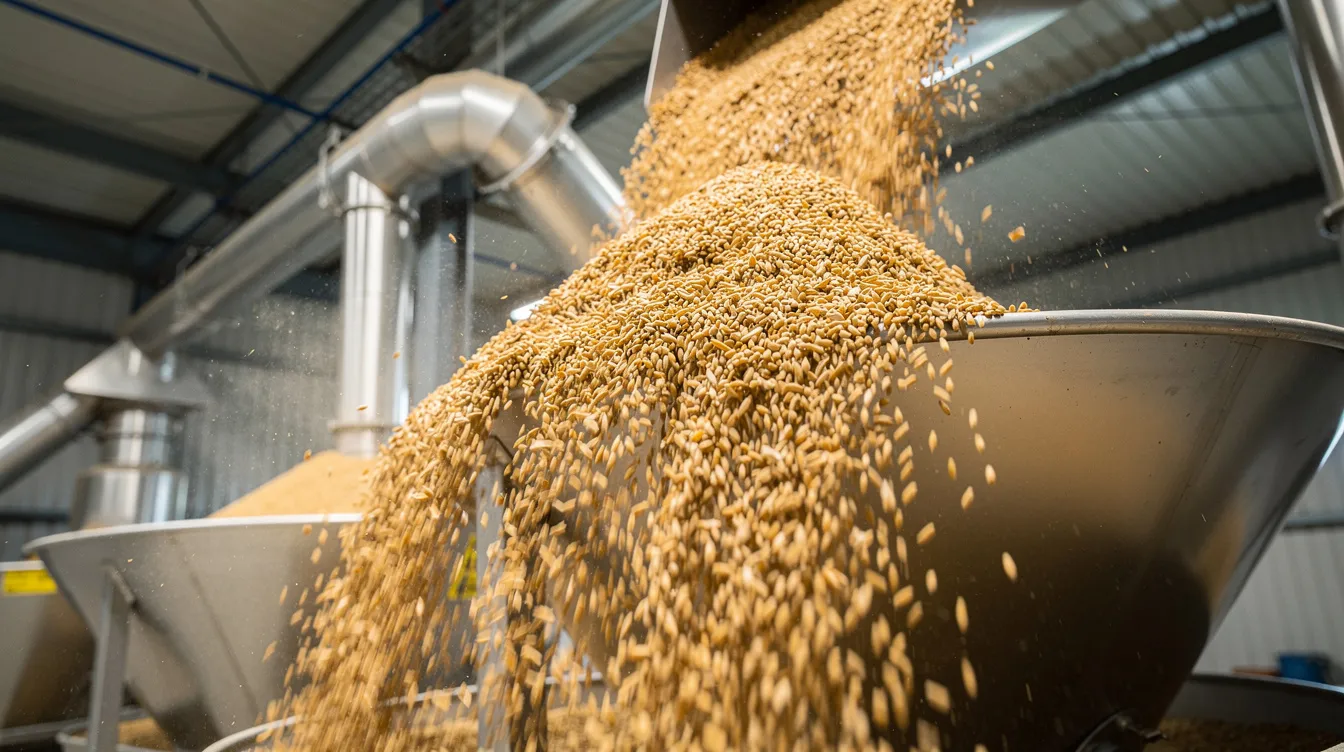
A flour mill business can be positioned around different core products. The flour mill project report should justify the chosen product mix based on market analysis, technical capability and financial returns. Market analysis is necessary to justify the product mix and sales strategy for any proposed plant.
| Product | Principal Applications | Target Buyers | Key Business Consideration |
|---|---|---|---|
| Maida | Biscuits, noodles, cakes, bread, rusk | Food manufacturers, bakeries, wholesalers | Consistent ash content and gluten strength |
| Suji (Semolina) | Upma, halwa, pasta, breakfast mixes | Retail, institutional, food processors | Granulation quality and particle uniformity |
| Bakery Flour | Bread flour, biscuit flour, cake flour | Commercial bakeries, FMCG brands | Customer-specific flour specifications |
| Wheat Bran | Cattle feed, poultry feed, fibre foods | Feed producers, health food processors | Storage management and market realisation |
Maida
Maida is refined wheat flour produced from the endosperm with low ash content. It is the primary input for biscuit manufacturers, noodle plants, bakeries and processed food producers. Quality parameters such as ash content, gluten strength and moisture must be maintained consistently to retain institutional buyers. For a dedicated assessment, refer to the Maida Manufacturing Plant Project Report & DPR.
Suji (Semolina)
Suji consists of coarse or medium-granular particles separated during milling. It commands a premium price per tonne compared to atta and is used in upma, halwa, pasta, and processed breakfast mixes. Purifier efficiency directly affects suji quality, which is discussed further in the Suji Manufacturing Plant Project Report & DPR.
Bakery Flour
Bakery flour grades-bread flour, biscuit flour, cake flour-are customised to meet the specifications of commercial bakeries and FMCG brands. This is a specialised segment within bakery products manufacturing, covered in detail in the Bakery Flour Manufacturing Plant Project Report.
Wheat Bran
Bran accounts for roughly 24–25% of cleaned wheat input. While lower in per-tonne value, bran contributes substantially to overall revenue when efficiently marketed. The Wheat Bran Processing & Value Addition Project Report covers value-addition strategies including feed-grade and food-grade applications.
Atta can also be part of the integrated product mix, particularly for plants supplying local retail markets. The DPR should define whether the focus is bulk B2B supply or branded consumer packs.
Integrated Maida, Suji, Atta & Wheat Products Manufacturing Model
An integrated wheat flour milling plant operates with common wheat procurement, storage and pre-cleaning infrastructure, followed by conditioning and roller milling that produce multiple finished products from the same raw wheat input. The grain flow splits into maida, suji, atta and bran streams through differential sifting, purifying and blending stages.
The commercial advantages of integration are meaningful: better utilisation of wheat, flexibility to serve multiple markets simultaneously, incremental revenue from bran and by-products, and risk diversification when any single product’s price is under pressure. However, integration also introduces complexity-more SKUs require separate storage and packaging units, stricter quality control to maintain grade consistency across products, and additional working capital for wider inventory holdings.
This integrated model is typically considered in medium to large capacity roller flour mills (for example, 40 TPD, 80 TPD or 120 TPD). The feasibility study and DPR must verify whether the local and regional market can absorb these multiple products at realisations that justify the incremental investment.
Manufacturing Process & Technology Overview
While each plant is designed differently, most maida and suji manufacturing processes follow a common flow. A roller flour mill uses a series of mechanical operations to mill wheat into commercial products.
Wheat Receiving → Pre-Cleaning → Cleaning & Destoning → Conditioning/Tempering → Roller Milling → Sifting & Purification → Product Separation → Fortification (if applicable) → Packaging & Storage → Dispatch
- Cleaning: Cleaning wheat removes impurities such as stones, dust and chaff before milling, improving process reliability and product quality.
- Conditioning: Adjusts moisture content so that bran separates cleanly and endosperm breaks efficiently.
- Roller milling: Wheat grains pass through break rolls and reduction rolls progressively; the number of passages determines extraction efficiency.
- Sifting and purification: Plansifters separate fractions by particle size; purifiers refine suji granulation.
- Product separation: Streams are directed into maida, suji, atta and bran based on sieve classifications.
Quality control measures are essential in flour production to maintain product standards-ash content, moisture, gluten and particle size specifications must be monitored continuously. The exact number of break and reduction passages, sifter decks and purifiers varies depending on desired extraction percentage, quality specification and plant capacity.
For detailed process flow charts and technical variants, refer to the dedicated manufacturing process guide.
Plant Machinery, Capacity & Infrastructure Planning
Correct machinery selection, capacity planning and plant layout are major components of any wheat products manufacturing DPR or flour mill project report. From a project finance perspective, machinery capacity alone does not establish commercial viability. The proposed product mix, raw material requirements, working capital cycle and ability to service debt must also be evaluated.
Machinery & Equipment
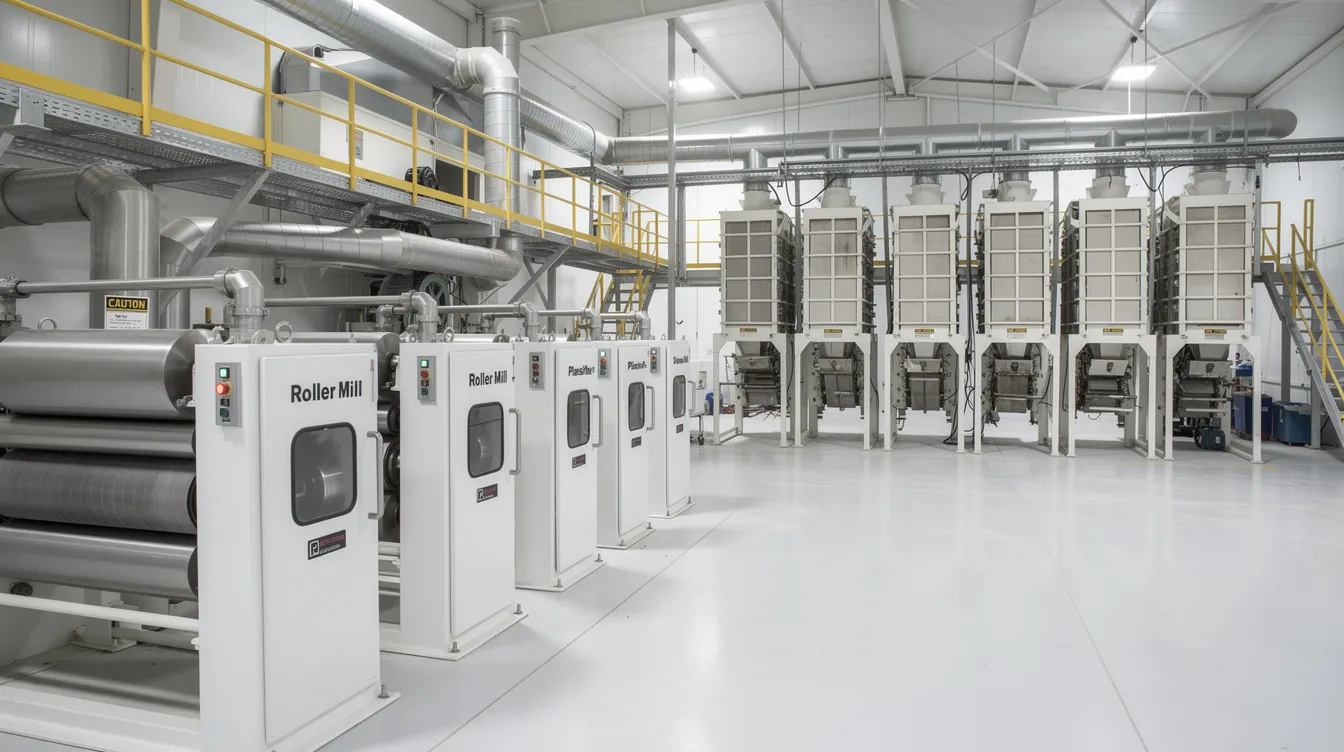
Key equipment categories include intake and cleaning machines (aspirators, magnetic separators, destoners), conditioning bins, roller mills, plansifters, purifiers, pneumatic conveying systems, bran finishers, dust control and aspiration systems, and automatic packaging units. Machinery cost varies significantly with capacity and automation level. For comprehensive equipment lists and costing considerations, see Maida & Suji Plant Machinery, Equipment & Cost.
Manufacturing Capacity Planning
Capacity is measured in tonnes per day (TPD) of wheat input, with typical plants operating approximately 300 days per year. Banks expect 45–55% capacity utilisation in the first year, ramping toward 70–90% by Year 3–5. Typical extraction rates in an integrated mill may be approximately 50–55% maida, 9–12% suji, 8–10% atta and 24–25% bran, depending on mill configuration and wheat quality. Wheat quality affects the efficiency and yield of milling operations significantly. Capacity utilisation directly impacts profitability and operational efficiency. For detailed planning guidance, refer to Maida & Suji Plant Capacity Planning, Yield & Product Mix.
Land, Building & Plant Layout
For a 100 TPD plant, built-up area typically ranges between 25,000 to 35,000 sq ft, covering raw wheat storage, the mill house, finished goods godowns, utility blocks, administrative offices and circulation space for trucks. Higher capacity mills require advanced machinery and more space. Vertical versus horizontal layouts affect civil construction costs and material flow efficiency. Layout details are covered in the Maida & Suji Plant Land, Building & Layout Requirements guide.
Plant Setup & Implementation Planning
A typical implementation timeline for a 50–100 TPD plant is 9–15 months from land acquisition to commissioning, including civil construction, machinery ordering, installation, utility connections (power, water, compressed air), trial runs and performance testing. The DPR will typically include an implementation schedule in bar-chart or Gantt format with milestone dependencies.
Maida, Suji & Wheat Products Plant Setup Cost & Investment Planning
Project cost varies widely depending on capacity, level of automation (manual, semi-automatic, fully automatic), location, and whether the plant is greenfield or part of an existing complex. Production capacity significantly influences flour mill project cost across all heads.
Key capital expenditure heads in a flour mill project include:
- Land and site development
- Factory building and civil construction
- Plant and machinery (the largest single head)
- Electrical installations and control panels
- Utilities (transformers, compressors, boilers if required)
- Storage silos and material handling equipment
- Laboratory and quality testing equipment
- Preliminary and pre-operative expenses
- Contingencies (typically 5–10% on certain heads)
- Margin money for working capital
Indicative machinery cost ranges (illustrative, not standard quotations):
| Plant Scale | Capacity | Indicative Machinery Cost |
|---|---|---|
| Small-scale flour mill | 5–10 TPD | ₹10 lakh to ₹25 lakh |
| Small atta plant | 10–20 TPD | ₹15 lakh to ₹30 lakh |
| Medium-scale plant | 20–40 TPD | ₹35 lakh to ₹80 lakh |
| Large plant | 80–120 TPD | ₹1 crore to ₹2 crore |
| Fully automatic flour mill | Various | ₹50 lakh to ₹2 crore |
| Large 80+ TPD units | 80+ TPD | ₹1 crore to ₹2.5 crore |
Overall flour mill setup costs range from ₹10 lakh to ₹2 crore depending on scale, excluding land cost in metro areas. Civil construction and electrical setup add substantially to project costs beyond machinery alone. Total project cost in a DPR also includes interest during construction, margin money for working capital and expenses for statutory approvals.
Promoters should use the DPR to reconcile supplier quotations, civil estimates and financial planning rather than relying on generic internet figures. For capacity-wise cost structures, refer to Maida & Suji Manufacturing Plant Setup Cost.
Project Cost, Means of Finance & Bank Loan Planning
The total project cost for a flour mill project combines fixed assets, pre-operative expenses and working capital margin. Project cost projections should separate fixed capital from working capital needs clearly, as banks evaluate each component differently. Banks require a detailed project report for flour mill loans, and professionals seek comprehensive guidance to create bank-ready project documentation.
A typical means of finance structure includes:
- Promoter equity contribution: Usually 25–33% of total project cost
- Term loan: Covers 67–75% of fixed asset investment, with repayment over 7–10 years including a moratorium period of 6–18 months
- Working capital facilities: Cash credit, overdraft or short-term loans to fund raw materials, inventory and receivables
- Other sources: Unsecured loans, quasi-equity or scheme-based support where applicable
The term loan is used for machinery and buildings with a longer tenure, while working capital finance is a revolving facility for day-to-day operations. A typical loan repayment timeline for flour mills is structured around projected cash flows and DSCR rather than focusing solely on fastest possible repayment. CMA data is mandatory for loans above ₹10 lakh and must accompany the bank finance DPR.
Banks evaluate promoter contribution, debt-equity ratio, repayment schedule, collateral security and coverage under schemes like CGTMSE. However, no DPR guarantees loan sanction. Project finance advisory includes loan structuring and means of finance planning to improve bankability. For detailed funding structures, see Maida & Suji Plant Project Cost & Means of Finance.
Financial Projections, Profitability & Working Capital
Financial projections for a maida suji plant are built on interlinked assumptions: capacity utilisation, extraction rates, selling prices, wheat procurement cost, power usage, manpower and overheads. Financial modelling should include revenue streams from all product categories-maida, suji, atta and bran. Flour mill financial projections must include byproduct revenue, as bran alone can represent 24–25% of output volume.
Key financial statements projected over 5–7 years include:
- Projected profit and loss account
- Projected balance sheet
- Cash flow statement
- Fund flow statement (where required by lenders)
Product-wise revenue modelling links tonnes of each product sold per year with realistic net realisation per tonne, differentiated by B2B bulk sales versus branded retail packs. Main cost heads include wheat and packing material consumption, power and fuel, repairs and maintenance, salaries, administrative costs, selling and distribution expenses, interest and depreciation.
Working capital assessment is crucial for financing wheat purchases and operations. The assessment considers wheat inventory holding periods, finished stock days, debtor realisation periods and creditor terms. These feed directly into bank working capital limits and CMA Data preparation.
A strong project report must include DSCR above 1.5. Debt Service Coverage Ratio below 1.5 often leads to loan rejection by banks. DSCR should be computed year-wise and on an average basis using realistic assumptions rather than inflated projections. Banks expect a structured checklist in project reports covering all these financial parameters.
Financial projections should consider sensitivity to raw material price fluctuations. These projections are scenarios based on assumptions discussed with the promoter and are not a prediction or certification of future performance. For detailed financial modelling guidance, refer to Maida & Suji Plant Financial Projections, Working Capital & DSCR.
Feasibility Study, ROI, IRR & Investment Decision-Making
Feasibility studies assess the viability of new manufacturing projects before large capital is committed. The financial feasibility of a milling project includes detailed cost assessment across technical, market and financial dimensions.
Technical feasibility examines: wheat availability in the region, power reliability, access to skilled labour and infrastructure, appropriate plant capacity and technology fit for the target market.
Market feasibility evaluates: local and regional demand for maida, suji, atta and bran, presence of competing mills, buyer relationships with bakeries and institutional buyers, and price trends.
Financial viability indicators include:
- ROI (Return on Investment) and IRR (Internal Rate of Return)
- Payback period and NPV where used
- Breakeven analysis, which helps determine the production level needed to cover costs
- Flour mills operating at 70–80% capacity typically achieve 18–24% net profit margins
Sensitivity analysis is critical-testing base projections against changes in wheat prices, selling prices, capacity utilisation and interest rates helps identify genuine risk exposure. For deeper evaluation methods, refer to the Maida & Suji Plant Feasibility Study & Project Viability guide and the ROI, IRR, Payback & Sensitivity Analysis article. Project Report Bank also assists promoters with independent feasibility and viability assessments.
Wheat Milling Product Mix Optimisation & Revenue Opportunities
For an integrated wheat flour mill, profitability depends not only on total extraction but also on how much of each fraction is produced and sold at what price and margin. Product-wise extraction ratios influence total revenue, and these can be adjusted within technical limits by modifying mill settings and plansifter allocations.
Some markets offer higher realisation for suji or specialised bakery flour, while in other regions bulk maida or branded atta may dominate. DPRs should therefore model alternative product mix scenarios. Bran, though lower priced per kilogram than maida, can contribute substantially to overall profitability when efficiently marketed to feed mills or processed into value-added products.
Maximising physical extraction percentage of total flour is not the same as maximising rupee contribution per tonne of wheat processed. Promoters should focus on contribution per tonne and capacity utilisation of profitable products rather than simply maximising volume. The Wheat Milling Product Mix Optimisation guide offers deeper strategies for planning and fine-tuning the maida-suji-atta-bran mix.
Licences, Registrations & Regulatory Considerations
Exact licence requirements vary by state, capacity and location. Regulatory compliance for wheat mills includes food safety and environmental approvals. Promoters must verify requirements with local authorities and current regulations.
Common requirements include:
- Business registration: Proprietorship, partnership, LLP or company formation; PAN, TAN and Udyam MSME registration
- Food-related permissions: FSSAI licence or registration; compliance with Food Safety and Standards (Packaging and Labelling) Regulations
- Tax and commercial registrations: GST registration where applicable; trade licence from local municipal body
- Factory and environmental: Factory registration for units crossing specified manpower thresholds; pollution control board consents for air, water and noise; fire safety NOC and building plan approval
- Fortification compliance: If flour fortification is carried out, FSSAI fortification standards must be followed
The DPR generally includes a list of likely licences, but legal and regulatory advice should be taken from competent local professionals before implementation.
Key Risks in Wheat Products Manufacturing Projects
Every maida suji wheat products manufacturing project carries risks that must be recognised and mitigated in the DPR and business plan.
- Procurement risks: Wheat price volatility, seasonal availability, quality variations affecting extraction and flour quality, storage losses and dependence on limited suppliers or regions.
- Production risks: Machinery breakdown, inconsistent flour quality, energy cost increases, capacity underutilisation due to demand shortfall, and skilled manpower shortages.
- Market risks: Aggressive competition from established mills, price pressure from large buyers, payment delays, and shifts toward alternative grains or health-conscious products.
- Financial risks: Inadequate working capital, high leverage, DSCR falling below covenanted levels, interest rate increases, and delays in subsidy disbursements where factored into the plan.
Risk mitigation strategies include diversified procurement, preventive maintenance programmes, quality management systems, conservative sales assumptions, realistic working capital planning and maintaining contingency buffers in the project cost.
Why a Detailed Project Report Is Important for Wheat Products Manufacturing
A flour mill project report or DPR is not just a financial spreadsheet. A detailed project report should address all aspects of project planning and execution. It is an integrated document explaining the business model, technical setup, project cost, market assessment and projected financial performance to promoters and lenders. Investor-ready documentation is crucial for raising funds and securing projects.
Typical components of a bank-focused maida suji wheat products manufacturing project report include:
- Executive summary and project rationale
- Promoter profile and related experience
- Product description and target markets
- Manufacturing process and technology
- Plant capacity, extraction and product mix
- Land, building and layout details
- Project cost and means of finance
- Revenue, cost and profitability projections
- Working capital and CMA Data overview
- Cash flow, DSCR and loan repayment schedule
- Feasibility and sensitivity analysis
- Implementation schedule and key risks
Flour mill project reports must detail machinery costs and capacity alongside financial projections. A well-prepared DPR makes internal decision-making easier and responds to typical questions asked by credit officers and investment committees. It should be customised to the specific flour mill project-location, capacity, machinery and markets-rather than using generic assumptions.
From a CA perspective: assumptions used for capacity utilisation, wheat cost and selling prices must be internally consistent with working capital and DSCR. Banks often quickly identify mismatches between technical capacity and financial projections.
Professional DPR & Project Finance Advisory by CA Manish Gugliya
Project Report Bank is a Chartered Accountant-led advisory platform specialising in customised manufacturing project DPRs, particularly for food, agro and grain-processing projects across India. CA Manish Gugliya, FCA, DISA (ICAI), brings more than 20 years of professional experience in industrial project finance, CMA Data, financial modelling and feasibility analysis for MSME and mid-sized projects.
Core services relevant to maida suji wheat products projects include:
- Customised DPR preparation for bank finance and investor discussions
- Project cost estimation and means of finance structuring
- CMA Data preparation for bank loan proposals
- Financial projections and financial modelling
- Working capital assessment and DSCR analysis
- Project finance advisory and loan structuring
Advisory support often includes refining assumptions, answering bank queries on financials and helping promoters understand the implications of various funding structures. This is professional advisory-it does not imply guaranteed loan sanction.
Serious promoters planning a flour mill project are welcome to initiate a WhatsApp-based enquiry or submit a request through ProjectReportBank.com to discuss their proposed project and DPR requirements.
Supporting Articles Resource Directory – All 14 Maida & Suji Guides
This directory helps readers move logically from technical planning to financial feasibility using all 14 specialised articles in the maida and suji cluster.
- Product-Specific Manufacturing Projects
- Maida Manufacturing Plant Project Report & DPR – Overview of maida-focused plant models, process and DPR contents.
- Suji Manufacturing Plant Project Report & DPR – Dedicated guidance on semolina production and market positioning.
- Bakery Flour Manufacturing Plant Project Report – Specialised flour grades for commercial bakeries and food manufacturers.
- Wheat Bran Processing & Value Addition Project Report – By-product utilisation and value-added bran products.
- Technical & Infrastructure Planning
- Maida & Suji Manufacturing Plant Setup Cost – Capacity-wise capex structures and cost heads.
- Maida & Suji Plant Machinery, Equipment & Cost – Machinery lists and costing considerations.
- Maida & Suji Manufacturing Process & Flow Chart – Detailed process steps and flow diagrams.
- Maida & Suji Plant Capacity Planning, Yield & Product Mix – Capacity selection, extraction planning and mix design.
- Maida & Suji Plant Land, Building & Layout Requirements – Land area norms and plant layout guidance.
- Project Cost, Finance & Feasibility
- Maida & Suji Plant Project Cost & Means of Finance – Project cost components and funding patterns.
- Maida & Suji Plant Financial Projections, Working Capital & DSCR – Financial modelling and DSCR-focused projections.
- Maida & Suji Plant Feasibility Study & Project Viability – Evaluating technical, market and financial feasibility.
- Maida & Suji Plant ROI, IRR, Payback & Sensitivity Analysis – Investment returns and risk assessment.
- Revenue & Product Mix Optimisation
- Wheat Milling Product Mix Optimisation – Strategies to maximise revenue and contribution from maida, suji, atta and bran.
Frequently Asked Questions (FAQs)
The following FAQs address common queries that may not have been fully covered in earlier sections.
What is included in a Maida Suji Wheat Products Manufacturing Project Report?
A comprehensive project report covers the business overview, promoter profile, product description and market assessment, manufacturing process and technology, plant capacity and product mix, land and building requirements, project cost and means of finance, financial projections including profit and loss, cash flow and balance sheet, working capital assessment, DSCR analysis, feasibility evaluation and sensitivity analysis. The document integrates technical design with financial planning to produce a bankable proposal.
Can I start with a small atta chakki and later expand into maida and suji?
Many entrepreneurs begin with a smaller atta chakki plant at 5–10 TPD and later upgrade to an integrated roller flour mill. This phased approach can reduce initial risk. However, the initial plant layout, electrical infrastructure and utilities should be planned with future expansion in mind. A mini flour mill that is designed without expansion provisions may require significant reworking when upgrading to a multi-product roller flour mill project.
How do I choose the right capacity for my first wheat flour mill plant?
Practical considerations include local wheat availability, target market size, competitor capacities in the region, minimum economic scale, promoter financing ability and risk appetite. The feasibility study and DPR will normally evaluate one or two alternative capacities to help the promoter select the scale that balances investment against realistic market off-take. There is no universal ideal capacity-it depends entirely on the specific project context.
Do I need separate DPRs for PMEGP, bank term loans and other schemes?
Core project assumptions can remain common, but formats, annexures and financial presentation may differ across schemes. A comprehensive DPR prepared once can often be adapted for multiple purposes-PMEGP, CGTMSE-backed loans or direct bank term loan applications-with appropriate restructuring of the financial statements and supporting documentation.
How soon should I involve a CA or project finance consultant in my flour mill project?
Professional input is most valuable after the initial business idea and rough capacity are identified but before finalising machinery orders or submitting loan applications. This allows project cost, financial projections, means of finance and loan structuring to be planned correctly from the outset. Engaging an advisor after machinery purchase orders have been placed or loan applications have been submitted limits the scope for meaningful financial planning.
Conclusion – Planning a Viable Wheat Products Manufacturing Investment
A successful maida suji wheat products manufacturing project requires alignment between industry opportunity, product mix strategy, plant capacity, project cost, means of finance, working capital and the ability to maintain an acceptable DSCR over the loan tenure. Processing wheat into multiple value-added products through an integrated model is commercially attractive, but it demands careful planning across technical, market and financial dimensions.
A customised maida suji wheat products manufacturing project report and DPR is essential for serious promoters-both for their own decision-making and for discussions with banks and potential investors. The 14 supporting guides linked throughout this hub provide detailed coverage of every aspect from process design to sensitivity analysis, helping promoters deepen their understanding before committing capital.
Promoters planning a flour mill project-whether an atta chakki, an integrated roller flour mill or a wheat products diversification-are invited to contact Project Report Bank and CA Manish Gugliya through the website or WhatsApp enquiry options at ProjectReportBank.com for tailored DPR preparation, feasibility study, CMA Data and project finance advisory support.
CA Manish Gugliya FCA, DISA (ICAI) www.projectreportbank.com