Key Takeaways
Rice mill operating cost is the single most critical assumption in any rice mill Detailed Project Report in India. Getting this wrong – even marginally – cascades through every financial projection, from EBITDA to DSCR to payback period.
- Paddy procurement cost and milling recovery together control over 70% of rice mill cost of production. Even a ₹50 per quintal change in paddy price or a 1–2% change in head rice yield can materially alter profit margins, DSCR and payback period for a commercial rice mill.
- Electricity, labour, packaging and maintenance drive the balance of rice mill operating expenses. Power costs generally make up 8% to 12% of processing operational costs, while labour usually accounts for 5% to 15% depending on automation.
- The fixed versus variable cost structure of a rice mill determines break-even capacity utilisation and debt servicing ability. Rice mill profit margins in India typically range from 5–10%, making accurate cost estimation non-negotiable.
- Rice mill production cost in India must be estimated project-wise based on location, capacity, technology, paddy variety and market – no single template applies universally.
- This article is written from the professional perspective of CA Manish Gugliya for ProjectReportBank.com and is intended for entrepreneurs, consultants and bankers evaluating rice mill projects.
Introduction: Why Rice Mill Operating Cost Matters in DPRs & Bank Finance
In a modern 4–8 TPH commercial rice mill, annual rice mill operating cost typically exceeds the original project cost within 3–5 years of full operations. A 4 TPH rice mill costs ₹1.2–2.5 crores in 2026, yet its annual running expenses – paddy, power, labour, packaging, maintenance – can easily surpass that figure once the mill stabilises at 70–80% capacity utilisation. This is precisely why operating cost assumptions deserve more scrutiny than machinery quotations or construction costs when evaluating project viability.
In a standard DPR for a rice mill business in India, minor changes in operating assumptions – paddy procurement price, electricity tariff, recovery percentage, capacity utilisation – have a far larger impact on profitability and DSCR than small variations in rice mill construction cost or civil works estimates. A well-run 4 TPH rice mill can generate ₹35–50 lakh annual EBITDA with post-tax IRR of 18–25% and a payback period of 3–4 years, but these numbers swing dramatically when operating inputs shift by even modest amounts.
Three concepts must be clearly separated in any financial analysis: capital expenditure (land, building, rice mill machinery cost and installations), operating expenditure (recurring running costs of processing paddy into finished rice), and cost of production (the unit cost per tonne, quintal or kg of saleable rice after by-product credits). Operating assumptions directly affect gross profit, EBITDA, cash accrual, DSCR, break-even point, IRR and loan repayment capacity in the rice mill financial model.
All numbers discussed in subsequent sections – tariffs, prices, recovery percentages, energy consumption – are illustrative only. Any actual rice mill operational cost in India must be estimated project-wise, based on location, technology, product mix and target market conditions.
What Is Rice Mill Operating Cost? Definition & Scope
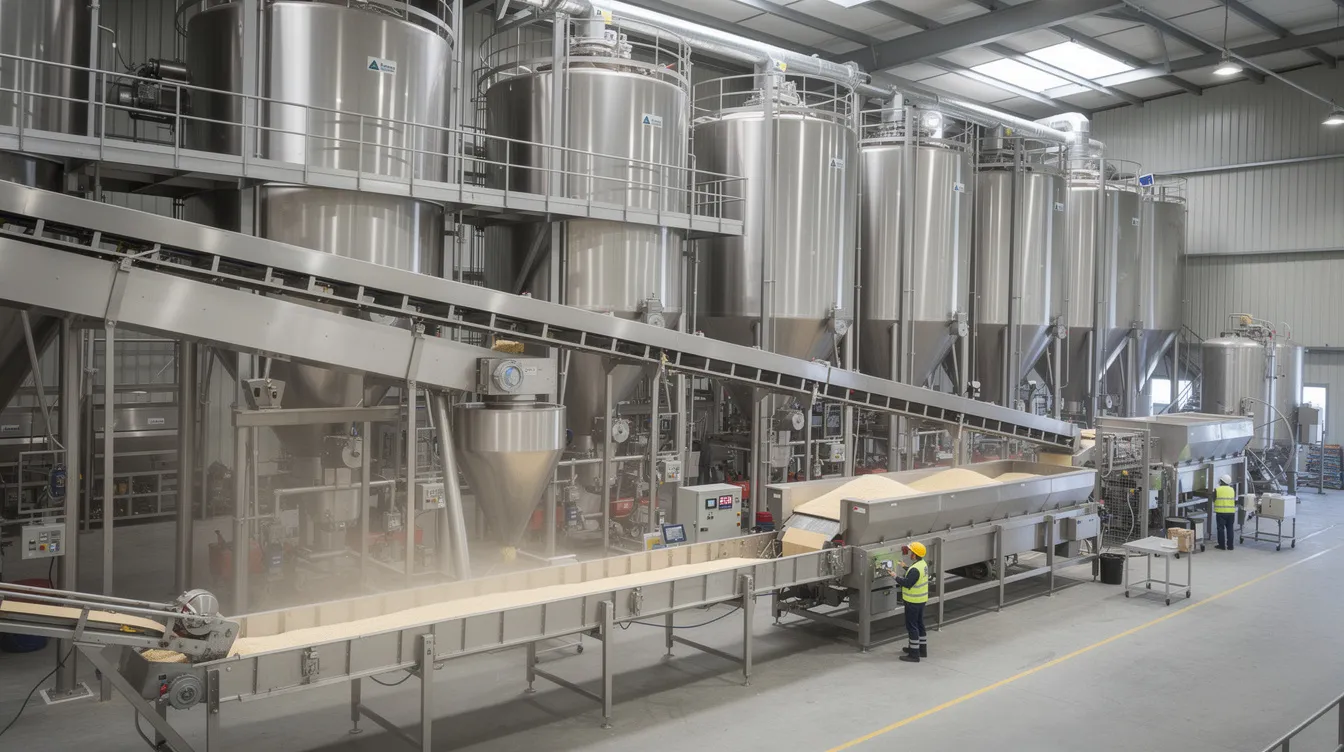
Rice mill operating cost covers all recurring cash expenses required to convert paddy into saleable rice and by-products – rice bran, rice husk and broken rice – within a given accounting period. It encompasses every rupee spent from the moment paddy enters the gate to the point finished rice bags are loaded for dispatch.
Typical direct costs forming the core of rice mill manufacturing cost include paddy and other raw materials, power and fuel, direct labour, processing consumables, packaging materials, and inward and internal handling charges. Indirect factory costs – repairs and maintenance, supervision, factory insurance, quality control and testing, stores and internal transport – are classified as factory overheads and remain part of rice mill production cost. Administrative and compliance costs round out the remaining overheads in running a rice mill, and these can be treated separately or partially allocated into the rice mill cost sheet depending on whether the purpose is management analysis, CMA data or statutory reporting.
For DPRs and bank loan project reports, lenders typically focus on cash-based operating expenses relevant to EBITDA and DSCR, rather than non-cash items like depreciation.
Difference Between Project Cost and Operating Cost
Many first-time promoters confuse total project cost with operational costs. Both must be projected separately in a bankable rice mill DPR – they serve different purposes in credit appraisal.
Rice mill project cost includes: land purchase or leasehold premium (land costs can range from ₹15–30 lakhs depending on location and land prices), site development and access road, building or PEB shed (costing ₹1,400–2,600 per sq ft in 2026), paddy storage godowns or silos, plant and milling machinery (machinery accounts for 50–65% of total rice mill project cost), electrical installations, boiler and dryer for parboiling units, ETP, vehicles, furniture, pre-operative expenses, interest during construction, contingency and margin money for working capital. Installation and setup costs are estimated at ₹5 lakh to ₹20 lakh. Small-scale rice mills cost ₹10–25 lakhs to set up, a modern rice mill setup can cost between ₹35–60 lakh for a 2 TPH mill, while larger automated rice mills can exceed ₹5 crores in capital investment.
Rice mill operating cost includes: paddy procurement, electricity and diesel, labour and supervision, packaging, repair and maintenance, spare parts and consumables, water, quality control, transportation and handling, administrative and selling expenses. Rice mill machinery costs range from ₹2–3 lakhs for mini rice mill units with 1 TPH capacity, while a 4 TPH rice mill machinery line costs ₹65 lakh–1.4 crore. Fully automated rice mills are significantly more expensive than semi-automatic ones.
| Category | Project Cost Items | Operating Cost Items |
|---|---|---|
| Infrastructure | Land, building, PEB shed, civil construction | Rent (if leased), building maintenance |
| Equipment | Rice milling machinery, colour sorter, paddy separator | Electricity, rubber rolls, spare parts |
| Utilities | Transformer, borewell, ETP installation | Power bill, water charges, DG diesel |
| People | – | Salaries, wages, EPF, ESI |
Banks assess term loan requirement against project cost, and cash-credit or OD limits against working capital tied to rice mill operating cost and inventory holdings.
Major Components of Rice Mill Operating Cost in India
In a typical Indian raw or parboiled rice mill, raw material procurement typically accounts for 70% to 80% of operating costs. Power, labour, packaging, maintenance and overheads make up the remaining portion. The percentages below are indicative and must not be treated as uniform industry standards – they vary with location, capacity, paddy variety and processing technology.
Paddy and Other Raw Material Cost
Paddy is almost always the dominant component of rice mill raw material cost. According to CRISIL’s MSME cost structure survey, raw materials constituted approximately 90.7% of total cost in smaller raw rice mills. Even in larger modern mills, paddy cost rarely falls below 65–70% of total cost.
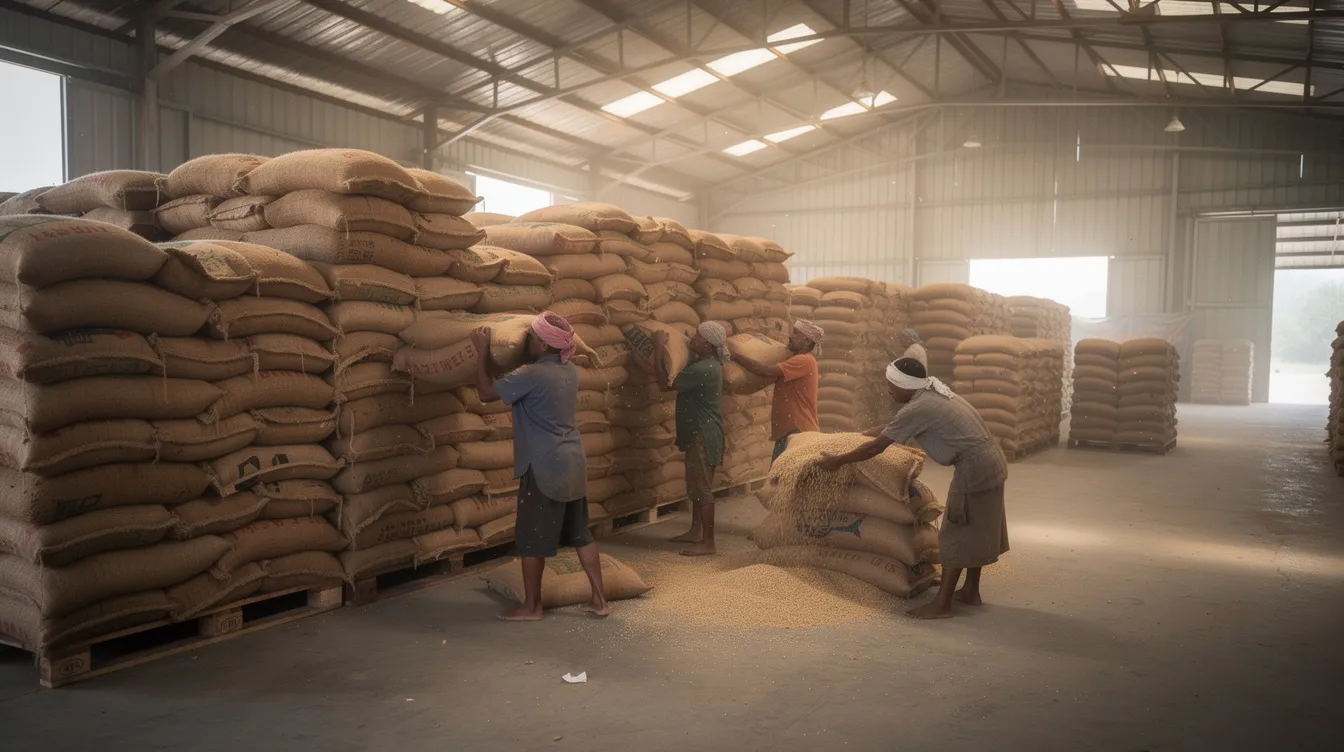
Key factors affecting paddy cost include MSP versus open market rates, variety (basmati versus non-basmati), moisture content, purity, local mandi commissions, gunny bag costs, loading and unloading charges, and transportation from procurement centres. Paddy moisture and quality significantly impact milling recovery and costs – wet paddy requires mechanical drying before milling, increasing energy consumption. Storage and handling losses (driage, quality deterioration) must also be factored when calculating effective paddy processing cost.
Paddy procurement assumptions in a DPR must align with the proposed product mix and recovery percentages. More detailed guidance on paddy procurement and raw material planning is usually covered in a separate analysis. The costing must also distinguish between paddy procured for own milling versus toll-milling or custom-milling operations where the customer supplies paddy input.
Electricity and Power Consumption Cost
Rice mill electricity cost is typically the largest non-paddy operating cost. Electricity usage can account for 20% to 30% of routine operational expenditures in rice mills, and energy expenses are significantly affected by the source and local tariffs. According to BEE India’s energy benchmarking study, specific electrical energy consumption for raw rice milling ranges from 25–50 kWh per tonne of paddy processed.
The main power-consuming sections include pre-cleaners, destoners, huskers, paddy separators, whiteners, polishers, graders, elevators, conveyors, air compressors, colour sorter units, packaging equipment and lighting. A generic formula for estimating power cost:
Power Cost = Total Units Consumed (kWh) × Weighted Average Tariff (₹/kWh)
For example (purely illustrative): 30 kWh/tonne × 16,000 tonnes/year × ₹7/kWh = ₹33.60 lakh/year. Demand charges, power factor penalties, minimum billing and diesel cost for DG sets during load-shedding should be recognised separately in the power supply cost estimate.
Fuel and Thermal Energy Cost
In parboiled rice mills, thermal energy for steam generation, soaking, parboiling and drying is a major cost component – often exceeding electrical cost. Many integrated mills use their own rice husk as boiler fuel. Mills that use waste rice husk for energy can achieve lower operational costs, though there remains an opportunity cost if husk can be sold externally.
DG set diesel consumption must be estimated based on expected hours of power outage and kWh per litre specific to the generator size.
Labour and Manpower Cost
Labour usually accounts for 5% to 15% of operational costs depending on automation levels. High automation levels can lead to lower labor costs and reduced grain breakage. Categories of manpower include mill manager, production supervisors, skilled operators for each section, helpers and loaders, quality control staff, boiler operator (for parboiled rice), electricians, fitters, storekeepers, security and administrative staff.
For a 4–6 TPH modern rice mill operating in two shifts, typical headcount may range from 20 to 45 persons depending on the production line configuration. Fixed salaries for permanent staff must be distinguished from semi-variable costs for piece-rate loading, outsourced labour or seasonal workers. Statutory obligations – EPF, ESI, bonus and gratuity – must be factored into rice mill labour cost calculation for CMA data and DPR projections.
Packaging Materials Cost
Packaging and transport usually comprise 3% to 8% of operational expenses. Typical packaging formats include 25 kg and 50 kg HDPE/PP bags for wholesale, 5–10 kg printed BOPP or laminated pouches for retail branded rice, and bulk bags for bran and broken rice. Rice mill packaging cost differs sharply between bulk institutional sales and branded consumer packs, making product mix assumptions critical for accurate cost per kg estimation.
All components – bags, liners, labels, printing, stitching thread, pallets and secondary packing – should be included.
Repair, Maintenance and Spares
Maintenance and repairs account for about 3% to 10% of operational budgets. This covers routine replacement of rubber rolls, emery stones, screens, belts, bearings, elevator buckets, motors and electrical spares. While some practitioners use 2–5% of plant and machinery value as an initial thumb rule, actual costs deviate depending on machinery brand, utilisation intensity and preventive maintenance practices. Preventive maintenance can reduce unplanned downtime and is generally more cost-effective than emergency repairs.
Consumables, Stores and Factory Supplies
Lubricants, greases, cleaning agents, emery powders, PPE, lab chemicals and miscellaneous tools are individually small but cumulatively represent 0.5–1.5% of total rice mill production cost. They should be captured under factory overheads in the DPR.
Water, Utilities and Effluent Handling
Raw rice mills have modest water requirements – primarily for domestic use, dust suppression and boilers. Parboiled rice mills require significantly more water for soaking and steaming, and effluent treatment becomes a design parameter. Water charges, borewell operating cost, pumping power and ETP running costs should be included. Environmental norms differ by state and capacity.
Transportation, Loading and Handling
Transportation costs vary significantly based on the distance from suppliers and buyers. For most commercial mills, there are inward paddy logistics (mandi to mill) and outward freight for finished rice, bran and by-products. Whether outward freight is treated as production cost or selling expense depends on whether pricing is ex-mill or delivered.
Administrative, Selling and Distribution Expenses
Major administrative expenses include office staff salaries, accounting and professional fees, communication, insurance, IT systems, audit, necessary licenses and statutory compliance. Starting a rice mill requires 8–10 licenses in India – factory license costs between ₹20,000–50,000 under the Factories Act, FSSAI Central License costs ₹7,500 per year for mills above 2 MT/day, Pollution Control Board consent takes 60–120 days to obtain, and total licensing cost ranges from ₹1.5–3.5 lakh.
Selling and distribution costs include dealer commission, marketing, branding, warehousing and outbound freight. Underestimating these overheads can make rice mill financial projections appear unrealistically profitable – a red flag during credit appraisal.
Fixed Cost vs Variable Cost Structure in Rice Mills
Operating a rice mill involves managing fixed and variable expenses – and correctly classifying them is essential for break-even and profitability analysis.
Variable costs move in proportion to quantity milled: paddy cost, variable power and fuel, packaging material, outward freight and handling consumables. Fixed and semi-fixed costs remain broadly constant regardless of throughput: core staff salaries, administrative overheads, factory insurance, minimum power demand charges, AMC fees, security and certain maintenance contracts.
A high fixed-cost structure increases breakeven capacity utilisation but offers better profit leverage at higher volumes. This is why larger plants and fully automated mills need to plan for higher utilisation to justify their initial investment.
Rice Mill Cost of Production: Concepts and Formulas
Rice mill cost of production is the net manufacturing cost of saleable rice after considering all relevant factory-level expenses and by-product credits.
Total Production Cost = Paddy & Raw Materials + Power & Fuel + Direct Labour + Packaging + Repairs & Maintenance + Factory Overheads + Allocated Administration – By-Product Credits
To derive unit costs:
- Cost per Tonne = Total Annual Cost ÷ Saleable Rice Production (tonnes)
- Cost per Quintal = Total Annual Cost ÷ Saleable Rice Production (quintals)
- Cost per Kg = Total Annual Cost ÷ Saleable Rice Production (kg)
While formulas provide structure, actual rice mill costing calculation must be tailored to project size, accounting policy and purpose. Selling and distribution expenses may be excluded from cost of production in some methodologies and shown separately.
Illustrative Rice Mill Cost Sheet (Hypothetical Example)
The following table presents an illustrative rice mill cost sheet for a hypothetical 4 TPH modern rice mill processing approximately 16,000 tonnes of paddy per year, with milling recovery at ~67%. These figures are illustrative only – not an industry standard or quotation.
| Cost Component | Annual Cost (₹ Lakh) | Cost per Tonne of Saleable Rice (₹) | % of Total Cost |
|---|---|---|---|
| Paddy Cost | 384.00 | 35,820 | 74.5% |
| Power & Fuel | 42.00 | 3,920 | 8.2% |
| Direct Labour | 28.00 | 2,612 | 5.4% |
| Packaging | 12.00 | 1,120 | 2.3% |
| Repairs & Maintenance | 10.00 | 933 | 1.9% |
| Consumables & Stores | 4.00 | 373 | 0.8% |
| Factory Overheads | 6.00 | 560 | 1.2% |
| Transportation | 10.00 | 933 | 1.9% |
| Allocated Administration | 9.00 | 840 | 1.8% |
| Total Gross Cost | 505.00 | 47,111 | 98.0% |
| Less: By-Product Credit | (20.00) | (1,866) | (3.9%) |
| Net Cost of Production | 485.00 | 45,245 | – |
Paddy dominates at roughly 74.5% of total cost, consistent with broader industry data. By-product revenue from rice bran, husk and broken rice reduces effective production cost meaningfully. Readers must not copy these figures into bank proposals without customising them for their own location, processing capacity, technology and year of operation.
Paddy-to-Rice Recovery and Its Impact on Cost
The cost of milling paddy into rice per tonne is not determined solely by paddy price – it hinges critically on how much saleable rice is recovered. The efficiency of milling determines the head rice recovery percentage. Modern rice mills achieve 67–70% head rice yield, compared to below 60% in traditional huller mills.
Consider this purely illustrative example: if 1,000 kg of paddy costs ₹24,000, and recovery is 67% (670 kg saleable rice), effective paddy cost per kg of rice is ₹35.82. If recovery drops to 60% (600 kg), the same paddy produces less output and effective cost rises to ₹40.00 per kg – a 12% increase with no change in raw material price. By-products like rice husk, bran and broken rice can generate additional revenue, but the head rice yield remains the most sensitive variable.
Over-optimistic recovery assumptions in DPRs make rice mill operating cost per ton appear artificially low. For more on the rice milling process flow and recovery analysis, technical parameters should be reviewed in detail.
By-Product Revenue and Net Effective Production Cost
A commercial rice mill generates significant by-products. Typical monetisation routes include selling bran to solvent extraction plants, using husk as boiler fuel or selling it to industries, and selling broken rice to flour mills or breweries. The rice mill revenue model and product mix must account for these streams.
Illustratively, if gross processing cost is ₹47,111 per tonne of saleable rice and by-product credits amount to ₹1,866 per tonne, the net effective cost reduces to ₹45,245. Promoters should treat by-product income conservatively in projections, especially where local market demand for husk and bran is uncertain.
Capacity, Utilisation and Their Effect on Operating Cost Per Tonne
High capacity utilization reduces the per-unit fixed cost of milling. Operating costs are influenced by scale and capacity – larger mills benefit from economies of scale. A 2 TPH mini rice mill has a payback period of 2.5–3.5 years, a 4 TPH mill 3–4 years, and larger 8 TPH mills 3.5–4.5 years.
For instance, if annual fixed costs are ₹50 lakh: at 50% utilisation (8,000 tonnes paddy), fixed cost per tonne is ₹625; at 70%, it drops to ₹446; at 90%, just ₹347. DPRs should assume a build-up in utilisation – 50–60% in year 1, 65–75% in year 2, stabilising thereafter – rather than 100% from day one. A separate capacity planning analysis should validate whether paddy availability and market demand support the assumed utilisation.
Machinery Efficiency, Technology Choice and Operating Cost
The choice of rice mill machinery and equipment directly affects operating cost. Newer generation sorters, paddy separators and whiteners reduce electricity consumption per ton and improve head rice yield, reducing rice mill processing cost per tonne. Higher efficiency machines justify higher machinery costs through lower ongoing operational costs.
The trade-off between lower-cost local machinery and higher-end lines must be evaluated in each DPR. Investment in automation should be judged based on paddy variety, target market segments, manpower availability and long-term strategy. Large-scale mills (50–100+ TPD) often require custom engineering for their machinery layout and production line.

Storage, Inventory Holding Cost and Operating Economics
Storage costs can significantly influence operational expenses due to moisture management and pest control. Key storage-related costs include godown rent or depreciation, fumigation, bagging and stacking labour, insurance, interest on tied-up capital, and moisture loss. When paddy procured at 18% moisture is dried to 14%, weight loss of 3–4% occurs, increasing effective paddy cost per quintal.
For the Kancheepuram 500-TPD mill DPR, storage cost per MT in warehouses was approximately ₹805, and somewhat lower in silos. Paddy storage, warehouse and silo requirements should be planned to align with procurement and milling schedules to avoid both over-stocking and under-stocking.
Working Capital Requirement and Its Link to Operating Cost
Rice mill working capital requirement is driven primarily by paddy inventory, finished rice inventory, receivables and operating cash balances. Higher rice mill operating cost per month directly increases the quantum of cash-credit limits required.
The cash conversion cycle for a rice mill involves buying paddy, storing, processing, holding finished stock, selling on credit and collecting – each stage ties up cash. Working capital is typically calculated using holding-period assumptions multiplied by average daily running cost. Underestimating working capital in projections is a frequent cause of cash-flow stress, even when theoretical profitability appears adequate on paper.
Operating Cost in Financial Projections, DSCR and Project Feasibility
Line-by-line rice mill operating expenses feed into the projected P&L, impacting gross profit, EBITDA, PAT and cash accrual, which then flow into DSCR and loan repayment capacity calculations. Banks test reasonableness of key ratios – paddy consumption per tonne of rice, power consumption per tonne, labour cost as percentage of sales – against their own benchmarks.
DPRs should include sensitivity analysis: test scenarios like +5% paddy price, –2% recovery, +10% power tariff or lower capacity utilisation, and observe the effect on EBITDA and DSCR. A rice mill feasibility study should demonstrate viability even under realistic stress scenarios, while ROI, IRR, payback and sensitivity analysis quantify the risk thresholds.
How to Reduce Rice Mill Operating Cost Without Compromising Quality
Cost reduction must never compromise food safety, regulatory compliance or output quality. Practical levers include:
- Optimised paddy procurement strategy – right timing, moisture and quality – to maximise value from buying paddy
- Reducing breakage through better process control and modern rice milling machinery
- Upgrading critical machinery for higher efficiency and making rice milling more energy-efficient
- Preventive maintenance schedules to avoid breakdowns and unplanned downtime
- Energy management: power-factor correction, off-peak operations, husk handling and utilisation as boiler fuel
- Reviewing product mix to maximise margin – shifting volumes to branded retail packs for faster ROI where feasible
- Robust MIS to track operating cost per tonne monthly by product category
Quality control and testing are necessary for maintaining product standards and can incur additional costs, but they protect long-term brand value and local rice prices realisation.
Key Operating-Cost Assumptions Required in a Rice Mill DPR
A well-prepared rice mill DPR should summarise all critical assumptions transparently. Essential inputs include:
- Installed capacity (TPH), target capacity and annual tonnes; expected capacity utilisation by year
- Paddy requirement and price by variety, with paddy availability assessment; MSP versus open market
- Paddy-to-rice recovery percentages: head rice, broken rice, bran and husk
- Specific power consumption per tonne, electricity tariff assumptions, fuel type and consumption
- Number of workers by category, average monthly wages, statutory benefits
- Average packaging cost per kg by segment (bulk versus retail)
- Annual maintenance provision and consumables
- Inward and outward freight cost per tonne, transportation rates
- Administrative and selling overheads as percentage of sales or absolute values
- By-product realisation rates (₹ per tonne of bran, husk and broken rice)
- Inventory holding periods, receivable days and creditor days
All assumptions must be listed in annexures to the rice mill project cost and means of finance section to ensure transparency during appraisal. For medium scale and large scale mills, land and infrastructure costs range from ₹20 lakh to ₹1.5 crore, and the detailed project report must reflect this accurately.
Common Mistakes and Pitfalls in Rice Mill Costing
In my experience reviewing numerous rice mill DPRs, a significant share of issues arise from simplistic or incorrect treatment of operating cost rather than from machinery cost estimates.
Common errors include: assuming one uniform paddy price across seasons without considering arrivals and MSP, using unrealistically high rice recovery ratios, ignoring moisture loss and shrinkage, and excluding brown rice or broken rice from the recovery analysis. Other frequent mistakes: ignoring the value of bran and husk or double-counting them, underestimating electricity consumption, assuming 90–100% capacity utilisation from the first year, neglecting repair and maintenance provisions, and omitting packaging and freight from the cost of production calculation.
Financial-analysis mistakes compound the problem: mixing capital expenditure with operating cost, treating illustrative industry ranges as project-specific facts, and failing to reconcile paddy procurement assumptions with projected rice sales volume and product mix. Professional verification of costing logic is essential before submitting DPRs for term loan assessment at banks and financial institutions. A profitable business depends on realistic, verifiable cost assumptions, not optimistic guesswork.
Frequently Asked Questions on Rice Mill Operating Cost & Cost of Production
The following FAQs address specific practical questions relevant to entrepreneurs and bankers evaluating rice mill cost sheets and DPRs.
How can I quickly estimate rice mill operating cost per tonne for a new project?
A quick indicative estimate involves: estimating paddy cost per tonne including all procurement and handling charges, applying realistic recovery percentages to arrive at saleable rice tonnes, adding benchmarked non-paddy costs (power, labour, packaging, maintenance, overheads) per tonne of paddy, and deducting conservative by-product credits. This back-of-the-envelope approach is useful for preliminary viability checks for setting up a rice mill, but detailed costing and financial projections remain essential for a DPR or bank finance application. How much land is required depends on the scale – small scale mills may need 0.5–1 acre, while larger plants need substantially more.
Is paddy cost always included in rice mill operating cost, even for custom or toll milling?
Where the mill buys and owns the paddy, paddy cost is a core part of operating cost and dominates the cost structure. In pure toll-milling arrangements where the customer supplies paddy, the DPR treats only processing charges, power, labour and overheads as operating cost, with no paddy purchase in the P&L. Business planning must clearly distinguish between these models as they fundamentally change working capital and risk profiles.
How do I treat interest and depreciation in rice mill cost of production?
For management costing and pricing, some promoters include depreciation and interest under cost of production. However, for operating performance and DSCR analysis, operating cost typically excludes interest and depreciation, focusing on cash operating expenses. DPRs should clearly separate cash operating costs, non-cash charges and finance costs.
What recovery percentage should I use to calculate how much paddy is needed for one tonne of rice?
There is no single standard recovery ratio. Actual paddy-to-rice recovery depends on paddy variety, quality, moisture, processing method (raw versus parboiled), machinery type and operating parameters. Promoters should use realistic ranges based on actual data from similar mills, technical inputs from equipment suppliers and trial runs. India depends heavily on rice as a food processing staple, and regional recovery norms vary accordingly.
Why do banks question operating-cost assumptions even when projected profit appears high?
Lenders see many rice mill projects and maintain internal benchmarks. If projected operating cost per tonne, power consumption, recovery or labour ratios are significantly better than typical norms without clear justification, they treat projections as aggressive. Financial assistance decisions require that promoters justify assumptions with data, quotations, comparable cases and sensitivity analysis. Import duties on specialised machinery, local paddy procurement realities and rural areas wage levels all factor into the appraisal. A convincing DPR supported by realistic assumptions is what facilitates – though never guarantees – bank sanction.
Conclusion: Professional Approach to Rice Mill Operating Cost & DPR Preparation
Accurate estimation of rice mill operating cost is central to determining cost of rice production in rice mills, assessing profitability, planning working capital and evaluating loan repayment capacity. No single percentage or template can represent all rice mills across India – each DPR must integrate technical capacity, paddy availability and procurement strategy, realistic recovery, product mix, selling prices, operating expenses, working capital needs and financing structure.
A bankable rice mill DPR for India should include a detailed operating-cost build-up, transparent assumptions, year-wise cost per tonne estimates, break-even analysis, DSCR calculations and sensitivity analysis on key variables. The total cost picture must account for everything from raw materials to administrative overheads, from market demand realities to seasonal paddy procurement dynamics.
Businesses, consultants and financial institutions requiring assistance with rice mill detailed project reports, bank finance DPRs, financial projections, CMA Data preparation, working capital assessment, DSCR analysis and overall project feasibility are welcome to engage the professional services of CA Manish Gugliya through ProjectReportBank.com. Professional support facilitates sound business planning and project evaluation – it does not guarantee bank sanction or certify future financial performance.