Key Takeaways
- A bank loan for rice mill plant is sanctioned based on overall project viability – not merely machinery cost, collateral security or subsidy eligibility.
- Banks separately assess term loans for fixed assets (land, building, machinery) and working capital limits for paddy stock, finished rice, by-products and receivables.
- A rice mill requires capital for both fixed assets and working capital, and lenders expect both components to be clearly structured in the proposal.
- Preparation of a bankable Detailed Project Report (DPR) with realistic financial projections, DSCR analysis and repayment capacity assessment is essential for financing a rice mill.
- CA Manish Gugliya provides project finance advisory, DPR preparation and CMA Data assistance for rice mill and MSME projects through ProjectReportBank.com.
Introduction: How Banks Really Look at a Rice Mill Loan Proposal
Securing a bank loan to establish a rice mill is not as simple as submitting a machinery quotation and a property document. Lenders in India evaluate the entire project – promoter profile, project cost, means of finance, plant capacity, paddy availability, market potential, working capital requirement, profitability, DSCR and repayment capacity – before arriving at a credit decision.
Banks do not finance only one machine invoice. They look at the integrated rice mill project finance structure: land, factory building, plant layout, storage infrastructure, utilities, raw materials planning and projected cash flows. Rice milling businesses are assessed for their ability to generate cash flow to service debt over the life of the loan.
In most cases, project finance for a rice mill is structured as a combination of term loans for fixed assets, cash credit for working capital and sometimes non-fund based limits. Banks may also offer specialized loan products tailored for rice mill financing, such as Cent Rice Mill, SBI Rice Mill Plus and KVB Rice Plus. Government schemes can provide additional financing support for agricultural projects.
This article is written as practical professional guidance by CA Manish Gugliya, a practising Chartered Accountant with experience in preparation of Detailed Project Reports, CMA Data, financial projections and bank finance proposals for rice mill and MSME projects. The content is intended for entrepreneurs, rice mill owners, investors and MSMEs seeking project finance for rice mill in India.
What Is Bank Loan & Project Finance for a Rice Mill Plant?
Rice mill project finance means funding the complete plant so that loan repayment comes primarily from the cash flows generated by milling operations. The lender assesses not just machinery or land, but the entire economic cycle – procurement, processing, sales, margins and debt servicing.
The finance structure typically includes:
- Term loan for fixed assets: Covers land development, civil construction (factory shed, godowns, staff block), plant and machinery (cleaners, polishers, sorters, colour sorters), electrical installations, boiler, water supply, effluent treatment and commissioning charges. Term loans are typically used for purchases of land and heavy machinery.
- Working capital finance: Cash credit, working capital demand loans and seasonal enhancement limits used for paddy procurement, holding finished rice inventory, managing by-products (bran, husk) and funding receivables. Working capital facilities have a maximum period of 12 months and are renewed annually.
- Other facilities: Letters of credit for machinery imports, bank guarantees, packing credit and non-fund based limits as applicable.
Rice mill plant loan may also be structured under government-linked subsidy or refinance schemes depending on bank policy, borrower eligibility criteria and project nature.
Major Components of Rice Mill Project Cost Considered by Banks
Banks finance total rice mill project cost – not just the visible machinery price. They verify each cost component against realistic benchmarks. Costs for establishing a rice mill include land, construction, machinery and operational overhead.
Key cost heads include:
- Land and site development: Purchase or lease premium, land conversion (non-agricultural), levelling, boundary wall, internal roads.
- Building and warehouses: Factory building, paddy godowns, finished goods warehouse, husk and bran yards, office block, staff facilities. PEB sheds can save 18–25% over RCC construction and offer faster completion.
- Plant and machinery: Pre-cleaners, de-stoners, shellers, huskers, whiteners, polishers, graders, colour sorters, conveyors, elevators, weigh bridges and bagging units – along with erection, commissioning, freight, insurance and GST. Machinery cost typically represents 50–65% of fixed cost excluding land.
- Electrical and utilities: Transformer, HT/LT panels, wiring, DG set, boiler (for parboiled rice), water supply, drainage and pollution-control equipment, usually 8–15% of project cost.
- Pre-operative expenses and contingency: Interest during construction (moratorium period), salaries before commissioning, trial runs, consultant fees and contingency provisions at 2–5% of hard costs.
- Working capital margin money: Banks include promoter’s contribution to working capital margin as part of overall project cost to arrive at a realistic Rice Mill Project Cost & Means of Finance.
For reference, an integrated rice mill plant of 5–10 TPH capacity inclusive of working capital may require an investment of approximately ₹18–45 crore, while mini units can start from ₹20–30 lakh depending on scale and type.
Term Loan for Rice Mill Plant
A rice mill term loan is bank finance for fixed assets, repayable over a defined repayment period through structured instalments along with interest. Typical assets financed include civil construction, plant and machinery, electrical systems, silos, warehouses, laboratory equipment, factory vehicles and utility infrastructure.
Promoter contribution and margin money: Banks typically require a margin money contribution of 15% to 30% for rice mill projects. For instance, KVB requires 25% margin for machinery and 40% for building. The debt-equity ratio assessed by banks commonly falls in the range of 1.5:1 to 2:1 as an illustration, but exact ratios vary by lender and risk profile.
Repayment structure: Term loans typically have a repayment period of 5 to 7 years, though the repayment period for term loans can range between 5 to 10 years with possible moratoriums. Under the Cent Rice Mill scheme, term loans have a maximum tenure of 10 years including moratorium of up to 12 months. Cent Rice Mill loans range from Rs 5 Crore to Rs 100 Crore.
Interest rates: Interest rates for loans can vary based on borrower risk profile. Assessing interest rates and processing fees is vital when selecting a loan. Most banks use floating rate of interest linked to their external benchmark or MCLR, with spreads varying by credit rating category.
Security: Primary security is created through hypothecation or mortgage of assets created out of bank finance. Collateral requirements may include a mortgage on property or fixed assets. All assets created with bank loans must be insured. Loans under Rs 5 crores may not need collateral under CGTMSE, which provides guarantee support that can reduce collateral requirements for small enterprises. However, loans above Rs 5 crore require 50% collateral for brownfield units. Loans over Rs 10 lakhs generally require collateral security, subject to applicable scheme coverage.
SBI Rice Mill Plus Loan has no upper ceiling on loan amount, while margin requirements for SBI Rice Mill Plus loans range from 15% to 40%. KVB Rice Plus is designed for rice mills with investments up to Rs 10 Crore.
Actual term loan conditions differ among banks, NBFCs and credit schemes.
Working Capital Finance for Rice Mill
Rice mills need substantial working capital because paddy is often procured in bulk during harvesting season while milling and sales continue throughout the year. Working capital loans are essential for financing daily operations and seasonal procurement. Seasonal fluctuations in paddy procurement should be accounted for in financial planning.
Key working capital components include raw paddy stock, semi-finished WIP, finished rice, broken rice, rice bran, husk, packing materials, book debts (receivables) and minimum cash balance.
Common bank facilities include:
- Cash credit limit (continuous drawing against stocks and receivables)
- Working capital term loan or demand loan
- Seasonal enhancement limits during peak procurement months
Banks assess Working Capital Requirement for Rice Mill using turnover method, operating cycle method or projected balance sheet method – examining paddy holding period, processing days, finished goods inventory and credit terms extended to buyers.
A 15% to 40% margin is required for working capital loans. For example, TMB requires 20% margin on stocks and 25% on book debts up to 60 days. Working capital facilities enable flexible funding for raw materials and operational expenses. Drawing power is computed based on stock and receivables statements, subject to regular inspection, valuation and margin rules applied by the bank.
Paddy Procurement and Raw Material Planning in Bank Appraisal
Banks attach high importance to assured paddy availability because it drives capacity utilisation, sales and loan repayment. A rice mill located in a strong paddy-growing region with reliable supply networks presents lower procurement risk.
Key factors evaluated during appraisal:
- Procurement radius: Banks prefer projects within 50–100 km of paddy collection mandis or farming clusters, reducing transport costs and moisture losses.
- Seasonality: Kharif and rabi harvest cycles, state procurement policies, MSP versus open-market purchasing – all affect raw material availability and pricing assumptions.
- Supplier base: Tie-ups with farmers, FPOs, traders and commission agents; consistency of quality and moisture levels; payment terms and logistics arrangements.
- Raw material assumptions: Paddy purchase price, average moisture content, expected yield, storage losses and in-godown management practices must be realistic and documented in the DPR.
Supply agreements, if available, strengthen the loan proposal. For more on this subject, refer to Paddy Procurement & Raw Material Planning for Rice Mill.
Paddy Storage, Warehouse and Silo Infrastructure
Banks review paddy storage capacity, warehouse design and silo infrastructure because these directly influence stock quality, working capital limits and security of primary charge.
Storage types range from traditional godowns to scientific warehouses with ventilation and moisture control, to vertical silos for large integrated mills. Storage capacity (in MT) should be consistent with projected paddy procurement volume, holding period and working capital cycle shown in the DPR.
Lenders examine whether storage arrangements support regular bank inspections, reliable stock measurement and accurate drawing-power calculation. Good storage reduces quantitative and qualitative losses, maintaining the value of stocks hypothecated to the bank as primary security. Read more at Paddy Storage, Warehouse & Silo Requirements for Rice Mill.
Plant Capacity and Capacity Utilisation Assumptions
Lenders assess installed capacity – expressed in tonnes per hour (TPH) – along with operating hours per day and working days per year to compute annual paddy-processing capacity. A detailed project report should outline plant capacity and technology used clearly.
Most DPRs assume a conservative capacity utilisation ramp-up: for instance, 50–60% in the first year, 65–75% in the second year and 80–90% in later years. These are illustrations – actual assumptions must match the specific project. Unrealistic assumptions like 100% utilisation from year one weaken project credibility during credit appraisal.
Paddy-to-rice recovery ratios (head rice, broken rice, bran, husk) are checked against industry norms and supplier technical data. Over-optimistic recovery percentages reduce the DPR’s credibility. For guidance on capacity planning, see Rice Mill Plant Capacity Planning & Production Capacity.
Rice Mill Machinery Cost and Bank Finance
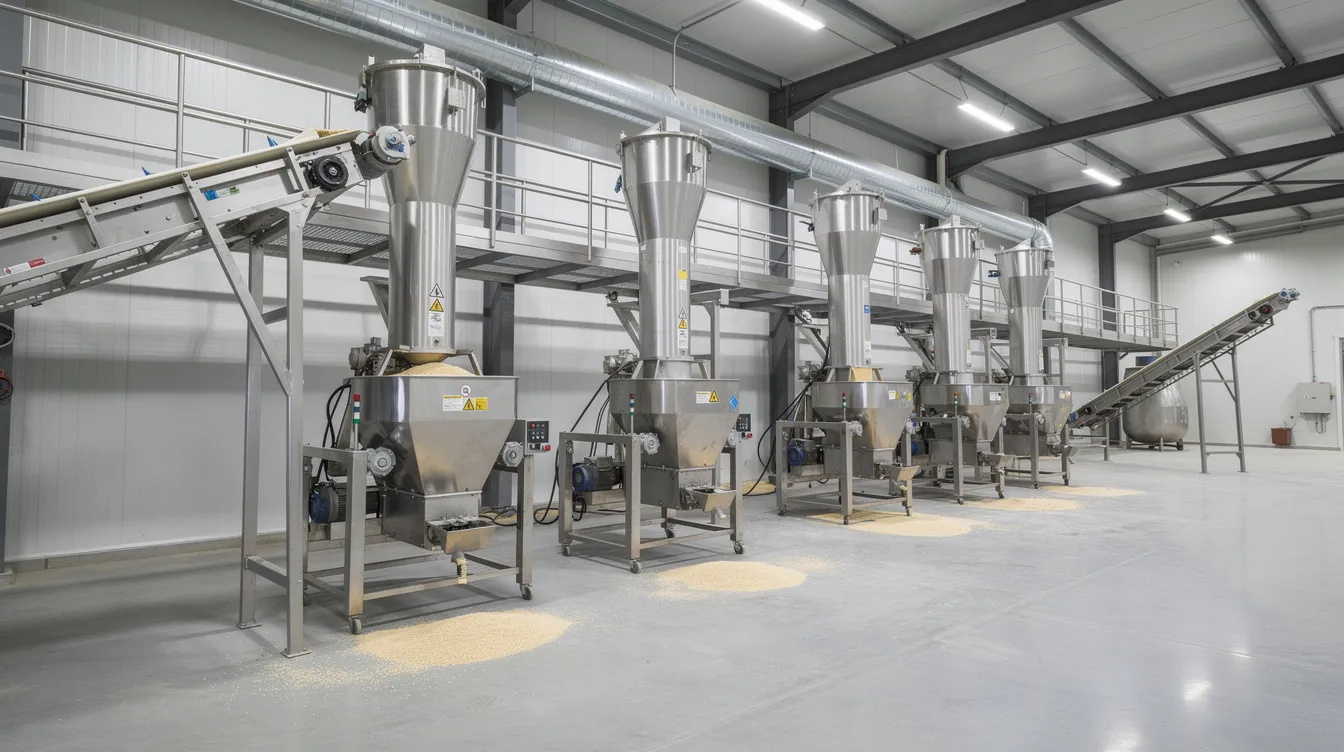
Rice mill plant and machinery is usually the largest component of project cost and is closely examined by banks. Machinery cost for a 4 TPH line can range from ₹65 lakh to ₹1.40 crore depending on brand and features.
Banks expect:
- Detailed quotations specifying make, model, capacity per hour, scope of supply (erection and commissioning included or not), freight, insurance and GST
- Supplier credentials, after-sales support commitment, energy efficiency data and automation level
- Compatibility of each machine with total plant capacity – mismatches between individual machine throughput and stated line capacity raise red flags
For imported machinery, banks may require LCs, and they evaluate foreign currency exposure, delivery timelines and spare parts availability. Rice mill machinery loan may be structured as separate equipment finance or within a composite TL, depending on lender policy. More details at Rice Mill Machinery & Equipment Cost.
Land, Building and Plant Layout Assessment
Banks evaluate whether proposed land, building plan and layout are adequate for the planned rice mill capacity and future expansion.
Checklist items include:
- Clear title or long-term lease, non-agricultural conversion where required
- Approach road width, truck turning radius, parking and proximity to utilities
- Functional layout zones: paddy receipt and weighing, pre-cleaning, parboiling (if applicable), milling, grading, packing, paddy storage, finished-goods warehouse, bran and husk yards and administrative block
Efficient material movement minimises internal handling, mixing of lots and breakage losses – directly affecting profitability and rice mill loan repayment. See Rice Mill Land, Building & Plant Layout Requirements for layout guidance.
Revenue Model Considered by Banks
Rice mill revenue is not limited to sale of head rice. By-product income can contribute 10–20% or more of total revenue in well-run mills.
Key revenue streams include:
- Different grades of head rice (raw, parboiled, premium varieties)
- Broken rice sold to food processing and cattle feed industry
- Rice bran for oil extraction or animal feed
- Husk used as boiler fuel, briquettes or sold externally
- Value-added products and branded packing
Banks expect the DPR to show realistic selling prices for each product category based on local market analysis, seasonal price trends and credit period extended to buyers. For structuring your revenue model, refer to Rice Mill Revenue Model & Product Mix.
Financial Projections Required for Rice Mill Project Finance
Lenders require integrated financial projections for at least 7–10 years (or loan tenure) when considering a bank loan for new rice mill plant or expansion. A solid financial model is crucial for lender confidence and loan approvals.
Statements to be prepared include:
- Projected profit and loss account
- Projected balance sheet
- Cash flow statement and fund flow statement
- Working capital assessment
- Key ratio analysis (DSCR, debt-equity, current ratio, profitability ratios)
Major line items must cover projected sales volume and value by product, raw material cost, power and fuel, employee cost, repair and maintenance, admin and selling expenses leading to EBITDA and net profit. All figures must be internally consistent – capacity, paddy requirement, recovery ratio, sales and working capital should reconcile logically.
The term loan schedule (principal and interest), working capital interest, depreciation and tax must be integrated to assess rice mill loan repayment capacity and DSCR. See Rice Mill Financial Projections for DPR for further details.
Profitability and Break-Even Analysis
Banks take a close view of rice mill profitability and break-even because they indicate resilience under adverse price movements or lower capacity utilisation.
Contribution analysis: Gross profit depends on the gap between paddy purchase price and combined realisation from rice, broken rice, bran and husk – net of power consumption, labour and processing costs per tonne.
Fixed costs include salaries, administrative overheads, interest on term loan, minimum power charges, insurance and statutory expenses. These define the break-even sales level.
As an illustrative example only, if a mill’s annual fixed costs are ₹1.5 crore and contribution margin is ₹2,500 per tonne, break-even volume would be approximately 6,000 tonnes – which may correspond to roughly 60–65% capacity utilisation for a mid-size unit.
Sensitivity analysis on paddy price increase (say 10–15%) and rice selling-price decrease shows impact on profit and DSCR. A proposal without sensitivity analysis is less credible. More at Rice Mill Profitability & Break-Even Analysis.
DSCR and Loan Repayment Capacity
DSCR (Debt Service Coverage Ratio) measures cash available for servicing debt divided by total term-loan principal plus interest obligations for that period. Components of cash accrual typically include net profit after tax plus non-cash charges like depreciation.
Banks normally examine both average DSCR over loan tenure and year-wise DSCR, but do not follow one universal DSCR number for all projects. For food processing and agri projects, lenders often expect DSCR of 1.25 to 1.50 in steady state, though this varies with project risk, collateral coverage and promoter profile.
Stress testing is important: projections showing DSCR under worst-case scenarios (higher paddy cost, lower selling prices, delayed ramp-up, higher rate of interest) demonstrate whether the project can withstand adverse conditions. If worst-case DSCR stays above 1.0, risk is generally manageable.
Rice mills must be profitable to qualify for loans – lenders will not finance a project where projected cash flows cannot cover debt service. Details at DSCR & Loan Repayment Capacity for Rice Mill Project.
Debt-Equity Ratio and Promoter Contribution
Banks structure rice mill plant finance in India through a mix of promoter contribution (equity, internal accruals), unsecured loans where acceptable, term loan and subsidies or incentives if applicable.
Common illustrative debt-equity ratios observed in practice range from 1.5:1 to 2:1, meaning promoters contribute roughly 33–40% of fixed capital. These are examples, not fixed rules – actual ratios depend on lender policy and project risk assessment.
Adequate margin money from promoters enhances project stability, improves DSCR and increases bank confidence. Insufficient promoter contribution is one of the most common reasons for rejection. The DPR and CMA Data should clearly show sources of promoter contribution, timing of infusion and alignment with the project implementation schedule.
How Banks Appraise a Rice Mill Loan Proposal
Rice mill credit appraisal covers promoter assessment, technical feasibility, commercial viability, financial feasibility, security evaluation and compliance checks. Banks evaluate project viability based on detailed financial projections and risk assessments, often using internal credit rating models. Rice mills must have a credit rating of SB-9 or above under certain bank schemes. Banks require detailed financial records to assess creditworthiness during loan applications.
Promoter Assessment
Banks evaluate experience in rice milling, agri-trade or food processing, understanding of paddy procurement and marketing, and managerial capability. Promoter net worth, liquidity, existing banking relationships, credit history (CIBIL or equivalent) and repayment track record are closely scrutinised. Tax compliance, transparency and willingness to provide collateral security where required also form part of the assessment.
Technical Feasibility
Banks evaluate machinery selection, technology type (raw, parboiled or integrated), plant layout and compatibility with proposed capacity. Checks cover adequacy of land, building, power, water, boiler and effluent treatment systems. Understanding the regulatory approvals required is part of securing financing for a rice mill. For process understanding, refer to Rice Milling Process Flow Chart & Production Process.
Commercial Feasibility
Lenders review market demand for different rice varieties (non-basmati, basmati, parboiled, fortified), competition analysis and customer segments. Product mix, branding strategy, long-term contracts and by-product marketing plans support stable revenue. Realistic assumptions on selling prices, credit period to buyers and impact of government procurement policies are expected.
Financial Feasibility
Lenders analyse projected profitability, cash flows, DSCR, break-even, working capital cycle, debt-equity ratio and sensitivity scenarios. The projected balance sheet is reviewed for gearing and liquidity, and the projected profit and loss account for margins relative to sector norms.

Documents Required for Rice Mill Bank Loan
Documentation varies by bank, borrower type (proprietorship, partnership firm, company, LLP) and loan amount. Core documents commonly requested include:
| Category | Documents |
|---|---|
| KYC & Constitutional | PAN, Aadhaar, partnership deed, MOA/AOA, LLP agreement, board resolutions |
| Business Registrations | GST, Udyam/MSME registration, FSSAI licence, factory licence, trade licence |
| Land & Building | Sale deed, title search report, mutation records, land conversion, building plan approval |
| Machinery | Proforma invoices, specifications, supplier brochures, capacity details |
| Financial | Audited financial statements (for existing units), ITR, bank statements, net-worth statement, existing loan details |
| Project-Specific | Rice mill project report for bank loan, DPR, CMA Data, projected financial statements, implementation schedule |
| Collateral | Property title documents, valuation reports, encumbrance certificates |
Documentation for a rice mill loan includes identity proof, licences and financial records. Exact requirements differ across lenders and loan products.
Importance of DPR for Rice Mill Bank Finance
A well-structured rice mill detailed project report is often the primary document used by banks to understand and appraise the project. The DPR should integrate technical details (machinery, layout, capacity, process flow) with commercial aspects (procurement, market, pricing) and financial projections (profitability, cash flow, DSCR).
Core elements of a strong DPR include project background, promoter profile, project cost, means of finance, implementation schedule, capacity planning, raw-material planning, revenue model and risk analysis.
The DPR must tell one consistent financial story – paddy availability should match capacity; production should match sales volume; working capital estimates should match inventory and credit terms; and repayment should align with cash accrual. CA Manish Gugliya assists entrepreneurs in preparation of rice mill DPRs, financial projections and project feasibility analysis for bank-finance proposals.
CMA Data for Rice Mill Bank Finance
CMA Data (Credit Monitoring Arrangement data) typically contains past financials, projected operating statements, balance sheet, current-asset and current-liability break-up, fund flow analysis and calculation of maximum permissible bank finance for working capital.
CMA Data differs from the DPR: the DPR is broader and project-oriented, while CMA Data is formatted financial information required by banks, especially for cash credit and composite limits. Key schedules include operating statement, projected balance sheet, fund flow and key ratios.
CMA Data for rice mill bank finance should be aligned with assumptions in the DPR regarding capacity utilisation, paddy procurement, sales and margins. CA Manish Gugliya assists businesses in preparation and presentation of CMA Data and financial projections as part of structured rice mill bank loan requirements.
Common Reasons Rice Mill Loan Proposals Face Difficulty
Based on practical observation during bank appraisals, common weaknesses include:
- Unrealistic capacity utilisation (90–100% assumed from year one)
- Optimistic recovery ratios or under-estimated moisture losses
- Insufficient promoter contribution or unclear sources of margin money
- Weak or adverse credit history of the promoter
- Inadequate paddy availability analysis – vague procurement plans without tie-ups
- Over-stated selling prices ignoring seasonal fluctuations or local competition
- Under-estimated working capital requirement – insufficient inventory holding days or ignoring payment delays
- Machinery capacity not matching projected throughput in DPR
- Inadequate power, storage or logistics infrastructure for proposed scale
- Low DSCR, tight cash flow or excessive debt burden
- Missing regulatory approvals, licences or property conversion documents
- Inconsistencies within DPR and CMA Data – differing project cost or loan amount figures in different sections
How to Improve the Bankability of a Rice Mill Project
Practical steps to strengthen a rice mill project loan proposal:
- Choose commercially viable plant capacity matched to local paddy availability, market demand and promoter resources
- Obtain multiple realistic machinery quotations verified for specifications, power requirement and space needs
- Conduct basic market and procurement studies – catchment analysis, competitor mapping, price trends – and reflect them in the DPR
- Provide adequate promoter contribution and demonstrate source and timing of infusion
- Prepare conservative financial projections with reasonable capacity ramp-up
- Estimate working capital adequately, accounting for seasonal procurement patterns
- Demonstrate strong repayment capacity and DSCR under both base-case and stress scenarios
- Ensure all DPR assumptions are internally consistent
- Complete all required approvals and documentation before submission
New Rice Mill vs Expansion of Existing Rice Mill
Banks differentiate between greenfield rice mill plant finance and expansion or modernization of an existing operating unit, primarily because of differences in risk and data availability. New rice mills are eligible for financing under most bank schemes. Existing units must have a minimum of 3 years of operation under certain scheme guidelines.
Greenfield Rice Mill Project
For new units, banks place greater emphasis on promoter experience, sector understanding, net-worth strength and ability to handle project execution risks – land acquisition, approvals, construction delays and machinery installation. Detailed market study, raw-material assessment and realistic implementation schedule are critical. Banks may seek higher margin money, more conservative assumptions and stronger collateral security for first-time promoters.
Expansion or Modernisation
Lenders review historical financial statements, current capacity utilisation, profitability trends, existing loan conduct and repayment track record. Assessment focuses on incremental capacity, incremental revenue, cost savings from technology upgrade and impact on combined DSCR for old and new term loans. Banks examine whether modernization improves quality, reduces breakage, saves power or diversifies the product mix in a way that strengthens overall repayment ability.
Bank Loan Process for Rice Mill Plant
Though each bank has its own procedures, most rice mill plant loan processes follow a broadly similar sequence:
- Finalise plant capacity, technology type and concept
- Identify and secure land or site
- Obtain machinery quotations and civil construction estimates
- Prepare detailed project cost and means of finance
- Plan and document promoter contribution
- Prepare DPR with financial projections and working capital assessment
- Prepare CMA Data where applicable
- Collate all documents and submit formal loan application
- Bank appraisal – branch scrutiny, credit department review, technical evaluation, site visit
- Respond to clarifications and information requirements
- Loan sanction and documentation
- Security creation and phased disbursement linked to project milestones
Timelines vary depending on lender, loan size, completeness of documentation and regulatory approvals. Financial assistance from different banks may proceed at different speeds.
Role of Professional Project Finance Advisory
Many technically sound rice mill projects struggle at the finance stage due to weak presentation, inconsistent projections or incomplete documentation. An experienced project-finance professional can assist in structuring rice mill project financing from refining the project concept to preparing DPR, projections and CMA Data tailored to bank requirements.
Specific support areas include project-cost structuring, means-of-finance planning, profitability and break-even analysis, DSCR and loan repayment assessment, working-capital estimation and sensitivity analysis. Professional advisory also covers preparing bankable loan proposals, organising documents and responding to appraisal queries.
CA Manish Gugliya, through ProjectReportBank.com, provides such advisory and documentation support for rice mill and other food-processing projects. This is professional services support – no professional can promise or guarantee loan sanction.
Frequently Asked Questions
The following FAQs address practical questions on bank loan for rice mill plant that may not be fully covered in the main sections.
Can I get a bank loan for setting up a new rice mill in India?
Many banks and financial institutions provide bank loan for new rice mill plant, subject to project feasibility, promoter profile, margin money and security requirements. Being a new unit is acceptable if projections are realistic and documentation is complete. There is no universal minimum or maximum project cost – small mills may start from a few lakhs while integrated plants can require investment running into several crores.
How much term loan can a bank typically provide for a rice mill project?
The loan amount is linked to eligible project cost, accepted debt-equity ratio and promoter contribution, and may also be influenced by scheme limits or internal exposure policies. Some lenders may finance 65–75% of project cost as an illustration. SBI Rice Mill Plus has no upper ceiling on loan amount, while Cent Rice Mill scheme has a minimum loan amount of Rs 5 Crore.
Is collateral security always required for rice mill project finance?
Primary security usually consists of assets created out of bank finance through hypothecation or mortgage. Additional collateral security may be required based on bank policy and loan amount. Loans under Rs 5 crores may not need collateral under CGTMSE coverage. Collateral must be at least 50% of the loan amount for brownfield borrowers with loans above Rs 5 crore under certain schemes. Exact requirements vary by lender.
How long is the repayment period for a rice mill term loan?
The repayment period generally aligns with economic life of assets and projected cash flows. Term loans can have a maximum tenure of 10 years including moratorium under schemes like Cent Rice Mill. Choosing a very short tenure may stress cash flows and DSCR, while excessively long tenure may exceed asset life or bank policy limits.
Do I need a DPR and CMA Data for a rice mill loan application?
For most new rice mill projects and sizeable expansions, banks expect a comprehensive rice mill project report for bank loan. Many also require CMA Data in prescribed formats for cash credit and working capital limits. These documents help the bank understand capacity, project cost, means of finance, profitability, working capital, DSCR and overall repayment capacity – improving the quality and speed of appraisal.
Can a bank finance both term loan and working capital for the same rice mill?
In many cases, the same bank sanctions a composite limit consisting of a term loan for fixed assets and cash credit or working capital limits for operations. Promoters may also select separate institutions depending on policy and comfort. Dealing with one primary banker often simplifies monitoring, integrated assessment and the overall rice mill bank finance structure.
How do banks view by-product income while assessing rice mill viability?
Lenders generally include realistic income from broken rice, bran and husk while evaluating profitability and DSCR, provided supporting market data and pricing assumptions are given in the DPR. Over-stating by-product prices or volumes without proper justification may be viewed critically. By-product revenue is a legitimate and important part of the revenue model – it should not be ignored or inflated.
Can an existing rice mill obtain finance for expansion or technology upgradation?
Many banks actively fund expansion, modernization and capacity enhancement of existing profit-making rice mills, often under SME or food-processing schemes. In such cases, bankers place strong emphasis on historical financial performance, current repayment track record and the incremental benefits expected from the upgrade. Existing units with good conduct and demonstrated profitability often find the appraisal process smoother than greenfield proposals.
Conclusion
Successful bank loan for rice mill plant depends on overall project bankability – technically feasible capacity, realistic project cost, adequate promoter contribution, assured paddy procurement, sustainable profitability, adequate working capital and acceptable DSCR. Lenders focus on integrated assessment – capacity, recovery, revenue model, cash flow and security – rather than any single number like collateral value or subsidy amount.
A consistent, professionally prepared DPR, robust financial projections and well-structured CMA Data significantly improve the quality of interaction with banks, though no document or advisory can guarantee sanction. Every projection must be defensible, every assumption must be traceable and every number must reconcile with the rest of the proposal.
CA Manish Gugliya assists entrepreneurs and MSMEs with rice mill DPRs, financial projections, project feasibility analysis, CMA Data preparation and bank-finance proposal structuring. Promoters planning a new rice mill, expansion or modernization are welcome to explore project-report and project-finance advisory services through www.projectreportbank.com.