
When banks evaluate a rice mill term loan, they look beyond accounting profit. This guide explains how DSCR for rice mill project is calculated, what banks expect, and how promoters can structure their project finance for stronger loan repayment capacity.
Key Takeaways
For any rice mill term loan-whether MSME term loans ranging from ₹10 lakh to ₹2 crore or larger facilities-banks focus on Debt Service Coverage Ratio and cash flow rather than profit alone. Rice Mill DSCR equals Cash Available for Debt Service divided by total debt service (principal plus interest on term loan), and lenders generally look for comfortable headroom above 1.00 depending on bank policy and loan scheme.
Rice mill loan repayment capacity depends on capacity utilisation, paddy procurement pattern, working capital cycle, by-product income and realistic financial projections-not optimistic sales assumptions. This article includes a step-by-step rice mill project DSCR calculation example, comparison of annual vs average DSCR, and year-wise repayment impact analysis.
CA Manish Gugliya and ProjectReportBank.com assist promoters in preparing bank-ready DPR, CMA Data, cash flow and DSCR analysis for rice mill term loans across India.
Introduction: Why DSCR Matters More Than Profit in a Rice Mill Project
Many rice mill proposals for 2–4 TPH capacity units show accounting profit but still struggle to pay term-loan instalments on time. Insufficient cash flow from operations leads to payment defaults-a risk banks assess carefully. The core question during appraisal is whether yearly cash accrual is sufficient to cover interest on term loan, principal instalments and other term liabilities.
DSCR for rice mill project is a core ratio in almost every bank loan appraisal, evaluated alongside profitability, break-even and working capital assessment. It connects directly to project cost, debt-equity mix, repayment period, moratorium, capacity utilisation ramp-up, working capital requirements and seasonality of paddy procurement during harvest season.
What Is DSCR? (Debt Service Coverage Ratio for a Rice Mill)
DSCR measures the ratio between cash generated by the rice mill and total debt servicing obligation for a given year. A DSCR of 1.0 indicates operating income is just enough to cover debt payments-leaving zero margin for error. A strong DSCR indicates stronger ability to meet debt obligations, while a low DSCR increases risk of insolvency and reduced access to financing.
The generic formula: DSCR = Cash Available for Debt Service ÷ Total Debt Service. Each lender or scheme may have its own benchmark and computation methodology. DSCR is typically calculated year-wise over the full repayment period (7–10 years) and averaged to derive the average DSCR for the rice mill project.
Standard DSCR Formula for Rice Mill Project & Key Components
For rice mill project report DSCR, banks typically use a cash-accrual approach:
DSCR = (Profit After Tax + Depreciation + Interest on Term Loan) ÷ (Term Loan Principal Repayment + Interest on Term Loan)
DSCR is also sometimes expressed as (Net Profit + Depreciation) divided by Annual Loan EMI. Some banks use PBDIT minus tax instead.
| Component | Explanation |
|---|---|
| Profit After Tax | Net income from milling rice, broken rice, bran, husk and other by products |
| Depreciation | Non-cash charge on plant, machinery, factory building-added back because it does not reduce actual cash |
| Interest on Term Loan | Only term loan interest (not cash credit interest) added in numerator if PAT is post-interest |
| Principal Repayment | Annual instalment per repayment schedule |
Higher depreciation and maintenance costs impact cash available for debt service, which is why machinery selection and project sizing directly affect DSCR.
Illustrative Rice Mill DSCR Calculation Example
Consider a hypothetical 3 TPH rice mill with a sanctioned term loan (FY 2025–26). These figures are illustrative:
| Item | Amount (₹ Lakh) |
|---|---|
| Profit After Tax | 28 |
| Depreciation | 12 |
| Interest on Term Loan | 10 |
| Annual Principal Repayment | 22 |
Step-by-step calculation:
- Cash available for debt service = 28 + 12 + 10 = ₹50 lakh
- Total debt service = 22 + 10 = ₹32 lakh
- DSCR = 50 ÷ 32 ≈ 1.56
Lower capacity utilisation reducing PAT, or a shorter repayment period increasing principal instalments, would reduce this ratio. In a Detailed Project Report, your project report must show DSCR for all 5 projection years (minimum), and banks examine both annual and average DSCR.

Annual DSCR vs Average DSCR in Rice Mill Loan Appraisal
Annual DSCR is computed for each project year; average DSCR is the mean across the repayment tenure. DSCR should be monitored over time, not just in a single year.
| Year | DSCR |
|---|---|
| Year 1 | 1.20 |
| Year 2 | 1.45 |
| Year 3 | 1.80 |
| Average | 1.48 |
A rice mill may show weak DSCR in Year 1 (during ramp-up) but strong ratios later. Banks check the minimum DSCR year to ensure no single period is dangerously close to 1.00. During DPR preparation, focus on ensuring each year’s DSCR is reasonably comfortable rather than chasing only a high average.
Understanding Loan Repayment Capacity of a Rice Mill
Rice mill loan repayment capacity is the ability of the project’s cash flows to meet all repayment obligations after covering operating expenses, paddy purchases, taxes and working capital interest. A well-run mill can generate ₹8–₹15 lakh annual net profit, but accounting profit and cash available for repayment often differ due to credit sales, inventory build-up and advance payments for paddy.
Banks verify realistic Year 1 capacity utilization of 50–60%, and review break-even volume, working-capital cycle and sensitivity to paddy price or rice realisation changes alongside the rice mill bank loan DSCR.
Rice Mill Revenue, Product Mix & Impact on DSCR
Revenue comes from multiple streams. A 2-tonne/hour rice mill earns ₹2–₹5 per kg in milling charges. Rice bran sells for ₹12–₹18/kg as an additional revenue source, while husk can be sold to biomass users. Better monetisation of by-products improves operating margins and cash accrual for debt servicing. For detailed revenue structuring, see Rice Mill Revenue Model & Product Mix.
Project Cost, Means of Finance & Their Effect on Rice Mill DSCR
The structure of financing affects a rice mill’s total debt service burden. High project cost funded predominantly through term loans strains DSCR even when the unit is operationally profitable. Payback period for a rice mill is typically 3–5 years, but debt-equity balance matters-higher promoter contribution lowers annual debt service. Bank margin requirements generally range from 25–30% of project cost.
Plant Capacity, Capacity Utilisation & DSCR
Higher capacity utilization boosts operating income and DSCR. Realistic assumptions: Year 1 at 55–60%, Year 2 at 70–75%, stabilising at 80–85%. Over-stating utilisation from Year 1 artificially inflates revenue, profit and DSCR. Banks cross-check these against capacity planning norms and local paddy supply conditions.
Paddy Procurement, Seasonality & Working Capital Link to DSCR
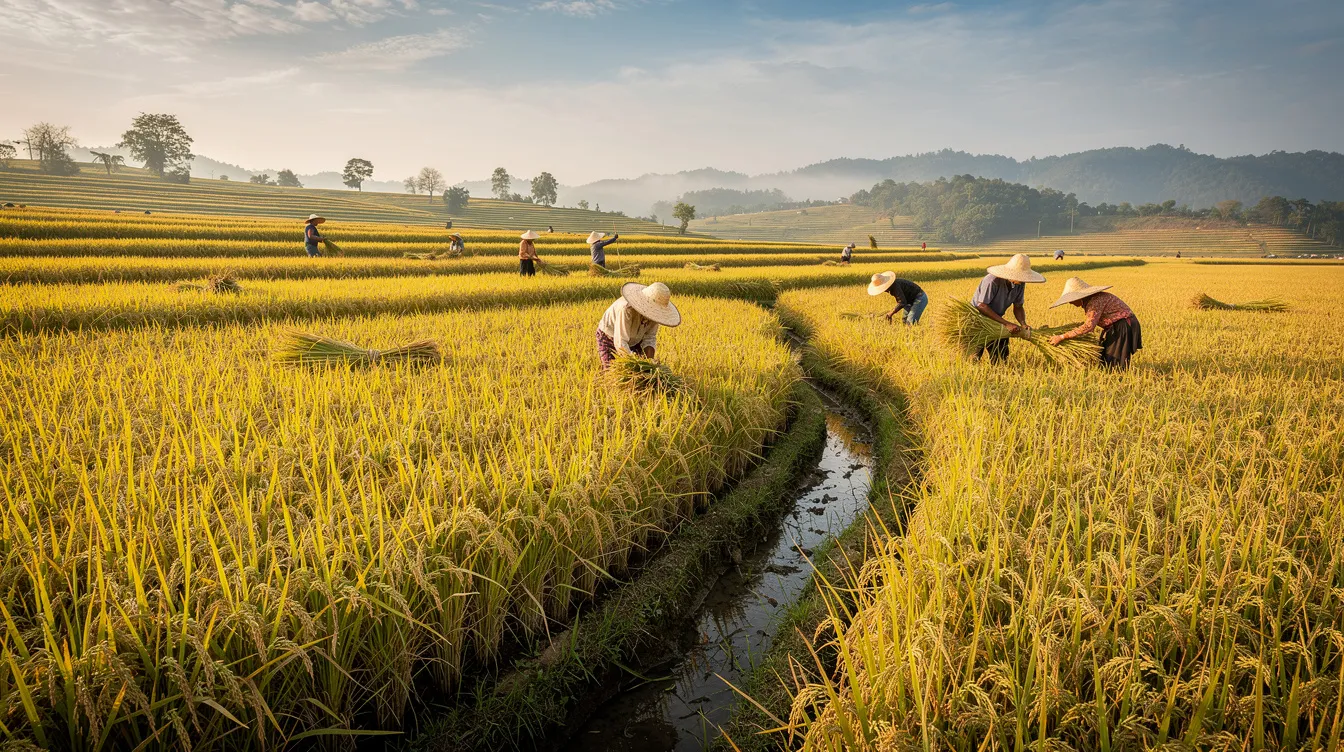
Paddy procurement costs significantly affect a rice mill’s gross margin. During kharif and rabi harvest seasons, heavy procurement requires large working capital, creating temporary cash flow gaps. Paddy price swings alter operating cash flows for rice mills engaged in bulk buying. Under-financed working capital may force mills to divert term-loan instalment funds towards paddy purchases, weakening DSCR. Efficient paddy procurement and milling practices support a higher DSCR. For procurement planning guidance, see Paddy Procurement & Raw Material Planning for Rice Mill.
Storage, Inventory & Their Impact on Cash Flow
Factors such as inventory management affect the cash flow of rice mills. Excessive rice stock and paddy inventory lock up funds-even when the P&L shows profit, cash remains blocked. Efficient stock rotation and planned storage and silo capacity improve cash flow stability and support better DSCR.
Working Capital Requirement, Cash Credit & DSCR
Seasonal working capital demands impact the DSCR for rice mills. A medium-sized mill may need ₹10–₹50 lakh for procurement alone. While DSCR technically covers term-loan servicing, interest on working capital facility reduces profit and indirectly weakens DSCR. Common issues include underestimating working-capital interest and assuming all sales are cash sales. See detailed norms at Working Capital Requirement for Rice Mill.
Profitability, Break-Even & Their Role in DSCR
Sustainable DSCR requires operating profitability. Power and utility expenses are substantial for rice milling operations and must be accurately projected. Gross margin, variable processing costs and fixed expenses determine break-even utilisation. A small drop in milling margin can push the unit below break-even and weaken DSCR across the tenure.
Financial Projections & Statements Required for DSCR Assessment
DSCR cannot be calculated in isolation. It requires projected Profit & Loss, Balance Sheet, Cash Flow Statement and a term-loan repayment schedule covering at least 5–7 years. CMA Data should capture assumptions on capacity utilisation, paddy pricing, power tariff, wage growth and interest rates. See the integrated framework at Rice Mill Financial Projections for DPR.
Machinery Cost, Technology Choice & Effect on Debt Service
A basic rice mill requires a pre-cleaner, huller and separator. A complete machinery set for 1–2 tonne/hour costs ₹8–₹18 lakh. Paddy huller machines cost between ₹1.5 lakh and ₹4 lakh, rice polishers range from ₹2 lakh to ₹5 lakh, and a rice mill needs an electrical panel costing ₹1–₹2 lakh. Advanced machinery increases investment but can deliver better milling recovery and lower unit processing cost. Base machinery cost on actual quotations, not arbitrary assumptions. For indicative equipment lists, see Rice Mill Machinery & Equipment Cost.
Land, Building, Plant Layout & Their Indirect Impact on DSCR
Land and factory building investments do not directly generate revenue. Over-investment in non-productive assets inflates project cost and required term loan. A balanced approach-moderate building cost with efficient plant layout-generally produces healthier DSCR than heavy civil works funded purely by bank debt.
Integrated Rice Mill Setup Cost & DSCR Perspective
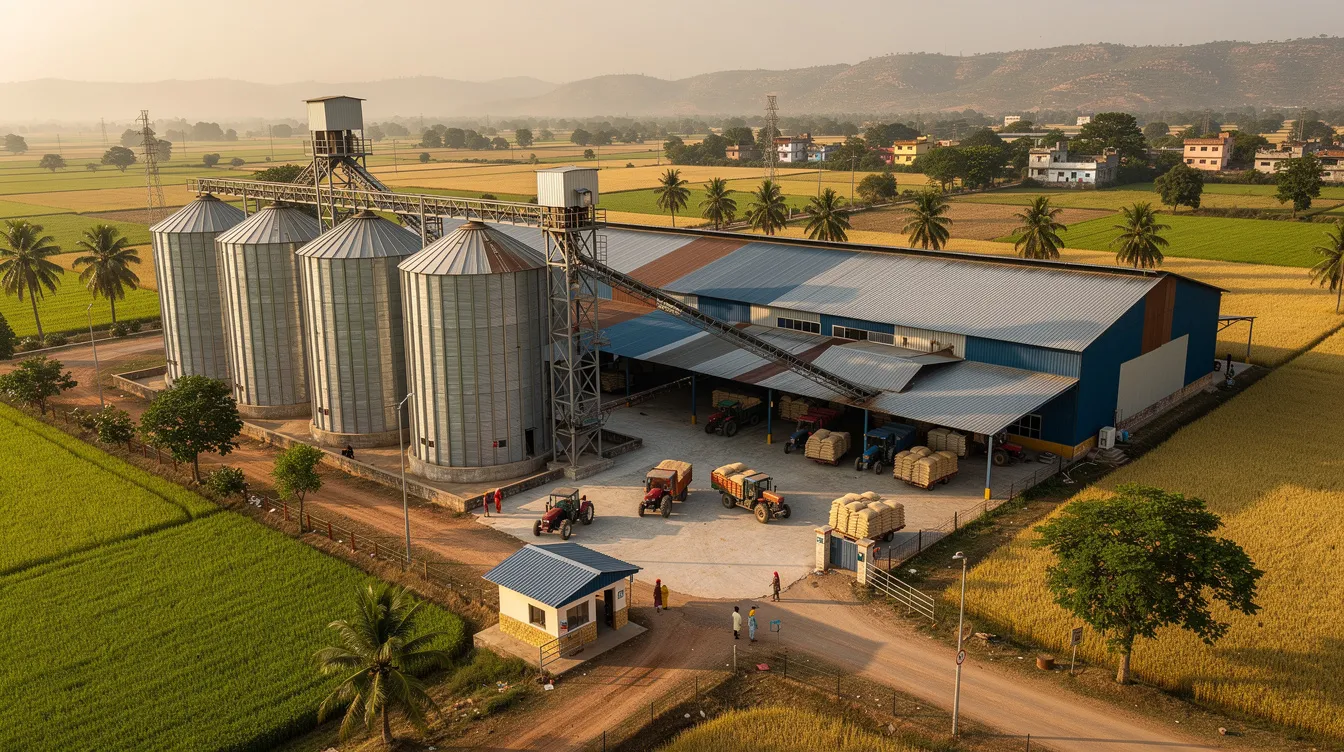
Integrated rice mills combining paddy drying, parboiling, milling, sorting and by-product value-addition involve higher project costs and longer payback. For such projects, lenders scrutinise DSCR, break-even and sensitivity analysis more strictly, especially for 8–10 year term loans. See Integrated Rice Mill Plant Setup Cost in India for investment ranges.
Rice Milling Process, Recovery Rates & DSCR
The milling recovery rate directly impacts a rice mill’s revenue. Steps include cleaning, dehusking, paddy separation, whitening, polishing, grading and packaging. Small differences in recovery-say 66% vs 68% head rice yield-materially affect revenue per tonne and year-wise DSCR. Rice milling faces significant commodity price volatility, affecting DSCR. Accurate recovery assumptions are central to credible DSCR calculations. See Rice Milling Process Flow Chart & Production Process.
Key Factors Banks Examine While Assessing Rice Mill Loan Repayment Capacity
| Factor | What Banks Check |
|---|---|
| DSCR | Year-wise and average; lenders typically look for a DSCR of 1.25 or higher; some bank policies require DSCR ≥ 1.50 for rice mill loans |
| Promoter Contribution | Minimum 25–30% equity; eligibility criteria vary by scheme |
| Collateral Security | Primary security (machinery, land) plus collateral as applicable |
| Working Capital | Adequate cash credit and insured stock coverage |
| Industry Outlook | Paddy supply risk, location, power availability, consent and approval status |
NABARD provides refinance support for agro-processing loans, and SBI Rice Mill Plus loans have no upper limit on loan amount. Existing units with proven track record may get more favourable terms than new rice mills.
How Repayment Tenure & Moratorium Influence DSCR
Shorter repayment period means higher annual principal, reducing DSCR. Longer tenure spreads principal but increases total interest cost. Moratorium (typically 6–12 months during commissioning) allows time to stabilise before full instalments begin. During moratorium, interest may still be payable per sanction terms. Interest rate fluctuations directly affect the DSCR calculation over the tenure. Structure tenure based on realistic cash-flow capacity, not to artificially inflate DSCR figures.
Capacity Utilisation Planning & DSCR Sensitivity
One of the most common issues in rice mill DPRs is unrealistic capacity utilisation. A logical ramp-up-55–60% in Year 1, 70–75% in Year 2, 80–85% thereafter-is subject to paddy availability, marketing tie-ups and competition. If utilisation drops from 75% to 60% in Year 2 due to poor harvest, DSCR may fall from 1.45 to 1.15, creating cash-flow stress.
Common Sensitivity Scenarios Affecting Rice Mill DSCR
| Scenario | Impact on DSCR |
|---|---|
| Paddy cost rises 10% | Reduces PAT, lowers DSCR |
| Rice selling price falls 5% | Revenue drop, weaker cash accrual |
| Capacity utilisation drops 15% | Significantly lower revenue and DSCR |
| Power tariff increases 10% | Higher costs, marginal DSCR reduction |
| Interest rate rises 2% | Higher debt service, direct DSCR reduction |
Some banks specifically ask for base case and stress case DSCR during appraisal of larger projects.
How to Improve DSCR Before Applying for a Rice Mill Term Loan
- Increase promoter contribution to reduce loan amount
- Optimise project scale to match actual paddy availability
- Avoid non-essential capital expenditure
- Negotiate appropriate repayment tenure
- Improve product mix-monetise rice bran, husk and broken rice
- Control inventory holding periods
- Explore subsidy schemes: PMEGP offers loans up to ₹50 lakh with 25–35% subsidy; PMFME provides loans up to ₹10 lakh with 35% subsidy
DSCR should not be improved by manipulating assumptions. Banks cross-check margins and utilisation against industry norms.
Common Mistakes in Rice Mill DSCR Projections
Frequent errors include overstated sales volume, assuming 100% capacity from Year 1, ignoring working-capital interest, mis-calculating term-loan interest and not syncing principal instalments with outstanding balance. Other mistakes: ignoring income tax, using incorrect depreciation rates, omitting seasonal inventory build-up and confusing profit with cash flow. Sustained low DSCR can limit access to capital and trigger closer monitoring. A low DSCR increases risk of insolvency and reduced access to financing over time.
DSCR in DPR & CMA Data for Rice Mill Project Finance
Any serious rice mill DPR for bank loan should include term-loan assumptions, repayment schedule, detailed DSCR workings and a summary table of year-wise and average DSCR. CMA Data typically contains projected P&L, Balance Sheet, fund-flow statement and ratio analysis. CA Manish Gugliya, as a practising Chartered Accountant, prepares, assists in preparation, structures and reviews financial projections, CMA Data and Detailed Project Reports based on information and assumptions provided by promoters. A well-structured DPR with clear DSCR explanation improves the quality of discussions with lenders and can reduce queries during appraisal.
Professional Insight from CA Manish Gugliya on Rice Mill DSCR
From practical experience across rice mill project finance assignments in multiple states, technically profitable rice mills sometimes face repayment stress because of excessive term-loan borrowing, heavy paddy inventory blocking funds, early repayment start before stabilisation and over-optimistic margin assumptions. Project finance should be structured around sustainable cash-flow capacity and realistic DSCR-not maximum possible loan amount. Promoters who recalibrate project size, strengthen equity and modify repayment schedules achieve more stable DSCR trends. Professional assistance in DPR, CMA Data and DSCR analysis aligns technical, commercial and financial aspects before approaching banks.
Conclusion: DSCR as Part of an Integrated Rice Mill Financial Model
DSCR for rice mill project is a central but not stand-alone measure. It must be evaluated alongside project cost, capacity planning, working capital, profitability and cash-flow pattern across seasons. A robust rice mill DSCR analysis should be built on realistic assumptions regarding paddy procurement, product mix, recovery, selling prices and operating costs, validated through detailed financial projections.
ProjectReportBank.com, under the professional guidance of CA Manish Gugliya, assists rice mill promoters, MSMEs and consultants with Detailed Project Reports, Bank Finance DPR, financial projections, CMA Data, DSCR analysis and loan repayment planning. If you are planning to set up, expand or modernise a rice mill, invest time in accurate DSCR-oriented planning at the DPR stage-it reduces surprises later and supports long-term financial viability. Visit the website for professional assistance in structuring your project finance before submitting proposals to banks.
Frequently Asked Questions on Rice Mill DSCR & Repayment Capacity
Is there a standard DSCR that all banks require for a rice mill loan?
There is no single statutory DSCR requirement. Many banks prefer DSCR comfortably above 1.00-some internal policies target 1.25–1.30 (for example, Central Bank of India’s rice mill cluster scheme requires average DSCR of 1.25), while others like UCO Bank require 1.50 for new projects. Exact benchmarks vary by bank, borrower risk profile, collateral cover and type of scheme. A borderline DSCR proposal might still be considered if other strengths such as strong security or experienced promoters are present.
Does working capital borrowing form part of DSCR calculation?
Classic DSCR for project term loans considers only term-loan principal and interest in total debt service, not cash credit. However, interest on working capital facility is part of operating expenses that reduce profit and thus indirectly impact cash available for term-loan repayment. In the rice mill DPR, working-capital interest must be fully reflected in P&L projections.
Can DSCR change after the bank has already sanctioned the rice mill loan?
Yes. DSCR is originally calculated on projected figures at appraisal, but actual DSCR in subsequent years may differ because of variations in paddy price, selling price, capacity utilisation, operating costs and interest rates. Banks may periodically review performance against projections, and sustained deterioration could trigger closer monitoring.
How should new rice mills without past financials approach DSCR planning?
New units must rely on carefully researched assumptions regarding paddy procurement, processing yields, selling prices and operating costs, ideally supported by market studies, supplier quotations and comparable industry data. Working with professionals such as CA Manish Gugliya helps prepare DPR and DSCR workings that can withstand scrutiny despite the absence of historical performance.
Who can prepare a DSCR-based DPR and CMA Data for a rice mill project?
DPR and CMA Data are typically prepared by Chartered Accountants, financial consultants or experienced project advisors familiar with rice milling operations, banking norms and project finance techniques. CA Manish Gugliya prepares, assists in preparation, analyses and structures rice mill financial projections, DPR and DSCR workings based on information and assumptions shared by promoters, ensuring alignment with practical banking expectations.