
Key Takeaways
- Working capital in a rice mill is dominated by paddy inventory (typically 60% to 70% of total working capital), finished goods stock and receivables, with procurement during harvest season creating sharp peaks in funding needs.
- A medium modern rice mill (4 TPH–8 TPH) commonly needs working capital running into a few crore rupees, while smaller mills typically require working capital ranging from ₹5 lakh to ₹50 lakh depending on scale, paddy prices and holding period.
- Banks generally fund rice mill working capital through Cash Credit limits, based on stock and book-debt levels, after deducting the promoter’s margin (usually 20%–30%).
- Working capital needs typically range from 30% to 50% of total project cost, making proper assessment in DPR, financial projections and CMA Data essential for bank finance approval.
- Underestimating working capital can cause liquidity stress even in a technically profitable unit, particularly during months when cash outflow occurs upfront during paddy procurement while revenue from milled rice is realised over 2–4 months post-harvest.
Introduction – Working Capital in a Rice Mill Project
Operating a rice mill requires substantial working capital due to its seasonal nature. In my professional experience preparing DPRs and bank finance proposals, I have seen otherwise viable rice mill units face severe cash flow problems simply because working capital was underestimated at the project planning stage.
Working capital, defined as current assets minus current liabilities, represents the funds required to run daily operations. It is distinct from fixed capital spent on land, factory building, machinery and infrastructure. In a rice mill, large amounts remain blocked in paddy stock, work-in-process, finished rice, by-products and receivables at any given time.
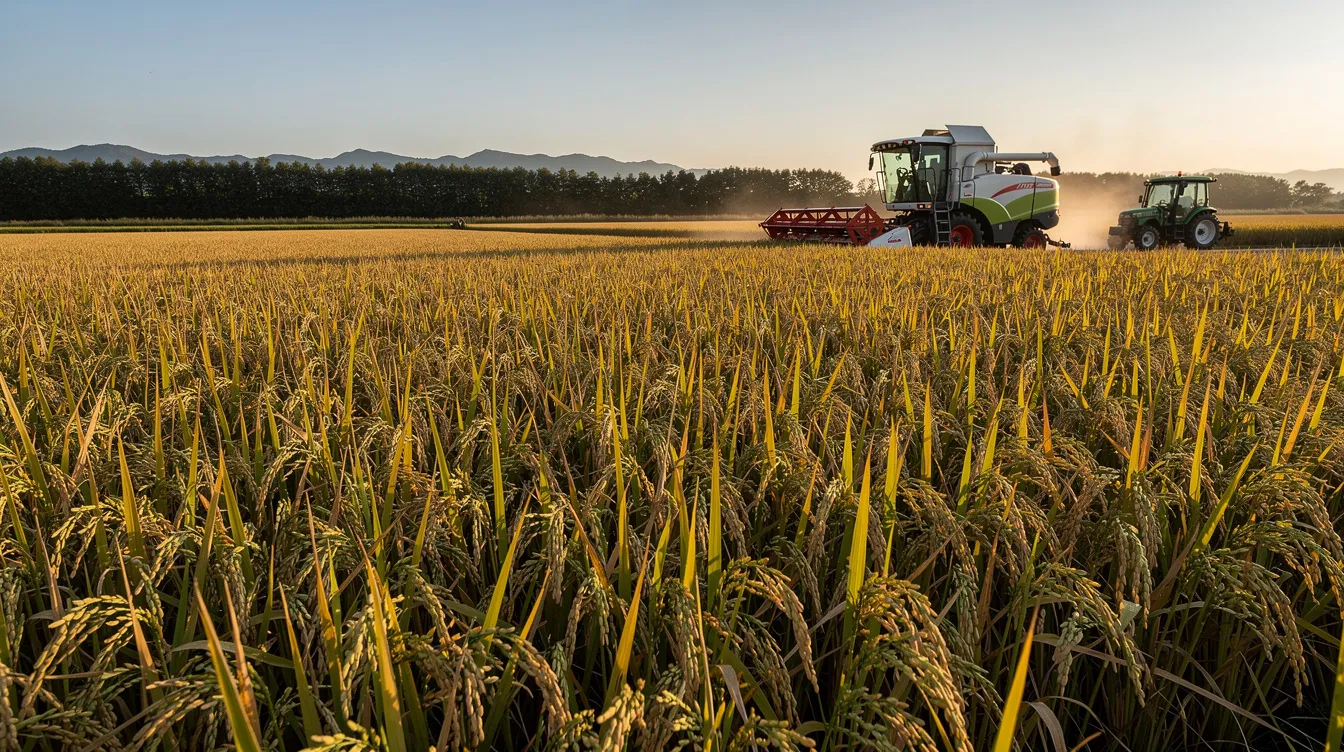
The kharif and rabi harvest seasons create concentrated procurement windows. Rice mills experience massive cash outflows during these harvest seasons for paddy procurement, while sales and collections happen gradually over subsequent months. This mismatch makes working capital planning indispensable.
A common mistake is treating working capital as a flat percentage of project cost. Instead, the requirement should be derived from operating-cycle assumptions – days of raw material stock, processing time, finished goods holding, credit period to buyers and credit received from suppliers. Proper modelling in DPR and CMA Data is what makes a rice mill finance proposal credible to any bank.
Components of Working Capital Requirement for Rice Mill
Every rice mill working capital assessment begins with identifying the relevant current assets and current liabilities.
Key current assets:
- Paddy and other raw materials
- Work-in-process inventory
- Finished goods (rice, broken rice, bran, husk)
- Trade receivables (book debts)
- Cash and bank balances
- Advances and other operating current assets
Key current liabilities:
- Trade creditors (paddy suppliers, packing material vendors)
- Outstanding expenses (wages, electricity, transport)
- Statutory dues
- Short-term bank borrowing (Cash Credit utilisation)
Net working capital is gross current assets minus these current liabilities. The following subsections detail each major component applicable to a practical rice mill project in India.
Paddy and Raw Material Inventory
Paddy stock is usually the single largest item, and raw material inventory, primarily paddy, usually accounts for 60% to 70% of total working capital. Paddy procurement often necessitates buying in large quantities during a limited harvesting period, because prices tend to be lower and availability better during the season.
Consider a 4 TPH rice mill operating at 70% capacity utilisation. At roughly 20 operating hours per day and 300 working days, annual paddy requirement may be around 16,000–17,000 tonnes. At an average paddy price of ₹2,400 per quintal, monthly consumption value works out to approximately ₹3.2–₹3.4 crore. Holding even 45–60 days of paddy stock can lock up ₹5–₹7 crore in raw material inventory alone. A medium-sized rice mill needs ₹10 lakh to ₹50 lakh for procurement at smaller scales, and multiples of that for larger units.
The number of months of stock, procurement sources (farmers, mandis, traders), moisture and quality adjustments, and costs like transport and unloading all add to the raw material value. For a deeper understanding of how annual paddy requirement connects with paddy procurement planning, promoters should model these assumptions carefully in their DPR.
Paddy Storage and Warehouse Requirement
How much paddy a rice mill can physically store – in owned godowns, silos or hired warehouses – puts a practical ceiling on inventory levels and hence on working capital locked in stock. Storage capacity should be planned in metric tonnes, translating to approximate months of coverage at expected daily consumption.
Poor storage efficiency can lead to increased cash requirements due to losses from moisture, pests and spoilage. Associated costs include rent (if on lease basis), insurance, fumigation and handling. Bank-financed stock must be covered by proper stock registers, insurance and periodic inspection as part of hypothecation arrangements. Understanding paddy storage requirements is essential for realistic working capital projections.
Work-in-Process (WIP) Inventory
WIP in a rice mill includes paddy under drying, soaking (for parboiled rice mills), conditioning, de-husking, polishing, grading and sorting. The value is estimated using average processing days multiplied by the cost of material plus proportionate processing expenses.
Although WIP is normally smaller than raw material or finished goods inventory, rice mills engaged in parboiling with long soak-dry cycles may have noticeably higher WIP days than simple raw rice units. This difference must be reflected in the operating cycle.
Finished Goods Inventory – Rice and By-Products
Finished goods include raw rice, parboiled rice, broken rice, bran and husk. Holding period depends on whether the mill sells in bulk (15–20 days), through retail or branded channels (30–45 days), or for export (potentially longer).
Milling by-products like rice bran and husk can generate additional steady cash flow if sold quickly, but banks may cap by-product inventory value at 5%–10% of finished goods stock to avoid overvaluation. The rice mill revenue model and product mix directly influences how much working capital remains tied in finished goods.
Receivables / Debtors
The credit period extended to buyers generally spans 15 to 45 days depending on whether the mill sells to local traders (shorter credit), institutional buyers or exporters (longer credit). Rice mills operate on credit cycles which can significantly vary between suppliers and buyers.
Banks consider only eligible receivables – typically invoices not older than 90 days and free from dispute – while computing drawing power. For example, if monthly sales are ₹3 crore and average collection period is 30 days, receivables of approximately ₹3 crore will appear in the working capital assessment.
Cash and Bank Balance
Rice mills must manage substantial cash flow for labour and utilities due to heavy machinery usage. A realistic DPR assumption is cash equal to 7–10 days of operating expenses (wages, electricity, fuel, freight, minor repairs). Excessive cash balance assumptions should be avoided; part of the operational float is typically covered by Cash Credit utilisation itself.
Trade Creditors and Other Current Liabilities
Credit terms from suppliers can alleviate immediate cash pressures. Packaging suppliers may offer 30–45 days credit, but paddy purchases from farmers are often against immediate payment. This limits creditor support during peak harvest procurement and increases the net working capital requirement. Projected creditors in DPR and CMA Data must be consistent with actual procurement policy and cannot be inflated.
Rice Mill Operating Cycle and Working Capital Cycle
The rice mill operating cycle flows as: Cash → Paddy Purchase → Storage → Milling/Processing → Finished Rice & By-Products → Sale → Receivables → Cash Realisation.
The cash conversion cycle for rice mills is influenced by inventory days, receivable cycles, and payable terms. An illustrative operating cycle table:
| Component | Illustrative Days |
|---|---|
| Raw material holding (paddy) | 45–60 |
| Processing / WIP | 2–3 |
| Finished goods holding | 20–30 |
| Receivables | 30 |
| Less: Creditors | 20–25 |
| Net Operating Cycle | 77–98 days |
These days are purely illustrative. According to CARE Ratings data, existing rice mills show inventory holding of 80–100 days and net operating cycles often exceeding 90–130 days during peak season. Longer cycles directly increase the required Cash Credit limit and interest cost.
How to Calculate Working Capital Requirement for Rice Mill
The basic formula in narrative form:
Gross Working Capital = Raw Material Inventory + WIP + Finished Goods + Receivables + Cash & Other Current Assets
Net Working Capital Requirement = Gross Working Capital − Trade Creditors − Other Current Liabilities
Each component is estimated as: daily consumption or production cost × holding days. The net requirement is then split between the promoter’s margin contribution and bank working capital finance. The detailed illustrative example below demonstrates this step by step, linked closely to rice mill production capacity planning.
Relationship Between Production Capacity, Paddy Price and Working Capital
Higher processing capacity demands larger volumes of raw materials, directly increasing inventory value and receivables. A mill expanding from 2 TPH to 8 TPH may see its working capital requirement multiply by 3–4 times.
Capacity utilisation also matters. New rice mills operating at 50%–60% in the initial year need less working capital than at stabilised 80%–90% utilisation. Paddy pricing highly influences working capital due to its status as the largest cost driver. A 10% increase in paddy price can raise raw material inventory value by ₹50–₹70 lakh for a mid-size unit even when quantity and holding days remain unchanged. Seasonal price fluctuations increase cash flow pressure for mills, making sensitivity analysis in DPR and rice mill financial projections indispensable.
Seasonal Nature of Rice Mill Working Capital
During the kharif harvest (October–December) and rabi harvest (March–May), paddy availability peaks and rice mills face cash flow gaps during harvest seasons. Most mills procure 60%–80% of their annual paddy requirement within these windows to secure quantity and price advantage.
Revenue from milled rice is realised over 2–4 months post-harvest, while cash outflow is concentrated upfront. This creates a pronounced mismatch. Banks often structure peak-season and non-peak limits, and some lenders offer seasonal enhancement or ad hoc credit limits subject to projected stock levels. Many rice mills secure working capital loans specifically to fund these upfront capital needs.
Working Capital Requirement in Rice Mill DPR and Project Cost
A Detailed Project Report for a rice mill should present capacity utilisation assumptions, annual paddy requirement, paddy prices, inventory-holding days, finished goods stock days, receivable and creditor periods, and the resulting current assets and current liabilities for each projected year.
Working capital needs typically range from 30% to 50% of total project cost. However, in a typical rice mill project cost and means of finance statement, only margin money for working capital (the promoter’s share) is included as part of project cost. The balance is separately financed via Cash Credit or working capital facility from the bank. DPR assumptions must remain consistent with CMA Data and projected balance sheet.
Bank Finance, Cash Credit Limit and Drawing Power for Rice Mills
Common bank facilities for rice mill working capital include Cash Credit (CC) on hypothecation, Working Capital Demand Loan, and seasonal or ad hoc limits. Cash credit facilities allow multiple withdrawals within a sanctioned limit, with interest charged on daily utilisation. Security is typically hypothecation of stocks and eligible book debts.
Banks assess credit limits using the projected turnover method (often 25% of annual turnover for smaller limits), the operating cycle method, or a hybrid. NABARD provides refinance support to banks for agro-processing sectors, improving the availability of funds for eligible borrowers.
Drawing power is computed monthly: eligible stock value + eligible receivables − applicable margin (typically 20%–25% on stock, 25% on book debts) − certain current liabilities. The sanctioned CC limit and drawing power are not always identical – drawing power depends on actual stock held. Working capital loans typically have a 12-month renewal period.
Specific products worth noting: SBI Rice Mill Plus loan has no upper ceiling on loan amount, with term loan repayment of 5 to 7 years under the scheme. KVB Rice Plus offers short-term loans for seasonal fund requirements and is available for rice mill units with investment up to ₹10 crore. Flexi working capital loans from some lenders can cover 125% of additional requirements during peak season. Rice mill cash credit limits for medium-size units commonly range from ₹10 lakh to ₹50 lakh at smaller scales, scaling higher for larger operations.
For the concept of Maximum Permissible Bank Finance (MPBF), the working capital gap (total current assets minus current liabilities excluding bank borrowing) is divided between borrower contribution and bank finance, subject to maintaining acceptable current ratio.
After sanction, banks require regular stock statements, book-debt statements, insurance proof and sometimes stock audits for monitoring drawing power and compliance.
CMA Data, Interest Cost and Effect on Rice Mill Profitability
CMA Data – covering projected operating statements, balance sheets, fund-flow analysis, current asset/liability breakdowns and key ratios – is commonly required by lenders for rice mill working capital limit assessment. The assumptions for stock days, receivables and creditors must match those in the DPR.
Interest on working capital is a recurring cost. For instance, if a rice mill utilises an average of ₹4 crore CC at 10% per annum, annual interest cost is approximately ₹40 lakh – directly reducing net profit, affecting DSCR and raising the break-even point. This impact should be modelled carefully in rice mill profitability analysis.
Effect of Revenue Model, Machinery and Production Process on Working Capital
Branded packaged rice and export models involve higher finished-goods stock and longer credit terms compared with bulk sales, increasing the working capital facility requirement. By contrast, mills selling primarily in bulk with shorter credit cycles can keep receivables lean.
Modern, efficient rice mill machinery with better recovery and faster throughput shortens processing time, reducing WIP days. The rice milling process flow – parboiling, drying, milling, grading, packing – collectively determines how many days of WIP inventory the unit carries.
Illustrative Example of Rice Mill Working Capital Calculation
Assumptions (illustrative only): 4 TPH rice mill, 70% utilisation, ~300 working days, annual paddy consumption ~16,800 tonnes, paddy cost ₹2,400/qtl, annual turnover ~₹38 crore.
| Component | Basis | Value (₹ Lakh) |
|---|---|---|
| Raw material inventory | 45 days of paddy consumption | 553 |
| WIP | 2 days of production cost | 23 |
| Finished goods | 25 days of cost of production | 243 |
| Receivables | 30 days of sales | 317 |
| Cash & bank balance | 10 days of operating expenses | 32 |
| Gross Working Capital | 1,168 | |
| Less: Trade creditors | 25 days of purchases | 230 |
| Less: Other current liabilities | Statutory dues, expenses | 38 |
| Net Working Capital Requirement | 900 | |
| Promoter’s margin (~25%) | 225 | |
| Indicative bank working capital finance | 675 |
These figures feed directly into the DPR and the bank’s CC limit assessment. Actual values will vary by capacity, utilisation, paddy price, procurement policy and market conditions.
New vs Existing Rice Mills, Expansion and Ongoing Monitoring
For new rice mills, working capital assessment relies entirely on projections, phased capacity build-up and initial margin money. For existing units, banks rely on historical stock levels, receivable ageing and CC account turnover. When an existing mill expands capacity or adds parboiling, it must reassess working capital and seek CC limit enhancement. Understanding integrated rice mill plant setup cost helps in planning this transition.
Ongoing monitoring includes monthly stock statements, book-debt statements, updated insurance, stock audits where applicable, and financial results submission. Underestimating working capital during expansion can cause liquidity stress even when revenue grows.
Practical Tips, Common Mistakes and Ways to Optimise Working Capital
Factors that increase requirement: longer paddy holding, higher paddy prices, increased capacity utilisation, extended customer credit, slow collection, branded inventory, export receivables and weak supplier credit.
Factors that reduce requirement: efficient paddy procurement planning, faster inventory turnover, shorter collection cycles, negotiated supplier credit, better production scheduling and quicker sale of by-products on cash terms.
Common DPR mistakes:
- Assuming working capital as a fixed percentage of project cost without operating-cycle analysis
- Ignoring seasonal procurement peaks
- Underestimating finished goods stock or assuming unrealistic creditor days
- Excluding interest on working capital from profitability projections
- Not updating working capital projections when capacity utilisation rises
Sensitivity analysis for paddy price changes, stock days and receivable period helps quantify working capital risk.
Frequently Asked Questions
How much working capital is generally required for a medium-sized rice mill in India?
For a modern rice mill in the 4–8 TPH range at reasonable utilisation, total working capital commonly runs into a few crore rupees. Smaller mills typically require working capital ranging from ₹5 lakh to ₹50 lakh depending on scale. The exact figure depends on paddy price, months of stock held, finished-goods days and credit period to customers. Only project-specific calculations in DPR and CMA Data provide reliable estimates.
Is working capital always financed fully by the bank through Cash Credit?
No. Banks normally expect the borrower to bring margin money (typically 20%–30% of the working capital gap). The balance is financed via CC or related facilities. The exact margin depends on lender policy, credit rating, collateral security and applicable scheme. PMEGP provides credit-linked subsidies for new micro-enterprises, which can help with the promoter contribution component.
How does collateral security affect rice mill working capital finance?
Primary security is hypothecation of paddy, rice and by-product stocks and eligible book debts. Many banks require additional collateral security such as mortgage of factory building and land, especially for higher limits. CGTMSE offers credit guarantees for MSME loans without collateral, which can reduce collateral requirements for smaller new units meeting the eligibility criteria.
Can a new rice mill obtain a working capital limit along with the term loan at project stage?
Subject to appraisal and lender policy, new units are often sanctioned both a term loan (for building and machinery) and a working capital facility as part of the same project finance package. Sanction is based on DPR, financial projections, promoter contribution, viability and security. The CC limit typically becomes operational as the unit nears commissioning.
Can gold loans be used for rice mill working capital?
Gold loans can serve as short-term funding for small mills and are often easier to obtain than secured business loans, since eligibility depends on the value of gold pledged rather than business financials. However, gold loans are not a substitute for a properly structured Cash Credit facility for sustained operations. They may be useful as a convenience for bridging very short-term gaps but should not be relied upon for regular procurement finance.
Conclusion
Accurate assessment of the working capital requirement for rice mill operations is as fundamental to a project’s success as selecting the right machinery. Paddy inventory, seasonal procurement, finished goods stock and receivables form the core of rice mill working capital and must be modelled using realistic operating-cycle assumptions – not arbitrary percentages.
DPR, project cost and means of finance, working capital projections, CMA Data and bank finance proposals must all be internally consistent. Underestimating working capital, or ignoring seasonality, can create strain even when the rice mill is profitable on paper.
Entrepreneurs and consultants planning a new rice mill, expansion or bank-financed project may seek professional assistance from CA Manish Gugliya and ProjectReportBank.com for preparation and analysis of Detailed Project Reports, financial projections, working capital assessment, CMA Data and bank-finance proposals. No guarantee of loan sanction or approval is implied – the purpose is to ensure your project is presented with the rigour and detail that lenders expect.