
Key Takeaways
- Paddy procurement for rice mill is not merely a purchasing activity – it is a core driver of plant capacity utilisation, working capital requirement, and overall project feasibility.
- Annual paddy requirement depends on rice mill capacity, operating days, utilisation, and milling recovery. Miscalculating this can make an otherwise good project unviable.
- Rice mills in India face seasonal paddy procurement cycles, requiring careful planning of storage areas, paddy godowns and cash credit limits to buy adequate stock during harvest.
- A professional rice mill DPR must analyse local paddy availability, procurement radius, landed cost, quality parameters and inventory policy before bankers will take projections seriously.
- All prices, recoveries and procurement conditions vary by state, season, and variety. Figures in this article are illustrative for planning concepts only.
Introduction: Why Paddy Procurement Determines Rice Mill Viability
Rice mills earn revenue only when adequate and consistent paddy is procured at the right price and quality. Paddy procurement is crucial for mill profitability and quality output – no amount of advanced machinery or rice installation can compensate for a weak raw material supply chain. Typically, paddy represents 65–75% of operating cost in a commercial rice mill, making rice mill raw material planning a central chapter of any DPR or feasibility study.
Projects fail or underperform for predictable reasons: the facility is located far from paddy producing regions, the procurement network is underdeveloped, limited working capital restricts paddy purchases during harvest, storage areas are inadequate, or poor-quality raw paddy leads to low milling recovery. Each of these failures directly impacts capacity utilisation, gross margin, DSCR and loan repayment – the metrics bankers scrutinise most. Streamlined processes in paddy procurement improve operational profitability and bankability simultaneously. This article focuses on commercial and integrated rice mills in India and is meant for promoters, bankers and consultants preparing or reviewing rice mill project reports.
Understanding the Raw Material Requirement of a Rice Mill
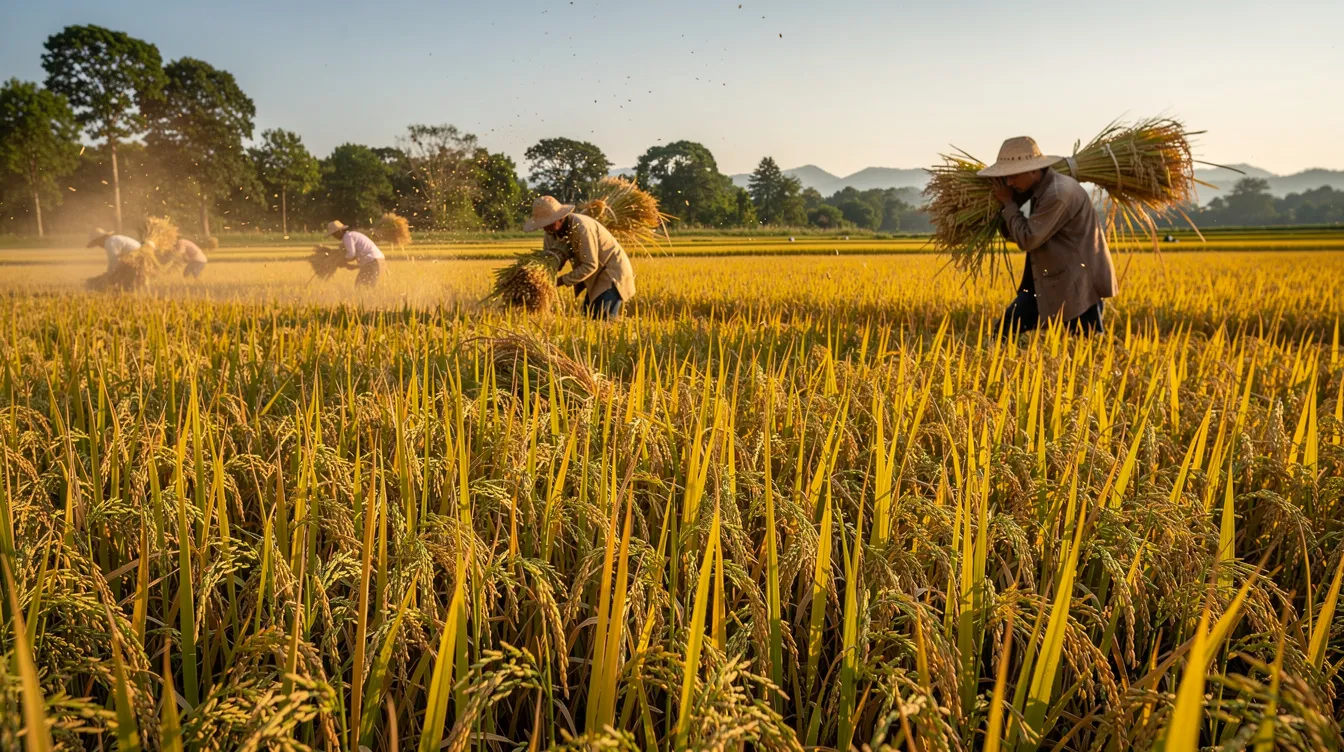
Paddy is the primary raw material, and rice mill raw material planning must convert installed milling capacity into a realistic annual paddy requirement. Key drivers include rated capacity (e.g., 2 TPH or 5 TPH), operating hours per day (typically 16–20), operating days per year (270–300 for Indian mills), and practical capacity utilisation (65–80%). A rice mill requires several machines for processing paddy through cleaning, drying, husking, polishing and grading stages – each influencing net throughput.
An effective procurement strategy considers the mill’s capacity and expected operating days rather than nameplate specifications alone. Rice milling is energy-intensive and requires reliable power supply – for instance, a 2 MT/hr unit typically needs around 75 KW – and consistent water supply. These infrastructure realities, alongside paddy availability constraints, determine the difference between theoretical capacity and achievable production.
Formula & Examples: Calculating Daily and Annual Paddy Requirement
The paddy consumption calculation for rice mill follows a straightforward formula:
Annual Paddy Requirement (tonnes) = Rated Capacity (TPH) × Operating Hours/Day × Operating Days/Year × Capacity Utilisation (%)
Each variable must be decided realistically. Operating hours should account for shift patterns and maintenance. Capacity utilisation for a new project in DPR stage is typically assumed at 65–75% in early years.
Table 1 – Indicative Annual Paddy Requirement by Rice Mill Capacity
| Plant Capacity (TPH) | Operating Hours/Day | Operating Days/Year | Capacity Utilisation (%) | Indicative Annual Paddy Requirement (Tonnes) |
|---|---|---|---|---|
| 1 | 16 | 280 | 70% | 3,136 |
| 2 | 16 | 280 | 70% | 6,272 |
| 5 | 16 | 280 | 70% | 15,680 |
| 10 | 20 | 290 | 75% | 43,500 |
All figures are illustrative. Actual requirements depend on project configuration, process type and local conditions.
To reconcile paddy requirement per ton of rice, apply indicative milling recovery (typically 65–70%). For example, producing 10,500 tonnes of milled rice requires approximately 15,680 tonnes of paddy at 67% recovery. Promoters should not treat sample ratios as universal norms. For guidance on selecting the right rice mill capacity, capacity must be matched against sustainable raw material availability.
Paddy-to-Rice Recovery, Material Balance and Milling Economics
The rice milling process converts paddy input into head rice, broken rice, bran, husk and minor losses. Procurement planning must consider all outputs. According to IRRI research, modern multi-stage mills achieve 65–70% milling recovery under optimal conditions, while ICAR data reports head rice recovery of approximately 57% for Grade-A paddy.
Illustrative Material Balance for 100 Tonnes of Paddy:
| Output | Indicative Range (Tonnes) |
|---|---|
| Head Rice | 50–58 |
| Broken Rice | 8–12 |
| Bran | 5–8 |
| Husk | 20–22 |
| Process Losses (dust, immature grains) | 2–5 |
Paddy quality impacts the financial margins and head rice recovery rates significantly. Even a 3% drop in milling recovery on 15,000 tonnes of paddy means ~450 fewer tonnes of finished rice – a substantial revenue loss that directly affects paddy procurement strategy and profitability.
Paddy Procurement Sources and Rice Mill Sourcing Channels in India
A sound paddy procurement process for rice mill operations requires a diversified rice mill procurement network. The procurement process involves sourcing, quality inspection, payment, and storage – and reliance on a single channel creates supply risk. Digital solutions can enhance traceability and efficiency across the procurement process.
Direct Procurement from Farmers
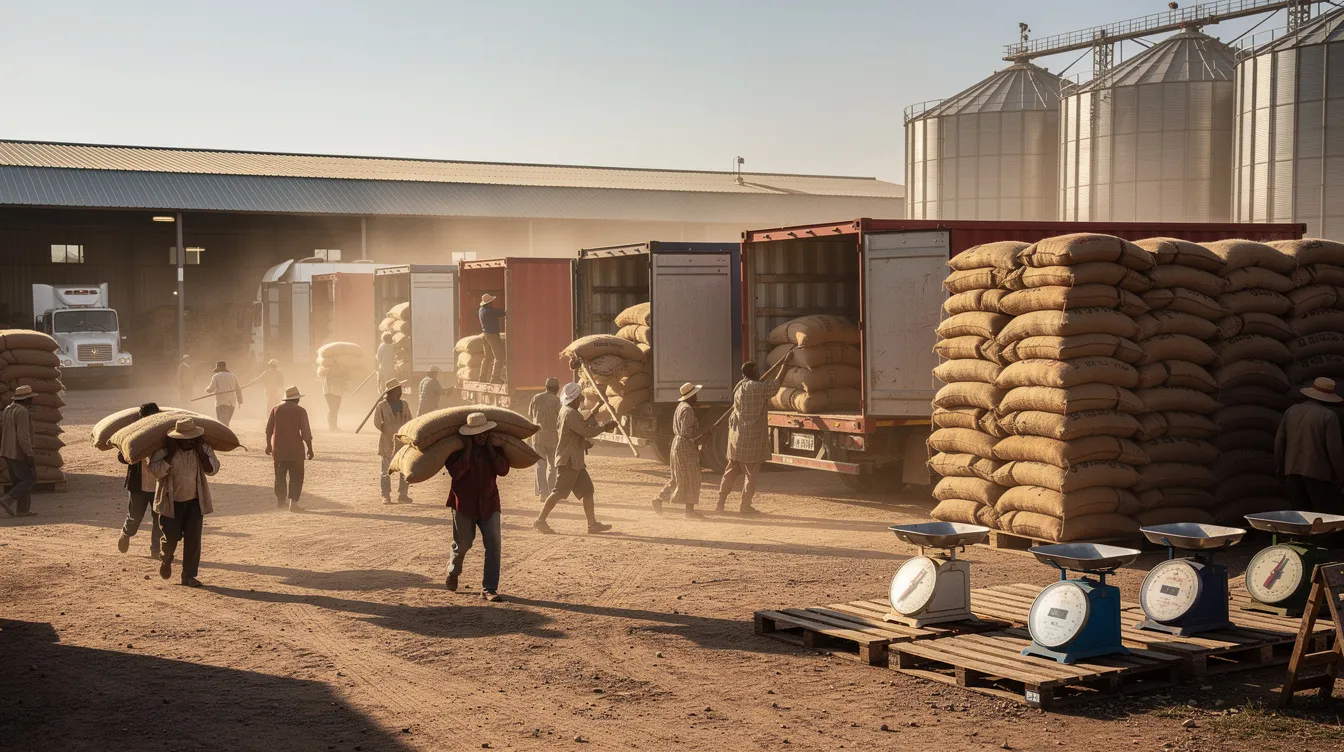
Building direct relationships with farmers ensures a steady supply of high-quality paddy. Direct farmer partnerships enhance traceability and reduce procurement costs. Farmers register with procurement centers or directly with rice mills for selling paddy. This channel requires field teams, weighing equipment, paddy quality testing at village collection points, and timely payments via NEFT/UPI. The challenges include aggregation of small lots, higher logistics coordination, and training staff in paddy grading for rice mill operations.
Procurement from APMC Mandis
APMC paddy procurement through regulated mandis offers volume and variety diversity. Mills can procure paddy through auction or bidding, though mandi fees and commission charges add to landed cost. Paddy sourcing from APMC mandi simplifies logistics but demands quick quality checks and moisture assessment under time pressure.
Traders, Aggregators and Commission Agents
Local traders and agencies help stabilise supply during peak and lean seasons, often at a premium. Benefits include reduced procurement management load and credit terms, but there is risk of dependence on few suppliers with limited transparency on origin and quality.
Farmer Producer Organisations (FPOs) and Cooperatives
FPOs can provide semi-organised bulk procurement from farmers with scope for quality standards and pre-agreed pricing. DPRs highlighting tie-ups with FPOs strengthen feasibility in the eyes of bankers by demonstrating a secured and systematic sourcing approach.
Contractual or Pre-Arranged Procurement
Forward purchase agreements with indicative price bands linked to mandi rates can reduce paddy price fluctuation risk but depend on production realities. Changes in procurement policy can affect logistics and supply chain operations for rice mills, so such arrangements need proper risk wording in the project report.
Assessing Local Paddy Availability Before Finalising Rice Mill Location
A rice mill feasibility study raw material analysis must precede land purchase or capacity finalisation. The critical distinction is between total district paddy production and realistic paddy available after adjusting for farmers’ own consumption, government procurement through the Food Corporation of India and central pool operations, existing competing millers, and local use (seed, feed, economy-level consumption).
Study district-wise crop statistics, historical mandi arrivals, irrigation coverage and yield trends. Map competing rice mills within the procurement radius, their capacities and procurement share. A 2 MT/hr rice mill needs approximately 1 to 1.5 acres of land, and the site must be elevated to prevent flooding, with proper drainage systems essential to avoid waterlogging. Proximity to paddy fields reduces transportation costs significantly.
CA Manish Gugliya’s Practical Insight: Lenders prefer DPRs that demonstrate where the projected tonnage of paddy will actually come from – by district, by mandi, by season – not just annual consumption stated as a single number. This analysis is what separates a bankable project report from a generic document.
Procurement Radius, Logistics and Landed Cost of Paddy
The procurement radius defines the distance within which it remains economical to source paddy. Cost components that increase with distance include freight, loading/unloading, transit losses and quality deterioration. Procurement efficiency relies on optimizing logistics to reduce costs and transit delays. Bottlenecks at weighbridges can impact logistics and crop quality during peak season.
| Factor | 20 km Radius | 80 km Radius |
|---|---|---|
| Transport Cost (₹/quintal) | ₹15–25 | ₹60–120 |
| Transit Time | 1–2 hours | 4–6 hours |
| Quality Risk | Low | Moderate–High |
DPRs should calculate a project-specific optimum radius based on transport rates, road conditions and daily paddy requirement. For rice mill land and building requirements, truck movement and unloading areas must be planned within the overall plant layout.
Seasonality of Paddy Procurement and Inventory Planning
The major paddy procurement season in India follows the kharif harvest (October–December), with rabi crops contributing in some regions (April–June). Mills typically procure large volumes during peak arrivals at relatively lower prices and process stock over subsequent months, creating a seasonal working capital challenge.
Seasonal paddy price trends generally show lower prices at peak arrivals and firmer prices in lean months – though actual movement varies by state and year. A buffer stock for rice mill operations is essential to avoid plant stoppage during temporary supply disruptions. DPRs should explicitly state whether the business model involves heavy seasonal stocking, moderate stocking or near just-in-time procurement, as this directly determines godown requirement and working capital for paddy procurement.
Paddy Variety Selection and Market Alignment
Paddy procurement strategy must align with target markets – common non-basmati rice, premium long-grain, parboiled rice, or aromatic segments. DPRs should identify 3–5 representative paddy varieties relevant to the project’s state, noting how variety affects milling recovery, broken percentage, and by-product yield.
Integrated rice mill raw material planning should consider by-product markets: bran for solvent extraction, husk for boiler fuel. Promoters should consult local buyers, wholesalers and exporters to match paddy variety selection with realistic offtake and document this in the rice mill DPR.
Quality Parameters, Moisture Content and Acceptance Standards
Quality control during procurement helps prevent storage and milling losses. Paddy quality parameters for rice milling directly affect rice recovery from paddy, storage life and sale price.
Table 3 – Key Paddy Quality Parameters
| Parameter | Why It Matters | Possible Impact on Milling |
|---|---|---|
| Moisture Content | High moisture paddy incurs risks of fungal growth and milling breakage | Reduced head rice recovery, storage spoilage |
| Foreign Matter (dust, stones) | Increases cleaning losses, damages equipment | Lower net yield, higher maintenance cost |
| Immature/Shrivelled Grains | Cannot produce whole kernels | Higher broken percentage, lower sale price |
| Varietal Purity | Mixed varieties produce inconsistent grain size | Uneven milling, grading difficulties |
| Discoloured/Damaged Grains | Indicates sprouted or weather-damaged paddy | Lower grade classification, price penalties |
| Infestation | Pest-affected paddy deteriorates rapidly | Storage losses, contamination of clean stock |
Moisture content should ideally be between 14% and 16% for effective storage. Moisture management is key to maintaining milling performance and profitability. Quality testing includes moisture content assessment to maintain ideal levels for milling at every purchase point.
Example: Two paddy lots at identical mandi price of ₹2,200/quintal – Lot A at 14% moisture, Lot B at 18% moisture. Lot B contains approximately 4.7% more water weight. After drying losses and drying cost (~₹30–50/quintal), the effective cost of Lot B is ₹2,300+ per quintal of dry-equivalent paddy. Purchasing purely on quoted price without moisture adjustment is a common and costly mistake.
Paddy Pricing, MSP and Landed Procurement Cost at the Mill Gate
For DPR and finance purposes, the relevant figure is landed paddy purchase cost for rice mill at the factory gate, not the quoted mandi price.
Landed cost components: base purchase price + mandi fees + commission + weighing charges + bagging + loading/unloading + transportation + drying/storage losses + finance cost during holding.
Government procurement in India is tied to minimum support price and quality specifications. For 2025-26, MSP for Common paddy was fixed at ₹2,369/quintal and Grade-A at ₹2,389/quintal. However, mandi prices can differ – in August 2025, paddy was trading around ₹2,133/quintal in many markets. The central govt sets MSP as a floor, but private rice mills buy at market-driven rates. A nodal agency like the Food Corporation manages central pool procurement, while private mills operate independently.
Table 5 – Procurement Cost Sensitivity
| Scenario | Paddy Cost Change | Recovery Assumption | Likely Impact on Margin |
|---|---|---|---|
| Base Case | Market price (~₹2,200/qtl) | 67% recovery | Standard margin |
| +5% Paddy Cost | +₹110/qtl | 67% recovery | Margin compressed 8–12% |
| +10% Paddy Cost | +₹220/qtl | 67% recovery | Margin compressed 15–20% |
| Base Price + Lower Recovery | No change | 62% recovery | Equivalent to ~7% cost increase |
DPRs should not mechanically assume MSP as procurement price. Use recent average market prices with sensitivity ranges for paddy price fluctuation. Legal compliance with food safety and government quotas is essential for rice mills operating in the scheme of government procurement.
Paddy Storage, Godown Planning and Inventory Capacity Calculation
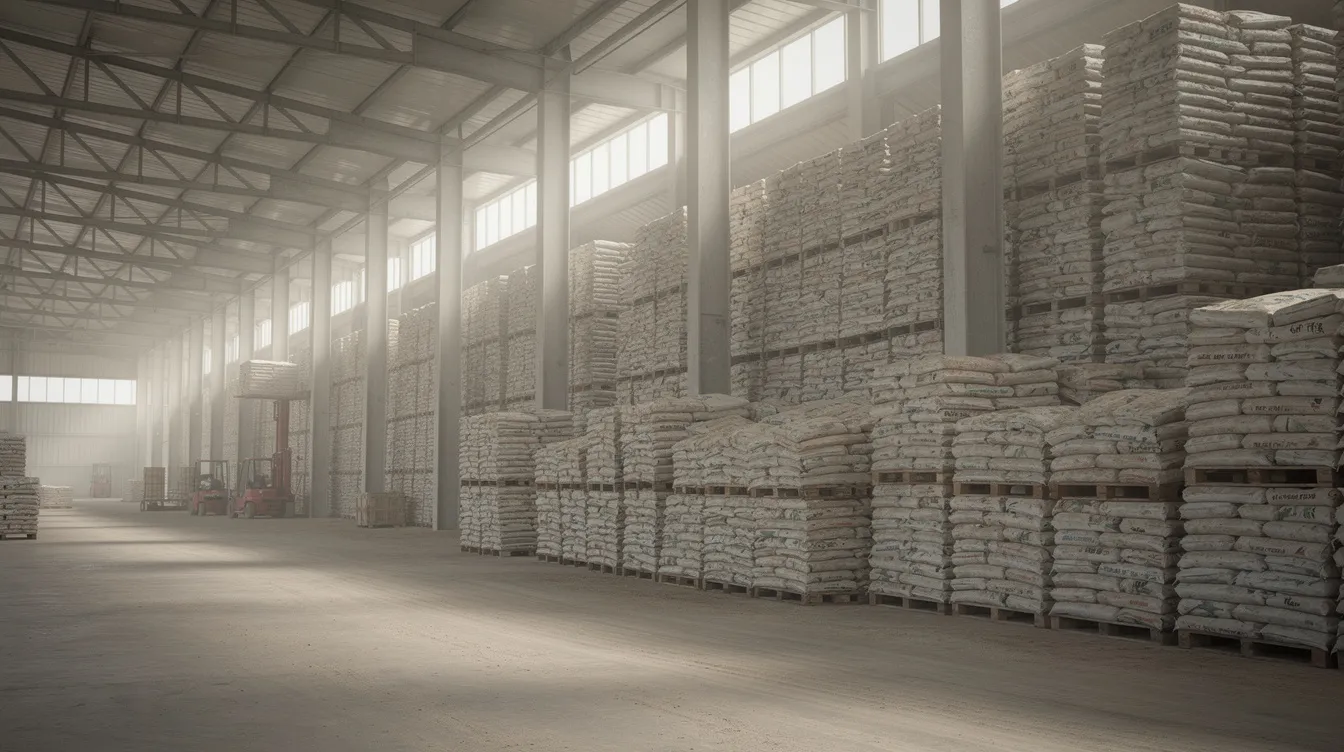
Paddy storage for rice mill must preserve quality and enable the chosen inventory strategy. Storage conditions must be clean, dry, and well-ventilated to preserve paddy quality. Proper storage prevents contamination and pest attacks in rice mills. Storage methods must protect against environmental factors that can harm paddy quality.
Formula: Required Paddy Storage (tonnes) = Average Monthly Consumption × Months of Inventory Planned, plus 15–20% margin for variety segregation and operational movement.
Maintaining a strict First-In, First-Out (FIFO) inventory prevents spoilage and pests – especially critical for mills holding stock for multiple months.
Table 4 – Inventory Strategy Comparison
| Inventory Policy | Working Capital Need | Storage Need | Procurement Risk | Price Exposure |
|---|---|---|---|---|
| Near JIT (< 15 days) | Low | Minimal | High (supply disruption) | Low |
| Moderate (1–2 months) | Medium | Moderate godown | Moderate | Moderate |
| Heavy Seasonal (3–6 months) | Very High | Large godown/silo | Low | High (if prices fall post-purchase) |
For integrated layouts, the rice mill warehouse and plant layout must allow smooth truck entry, unloading, and paddy movement from godown to the production line.
Inventory Strategy and Working Capital Requirement for Paddy Procurement
Rice mill raw material working capital depends primarily on paddy inventory value. Seasonal paddy inventory planning for 3–6 months can create working capital needs exceeding the machinery cost for medium-scale mills.
Illustrative Example (5 TPH mill, 50 tonnes/day consumption, paddy at ₹22,000/tonne):
| Inventory Days | Stock (Tonnes) | Inventory Value (₹) |
|---|---|---|
| 30 days | 1,500 | ₹3.30 crore |
| 60 days | 3,000 | ₹6.60 crore |
| 90 days | 4,500 | ₹9.90 crore |
Medium-sized mills typically need ₹10 lakh to ₹50 lakh for procurement in early operations, scaling significantly with capacity. Banks offer cash credit facilities that allow multiple withdrawals for procurement. Paddy procurement finance helps manage cash flow gaps during harvest season. Paddy inventory financing through hypothecation of stock is standard – for example, banks may offer a cash credit limit for rice mill based on stock value.
PMEGP offers credit-linked subsidies for new micro-enterprises entering rice milling. CGTMSE provides collateral-free credit guarantees for MSME loans, while NABARD supports lower-cost credit for agricultural sectors including rice processing. Government schemes reduce collateral and interest burdens for mills. Gold loans can serve as short-term funding for small rice mills – LTV for gold loans can be up to 85% for ₹2.5 lakh loans, providing quick funds during procurement peaks. Gold loans can also provide short-term funding for small mills needing immediate liquidity.
Procurement Planning and Risk Analysis in a Rice Mill DPR
The paddy procurement DPR section must cover catchment analysis, annual paddy requirement, seasonal procurement plan, procurement channels, quality standards and risk mitigation. Key risks include raw material shortage risk due to crop failure, excess competition, transport disruption, moisture-related storage loss and sudden price spikes.
CA Manish Gugliya’s Practical Insight: The cheapest quoted paddy is not always the lowest effective cost. After adjusting for moisture, transport, drying and actual milling recovery, a slightly more expensive but drier, cleaner lot from a closer location often delivers better margins.
DPRs should perform raw material cost sensitivity analysis testing multiple factors – higher paddy price, lower recovery, and lower utilisation – to observe impact on gross margin and DSCR. Those evaluating integrated rice mill plant setup cost in India should align investment in land, storage and machinery with sustainable paddy availability and finance capacity.
Developing a Practical Paddy Procurement Strategy for a New or Expanding Rice Mill
A step-wise paddy sourcing strategy for promoters:
- Determine requirement – Use the formula with realistic utilisation. Match with machinery required for a rice mill and process configuration.
- Map catchment – List major paddy-growing blocks, mandis and competing mills. Estimate realistic procurement share from each.
- Select channels – Fix a mix of farmers, APMC, traders and FPOs. Establish paddy procurement management structure with quality and moisture testing at purchase points.
- Define quality standards – Document paddy acceptance standards, targeted varieties and grade specifications with expected milling recovery bands.
- Plan storage – Choose inventory policy (months of stock), compute paddy storage capacity and derive godown area aligned with overall site layout.
- Model working capital – Estimate landed cost, seasonal working capital for paddy procurement, and align with planned cash credit limit, term loan and equity funds.
- Run sensitivity analysis – Test paddy price, recovery and utilisation scenarios to achieve confidence in project returns.
Common Mistakes in Paddy Procurement & Raw Material Planning for Rice Mills
- Relying on broad state-level production data instead of local catchment analysis, leading to overestimation of paddy availability for rice mills in India.
- Underestimating paddy warehouse requirement and ignoring segregation needs for varieties and quality grades in storage areas.
- Assuming one standard milling recovery ratio for all paddy varieties, seasons and processed output types.
- Planning rice mill capacity and paddy requirement based mainly on machinery supplier quotations without checking procurement radius and working capital feasibility.
- Using only MSP or last-season prices without modelling paddy price fluctuation over the project life.
- Ignoring the scale of seasonal working capital needed – the beginning of operations often catches promoters underprepared.
Project-Finance Perspective: How Bankers View Paddy Procurement Assumptions
Bankers analyse rice mill project report raw material requirement to judge whether projected capacity utilisation and revenues are credible. Paddy availability analysis for rice mill, inventory management policy and procurement cost directly affect gross margin, interest cover and DSCR in loan appraisal. Weak procurement assumptions can cause lenders to reduce sanctioned capacity, increase margin requirements or decline the proposal.
Well-prepared DPRs document assumptions with local data, discuss risk mitigation through diversified procurement channels, and use conservative utilisation in early years. ProjectReportBank.com supports promoters with rice mill DPRs, financial projections, CMA data preparation/assistance and working-capital assessment.
Conclusion: Integrating Capacity, Procurement, Storage and Finance
Successful rice milling in India requires balancing plant capacity with assured paddy availability, realistic procurement price, robust quality control, adequate godown and storage planning, and sufficient working capital. Paddy procurement for rice mill is not an isolated department – it is an integral part of project design, financial structuring and risk management across the economy of the operation.
Promoters should treat rice mill raw material planning as a core chapter of their DPR, with clear calculations, assumptions and sensitivity analysis. For professional assistance with rice mill detailed project reports, feasibility assessment, CMA data, working-capital planning and bank finance documentation, CA Manish Gugliya and ProjectReportBank.com are experienced resources available to help you build a bankable project from the ground up.
Frequently Asked Questions (FAQ)
How do I estimate paddy requirement for a 5 TPH rice mill in DPR stage?
Apply the formula: 5 TPH × 16 hours/day × 280 days × 70% utilisation = approximately 15,680 tonnes annually. Adjust operating hours, days and utilisation based on your specific state, power availability and procurement reliability. At 67% milling recovery, this yields roughly 10,500 tonnes of milled rice. All numbers should be clearly labelled as illustrative in your DPR and decided based on local conditions.
What is a practical starting point for paddy inventory levels for a new commercial mill?
In Year 1, planning for 30–45 days of paddy stock is a reasonable and bankable starting point, given that procurement networks and banker confidence are still developing. By Year 3, mills with established supplier relationships and proven operations may hold 60–90 days of seasonal stock, especially in kharif-dominant regions. The choice depends on local seasonality, procurement channel reliability and the cash credit limit sanctioned by banks.
Can I run a rice mill on just-in-time paddy procurement without large godowns?
In regions with near year-round mandi arrivals (parts of Andhra Pradesh, Telangana), a lighter inventory approach is more realistic. In highly seasonal belts (Punjab, Odisha during kharif), JIT is risky – a few weeks of supply disruption can idle an entire facility. The trade-off is clear: lower storage and interest cost versus higher supply risk. Most commercial mills maintain at least 30–45 days of stock as a practical compromise.
How should a rice mill account for by-products when planning paddy procurement?
Husk and bran revenues partially offset raw material cost. For a mill processing 15,000 tonnes of paddy, husk output of ~3,000–3,300 tonnes can fuel boilers (saving ₹15–25 lakh in fuel costs annually), while bran sale adds meaningful revenue. However, procurement planning should still be based primarily on head rice demand and feasible paddy intake – by-product income is a supplement, not the foundation.
Should paddy procurement assumptions in DPR be based on MSP or on open-market prices?
Use recent average mandi prices for your specific region as the base assumption, not MSP. MSP represents the government’s procurement floor, but private mills often purchase at rates that may be above or below MSP depending on supply conditions. Include sensitivity scenarios at +5% and +10% above base price. A comment in your DPR explaining this distinction shows understanding and adds credibility with banks and financial institutions evaluating your proposal.