Key Takeaways
- The “best” mudra loan lender depends entirely on your business profile, required loan amount, and documentation readiness-there is no universally superior bank or financial institution.
- Before visiting any branch, confirm that the institution and that specific branch actually handle Mudra Loans and accept applications for your line of activity and loan category.
- Lender choice should be based on total borrowing cost, documentation approach, processing experience, and the lender’s understanding of your business-not only on the lowest quoted interest rate.
- A strong project report, realistic loan amount, and clear repayment capacity usually matter more for approval than searching for a “guaranteed approval” bank or agent.
- The sections below provide detailed checklists, questions to ask the bank, and practical guidance tailored to first-time Mudra Loan applicants.
Introduction: Why Lender Choice Matters Before You Apply
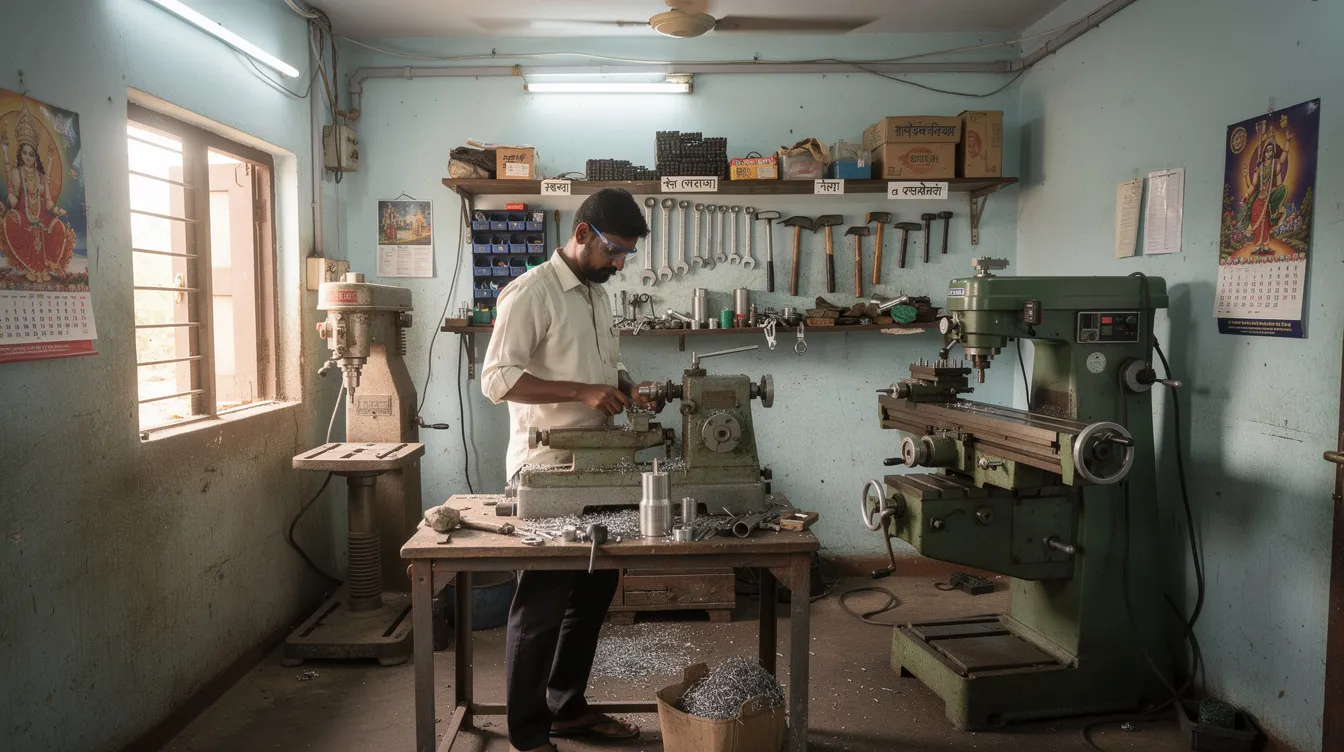
Consider a small manufacturing unit owner in Jaipur who spent three weeks collecting machinery quotations, preparing financial estimates, and filling out Mudra Loan forms in early 2026. He chose his lender simply because it was the nearest branch and he already held a savings account there. After submitting the application, he faced repeated queries for documents he had not been told about, two months of silence, and eventually a decline-without clear reasons.
This situation is far more common than you might think. Many applicants decide on a lender based on convenience, hearsay, advertisements, or their existing bank account, without checking if that institution is actually suitable for their proposal.
Under Pradhan Mantri Mudra Yojana (PMMY), which was a scheme launched on April 8, 2015, loans are available up to Rs. 10 lakh for non-corporate small businesses in India. However, Mudra does not disburse loans directly but through approved Member Lending Institutions (MLIs) such as banks, NBFCs, and MFIs. Each of these lending institutions has different processes, documentation expectations, and comfort levels with different business profiles.
I am CA Manish Gugliya (FCA), a Chartered Accountant with over 20 years of practical experience in project reports, CMA data, MSME finance, business loans, and Mudra Loan consultancy. This article is my practical checklist on how to choose a Mudra Loan lender-answering one core question: what should you verify and compare before deciding where to file your application?
Why Choosing the Right Mudra Loan Lender Matters
Your choice of lender affects the entire journey of your Mudra Loan application-from the first conversation to eventual disbursement. Here is how:
- Application receipt: Some lenders provide a formal written acknowledgement with an application number; others accept documents informally with only a verbal nod.
- Documentation demands: One lender may ask for a detailed project report and three years of ITRs; another may accept bank statements and a simple business plan for the same loan amount.
- Income and business assessment: How your revenue, profit, and repayment capacity are practically evaluated differs significantly between lending institutions.
- Follow-up and clarity: At some branches, you deal with a dedicated loan officer who keeps you updated. At others, you may make repeated visits without clarity on status.
- Sanction terms: Margin money, tenure, security requirements (if any), and linked insurance can vary between lenders, even for identical loan amounts.
- Disbursement timing: One lender may disburse within 10 days of sanction; another may take weeks.
Selecting the right lender does not guarantee Mudra Loan approval. The borrower must still meet the lender’s internal credit criteria and applicable PMMY guidelines. But investing time upfront in lender selection can save weeks of delay and reduce the chances of silent rejection.
Table of Contents
First Confirm Whether the Institution and Branch Provide Mudra Loans
Not every branch of every bank actively processes mudra loans, and some NBFCs or MFIs limit funding to specific areas or categories. Before visiting any branch, check the following:
- Whether the bank or NBFC actually sanctions loans under Pradhan Mantri Mudra Yojana in 2026.
- Whether that specific branch accepts Mudra Loan applications or forwards them to a centralised processing cell.
- Whether the branch is authorised to sanction amounts up to your required category. Mudra loans are categorized into four tiers based on business growth stages: Shishu loans are up to Rs. 50,000, Kishore loans range from Rs. 50,001 to Rs. 5,00,000, Tarun loans range from Rs. 5,00,001 to Rs. 10,00,000, and Tarun+ loans can go up to Rs. 20,00,000.
- Whether your business type-manufacturing, trading, services, or allied agricultural activities-is normally accepted at that branch.
You can verify whether your chosen institution is among the participating Mudra Loan banks by checking online or calling the branch directly.
Ask the branch how applications are submitted-paper form, online portal, or a combination-and whether a prior appointment with a loan officer is needed. If a nearby branch is not handling mudra loans actively, it may be better to choose another branch or another participating institution rather than forcing the process.
Understand What Types of Institutions Can Sanction Mudra Loans
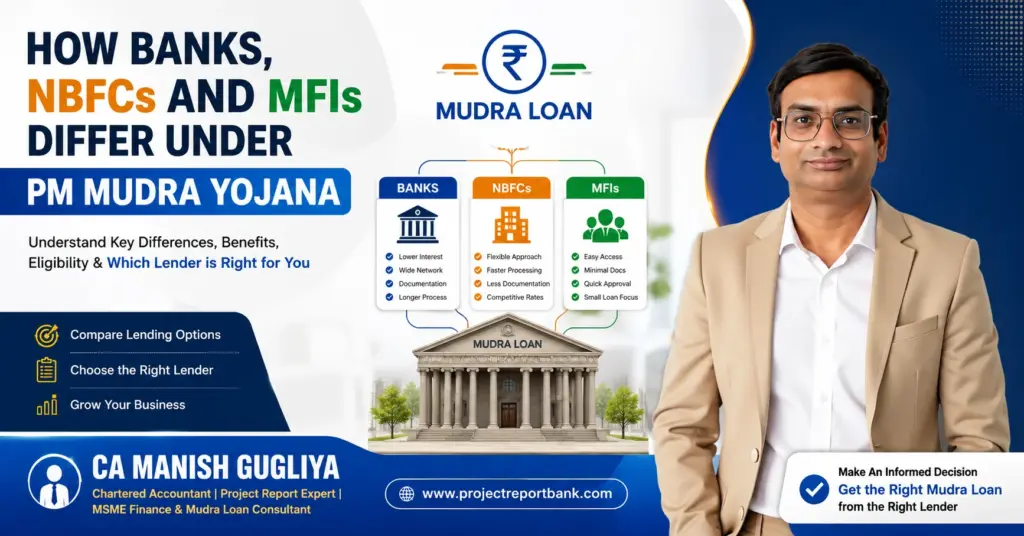
Mudra funding is provided by multiple categories of lending institutions, including public sector commercial banks, private banks, regional rural banks, cooperative banks, small finance banks, microfinance institutions, and certain NBFCs. Mudra loans can be applied through banks, NBFCs, and MFIs, and each type brings a different approach.
Before choosing a specific lender, understand this broader landscape of financial institutions that sanction Mudra Loans. Consider:
- How each category differs in branch network and accessibility, especially in semi-urban and rural areas.
- The typical ticket sizes they handle in practice-some institutions focus on shishu loans and small working capital limits, while others are comfortable with larger term loan proposals under Kishore and Tarun categories.
- Whether the lender normally deals with working capital for traders or mainly term loans for machinery and capital assets.
- How comfort with informal income or limited documentation may vary-MFIs and some NBFCs may accept alternate proofs, while commercial banks often require more formal financial records.
The stage of growth development of your enterprise and your development and funding needs should guide which category of institution you approach.
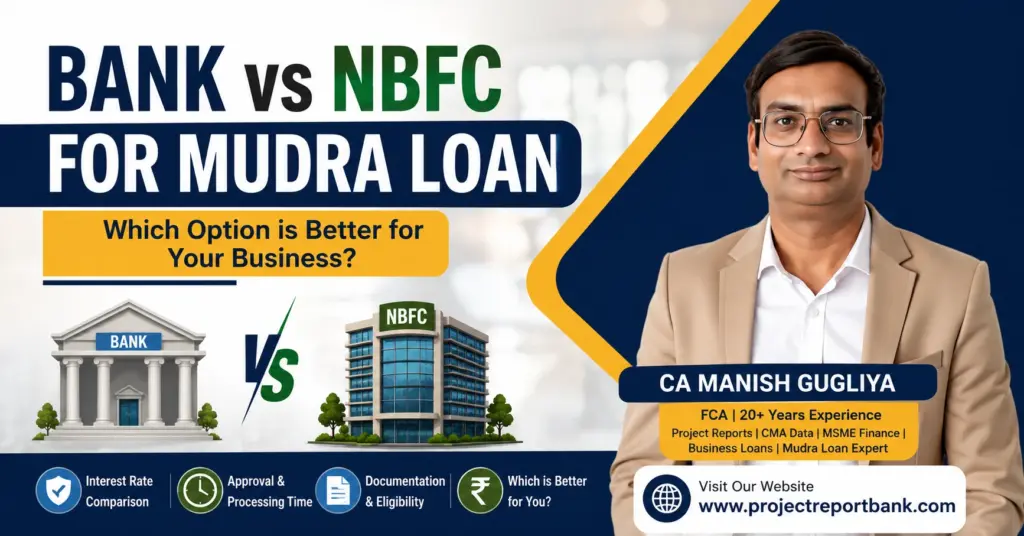
Bank or NBFC – Which Type of Mudra Loan Lender Suits You?
Many borrowers are unsure whether to approach a conventional bank or an NBFC for a Mudra Loan. Neither is automatically better. The right choice depends on matching the lender type to your profile.
Compare these points:
- Accessibility: Does the lender have a branch or office in your locality where you can visit for follow-up?
- Staff approachability: Can you speak to a loan officer easily, or does the branch require formal appointments?
- Documentation style: Banks may insist on ITRs and formal financials, while some NBFCs accept alternate proofs-but charge more.
- Interest cost: Interest rates for Mudra loans are deregulated by banks, meaning each lender sets its own rate. PSBs often charge lower rates compared to NBFCs, which may charge significantly higher rates, especially for smaller amounts.
- Repayment flexibility: Check whether the lender offers flexibility in EMI scheduling or restructuring in case of temporary stress.
For a more detailed comparison, read the guide on Bank vs NBFC for Mudra Loan. Match the lender type with your situation-an existing current account holder with steady turnover may find banks more suitable, while a very small trader with minimal formal records may initially approach an NBFC for product offerings that accommodate limited paperwork.
Public Sector Bank or Private Bank?
Some applicants automatically prefer public sector banks for government-linked schemes like PMMY, while others believe private banks are always faster. Actual experience depends more on the specific branch and officer than on the category.
Consider these factors in a neutral way:
- Risk appetite: Some PSB branches are more comfortable with very small Shishu loans for micro enterprises, while private banks may focus on higher-ticket proposals.
- Processing style: Many PSBs route larger applications through centralised credit hubs, which can add time. Private banks may have more streamlined internal workflows but charge higher interest.
- Staff availability: In busy PSB branches, MSME queries may compete with personal banking and retail loan traffic. Private bank branches may offer dedicated relationship managers but for a price premium.
- Transparency on charges: Both categories should disclose charges clearly, but the actual practice varies branch to branch.
For a deeper comparison, refer to public sector bank vs private bank for Mudra Loan. Base your selection on actual discussion with the branch handling officer, not on rumours about one category being “strict” and the other “lenient.”
Check Whether the Lender Is Comfortable With Your Business Activity
Two Mudra Loan lenders may treat the same beneficiary micro unit very differently depending on their familiarity with that line of business. Mudra loans support income-generating activities in manufacturing, trading, and services sectors, and the scheme aims to generate income and create employment through financial assistance to micro units.
Consider these practical points:
- A PSB branch in an industrial area may have strong experience financing small manufacturing units-light engineering, packaging, food processing-and understand technical quotations and capacity projections.
- A branch in a commercial market may be more comfortable with trading businesses and retail stock funding.
- Service providers such as beauty parlours, repair centres, or tiffin services may find better understanding at branches that regularly handle such proposals.
- If your proposed activity involves the non farm sector or allied agricultural activities, confirm that the branch has relevant experience.
When you visit a potential lender, be ready to explain clearly:
- What your business does and how revenue is generated
- How customers pay-cash, UPI, bank transfers
- Approximate monthly turnover and profit margin
- How the loan extended (for machinery, stock, or working capital) will increase capacity and income generation
Ask the officer whether the branch has recently financed similar businesses under PMMY or MSME schemes.
Check the Lender’s Approach Toward New Businesses and Startups
If you are planning to start a new unit in 2026-say, a mobile repair shop or a small packaging unit-you must check whether the lender is open to fresh startup proposals. Not all branches are equally comfortable with new businesses that lack trading history.
Lenders typically look for the following in new-business Mudra proposals:
- Promoter’s past experience or necessary skills in the proposed line-note that eligibility for Mudra loans includes being an Indian citizen with a solid business plan, though no specific educational qualification is mandatory under the scheme.
- A basic project report explaining cost, sales estimates, and expenses.
- Own contribution from savings.
- Local market demand and competition analysis.
- Repayment capacity based on realistic projections.
Ask the bank officer whether they have sanctioned mudra loans recently for similar startups, and if they have any internal guidelines for new units. For deeper guidance on startup proposals, refer to Mudra Loan approval for startups.
Do not believe any promise of automatic Mudra sanction just because a business is new or falls under a priority sector. Proper appraisal is still required in every case. Lender assessment of loan applications is based on credit history and business viability.
Compare Interest Rate and Total Borrowing Cost
Borrowers often ask, “Which bank has the lowest Mudra interest rate?” A sound decision must consider all components of cost, not just the headline rate.
Interest rates for Mudra loans range from approximately 11% to 21%, depending on the lender type, tier, and borrower profile. Key cost elements to check:
- Interest rate range: For small-ticket loans in 2026, PSBs typically charge 8.85%–14% depending on category, private banks around 11%–18%, and NBFCs or MFIs can go up to 24% or more. Ask whether the rate is fixed or linked to an external benchmark.
- Processing fee: This may range from nil (for Shishu at some PSBs) to 0.25%–0.5% or more at NBFCs.
- Documentation charges, valuation fees, and insurance premiums where loan-linked insurance is offered.
- Prepayment or foreclosure conditions: Many lenders waive these for smaller mudra loans, but confirm in writing.
- Tenure and EMI impact: A longer tenure reduces EMI but increases total interest. Typical tenure ranges from 12 months to 5 years, sometimes more for covering loans tied to specific asset purchases.
Request a simple written estimate of interest and major charges from each shortlisted lender. This allows you to perform a basic Mudra Loan lender comparison before committing.
Interest rates and policies change periodically. Always confirm current rates directly with the bank or NBFC rather than relying on old figures.
Check Processing Charges and Other Fees
Even when interest rates look similar, actual borrowing cost may differ because of processing charges and other fees. Here is what to check:
- Types of legitimate charges: Processing fee, documentation charges, stamp duty, and optional insurance.
- Official schedule: Check whether these charges are mentioned in the lender’s official published schedule of charges.
- Receipts: Get receipts for all payments made to the bank or NBFC.
- Unofficial demands: Be cautious about any cash “service charge” demanded by third parties or agents outside official channels.
For detailed examples of what lenders typically charge, read about Mudra Loan processing charges.
Not every charge is illegal. But the borrower should understand the purpose of each fee before agreeing.
Compare Documentation Requirements and Practical Feasibility
While mudra loans target micro enterprises and small and micro enterprises, lenders still require sufficient documents to establish identity, business proof, and repayment capacity. Identity proof, address proof, and income proof are commonly required documents.
Common document groups include:
- Basic KYC: Aadhaar, PAN, photographs
- Business proof: Registration certificate, GST (if applicable), Udyam registration, shop licence, rent agreement
- Financial proof: Bank statements, ITRs where available, sales records or bill books
- Project-related papers: Quotations for machinery or equipment, details of working capital requirement, simple project report
- Collateral details: The Reserve Bank of India mandates no collateral for loans up to Rs. 10 lakh under MSME norms. No collateral is required for loans up to Rs. 10,00,000, though some lenders may ask about assets created from the loan and any existing security.
Ask each prospective lender for a written document checklist and assess whether you can realistically provide those documents within a reasonable time. Lenders may justifiably request additional information as part of credit appraisal. Remember, “fewer documents” is not always an indicator of a safer or more professional lender.
Evaluate Branch Communication and Guidance Quality
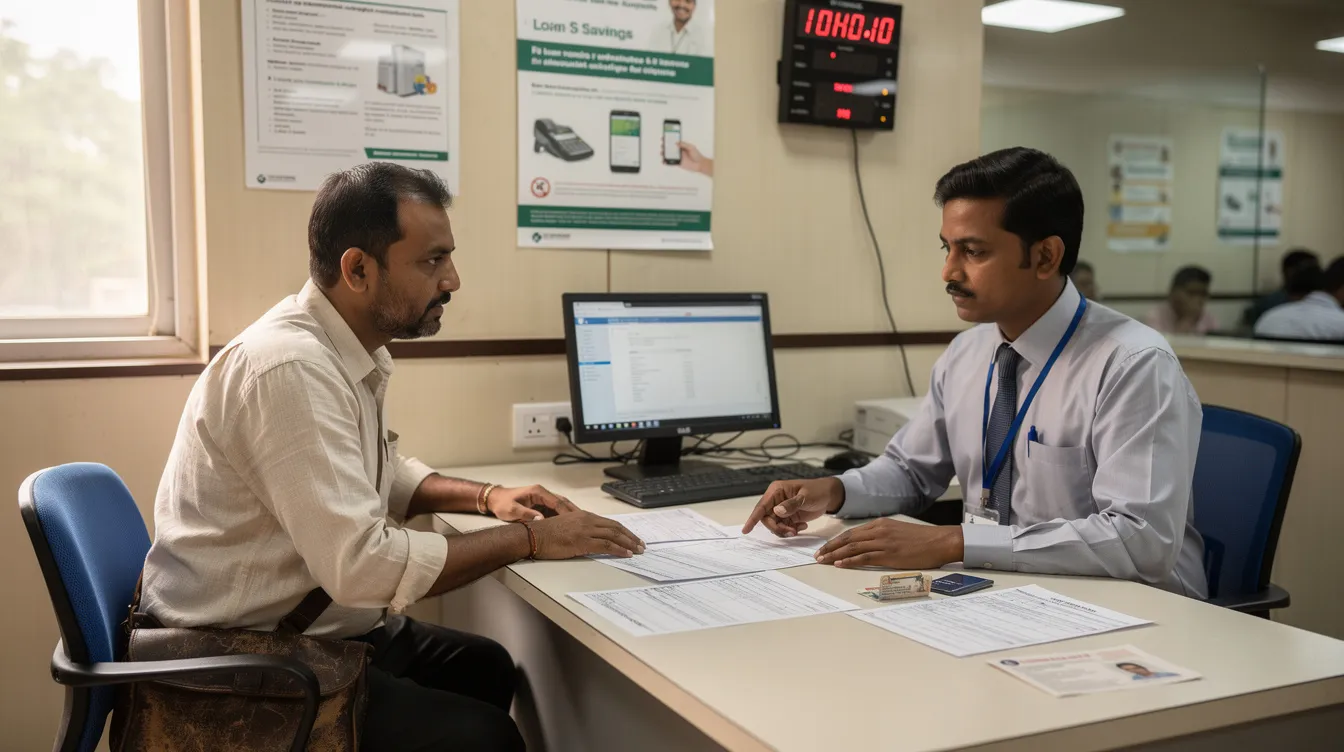
The first conversation at the branch gives a reliable signal about how your application is likely to be handled. During your initial visit, ask:
- Does this branch currently accept Mudra Loan applications? For which categories-Shishu, Kishore, Tarun?
- Who is the contact person or loan officer for MSME and Mudra proposals?
- What is the step-by-step process after submission, and will a written acknowledgement or application number be given?
- Approximately how long do complete applications usually take to process at this branch?
A lender that explains documentation clearly, provides a checklist, and answers basic questions consistently is usually preferable to one that gives vague or contradictory answers. Clear communication does not guarantee sanction, but it significantly reduces confusion and wasted visits.
Consider Your Existing Banking Relationship
An existing savings or current account with a bank can sometimes help because the lender already has a record of your inflows, outflows, and overall account conduct. Factors that matter include:
- Regularity of deposits and withdrawals
- Average monthly turnover and balance maintenance
- Record of cheque bounces, ECS returns, or unpaid EMIs
- Whether you have successfully repaid previous loans through that account
- Overall satisfactory credit track record visible through account behaviour
Understanding how financial discipline improves Mudra Loan approval can help you present your personal banking history more effectively.
However, having a long-standing account does not create a legal right to Mudra Loan sanction. The lender still conducts a full appraisal. Compare your home bank with at least one more eligible lender instead of assuming your own bank is always the best mudra loan lender.
Check How the Lender Evaluates Business Stability
For existing units, many lenders focus heavily on business stability-how long the unit has been running and how consistent the cash flows appear. Key indicators include:
- Years in operation at current or previous location
- Trend in monthly or yearly sales, even if based on informal records
- Pattern in bank statements: regular credits from customers, controlled cash withdrawals
- Profitability over time with basic proof such as bills, GST returns, or ITRs where available
- Continuity despite small ups and downs, showing resilience and growth
For detailed guidance, read about business stability in Mudra Loan approval.
Prefer lenders who are willing to understand these stability indicators in detail rather than those focusing only on a single recent month’s turnover.
Understand How the Lender May Assess Income and Repayment Capacity
A responsible lender will sanction only that Mudra Loan amount which the business can reasonably repay from its surplus income. Mudra loans support micro and small enterprises financially, but the loan must still be viable for the borrower. Here is how lenders typically assess:
- Income is estimated from sales, margins, and expenses. Your repayment capacity is assessed based on the surplus after all business and personal costs.
- Existing EMIs and previous loans obligations are considered in the total debt burden.
- Projected increase in turnover after adding machinery or working capital is evaluated for reasonableness.
- A realistic surplus after all expenses is critical for demonstrating repayment capacity.
For a deeper understanding, read about income assessment in Mudra Loan approval.
High turnover alone is not enough. What matters is profit after expenses. Understand why this distinction matters by reading about turnover vs profit for Mudra Loan approval.
Avoid lenders or agents who promise the “highest possible amount” without checking your actual repayment capacity. Eligible loan amounts range from Rs. 50,000 to Rs. 10,00,000, but the sanctioned amount should match what your business can realistically service.
Check Whether Your Required Loan Amount Is Realistic
Before comparing lenders, prepare a realistic project cost. Do not simply ask for the maximum loan amount-upto Rs. 10 lakh or Rs. 20 lakh-without supporting the requirement.
Project cost elements to define:
- Equipment, machinery, furniture, and installation costs
- Renovation, licensing fees, and initial marketing expenses
- Working capital for at least 3–6 months of operations, including stock and operating expenses
- Own contribution from savings or existing assets, which reduces the net funding gap
- Risks of over-financing (EMI pressure beyond what the business can afford) and under-financing (insufficient capital to run the business properly)
For help preparing accurate cost estimates, refer to proper project costing for Mudra Loan approval.
Compare lenders only after you have clarity on your realistic funding gap so that you can request similar terms from each lender.
Check Expected Processing Time and Stages
Many lenders or agents claim “same-day Mudra Loan” or “instant sanction.” In practice, processing time depends on internal checks and document completeness.
Usual processing stages include:
- Initial application and KYC verification
- Document and project report review
- Credit checks and internal appraisal
- Site visit or business verification where applicable
- Sanction, documentation signing, and disbursement
For Shishu loans processed via Straight-Through Processing for existing account holders, sanction may happen in 7–10 days. For Kishore and Tarun loans or fresh startup proposals requiring project evaluation, the timeline may stretch to 15–30 days or more.
For a detailed breakdown, read about Mudra Loan processing stages and timeline.
Ask each lender for an honest estimate of processing time under normal conditions. Do not select a lender solely on the basis of optimistic verbal promises about the next phase of your application.
Understand the Role of the Branch Manager in Mudra Loan Sanction
In many public and private sector banks, the branch manager plays a key role in accepting, scrutinising, and recommending Mudra Loan proposals. However, the final sanction may depend on delegated powers and higher-level credit committees.
- Some smaller mudra loans (especially Shishu) may be sanctioned entirely at branch level, while larger ones go to regional processing centres.
- The manager’s understanding of the local market and trust in the applicant’s conduct can influence how the case is presented internally.
- Respectful, honest communication with the branch team usually leads to better clarity and smoother processing.
For more depth, read about the Branch Manager’s role in Mudra Loan approval.
Do not assume that the manager alone can guarantee approval or that they have no say at all. Reality lies in between and depends on each institution’s delegation rules.
Watch for Unrealistic Approval Promises
Some agents or intermediaries claim “100% Mudra Loan approval,” “no documents required,” or “pay 2% and we will get you Rs. 10 lakh guaranteed.” Treat all such claims with extreme caution.
Typical red-flag statements include:
- Guaranteed sanction without seeing documents or business details
- Statements that credit score or previous defaults “do not matter at all”
- Promises of government subsidy or free grant under PMMY when such benefits are not actually notified for the applicant’s case
- Claims that a Mudra Loan is free government money or a grant-it is not
Genuine lenders will always perform credit appraisal. No CA, consultant, or agent can override that process. Mudra loans are provided through banks, NBFCs, and MFIs, and each conducts its own assessment. Rely on written communication from the bank or official websites rather than verbal assurances from unknown agents.
Check for Unfair or Suspicious Practices
Most bankers work within rules, but occasionally applicants may face unusual demands or confusing conditions. Be alert if you encounter:
- Unexplained cash payments demanded outside official receipts
- Insistence on routing the loan amount back immediately in cash without commercial justification
- Pressure to purchase unrelated products (such as insurance you did not request) as a mandatory condition for sanction
- Refusal to provide any written acknowledgement of application or rejection reasons
Read more about how to identify illegal bank practices in Mudra Loans and understand common Mudra Loan illegal bank practices.
Some additional checks and documents may be perfectly legitimate. The key is clarity, transparency, and the presence of official receipts and records for every payment.
Do Not Choose a Lender Only Because It Asks for Fewer Documents
It is natural to prefer a lender that appears to require minimal paperwork. But cutting corners on documentation can create issues later-during renewal, enhancement, or any regulatory review.
Understand why lenders must document identity, address, business existence, project details, and income:
- These are part of KYC and credit appraisal requirements applicable to all eligible borrowers.
- A reasonable request for extra bank statements or bills is often part of due diligence, not harassment.
- Extremely casual processing without basic documents may indicate non-standard practices.
Distinguish between necessary documents that help demonstrate your eligibility criteria and repayment capacity, and repeated, unexplained demands that suggest confusion at branch level. Prefer lenders that clearly explain why each key document is needed rather than those who simply say “no documents needed at all.”
Do Not Choose a Lender Only on Interest Rate
A difference of a few decimal points in interest may be less important than clear communication, realistic sanction terms, and convenient servicing over the loan tenure. Here is what to evaluate beyond the rate:
| Factor | What You Should Check |
|---|---|
| Eligibility | Does the lender handle your type of proposal? |
| Interest | Applicable lending rate for your category |
| Charges | Processing and other disclosed costs |
| Documentation | Requirements for your business and profile |
| Processing | Expected stages and practical timeline |
| Branch Access | Ease of communication and follow-up |
| Loan Amount | Whether your requirement is properly justified |
| Repayment | EMI and tenure suitability for your cash flow |
| Business Understanding | Familiarity with your activity |
| Transparency | Clear explanation of terms and conditions |
An apparently cheaper lender can become more expensive if they charge high upfront fees, insist on bundled products, or sanction a shorter tenure leading to higher EMI stress. The goal is choosing a balanced, suitable Mudra Loan bank-not chasing the absolute lowest rate at the cost of practical convenience and transparency.
Mudra Loan Lender Checklist Before Applying
Save or print this checklist before visiting any branch:
☐ Confirm whether the institution and specific branch provide Mudra Loans for your category and amount
☐ Verify that your business activity is eligible and accepted there
☐ Decide your realistic loan requirement based on project cost and working capital
☐ Obtain and understand the document checklist
☐ Ask about indicative interest rate, processing charges, and any insurance
☐ Estimate tentative EMI and tenure and check that they suit your monthly surplus
☐ Understand processing stages, expected timeline, and who will be your contact officer
☐ Ensure that all important terms and charges are clearly explained before submission
☐ Check whether a written acknowledgement or application number will be provided
☐ Confirm how your repayment capacity will be assessed based on your financials

Questions to Ask the Lender Before Submitting Your Application
Use these questions during your meeting with the bank or NBFC:
- “Does this branch currently process Mudra Loans for businesses like mine?”
- “What is the minimum and maximum loan amount usually sanctioned here for my profile?”
- “Can you share a written list of documents and any specific formats you expect?”
- “Do I need a project report? If yes, what key points should it cover?”
- “What interest rate range and processing charges might apply in my case?”
- “Will there be any insurance or other mandatory products linked to this Mudra Loan?”
- “How will my income and repayment capacity be assessed for this application?”
- “What is the usual time taken from complete application to disbursement?”
- “Will I receive an acknowledgement or application number after submission?”
- “If the loan is not sanctioned, will I be informed of the main reasons?”
- “Is a site visit or business verification required before sanction?”
- “What is the applicable tenure and can I prepay without charges?”
- “Who should I contact for follow-up on the application status?”
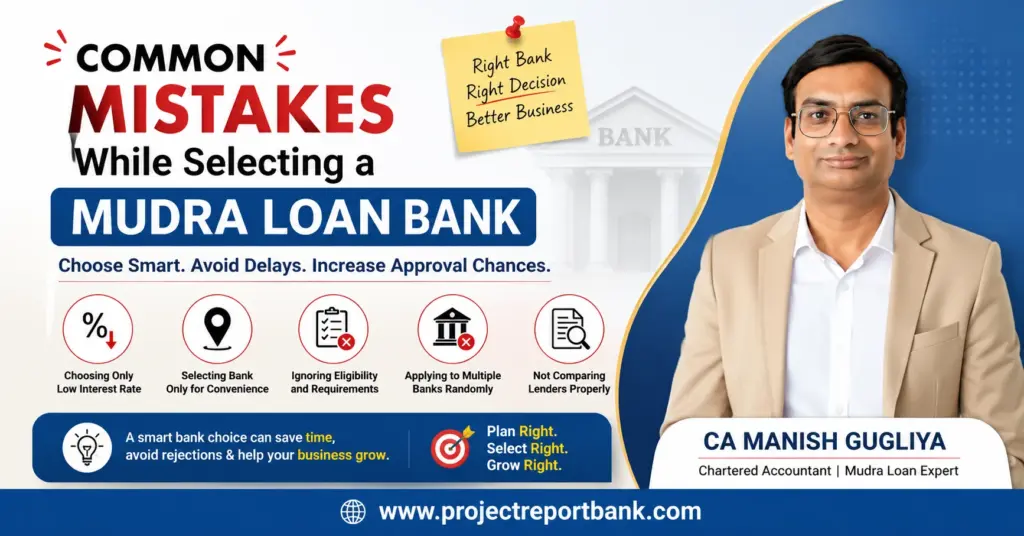
Common Mistakes While Choosing a Mudra Loan Lender
Based on what I have seen in practice, here are mistakes applicants frequently make:
- Applying randomly to the nearest branch without confirming whether they actively handle mudra loans
- Selecting a lender only because a friend or agent received approval there for a completely different business profile
- Chasing the highest possible loan amount without realistic project costing or a reference point for what the business actually needs
- Hiding existing EMIs or outstanding liabilities from the lender
- Ignoring processing charges, insurance, and other fees while comparing only headline interest rate
- Submitting incomplete or inconsistent documents to multiple lenders at the same time
- Not asking for written acknowledgement of application and later being unable to track the file
- Believing agents who promise guaranteed sanction without any credit appraisal
Should You Apply to Multiple Mudra Loan Lenders?
Many applicants submit multiple Mudra Loan forms at once, hoping that at least one lender will approve. This approach can sometimes backfire.
- Repeated credit enquiries in a short period may raise questions during appraisal.
- Inconsistent data across different applications-different turnover figures, different loan amounts-can create confusion and reduce credibility.
- It is practically difficult to provide follow-up information and attend verification visits for many institutions simultaneously.
The better approach: study and compare 2–3 suitable Mudra Loan lenders, then apply to the one that best fits your business, documentation, and cost expectations. Applying to more than one lender is not automatically wrong or prohibited, but applications should be thoughtful and well prepared rather than random.
What If Your First Choice of Lender Does Not Work Out?
Despite careful selection, sometimes the first lender may decline or may not move the application forward. Before approaching another institution:
- Obtain clarity on the main reasons for non-sanction, if possible
- Correct documentation gaps or inconsistencies identified during the earlier process
- Improve project report assumptions or reduce unrealistic expectations about turnover
- Review credit history issues-check your credit report and consider rectification or explanation
- Reassess whether the requested loan amount can be reduced to a more realistic level
For detailed remedial steps, read how to improve your chances of Mudra Loan approval.
Maintain a proper record of earlier applications and reasons for decline, so that you can answer queries from the next lender honestly and transparently.
CA Manish Gugliya’s Practical Advice on Choosing a Mudra Loan Lender
In my 20+ years of working with individual borrowers and micro enterprises engaged in manufacturing trading and services, I have seen one pattern repeatedly: applicants spend weeks searching for a magical bank that “gives Mudra Loans easily” instead of improving the quality of their own application.
Here is my advice:
Stop looking for shortcuts. Instead, focus on lenders that regularly handle proposals similar to your business. Make sure your project costing, turnover assumptions, profit estimates, and working capital requirement are realistic and clearly explained. A beneficiary micro unit entrepreneur who walks into a branch with a well-prepared file-even for a small Shishu or Kishore loan-receives far better attention from bank staff than someone who arrives asking for the maximum loan limit with no supporting details.
Prepare a simple, honest project report that shows how the loan will be used and repaid from business cash flows. Describe your loan purpose clearly and specifically-learn how to mention loan purpose in a Mudra Loan application to avoid vague statements that weaken your case.
Your banking behaviour and financial discipline must support the story in your project report. If your bank statements show erratic transactions, unexplained cash withdrawals, or bounced cheques, even the most accommodating lender will hesitate.
The needs of the beneficiary should drive the loan amount-not greed or guesswork. Mudra loans are availed by eligible non corporate non farm sector enterprises, and the credit is meant for genuine business funding. Treat lender selection and application preparation as key business decisions, not as a casual formality.
A well-prepared application filed with the right lender is worth more than ten random applications filed in haste.
Frequently Asked Questions
Can I change my Mudra Loan lender after the loan is sanctioned?
Once a Mudra Loan is sanctioned and documented, shifting it to another lender usually requires a balance transfer or loan takeover, which is subject to the new lender’s independent appraisal. This process involves fresh documentation, credit checks, and potentially different terms. It is far simpler and less costly to compare lenders carefully before accepting the first sanction rather than attempting a switch later.
Do I need to take a Mudra Loan from the bank where I already have an account?
It is not mandatory to borrow from your existing bank. While an existing account may help demonstrate your financial track record and make the lender’s assessment easier, you are free to compare and choose any participating Mudra Loan lender willing to assess your proposal. Evaluate at least one alternative before assuming your own bank is the best choice.
Can I get a fully online Mudra Loan without visiting any branch?
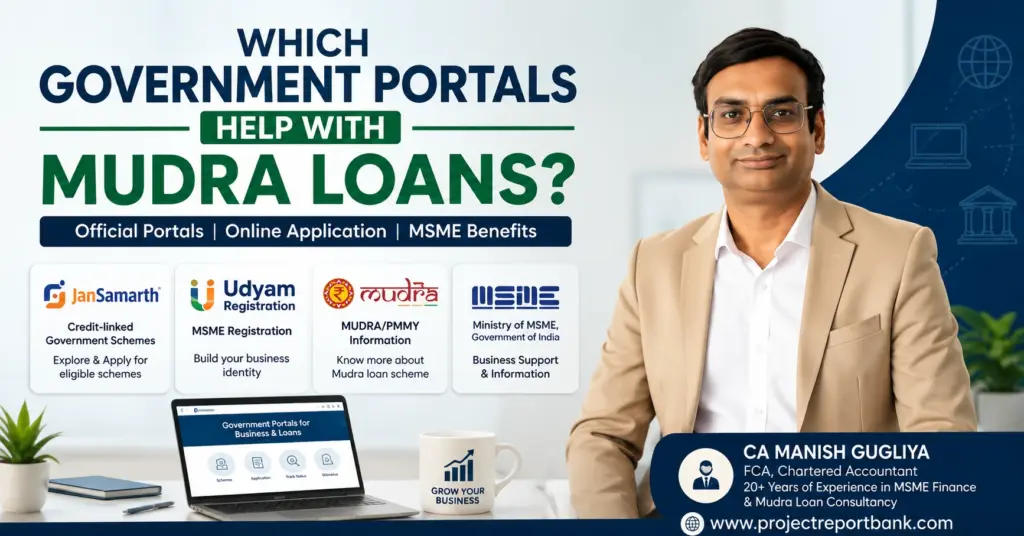
While portals like JanSamarth allow online Mudra applications, many lenders still require branch-level verification, physical document submission, or personal discussion before sanction. Applicants should confirm each lender’s exact process and be ready for at least one in-person interaction. Fully digital processing is more common for very small Shishu loans with existing account holders.
Will choosing a lender with more branches help in the future?
A wider branch network can be useful for future loan enhancements, additional working capital limits, and day-to-day support during the loan tenure. However, the immediate quality of the specific branch where you apply-its staff knowledge, communication, and processing capability-remains more important than the total branch count of the institution.
Is there any official list of approved Mudra Loan lenders?
You can refer to official government or PMMY communications for the list of various financial institutions approved as Member Lending Institutions. The internal resource on participating Mudra Loan banks also provides updated details. Always verify directly with the specific branch that they currently accept Mudra Loan applications for your business category and loan amount.
Conclusion: Treat Lender Selection as a Business Decision
Choosing a Mudra Loan lender should be a thoughtful decision combining eligibility, business fit, documentation feasibility, total cost, processing approach, and transparency. The formula is straightforward:
Eligibility + Business Suitability + Documentation + Cost + Processing + Communication + Repayment Capacity + Transparency
A strong, realistic business proposal with complete documents generally creates better chances of approval than chasing rumours of “easier” banks or agents. The scheme was designed to provide financial assistance to non corporate small enterprises in India, and every legitimate lender under it will conduct proper credit appraisal.
Invest a few extra days in properly comparing lenders and preparing your file before submitting your first Mudra Loan application. That small investment of time can make the difference between a smooth sanction and months of frustration.
- Do All Banks Follow the Same Mudra Loan Rules?

- Banks vs NBFCs vs MFIs for Mudra Loan: Which is Best for Your Business in 2026?
- Does Your Existing Bank Improve Mudra Loan Approval Chances?

- Common Mistakes While Selecting a Mudra Loan Bank – Practical Guide by CA Manish Gugliya
- What to Check Before Choosing a Mudra Loan Lender

- How to Find Participating Mudra Loan Banks in India

- Which Government Portals Help with Mudra Loans?
- Which Financial Institutions Can Sanction Mudra Loans?

- Bank vs NBFC for Mudra Loan: Which Is Better for Small Business Owners?