Most entrepreneurs who learn about Pradhan Mantri Mudra Yojana quickly realise they have one practical problem: they do not know which bank or financial institution to actually approach. MUDRA supports financial inclusion for small businesses and entrepreneurs, but it is not a retail bank where you walk in and collect a cheque. The Pradhan Mantri Mudra Yojana provides funding for non-farm, micro and small enterprises through a network of lending institutions, and your job is to find the right one. Participating Mudra Loan banks provide collateral-free credit to micro and small enterprises, yet not every branch of every listed bank will process your case the same way. This guide will show you exactly how to identify, verify and shortlist the lender that fits your situation.
Key Takeaways
- MUDRA itself is not a bank. It operates as a refinancing and development agency for microfinance. You must apply through eligible financial institutions such as public sector banks, private banks, RRBs, small finance banks, cooperative banks, NBFCs or microfinance institutions.
- Always verify that a specific branch actually offers PMMY before preparing your full file. Product availability, interest rates and processing differ across banks and branches.
- Shortlist banks based on your business profile, loan amount, location and existing banking relationship rather than chasing a random Mudra Loan participating banks list from WhatsApp or outdated websites.
- Both public and private banks (SBI, Bank of Baroda, Canara Bank, HDFC Bank, ICICI Bank, Axis Bank, etc.), along with RRBs, small finance banks, NBFCs and MFIs, can participate subject to eligibility criteria.
- “Participating bank” never means guaranteed approval. The lender still evaluates your credit needs, repayment capacity and project viability before sanctioning any loan.
Table of Contents
What Does “Participating Mudra Loan Bank” Actually Mean?
A “participating Mudra Loan bank” simply means a bank or other financial institution that has been permitted to extend loans under the Pradhan Mantri Mudra Yojana (PMMY). There is no separate “Mudra Bank” counter anywhere. The scheme was launched on 8 April 2015, and MUDRA Ltd. (Micro Units Development and Refinance Agency) acts as a refinance agency that supports and guides lending institutions. It does not lend directly to small businesses or individual borrowers.
As a borrower, you deal with commercial banks, Regional Rural Banks, small finance banks, cooperative banks, NBFCs or microfinance institutions. MUDRA refinances and supports them from the backend.
The practical flow works like this:
Applicant → Participating Lending Institution → Loan Appraisal → Sanction or Rejection → Disbursement
Even after you find a participating lender, the institution still evaluates several factors before sanctioning any Mudra Loan:
- Nature of business activity (manufacturing trading, services, allied agricultural activities)
- Loan requirement and proposed activity
- Repayment capacity based on cash flows and income
- Credit history, CIBIL score and banking conduct
- Existing liabilities and previous loans
- Business plan, financial projections and project viability
Loans under PMMY are tiered based on business maturity and needs. The loan categories are Shishu, Kishor, Tarun, and Tarun Plus. The scheme covers the stage of growth development and funding needs of the beneficiary micro unit entrepreneur.
From the desk of CA Manish Gugliya: Randomly applying to every bank without understanding this structure causes unnecessary rejections and multiple CIBIL enquiries, which can hurt your credit score. Always identify 2–3 suitable, genuinely participating lenders before submitting any application.
Which Types of Financial Institutions Can Provide Mudra Loans?
As per the PMMY framework, multiple categories of various financial institutions are permitted to offer mudra loans upto rs 10 lakh to eligible non farm enterprises. The exact product offerings may differ-SBI calls it e-MUDRA, Canara Bank has online Shishu Mudra, Bank of Baroda offers Digital Mudra, Axis Bank has its own Mudra product-but all operate under the same PMMY guidelines. Loans range from ₹50,000 to ₹20 lakhs based on category. Here is how each institution type fits in.
Public Sector Banks
Public Sector Banks such as State Bank of India, Bank of Baroda, Canara Bank, Bank of Maharashtra, Central Bank of India, Punjab National Bank, Union Bank of India and Indian Bank are among the largest participants. SBI offers e-MUDRA loans up to ₹20 Lakhs. Canara Bank offers online Shishu Mudra loans for micro-units. Bank of Maharashtra provides Mudra loans up to ₹20 Lakhs.
Many PSBs offer both digital and branch-based PMMY products, but availability of exact variants can vary by time and location. While DFS/MoF encourages PSBs to cover covering loans up to 10 lakh for eligible micro units under PMMY, it does not force every branch to sanction every proposal-the usual credit appraisal still applies.
Private Sector Banks
Large private banks also participate. HDFC Bank provides Mudra loans up to ₹10 Lakhs. ICICI Bank offers Mudra loans up to ₹10 Lakhs. Axis Bank supports Mudra loans up to ₹20 Lakhs. Kotak Mahindra Bank and others also participate.
Many borrowers wrongly assume only government banks provide mudra loans. Private sector banks can absolutely be considered if they actively offer PMMY in your area, though they may focus on existing customers, certain states or specific segments. Interest rates, processing charges and documentation requirements can differ from PSBs.
Regional Rural Banks
Regional Rural Banks (RRBs) are important for rural and semi-urban borrowers-small traders, dairy units, repair shops and businesses in allied agricultural activities. Many RRBs participate in Mudra lending for local entrepreneurs running non farm micro units, but schemes might carry local brand names and slightly different documentation formats. Check with the RRB branch serving your village or block for current offerings.
Small Finance Banks
Small finance banks like AU Small Finance Bank, Ujjivan, Equitas and Jana primarily focus on smaller borrowers and micro enterprises and can participate in PMMY. SFBs may combine Mudra with other MSME or micro-business products, so ask clearly if the loan will be classified under PMMY or as a regular MSME facility. Borrowers in smaller towns and peri-urban areas can consider SFBs because of their strong retail and micro-lending orientation.
Cooperative Banks
Selected State Cooperative Banks and District Central Cooperative Banks are permitted to participate, but not every cooperative institution or primary society will necessarily offer mudra loans. Before assuming eligibility, confirm whether your cooperative bank is included in official PMMY participating lists and whether the local branch actually handles such cases. Documentation, interest rates and processing may differ significantly from commercial banks.
NBFCs
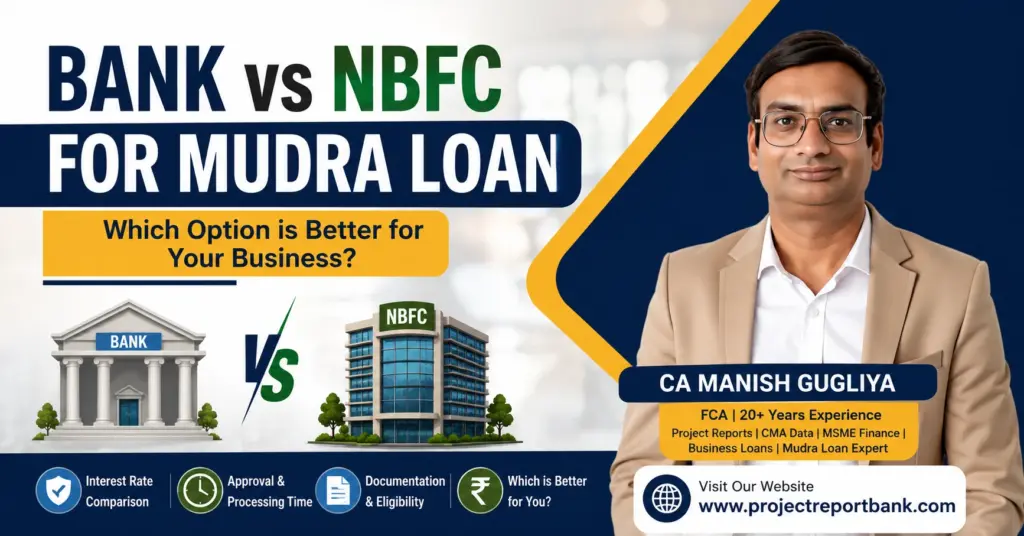
Certain eligible Non-Banking Financial Companies are allowed to offer Mudra Loans, often with MUDRA refinance support. NBFCs may have more flexible field outreach but can sometimes charge slightly higher interest due to their cost of funds and risk model. If you are deciding between a traditional bank and an NBFC, read our detailed guide on Bank vs NBFC for Mudra Loan for a deeper comparison.
Micro Finance Institutions
Micro Finance Institutions typically cater to very small borrowers, self-help groups and micro entrepreneurs needing low-ticket financial assistance. Some MFIs structure their loans under PMMY, though not every MFI offers all three products (Shishu, Kishore, Tarun). Many primarily handle smaller shishu loans up to ₹50,000. Borrowers should carefully check loan terms, effective interest cost and repayment schedule, especially for weekly or fortnightly collection models.
How to Find Participating Mudra Loan Banks
In practice, your first task is to identify which lenders actually offer PMMY in your area today rather than relying on a static Mudra Loan bank list from 2016–2017. Participating lenders include public sector banks and private sector banks, but you need current, verified information. Here is a step-by-step approach.
Step 1 – Start With Official Sources. Use the official PMMY/MUDRA website and key bank websites instead of social media posts or old PDFs. Participating institutions can change over time, so always check current information.
Step 2 – Check the Bank’s Official Website. Search within bank sites for terms like “Mudra Loan”, “PMMY”, “e-MUDRA”, “Digital Mudra” or “Micro Enterprise Loan”. Look for an active product page with updated terms and application procedure. Borrowers can apply for loans via participating banks or digital portals.
Step 3 – Contact the Local Branch. Ask specifically: “Does this branch currently accept applications under Pradhan Mantri Mudra Yojana for my type of business and required loan amount?” Also ask which categories (Shishu, Kishore, Tarun) are handled, what documents are required, whether startups are considered, whether a project report is needed, and where the file will be processed.
Step 4 – Check Government Digital Portals. Portals like JanSamarth may show available lenders for PMMY in your area. You can also apply online through some of these channels. Our dedicated guide on Government Portals for Mudra Loan Applications covers portal usage in detail.
Step 5 – Verify the Financial Institution Category. Confirm whether a shortlisted lender is a bank, RRB, SFB, NBFC or MFI. This affects interest rates, documentation and processing style. For deeper background, see our article on Financial Institutions That Sanction Mudra Loans.
Step 6 – Confirm Availability Before Submitting the File. Reconfirm-ideally in writing via email, SMS or official WhatsApp-that the specific branch and channel are currently accepting Mudra applications for your category and loan size. This avoids repeated visits and rework.
Does Every Bank Provide Mudra Loans?
No, not in the same way. While many banks are associated with PMMY, it does not mean each of them is actively marketing or sanctioning mudra loans in all branches at all times. There is a difference between a bank being part of the overall PMMY framework, having an approved Mudra product, a particular branch accepting applications, and that branch having the authority to sanction all loan sizes.
For example, a bank may stop new Mudra disbursements in a region temporarily, shift small-ticket loans to digital channels only, or route all MSME cases to a central processing cell. A “participating Mudra bank” must not be read as “guaranteed loan provider.” Normal credit filters-KYC, CIBIL, income, project viability-are always applied. Eligibility includes non-farm enterprises seeking financial support, but the lender still makes the final call.
Does Every Branch of a Participating Bank Accept Mudra Loan Applications?
Branch responsibilities are allocated internally by each bank. Some branches focus on MSME and agriculture lending, while others act mainly as service branches for deposits and basic retail loans. Some banks operate centralised MSME processing centres, so the local branch may only collect the Mudra application and documents while appraisal and sanction happen elsewhere.
For certain loan amounts (above ₹5 lakh, for instance) or risk levels, sanctioning powers may rest with higher authorities or specialised hubs rather than the local branch manager. Ask the branch whether they accept PMMY applications, process them locally or forward them, and have any caps on specific Mudra categories.
Redirection to another branch or digital channel should not be viewed as wrongdoing by default. It may simply be how the bank has structured its MSME vertical.
Public Sector Bank or Private Bank – Which Should You Approach?
Both PSBs and private banks are permitted to extend mudra loans. The better choice depends on your relationship, profile, location and comfort rather than ownership alone.
- PSBs typically have wider rural coverage, more experience with government schemes and PMMY reporting.
- Private banks may offer faster digital processes but often prefer existing customers with stable banking records and a satisfactory credit track record.
Consider proximity of the branch, whether you already hold a current or savings account there, the bank’s reputation in MSME lending, and clarity about documents and timelines. For a deeper comparison, refer to our guide on Public Sector Bank vs Private Bank for Mudra Loan.
Bank or NBFC for Mudra Loan?
Both banks and eligible NBFCs can participate in Mudra lending, but their lending approach, cost and documentation style differ significantly. Banks usually offer relatively lower interest rates but may insist on more formal documentation (bank statements, ITRs, financials). NBFCs often focus on field assessment, cash flow observation and on-ground business visits.
Accessibility (branch network versus field officers), speed and comfort of dealing are also practical considerations. The detailed pros and cons are discussed in our article on Bank vs NBFC for Mudra Loan.
How to Shortlist the Right Mudra Loan Bank
Once you have identified several participating lenders, shortlist 2–3 institutions that are practically suitable instead of sending applications everywhere.
Key shortlisting criteria:
- Existing banking relationship (current or savings account)
- Distance and ease of visiting the branch
- Bank’s comfort with your industry (trader, manufacturer, service provider)
- Typical loan size handled at that branch
- Feedback from other local borrowers
- Whether the bank handles your required Mudra category (Shishu up to ₹50,000, Kishore ₹50,001–₹5 lakh, Tarun ₹5,00,001–₹10 lakh)
- Your business constitution (proprietorship, partnership, small non corporate entity)
Focus on “Which bank fits my profile and requirement?” rather than “Which bank approves Mudra Loan the fastest for everyone?”
Existing Bank vs New Bank – Where Should You Apply?
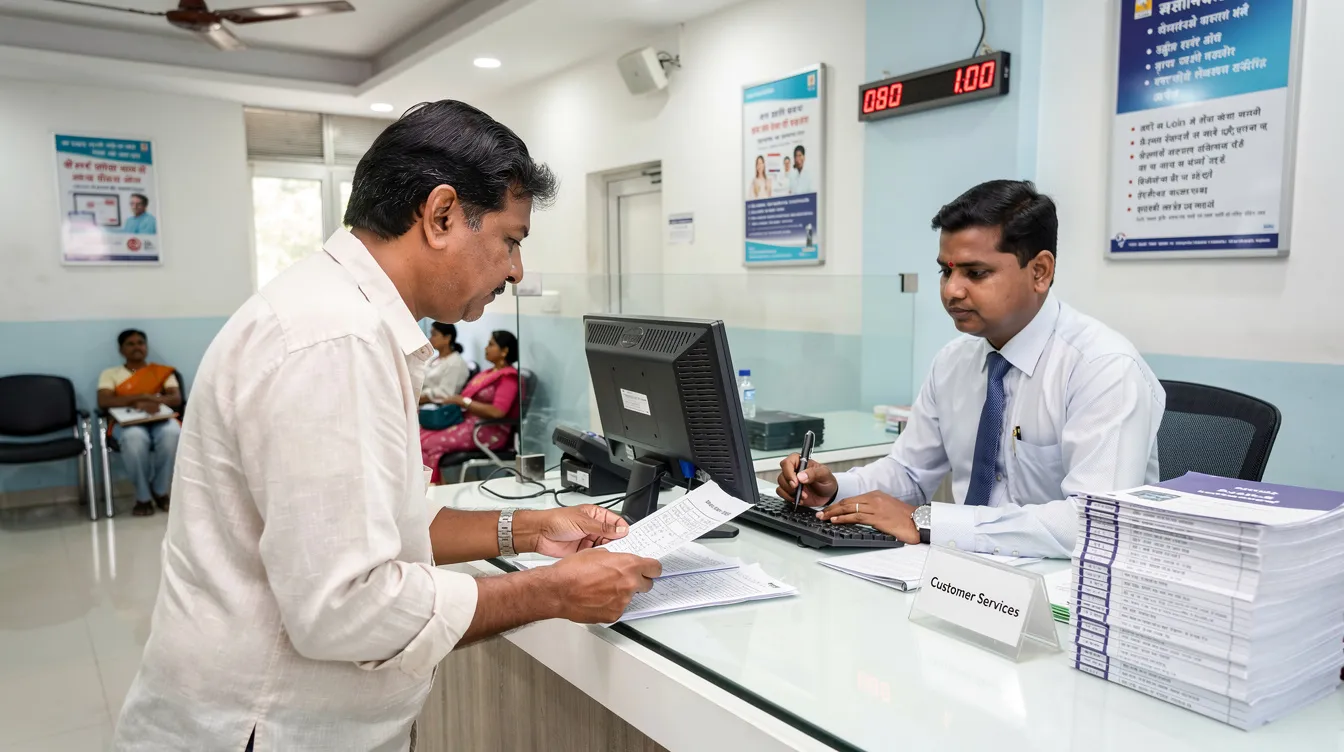
Most banks prefer to lend to customers whose account conduct they can already observe. This makes your existing banker a natural first choice. They already know your transaction history, cheque returns, average balance, and may be more comfortable with your income pattern and seasonality.
Approaching a new bank may be reasonable if your existing banker offers poor service, has no active PMMY product, or is not keen on your particular business or loan size. But do not close your existing relationship abruptly-maintain clean banking in all active accounts, as new lenders will check your statements.
Can a Startup Find a Participating Mudra Loan Bank?
PMMY is available even for first-time entrepreneurs without prior business turnover, but banks still expect a clear business plan, realistic projections and some understanding of the promoter’s background. There is no educational qualification barrier to applying, but you should demonstrate the necessary skills for your proposed activity.
Common startup challenges include no historic financials, no existing GST data or ITRs, and difficulty explaining repayment capacity purely from projected cash flows. While many participating banks mention startups as eligible borrowers, willingness to sanction depends on the quality of the project report, clarity of loan purpose, promoter experience and overall risk comfort. Our detailed guide on Mudra Loan Approval for Startups covers startup-specific strategies.

How Your Business Profile Affects Bank Selection
Two entrepreneurs may walk into the same branch on the same day and receive very different responses because their business profiles differ. Aspects that matter include age of business (new vs 3+ years), annual turnover, profitability trend, sector (retail, job work, manufacturing, services), promoter experience and credit history.
Applicants with stable turnover and clean banking may be better received at private banks or digital channels, while very small cash-based businesses focused on income generation may find MFIs, RRBs or SFBs more approachable. For a deeper match between profile and documentation, read Business Profile vs Documents for Mudra Loan.
Why Business Stability Matters Even After Finding a Participating Bank
Even after confirming that a bank participates in PMMY, the lender will closely observe the stability of your business. Stability typically means consistent or growing sales, regular credits in your bank account, limited cheque returns, a steady customer base, reasonable margins and the absence of frequent business closures or shifting.
For example, frequent account overdrawals or repeated EMI bounces in other loans may cause hesitation even under Mudra, which is a collateral free scheme. The lender wants to see that assets created from the loan extended will contribute to employment creation and sustainable business growth. For tips on strengthening stability before applying, see Business Stability and Mudra Loan Approval.
Income and Profitability Checks by Participating Banks
Banks may assess income using different methods-ITR-based assessment, turnover-based margins, cash-flow estimates or surrogate measures like average bank balance-but in all cases they try to ensure that EMI will be affordable. Repayment period typically ranges from one to five years, and repayment tenures can vary at the bank’s discretion.
High turnover alone is not enough if margins are thin. Lenders are more comfortable where reasonable profit and surplus cash flow are demonstrated. Self-employed borrowers should avoid under-reporting all income in ITRs if they plan to seek formal finance, as this weakens documented repayment capacity. Read more about Income Assessment in Mudra Loan Approval and why Turnover vs Profit for Mudra Loan Approval matters.
Prepare the Correct Loan Requirement Before Choosing a Bank
Many borrowers first decide the maximum loan amount they want (for example, the full ₹10 lakh Tarun loan) and then search for a bank. Lenders, however, expect a realistic calculation based on project cost. Business plans must be submitted with loan applications.
Key cost components to calculate:
- Machinery/equipment price and installation
- Tools, small capital assets, furniture and fixtures
- Initial stock/inventory
- Shop/office setup expenses
- Required working capital for at least 3–6 months
From the total project cost, deduct your own contribution to arrive at a sensible bank finance requirement. Working capital loans are provided for one year, while term loans have a maximum repayment period of 5-7 years. For detailed costing methods, refer to Proper Project Costing for Mudra Loan Approval.
Clearly Define Why You Need the Mudra Loan
When approaching participating banks, you should be able to state the purpose of the loan in one or two precise sentences. MUDRA loans can be used for manufacturing, trading, and services. The scheme supports micro enterprises engaged in the non farm sector and helps meet the development and funding needs of small and micro enterprises.
Common valid purposes include purchase of machinery or equipment, setting up or renovating a shop, buying commercial tools or vehicles for business use, stocking inventory, and meeting working capital gaps. Vague answers like “for my business needs” reduce banker confidence. Tie the purpose to expected business growth, income generation and repayment capacity. Our guide on How to Mention Loan Purpose in Mudra Loan Application helps you frame this properly.
Documents to Keep Ready Before Approaching Shortlisted Banks
Exact requirements vary by lender, loan amount and applicant profile, but here is a practical checklist. Required documents include identity proof and address proof as basics.
Personal KYC: Aadhaar card, PAN card, photograph, proof of residence (electricity bill, rent agreement)
Business documents: GST certificate, Shop & Establishment licence, partnership deed, Udyam Registration, trade licence, FSSAI (for food businesses), vehicle permits (for transport)
Financial papers: Last 6–12 months bank statements, last 1–3 years ITRs where available, basic financial statements for existing businesses, existing loan sanction letters or repayment schedules
Proposal-specific items: Machinery quotations, proforma invoices, rent/ownership proof of business premises, projected cash flow statements, a simple project report with assumptions
No collateral is needed for loans up to ₹10 lakhs. Collateral-free loans are backed by the Credit Guarantee Fund for Micro Units (CGFMU). MUDRA loans have minimal or no processing fees, though banks may levy nominal charges. For guidance on presenting your business clearly, see How to Write Business Details in Mudra Loan Application.
How to Verify Whether a Bank Really Offers Mudra Loan
Use these positive checks: confirm presence of an official PMMY/Mudra product page on the bank’s website, verify with branch staff or official customer care helpline, look for PMMY references in the bank’s MSME brochures, and cross-check via government portals where applicable. Seek at least one written or recorded confirmation (email, SMS, official WhatsApp) that the branch is currently accepting Mudra applications in your category.
Avoid relying only on WhatsApp forwards claiming “all banks must give Mudra up to ₹10 lakh”, old screenshots of circulars, YouTube promises of guaranteed approval, or third-party agents demanding upfront fees. If different staff at the same branch give contradictory responses, politely ask to see the latest internal circular or talk to the branch manager or MSME officer.
Participating Bank Does Not Mean Guaranteed Approval
Even if a bank participates in PMMY, it is not obligated to sanction every application. Normal credit appraisal and risk management rules always apply. There are three layers to understand: the lender participates in PMMY, the applicant is broadly eligible under scheme rules (activity, loan size, non farm sector), and the bank still has to be satisfied about creditworthiness before sanction.
Common reasons for rejection or reduction include weak repayment capacity, poor CIBIL or credit history, multiple existing loans, frequent cheque returns, incomplete paperwork, over-stated project cost and unclear loan purpose. Mudra is not a grant, subsidy or free government money-it is a regular business loan with EMI obligations. For deeper insight, read Why Banks Hesitate to Approve Mudra Loans.
How to Improve Your Chances After Selecting a Bank
Intelligent preparation can significantly improve the quality of your application even though no one can guarantee sanction.
- Fill the Mudra/PMMY form completely
- Ensure KYC details are consistent across documents
- Prepare a clear project report with realistic projections
- Request a realistic loan amount assessed based on actual project cost
- Attach all basic documents at the first submission
- Maintain healthy bank transactions for a few months before applying-avoid unnecessary cash withdrawals, cheque bounces or circular transfers
Loans up to ₹10 Lakhs require no collateral security, but your application quality still determines the outcome. See How to Improve Your Chances of Mudra Loan Approval and understand How Financial Discipline Improves Mudra Loan Approval.
Why Some Banks or Applications Move Faster Than Others
PMMY does not fix a uniform timeline for all Mudra applications. Processing speed depends on both bank and borrower factors.
Bank-side: Branch workload, presence of a dedicated MSME cell, level of digitisation (e-MUDRA, online uploads), and internal verification layers based on ticket size.
Borrower-side: Completeness and clarity of documents, loan amount sought, business complexity, response time to bank queries, and whether site verification is straightforward.
For Shishu category loans with complete documentation, official guidelines suggest processing within about 7–10 days. For more on timing, see Why Some Mudra Loan Applications Get Approved Faster.
Common Mistakes While Searching for a Mudra Loan Bank
- Assuming every branch gives Mudra loans up to ₹10 lakh to any applicant. Branch-level authority and product availability vary.
- Applying randomly to many lenders without understanding your own eligibility criteria or loan requirement.
- Relying on outdated PMMY participating bank lists circulated on social media or old blog posts.
- Choosing a bank purely for a slightly lower advertised interest rate. Mudra loan interest rates range from 9.05% to 21%, and actual rates depend on your profile.
- Paying agents who promise “sure-shot Mudra sanction” or demand hefty upfront fees. Only official charges mentioned by the bank should be paid.
- Going to a bank without knowing the exact loan requirement or without basic documents. This wastes everyone’s time and creates a negative impression.
- Giving different business information to different lenders. Inconsistency raises red flags during credit assessment.
Questions to Ask the Bank Before Applying
Carry this checklist when you visit or call a bank:
- Is this branch currently accepting PMMY/Mudra Loan proposals for my business activity and required amount?
- Which Mudra category (Shishu / Kishore / Tarun) would my case fall under?
- What are the exact documents you require?
- Is a project report compulsory for my ticket size?
- Will my application be processed here or at a central MSME cell?
- Are there any processing charges, inspection fees or insurance costs?
- In what form will I receive the loan-term loan, cash credit, overdraft?
- Will a pre-sanction visit to my shop or office be done?
- How will I get updates-SMS, email, call?
- Can I receive the affordable credit facility even as a new customer?
Note down the name and designation of the bank official you spoke to, and keep a simple record of dates and discussions.
Simple Decision Process for Choosing a Participating Mudra Loan Bank
Here is a linear step-by-step decision flow that summarises the earlier guidance:
- Determine clear loan requirement and purpose. Calculate project cost, own contribution and bank finance needed.
- Identify which categories of financial institutions (banks, RRBs, SFBs, NBFCs, MFIs) are available in your area.
- Use official sources to check their PMMY participation.
- Verify product and branch-level availability for your category and loan size.
- Compare 2–3 shortlisted lenders on accessibility, responsiveness and fit with your business profile.
- Check if your documents meet their expectations.
- Prepare a project report and financial projections.
- Submit a complete, consistent application through the chosen channel.
Follow up politely via official channels. Consider a second lender only after understanding reasons for any first rejection or delay.
Practical Example: Selecting a Bank for a ₹6 Lakh Mudra Loan
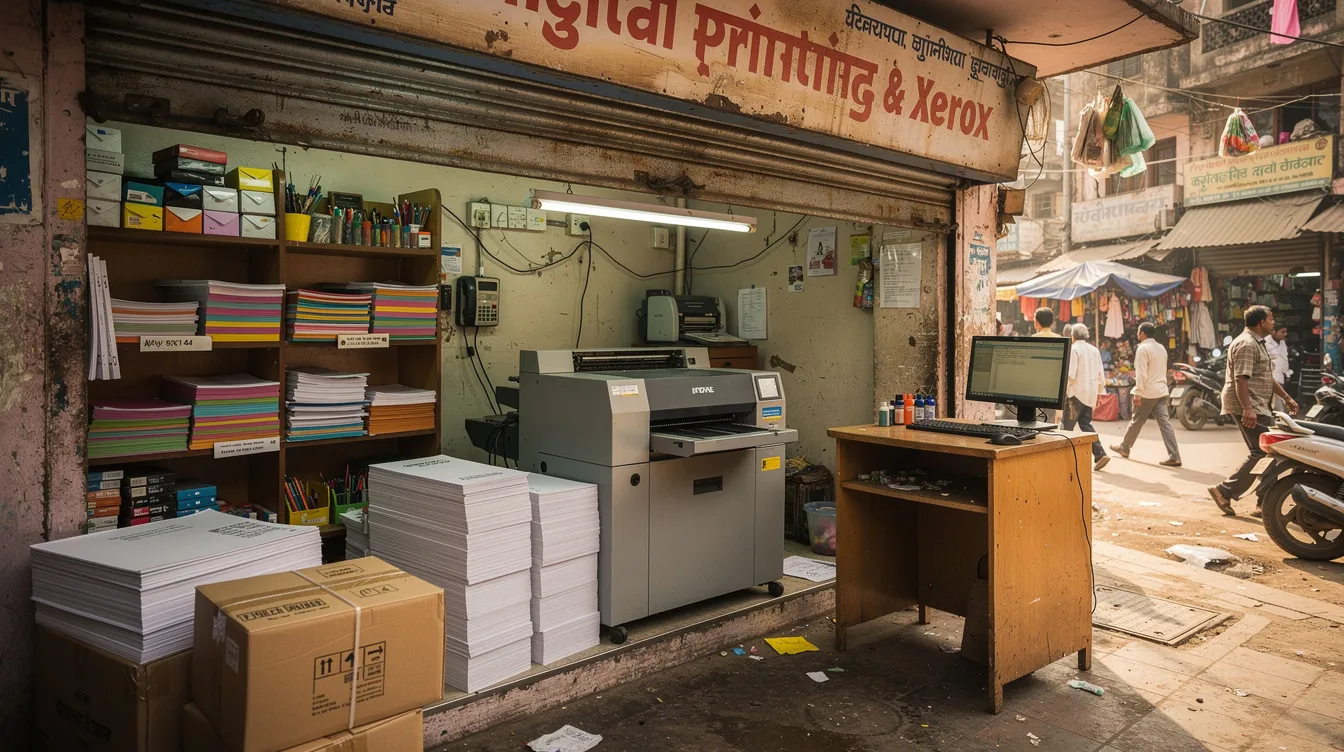
Ramesh runs a small printing business in a tier-2 city and needs around ₹6 lakh for a new digital printing machine and three months of working capital. Here is how he approaches the process.
He first calculates his project cost: machine price ₹4.5 lakh, installation ₹30,000, initial paper and ink stock ₹70,000, and working capital for three months ₹50,000. Total project cost comes to ₹6 lakh. His own contribution is ₹60,000, so the bank finance requirement is ₹5.4 lakh-falling in the Kishore Mudra category. Kishore Loans range from ₹50,001 to ₹5 lakh, so he realises the full ₹6 lakh (or ₹5.4 lakh after own contribution) needs a Tarun category since Tarun Loans range from ₹5 lakh to ₹10 lakh. He adjusts his understanding and targets the next phase of funding under Tarun.
He shortlists three institutions: a nearby PNB branch (PSB), HDFC Bank where he has a savings account (private), and a local RRB branch close to his workshop. He checks each bank’s website, calls branches to confirm PMMY availability, collects their document lists, and compares their practical suitability-service quality, distance, comfort with printing businesses, and reference point from a fellow printer who got a Mudra loan from PNB.
He finally chooses PNB, prepares a project report with realistic revenue projections, attaches machinery quotations and bank statements, and submits a complete file. This is only an educational example and does not imply any guaranteed sanction.
Expert Guidance from CA Manish Gugliya
In my experience of over 20 years working with small businesses, entrepreneurs and micro units, I have noticed that most borrowers spend excessive time asking one question: “Which is the best bank for Mudra Loan?” The more useful question is: “Which participating lender is suitable for my business profile, loan requirement, location and documents?”
Fix your loan requirement first. Understand your own financial statements and banking pattern. If you are a beneficiary micro unit entrepreneur looking for growth development and funding, your funding needs must be clearly documented before you approach any lender.
Shortlist lenders logically instead of applying blindly through multiple agents or portals. A clear, bankable project report, consistent KYC, transparent disclosure about existing loans, and disciplined banking-these matter far more than finding the “cheapest” or “fastest” bank. Interest rates are linked to banks’ internal lending rates, and every lender will assess your case individually.
Remember that Mudra Loan is a credit facility, not an entitlement. Banks take the final decision. Treat the process professionally, keep all communication records, and learn from each interaction. If one bank declines, understand why before approaching the next one.
For eligible borrowers who have successfully repaid previous loans under the Tarun category, the maximum loan amount has been increased to ₹20 lakh under Tarun Plus-an incentive for borrowers with a satisfactory credit track record. This shows that the scheme rewards discipline and good conduct.
Frequently Asked Questions
How do I find a Mudra Loan bank near me without relying on agents?
Check the official PMMY/MUDRA site for categories of lenders, search websites of major banks active in your city or district, and call 2–3 nearby branches of PSBs and private banks. If available, use government portals like JanSamarth to see which lenders handle PMMY for your location. Walking into a branch with basic KYC and a short write-up of your business can help the banker quickly tell whether they handle Mudra or which branch does.
Can I apply for a Mudra Loan online, or must I visit a branch?
Several banks, such as SBI (e-MUDRA) and some private and public banks, offer online or partially online PMMY applications, especially for smaller ticket sizes. Shishu Loans are for amounts up to ₹50,000 and are commonly available through digital channels. However, not all lenders have full digital journeys. Even with an online form, physical KYC, document verification or branch visits may still be required. Follow only links from official bank or government websites when applying online.
Is the interest rate for Mudra Loan the same in all banks?
No. Interest rates for Mudra loans are deregulated by banks. Each bank or financial institution charges a reasonable rate based on its cost of funds, risk perception and internal policy. Mudra loan interest rates range from 9.05% to 21% depending on the lender, product type, loan amount and borrower profile. As a reference point, PNB has been observed around 8.50%–9.75%, SBI e-Mudra around 12.15% onwards, and Axis Bank around 15%–19.35% for certain products.
Can I change the bank if my Mudra Loan application is delayed or rejected?
Yes. Borrowers are generally free to approach another eligible participating institution if one bank declines or delays beyond a reasonable period. However, understand the reasons for rejection first to avoid repeating the same issues elsewhere. Keep a record of the earlier application and use any feedback received-about documents, CIBIL or income-to strengthen the next proposal.
Do I need to maintain a current account in the same bank before applying?
Most banks prefer or require that the Mudra borrower open or maintain a current or savings account with them for routing transactions, but this may not be mandatory before the first enquiry. Having an existing account with good conduct often strengthens the case, yet banks can also consider new clients if the business plan and proposal are otherwise sound. The loan can be disbursed as a term loan or cash credit depending on the purpose-capital assets versus working capital.
Conclusion
Finding participating Mudra Loan banks is a structured exercise, not a matter of downloading an old list and hoping for the best. The Pradhan Mantri Mudra Yojana, also known as mantri mudra yojana pmmy, provides financial assistance through a wide network of lending institutions for non corporate non farm enterprises, but the borrower must do the groundwork.
Follow the simple framework: Identify → Verify → Compare → Prepare → Apply.
While the maximum loan under PMMY is ₹10 lakh (and upto ₹20 lakh under Tarun Plus for eligible borrowers), the right lender will look at viability, repayment capacity and documentation before sanctioning any proposal. As of February 2025, over 52 crore accounts amounting to ₹33.19 lakh crore have been sanctioned under PMMY-proof that the scheme works when borrowers approach the right institutions with the right preparation.
The final credit decision always rests with the lending institution. But a well-prepared, transparent borrower approaching the correct participating bank or NBFC stands a far better chance of timely approval.
About the Author
CA Manish Gugliya (FCA) is a Chartered Accountant with over 20 years of hands-on experience in Project Reports, CMA Data, MSME Finance, Business Loans and Mudra Loan consultancy. Through ProjectReportBank.com, he helps entrepreneurs, startups and MSMEs across India prepare professional project reports and understand practical aspects of schemes like Pradhan Mantri Mudra Yojana. His guidance is based on real-life interaction with banks and financial institutions, aimed at making borrowers better prepared and more confident while approaching participating Mudra Loan lenders.
- Do All Banks Follow the Same Mudra Loan Rules?

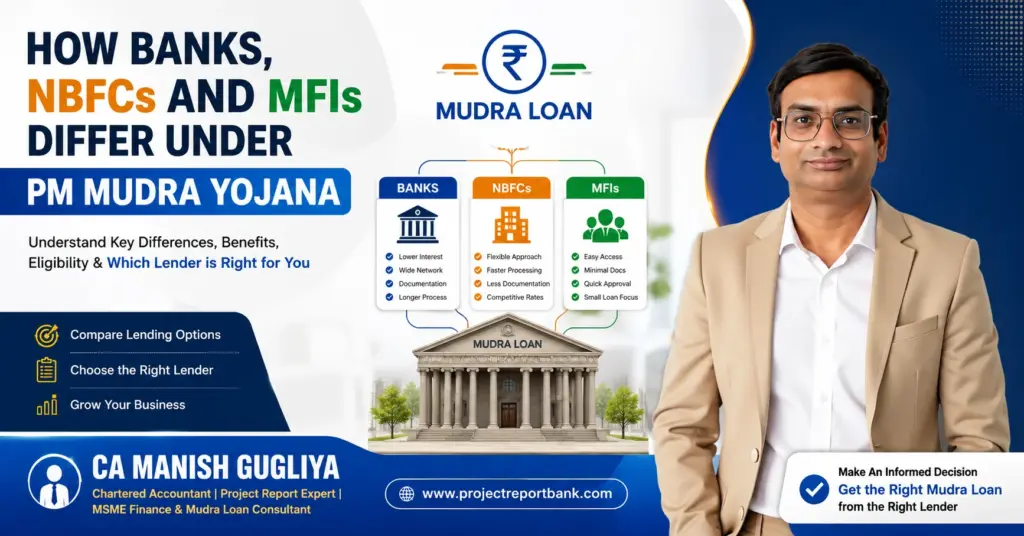
- Banks vs NBFCs vs MFIs for Mudra Loan: Which is Best for Your Business in 2026?
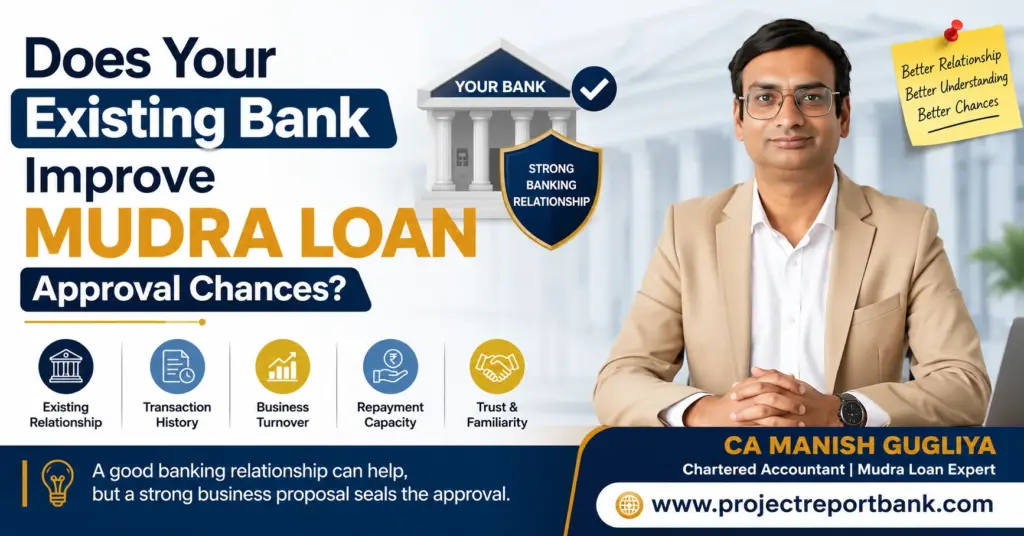
- Does Your Existing Bank Improve Mudra Loan Approval Chances?
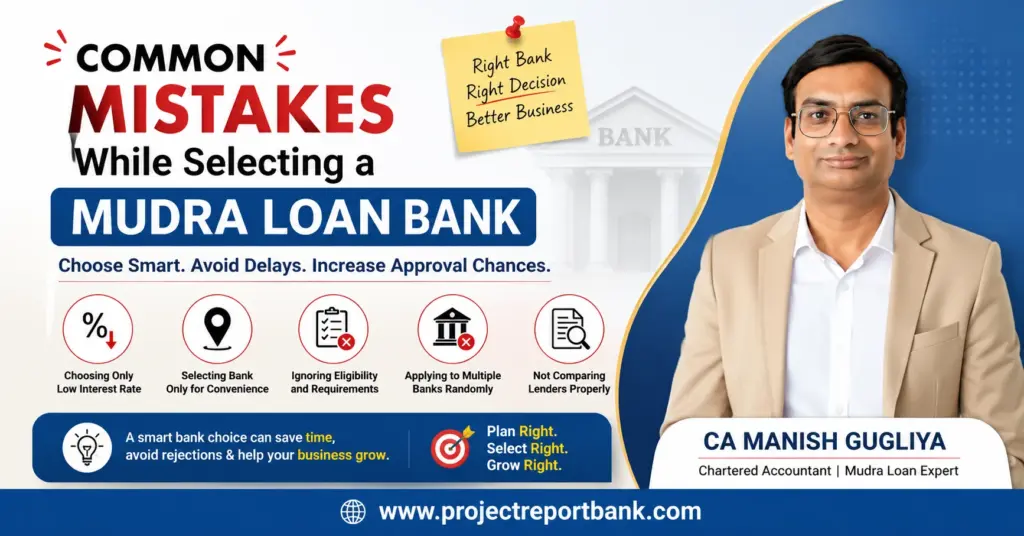
- Common Mistakes While Selecting a Mudra Loan Bank – Practical Guide by CA Manish Gugliya
- What to Check Before Choosing a Mudra Loan Lender

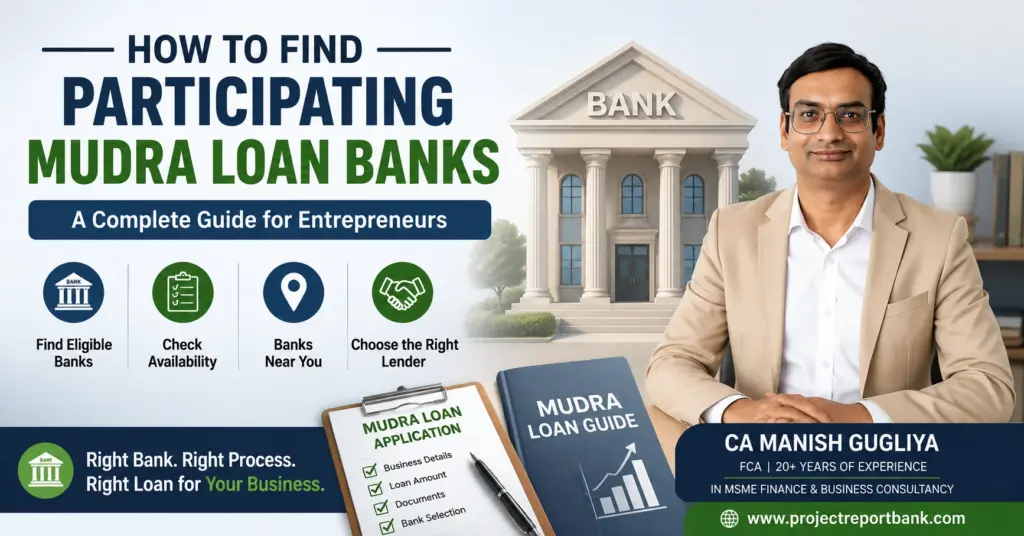
- How to Find Participating Mudra Loan Banks in India
- Which Government Portals Help with Mudra Loans?
- Which Financial Institutions Can Sanction Mudra Loans?

- Bank vs NBFC for Mudra Loan: Which Is Better for Small Business Owners?