Every week, at least two or three entrepreneurs walk into my office and ask me the same question: “CA Sahab, can I apply for a Mudra loan without visiting the bank?” It is a fair question. Nobody enjoys standing in long bank queues, filling out paper forms, and making multiple trips just to get a small business loan.
The good news? Yes, you can start – and in some cases, nearly complete – your Mudra loan application from home. But the full picture is a bit more nuanced than what you read in advertisements. Let me explain everything based on what I have actually seen in my 20+ years of helping entrepreneurs with MSME finance.

Key Takeaways
Here is a quick summary before we get into the details:
- You can apply for a Mudra loan without visiting the bank in the initial stage. Most major banks now allow you to fill the application form, upload documents, and even track status online. However, at least one physical interaction (for KYC, signatures, or field verification) is still common.
- Banks and financial institutions like SBI, Bank of Baroda, PNB, Union Bank, and Canara Bank offer digital Mudra loan application options. But final approval is rarely 100% paperless, especially for first-time borrowers or higher loan amounts.
- A satisfactory credit track record, complete documents, and a well-prepared project report significantly improve your approval chances – whether you apply online or offline.
- Mudra loans are classified into Shishu (upto Rs 50,000), Kishore (Rs 50,001 to Rs 5 lakhs), and Tarun (Rs 5 lakhs to Rs 10 lakhs) categories, with a newer Tarun+ category covering loans from Rs 10 lakhs to Rs 20 lakhs.
- Loans up to Rs 10 lakhs under PMMY require no collateral security.
- This article explains the complete online Mudra loan process in India, documents required, when a branch visit is still needed, and practical expert tips from CA Manish Gugliya (ProjectReportBank.com).
Table of Contents
What Is an Online Mudra Loan Application?
In simple words, an online Mudra loan application means starting and tracking your loan request without first going to the bank branch.
A digital Mudra loan application involves filling the PM Mudra loan online apply form on a bank website, mobile app, internet banking portal, or a government portal like Jan Samarth – instead of walking into a branch and filling paper forms. The Pradhan Mantri Mudra Yojana (PMMY) scheme was launched on April 8, 2015 to provide financial assistance to non corporate small enterprises, and today the application process has become significantly more digital than it was at launch.
Here is what typically happens when you apply online:
- Basic details collection: The online registration form asks for your name, Aadhaar number, PAN, mobile number, business type, loan amount, and your preferred bank or financial institution.
- Document upload: Many banks let you upload documents for online Mudra loan – Aadhaar, PAN, address proof, bank statement, business proof, quotations, and project report – as scanned PDFs or clear photos. Digital documents required for Mudra applications may include identity, address, and business proofs.
- Application tracking: Online MSME loan application systems usually give you an application number so you can track status (under process, approved, sanctioned, disbursed) from home.
- Offline verification still happens: Even with the online process, banks still perform offline checks like field visits, business inspection, and KYC verification to satisfy RBI, MSME Ministry, and their own internal guidelines.
Quick example: Ramesh runs a small grocery store in a tier-2 city. He has an SBI savings account. Instead of taking a day off and visiting the branch, he opens SBI’s website on his phone, fills the e-Mudra form, uploads his Aadhaar, PAN, and shop licence, and submits his application. He gets an acknowledgement number within minutes. That is what an online Mudra loan application looks like in practice.
But here is the important part that many people miss: applying online does not mean the bank will never contact you. It simply means you do not need to visit the branch to start the process. The nature of the verification that follows depends on your profile, your loan amount, and the bank’s internal policy.
Can You Apply for a Mudra Loan Without Visiting the Bank?
Let me give you a direct answer from my experience as CA Manish Gugliya: you can apply for a Mudra loan without visiting the bank in the initial stage, but in most real cases, at least one branch or field interaction is still needed.
Here is how it breaks down in practice:
Complete Online Application (Rare but Possible)
Some existing customers of banks like SBI, Bank of Baroda, or Indian Bank may complete form filling, document upload, and even get preliminary approval digitally – when they already have updated KYC and a good relationship with the bank. Indian Bank, for example, has launched an Online Shishu Mudra Loan under “Project Wave” that allows pre-selected, KYC-compliant customers to go from application to disbursement without any branch visit.
But this scenario applies mainly to shishu loans (upto Rs 50,000) and to customers who have been with the bank for at least 12 months with clean account history.
Partial Online Application (Most Common)
This is what happens for the majority of borrowers. You submit your Mudra loan application from home, but the bank later calls you for:
- Physical KYC
- Signature verification
- Loan agreement signing
- Clarifications on your business or project report
Branch Visit Still Required (Certain Situations)
A visit is almost always needed when:
- You are a first-time borrower with no existing bank account
- Your credit history is weak or you are a defaulter
- You are applying for larger amounts (Kishore or Tarun category)
- The bank wants to inspect your shop, stock, machinery, or capital assets
- Original document verification is required
Online vs Offline Mudra Loan Application: Quick Comparison
| Step | Online | Offline |
|---|---|---|
| Application form filling | From home (website/app/portal) | At bank branch |
| Document submission | Upload scanned copies | Carry physical copies |
| KYC verification | e-KYC via Aadhaar OTP (sometimes) | In-person at branch |
| Credit appraisal | Bank does internally (same either way) | Same |
| Loan agreement signing | Digital in rare cases | Wet signature at branch |
| Field verification | May still happen | May still happen |
| Disbursement | Direct to account | Direct to account |
| Timeline | Faster initial submission | Depends on branch workload |
The eligibility criteria remain the same whether you apply online or offline: you must be running a small non-farm business, the loan can be up to Rs 10 lakhs under PMMY (and upto Rs 20 lakhs under Tarun+), and the bank must be satisfied with your repayment capacity and business viability. Applying for a Pradhan Mantri Mudra Yojana loan online is absolutely possible – you just need to be realistic about when physical steps might still be required.
If you want a full walkthrough of the complete Mudra loan application process, I have covered that separately.
Which Banks Allow Online Mudra Loan Applications?
Almost all major commercial banks now support some form of Mudra loan online application. But the depth of “online” differs from bank to bank.
Here are the key banks offering online Mudra loan initiation:
- State Bank of India (SBI): Offers e-Mudra for existing customers. Loans upto Rs 50,000 can often be processed digitally for borrowers who have held an SBI account for at least 6 months.
- Bank of Baroda: Offers a Digital Mudra Loan via its bobWorld app and internet banking. For small amounts, sanction and disbursement can also be digital.
- Indian Bank: Online Shishu Mudra Loan for pre-selected existing customers – one of the most fully digital options available.
- Punjab National Bank (PNB): Online application initiation through website and digital channels.
- Union Bank of India: Digital loan application available through their portal.
- Canara Bank: Online MSME and Mudra loan applications accepted through their website.
- Small finance banks and select NBFCs also participate in the mudra scheme and some offer digital application forms.
Mudra loans are commonly processed through government portals or participating banks. Borrowers can also start a digital Mudra loan application via the Jan Samarth Mudra Loan portal, choosing their preferred bank during the process.
MUDRA itself is a refinancing agency and does not lend directly to individual borrowers. The actual loan extended to the borrower comes from the bank or financial institution you apply to. Mudra loans are provided by various financial institutions, including public sector banks, private banks, and small finance banks.
Bank-Wise Digital Application Availability (General Guidance)
| Bank | Online Application Available? | Fully Digital Sanction? |
|---|---|---|
| SBI | Yes (e-Mudra) | Partial – upto ₹50,000 for existing customers |
| Bank of Baroda | Yes (bobWorld / Jan Samarth) | Partial – upto ₹50,000 |
| Indian Bank | Yes (Online Shishu) | Yes – for pre-selected, KYC-compliant customers |
| PNB | Yes (website) | Varies by branch policy |
| Union Bank | Yes (portal) | Varies |
| Canara Bank | Yes (website) | Varies |
| Small Finance Banks | Some offer digital forms | Rarely fully digital |
Important: Do not assume fully paperless approval just because the bank accepts online applications. Even banks with strong digital channels may still call you for in-person verification, especially for higher-ticket loans or new customers.
Ways to Apply for Mudra Loan Without Visiting the Branch (Initially)
There are multiple ways to start a business loan without visiting the bank. But most of them still end with at least one human interaction step. Here are your options:
1. Official Bank Websites
Go to your preferred bank’s website, navigate to the Mudra or PMMY loan page, choose the right category (Shishu, Kishor, or Tarun based on your funding need), fill in your basic details, and submit the online form. Most banks provide an acknowledgement number immediately.
2. Internet Banking Portals
If you are an existing customer, log in to your internet banking, go to “Loans” or “SME / MSME Loans,” choose Mudra loan online, and your data gets pre-filled based on existing KYC and bank records. This is often the fastest route because the bank already has your information.
3. Mobile Banking Apps
Select banks allow small Mudra or MSME loans through their mobile apps, especially for borrowers who have successfully repaid previous loans and maintain good account conduct. SBI’s YONO app and Bank of Baroda’s bobWorld are two popular examples.
4. Jan Samarth Portal
Mudra loans can be applied online via the JanSamarth portal. Register with your mobile number and Aadhaar, fill in business and promoter details, choose your preferred bank, and upload all documents in one place. This is a government-backed digital platform that connects you directly to participating banks.
5. Third-Party DSAs or Marketplaces
Some websites and apps act as lead generators for Mudra and MSME loans. They collect your details and forward them to banks. But remember: these are not lenders. The final sanction always rests with the bank or financial institution you apply to.
Safety tip: Always use only official bank or government URLs for any Mudra loan online registration. Avoid sharing your Aadhaar, PAN, or OTP on unverified websites.
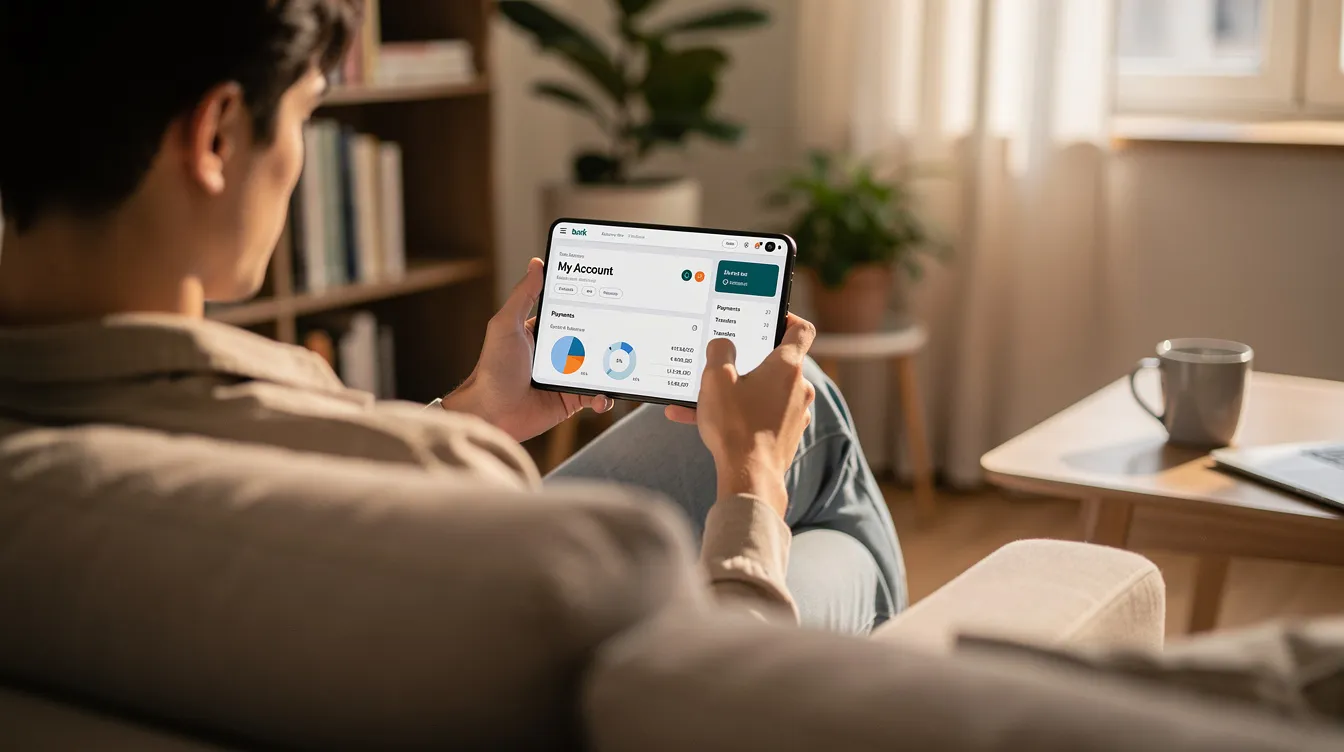
Step-by-Step Online Mudra Loan Application Process
Here is a clear, numbered process that even a first-time entrepreneur can follow:
Step 1: Check Eligibility Confirm you meet the eligibility criteria: you must be running a non-farm small business (trading, manufacturing, or services sector), the loan should be within scheme limits, and you should not be a defaulter with any bank. No specific educational qualification is required – what matters is that you possess the necessary skills and knowledge to undertake the proposed activity. Eligible borrowers include non-corporate small enterprises and individual borrowers.
Step 2: Choose a Suitable Bank Pick a bank or financial institution where you already hold an account. Your past relationship and local branch support for micro and small enterprises matter. If you have availed any previous loans and repaid them well, that bank is usually your best reference point.
Step 3: Select the Right Product Go to the bank’s official website, internet banking, mobile app, or Jan Samarth portal. Select the correct Mudra product:
- Shishu: Upto Rs 50,000
- Kishore: Rs 50,001 to Rs 5 lakhs
- Tarun: Rs 5 lakhs to Rs 10 lakhs
- Tarun+: Rs 10 lakhs to Rs 20 lakhs
Mudra loans are available up to Rs 20 lakhs, and loans up to Rs 10 lakhs under PMMY require no collateral security.
Step 4: Fill the Application Form Enter business details, loan purpose, required amount, proposed repayment period, and promoter details. Make sure every field matches your Aadhaar and PAN exactly. Even small mismatches can delay the process.
Step 5: Upload Documents Upload scanned copies of KYC documents, address proof, business proof, bank statement, project report, quotations, and Udyam Registration (if available). Use clear, readable formats. Eligibility for Mudra loans usually requires minimal paperwork for shishu loans, but for Kishore and Tarun categories, the bank will need more detailed documentation.
Step 6: Review and Submit Double-check all fields. Confirm your mobile number and email are correct. Submit the digital Mudra loan application and save or print the acknowledgement with your application number.
Step 7: Respond to Bank Queries Wait for preliminary verification. Respond promptly to any calls, SMS, or emails from bank staff asking for clarifications or additional documents. Delays from your side can slow down the entire process.
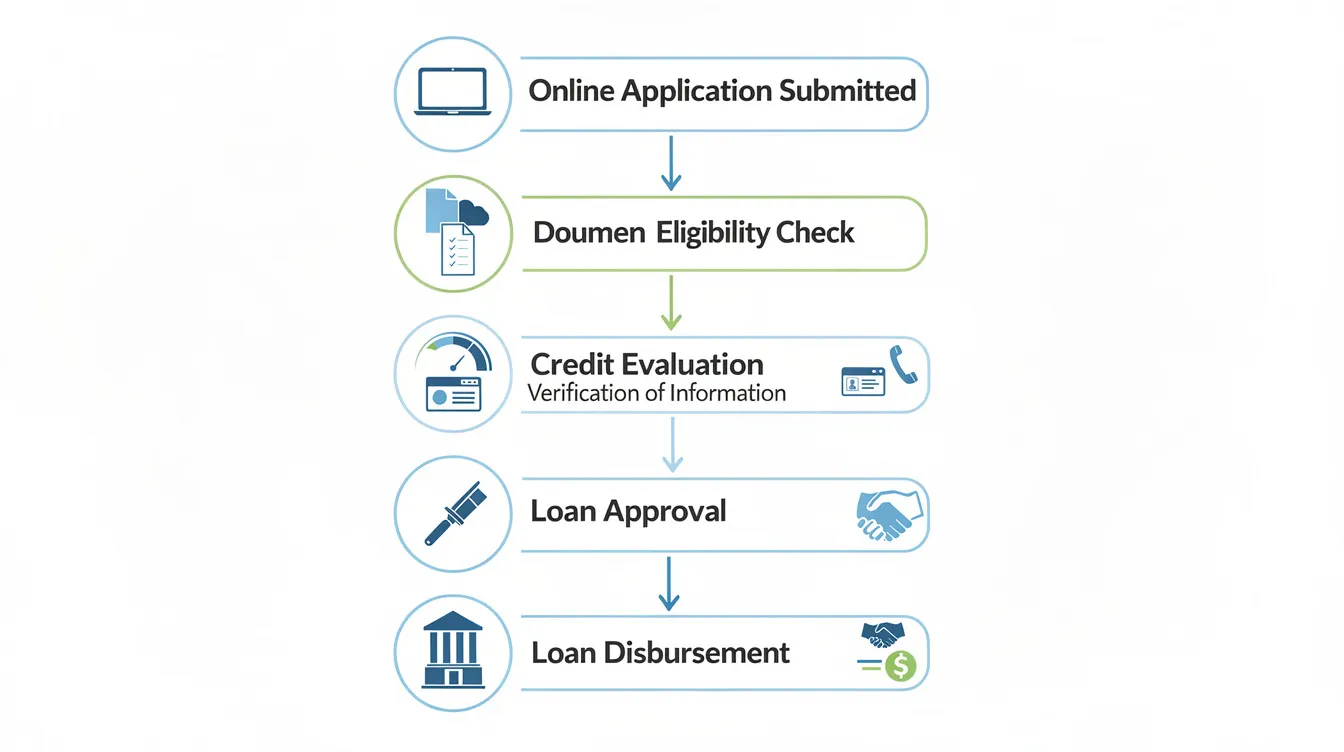
Step 8: Credit Appraisal The bank performs internal credit appraisal. They check your CIBIL score, existing borrowings, whether you have successfully repaid previous loans, and whether the project appears viable. Your application is assessed based on credit history, business strength, and the quality of your project report.
Step 9: Sanction If your proposal is found acceptable, the bank issues sanction terms. They may call you to the branch to sign loan documents and complete any pending KYC or security documentation. This is the stage where most “online” applications become partially offline.
Step 10: Disbursement Once all formalities are completed, the bank disburses the funds to your current or savings account. The loan moves into the regular EMI or OD repayment phase, which you can monitor online. Each beneficiary micro unit receives funds directly into their account.
Documents Required for Online Mudra Loan Application
Complete documentation is the single biggest difference between fast approvals and repeated follow-ups – whether you apply online or offline.
Here is what you typically need:
Personal KYC Documents
- Aadhaar card
- PAN card
- Recent passport-size photographs
- One additional ID proof if demanded by the bank (Voter ID, Driving License, Passport)
Address Proof
- Aadhaar (if accepted as address proof)
- Voter ID
- Passport
- Utility bill (electricity, water)
- Rental agreement
Business Proof
- GST registration (if applicable)
- Shop and Establishment certificate
- Udyam Registration for MSME
- Partnership deed or proprietorship declaration
- Any licence proving existence of the proposed activity
Financial Documents
- Last 6 to 12 months bank statements
- Income Tax Returns (ITRs) if available
- Basic financials for existing micro units
- Details of any previous loans to show repayment discipline
Project-Related Documents
- Quotations for machinery, equipment, or stock
- A basic project report covering loans requirement, expected sales, expenses, and repayment plan
- Working capital estimation
Complete Documents Checklist Table
| Document Type | Specific Documents | Format for Upload |
|---|---|---|
| Identity Proof | Aadhaar, PAN, Voter ID, DL, Passport | PDF or clear photo |
| Address Proof | Aadhaar, utility bill, rental agreement | PDF or clear photo |
| Business Proof | Udyam Registration, GST, Shop licence | PDF or clear photo |
| Financial Records | Bank statements, ITR, balance sheet | |
| Project Documents | Quotations, project report, invoices | |
| Photographs | Passport-size photo of applicant | JPEG |
For a detailed breakdown, check this complete Mudra loan documents checklist.
When Might You Still Need to Visit the Bank?
Even after a paperless Mudra loan application, physical interactions are common and perfectly normal under Indian banking practice. Here are the typical situations:
Physical KYC
The branch may ask you to visit with original Aadhaar, PAN, and address proof to match them against your uploaded copies. This is a regulatory requirement for the digital application processes involving KYC verification.
Signature Verification
Banks often insist on taking fresh wet signatures on the application form, loan agreement, standing instruction forms, or ECS mandate. E-signing is still not universally available across all branches.
Original Document Verification
In some cases – especially for Kishore and Tarun loans covering loans for larger amounts – the bank wants to see original invoices, quotations, licences, or registration certificates.
Field or On-Site Verification
A credit officer might visit your shop, workshop, or office to confirm business activity, stock levels, machinery, and overall viability. This is common for micro enterprises engaged in manufacturing, trading, or services where physical assets created from the loan need to be verified.
Disbursement Formalities
Some banks require you to visit on disbursement day to sign final documents, collect the sanction copy, and understand the repayment schedule and conditions.
Situations Where Bank Visit Is Typically Required
| Trigger | Reason | Likely For |
|---|---|---|
| KYC not updated in bank records | Regulatory compliance | New customers, lapsed KYC |
| Loan amount above ₹50,000 | Higher risk needs deeper checks | Kishore, Tarun applicants |
| No existing account with the bank | Bank needs full onboarding | First-time borrowers |
| Weak or no credit history | Bank needs more comfort | Individuals with no CIBIL |
| Business verification needed | Confirm existence of business | All categories (varies) |
| Loan agreement signing | Legal requirement | Most applicants |
Advantages and Limitations of Applying for Mudra Loan Online
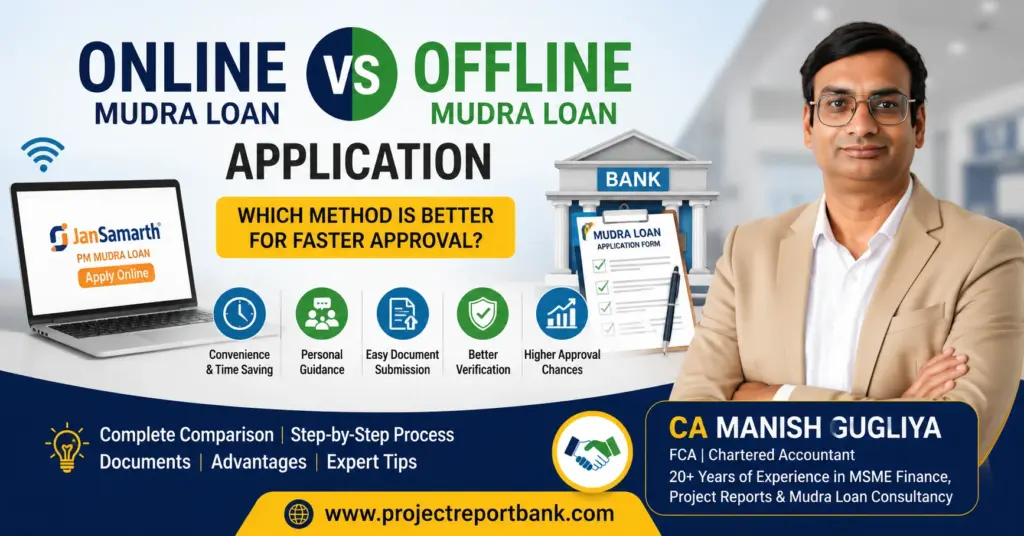
Knowing both sides helps you set realistic expectations. For a deeper comparison, you can also read about online vs offline Mudra loan application differences.
Advantages
- Time saving: No long queues, no wasted workdays. You can submit from home or your shop at any hour.
- Convenience: Mudra loan application from home is especially valuable for entrepreneurs in smaller towns, where the nearest branch of a preferred bank may be far away.
- Faster initial screening: Digital submissions reach the processing team faster than paper applications sitting on a desk.
- Easy tracking: You get SMS or email updates on your application status. You know what documents for online Mudra loan are needed in advance.
- Paperless record keeping: Everything is stored digitally – no risk of losing physical copies during the process.
Limitations
- Technical issues: Website or app glitches, upload errors, poor internet connectivity, and unclear instructions can frustrate applicants.
- Branch-specific procedures: What is fully digital in one branch may still be manual in another branch of the same bank.
- Additional document requests: Banks may ask for more documents after digital submission. This is a common concern, and I have written about whether a bank can keep asking for new documents during the process.
- Physical verification still likely: For most applicants, at least one in-person meeting is standard.
- No change in credit decision: Online Mudra loan vs offline does not change basic credit norms. If your project is weak or your credit history is poor, digital application alone will not ensure approval. The bank still checks whether the applicant can repay, whether the business is viable, and whether the funding makes sense.
Advantages vs Limitations at a Glance
| Factor | Online Application | Offline Application |
|---|---|---|
| Convenience | High | Low (multiple visits) |
| Speed of submission | Fast | Slower |
| Document management | Digital uploads | Physical copies |
| Bank verification | Still required | Required |
| Technical dependency | Yes (internet, app) | No |
| Human interaction | Reduced but not zero | Full in-person |
| Credit decision impact | Same criteria | Same criteria |

Common Mistakes and Expert Tips for Online Mudra Loan Applications
Common Mistakes Applicants Make
From what I have seen with hundreds of Mudra loan clients over the years, these are the most frequent errors:
- Blurry or cropped document uploads: If the bank officer cannot read your Aadhaar number or PAN clearly, your application gets stuck right at the first stage.
- Wrong mobile number or email: If the number linked to your Aadhaar does not match what you enter in the form, OTP verification fails.
- Mismatch between Aadhaar details and application form: Even a small spelling difference in your name can cause rejection or delay.
- Incomplete project report: Many applicants skip the project report or provide just a one-line description. For Kishore and Tarun loans, this is a deal-breaker. The project report should signify that the business has clear revenue potential and repayment capacity.
- Selecting the wrong loan category: Choosing Shishu when you actually need Rs 3 lakhs, or Tarun when you only need Rs 40,000, creates confusion.
- Applying to the wrong bank: Approaching a bank that rarely handles small-ticket MSME finance in your area, instead of one with a stronger Mudra portfolio and existing branch relationship.
- Ignoring follow-up communication: Not responding to calls, SMS, or emails from the bank leads to the application being kept pending or closed. I see this happen far too often.
Expert Tips from CA Manish Gugliya
Based on my practice helping individual borrowers and micro units with Mudra loan applications:
- Prepare documents before you start: Keep all documents scanned and named properly (e.g., “Aadhaar_Front.pdf,” “BankStatement_Jan_Jun.pdf”). This makes uploads smooth and reduces errors.
- Get Udyam Registration first: It is free, entirely online, and shows the bank you are serious about your business. Even when not strictly a requirement, having it helps.
- Prepare a professional project report: Even for Shishu category, a simple one-page report covering your business model, expected sales, expenses, and repayment plan makes a strong impression. For Kishore and Tarun, it is practically essential. The report serves as the bank’s reference point for understanding your proposed activity.
- Maintain a clean banking record: Avoid cheque returns, keep some minimum balance, and demonstrate a satisfactory credit track record. If you have successfully repaid previous loans, make sure that is visible in your bank statement.
- Track application status regularly: Do not just submit and forget. Check every 2-3 days. If there is no movement, call the branch politely.
- Keep original documents handy: Even if the digital application says “no branch visit,” the branch may still ask for physical verification at any stage. Being prepared reduces drop-off and delays.
- Respond to bank queries within 24-48 hours: Speed signals seriousness. The faster you provide what the bank needs, the faster your loan moves to the next phase.
Before starting the process, I strongly recommend reading about what to do before applying for a Mudra loan. And for help with the form itself, here is a Mudra loan application form step-by-step guide.
Frequently Asked Questions
These FAQs cover additional doubts about applying for a Mudra loan without bank visit that go beyond what we have discussed in the main sections above.
Can I get a Mudra loan fully online without any branch visit at all?
In practice, a 100% paperless Mudra loan from start to finish is still rare. Most banks require at least one KYC visit, signature verification, or field inspection.
That said, some existing customers with updated KYC, a clean account history, and a good track record may experience nearly end-to-end digital processing. Indian Bank’s Online Shishu Mudra product is one such example where pre-selected customers get disbursement without visiting the branch. But this depends completely on the internal policy of each bank and is not a universal guarantee. MUDRA loans support micro enterprises in various sectors, but each lending institution sets its own risk and verification norms.
Does applying online increase my chances of Mudra loan approval?
No. Online vs offline does not change core eligibility criteria or credit norms. The bank still checks your income, business viability, and credit history. Your application is assessed based on the same parameters regardless of channel.
However, online applications can reduce errors and missing documents, which indirectly helps achieve faster and smoother processing. A well-prepared digital application with complete documents and a solid project report does give a better impression – but it does not guarantee sanction.
How long does an online Mudra loan application usually take to get processed?
Simple shishu loans may be processed in a few working days if documents are complete and the applicant has a good credit record. Kishore and Tarun loans take longer due to deeper appraisal, higher scrutiny, and possible site visits.
I advise borrowers to track application status online and follow up politely with the branch if there is no movement within 7-10 working days. For more on this topic, read about how long a bank can keep a Mudra loan application pending.
Can I submit Mudra loan applications online to multiple banks at the same time?
Technically, yes. You can approach more than one bank. But multiple simultaneous applications show up as credit enquiries on your CIBIL report, and this can confuse or concern lenders.
My recommendation: shortlist one or two banks where you already have accounts or strong local support, and focus on submitting one complete, well-prepared application first. If that does not work out, then approach the second bank. Mudra loans are processed through the bank or financial institution you apply to, and each one does its own independent appraisal.
What should I do if my online Mudra loan application gets stuck or shows no update?
First, check your SMS, email, and spam folder for any communication from the bank. Then contact the branch or customer care helpline with your application number and ask for a status update.
If there is still no clarity even after follow-up, I recommend visiting the branch personally. Some issues – like a KYC mismatch, a document that did not upload properly, or a question about your business – can be solved much faster in person. Do not let your application sit idle. In my experience, entrepreneurs who follow up actively get their loans processed significantly faster than those who just wait.
Conclusion
So, can you apply for a Mudra loan without visiting the bank? Yes – you can definitely start the process from your home, shop, or office. The digital path is real, and it is getting better every year. Banks like SBI, Bank of Baroda, Indian Bank, and others now provide genuine online channels for the Mudra scheme, and the Jan Samarth portal makes it even easier to connect with multiple lenders.
But let me be honest with you, as I always am with my clients: for most borrowers, at least one physical touchpoint remains part of the process. Whether it is KYC verification, document originals, signing the loan agreement, or a field visit to your business premises – the bank will likely need to see you at least once.
The real key to a smooth Mudra loan – online or offline – is preparation. Get your Udyam Registration done. Prepare a clear, professional project report that shows the bank exactly how you plan to use the funding and repay it. Keep your documents organized, your credit record clean, and your banking history transparent.
If you do these things right, the process – whether digital or branch-based – becomes dramatically easier.
Ready to apply? Start by getting your project report and documentation in order. A well-prepared application is the single most powerful thing you can do to improve your chances, no matter which channel you choose.
- How to Mention Loan Purpose Correctly in a Mudra Loan Application

- How to Write the Business Details Section in a Mudra Loan Application
- Can You Apply for a Mudra Loan at Multiple Banks? Complete Guide for Applicants (2026)
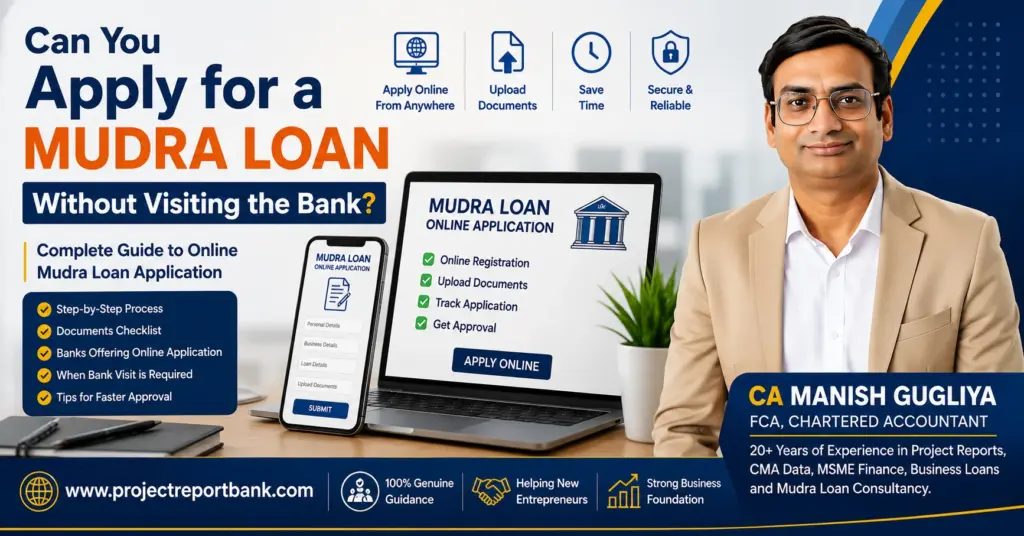
- Can You Apply for a Mudra Loan Without Visiting the Bank?
- Common Mistakes While Filling a Mudra Loan Application Form
- What to Do Before Applying for a Mudra Loan
- Which Bank Should You Choose for Your Mudra Loan Application?
- Online vs Offline Mudra Loan Application: Which Method Is Better for Faster Approval?
- How to Fill the Mudra Loan Application Form Correctly