Key Takeaways
- Most Mudra loan borrowers check only the approved amount and EMI but ignore the 3–6 pages of conditions that control interest changes, penalties, insurance, and inspection rights.
- Critical hidden terms include loan purpose restriction, disbursement pre-conditions, floating interest rate clause, default and penal charges, and validity period of the sanction letter.
- Once you sign the sanction letter, you are legally bound by every printed clause – even if you did not understand the banking language at the time.
- Mudra loans under Pradhan Mantri Mudra Yojana are promoted as collateral free, but sanction letters may still require hypothecation of assets or a personal guarantee.
- This guide, written by CA Manish Gugliya (FCA) with 20+ years in MSME finance, walks you clause-by-clause through real Mudra loan sanction letter conditions with examples from actual court cases.
Introduction: Why You Must Read Every Line of Your Mudra Loan Sanction Letter
In my office last week, a young entrepreneur walked in smiling. His pm mudra loan for ₹5,00,000 had been sanctioned. He had checked two things – the loan amount and the approximate EMI of ₹11,000. He had already signed the sanction letter.
What he had not read was that his interest rate was floating and could increase every quarter, that disbursement required routing all daily sales through the bank account, and that missing even one stock statement submission could trigger a 2% penal interest charge.
The Mudra loan sanction letter is not a congratulations message. It is a legal document – launched under a scheme that started on 8 April 2015 by the government of India – that decides your interest, EMI start date, penalties, insurance obligations, and when the bank can cancel your loan entirely. Mudra loans can be processed quickly without collateral requirements, which makes many small shopkeepers, street vendors, and shop owners assume the paperwork is equally simple. It is not.
The scheme supports small businesses across India, available for micro and small enterprises only, covering business activities in manufacturing, services, and trading. The maximum Mudra loan amount is Rs. 20 lakh under Tarun Plus. But whether you borrow ₹30,000 or ₹15 lakh, what matters is the fine print.
By the end of this article, you will be able to pick up any Mudra loan sanction letter – Shishu, Kishore, Tarun, or Tarun Plus – and quickly spot the hidden terms and conditions that affect your business and cash flow.

Table of Contents
What Is a Mudra Loan Sanction Letter?
A Mudra loan sanction letter is a written confirmation from the bank or lender that your business loan under Pradhan Mantri Mudra Yojana has been sanctioned, subject to specific terms printed in that document.
It is different from the SMS or mudra loan online portal message saying “approved subject to verification.” The formal sanction letter comes on bank letterhead with a sanction number, date, and authorised signatures.
Typical sections include: borrower details, loan amount, loan category (Shishu up to Rs. 50,000 for startups, Kishore from Rs. 50,001 to Rs. 5 lakh for growth, Tarun from Rs. 5 lakh to Rs. 10 lakh for expansion, and Tarun Plus from Rs. 10 lakh to Rs. 20 lakh), interest rate, tenure, repayment schedule, security details, and special conditions. Tarun Plus is available only to borrowers who successfully repaid a tarun loan previously. Applicants must be aged 18 to 65 years, running non-corporate, non-farm enterprises. Farming-related businesses are not eligible for mudra loans. The loan structure may be classified as term loan or Overdraft/Cash Credit.
Once you sign “I accept the terms and conditions,” this document becomes binding under Indian law. For a detailed line-by-line breakdown, see our guide on Mudra Loan Sanction Letter Format: Every Section Explained.
Why Hidden Terms in a Mudra Sanction Letter Matter So Much
Banks and non banking financial companies rely entirely on what is written in the sanction letter. Whatever a bank officer verbally promises – “interest will not change,” “no penalty for late payment” – has no legal weight if the sanction letter says otherwise.
Signing creates specific legal responsibilities: timely payment, providing updated documents, allowing inspection of your business premises, using funds only for approved business purposes, and notifying the bank about changes in address or ownership. Mudra loan sanction letters can include terms that impact borrowing rights for years.
In the UCO Bank vs Rakesh Kumar (2026) case, a borrower faced penal interest of 2% simply for not submitting stock statements – even though EMIs were current. In another instance, disbursement was delayed for weeks because the borrower missed a “submit GST registration within 30 days” condition buried in the annexure.
For pmmy loans up to ₹20 lakh, even small hidden charges can severely hurt small enterprises depending on that money for seasonal stock.
Common Hidden Terms Found in a Mudra Loan Sanction Letter
This is the core section. Each clause below appears frequently in Mudra loan sanction letters – often in smaller font on the second or third page, or in annexures headed “Special Conditions” or “Undertakings by Borrower.”
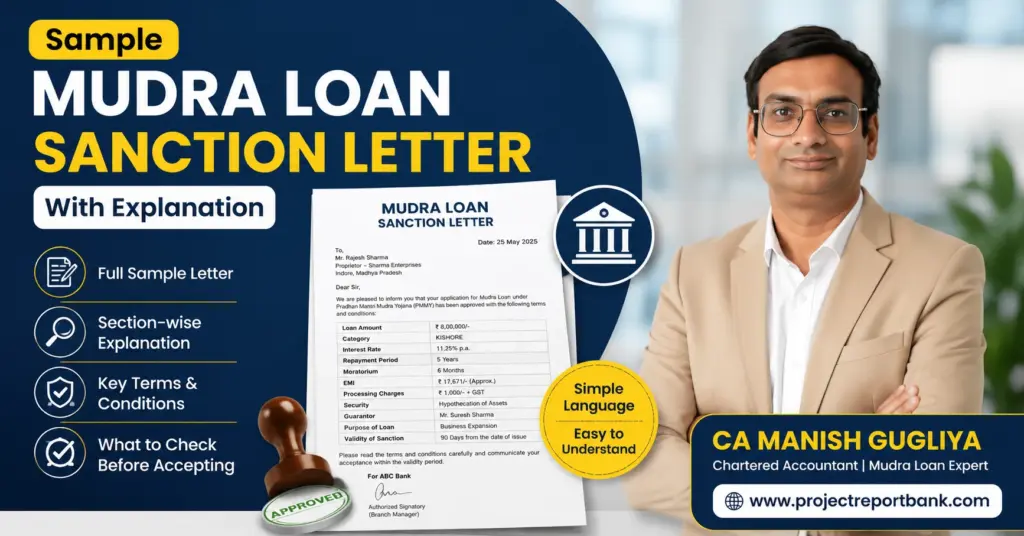
Mudra loans can have varying terms set by individual lending institutions. Not every letter will contain all of these, but borrowers should actively look for them before signing, especially for Kishore, Tarun, and tarun category loans. For reference, you can review a Sample Mudra Loan Sanction Letter with Explanation.

Loan Purpose Restriction
Every sanction letter states the purpose: “working capital for kirana shop,” “purchase of auto-rickshaw,” or “basic equipment for garment unit.” Legally, the borrower must use funds only for this purpose. Using the money for personal expenses, home renovation, or repaying old loans is treated as misuse and can trigger loan recall. Mudra loans support various business activities in manufacturing and services, but only the specific activity mentioned in your letter is permitted.
If the stated purpose does not match your actual business operations, ask for correction before signing.
Disbursement Conditions
Many letters say “sanction subject to completion of documentation.” Hidden below are pre-conditions: opening a current account at the same branch, submitting identity proof and address proof, clearing a small overdue in another account, or providing a rental agreement for the business premises.
Approval for Mudra loans can take a few days if documents are complete, but non-fulfilment of these conditions can delay disbursement for weeks. Mudra loan recipients often need to contribute their own capital as margin money. Sanction letters might require routing daily cash flows through a specified bank account. Before leaving the branch, ask for a written checklist of pending formalities. Read more about What Is Conditional Sanction in a Mudra Loan.
Interest Rate Revision Clause
A “floating interest rate” means your rate is linked to a benchmark – MCLR, EBLR, or repo rate – plus a fixed spread. In the UCO Bank case, the sanction stated: “Floating rate … UCO MCLR + 0.15%.” Mudra loans have interest rates linked to benchmark rates, and the clause “subject to change as per bank policy” allows revision without your prior approval.
Even a 1% increase on a ₹7,00,000 Tarun loan over 5 years can add ₹20,000–25,000 to your total interest cost. Check whether your rate is fixed or floating, how frequently it resets, and whether any notice period is promised.
EMI Start Date
EMI does not always start from sanction. It may begin from the date of first disbursement, end of month, or after a moratorium. Some letters require interest-only payment during the gap between disbursement and the first full EMI.
For example, in the Canara Bank case, disbursement happened weeks before the first EMI was “repayable w.e.f. 22.03.2021.” Confirm in writing when the first EMI will be deducted and ensure it aligns with your business cash flow cycle.
Moratorium Conditions
A moratorium is a holiday period when EMI is not required. Not all Mudra loans – especially Shishu or working capital loans – come with one. Some sanction letters allow 3–6 months moratorium on principal but still charge interest during that period, which gets added to the outstanding amount.
If you are setting up a new unit or waiting for a business registration or licence, specifically look for this clause. Verbal promises of a moratorium have no value unless written in the sanction letter.
Processing Charges and Other Deductions
Although many mudra loans – especially Shishu – are advertised as “no processing fee,” sanction letters may still mention documentation charges or GST. There are no hidden government fees associated with genuine Mudra loans, but lenders may levy their own service charges. Mudra loans require minimal documentation for Shishu category applicants, but higher categories may have more fees.
The annual guarantee fee for CGFMU coverage is recovered from the borrower and may be debited from the loan amount. If sanction is ₹5,00,000, you might receive only ₹4,92,500 after deductions. Calculate your net amount in hand before ordering stock or machinery.
Insurance Requirement
Some sanction letters require loan protection insurance, asset insurance for vehicles or machinery, or life insurance through the bank’s tie-up. Insurance may be required for assets financed under Mudra loans.
Typical wording: “borrower shall ensure comprehensive insurance of primary security and assign the policy in favour of the bank.” This can significantly increase effective cost if the premium is funded from the loan itself. You have the right to ask whether insurance is optional and whether you can purchase it independently. Read our detailed guide: Is Insurance Compulsory with Mudra Loan?
Security or Guarantor Conditions
Mudra Yojana offers collateral free loans up to Rs. 20 lakh. Yet sanction letters may still specify hypothecation of stock, receivables, or the asset purchased. Assets purchased with Mudra loans may be hypothecated to the bank as security. In the UCO Bank case, an e-rickshaw was hypothecated even for a loan of ₹1,30,000.
“Personal guarantee” means if you default, the bank can recover from the guarantor’s assets too. Some letters state: “additional collateral may be obtained at the bank’s discretion.” Never sign blank security documents or undated cheques. For specifics, see Can Bank Ask Security for Mudra Loan? and Is Guarantor Mandatory for Mudra Loan?
Default Clause and Penal Charges
The default clause defines what happens if EMI is missed, the business closes without informing the bank, or funds are misused. Common penalties include extra penal interest (typically 2% p.a. over normal rate), cheque dishonour charges, legal notice fees, and the right to recall the entire loan at once (acceleration clause). Sanction letters include default clauses outlining conditions for loan recall. Borrowers can be penalized for missing repayment due dates.
Note how many days’ delay converts your account into a non-performing asset (NPA). If you foresee a temporary cash flow problem, contact the bank in writing immediately rather than simply skipping an EMI.
Bank Inspection Rights and Business Monitoring
Many sanction letters give the bank the right to visit your shop, godown, or factory and inspect books of account, invoices, voter i.d., bank statement records, and GST returns. Borrowers may need to provide periodic financial information as part of their agreement. Refusal to cooperate can be treated as a breach of terms.
Keep a simple file ready: purchase bills, basic sales records, and photographs of business premises. These inspections are normal banking practice – not harassment – provided you are transparent.
Business Usage Verification and End-use Undertaking
Beyond inspections, some letters require a signed undertaking that funds will only be used for the stated purpose. Banks may demand copies of invoices – vehicle bill, machinery invoice, stock purchase bills – within a set period after disbursement. Borrowers must adhere to end-use stipulations outlined in loan agreements.
Non-submission may be treated as non-compliance even if usage is genuine, affecting your credit score and future business loan eligibility.
Prepayment and Foreclosure Rules
Many borrowers want to repay early when business improves. However, sanction letters may specify prepayment charges (2–3% on outstanding principal for Tarun or Tarun Plus loans) or bar prepayment in the first 6–12 months.
If the sanction letter mentions these charges, you cannot argue later that nobody informed you. Compare interest savings from early repayment against the penalty cost before deciding.
Loan Cancellation and Recall Clause
Sanction letters often allow the bank to cancel undisbursed limits or recall the outstanding loan if certain events occur: misrepresentation, non-cooperation, or deterioration of the applicant’s financial position.
“Recall” means the bank can demand full repayment within a short period. Even if EMIs are current, continuous violation of documentation conditions – not renewing business registration, not submitting a liability statement – can technically trigger this clause.
Validity Period of Sanction Letter
Almost every sanction letter specifies a validity period – typically 60 or 90 days – within which all conditions must be met and disbursement completed. Working capital limits are usually subject to annual review as well.
If you delay submitting required documents (proof of identity, rent agreement, other documents), the sanction may lapse. A fresh sanction or revalidation is at the bank’s discretion – it is not your automatic right.
Borrower’s Declaration and Accuracy of Information
Near the end of the sanction packet, a declaration states that all information – income, sales, ownership, address – is true and complete. Giving wrong information can lead to legal action.
This links to the cancellation and default clauses. If sales figures or GST returns are found misrepresented, the bank treats it as fraud. Never exaggerate turnover or understate liabilities on your loan application form or business plan just to qualify. Keep copies of everything you submit.
Hidden Conditions Most Mudra Borrowers Ignore
| Condition | Risk if Ignored | What You Should Do |
|---|---|---|
| Floating interest rate clause | EMI increases without warning | Confirm benchmark, reset frequency, and notice period |
| Validity period (60–90 days) | Sanction lapses, must re-apply | Arrange all documents and complete formalities within 30 days |
| Insurance loading on loan | Effective cost jumps significantly | Ask if insurance is optional; get independent quotes |
| Prepayment penalty | Lose money even when repaying early | Read the exact clause and calculate savings vs. penalty |
| Disbursement pre-conditions | Weeks of delay, lost business orders | Get a written checklist from branch on day one |
| Bank inspection rights | Non-cooperation = breach of terms | Keep purchase bills and sales records organised |
| Annual review of limits | Cash credit frozen mid-season | Submit stock statements and financials on time |
Pattern to notice: most hidden risks are about time (delays), money (extra charges), or control (bank rights over your business decisions).
Warning Signs to Check Before Signing Your Mudra Sanction Letter
Before you sign, scan for these red flags:
- Blank spaces in amount, interest, or tenure columns
- Handwritten corrections not countersigned by the bank officer
- Unsigned or unstamped pages
- Annexures mentioned but not physically attached
- Repayment schedule that does not match what the officer verbally explained
- Your name, business name, or loan category printed incorrectly
You have every right to take a photocopy home, read it with your family or CA, and return to sign. Never sign in a hurry at the cash counter.
Questions to Ask the Bank Before You Accept the Sanction
Here are simple questions you can ask the branch manager – even if you feel shy:
- Is my interest rate fixed or floating? If the RBI increases rates, will my EMI also increase?
- When will my first EMI be deducted?
- What happens if my EMI is delayed by 10–15 days?
- Is any insurance compulsory, or can I buy my own policy?
- What other documents do I still need to submit before disbursement?
- Are there any prepayment or foreclosure charges?
- What is the validity period of this sanction letter?
- Can I verify this sanction letter at the branch if I have doubts?
Mudra loans can be applied online at udyamimitra.in or offline at lender branches. You can also learn How to Download Your Mudra Loan Sanction Letter Online for your records.
How to Protect Yourself While Taking a Mudra Loan
Follow these steps from the moment you hear “your Mudra loan is sanctioned”:
- Ask for the complete draft – every page, every annexure, every form.
- Read slowly at home – underline or circle anything you do not understand.
- Consult a trusted advisor – a CA, an experienced entrepreneur, or a friend who has availed a similar loan.
- Clarify doubts in writing – email or WhatsApp the branch, and save the replies.
- Sign only after satisfaction – do not let anyone rush you.
- Keep a signed copy safely – with your passport-size photos, other legal entity documents, and business proof.
- Review annually – check if you owe any financial statements, stock statements, or insurance renewals.
Written records protect you if any clause is later interpreted differently by the bank or micro finance institutions.

Expert Advice from CA Manish Gugliya (FCA) on Mudra Loan Sanction Letters
In my 20+ years of helping eligible borrower clients across India – from food processing units to small traders – I have seen three patterns repeat:
Case 1: A client’s Tarun loan disbursement was stuck for 45 days because the sanction letter required a specific voter i.d.-linked address proof that did not match the shop’s rent agreement. One careful reading before signing would have flagged this.
Case 2: A Kishore borrower’s EMI jumped by ₹800 per month after a repo rate hike. The sanction letter clearly said “floating rate linked to EBLR.” He had not checked.
Case 3: A woman entrepreneur saved ₹18,000 by refusing a bundled insurance policy and buying her own cover after reading the sanction letter clause that said insurance was “recommended” – not mandatory.
My practical advice: always link your sanction letter with your project report and repayment capacity assessment. Never rely only on bank marketing brochures. What is written in the sanction letter will govern your financing relationship for the next 3–5 years. If banking language overwhelms you, invest in a one-time professional review. It can save lakhs and protect your business reputation.
Frequently Asked Questions on Hidden Terms in Mudra Loan Sanction Letters
Can the bank change my Mudra loan interest rate after giving the sanction letter?
Yes, but only if the sanction letter specifies a floating benchmark (like repo-linked rate). If the letter promises a fixed rate for a specific period, the bank must honour that. Always read the interest clause before signing. The phrase “subject to change from time to time” is a clear indicator that your rate can move.
What if I signed the sanction letter without reading and now disagree with some conditions?
Legally, signing means acceptance. However, before disbursement, you can approach the branch manager, request modification, or even decide not to avail the loan. Once funds are disbursed, changing terms becomes much harder. It is always better to resolve concerns before money enters your account.
Is insurance compulsory with a Mudra loan, and will it be written in the sanction letter?
Insurance is not automatically compulsory for every Mudra loan. If the bank requires a specific policy, it must be mentioned in the sanction letter or annexure. You have the right to arrange your own policy at a lower premium instead of accepting a bundled product. See our guide on whether insurance is compulsory with Mudra loans for details.
Can the bank keep asking for new documents even after issuing the sanction letter?
The bank can ask for documents reasonably linked to conditions in the sanction letter – updated KYC, business registration renewals, or bank statement copies. If an unexpected document is demanded, politely ask the officer to show which clause requires it. Our resource on whether banks can keep asking for new documents covers this in depth.
How can I check if my Mudra loan sanction letter is genuine?
Verify the official bank letterhead, branch seal, sanction number, and authorised signatures. Contact the bank’s customer care or visit the branch directly to confirm. Genuine sanction letters are never issued only over WhatsApp by unknown agents. For a step-by-step verification process, read How to Check Whether Your Mudra Loan Sanction Letter is Genuine.
Conclusion: Read Today, Save Trouble Tomorrow
The most important part of your Mudra loan sanction letter is not the bold “Sanctioned: ₹X lakh” line. It is everything printed below – the clauses that control your interest rate, EMI dates, penalties, inspection rights, insurance obligations, and the bank’s power to recall the loan.
Never sign a Mudra sanction letter in a hurry. Read every page. Ask questions until you are fully satisfied. Keep a signed copy safely with your other business loan documents. An informed borrower who understands hidden terms is more likely to maintain a clean repayment track record, apply online for larger loans in the future, get approval faster, and avoid legal or financial stress when business conditions change.
Whether you are a first-time applicant filling out a form for a Shishu loan to purchase basic equipment for your services business, or an experienced entrepreneur seeking a Tarun Plus loan after having successfully repaid your earlier funds, the sanction letter is your roadmap for the next 3–5 years.
Take the time to read it. Your future self – and your business – will thank you.
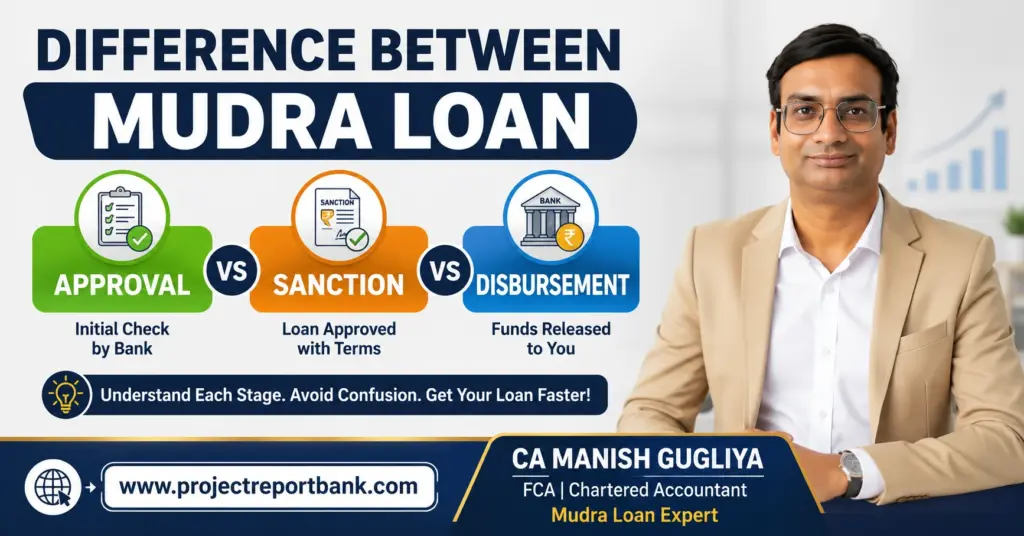
Continue learning about Mudra loans with our detailed guides on sanction letter format, what happens after sanction, and the difference between approval, sanction, and disbursement.
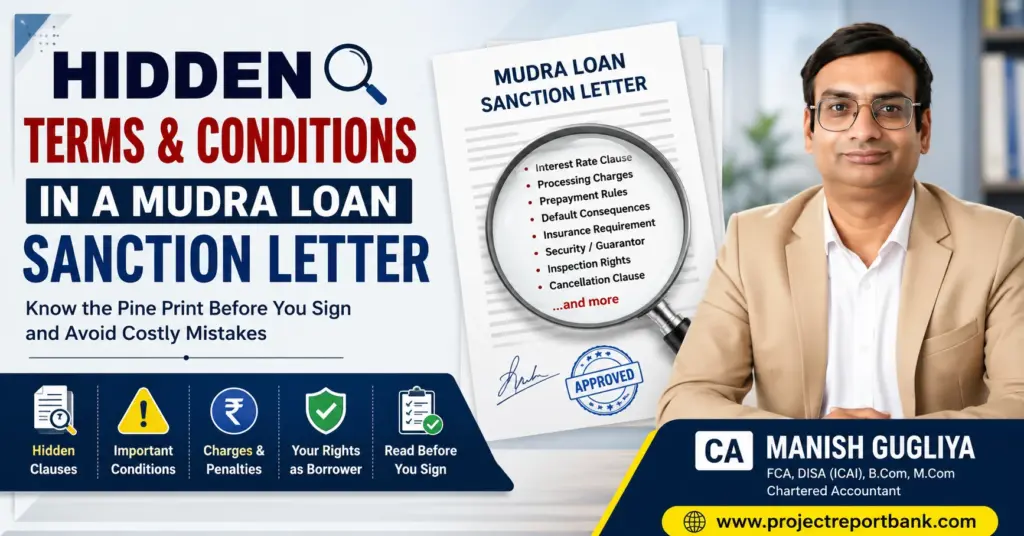
- Hidden Terms and Conditions in a Mudra Loan Sanction Letter

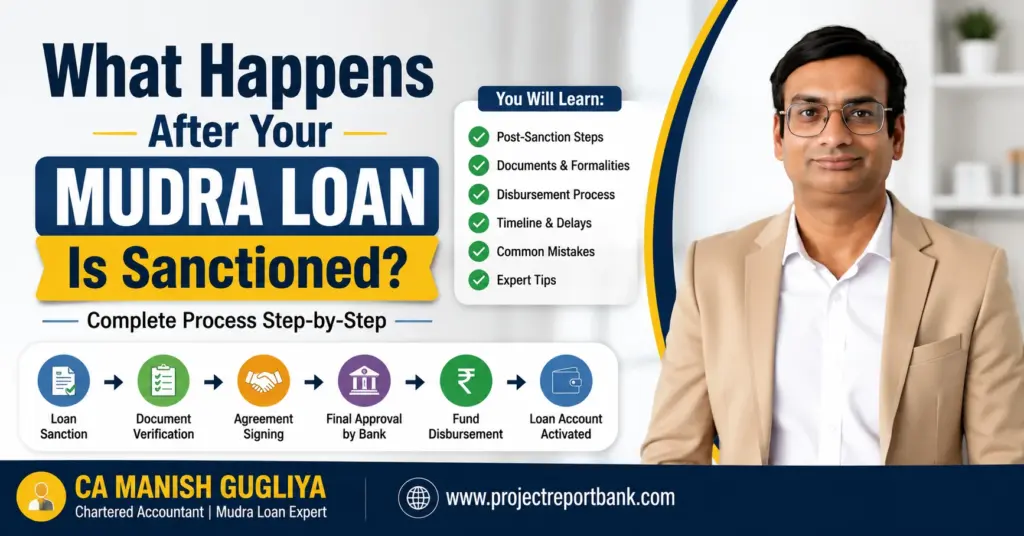
- What Happens After Your Mudra Loan Is Sanctioned?
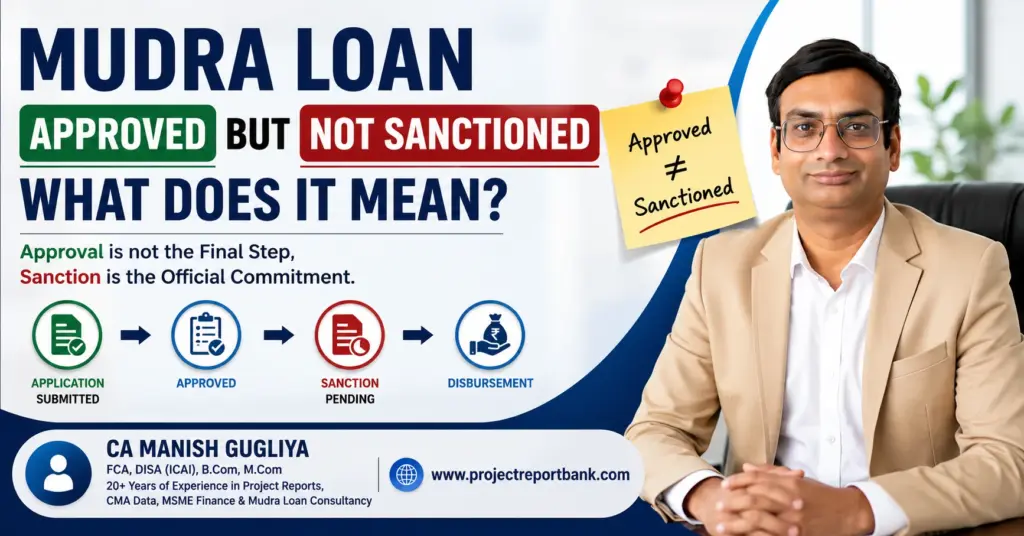
- Mudra Loan Approved but Not Sanctioned: What Does It Really Mean?
- What Is Conditional Sanction in a Mudra Loan? Meaning, Conditions, Documents & Next Steps
- Can a Sanctioned Mudra Loan Be Cancelled by the Bank? Complete Guide (2026)
- Difference Between Mudra Loan Approval, Sanction and Disbursement
- How to Check Whether Your Mudra Loan Sanction Letter Is Genuine

- Mudra Loan Sanction Letter Format: Every Section Explained
- Sample Mudra Loan Sanction Letter with Explanation