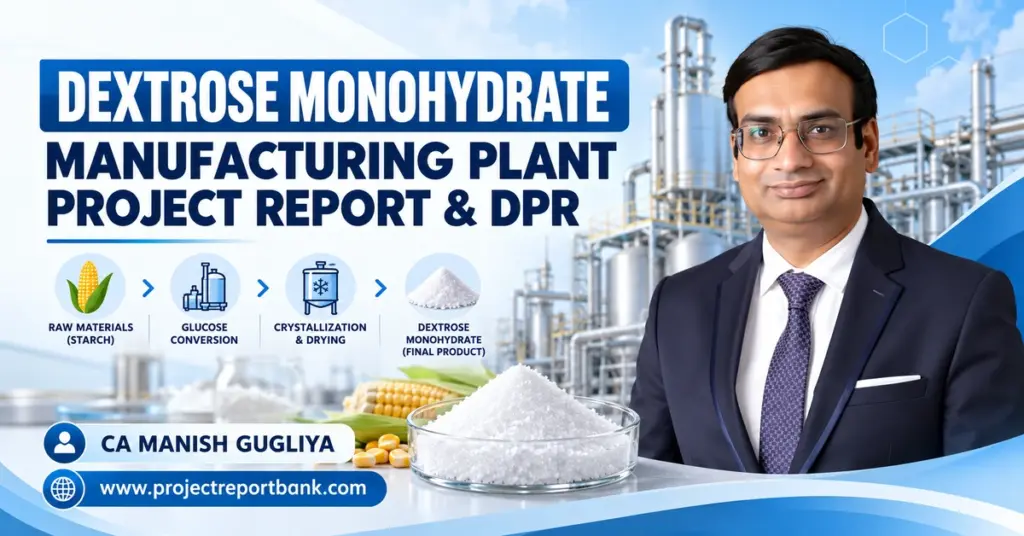
Key Takeaways
- This article explains the dextrose monohydrate manufacturing process, plant setup cost in India, operating economics, machinery requirements, and the structure of a professional Detailed Project Report (DPR) for bank finance and investment planning.
- The focus is on practical plant-level investment decisions – capital expenditure, operating cost, working capital, profitability, DSCR, and break-even analysis – relevant to Indian entrepreneurs, starch processors, and industrial investors.
- Maize starch or high-DE glucose syrup is the key raw material; project success depends heavily on crystallisation yield, feedstock cost, capacity utilisation, energy efficiency, and customer quality approvals.
- All figures, tables, and examples in this article are illustrative; actual project cost and profitability must be determined from project-specific vendor quotations, site conditions, and validated financial assumptions.
- CA Manish Gugliya and Project Report Bank prepare customised DPRs, financial models, CMA Data, and bank finance documentation for dextrose monohydrate and related starch derivative manufacturing projects.
Dextrose Monohydrate Manufacturing Plant Project Report & DPR – Introduction
Dextrose monohydrate is purified, crystallised D-glucose containing one molecule of water of crystallisation. It is a key starch derivative widely used in pharmaceuticals and food processing, serving various industries from confectionery to intravenous fluid manufacturing. Dextrose monohydrate is produced from corn starch or other starches through enzymatic hydrolysis, followed by purification and controlled crystallisation.
This article focuses on what it takes to prepare a dextrose monohydrate manufacturing plant project report in India – covering the manufacturing process, plant setup cost, capital investment, raw materials, production yield, operating expenses, profitability analysis, bank finance requirements, and DPR documentation. The objective is to help promoters evaluate whether this project makes commercial sense before committing substantial capital.
Promoters who typically consider such projects include existing maize starch manufacturers seeking value addition, integrated maize wet milling businesses expanding into derivatives, glucose or liquid glucose producers adding a crystallisation line, and new industrial investors entering the starch derivatives space. Those operating integrated maize wet milling complexes – as discussed in our Integrated Maize Wet Milling Plant Project Report & DPR – have particular advantages in feedstock control and cost.
A bankable DPR with realistic technical and financial assumptions is essential for term loan appraisal and internal investment decisions. The numbers in the project report should tell a logical business story – one that a lender or investor can examine, question, and ultimately support.
Planning to establish a Dextrose Monohydrate Manufacturing Plant in India? CA Manish Gugliya assists industrial promoters with Detailed Project Reports, financial projections, feasibility assessments, CMA Data and bank finance proposal preparation. Connect via WhatsApp through ProjectReportBank.com to discuss your proposed project.
What Is Dextrose Monohydrate and Where Is It Used?
Dextrose monohydrate is a white, crystalline dextrose powder with typical purity of 99% or higher on a dry basis. It is distinct from table sugar (sucrose) and high-fructose syrups. Classifications of dextrose monohydrate include food grade and pharmaceutical grade, each affecting production specifications, quality control measures, and achievable price per kilogram. Dextrose serves as a sweetener in baked goods and beverages, and as a bulking agent in processed foods.
Major application segments include bakery and confectionery industry products, instant drink mixes, dairy formulations, energy drinks, and sports drinks where dextrose serves as a rapid energy source. In the pharmaceutical industry, dextrose monohydrate is used in intravenous solutions for hydration and energy, oral rehydration solutions, and tablet excipients. Dextrose is also a key ingredient in sports nutrition products. In fermentation processes, it provides a readily assimilable carbon source to produce ethanol, amino acids, citric acid, and enzymes for brewing and biofuels.
| Parameter | Dextrose Monohydrate | Dextrose Anhydrous | Liquid Glucose | Maltodextrin |
|---|---|---|---|---|
| Physical Form | Crystalline powder | Crystalline powder | Viscous syrup | Powder / spray-dried |
| Water of Hydration | ~8-9% (1 molecule H₂O) | Nil | N/A (liquid) | Nil (dry form) |
| DE Range | ~99+ | ~99+ | 20–65 (varies) | 3–20 |
| Key Applications | Food, pharma, fermentation | Pharma, confectionery | Confectionery, bakery, beverages | Food, pharma excipient |
| Commercial Positioning | Premium crystalline glucose | Higher-value pharma grade | Mid-value bulk sweetener | Functional ingredient |
For related products, promoters may also review our Liquid Glucose Manufacturing Plant Project Report & DPR and Maltodextrin Manufacturing Plant Project Report & DPR to understand how each product requires different processing and market positioning.
Product grade – food, pharma, or fermentation – directly influences manufacturing controls, quality assurance systems, and the realisation per kg that the plant can achieve. This distinction carries through every financial section of the DPR.
Dextrose Monohydrate Industry and Market Opportunities in India
Dextrose monohydrate occupies a significant position within India’s starch derivatives value chain, supplying food processing industries, the beverage industry, pharmaceutical applications, and fermentation substrates. The global dextrose monohydrate market is valued at approximately USD 3–5 billion, with the dextrose monohydrate market size projected at USD 4.5 billion by 2030. The market potential includes applications in IV fluids and confectionery products, both of which show growing demand in India.
Domestic demand drivers include the rising demand for packaged and processed foods, contract manufacturing for multinational food manufacturers, pharmaceutical sector requirements for IV fluids and nutraceuticals, and fermentation processes for enzymes, citric acid, and biotech products. The food and beverage industry in India continues to expand, supporting market growth for quality-consistent dextrose monohydrate.
India both imports and exports starch derivatives. Promoters should independently confirm current market demand, import substitution opportunities, and export prospects through current-year market research before finalising capacity. Price trends for dextrose remain linked to maize and corn starch prices and global market dynamics; as of recent data, CIF India import prices have been around USD 572/MT.
Industry trends include increasing preference for reliable suppliers with consistent quality, tighter quality specifications from institutional buyers, customer audits, and price competition. Existing maize starch plants can explore diversification into dextrose monohydrate alongside liquid glucose and maltodextrin – but each product needs separate market validation and technical configuration, not a blanket assumption of market expansion.
Dextrose Monohydrate Manufacturing Process and Flow Chart
The dextrose monohydrate manufacturing process involves converting starch into glucose through enzymatic hydrolysis and then crystallising the purified glucose into the monohydrate form. The production process requires careful control of temperature and pH at every stage. Here is the typical process sequence:
Corn Starch or Glucose Syrup Receipt → Slurry Preparation → Liquefaction (α-amylase) → Saccharification (Glucoamylase) → Filtration / Clarification → Decolourisation (Activated Carbon) → Ion Exchange / Demineralisation → Evaporation / Concentration → Crystallisation → Centrifugation → Drying → Screening & Packing
Dextrose monohydrate is produced via enzymatic hydrolysis of starch. The enzymatic hydrolysis process uses alpha-amylase and glucoamylase enzymes to convert starch into high-purity glucose. Crystallization occurs when glucose liquor is cooled in crystallisers under controlled conditions – energy efficiency is crucial during this stage due to high utility costs. Purification involves filtration and ion-exchange systems to remove colour, ash, and trace impurities. Purity checks are performed before the final product release.
Three technical configurations exist:
- Integrated maize wet milling – maize to starch to glucose syrup to dextrose monohydrate, offering maximum control but highest capital expenditure.
- Starch-to-DMH – purchased maize starch is converted through saccharification, purification, and crystallisation.
- Crystallisation from high-DE syrup – purchased glucose syrup is purified and crystallised, requiring lowest CAPEX but depending entirely on feed quality.
Not every commercial liquid glucose is suitable as crystallisation feed. The dextrose equivalent (DE), maltose content, and oligosaccharide profile must be tightly controlled. For more on glucose syrup production methods, see our Liquid Glucose Manufacturing Plant Project Report & DPR.
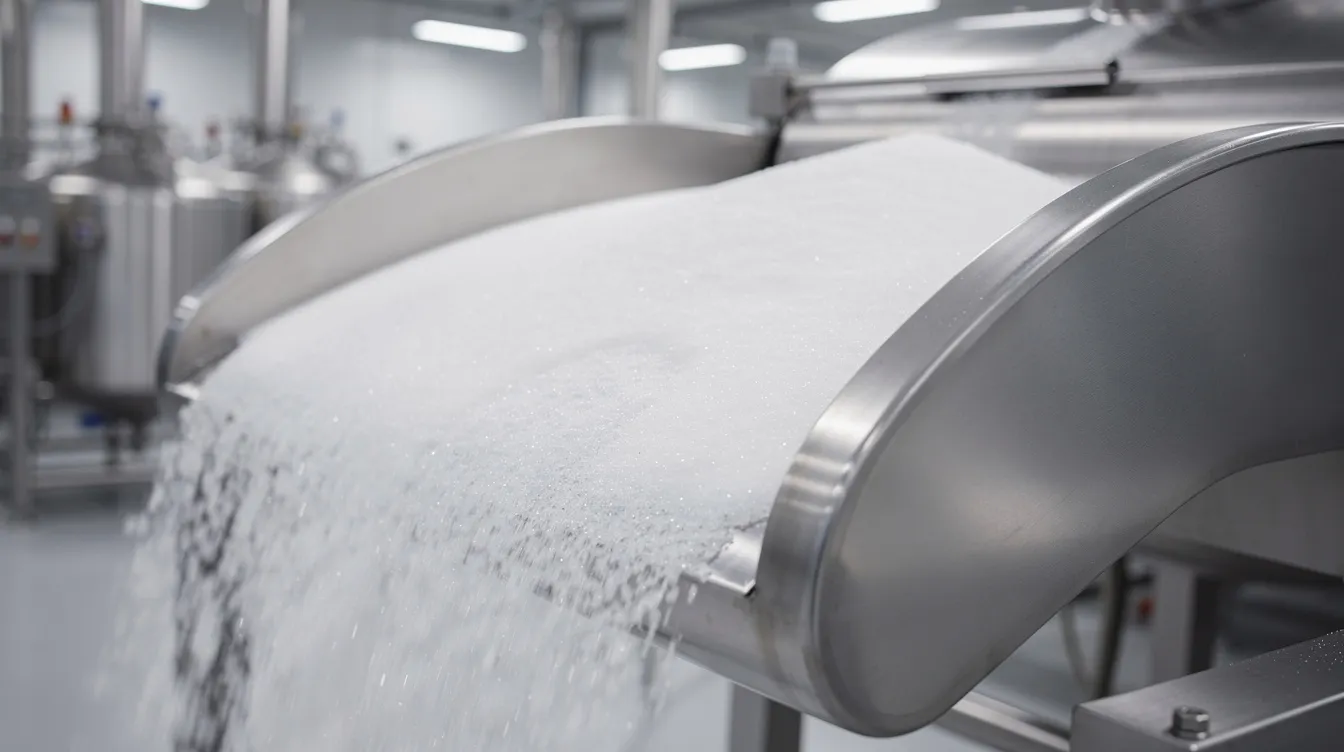
Raw Materials, Utilities and Production Yield
The key raw materials required for dextrose monohydrate production include maize starch or high-DE glucose syrup, process water, alpha-amylase and glucoamylase enzymes, activated carbon, ion exchange resins, filtration aids, and food-grade packaging materials. Enzymes like alpha-amylase and glucoamylase are essential for hydrolysis and represent a meaningful variable cost.
| Input (per tonne of DMH) | Illustrative Requirement | Notes |
|---|---|---|
| Maize starch (dry basis) | 1.8–2.0 tonnes | Depends on yield and purity |
| Process water | 8–12 KL | Includes cooling and washing |
| Steam | 3.5–5.0 tonnes | Liquefaction, evaporation, drying |
| Electricity | 250–400 kWh | Pumps, centrifuges, auxiliaries |
| Enzymes | As per dosage | Alpha-amylase + glucoamylase |
| Activated carbon | 5–15 kg | Decolourisation |
All values are indicative engineering assumptions, not guaranteed norms.
Starch accounts for 55–70% of raw material costs, making raw material sourcing and raw material costs the single largest driver of production economics. Utilities – steam, electricity, cooling water, and compressed air – are most intensive during liquefaction, evaporation, and drying stages. Energy costs constitute 15–25% of operating expenses.
Process yield depends heavily on starch purity, DE achieved during saccharification, crystallisation recovery, and mother-liquor recycling. Industrial processes with high-purity feed and mother liquor recycling can achieve 80–86% yield on feed solids, while pharmaceutical-grade production with full purification may yield around 50–55%. Raw material consumption per kg of finished product changes significantly between these configurations.
For detailed feedstock considerations, promoters may refer to our Maize Starch Manufacturing Plant Project Report & DPR, which discusses why feedstock quality and a consistent supply of starch are critical for stable yields and competitive production cost per kg.
Dextrose Monohydrate Plant Machinery and Equipment Cost
Machinery selection must align with desired capacity, product grade (food vs pharma), and integration level. Current supplier quotations are essential for any DPR – no meaningful equipment cost can be estimated from generic internet sources alone.
Major equipment groups include starch handling and slurry systems, jet cookers, liquefaction tanks, saccharification reactors, plate and pressure filters, carbon treatment vessels, ion exchange columns, multiple-effect evaporators, crystallisers, centrifuges, fluid bed or tray dryers, vibratory sieves, packing machines, and laboratory instruments. Key equipment includes crystallizers, dryers, and centrifuges – these define both product quality and cycle time.
| Process Section | Equipment Examples | Share of Plant & Machinery Cost |
|---|---|---|
| Starch conversion (liquefaction + saccharification) | Jet cookers, reactors, enzyme dosing | 15–25% |
| Refining & purification | Filters, carbon columns, ion exchange | 15–20% |
| Evaporation | Multiple-effect evaporators | 10–15% |
| Crystallisation & finishing | Crystallisers, centrifuges, dryers, sieves | 30–40% |
| Utilities & auxiliaries | Boilers, cooling towers, compressors, ETP | 10–15% |
Values are illustrative and capacity-dependent. CAPEX for dextrose plants is typically 40–55% for saccharification and crystallization equipment combined.
Key selection factors affecting CAPEX and operational costs include automation level, stainless steel grade and material of construction, clean-in-place (CIP) provisions, heat recovery systems, local versus imported machinery, and after-sales and spares support from reliable suppliers. Pharmaceutical-grade plants require separate dedicated lines, higher hygiene standards, and more advanced purification, increasing plant and machinery cost per TPD.
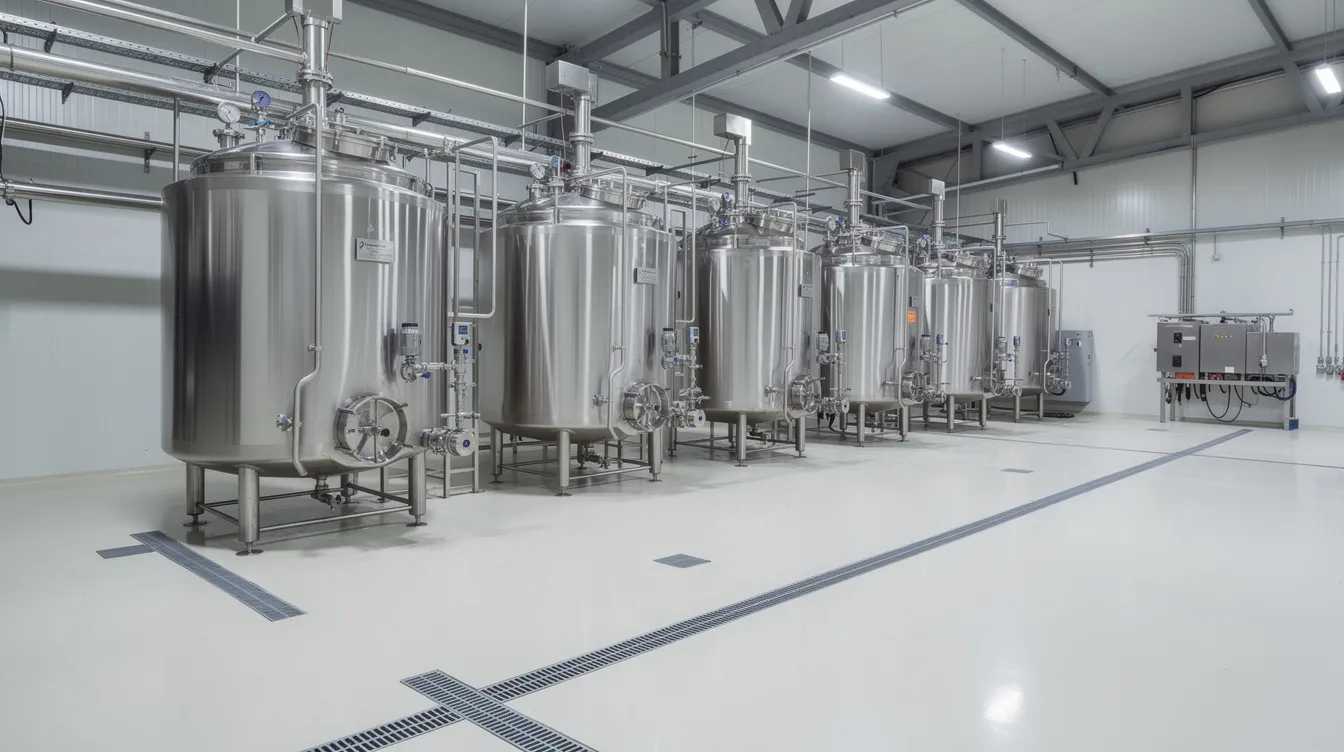
Production Capacity Planning – TPD, Operating Days and Capacity Utilisation
Lenders and investors assess plant capacity in tonnes per day (TPD) and annual saleable output. Efficient production planning requires realistic assumptions about ramp-up and stabilisation.
| Parameter | Year 1 | Year 2 | Year 3 | Year 4 | Year 5 |
|---|---|---|---|---|---|
| Rated Capacity (TPD) | 50 | 50 | 50 | 50 | 50 |
| Operating Days | 300 | 300 | 300 | 300 | 300 |
| Capacity Utilisation | 50% | 65% | 75% | 85% | 90% |
| Annual Production (MT) | 7,500 | 9,750 | 11,250 | 12,750 | 13,500 |
Illustrative assumptions for a 50 TPD dextrose monohydrate plant.
Operational realities include a commissioning and stabilisation period (often 2–4 months), crystallisation cycle time constraints, maintenance shutdowns, utility outages, and market-driven downtime. Upstream bottlenecks in saccharification, evaporation, or ion exchange can limit effective output even when crystallisers are sized larger. Final capacity should be aligned with confirmed offtake, raw material availability, and the promoter’s ability to manage working capital at higher production levels.
Land, Building and Plant Layout Requirements
Land and construction costs vary significantly with location, whether an industrial estate, agro-processing zone, or integrated campus. A standalone crystallisation unit based on purchased glucose syrup requires considerably less plot area than a greenfield integrated maize wet milling complex, which may need 10–15 acres or more depending on capacity and utility infrastructure.
Key functional blocks include raw material receiving and storage, the process block for conversion and refining, evaporation and crystallisation block, drying and packing area, finished goods warehouse, utilities block (boiler house, cooling towers, power distribution), laboratory and quality control, admin block, internal roads, greenbelt, and effluent treatment plant. Effluent Treatment Plants are essential for managing wastewater in dextrose production, given the high biological oxygen demand of process effluents.
Any land area quoted in a DPR must clearly mention assumed capacity, plant configuration, local building regulations, and site-specific conditions. The necessary infrastructure extends beyond the process building to include transportation networks, water supply, and power connectivity.
Dextrose Monohydrate Manufacturing Plant Setup Cost in India
Total project cost includes both fixed capital (land, building, machinery, utilities) and margin for working capital. Project scope determines the scale of investment – a brownfield addition to an existing starch plant differs fundamentally from a greenfield integrated complex.
| Cost Head | Illustrative Share |
|---|---|
| Land & Site Development | 5–8% |
| Buildings & Civil Works | 12–18% |
| Plant & Machinery (installed) | 40–50% |
| Utilities & Auxiliary Equipment | 8–12% |
| Electrical Systems | 3–5% |
| ETP & Environmental Measures | 2–4% |
| Preliminary & Pre-operative Expenses | 3–5% |
| Contingencies | 3–5% |
| Margin for Working Capital | 8–12% |
Percentages are indicative and will vary with capacity, technology, and location.
As a real-world benchmark, Jayaditya Agro’s integrated 600 TPD maize wet milling project in Andhra Pradesh – which includes approximately 50 TPD of dextrose monohydrate among other derivatives – has a total project cost of approximately ₹300 Crore. A standalone 150 TPD maize starch plant (without DMH) has been estimated at ₹100–120 Crore by EIRI India. Standalone DMH crystallisation units purchasing glucose syrup would require substantially lower capital expenditure, but this must be validated with current vendor quotations.
Cost drivers include imported versus indigenous machinery, food versus pharma-grade design, automation level, effluent treatment requirements, and distance from maize-growing regions. The article provides methodology and structure rather than arbitrary crore-level numbers; actual project cost requires current quotations and site-specific assessments.
Project Cost and Means of Finance
A DPR must align total project cost with a realistic mix of promoter equity and debt funding. The debt-equity structure should not be decided solely by minimising the promoter’s contribution – higher borrowing creates higher repayment obligations.
| Source of Finance | Illustrative Share |
|---|---|
| Promoter’s Equity / Share Capital | 25–35% |
| Term Loan from Bank / FI | 55–65% |
| Subsidy / Grant (if verified and applicable) | 0–10% |
| Total | 100% |
Core financing concepts include acceptable debt-equity ratios (typically 2:1 to 2.5:1 for manufacturing), interest during construction, moratorium period, repayment tenure of 7–10 years, and how these feed into DSCR and cash flow projections. For structured project finance planning, promoters may explore Project Finance Advisory & Loan Structuring Services to evaluate the appropriate mix of term loan, working capital limits, and promoter funds.
Final funding terms, margins, and securities are decided by lending institutions based on their detailed appraisal, promoter profile, collateral, and internal policies. No DPR can guarantee loan sanction.
Manufacturing Cost per Kg and Operating Expenses
Calculating realistic manufacturing cost per kg is central to the project report and profitability assessment. Production costs are primarily driven by starch, accounting for 40–55% of total operating expenses. The competitive landscape demands that domestic producers match or beat landed import cost.
| Cost Component | Illustrative ₹ per Kg | Share of Total |
|---|---|---|
| Maize Starch / Glucose Syrup | 18–26 | 50–60% |
| Enzymes & Chemicals | 1.5–3.0 | 4–7% |
| Steam & Fuel | 3–5 | 8–12% |
| Electricity | 2–4 | 5–10% |
| Direct Labour | 1–2 | 3–5% |
| Packaging | 1–2 | 3–5% |
| Overheads & Maintenance | 2–4 | 5–10% |
| Total Manufacturing Cost | ~30–42 | 100% |
Illustrative assumptions for food-grade production. Pharma-grade costs will be higher due to additional purification and quality control.
Fluctuations in maize and starch prices, energy tariffs, and enzyme prices can materially change cost per kg. Raw material cost alone varies seasonally between ₹18–28/kg for maize at farm gate, creating meaningful operating cost volatility. Sensitivity analysis around these inputs is essential in any financial model.
Promoters should differentiate between manufacturing cost, total cost of sales (including marketing, freight, and credit costs), and landed price to customer. Margin analysis should not ignore transportation networks and distribution expenses.
Revenue Model, Profitability and Financial Projections
Revenue depends on dextrose monohydrate grade – food-grade typically sells at ₹35–55/kg, while pharma-grade commands ₹55–85/kg. Dextrose monohydrate sells for USD 500–900 per MT based on grade in the global market. The dextrose powder market and dextrose powder industry show price trends influenced by market fluctuations in corn starch feedstock globally.
| Year | Utilisation | Saleable Qty (MT) | Avg. Price (₹/kg) | Revenue (₹ Cr) | EBITDA (₹ Cr) | PAT (₹ Cr) |
|---|---|---|---|---|---|---|
| 1 | 50% | 7,500 | 42 | 31.5 | 4.7 | 1.2 |
| 2 | 65% | 9,750 | 43 | 41.9 | 7.5 | 3.0 |
| 3 | 75% | 11,250 | 44 | 49.5 | 10.2 | 5.1 |
| 4 | 85% | 12,750 | 45 | 57.4 | 13.5 | 7.6 |
| 5 | 90% | 13,500 | 45 | 60.8 | 15.2 | 9.0 |
Illustrative projections for a 50 TPD food-grade plant. All assumptions are hypothetical and must be validated.
Financial models for manufacturing projects should cover capital and operating expenditures along with sensitivity analysis. Selling price assumptions must be cross-checked with actual B2B buyer quotations rather than relying on generalised global price ranges. Even where projected net profit is positive, high interest and principal repayments can strain cash flow – hence DSCR analysis is critical.
For detailed multi-scenario financial modelling, promoters may explore Financial Projections & Financial Modelling Services to build base, optimistic, and stressed projections that support informed business decisions.
Working Capital Requirements
The working capital cycle in dextrose monohydrate manufacturing involves purchasing and storing maize starch or syrup, processing time (typically 3–7 days), finished goods storage, sales on credit, and collection. Working capital can be substantial given raw material bulk and customer payment cycles.
| Component | Holding Period | Value (₹ Lakhs) |
|---|---|---|
| Raw Material Inventory | 30–45 days | 250–400 |
| Work-in-Process | 5–7 days | 40–70 |
| Finished Goods | 15–20 days | 150–250 |
| Receivables | 30–45 days | 350–550 |
| Less: Creditors | 15–30 days | (150–250) |
| Net Working Capital | 640–1,020 |
Illustrative for a 50 TPD plant at moderate utilisation.
Feedstock seasonality, customer payment terms, and market fluctuations in raw material prices can increase working capital lock-in and interest cost. Banks evaluate working capital limits based on projected current assets and liabilities and require structured CMA Data Preparation Services for Bank Loans. Promoters must assess whether they can support higher requirements during ramp-up and price spikes without disrupting operations.
DSCR, Break-Even, ROI, IRR and Payback Analysis
| Metric | Illustrative Range | Notes |
|---|---|---|
| Average DSCR | 1.5–2.5 | Lenders typically expect ≥1.25–1.30 |
| Break-Even Utilisation | 60–75% | For multi-grade plants; 43–50% for large integrated plants |
| Project IRR | 15–22% | Depends on scale, integration, feedstock cost |
| Equity IRR | 20–28% | Higher due to leverage |
| ROI | 12–18% | Achievable under normal operating conditions |
| Payback Period | 5–9 years | Plants running at 70–85% capacity recover investment in this range |
Illustrative examples only. Actual values depend on project-specific assumptions.
Production plants break even at 60–75% capacity utilization for multi-grade operations. Dextrose monohydrate plants achieve ROI of 12–18% under typical conditions. The financial viability of a project can be assessed through break-even analysis and return on investment alongside DSCR.
Project IRR reflects returns on total capital employed, whereas equity IRR reflects return only on the promoter’s equity after servicing debt – these can differ significantly. Lenders examine minimum average DSCR over the loan tenure and the worst single-year DSCR. At least a few stress tests – lower realisation, higher starch cost, delayed utilisation – must be incorporated so promoters understand repayment risk.
Licences, Regulatory Approvals and Quality Requirements
Key Indian approvals include company or firm registration, MSME/Udyam registration, factory licence, labour law registrations, fire and safety NOCs, electricity connection, State Pollution Control Board consents (Consent to Establish and Consent to Operate), and water extraction permissions where applicable. Statutory approvals in India include environmental clearances and factory licenses for dextrose manufacturing facilities.
For food-grade dextrose monohydrate, FSSAI licensing and compliance with applicable food safety standards under FSSAI regulations and BIS IS 874:1992 are necessary. Quality standards for dextrose monohydrate must align with applicable food and pharmaceutical regulations. Pharmaceutical applications require stringent quality control measures, separate validations, and compliance with Indian Pharmacopoeia – promoters should not assume food-grade approvals are sufficient for pharma-grade production.
Additional regulatory compliance includes GST registration, boiler and pressure vessel certifications, weighing equipment approvals, and compliance with state-specific industrial policies. A well-equipped laboratory and documented quality systems – SOPs, batch records, traceability – are essential for consistent quality and for satisfying institutional buyers’ audit requirements, supporting both quality assurance and regulatory approvals.
High biological oxygen demand wastewater management is a significant aspect of dextrose production. Environmental measures, including effluent treatment, must be planned and budgeted from the outset to minimize environmental impact and ensure sustainable practices.
Project Feasibility Study and Key Investment Risks
A structured feasibility study should address technical, commercial, financial, environmental, and organisational feasibility before promoters commit large capital. The competitive landscape in the dextrose powder industry requires careful validation of every assumption.
| Risk | Potential Impact | Mitigation |
|---|---|---|
| Raw material price volatility | Cost per kg rises, margin compression | Diversify sourcing, consider integration, partial hedging |
| Technology / yield risk | Lower output, higher purification cost | Pilot trials, vendor guarantees, process optimisation |
| Power / steam disruption | Production losses, quality issues | Backup power, fuel supply agreements |
| Customer concentration | Revenue risk if key buyer lost | Diversify customer base, develop multiple grades |
| Regulatory changes | Compliance cost, production disruption | Monitor FSSAI / PCB updates, invest in quality systems |
| Working capital stress | Liquidity crunch, delayed payments | Conservative inventory, strict credit policy |
Three sensitivity scenarios every DPR should examine:
- Feedstock cost increase (e.g., starch price rises 15–20%) – directly compresses EBITDA and can push DSCR below acceptable thresholds.
- Selling price decline (e.g., realisation drops 10%) – tests whether the project can still service debt.
- Delayed capacity utilisation (e.g., Year 1 at 35% instead of 50%) – strains cash flow during the initial years when loan repayment begins.
Independent verification of assumptions through a Project Feasibility Study & Project Viability Services engagement is recommended before ordering machinery. Feasibility is not static – assumptions should be revisited once actual quotations, trial results, and confirmed customer orders become available.
How to Prepare a Bankable DPR for a Dextrose Monohydrate Manufacturing Plant
In my experience preparing DPRs for manufacturing projects, the most common weakness I see is promoters copying figures from unrelated projects or generic internet sources. A bankable dextrose monohydrate manufacturing plant project report must be specific to the proposed plant’s capacity, location, technology, and commercial plan.
Comprehensive project reports should include market analysis, technical feasibility, financial projections, and risk assessments. The core components of a high-quality DPR are: promoter background, project rationale, detailed manufacturing process description with production methods, capacity and plant configuration, machinery list with budgetary quotations, land and building details, implementation schedule, project cost estimate, means of finance, working capital assessment, projected financial statements (P&L, balance sheet, cash flow), DSCR analysis, and key project risks.
Detailed Project Reports should outline the plant’s capacity, expected profitability, and total capital investment in a manner that lenders can independently verify and stress-test.
CMA Data is a structured financial statement format for banks, prepared on the basis of assumptions and management estimates. It is not a certification of future performance by the Chartered Accountant – a distinction that promoters and bankers both understand. For professional support in preparing coherent loan proposals, promoters may explore Bank Finance DPR & Loan Proposal Assistance.
Production cost analysis, sensitivity modelling, and production capacity verification are what separate a credible DPR from a generic document. The objective is defensible projections based on reasonable assumptions – not attractive numbers that cannot withstand scrutiny.
How CA Manish Gugliya Assists Industrial Project Promoters
CA Manish Gugliya, FCA, DISA (ICAI) brings over 20 years of professional experience in project reports, financial modelling, CMA Data, project finance, and business advisory through Manish Gugliya & Company, Chartered Accountants (Ratlam, Madhya Pradesh), with online advisory services across India via Project Report Bank.
Services relevant to dextrose monohydrate and starch derivative projects include customised DPR preparation, feasibility studies, financial modelling, CMA Data for bank loans, project finance advisory, bank loan proposal support, and investor-ready documentation. The advisory work is analytical and documentation-focused – it does not guarantee bank sanctions, government subsidies, or investor funding, but it improves the clarity and professionalism of submissions.
If you are planning a dextrose monohydrate manufacturing plant, connect via WhatsApp through ProjectReportBank.com to discuss scope, timelines, and professional fees. All work is customised based on the specific project parameters shared by the promoter.
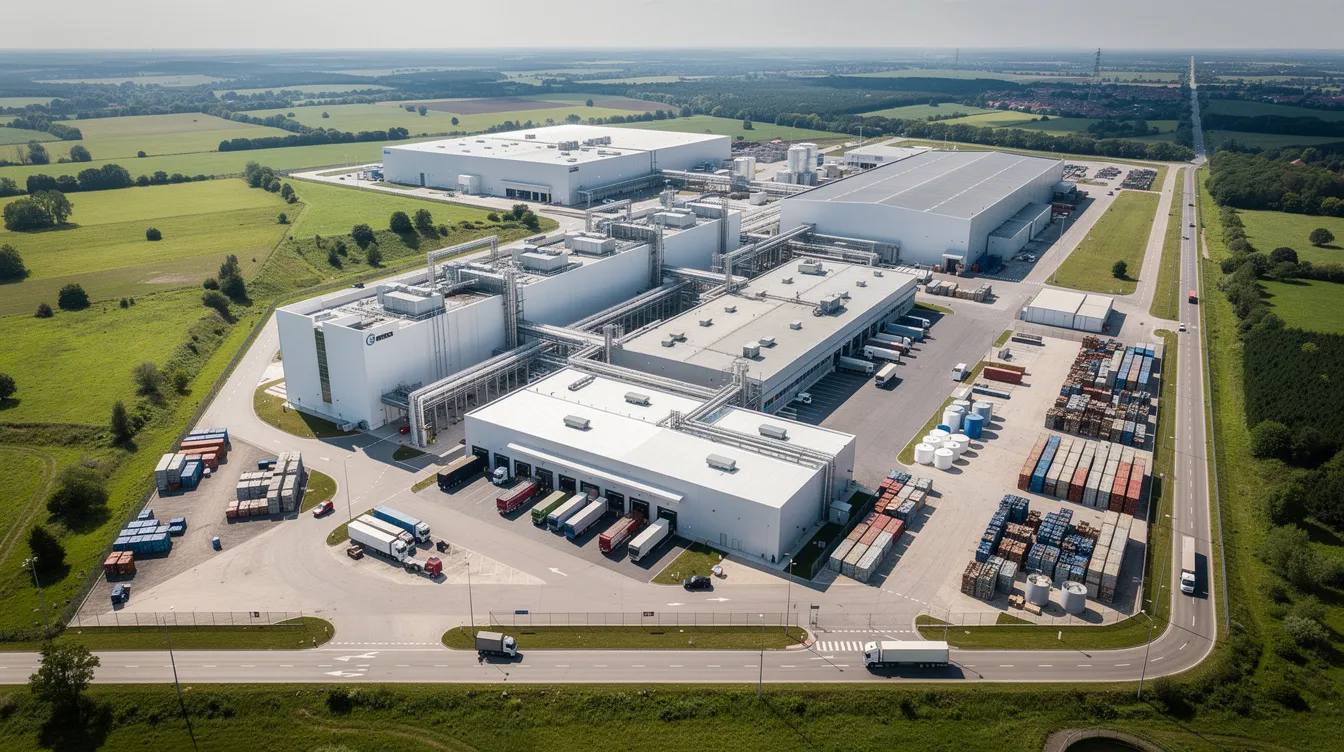
Frequently Asked Questions – Dextrose Monohydrate Manufacturing Plant Project Report
The following FAQs address common queries from promoters and investors that are not fully covered in the main sections above, focusing on practical DPR, finance, and project planning issues.
What additional information does a bank typically ask for beyond the DPR?
In addition to the DPR, banks generally require KYC documents and audited financial statements of promoters, collateral details and property valuations, credit history and CIBIL reports, projected CMA Data in the prescribed format, sanction letters of existing facilities (if any), and sometimes third-party technical or market opinions. Promoters should assemble these documents early in the financing process to avoid delays. Technological advancements in the proposed process, promoter capability, and existing production facilities (if any) are also evaluated during appraisal.
Can a small MSME unit viably start with a lower-capacity dextrose monohydrate plant?
While economies of scale favour larger plants, smaller capacities may be viable where promoters have captive consumption (e.g., a pharma company needing dextrose as an input), access to niche markets, or integration with existing starch facilities. However, at lower scale, the cost per kg rises and break-even utilisation may be higher. A customised feasibility study with careful production cost analysis at the proposed scale is essential before committing capital investment. The animal feed industry and animal feed formulations may also absorb lower-grade by-products, but this should not be the primary revenue assumption.
How long does it typically take to implement a dextrose monohydrate project from concept to commissioning?
For a standalone crystallisation unit, the period from detailed planning through land acquisition, machinery ordering, erection, trial production, and stabilisation is typically 12–18 months. Integrated maize wet milling projects with multiple derivatives can take 18–24 months or longer, depending on land readiness, regulatory approvals, machinery lead time from vendors, and financing closure. Promoters should build realistic implementation schedules into their DPR rather than assuming optimistic timelines.
Is it necessary to lock in long-term raw material contracts before setting up the plant?
While long-term binding contracts may not always be feasible in the maize starch market, securing reliable maize starch or glucose suppliers, understanding seasonal price patterns, and considering partial integration or hedging strategies significantly reduces raw material risk. An unparalleled competitive advantage can be built by those who control their upstream feedstock supply. Promoters should demonstrate to lenders that they have identified credible suppliers and understand the cost implications of market fluctuations in raw material sourcing.
Can by-products or mother-liquor from dextrose crystallisation improve project economics?
Mother-liquor from crystallisation retains dissolved glucose and other sugars. It can sometimes be re-used in syrup applications, sold as a lower-grade glucose product, or used in animal feed formulations, extending shelf life of the revenue stream. However, promoters should not assume high-value by-product revenue without concrete technical validation and confirmed buyers. The value depends on purity, moisture retention characteristics, and whether customers in the food industry or fermentation industry accept such material. Any by-product credit in the DPR should be conservative and separately validated.
Conclusion – Evaluating Dextrose Monohydrate Manufacturing Investment
The decision to invest in a dextrose monohydrate manufacturing plant should rest on verified technical parameters – technology choice (integrated vs standalone), feedstock sourcing strategy, crystallisation yield, energy efficiency – and on realistic financial assumptions about capacity utilisation, product pricing, raw material costs, and working capital requirements. The food and beverage industry, pharmaceutical industry, and fermentation sector offer real demand, but promoters must validate that demand independently through market research before committing to a specific plant capacity and configuration.
A well-researched feasibility study and a customised, bankable DPR are prerequisites before committing large capital, particularly where term loans and external investors are involved. The DPR should help make an informed investment decision, not merely fulfil a bank submission formality.
If you are seriously considering a dextrose monohydrate manufacturing plant in India, connect with CA Manish Gugliya via WhatsApp through ProjectReportBank.com for customised DPR preparation, financial modelling, CMA Data, and project finance advisory. Every project is different – and your project report should reflect that.
- CA Manish Gugliya, FCA, DISA (ICAI)