Key Takeaways
- This article serves as a practical guide to preparing a bankable maltodextrin manufacturing plant project report and DPR in India, covering technology selection, plant setup, project cost structure, raw materials, and financial planning.
- Maltodextrin is typically produced from corn starch via controlled starch liquefaction, enzymatic hydrolysis, purification, concentration, and spray drying. Process choices directly affect product grades, utility consumption, and overall project feasibility.
- Project cost, capital expenditure, working capital, and profitability vary widely depending on capacity, level of integration (standalone starch-conversion plant vs. integrated maize wet milling facility), location, and machinery configuration.
- A professional DPR must combine technical details-manufacturing process, plant layout, machinery specifications-with robust financial projections including cash flows, DSCR, ROI, IRR, and payback period to satisfy bank appraisal requirements.
- Indian entrepreneurs and MSMEs considering maltodextrin production are encouraged to seek customised DPR, financial modelling, and bank-finance advisory support from Project Report Bank (CA Manish Gugliya) via WhatsApp-first enquiry.
Introduction and Project Overview
A maltodextrin manufacturing plant is an industrial facility that converts food-grade corn starch into maltodextrin powder through starch liquefaction, enzymatic hydrolysis, purification, evaporation, and spray drying. For promoters exploring starch-derivative projects in India, preparing a structured maltodextrin manufacturing plant project report is an essential first step before committing capital, finalising technology, or approaching banks.
Maltodextrin functions as a starch-derived functional ingredient across India’s growing food, beverage, pharmaceutical, nutraceutical, and personal care industries. Its role as a bulking agent, carrier, texture modifier, and moisture retention aid makes it indispensable in processed foods, energy drinks, sports drinks, dairy products, instant mixes, and pharmaceutical applications. Rising demand for convenience foods and health nutrition products continues to expand the domestic market.
India’s strong availability of corn starch and an expanding maize-processing base make maltodextrin manufacturing a logical downstream diversification opportunity. However, the viability of such a project depends on several key factors: raw material sourcing, technology selection, capital investment, realistic demand assessment, and financial discipline.
A bankable maltodextrin manufacturing plant DPR must integrate technical design, process planning, plant setup, capital expenditure, working capital assessment, and projected financial performance into a coherent proposal. This article, written from the professional perspective of CA Manish Gugliya (Project Report Bank), examines each of these aspects to help promoters make informed investment decisions.
If you are already exploring maltodextrin production, consider initiating a WhatsApp-first consultation with Project Report Bank to discuss a customised DPR tailored to your proposed capacity, location, and market.
What Is Maltodextrin? Products, Grades and Applications
Maltodextrin is a partially hydrolysed starch polysaccharide, most commonly produced from corn starch, though starch sources include wheat, potato, or rice as well. It is produced from starch through hydrolysis and is typically supplied as a free-flowing white powder with a dextrose equivalent generally in the range of 3 to 20. The hydrolysis process can achieve a dextrose equivalent of 5–20, depending on the degree of starch molecule breakdown into shorter glucose units.
The dextrose equivalent, or DE value, is commercially significant. Higher DE means shorter chain lengths, greater sweetness, low viscosity, and rapid absorption characteristics. Lower DE retains more of the original starch molecules’ properties-higher viscosity, less sweet taste, and stronger film-forming behaviour. DE therefore determines the functional profile of each maltodextrin grade and dictates which food applications or pharmaceutical applications it suits.
It is important to distinguish maltodextrin from related starch derivatives. Native maize starch has not been hydrolysed. Liquid glucose has a higher DE (typically above 20) and greater sweetness. Dextrose is essentially pure glucose. Maltodextrin occupies the intermediate DE range, serving primarily as a food additive for bulking, stabilising, encapsulation, and texture control rather than as a sweetener. For promoters interested in liquid maltodextrins or glucose syrups, the Liquid Glucose Manufacturing Plant Project Report & DPR provides additional context on starch derivative manufacturing.
Common commercial grades are defined by DE bands: 5–10, 10–15, and 15–20. Quality parameters include moisture limits (typically 3–6% for powder form), bulk density (0.4–0.6 g/mL), solubility, microbiological standards, ash content, and colour. B2B buyers-large FMCG manufacturers, contract blenders, beverage companies, sports nutrition formulators, pharma excipient suppliers, and export-oriented food processors-each specify DE ranges and functional characteristics suited to their formulations.
Maltodextrin is widely demanded across food, beverage, pharmaceutical, and personal care industries. Key food products include bakery goods, confectionery, seasonings, instant mixes, and dairy solids. It serves as a key ingredient in sports nutrition products and energy drinks, providing rapid absorption of carbohydrate energy. In the pharmaceutical industry, it functions as an excipient, filler, and carrier. Personal care industries use it as a stabiliser and carrier for fragrance or active ingredients. Maltodextrin also acts among anti caking agents and functional ingredients in various industries.
One important clarification: maltodextrin is not inherently sugar-free or low-calorie. Digestible maltodextrin contributes approximately 4 kcal per gram and can influence blood glucose response. Any marketing or labelling must reflect this accurately, as food science standards and regulatory requirements demand truthful nutritional declarations.
Maltodextrin Manufacturing Business Opportunity in India
India’s consumption of processed foods, ready-to-mix products, beverages, and nutraceuticals has grown substantially over the past decade. This rising demand has made maltodextrin a strategic functional ingredient in domestic formulations, particularly where manufacturers require a consistent, shelf-stable, and cost-effective bulking agent or carrier.
According to industry data, India’s maltodextrin market was valued at approximately USD 151.46 million in 2024, with volume demand of about 0.28 million metric tonnes. Food and beverage applications accounted for roughly 66% of consumption, with the pharmaceutical industry contributing around 24%. Domestically, low-DE specialty grades remain largely import-dependent, presenting a clear import substitution opportunity for reliable domestic manufacturers.
At the global level, the maltodextrin market was valued at USD 4.31 billion in 2025 and is expected to reach USD 4.76 billion by 2034, growing at a CAGR of 5.0% from 2026 to 2034. Industry trends indicate sustained growth driven by processed foods, sports nutrition, and pharmaceutical excipients.
Existing maize starch and liquid glucose producers have a natural advantage in diversifying into maltodextrin production. Common upstream infrastructure, technical know-how, and established maize procurement networks provide a competitive edge. Leading manufacturers in India’s starch derivatives sector are already expanding capacity to capture downstream value.
Institutional buyers-large food brands, contract manufacturers, pharma companies-require consistent quality, reliable delivery, and often long-term contracts, making mid-to-large capacity plants attractive. Export prospects to South Asia, the Middle East, and Africa are feasible provided the plant adheres to international quality systems such as FSSC 22000 and HACCP, and maintains competitive pricing against global suppliers.
A maltodextrin manufacturing plant feasibility study should quantify market demand through discussions with prospective buyers and analysis of trade data, rather than relying solely on generic global market projections. Consideration of market trends and the competitive landscape is necessary for any credible project report.
Raw Materials and Production Models
Corn starch is the principal raw material used in maltodextrin production in India. While other starches-potato, tapioca, rice-are technically feasible starch source options, corn starch dominates commercially due to availability, pricing, and well-established supply chains. The project report should detail raw material requirements including maize, tapioca, rice, and potato starch where applicable, and identify the chosen starch source with supporting rationale.
Model A: Standalone Maltodextrin Manufacturing Plant
A standalone plant purchases food-grade maize starch from external suppliers and converts it into maltodextrin. This model offers lower capital expenditure, simpler operations, and faster implementation. However, it introduces dependency on starch suppliers and exposure to raw material costs and price trends. Supply reliability and starch quality consistency become critical risks.
Model B: Integrated Maize Wet Milling and Maltodextrin Plant
An integrated facility processes maize grain through wet milling to produce starch, and then converts the starch into maltodextrin in-house. This model requires significantly higher capital investment and operational complexity but provides greater control over feedstock quality, margin capture across the value chain, and the ability to generate revenue from co-products (gluten, germ, fibre). For promoters evaluating this route, the Integrated Maize Wet Milling Plant Project Report & DPR provides a detailed upstream resource.
The two models differ substantially in investment size, utility loads, process complexity, need for technical manpower, and exposure to agricultural risks. The choice between them fundamentally affects the capital expenditure profile, risk structure, and bankability of the DPR.
Key raw materials and utility inputs beyond starch include process water (treated), food-grade enzymes (alpha amylase, and possibly glucoamylase depending on target DE), acids and alkalis for pH control, filtration aids, activated carbon, ion exchange resins for purification, and packaging materials such as multi-layer paper or HDPE bags with liners. Promoters sourcing starch externally should refer to the Maize Starch Manufacturing Plant Project Report & DPR for an understanding of upstream starch quality parameters.
A professional maltodextrin manufacturing plant DPR should explicitly state which production model is proposed, document key raw materials with sourcing plans, and quantify raw material consumption per tonne of finished product, since this choice determines the entire financial structure.
Maltodextrin Manufacturing Process and Flow Chart
The manufacturing process for maltodextrin converts corn starch into a controlled-DE powder through a sequence of thermal, enzymatic, and mechanical operations. A process flow diagram is crucial for explaining the maltodextrin manufacturing process in any bankable DPR, as it demonstrates the promoter’s technical understanding and helps lenders evaluate the project’s engineering foundation.
The process begins with receipt and quality inspection of raw corn starch, checking moisture, ash, microbial load, and viscosity behaviour. Accepted starch is mixed with process water to prepare a starch slurry at specified solids concentration (commonly 30–40%).
The slurry undergoes gelatinisation and starch liquefaction. Heating-often via jet cooking-gelatinises the starch, and alpha amylase enzyme is introduced to break down starch molecules into shorter dextrins, reducing viscosity. This enzymatic hydrolysis converts starch into shorter glucose chains, and the process conditions (temperature, pH, enzyme dosage, residence time) are controlled to achieve the target dextrose equivalent.
After hydrolysis, the enzyme is inactivated through heating or pH adjustment. The hydrolysate is then filtered and clarified to remove insolubles. Depending on the grade, purification may include treatment with activated carbon for decolourisation and ion exchange resins for demineralisation. Multi-effect evaporators concentrate the solution before it enters the spray drying stage. Maltodextrin is dried using spray drying to form a fine powder, with inlet and outlet air temperatures controlled to achieve the target moisture content of approximately 3–6%.
The final product undergoes cooling, sieving, and optional blending before quality testing (DE, moisture, microbiology, bulk density) and packaging into moisture-proof containers. Packaging requirements and design should align with market standards for maltodextrin products.
Manufacturing Process Flow Chart:
Corn starch → Slurry preparation → Gelatinisation & liquefaction → Enzymatic hydrolysis → Enzyme deactivation → Filtration & clarification → Purification (carbon / ion exchange) → Concentration (evaporation) → Spray drying → Cooling & sieving → Quality testing → Packing & storage → Dispatch
Process conditions differ meaningfully for lower DE versus higher DE maltodextrin. Lower DE requires less hydrolysis and retains longer-chain molecules with higher molecular weight, while higher DE demands more aggressive enzyme action, producing shorter chains with greater sweetness and low viscosity. Technology suppliers customise equipment sizing, reactor design, and control systems accordingly.
Yield depends on starch solids input, conversion efficiency, moisture in the final product, and losses during filtration and drying. A professional DPR should perform a detailed mass balance and energy balance rather than assuming generic thumb rules, as these directly affect projected operating costs and profitability.
Plant Machinery and Equipment Requirements
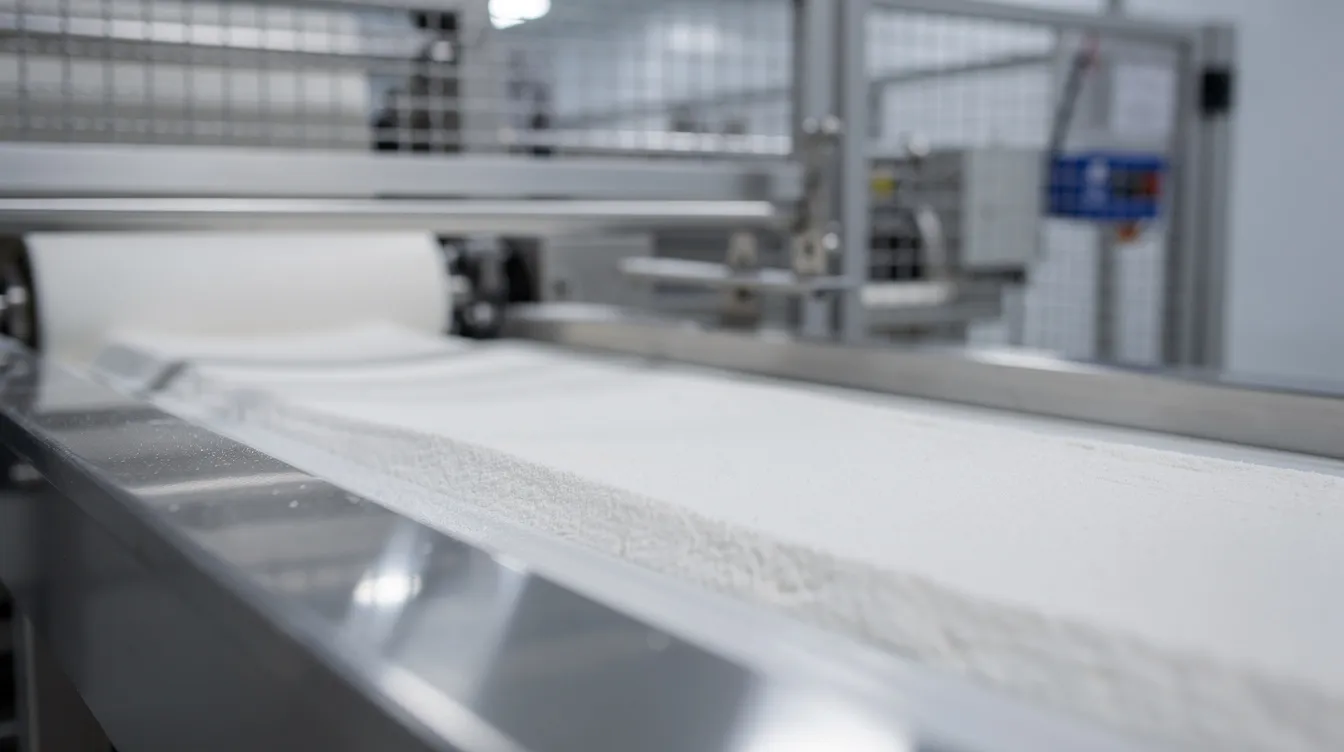
Machinery configuration for a maltodextrin manufacturing plant depends on plant capacity, product mix (DE grades), and the chosen technology route. However, the core equipment categories remain broadly similar across projects. Specifications for machinery should focus on food-grade materials suitable for processing, particularly stainless steel for all product-contact surfaces.
| Machinery / Equipment | Purpose | Cost & Specification Considerations |
|---|---|---|
| Starch slurry preparation tanks | Mixing starch with process water | Capacity in litres, agitator design, SS construction |
| Jet cooker & liquefaction reactor | Gelatinisation and starch liquefaction | Pressure rating, steam consumption, SS internals |
| Saccharification / hydrolysis vessels | Controlled enzymatic hydrolysis to target DE | Volume, temperature control, insulation |
| Enzyme & chemical dosing systems | Precise addition of alpha amylase and pH chemicals | Metering pump accuracy, food-grade wetted parts |
| Filtration & clarification units | Removing insolubles and fine particles | Filter press or centrifuge, throughput capacity |
| Activated carbon / ion exchange columns | Decolourisation and demineralisation | Resin volume, regeneration system, SS or lined vessels |
| Multi-effect evaporator | Concentrating hydrolysate before drying | Number of effects, energy efficiency, capacity |
| Industrial spray dryer | Converting concentrate to dry powder form | Inlet/outlet temperature, atomiser type, tower height, capacity in TPD |
| Powder handling & packing line | Sieving, blending, bagging (25 kg / bulk) | Automation level, weighing accuracy, sealing quality |
| Boiler & steam distribution | Providing process steam for heating, drying | Fuel type, capacity in TPH, emissions compliance |
| Water treatment plant | RO, softening, process water quality | Capacity, output water quality specs |
| CIP (Clean-In-Place) system | Hygienic cleaning of process lines | Automated vs manual, chemical tank sizing |
| QC laboratory equipment | DE analysis, moisture, microbiology, ash | Instruments: moisture analyser, reducing sugar assay, incubator |
| Electrical panels & automation | Power distribution, PLC/SCADA control | Level of automation, redundancy, energy monitoring |
| Effluent treatment plant | Treating wash and process wastewater | Design based on effluent volume and discharge norms |
Staffing requirements should encompass a range of roles from process engineers and quality control personnel to boiler operators, packaging staff, and administrative personnel. The level of automation-manual, semi-automatic, or PLC/SCADA-controlled-directly affects both machinery cost and staffing levels. Higher automation supports consistent product quality and traceability, which is particularly important for large B2B customers and export markets.
Actual machinery quotations depend on detailed technical specifications, vendor scope (supply-only vs. turnkey including installation and commissioning), and capacity in TPD. A professional maltodextrin manufacturing plant DPR should attach vendor offers and specification sheets rather than assumed price lists, as lenders scrutinise these during appraisal.
Production Capacity, Land and Plant Layout
Selecting a suitable production capacity requires balancing targeted customer demand, anticipated orders, manufacturing shifts, and the financial capacity of promoters. The plant capacity typically ranges from 5,000 to 15,000 MT annually for commercial maltodextrin units, though MSME units may operate at lower capacities while large integrated plants may exceed this range.
Finished maltodextrin output in tonnes per day depends on corn starch input, solids content, and process losses. Capacity planning must be grounded in realistic operating hours and shifts per day. An illustrative plant producing 30 TPD of finished maltodextrin would require correspondingly higher daily starch input, given conversion and moisture losses.
Capacity utilisation ramp-up is a critical assumption for financial projections. A new plant may operate at 40–60% utilisation in the first year while developing customers, stabilising production, and training operators, increasing gradually in subsequent years. These assumptions directly impact projected revenue, working capital, and DSCR calculations.
Land, building, and infrastructure requirements should be assessed based on production needs. Key zones include raw material godowns for starch storage in a dry environment, the process block (slurry preparation, reactors, evaporation), a tall spray dryer tower requiring special building height, finished goods warehouse, boiler house and utilities area, QC laboratory, administrative block, and truck movement and parking areas. Hygienic plant layout demands logical material flow from raw materials to the final product, separation of wet and dry zones, and provision for future expansion.
Land requirements cannot be standardised-they must be derived from a preliminary layout prepared by plant engineers, taking into account machinery footprint, spray dryer height, building clearances, statutory setbacks, internal roads, fire safety norms, and transportation requirements. A bankable maltodextrin production plant project report should include a basic layout drawing and land-use plan to help lenders visualise the facility.
Maltodextrin Manufacturing Plant Setup Cost in India
This section explains the structure and components of total project cost for a maltodextrin manufacturing plant in India. It is important to distinguish between fixed capital expenditure and overall project cost, which includes working capital.
Production costs include machinery, utilities, and raw materials, but the total project cost extends well beyond machinery procurement. The following table illustrates the main cost heads:
| Cost Head | Examples | Remarks |
|---|---|---|
| Land & site preparation | Land acquisition or lease, levelling, boundary, access roads | Varies by location; site preparation costs often underestimated |
| Building & civil construction | Process building, spray dryer tower, warehouse, office, lab | Construction costs depend on height, floor loading, finishes |
| Plant & machinery | Reactors, evaporators, spray dryer, filtration, packing lines | Largest single cost head; depends on capacity and automation |
| Utilities & infrastructure | Boiler, transformer, electrical panels, water treatment, air compressor | Necessary infrastructure for continuous operations |
| QC laboratory | Instruments for DE, moisture, microbiology testing | Essential for consistent product quality |
| Effluent treatment | ETP as required by Pollution Control Board | Depends on process water discharge volumes |
| Installation & commissioning | Erection, piping, wiring, trial runs | Often 8–15% of machinery cost |
| Preliminary & pre-operative expenses | Design, engineering, statutory fees, interest during construction, training | Budget realistically; delays increase this component |
| Contingencies | Unforeseen costs during implementation | Typically 5–10% of fixed capital |
| Working capital margin | Initial starch inventory, packaging, finished goods, receivables, cash buffer | Promoter contributes margin; bank finances the balance |
The maltodextrin manufacturing plant cost in India varies widely. For reference, a publicly available DPR for an integrated starch-to-sweeteners facility (166.67 MT/day capacity, including maltodextrin) showed a total capital investment of approximately ₹110.85 crore, with land and building at ₹27.37 crore and plant and machinery at ₹55 crore. A smaller standalone configuration was documented at approximately ₹23.85 crore. These are illustrative benchmarks; actual costs depend on specific capacity, location, machinery vendors, and level of integration.
Key considerations for the financial viability analysis include both capital and operational expenditures. Promoters should use realistic vendor quotations, civil cost estimates, and implementation schedules in their DPR rather than relying on generic templates, as banks scrutinise these assumptions closely during appraisal.
If you are evaluating a maltodextrin manufacturing plant investment, contact Project Report Bank via WhatsApp to discuss a customised cost assessment and professionally prepared project report tailored to your capacity and location.
Means of Finance and Bank Loan Planning
Funding a maltodextrin manufacturing plant typically involves a combination of promoter equity (or unsecured loans from promoters), bank term loan for fixed assets, and separate working capital finance (cash credit, overdraft, or working capital term loan) for operations. The project funding structure must align with the project’s cash generation capacity.
Key considerations while planning means of finance include minimum promoter contribution norms (banks often require 25–33% of project cost as equity), acceptable debt-equity ratios for manufacturing projects, realistic repayment tenures including moratorium periods, and alignment between projected cash flows and instalment schedules. Promoter contribution should be planned before finalising bank finance, not as an afterthought.
Banks examine more than projected profit when evaluating a maltodextrin project. They assess promoter background and experience, techno-economic viability, quality of the DPR, reasonableness of project cost estimates, firm orders or MOUs from prospective customers, raw material tie-ups, and DSCR under different scenarios. A robust maltodextrin manufacturing plant bank loan DPR should include detailed term-loan schedules, depreciation, interest calculations, and sensitivity analysis demonstrating how adverse changes impact repayment capacity.
A structured, professionally presented loan proposal significantly improves the quality of interactions with banks. For guidance on preparing bank-oriented documentation, promoters may refer to Bank Finance DPR & Loan Proposal Assistance services. Project Report Bank also provides Project Finance Advisory & Loan Structuring Services to help promoters decide optimal borrowing levels, loan types, and repayment structures.
Where applicable, state-level industrial policy incentives, interest subvention schemes, or MSME support programmes may improve project viability-but no subsidy should be treated as guaranteed in the DPR. Project funding assumptions must remain conservative.
Manufacturing Cost and Operating Expenses
The operating cost structure of a maltodextrin plant is dominated by corn starch (and, where integrated, maize grain) and utilities-steam for liquefaction and evaporation, electricity for motors and spray dryer fans. Raw materials account for 70–80% of operating expenses, making starch procurement price trends and conversion yields the most critical drivers for contribution margins.
| Operating Cost Component | Key Cost Driver | Financial Impact |
|---|---|---|
| Corn starch | Starch price per tonne, raw material consumption per tonne of output | Largest variable cost; small price changes significantly affect margins |
| Enzymes & chemicals | DE grade influencing enzyme dosage, pH adjustment chemicals | Typically 2–5% of operating costs; higher for specialty grades |
| Steam / thermal energy | Boiler fuel cost (coal, gas, biomass), energy source selection | Spray drying and evaporation are energy-intensive; efforts to reduce energy consumption directly improve margins |
| Electricity | Tariff rates, motor and fan loads, automation | Continuous process; power cost varies by state and captive generation |
| Labour & supervision | Staffing per shift, automation level, skill requirements | Relatively fixed; higher automation reduces headcount |
| Packaging materials | Bag type (HDPE, Kraft paper with liner), market standards | Must align with buyer requirements |
| Repairs & maintenance | Equipment age, preventive vs breakdown maintenance | Typically 2–3% of machinery value annually |
| Quality testing | Lab consumables, external testing fees | Small but essential for maintaining B2B buyer confidence |
| Transportation | Distance from starch supply and market centres | Inbound and outbound logistics must be factored in operational costs |
Small variations in starch cost per kg can materially affect the profitability of maltodextrin manufacturing. Energy efficiency of evaporators and spray dryers influences steam and power consumption per tonne of finished maltodextrin-high energy tariffs or inefficient equipment compress margins considerably. Variable costs should be clearly separated from fixed costs in the DPR to enable meaningful break-even and sensitivity analysis.
Financial Projections, Working Capital and DSCR
Any serious maltodextrin manufacturing plant DPR requires a 5–7 year financial projection model covering projected production, sales, cost of production, profitability, cash flows, and balance sheets. Financial projections should include profitability analyses such as ROI, payback period, and cash flow to demonstrate the project’s bankability.
Key assumptions that must be clearly documented include annual production capacity and expected capacity utilisation by year, selling prices by product grade, raw material and utility costs, credit periods for customers and suppliers, and inflation factors. These assumptions form the backbone of the economic analysis and should be defensible.
Working capital assessment drives bank working capital limits. Norms for raw material inventory (corn starch holding in large quantities), finished goods stock based on despatch cycles, receivable days reflecting B2B credit practices, and payable days for suppliers must be quantified. Rapid sales growth can actually increase the need for working capital-projected profitability and cash availability should never be treated as the same thing.
DSCR (Debt Service Coverage Ratio) is calculated from projected cash accruals and total debt service obligations. Banks place significant emphasis on consistent DSCR above threshold levels (typically 1.25–1.5x or higher) across the loan tenure. Financial projections assess capital investment and operating costs together to demonstrate whether the project generates adequate surplus for debt servicing.
Preparation of integrated statements-projected Profit & Loss, Balance Sheet, Cash Flow Statement, and term-loan amortisation schedule-is standard for bank appraisal. Customised Excel-based models, such as those offered through Financial Projections & Financial Modelling Services, help promoters and lenders test multiple scenarios. Similarly, CMA Data Preparation Services for Bank Loans are often mandatory for working capital sanctions.
Projections are estimates based on current assumptions and must be revisited once operations begin, ensuring financial discipline and early detection of stress.
Project Feasibility, Profitability, ROI and IRR
A comprehensive project report for a maltodextrin manufacturing plant must cover technical feasibility (process and technology), commercial feasibility (marketability of the product at viable prices), and financial feasibility (adequate returns and repayment capacity). The project report must include financial viability analysis that goes beyond simple profit projections.
Key profitability indicators that a maltodextrin manufacturing plant feasibility study should compute include:
- Contribution per kg of maltodextrin by DE grade
- Break-even capacity utilisation (illustrative benchmarks from published DPRs suggest around 40–45% for well-structured integrated projects)
- EBITDA margin range under realistic conditions
- Return on Investment (ROI)
- Internal Rate of Return (IRR)
- Payback period
- Average DSCR across the loan tenure
Projected profit margins for maltodextrin can range from 25–35% depending on capacity utilisation, product mix, starch procurement cost, and energy efficiency-but these are indicative ranges, not guaranteed outcomes. Changes in selling price, raw material costs, capacity utilisation, energy tariff, and labour cost can alter these indicators significantly. Sensitivity analysis (best case, base case, stress case) within the DPR is essential.
Simply installing a higher capacity plant does not guarantee higher profit. Under-utilisation of capacity or insufficient market development can lead to lower-than-expected returns. Lenders review the project’s IRR relative to the cost of capital and examine whether projected cash flows provide reasonable cushion over scheduled debt service.
Project Feasibility Study & Project Viability Services from Project Report Bank can support independent feasibility exercises focused on realistic assumptions rather than optimistic projections. Promoters should treat feasibility analysis as a decision-support tool to refine project design, not merely as a document to satisfy bank formats.
Licences, Statutory Approvals and Quality Compliance
Regulatory and statutory requirements vary by state, local authority, and project size. Promoters must confirm exact requirements with local agencies, but the following provides a structured overview.
Food-safety and manufacturing-related approvals likely include FSSAI licence for food ingredient manufacturing, Factory licence under the applicable state Factory Act, Trade licence, and registrations under relevant local laws. The project report should assess the need for environmental compliance and regulatory approvals, including Consent to Establish and Consent to Operate from State Pollution Control Boards, particularly considering boiler emissions, effluent from washing and CIP operations, and solid waste disposal.
Building plan approvals, fire safety NOC, electrical safety clearances, and compliance with local zoning or industrial area norms for the proposed land are also required. GST registration for tax compliance and correct classification of maltodextrin as a product and its inputs must be ensured. Ensure compliance with applicable regulations to avoid delays and penalties.
Compliance with food safety standards like ISO 22000 and GMP is essential for marketability, particularly with institutional buyers and export customers. Major buyers may additionally require FSSC 22000, HACCP, Halal, Kosher, or specific customer audits. These certification costs should be budgeted in the DPR under pre-operative or recurring compliance costs.
A well-prepared DPR should list all anticipated licences and approvals, their approximate timelines, and implementation sequencing to prevent project delays.
Major Risks and Mitigation Strategies
Every maltodextrin project faces technical, commercial, and financial risks that should be identified, assessed, and addressed in the DPR.
Raw material risks: Corn starch price volatility, supply disruption due to crop issues or logistics, and quality inconsistency impacting DE control are primary concerns. Mitigation includes maintaining multiple supplier relationships, building buffer stocks, establishing quality-based procurement contracts, and considering partial backward integration where scale permits.
Market and sales risks: Overestimation of market demand, dependence on a few large buyers, and pricing pressure from competing suppliers can erode projected margins. Phased capacity ramp-up, diversification of product grades and customer segments, long-term supply agreements, and development of export channels help manage these risks. An unparalleled competitive advantage comes from consistent quality and reliable delivery rather than from price alone.
Operational risks: Spray dryer energy inefficiency, unplanned downtime, and inconsistent DE or moisture levels causing batch rejections impact both costs and customer relationships. Reliable equipment from established vendors, preventive maintenance programmes, process automation, and operator training provide effective mitigation.
Financial risks: Cost overruns during implementation, delayed bank disbursements, inadequate working capital leading to production interruptions, and tight DSCR all threaten project viability. Realistic cost estimation with adequate contingencies (10–15%), careful loan structuring, and maintaining financial discipline through the implementation and ramp-up phases are essential.
Regulatory risks: Delays in statutory approvals, changes in food safety norms, or environment-related constraints can disrupt timelines. Early engagement with regulators and proactive compliance planning reduce this risk.
The DPR should include a qualitative risk analysis and sensitivity study demonstrating that promoters are aware of and prepared for adverse scenarios. This builds lender confidence and supports the project’s bankability.
Importance of a Professional Maltodextrin Manufacturing Plant DPR
A Detailed Project Report is not merely a descriptive document. It is a comprehensive planning and appraisal tool integrating technical, commercial, and financial aspects of the maltodextrin project into a single coherent proposal.
A professional maltodextrin manufacturing plant DPR should contain: promoter profile, project concept and rationale, market analysis, a detailed description of the manufacturing process, machinery list with vendor quotations, plant layout, project cost estimates, means of finance, implementation schedule, projected financial statements (P&L, balance sheet, cash flow), CMA Data, and risk/sensitivity analysis.
Lenders expect DPRs to be consistent, data-backed, and internally coherent. Building area should match machinery footprint. Utility loads should match installed equipment. Capacity utilisation assumptions should align with market analysis. For a specialised product like maltodextrin, technical nuances-DE grades, spray dryer sizing, utility consumption estimates, and by-product handling-need to be realistically reflected in mass and energy balances.
Generic downloaded reports that reuse assumptions carry meaningful risks: potential rejection during bank appraisal, queries requiring extensive rework, and-most importantly-the possibility of committing to a project based on unrealistic numbers. Promoters should treat DPR preparation as an opportunity to refine plant capacity and configuration before committing to machinery orders and long-term finance.
How CA Manish Gugliya and Project Report Bank Can Assist
Project Report Bank, led by CA Manish Gugliya (FCA, DISA ICAI) with more than 20 years of professional experience, supports entrepreneurs and MSMEs across India in planning maltodextrin manufacturing and broader starch-derivative projects.
Professional services relevant to maltodextrin plants include:
- Customised industrial DPR preparation
- Project cost estimation and means of finance planning
- Bank loan DPR and proposal drafting
- CMA Data preparation
- Detailed financial projections and modelling
- Working capital assessment
- DSCR and repayment scheduling
- Project feasibility and viability analysis
Services are provided online across India, enabling promoters from any state to access specialised advisory without geographical constraints. The focus is on realistic assumptions, careful risk assessment, and alignment with bank appraisal expectations-not promises of guaranteed sanctions or pre-fixed profit outcomes.
If you are seriously considering a maltodextrin manufacturing plant, initiate a WhatsApp-first enquiry with Project Report Bank to discuss your proposed capacity, location, and timelines, so that an appropriate DPR and financial advisory scope can be designed for your specific requirements.
Frequently Asked Questions
What is the approximate investment range for a maltodextrin manufacturing plant in India?
Investment varies significantly with capacity, technology (standalone vs. integrated with maize wet milling), automation level, and location. A smaller standalone starch-conversion plant may require an investment in the range of ₹20–30 crore, while a larger integrated facility can exceed ₹100 crore. A proper feasibility study with vendor quotations and civil cost estimates is necessary to arrive at a reliable project cost for any specific configuration.
Can I set up a maltodextrin unit using purchased maize starch instead of installing a full maize wet-milling plant?
Yes. Many commercial maltodextrin plants operate on purchased food-grade maize starch. This standalone model requires lower capital investment, simpler operations, and faster implementation. The trade-off is dependency on external starch suppliers and exposure to starch price volatility. The DPR should document the chosen model with supporting commercial and financial rationale.
How long does it typically take to commission a maltodextrin manufacturing plant after financial closure?
Implementation typically involves land acquisition and site preparation (2–4 months), civil construction (4–8 months), machinery delivery and erection (6–10 months, often overlapping with civil work), utility installation, and trial runs (2–3 months). Overall timelines of 12–18 months from financial closure are common, though actual duration depends on project management, vendor schedules, and regulatory approvals.
Do banks insist on long-term offtake agreements for maltodextrin projects?
While firm orders or MOUs from prospective buyers strengthen the loan proposal, banks primarily assess overall market demand, promoter profile, techno-economic viability, and realistic financial projections. Formal offtake contracts are useful but not always mandatory. What matters is that the DPR demonstrates a credible path to achieving projected sales volumes.
What factors determine the feasibility of a maltodextrin manufacturing plant?
Feasibility depends on several key factors: reliable corn starch supply at competitive prices, appropriate technology and equipment selection, realistic capacity planning aligned with actual B2B demand, competitive energy source and utility costs, adequate capital investment and working capital, a well-structured financing plan with comfortable DSCR, and the promoter’s ability to develop and retain institutional customers. A professionally prepared DPR should evaluate all these dimensions with detailed insights and scenario analysis.
Conclusion
A successful maltodextrin manufacturing project in India requires disciplined planning across raw material sourcing, appropriate technology selection (starch liquefaction and enzymatic hydrolysis), reliable spray drying, project cost control, and structured financing. The difference between a viable project and an overcommitted one often lies in the quality of assumptions built into the DPR.
Aligning plant capacity and product grades with realistic B2B demand, controlling key costs-starch, steam, power-and maintaining consistent DE and quality parameters are essential for building long-term relationships with institutional buyers and sustaining profitability. A robust maltodextrin manufacturing plant project report translates a technical idea into a bankable, financially sound industrial proposal that withstands lender and investor scrutiny.
Entrepreneurs and MSMEs considering maltodextrin or related starch-derivative projects are encouraged to contact Project Report Bank for a customised DPR, feasibility study, financial projections, and bank finance advisory. WhatsApp is the recommended first point of contact to discuss your project requirements with CA Manish Gugliya.