
Key Takeaways
- This article provides a complete maize starch manufacturing plant project report framework covering industry trends, plant setup, machinery requirements, the maize starch manufacturing process, feasibility report preparation, and financial analysis for Indian promoters.
- The focus is on a native starch manufacturing plant, distinct from an integrated corn starch and derivatives complex that also produces liquid glucose, maltodextrin, dextrose monohydrate, or modified starches.
- Project Report Bank, led by CA Manish Gugliya (FCA, DISA, ICAI), prepares customised DPRs, bank finance reports, CMA Data, and financial models for maize starch projects rather than selling generic PDFs.
- All numbers used in this article are illustrative only. Actual maize starch plant viability depends on project-specific assumptions, market-study driven capacity planning, vendor quotations, and location-specific costs.
- The article covers the production process, machinery list, land and utilities, maize procurement, project cost structure, profitability analysis, ROI, IRR, DSCR, working capital, and project funding options.
Maize Starch Manufacturing Plant Project Report – Introduction
A maize starch manufacturing plant project report serves as a foundational blueprint for technical execution and financial evaluation before committing capital to this agro-processing business. Maize starch, also referred to as corn starch, is a reserve carbohydrate extracted from yellow corn kernels through wet milling. Its molecular formula (C₆H₁₀O₅)ₙ represents a polysaccharide polymer that finds use across the food industry as a thickener, in the pharmaceutical industry as a tablet binder and excipient, in the textile industry for fabric finishing and sizing, in the paper industry for surface sizing and strength, and as a key ingredient in biodegradable packaging materials.
The maize processing plant for starch production is based on wet milling, steeping, and starch extraction. This production process is water-intensive, utility-dependent, and requires strict process control across various unit operations. A corn starch manufacturing plant also generates by-products such as maize germ, gluten, fibre, and steep liquor, which contribute to overall project economics.
A well-structured DPR and feasibility report help promoters evaluate plant capacity, machinery selection, raw material requirements, working capital, and bank loan structure before investment. I am CA Manish Gugliya, FCA, DISA (ICAI), with over 20 years of professional experience in preparing industrial DPRs, CMA Data, and financial models for agro-processing and manufacturing projects. Through Project Report Bank, I assist entrepreneurs across India in building bankable project documentation.
Readers evaluating a broader maize processing facility producing multiple derivatives should refer to our Integrated Maize Wet Milling Plant Project Report & DPR. A dedicated native starch plant differs from such a complex in scope of equipment, technology licensing, regulatory requirements, and capital investment.
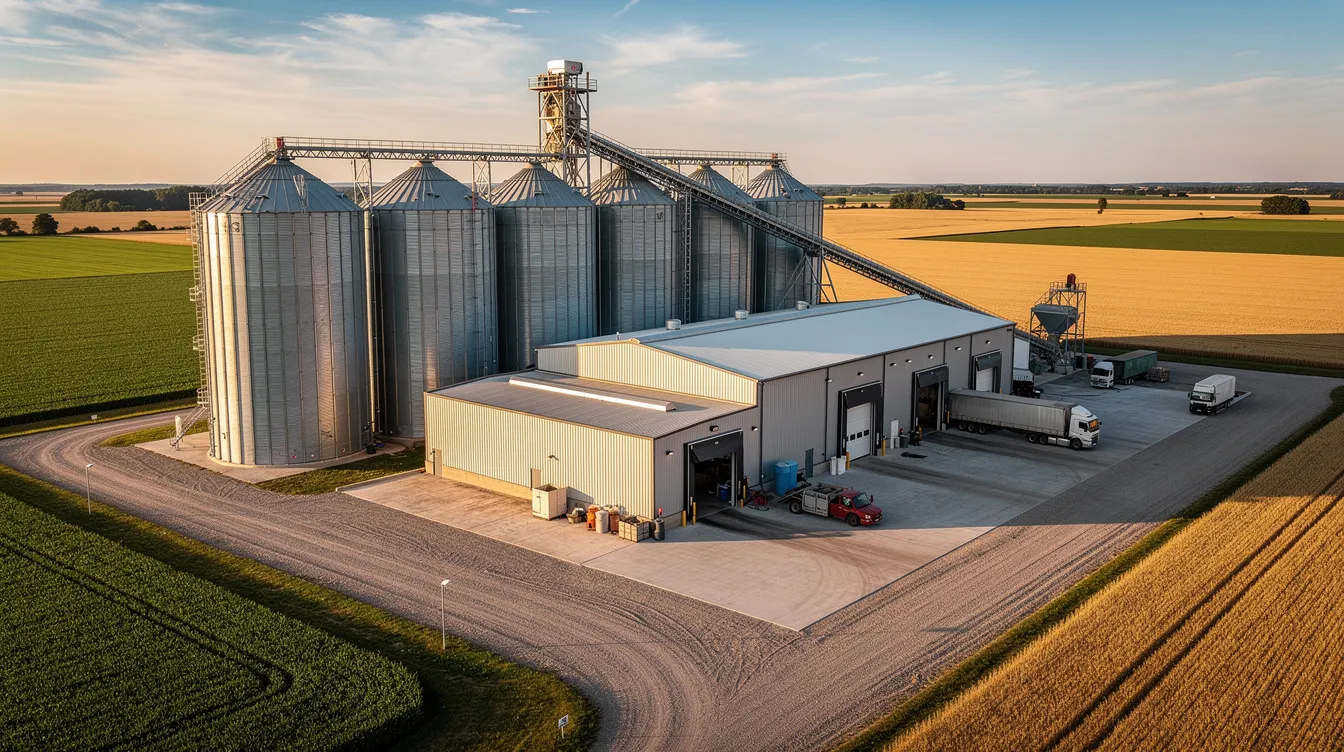
Maize Starch Industry Overview and Market Opportunities in India
The corn starch industry in India draws demand from several key factors: rising consumption of processed and convenience foods, growth in pharmaceutical manufacturing, expansion of the paper and packaging sector, and increasing interest in biodegradable and bio-based materials using corn starch as a base polymer. Market positioning strategies should consider whether to sell native starch, modified starches, or downstream products, as each segment has different buyer specifications and pricing dynamics.
The global corn starch market was 90.32 million tons in 2025, and is expected to reach 109.38 million tons by 2034, growing at a CAGR of 2.2% until 2034. India’s corn starch market was valued at 1.37 billion in 2018 and is projected to grow at a CAGR of 3.9% until 2024. The demand-supply analysis of maize starch must consider local and international markets to evaluate its potential, given that India holds roughly 17% share of global native starch exports.
Key user segments include:
- Food processing (soups, sauces, bakery, confectionery, frozen foods)
- Pharmaceuticals (tablet binders, excipients, capsule ingredients)
- Textiles (sizing agents, finishing compounds)
- Paper and packaging (surface sizing, strength enhancement)
- Industrial adhesives, corrugation, and biodegradable materials
Demand for biodegradable materials is boosting corn starch usage as industries seek alternatives to petroleum-based polymers. Market research and capacity sizing are critical steps before establishing a maize starch manufacturing plant. Native starch differs from modified starches, liquid glucose, dextrose monohydrate, and high fructose corn syrup; manufacturing these derivatives requires additional processing lines, enzymes, and capital beyond a basic native starch setup.
Promoters should map industrial clusters, identify institutional customers, and understand their quality assurance criteria (viscosity, moisture, microbial limits) before finalising DPR assumptions. Competition from established maize processing plants in Gujarat, Maharashtra, Karnataka, and states like Madhya Pradesh and Chhattisgarh (a major maize-producing region in India) means new entrants must compete on consistent quality, logistics efficiency, and long-term supply contracts. India’s maize production reached approximately 37.5 million tonnes in FY2023-24, providing a strong raw material base.
Maize Starch Manufacturing Process and Production Flow Chart
This section explains the manufacturing process flow for a maize starch plant in language useful for both promoters and bankers reviewing the DPR. Key technical considerations include plant layout, equipment procurement, and process design tailored to the target product specifications and plant capacity.
Key steps in the maize starch manufacturing process include cleaning, steeping, germ separation, and starch washing. The full sequence of unit operations involved is:
- Maize receipt and storage: Incoming yellow corn is weighed, sampled, and stored in silos or godowns.
- Cleaning and grading: Pre-cleaners, destoners, and magnetic separators remove foreign matter, broken kernels, and impurities.
- Steeping and conditioning: Maize is soaked in warm water (often with SO₂ or lactic acid) for 24-48 hours. This softens the kernel, loosens the protein matrix, and facilitates downstream separation.
- Germ separation: Degerminator equipment separates the germ (oil-bearing fraction) from the rest of the kernel.
- Fibre separation: Screens remove hull and fibre material from the slurry.
- Fine grinding: Disk or attrition mills free remaining starch granules from the protein matrix.
- Starch-gluten separation: Centrifuges or hydrocyclone batteries separate starch from gluten based on density differences.
- Starch washing: Multi-stage hydrocyclone washing purifies starch, reducing protein and ash content.
- Dewatering: Vacuum belt filters or peeler centrifuges reduce moisture content.
- Drying: Flash dryers bring starch to the specified moisture level (typically 10-12% for food-grade native starch).
- Screening and packing: Sieving machines classify particle size; automatic packing lines fill bags.
- By-product recovery: Germ, gluten, fibre, and steep liquor are collected, dried or processed for sale.
Text-based flow: Maize → Cleaning → Steeping → Grinding → Germ & Fibre Separation → Starch-Gluten Separation → Starch Washing → Dewatering → Drying → Screening & Packing
Steeping is the most time-consuming step and directly affects starch extraction efficiency. Hydrocyclones split starch and gluten by exploiting their density difference in aqueous suspension. Flash dryers consume the largest share of thermal energy in the same plant. Effluent treatment plants (ETPs) are necessary for environmental compliance in maize starch production, as steeping and washing generate wastewater with high BOD and COD levels.
The exact process configuration depends on the OEM technology, raw maize characteristics (kharif maize tends toward harder endosperm than rabi season maize), and end-user product specifications documented in the DPR.
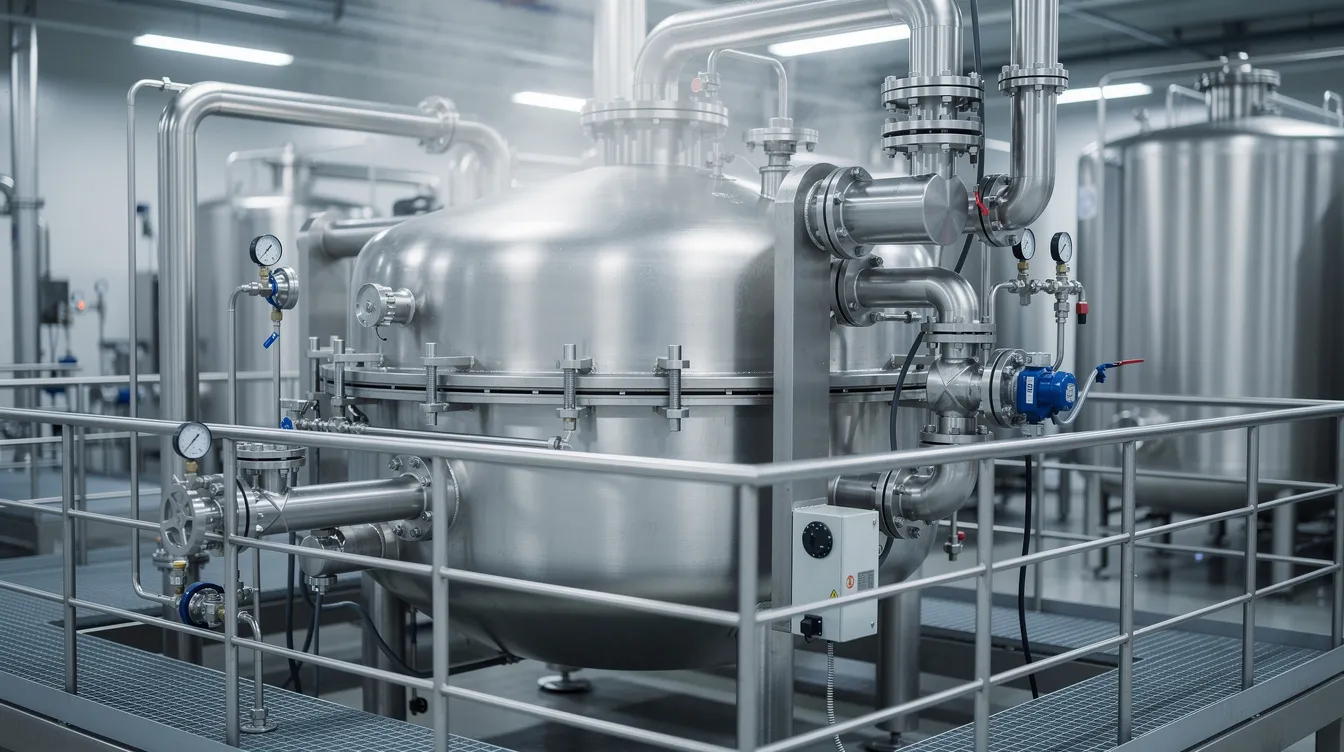
Maize Starch Manufacturing Plant Machinery and Equipment
Machinery selection directly impacts project cost, starch recovery, energy consumption, and product quality. The following table outlines core and supporting equipment for a maize starch manufacturing plant:
| Equipment Group | Key Items | Function |
|---|---|---|
| Receiving & Cleaning | Pre-cleaners, destoners, magnetic separators, conveyors | Remove impurities from raw maize |
| Steeping | Steeping tanks with agitation, heating, SO₂ dosing | Soften kernels, loosen protein matrix |
| Degermination | Degerminators, germ separators | Separate oil-bearing germ |
| Grinding | Disk mills, attrition mills | Free starch granules from protein |
| Fibre Separation | Fibre washing screens | Remove hull and fibre |
| Starch-Gluten Separation | Centrifuges, hydrocyclone batteries | Split starch from gluten |
| Starch Washing | Multi-stage hydrocyclones | Purify starch slurry |
| Dewatering | Vacuum belt filters, peeler centrifuges | Reduce moisture before drying |
| Drying | Flash dryer system | Dry starch to target moisture |
| Packing | Sieving machines, auto packing lines | Grade and pack finished starch |
| Utilities | Boiler, cooling tower, air compressor, WTP, ETP | Provide steam, cooling, water, effluent treatment |
| Electrical & Controls | Panels, MCCs, PLC/SCADA systems | Power distribution, process automation |
| Laboratory | Moisture analysers, viscometers, microbiological testing | Quality control and technical tests |
Factors influencing machinery cost include plant capacity (TPD), automation level, imported versus Indian-made components, material of construction (stainless steel versus mild steel for starch-contact parts), energy efficiency features, and whether the vendor provides turnkey supply or individual machines. Machinery costs form the largest portion of total capital expenditure in a maize starch project.
Promoters should collect at least 2-3 technically comparable quotations from reputable machinery suppliers before finalising the DPR. Selecting equipment purely on lowest initial price without evaluating recovery efficiency, energy consumption, and after-sales support creates long-term operational risk.
Maize Starch Plant Capacity Planning and Production Yield
Plant capacity selection should be driven by confirmed or expected market offtake, not by available land or generic industry benchmarks. The corn starch plant capacity ranges from 100,000 to 200,000 MT annually for medium-to-large installations. A maize wet-milling plant typically operates with an annual processing capacity ranging from 20,000 to 80,000 metric tons at MSME-to-mid scale.
The distinction between maize input capacity and finished starch output is critical. Starch recovery from Indian maize typically ranges from 60-62% of dry kernel solids. The remaining mass balance yields by-products.
Illustrative Capacity Planning Table (100 TPD Maize Input)
| Parameter | Assumption |
|---|---|
| Maize input per day | 100 tonnes |
| Working days per year | 300 |
| Annual maize processed | 30,000 MT |
| Starch yield (illustrative) | ~60% |
| Annual starch output | ~18,000 MT |
| Gluten recovery (illustrative) | ~8-9% |
| Germ recovery (illustrative) | ~6-7% |
| Fibre/husk recovery | ~22-24% |
All percentages are illustrative. Actual yield depends on maize variety, kernel hardness, steeping conditions, and OEM performance guarantees.
Maize starch production can yield several co-products like gluten and corn fiber, enhancing profitability through by-product monetization. Realistic ramp-up matters: financial projections should assume 60-65% capacity utilisation in Year 1, rising to 75-80% in Year 2, and 90%+ by Year 3 or 4. Promoters should obtain written mass balance data and OEM guarantees before freezing the financial model.
Land, Building, Factory Layout and Infrastructure Requirements
Maize starch plants are layout-intensive and utility-dependent. Land and building planning directly affects implementation cost, material flow efficiency, and future expansion capability. A medium-scale starch manufacturing plant (100-150 TPD) may require 5-12 acres depending on layout configuration and local regulations.
Infrastructure components include:
- Industrial land with site development (levelling, drainage, approach roads)
- Production building housing wet milling and drying sections
- Raw maize storage (silos or covered godowns)
- Finished starch warehouse with controlled humidity
- By-product storage and dispatch area
- Utility block (boiler, compressor, cooling tower)
- Water treatment plant and ETP facility
- Quality-control laboratory
- Administrative building and worker amenities
- Internal roads and truck turning areas
- Space reserved for future capacity expansion
Site selection should prioritise proximity to maize-growing regions (reducing freight on bulky raw material), reliable power supply, adequate water availability, and road or rail connectivity. The DPR should capture applicable zoning requirements, Pollution Control Board norms, and buffer distances.
Maize Starch Manufacturing Plant Setup Cost in India
This section forms a core part of any maize starch plant project report. Land and site development costs are significant in capital expenditure, and the overall plant setup cost varies considerably with capacity, technology, location, and scope.
Illustrative Project Cost Structure (100 TPD Maize Input; Percentage Distribution)
| Cost Component | Approximate Share of Fixed Capital |
|---|---|
| Plant & Machinery (including installation) | 50-55% |
| Factory Building & Civil Works | 18-22% |
| Land & Site Development | 8-12% |
| Electrical, Instrumentation & Automation | 5-7% |
| Utilities (Boiler, WTP, ETP, Cooling) | 5-8% |
| Pre-operative & Preliminary Expenses | 3-5% |
| Contingency | 3-5% |
Percentages are indicative and will shift based on plant-specific factors.
For reference, published project data indicates that a 150 TPD native maize starch plant may involve a total capital investment of approximately ₹117.5 Crores, while a 600 TPD integrated plant (with derivatives) has been reported at around ₹300 Crores. These figures illustrate how scale, integration, and scope affect investment.
Total project cost includes fixed capital plus margin money for working capital. Project Report Bank prepares DPRs with project-cost estimates based on current vendor quotations and location-specific construction assumptions.
Project Cost and Means of Finance
A corn starch manufacturing plant is financed through a combination of promoter equity, bank term loan, and working capital limits. The financing structure depends on the lender’s credit policy, borrower profile, available security, and demonstrated project viability.
Illustrative Means of Finance (Percentage Basis)
| Source | Indicative Share |
|---|---|
| Promoter Contribution (Equity) | 25-35% of project cost |
| Bank Term Loan | 60-70% of fixed assets |
| Working Capital Finance (CC/WCDL) | Assessed separately |
Term-loan tenure for starch manufacturing typically ranges from 7-10 years with a moratorium period of 12-18 months during plant construction and commissioning. Repayment scheduling should align with projected cash flows from maize starch sales and by-product revenues.
Professional project finance advisory and loan structuring helps ensure that instalment obligations match the plant’s expected cash generation profile during ramp-up and stabilisation years. Detailed DSCR analysis and repayment planning form integral parts of a bankable maize starch manufacturing plant DPR.
Raw Materials, Utilities and Operating Costs
Corn starch production costs are primarily driven by raw material expenses. Corn accounts for 65-75% of total operating expenses in a typical maize starch plant. Specifications for raw materials include optimal moisture (12-14%) and starch content (above 60% on dry basis) for yellow maize used in industrial starch production.
Key Operating Cost Components:
- Maize procurement: Seasonal price variation between kharif and rabi crop cycles affects landed cost. Chhattisgarh, Madhya Pradesh, Karnataka, Maharashtra, Bihar, and Andhra Pradesh are major sourcing regions.
- Process chemicals: Steeping aids (SO₂, lactic acid where applicable), filter aids, cleaning chemicals.
- Utilities: Water (process, cooling, boiler feed), steam from coal/briquette/gas-fired boiler, electricity for motors, centrifuges, and dryers, and compressed air. Utilities are a significant component of operating costs in wet milling, demanding careful planning.
- Labour: The required manpower includes roles ranging from plant head to process engineers, shift operators, machine operators, lab chemists, quality control staff, maintenance technicians, helpers, and administrative personnel. Human resource requirements scale with capacity and automation level.
- Other ongoing expenses: Repairs, insurance, packaging (25-50 kg bags, jumbo bags), freight and distribution, quality testing, and administrative overheads.
Maize price volatility and variations in starch recovery have the most direct impact on variable costs and plant profitability. A DPR should incorporate sensitivity analysis to quantify these effects.
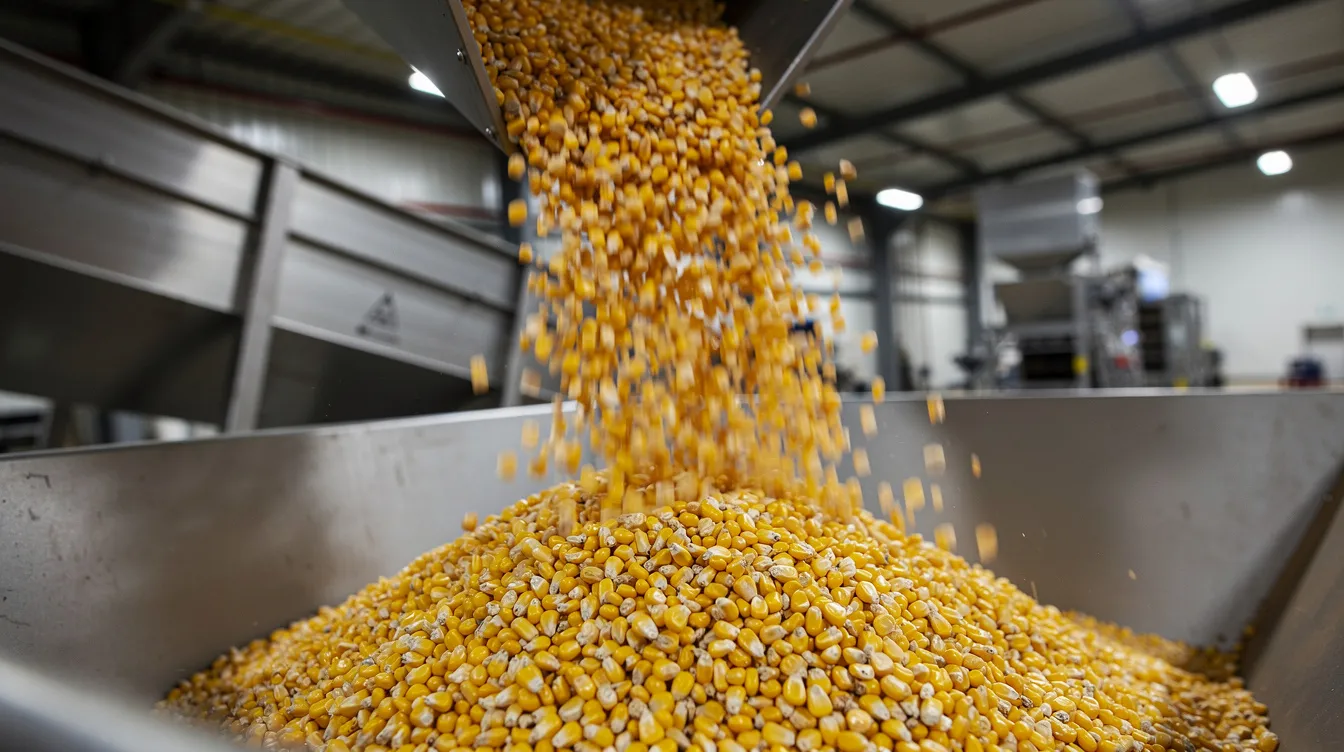
Maize Starch Plant Financial Projections and Working Capital
From a practicing CA’s perspective, integrated 5-7 year financial projections are essential for evaluating whether a maize starch manufacturing plant can sustain its debt obligations and deliver adequate returns. Financial models should project costs, revenues, and debt servicing capacity to ascertain project viability.
Key projection components include:
- Year-wise production data and capacity utilisation assumptions
- Maize starch and by-product sales revenue (projected separately)
- Raw material cost of maize and process inputs
- Manufacturing, utility, and employee expenses
- EBITDA, depreciation, interest, PBT, and PAT
- Projected Balance Sheet, Cash Flow Statement, and Profit & Loss
- DSCR and loan repayment schedule
- Break-even capacity utilisation
Working capital for a maize starch unit is influenced by maize stockholding (seasonal procurement often requires 30-60 days of inventory), finished starch holding, debtors (industrial buyers typically operate on 30-60 day credit), and creditor terms from maize suppliers. These factors determine the working capital gap and required bank limits.
Banks require CMA Data for sanctioning working capital, summarising projected current assets, current liabilities, and drawing power. CMA Data preparation services and financial projections and financial modelling form part of the advisory support Project Report Bank provides for maize starch projects. All projections are estimates based on assumptions; they should be internally consistent and transparent for lenders.
Maize Starch Plant Profitability, ROI, IRR and DSCR
The financial analysis for project viability includes capital costs, operating expenses, and revenue projections interpreted through several key financial indicators. Financial projections include capital investment and operating costs as the foundation for these metrics.
- Gross profit margins for corn starch production are typically reported at 20-30%, depending on maize procurement cost, starch recovery, and selling price.
- EBITDA margin reflects operating profitability before financing and depreciation charges.
- Net present value (NPV) discounts projected future cash flows to present value, helping assess whether the project creates value above the cost of capital.
- Expected ROI for corn starch plants ranges from 18% to 30%, with ROI for corn starch manufacturing expected within 3 to 4 years in well-planned projects.
- DSCR (Debt Service Coverage Ratio) measures cash available to service debt. Banks typically require DSCR above 1.25-1.5.
- Break-even capacity utilisation for native starch plants generally falls in the 40-60% range.
By-product monetization plays a crucial role in the profitability of maize starch manufacturing. Revenue from germ (for oil extraction), gluten meal (animal feed), fibre, and steep liquor can improve margins by 5-8 percentage points.
Sensitivity Analysis Scenarios:
| Parameter Change | Impact Area |
|---|---|
| 10% rise in maize purchase price | Reduces EBITDA margin, weakens DSCR |
| 5% lower starch recovery | Reduces output volume, raises per-unit cost |
| Lower capacity utilisation in Year 1-2 | Delays payback, stresses cash flow |
| Higher electricity/fuel tariffs | Increases operating costs in drying section |
| Delayed commissioning by 6 months | Increases interest during construction |
In a capital-intensive and working-capital-intensive maize processing project, even a financially attractive IRR can be undermined if cash-flow timing and working capital are not carefully planned in the DPR.
Maize Starch Plant Feasibility Study and Project Viability
A high-level feasibility report helps promoters evaluate whether to proceed to detailed DPR preparation, while a bankable DPR provides the granular financial and technical documentation required for lending decisions. Both serve distinct purposes at different stages.
Feasibility dimensions for a maize starch project:
- Technical: Manufacturing process reliability, technology selection, utility infrastructure, and efficient plant operations
- Market: Native starch demand from identified buyer segments, competitive landscape, pricing trends, and industry trends
- Financial: Project cost, margins, DSCR, IRR, and net present value analysis
- Operational: Manpower availability, procurement logistics, water and power reliability
- Environmental: Effluent treatment capacity, emission controls, and regulatory compliance
A structured project feasibility study helps refine capacity, product-mix decisions, location selection, and financing strategy before incurring large capital investment. Technological advancements in starch processing, market segmentation analysis, and production data from comparable plants feed into this assessment.
Licences, Registrations and Approvals for a Maize Starch Plant in India
Actual requirements depend on state, capacity, land zoning, and product grade. Promoters should verify specifics with local authorities and qualified technical consultants. Environmental compliance involves obtaining necessary regulatory approvals such as environmental clearances and factory licenses.
Typical registrations include:
- Business entity registration (Company, LLP, Partnership, Proprietorship)
- PAN, TAN, GST registration
- Factory licence under applicable state factory legislation
- State Pollution Control Board Consent to Establish and Consent to Operate
- Boiler registration (where steam boiler is installed)
- FSSAI licence (if starch is produced for food applications)
- Fire safety NOC and building plan sanction
- Water extraction permission where applicable
- IEC (Importer Exporter Code) for export of corn starch or by-products
- Product certifications (ISO, HACCP) as demanded by institutional buyers
The DPR should list regulatory assumptions and build compliance timelines into the project implementation schedule.
Government Schemes, Subsidies and Bank Finance Opportunities
Maize starch units fall under food processing and agro-based industry categories and may be eligible for central or state-level incentives. Types of support include capital subsidies for food processing or MSME units, interest subvention, SGST reimbursement, power-tariff concessions, and stamp-duty rebates, depending on prevailing state industrial policy.
Eligibility varies with enterprise size, project location (backward area, agro-processing cluster), investment amount, and whether the project qualifies under specific food processing policies. Subsidies are typically reimbursed after project implementation and commercial production, not disbursed upfront. Promoters should reference applicable schemes in the DPR but avoid building unrealistic subsidy assumptions into loan-repayment capacity calculations. Project funding strategy should clearly separate confirmed promoter equity and bank finance from uncertain incentive receipts.
How to Prepare a Bankable Maize Starch Manufacturing Plant DPR
A detailed project report for maize starch production should establish sufficient raw material availability and quality, demonstrate market demand, and present realistic financial projections. The project report should include detailed financial projections and risk assessments specific to maize price and recovery sensitivity.
Core DPR components:
- Promoter and company profile with relevant experience
- Project rationale, proposed capacity, and location
- Comprehensive market overview and marketing plan
- Detailed manufacturing process description and technology selection
- Machinery quotations from reputable vendors
- Land, building, and infrastructure specifications
- Raw material sourcing plan with seasonal procurement strategy
- Detailed project cost with supporting quotations
- Means of finance (equity, term loan, working capital)
- Working capital assessment linked to operating cycle
- 5-7 year financial projections (P&L, Balance Sheet, Cash Flow)
- DSCR, loan repayment schedule, break-even, ROI, IRR
- Sensitivity analysis on maize price, recovery, and utilisation
- Implementation schedule and regulatory compliance roadmap
- Supporting annexures: vendor quotations, mass balance, product specs, buyer MOUs
Banks examine project viability, promoter contribution, commercial assumptions, and repayment ability rather than relying on projected turnover alone. Bank finance DPR and loan proposal assistance strengthens the completeness of a financing proposal but does not guarantee bank approval.
Common Mistakes to Avoid When Setting Up a Maize Starch Plant
Technically sound maize starch projects can face financial stress when planning mistakes remain unaddressed:
- Selecting capacity without market assessment: Building a 200 TPD plant without confirmed buyers for even half the output creates idle capacity and cash-flow pressure.
- Assuming stable maize prices: Maize procurement costs fluctuate 15-25% between seasons. Financial models should test for rising demand and maize productivity variations.
- Relying on verbal recovery guarantees: Written OEM performance guarantees on starch recovery should be contractually documented before freezing the DPR.
- Ignoring water and ETP costs: Wet milling consumes large quantities of water. Underestimating treatment infrastructure creates both cost overruns and regulatory risk.
- Underestimating working capital: Seasonal maize procurement requires significant inventory financing. Receivables from industrial buyers add to the gap.
- Assuming high utilisation too early: Projecting 90% utilisation in Year 1 without contractual offtake creates a DSCR problem in early years.
- Neglecting by-product handling: Germ, gluten, and fibre must have identified buyers and logistics. Storing unmarketable by-products ties up space and capital.
- Treating subsidies as confirmed income: Building loan repayment schedules that depend on incentive disbursement is risky.
Corrective approach: conduct a pre-investment market study, obtain techno-commercial offers with written guarantees, prepare conservative projections with contingency buffers, and include by-product revenue as a separate validated line item.
How CA Manish Gugliya and Project Report Bank Assist Maize Starch Entrepreneurs
Through Project Report Bank, I assist entrepreneurs and project promoters planning maize starch and corn starch manufacturing plants with:
- Customised DPR preparation based on project-specific data
- Maize starch plant project cost estimation using current vendor quotations
- Financial projections and financial modelling with realistic assumptions
- CMA Data preparation for term loan and working capital sanction
- Working capital assessment and DSCR analysis
- Project feasibility and viability studies
- Means-of-finance planning and loan-structuring advisory
- Guidance on responding to bank queries during loan appraisal
I am based in Ratlam, Madhya Pradesh, and provide online advisory services across India through email, WhatsApp, and video consultations. All work is customised based on project-specific assumptions. No guarantee is offered regarding bank sanction or future profitability.
If you are planning a maize starch manufacturing project, share your proposed capacity (TPD), location, approximate investment, and financing requirements through ProjectReportBank.com or WhatsApp for an initial discussion.
Frequently Asked Questions – Maize Starch Manufacturing Plant
What is the minimum practical capacity for a competitive maize starch plant in India?
Most industry participants operate at 100 TPD maize input or above to achieve viable economies of scale on equipment, utilities, and logistics. Below 50 TPD, per-unit costs for steam, power, and effluent treatment tend to reduce margins to levels that make debt servicing difficult. The plant will produce native corn starch and derivatives like maltodextrin only if additional processing sections are installed.
How does a native maize starch plant differ from an integrated wet milling complex?
A native starch plant focuses on extracting and drying unmodified starch from maize, along with by-products. An integrated complex adds downstream processing for liquid glucose, dextrose, high fructose corn syrup, or modified starches through chemical modification or enzymatic conversion. The integrated complex requires additional reactors, evaporators, crystallisers, and typically 2-3x the capital investment of a starch-only plant.
How long does it take to implement a maize starch manufacturing plant?
For a 100-150 TPD plant, realistic implementation from completed DPR to commissioning takes 18-30 months, including land acquisition, regulatory approvals, civil construction, machinery procurement and installation, and trial runs.
Can an existing flour mill or food unit diversify into maize starch manufacturing?
The wet milling process for starch extraction is fundamentally different from dry milling used in flour production. Diversification requires purpose-built starch processing equipment (steeping tanks, hydrocyclones, centrifuges, flash dryers), separate utility infrastructure, ETP, and additional working capital. A detailed feasibility study is required to assess whether the existing site, utilities, and financial capacity support this expansion.
Is an investor-ready DPR available through Project Report Bank for maize starch projects?
Yes. Project Report Bank prepares investor-ready DPRs that include business valuation, financial modelling, and growth-scenario analysis tailored for equity investors and funding discussions, in addition to bank-finance DPRs focused on DSCR, CMA Data, and loan repayment capacity.
Conclusion – Planning a Financially Viable Maize Starch Manufacturing Plant
Maize starch manufacturing is a technically established but capital-intensive and working-capital-intensive agro-processing business. Success depends on appropriate manufacturing technology, efficient raw material sourcing, realistic production and recovery assumptions, reliable institutional market demand, effective by-product utilisation, and disciplined financial planning.
A professionally prepared, customised maize starch manufacturing plant project report helps promoters evaluate project economics with transparency, identify risks before committing capital, and present a credible case to banks and investors. The DPR is not a formality; it is the financial roadmap for the proposed investment.
Planning to establish or expand a maize starch or corn starch manufacturing plant in India? Connect with CA Manish Gugliya through ProjectReportBank.com for customised DPR preparation, financial projections, CMA Data, project feasibility analysis, and bank finance proposal assistance. Share your proposed capacity, investment, and location through WhatsApp to discuss your requirements.