Key Takeaways
- A comprehensive Poha Plant Feasibility Analysis depends on installed capacity, raw material cost, selling price, operating efficiency and financing structure – not on a single projected profit figure.
- A bankable detailed project report for a Poha manufacturing plant must analyse ROI, IRR, payback period, debt service coverage ratio, break-even point, profitability and cash flow across at least 5–7 years of projections.
- Poha (flattened rice or beaten rice) units in India can be financially attractive – India’s poha market size exceeds ₹8,500 crore annually and is growing at 12% year-on-year – but actual Poha Plant ROI Analysis and IRR depend entirely on project-specific assumptions that must be stress-tested through rigorous sensitivity analysis.
- Banks and investors focus heavily on DSCR, loan repayment capacity, realistic capacity utilisation ramp-up and properly structured term loans when judging Poha Plant Project Viability.
- ProjectReportBank.com, led by CA Manish Gugliya, prepares customised DPRs, CMA data and financial projections tailored to each Poha processing plant’s capacity, product mix, location and financing plan.
Introduction to Poha Plant Financial Feasibility
A Poha Plant Feasibility Analysis answers one fundamental question: will this project generate enough revenue, profit and cash flow to justify the investment and comfortably repay its debt? Technical viability – owning the right machinery, understanding the manufacturing process, sourcing raw paddy – is only one half of the equation. The other half is commercial and financial viability.
Poha, also known as flattened rice, beaten rice or roasted rice flakes, is a staple vegetable food across central and western India and an important segment of the food processing industry. It is naturally gluten free, has a long shelf life and appeals to health-conscious consumers seeking convenient, ready-to-eat food options. Demand for poha is influenced by urbanization and the increasing preference for such options, with branded packaged poha steadily replacing loose commodity sales. The poha market in India is valued at over ₹8,500 crore annually, making it a meaningful space for investment opportunities.
Yet market potential alone does not make a project bankable. From a project appraisal perspective, the DPR must demonstrate adequate revenue, operating profit, cash accrual, debt servicing capacity and return on promoter investment. The core tools for this assessment are ROI, IRR, payback period, DSCR, break-even analysis, cash-flow projections and sensitivity analysis – each revealing a different dimension of the project’s financial health.
A bankable Poha Plant project report must include financial projections for at least 5–7 years, supported by realistic assumptions grounded in local market research, not copy-paste numbers from generic reports found online. Establishing a poha manufacturing plant is a viable agro-based business venture, but only when these financial disciplines are applied rigorously.
What Determines the Feasibility of a Poha Processing Plant?
Multiple technical and financial drivers together determine whether a Poha manufacturing unit will be commercially successful. These drivers form the backbone of any detailed project report and must be customised to the specific plant location, whether that is Madhya Pradesh, Maharashtra, Chhattisgarh, Odisha or any other state.
Before performing break-even analysis, DSCR computation or Poha Plant IRR Calculation, realistic assumptions for each of the following factors are essential:
- Installed production capacity and daily production capacity
- Capacity utilisation ramp-up over initial years
- Raw material availability and paddy procurement strategy
- Product realisation and selling price across channels
- Operating costs including raw materials, fuel expenses, labour, packing material cost and administration expenses
- Capital expenditure on land, building, machinery and fixed assets
- Financing structure covering equity, term loan and working capital
Installed Production Capacity
Installed capacity – whether 500 kg/day, 2 TPD or 5 TPD of finished Poha – directly influences total project cost, machinery size, land required and the plant layout. A typical poha manufacturing plant requires a minimum space of 2,000 to 3,000 sq. ft. Higher capacity typically reduces per-kg fixed cost due to better absorption but demands higher investment, stronger market access and proven distribution strength.
Banks routinely compare proposed capacity with promoter experience, local market demand and raw material availability when judging project feasibility. To determine the appropriate capacity of a Poha plant, promoters should align production capacity with realistic sales projections rather than aspirational figures.
Capacity Utilisation
Capacity utilisation is the percentage of installed capacity that the plant actually uses. In practice, most Poha units start at around 60% utilisation in Year 1, rising to 70–75% in Year 2 and stabilising at 80–85% or higher in subsequent years.
Assuming 100% utilisation from the first year in a DPR is a red flag during bank appraisal. Both ROI and DSCR are highly sensitive to utilisation assumptions and should be tested at multiple levels during Poha Plant Sensitivity Analysis. A 500 kg/day poha unit produces approximately 13 tonnes monthly at full capacity – but reaching that level takes time, market development and working capital strength.
Raw Material Availability
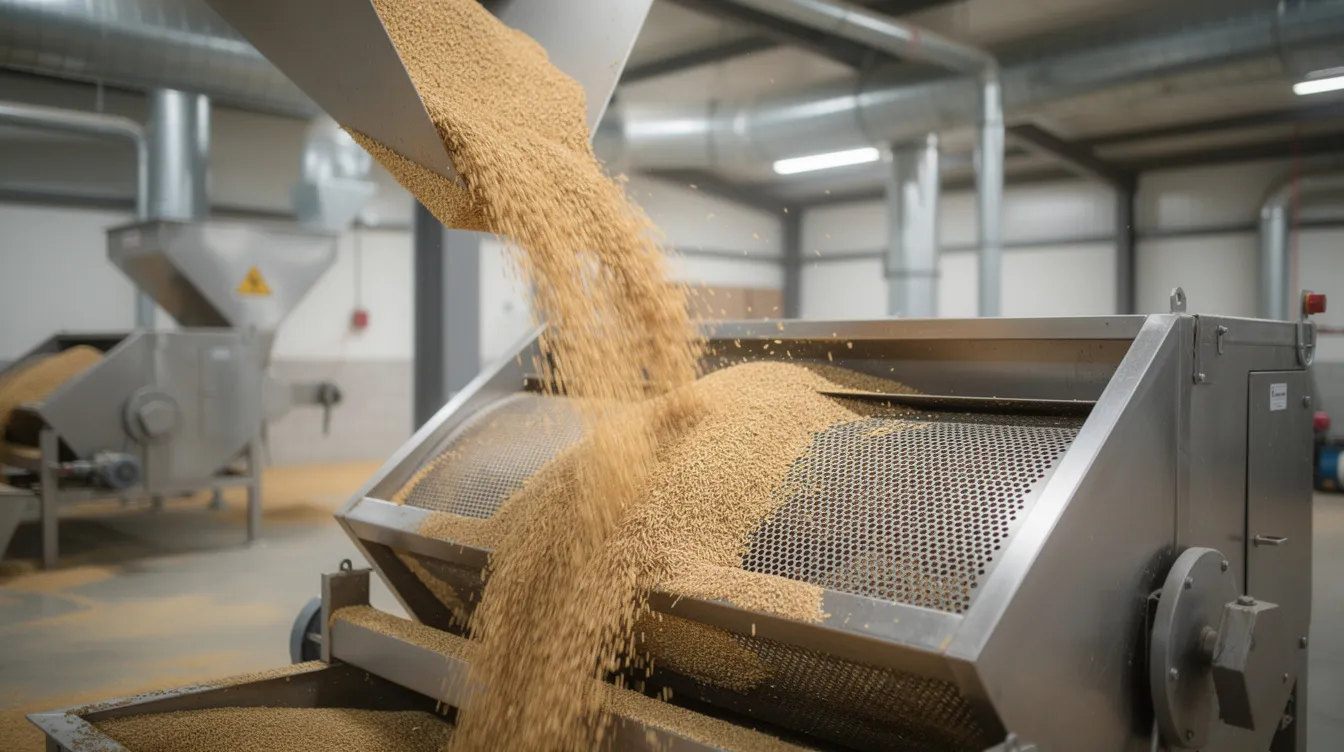
Assured paddy availability near the plant is critical. Paddy procurement typically peaks during October–February, and poha quality depends on the variety of paddy used, specifically those with high starch yields. Common short-grain varieties like IR36 and IR64 are preferred, and the typical conversion ratio is about 70–75 kg of finished Poha per 100 kg of raw paddy. Proximity to major rice-producing belts reduces transportation costs for raw materials significantly.
Efficient management of paddy sourcing and by-product recovery improves operational viability. Sharp volatility in paddy prices can materially alter Poha Plant Financial Feasibility, making it essential to address procurement risk through raw material planning for a Poha manufacturing unit.
Product Realisation and Selling Price
Selling price depends on product grade (thin, medium, thick – where flake thickness matters for consumer preference), packaging format (loose vs branded retail packs) and target sales channel. Market selling prices for poha range from ₹25–40 per kg, with branded retail commanding the upper end but requiring higher marketing and packing costs.
Selling price assumptions must be based on local market study and competitor analysis, not arbitrary premium pricing. These assumptions directly drive revenue assumptions and product mix for a Poha plant as well as break-even estimates and ROI.
Operating Costs
Key operating cost heads in a Poha manufacturing unit include:
- Raw paddy (typically 55–65% of total cost)
- Fuel and power for boiler, roasting and drying operations
- Direct labour and human resources
- Packing material cost and packaging line expenses
- Repairs and maintenance
- Quality control and administration expenses
- Selling and distribution charges (charges selling)
Even a small percentage increase in raw material cost can significantly reduce profitability and DSCR. Accurate unit cost per kg of Poha is crucial for reliable profitability analysis and competitive pricing. For a deeper understanding, explore Poha manufacturing cost of production.
Capital Investment
Major capital cost components include land, building, plant and machinery, electrical installations, utilities (boiler, fixtures pre operative expenses), contingencies and margin for working capital.
For a semi-automatic manufacturing plant, total investment for a poha mill may range between ₹25 lakh and ₹140 lakh depending on scale, automation level and location. A 500 kg/day poha setup costs approximately ₹5–10 lakh for machinery alone. Key equipment required includes:
- De-stoner and aspirator: ₹30,000 to ₹60,000
- Flaking mill with rollers: ₹2 lakh to ₹4 lakh
- Rotary roasting drum: ₹1 lakh to ₹2 lakh
- Soaking tanks: ₹25,000 to ₹50,000
Total project cost forms the base for ROI, IRR, payback period and capital intensity comparisons. Detailed machinery estimates are available through resources like Poha Plant Machinery and Equipment Cost and infrastructure requirements for a Poha processing unit.
Financing Structure
Means of finance typically comprise promoter’s equity contribution (share capital), term loan from a bank and working capital limits for inventory and receivables. Government subsidies under schemes like PMFME can support the initial capital investment in micro food-processing businesses, offering up to 35% capital subsidy for eligible units.
Poha Plant Term Loan Viability depends on an appropriate debt equity ratio, reasonable repayment tenure and competitive interest rates. For guidance on structuring your project cost and financing structure of a Poha plant, or on financing a Poha processing plant through bank loan, tailored advisory is strongly recommended.
Understanding ROI in a Poha Plant
Return on Investment tells you, in percentage terms, how much annual return your Poha project generates relative to the money invested. The basic formula:
ROI = (Annual Return ÷ Total Investment) × 100
In a Poha Plant ROI Analysis, “annual return” could mean net profit after tax, profit before tax or cash accrual (net profit + depreciation). “Investment” could mean total project cost or just the promoter’s equity. Each version tells a different story:
- ROI on total project cost assesses project viability regardless of how it is financed
- ROI on equity measures returns specifically to the promoter
A bankable DPR must clearly disclose which definition is used. ROI is a snapshot ratio – it must be interpreted jointly with IRR, payback period, DSCR and sensitivity results for a comprehensive Poha Plant Financial Analysis.
Illustrative Poha Plant ROI Calculation
Consider a hypothetical semi-automatic Poha plant with 750 kg/day capacity. These numbers are strictly illustrative:
- Total project cost: ₹22 lakh
- Year 1 net profit after tax: ₹4.2 lakh (at ~60% capacity utilisation)
- Year 5 net profit after tax: ₹15.4 lakh (at ~95% utilisation)
Year 1 ROI = (₹4.2 lakh ÷ ₹22 lakh) × 100 = ~19%
Year 5 ROI = (₹15.4 lakh ÷ ₹22 lakh) × 100 = ~70%
Notice how ROI improves dramatically as capacity utilisation ramps up. Conversely, if paddy procurement price rises by 10% without a corresponding selling price adjustment, the margin per kg compresses and ROI drops even if sales volume remains constant.
The average gross profit margin for poha production typically ranges between 15% to 22%, but gross contribution in poha manufacturing is ₹5–15 per kg depending on procurement efficiency and product mix. Your own Poha Manufacturing Business ROI should be modelled through customised projections using realistic local market data, not generic benchmarks.
Understanding IRR for a Poha Manufacturing Project
Internal Rate of Return is the discount rate at which the Net Present Value of a Poha plant’s projected cash flows over its economic life equals zero. Unlike simple ROI, IRR considers the timing of cash flows over 7–10 years, making it highly relevant for capital-intensive, long-term investment decisions.
Poha Plant IRR Calculation is generally performed using spreadsheet tools (Excel’s IRR or XIRR functions) rather than manual trial and error. The cash flows typically include:
- Initial capital outlay (negative)
- Yearly net cash accrual after tax (positive)
- Terminal or salvage value of machinery at project end
If the Poha project’s IRR is comfortably higher than the cost of capital and the bank’s lending rate, it signals attractive long-term returns – subject to risk assessment and market conditions.
How IRR Is Interpreted for a Poha Plant
IRR should be compared against benchmarks such as the weighted average cost of capital, alternative investment opportunities and the risk profile of the poha manufacturing industry. In food processing projects focused on grain and cereals, an IRR of 15–25% is generally considered acceptable. Data from integrated Poha/Murmura lines under government cluster programmes suggest IRRs around 19% under favourable conditions.
A critical distinction exists between Project IRR (evaluating total project investment before financing) and Equity IRR (evaluating returns only to equity holders after debt service). Banks primarily focus on Project IRR and DSCR, while private investors may prioritise Equity IRR.
A robust feasibility study should present IRR under base, optimistic and conservative scenarios – not just a single figure.
Payback Period of a Poha Processing Plant
Payback period is the time required for cumulative net cash inflows to recover the initial investment. The simplified formula:
Payback Period = Initial Investment ÷ Annual Cash Inflow
In practice, cumulative yearly cash flow analysis is used when inflows are uneven across years. The typical payback period for a poha manufacturing plant is estimated to be between 3 and 5 years, though this can extend to 4–6 years depending on scale, product mix and market conditions.
For example, a Poha plant with ₹22 lakh total project cost generating average annual cash accrual of ₹6 lakh would show an approximate Poha Plant Payback Period of about 3.7 years – clearly illustrative only. Payback ignores cash flows beyond the recovery point and does not consider time value of money, so it should always be read alongside IRR and DSCR.
Factors Affecting Poha Plant Payback Period
Several factors can lengthen or shorten payback:
- Higher total project cost and capital expenditure extend payback
- Better gross margins per kg (through efficient procurement and premium pricing) shorten it
- Faster capacity utilisation ramp-up brings cash flows forward
- Heavy debt servicing in early years delays cash recovery
- Higher working capital requirements lock up funds
During Poha Plant Financial Analysis, promoters should test payback under conservative utilisation and pricing assumptions to understand downside risk. Structured financial models, such as those available through detailed financial projections for a Poha project, ensure these calculations are realistic and internally consistent.
Break-Even Analysis for a Poha Manufacturing Unit
Break-even analysis identifies the sales volume or capacity utilisation at which total revenue equals total cost – resulting in zero profit or loss. In a Poha plant:
- Fixed costs include salaries, rent, interest, depreciation on fixed assets
- Variable costs include paddy, fuel, packing material, variable labour
The formula:
Break-Even Quantity (kg) = Fixed Costs ÷ (Selling Price per kg − Variable Cost per kg)
Break-even capacity utilisation = Break-Even Quantity ÷ Installed Capacity. For many Poha units, break-even is achieved at approximately 48–55% of installed capacity – meaning commercial production becomes profitable once the plant consistently operates above that level.
A project operating close to its break-even capacity is highly vulnerable to market or cost fluctuations. For worked examples, refer to the profitability and break-even analysis of a Poha plant.
DSCR and Loan Repayment Capacity of a Poha Plant
The Debt Service Coverage Ratio is perhaps the most scrutinised metric in bank appraisal:
DSCR = Cash Available for Debt Service ÷ Total Debt Service (Interest + Principal)
Cash available for debt service is typically computed as net profit after tax + depreciation + interest on term loan. In a bankable DPR, DSCR is calculated year-wise over the entire loan tenure.
Using empirical data from a 750 kg/day semi-auto unit with a ₹22 lakh project cost, DSCR improved from approximately 1.36 in Year 1 to around 3.30 by Year 5 as utilisation ramped up. While lenders generally prefer DSCR comfortably above 1 in most years, acceptable thresholds vary by bank, scheme and collateral strength.
For further detail on how banks evaluate Poha project loan repayment capacity, a dedicated resource is available on ProjectReportBank.com.
Sensitivity Analysis of a Poha Plant
Sensitivity analysis checks how Poha Plant Financial Feasibility changes when key assumptions move unfavourably. It is a crucial component of a robust DPR because real-life performance rarely follows a single base-case projection.
Poha Plant Sensitivity Analysis should track the impact on profitability, cash accrual, DSCR, IRR, payback period and break-even utilisation under different stress scenarios. From a project appraisal perspective, banks and investors gain confidence when the project remains viable even after reasonable adverse changes in major variables.
Sensitivity to Raw Material (Paddy) Cost
Paddy is the largest cost component in poha manufacturing, often contributing 60–70% of total cost of production. Paddy procurement price volatility impacts the overall profitability of a poha manufacturing plant directly.
Consider three illustrative scenarios (base paddy price ₹22/kg):
| Scenario | Paddy Price | Impact on Gross Margin per kg | DSCR Trend |
|---|---|---|---|
| Base Case | ₹22/kg | Normal | Adequate |
| Moderate Increase (+5%) | ₹23.10/kg | Margin compressed ~₹0.80/kg | Slightly reduced |
| Higher Increase (+10%) | ₹24.20/kg | Margin compressed ~₹1.60/kg | Under pressure in early years |
A professional feasibility study should back paddy cost assumptions with historical mandi price data and a clear procurement strategy.
Sensitivity to Poha Selling Price / Realisation
A reduction in selling price per kg – even ₹1–2/kg due to competition or market discounting – directly reduces contribution margin. For a plant selling 300 tonnes annually, a ₹2/kg drop translates to ₹6 lakh less annual revenue, which can meaningfully affect EBITDA and IRR.
Branded, value-added products generally enjoy more stable realisation compared to commodity-grade loose Poha sold through a rice mill or wholesale channel, though they carry higher marketing and packing costs. Both price increase and decrease scenarios should be modelled in any robust sensitivity analysis.
Sensitivity to Capacity Utilisation
Lower-than-expected utilisation increases per-unit fixed cost and can erode margins severely, especially in initial years when market access and distribution are still developing. This is often the most critical sensitivity for new entrepreneurs.
Consider the impact on a hypothetical 3 TPD unit:
| Utilisation | Annual Output | Revenue (at ₹35/kg) | Fixed Cost per kg | Viability |
|---|---|---|---|---|
| 60% | ~540 tonnes | ~₹189 lakh | Higher | Marginal |
| 75% | ~675 tonnes | ~₹236 lakh | Moderate | Comfortable |
| 90% | ~810 tonnes | ~₹284 lakh | Lower | Strong |
Market demand assessment is crucial for establishing realistic ramp-up timelines. Industry trends suggest that poha is a staple food across central and western India with growing demand, but local conditions always vary.
Sensitivity to Fuel and Power Cost
Poha plants using biomass, LPG or other fuels for steaming and roasting are exposed to energy price fluctuations. While fuel expenses may be a smaller component than paddy (typically 5–10% of production cost), sustained increases in boiler fuel or electricity tariffs noticeably impact margins.
Energy-efficiency measures – proper boiler sizing, efficient roasting equipment and utilities and manpower planning for a Poha plant – serve as practical risk-mitigation strategies.
Sensitivity to Interest Rate and Financing Terms
Changes in interest rates or tighter repayment schedules affect interest expense, profit after interest and DSCR. For example, a 1–2% increase in interest rate on a ₹50 lakh term loan adds ₹50,000–₹1,00,000 to annual financial charges, directly reducing cash accrual and DSCR – particularly in early years.
Sensitivity to interest rate is relevant because borrowing costs can move over time and refinance options may not always be available.
Combined Stress Scenario
Professional feasibility analysis must test combined shocks, not just one variable at a time. In practice, paddy prices can rise while selling prices soften and utilisation lags simultaneously.
An illustrative combined stress scenario might involve:
- Paddy price: +7% above base
- Selling price: −5% below base
- Capacity utilisation: 65% instead of projected 80%
- Interest rate: +1% above base
Under such conditions, IRR may drop from, say, 19% to under 12%, payback extends by 1–2 years and DSCR in early years may hover near bank acceptability thresholds. If the project remains viable – even with reduced returns – it signals resilience and gives lenders confidence.

Base, Optimistic, Conservative and Stress Case Scenarios
A bankable Poha Plant Project Report DPR should present at least three to four scenarios with clear assumptions. Each scenario uses consistent but varied inputs on capacity utilisation, selling price, paddy cost, operating efficiency and interest rate, yielding different outcomes for profitability ratios, DSCR, IRR and payback.
Promoters can use these scenarios to decide their acceptable risk level and whether the range of outcomes meets their minimum return expectations. Banks review these scenarios to understand project resilience before sanctioning term loans.
Illustrative Scenario Comparison Table (ROI, IRR, DSCR, Payback)
The following table is purely illustrative and does not represent industry benchmarks. Actual results depend on location, scale, execution and market conditions.
| Scenario | Capacity Utilisation | Paddy Cost | Avg. Selling Price | Net Profit Margin | DSCR (Avg.) | IRR | Payback |
|---|---|---|---|---|---|---|---|
| Optimistic | 85–90% | ₹20/kg | ₹38/kg | ~18–22% | ~2.5+ | ~22–25% | ~3 years |
| Base Case | 75–80% | ₹22/kg | ₹35/kg | ~14–17% | ~1.8–2.2 | ~17–19% | ~4 years |
| Conservative | 65–70% | ₹24/kg | ₹32/kg | ~8–11% | ~1.3–1.5 | ~12–14% | ~5–6 years |
| Stress Case | 55–60% | ₹25/kg | ₹30/kg | ~3–6% | ~1.0–1.2 | ~8–10% | ~6–7 years |
Notice how relatively small changes in paddy cost (₹20 vs ₹25/kg) and selling price (₹38 vs ₹30/kg) translate into significant shifts in DSCR and IRR. This table reinforces why Poha Plant Sensitivity Analysis is indispensable in any serious project report and why project financials must be stress-tested before committing capital.
How Banks Evaluate Poha Plant Feasibility
From a practising Chartered Accountant’s perspective, here is what banks typically examine during Poha Plant Bank Loan Feasibility assessment:
- Promoter profile: Experience in poha manufacturing businesses or related industrial activity, creditworthiness, financial track record
- Project cost and means of finance: Detailed breakdown of capital expenditure, working capital margin, promoter contribution (typically 10–20% equity)
- DSCR and profitability: Year-wise DSCR projections, break-even capacity utilisation, projected net profit and cash accrual
- Market and raw material risk: Demand assessment, competition, paddy availability in the catchment area, industry trends in the food processing industry
- Security and collateral: Land, building, machinery and other total assets offered as security
- Documentation: Quotations for equipment required, land documents, projected balance sheet, profit and loss, and cash flow statements
FSSAI registration is mandatory for food manufacturing units. Udyam registration is required for MSME classification. GST registration is necessary for turnover above ₹40 lakh. A trade license is required from local authorities for manufacturing, and Pollution Control Board approval is needed based on local norms. Banks verify these compliance requirements as part of appraisal.
A professionally-prepared Poha Processing Plant project report connecting technical assumptions with financial projections significantly improves credibility during credit appraisal.
How Investors and Promoters Evaluate Poha Manufacturing Business Returns
Equity investors and promoters look beyond debt repayment capacity. Their focus areas include:
- Return on equity and Equity IRR
- EBITDA margin and free cash flow generation
- Scalability – can the plant expand capacity or add value-added products?
- Market opportunity – poha is a staple with growing demand; the market is growing at 12% year-on-year
- Operating margins and gross profit trends
Health benefits of poha as a naturally gluten free product appeal to health-conscious consumers, creating brand-building opportunities. Investors often stress-test downside scenarios more aggressively because their returns are residual and riskier than a lender’s interest income.
A robust Poha Plant Financial Analysis with clear IRR and sensitivity outputs is essential before negotiating equity deals or committing personal capital.
Common Mistakes in Poha Plant Feasibility Reports
Based on experience preparing DPRs across the industrial world of food processing, here are errors that frequently undermine Poha feasibility reports:
- Assuming 100% capacity utilisation from the first year
- Underestimating working capital needs for paddy inventory and receivables
- Ignoring seasonal paddy price spikes and procurement challenges
- Using unrealistic selling prices disconnected from local market conditions
- Ignoring process wastage – broken flakes, cleaning losses and grading rejects during the process flow can reduce yields
- Omitting packing material cost, administration expenses and selling distribution overheads
- Applying incorrect depreciation rates to fixed assets
- Failing to include interest during construction period
- Presenting IRR without underlying cash-flow assumptions
- Conducting no sensitivity analysis or break even analysis at all
- Using generic DPR figures copied from the internet without customisation
Proper equipment selection, processing technology, and facility layout are essential for the efficient production of poha – and these technical details must flow coherently into the project financials.
Role of a Detailed Project Report (DPR) in Poha Plant Feasibility Assessment
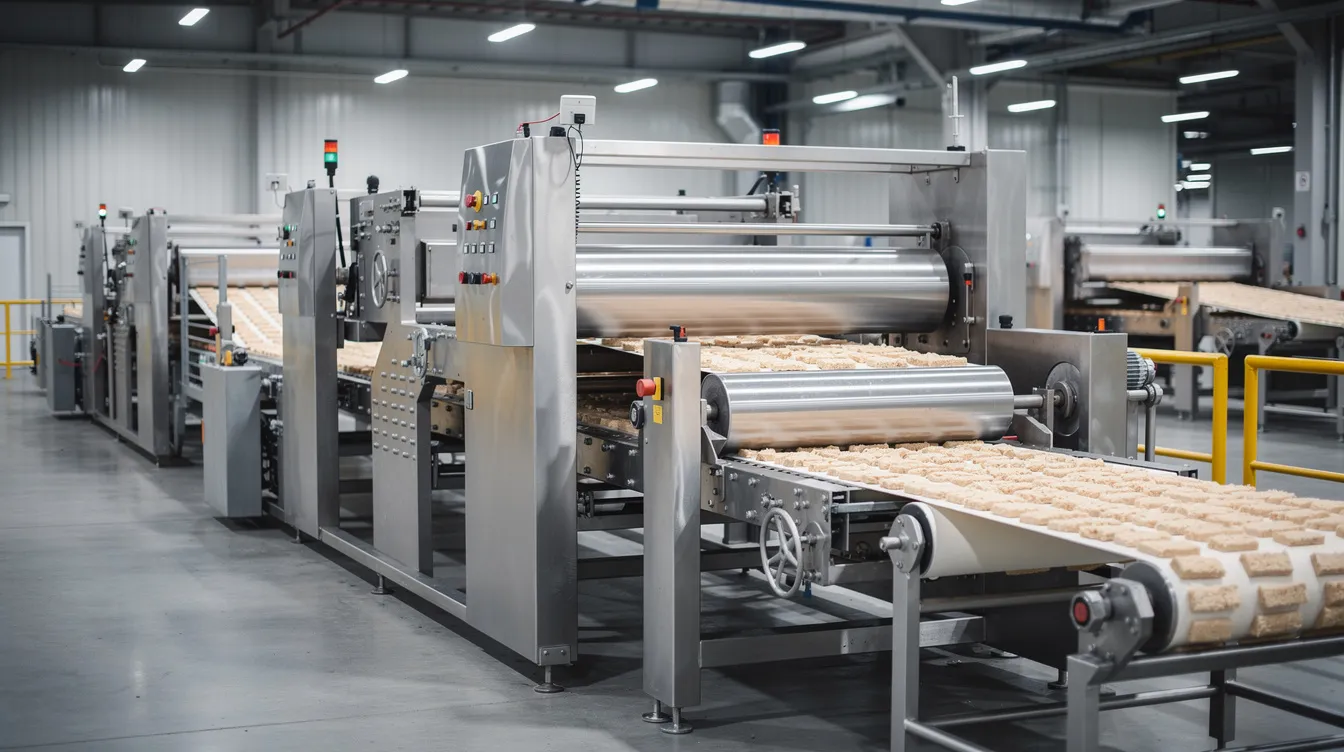
A DPR is a comprehensive document combining technical details, market study, production planning and financial projections for a proposed Poha manufacturing plant. Poha production involves cleaning, soaking, roasting, and flaking paddy – the Poha manufacturing process and process flow chart must connect seamlessly to cost and revenue projections.
Key financial components include:
- Projected Profit and Loss accounts and balance sheet for 5–7 years
- Cash Flow Statements
- Break-even analysis and profitability ratios
- ROI, IRR and projected pay back period computations
- DSCR and debt servicing schedules
- Working capital assessment
From a bank’s perspective, the Poha Plant DPR for Bank Loan is the primary basis for credit appraisal. Resources such as Poha Plant Financial Projections for DPR and Poha plant working capital requirement offer deeper guidance on structuring these components.
Quality control during production, including inline checks, is vital to avoid defects in the final product. This operational discipline directly affects rejection rates, yield and ultimately the financial performance captured in the DPR.
Practical Steps to Prepare a Bankable Poha Plant Financial Model
A logical step-by-step approach for building a Poha plant financial model:
- Define installed capacity and daily production capacity based on market demand and available investment
- Estimate production and sales volumes with realistic ramp-up (e.g., 60% → 75% → 85% over three years)
- Fix selling prices by channel based on local market research – a poha mill can start with ₹5–10 lakh investment at small scale but pricing must reflect local competitive realities
- Compute raw material cost using current mandi prices and procurement strategy – paddy prices fluctuate between ₹18–28/kg depending on variety and season
- Build operating cost schedules covering all heads: paddy, fuel, labour, packing, repairs, overheads
- Finalise total project cost including land, building, machinery, pre-operative expenses and contingencies
- Structure means of finance – equity, term loan, working capital, any applicable subsidies
- Prepare 5–7 year projected Profit and Loss, Cash Flow and Balance Sheet, ensuring they reconcile with each other
- Calculate DSCR, ROI, IRR, payback period and break-even
- Run sensitivity and scenario analysis across key variables
A poha mill requires ₹5–10 lakh for machinery at the small scale end, while monthly production capacity of a 500 kg/day unit is approximately 13 tonnes. These parameters must be accurately reflected in the business plan and financial model.
Professional Support from ProjectReportBank.com and CA Manish Gugliya
ProjectReportBank.com is a specialist platform for MSME DPRs, including Poha Plant Financial Feasibility Reports, backed by the professional expertise of CA Manish Gugliya. Services include:
- Detailed project report preparation for Poha processing units
- Customised financial projections and CMA data
- DSCR analysis and break-even calculations
- ROI and IRR assessment under multiple scenarios
- Term loan assessment and working capital evaluation
While professional support significantly improves the quality and credibility of a DPR, final loan approval always remains subject to each bank’s policies, documentation checks and credit committee decisions. Interested entrepreneurs may review resources such as Poha Plant Project Cost and Means of Finance on ProjectReportBank.com before finalising their investment decision.
NIIR Project Consultancy Services and similar organisations also provide industry research and business opportunities in the food processing space, though customised financial modelling remains essential for bankable DPRs.

FAQs – Poha Plant Feasibility, Returns and Bank Appraisal
Is a Poha processing plant profitable in India?
Poha plants can be profitable where there is good access to paddy, stable market demand and efficient operations. Poha is a staple across central and western India with a market exceeding ₹8,500 crore, and proximity to major rice-producing belts in rural areas reduces raw material cost considerably.
However, actual margins depend on procurement practices, selling price realisation, plant efficiency and capacity utilisation. Profitability also hinges on controlling costs of fuel, power, packing and labour, and on managing wastage of broken flakes and rejection rates. Realistic profitability estimates should always be developed through a customised DPR rather than relying on generic margins. Parboiled rice processing for Poha from reliable sources of paddy supply is foundational to sustained profitability.
How is ROI calculated for a Poha plant in practice?
In practical DPRs, ROI is computed as average annual net profit (or cash accrual) over a specific period divided by total project cost or promoter’s equity, multiplied by 100. Some promoters prefer ROI based on cash accrual because it better reflects cash available for reinvestment.
Each Poha project report should clearly state which version of “return” is being used and over which time horizon. ROI alone should not drive investment decisions – it must be read alongside IRR, payback, DSCR and sensitivity outcomes. A total lab of financial metrics provides a far more reliable picture than any single ratio.
What financial projections are normally required in a Poha plant DPR for bank finance?
Banks typically expect at least 5 years of projected financial statements: Profit and Loss account, Cash Flow Statement and projected balance sheet. Detailed schedules should cover production volumes, sales realisation, raw material consumption, operating expenses (including fuel expenses, packing material cost and administration expenses), term loan amortisation, interest costs and working capital requirements.
Key ratios including DSCR, break-even point, net margin, ROI and IRR are normally summarised in the DPR. Banks also look for consistency between technical assumptions (capacity, commercial production timeline) and financial numbers.
What happens to project viability if paddy prices rise sharply or capacity utilisation remains low?
Significant increases in paddy price compress contribution margin per kg and can quickly erode profitability and DSCR. Low capacity utilisation increases per-unit fixed cost, potentially leading to negative net profit, delayed payback and weaker cash flows.
A robust sensitivity analysis in the DPR should test these scenarios before investment. Banks also review stress scenarios during credit appraisal, assessing how the project would perform under adverse conditions across the food habits and industrial activity landscape of the target region.
Can a single generic feasibility report be used for every Poha plant?
Using a single generic feasibility report for all Poha plants is risky and can mislead both promoters and banks. Key drivers like raw material cost, labour rates, land required, selling prices and food processing industry dynamics vary significantly by location and scale of operations.
Financing structure, term loan amount, interest rates and working capital margin also differ across borrowers. Each proposed Poha manufacturing unit should have its own customised detailed project report reflecting local market data, capacity, process configuration and promoter-specific financing plan. ProjectReportBank.com and CA Manish Gugliya specialise in preparing such tailored reports for project feasibility assessment.
Conclusion – Interpreting Poha Plant Feasibility Holistically
A Poha processing plant must be evaluated not only on projected profits but on its overall financial strength – cash flows, DSCR, payback period, ROI, IRR and resilience to adverse assumptions. The Poha Plant Feasibility Analysis is a structured exercise requiring realistic assumptions on capacity, paddy cost, selling price, operating efficiency, working capital and financing terms.
Before investing substantial capital or approaching a bank, promoters should insist on a comprehensive, scenario-based financial feasibility study with clear documentation, transparent assumptions and rigorous stress testing. No single ratio determines viability – the project must demonstrate sustainable profitability, positive operating cash flows, reasonable break-even capacity, adequate debt servicing capability and manageable risk.
As a practising Chartered Accountant, my consistent advice to entrepreneurs considering poha manufacturing is straightforward: invest in a carefully-prepared DPR with sensitivity-tested financial models before committing resources. It is the most responsible foundation for sound decision-making in this space.