
Key Takeaways
- Value-added dairy plant project cost for an industrial-scale unit (10,000 to 50,000 LPD) in India typically ranges from ₹5 crore to ₹50 crore depending on capacity, product mix, technology, automation and location. A machinery quotation alone does not represent total project cost.
- Total project cost includes land and site development, building and civil work, plant and machinery, utilities and refrigeration, cold storage, electrical installations, laboratory and QC, preliminary and pre-operative expenses, contingency and working capital margin.
- Means of finance (sources of funds) is distinct from project cost (application of funds). The standard equation is: Total Project Cost = Promoter Contribution + Term Loan + Other Eligible Sources.
- Banks typically expect promoter contribution of 30 to 40 percent of total project cost for greenfield dairy projects, with term loan covering the balance of fixed assets. Working capital is assessed and financed separately.
- CA Manish Gugliya, FCA, DISA (ICAI), is a practising Chartered Accountant and project finance consultant who prepares bankable value-added dairy plant project reports, DPRs, CMA Data, financial projections and bank finance proposals for industrial dairy projects across India.
Introduction: Why Correct Value-Added Dairy Plant Project Costing Matters
India’s dairy industry grows at 4 percent annually, outpacing global rates. The Indian dairy industry accounts for 35 percent of total milk production being processed, and exports of dairy products have grown at 25 percent annually since 2001. Popular dairy products like paneer, ghee, yogurt, curd, flavoured milk and cheese are driving entrepreneurs to invest in value-added dairy processing plants rather than basic liquid milk units.
Estimating the cost of a value-added dairy plant project includes both capital and operational expenditures. A plant manufacturing paneer, curd, Greek yogurt, probiotic products and lassi requires different infrastructure, stricter hygiene controls, dedicated cold storage and specialised packaging compared with a simple milk processing plant. The total investment cannot be determined from machinery quotations alone; it depends on plant capacity (10,000 vs. 50,000 LPD), product mix, automation level, packaging formats, civil construction standards and cold chain requirements.
This article covers two core areas: (a) components of total project cost for a value-added dairy processing plant in India and (b) means of finance, including promoter contribution, term loan, working capital and other funding sources. The focus is on commercial and industrial-scale dairy plant project finance and on preparing a bankable DPR for bank loans.
What Is Included in Value-Added Dairy Plant Project Cost?
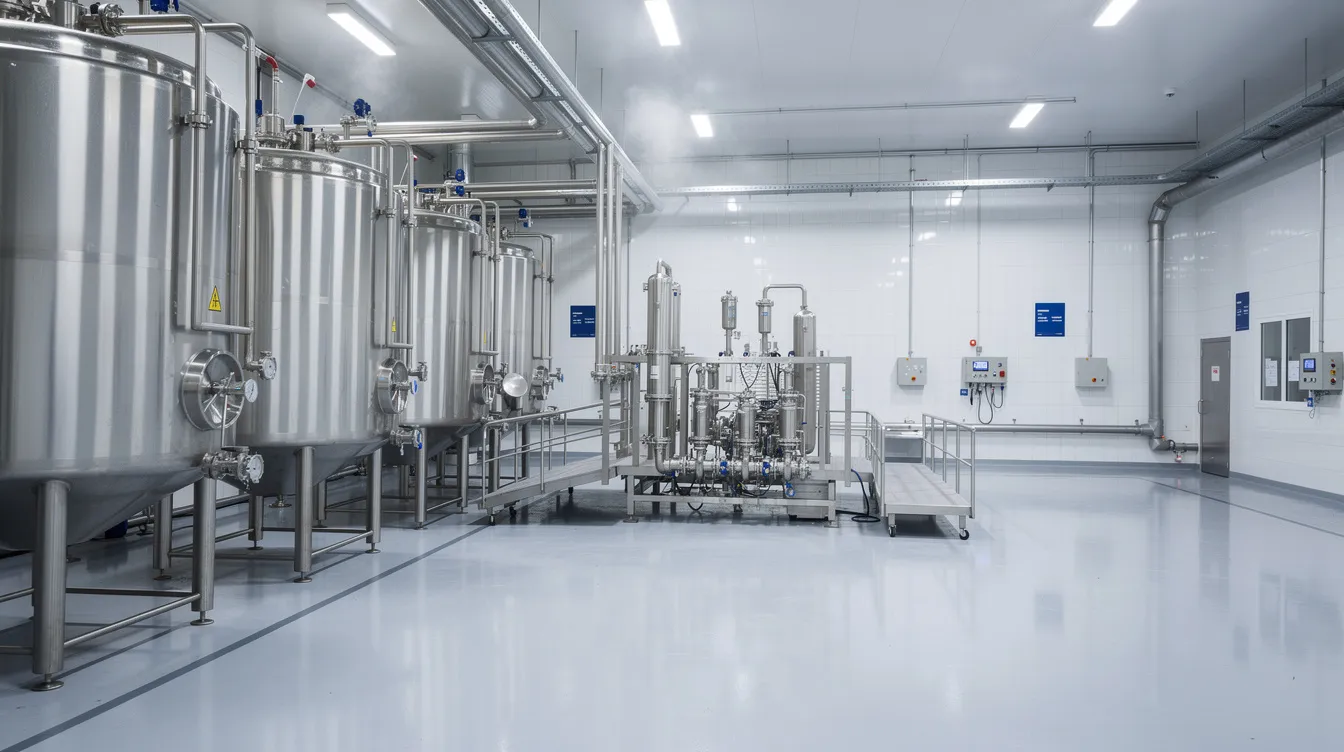
Total project cost represents the complete application of funds required to bring a value-added dairy processing plant into commercial operation. It covers fixed capital investment and margin money for working capital.
Major cost heads include:
- Land and site development
- Building and civil work
- Plant and machinery (processing, packaging, refrigeration)
- Utilities and refrigeration
- Electrical installations
- Cold storage and cold chain
- Laboratory and quality control equipment
- Furniture and office equipment
- Preliminary and pre-operative expenses
- Contingency provision
- Working capital margin
A proper dairy processing plant project cost follows structured project finance norms used by banks and financial institutions when appraising a value-added dairy project DPR for a bank loan.
Land and Site Development
Land can be freehold purchase, long-term lease in an industrial estate or a government-allotted plot. Cost varies widely; an industrial estate plot in Gujarat or Tamil Nadu carries a different price from a peri-urban belt in Uttar Pradesh or Rajasthan.
Components of land and site development cost include:
- Land acquisition or lease premium
- Filling, levelling and grading
- Internal roads and milk tanker circulation area (adequate turning radius for tankers)
- Weighbridge location
- Parking for insulated vehicles and delivery trucks
- Storm-water and effluent drainage systems
- Boundary wall, fencing and security gate
- Provision for future expansion
A 500-litre-per-day plant requires 1,500 to 2,000 square feet of covered and open area. Industrial plants at 10,000 LPD and above need proportionally larger sites with separate entry and exit for raw milk reception and finished goods dispatch. For detailed guidance on hygienic layout considerations, refer to value-added dairy plant land, building, utilities and hygienic layout.
Building and Civil Construction Cost
Building and civil work is one of the largest components of dairy plant capital investment after machinery. Compliance with food safety standards is essential to prevent cross-contamination in dairy plants; food-grade flooring, hygienic wall finishes, drains with proper kerbs and segregation of raw and finished product zones are non negotiable under FSSAI norms and GMP standards.
Key building zones to cost separately:
- Milk reception and testing area
- Processing hall (wet and dry sections)
- Fermentation and incubation rooms
- Paneer production section
- Yogurt and cultured products area
- Packaging hall
- Cold rooms and finished goods store
- Dry store for packaging materials and ingredients
- Utilities block (boiler room, refrigeration plant, compressors)
- Laboratory and QC
- Administrative office and records room
- Staff facilities (lockers, change rooms, canteen)
Civil cost rates in 2026 range from approximately ₹1,200 to ₹1,600 per sq ft for dry halls, ₹2,000 to ₹2,800 per sq ft for food-grade wet processing halls, and ₹3,000 to ₹4,000 per sq ft for cold storage rooms with specialised insulated panels. Underestimation of civil work is a common mistake in dairy plant project cost breakdown.
Dairy Plant Machinery and Equipment Cost
Plant and machinery cost often accounts for 35 to 55 percent of total fixed assets in a dairy processing plant, depending on automation and packaging sophistication.
Key equipment for a value-added dairy plant includes:
- Milk reception and weighing system, storage tanks, bulk milk coolers
- Pasteuriser (batch or HTST) and homogeniser
- Cream separator and standardisation tanks
- Fermentation tanks and incubation systems
- Paneer vats, press and cutting equipment
- Yogurt and cultured milk processing equipment
- Lassi and blended beverage processing systems
- CIP (Clean-In-Place) system
- Refrigeration plant and glycol/chilled water system
- Boiler and steam lines, air compressors
- Product and utility pumps, pipelines, valves and fittings
- Filling and packaging machinery (pouches, cups, tubs, bottles)
Laboratory equipment is necessary for on-site testing of dairy products, including microbiology, chemical analysis and culture handling. Machinery cost depends on capacity, number of product lines, automation level, origin of equipment (Indian vs. imported), stainless steel grade and PLC/SCADA controls. For machine-level cost breakdowns, see value-added dairy plant machinery and equipment cost.
Note that machinery base price must be supplemented with freight, insurance, installation, electrical panels, utility piping and commissioning charges in the project cost estimate.
Impact of Plant Capacity and Product Mix on Project Cost
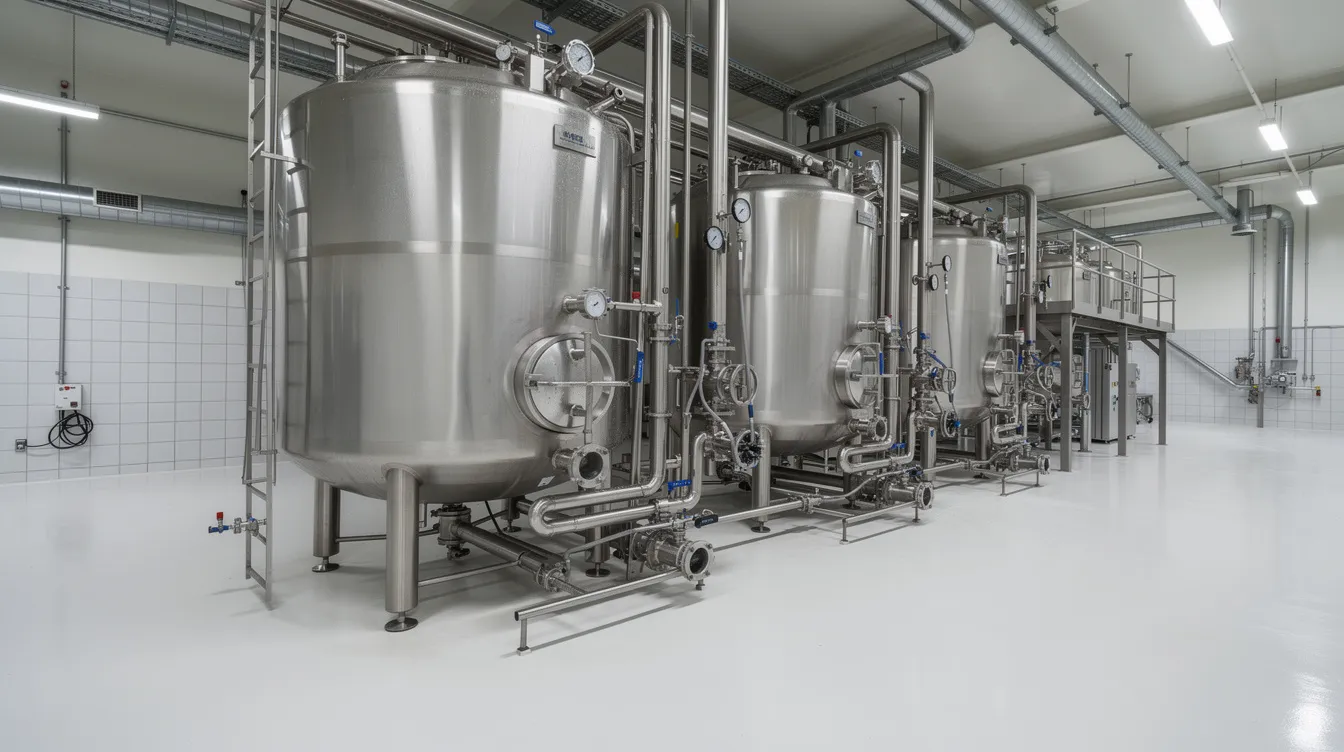
The volume of raw milk processed per day dictates processing capacity and utility loads. A 10,000 LPD multi-product plant (milk, curd, paneer) typically requires ₹5 to ₹7 crore for building, machinery and utilities excluding land. At 50,000 LPD, the range moves to ₹25 to ₹50 crore depending on product mix and automation.
Higher capacities bring economies of scale in processing but require proportionally higher investment in utilities, cold storage, packaging and working capital. Practical considerations include seasonal variation in milk availability, realistic capacity utilisation ramp-up over 3 to 5 years (starting at 40 to 50 percent), and regional demand for different dairy products.
A plant focused on paneer and ghee has different chilling and equipment requirements compared with one producing set-curd, yogurt and probiotic drinks at the same LPD capacity. These capacity and product decisions drive both project cost and means of finance structure. For detailed guidance, see value-added dairy plant capacity planning and product mix.
Manufacturing Process and Production Line Cost
Standard processing steps for value-added plants: raw milk reception and testing, clarification and filtration, chilling and storage, standardisation, pasteurisation of pasteurized milk, homogenisation (where required), fermentation or curdling per product, further processing (whey separation for Greek yogurt, pressing for paneer), filling and packaging, cooling and cold storage before dispatch.
Different process routes carry different capital profiles. Continuous HTST lines cost more upfront than batch pasteurisation but reduce operating cost at scale. Direct-set fermentation systems differ from bulk-starter-based systems in both equipment and quality control requirements. Inefficient layout or process choice increases machinery cost, utilities, labour and wastage. For technical details used in DPR preparation, see value-added dairy products manufacturing process and production line.
Refrigeration, Cold Storage and Cold Chain Investment
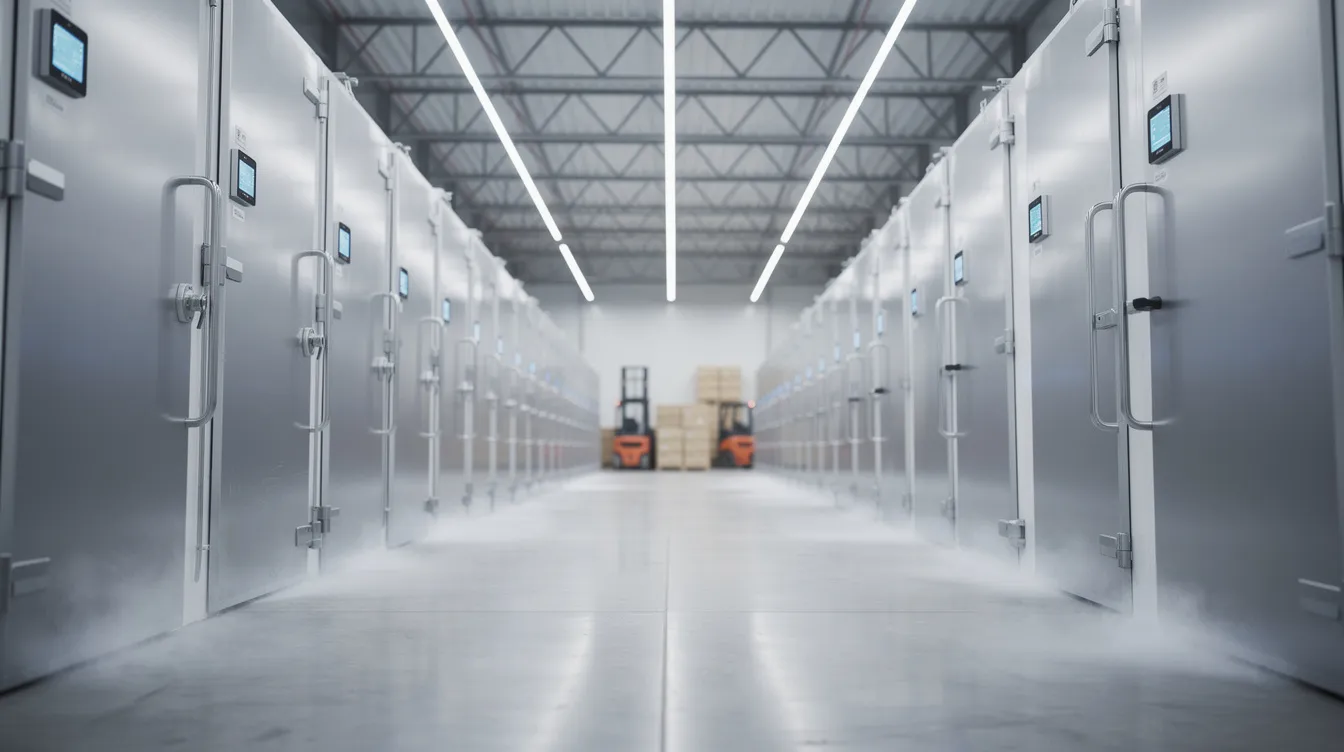
Cold chain infrastructure is often underestimated in dairy processing plant project cost, yet it is critical for perishable value added dairy products. Temperature control requirements (0 to 4°C for paneer and yogurt storage) directly affect refrigeration tonnage and power load.
Investment components include:
- Central refrigeration plant (ammonia or freon-based)
- Insulated glycol and chilled water piping
- Walk-in cold rooms for finished goods
- Blast chiller or rapid cooling where required
- Insulated dock and loading bay
- Refrigerated vehicles or third-party cold chain tie-ups
From a banker’s point of view, proper cold chain planning reduces spoilage risk and improves dairy plant financial feasibility. These costs must be explicitly captured under cold storage and cold chain requirements for value-added dairy products.
Utility Infrastructure Cost
Utility infrastructure is a substantial but often underestimated part of dairy plant cost and financing. Investment in utilities includes high-capacity electrical transformers and boilers, and costs for utilities generally account for 5 to 10 percent of operational expenses in dairy processing.
Key utility heads:
- Electrical connection, sub-station (transformer, panels, cabling) and DG backup
- Boiler and steam distribution
- Refrigeration compressors and condensers
- Chilled water and glycol systems
- Compressed air system
- Water supply and storage; high volumes of potable water are required for dairy processing and sanitation
- Water treatment plant
- ETP and/or STP (dairy processing generates high-strength wastewater requiring an effluent treatment plant)
- Fire-fighting systems
For moderate dairy plants, ETP cost ranges from ₹0.35 to ₹2.5 crore without zero liquid discharge; with ZLD, costs can increase 3 to 5 times. State Pollution Control Board NOC is necessary for dairy operations. Banks scrutinise whether ETP, fire safety and electrical provisions are adequately budgeted.
Packaging Line and Packaging Infrastructure
Packaging choices influence both setup cost and long-term operating cost. Milk processing plants can produce flavored milk and cheese alongside core products, each requiring different packaging formats.
Typical formats for value added products:
- LDPE pouches for market milk and buttermilk
- Plastic cups and tubs for curd and yogurt
- High-barrier cups for Greek yogurt and probiotic products
- PET/HDPE bottles for flavoured milk and lassi
- Institutional packs for HoReCa consumers
Semi-automatic cup-filling lines cost less but limit throughput; fully automatic FFS pouch machines and inline bottle-filling systems require higher capital but support larger volumes. Packaging material inventory also affects working capital requirement in the DPR.
Product-Specific Investment Requirements
The specific value-added products dictate the required processing steps and investment profiles. Different value-added products require various processing lines and packaging machinery, making product mix a direct driver of total project cost.
Industrial Paneer Manufacturing
Paneer lines require dedicated paneer vats, coagulation systems, pressing equipment, cutting and slicing machines, de-whey handling systems and rapid chilling of blocks. Paneer and ghee offer profit margins of 20 to 40 percent. Vacuum or MAP packaging adds to both capital and working capital needs. For detailed modelling, see industrial paneer manufacturing plant project report.
Yogurt Manufacturing
Incremental equipment includes temperature-controlled fermentation tanks, incubation rooms, specialised starter culture handling and cup or tub filling and sealing lines for set and stirred yogurt. Tighter hygiene controls increase lab and QC investment. See industrial yogurt manufacturing plant project report.
Greek Yogurt Manufacturing
Greek yogurt requires whey separation systems (separators, ultrafiltration or straining systems), a higher milk-to-finished-product ratio and enhanced cold storage for premium retail positioning. Plant and machinery cost per kg of output is higher than for basic curd. See Greek yogurt manufacturing plant project report.
Curd / Dahi Manufacturing
Curd manufacturing needs dedicated incubation rooms, batch tanks, setting racks and appropriate chilling systems. As a high-volume staple, curd can anchor plant utilisation but demands robust cold chain at scale. See curd and dahi manufacturing plant project report.
Industrial Lassi Manufacturing
Lassi lines add blending tanks, inline homogenisation, sugar and flavour dosing systems and bottle or pouch filling lines. Ghee and butter produced as by-products offer profit margins of 20 to 40 percent. See industrial lassi manufacturing plant project report.
Probiotic Dairy Products
Probiotic products require advanced process control, stringent hygiene, specialised cultures and stronger QC and lab infrastructure. Regulatory and shelf-life considerations influence cold chain and packaging requirements. See probiotic dairy products manufacturing plant project report.
Preliminary and Pre-Operative Expenses
Preliminary and pre-operative expenses are non-tangible costs incurred before commercial production, capitalised as part of total project cost:
- Company formation and statutory fees; GST registration is mandatory after ₹20 lakhs turnover
- Project consultancy (DPR, CMA Data, financial projections)
- Architect and engineering design fees
- Statutory approvals: FSSAI manufacturing license (essential for dairy processing plants; state FSSAI license is needed for turnover below ₹20 crore), local trade license from municipal authorities, State Pollution Control Board NOC, factory licence
- Trial production expenses
- Interest during construction on term loans
- Recruitment and training costs
- Insurance during project implementation
Banks normally accept justified pre-operative expenses as part of eligible project cost.
Contingency Provision
Contingency provision covers unforeseen increases in civil work, machinery, utilities, freight, customs duties on imported equipment and delay-related costs. It is not arbitrary padding; it should be reasonable and aligned with project size and risk profile. Escalation in steel prices and stainless steel costs during 2025 and 2026 has affected machinery quotes across the dairy sector. Absence of contingency in a DPR often leads to cost overruns and additional funding requests that weaken the project’s financial profile before lenders.
Margin Money for Working Capital
Value-added dairy businesses are working capital intensive. Raw milk has to be purchased continuously while finished products may take time to sell. Farmers earn ₹28 to ₹32 per litre selling raw milk, while processed milk sells for ₹54 to ₹60 per litre in cities; this gap funds operations but requires upfront procurement capital.
A dairy plant’s working capital needs include raw milk procurement, packaging materials, and salaries, along with ingredients, finished goods inventory in cold rooms, trade receivables and minimum cash balance. Raw milk procurement is a significant ongoing expense for dairy plants. Banks assess working capital limits separately, but the DPR must include a realistic working capital margin as the promoter’s contribution towards initial operating funds.
Illustrative Value-Added Dairy Plant Project Cost Structure
The following table presents an illustrative project cost for a mid-sized 20,000 LPD value-added dairy plant. The total capital investment for a 50,000-litre plant is approximately ₹17.25 crores in some configurations.
| Particulars | Indicative Amount (₹ Crore) |
|---|---|
| Land & Site Development | 1.50 – 3.00 |
| Building & Civil Work | 2.00 – 4.00 |
| Plant & Machinery | 3.50 – 6.00 |
| Utilities & Refrigeration | 1.50 – 3.00 |
| Electrical Installation | 0.50 – 1.00 |
| Cold Storage | 0.50 – 1.50 |
| Laboratory & QC | 0.20 – 0.40 |
| Furniture & Office Equipment | 0.10 – 0.25 |
| Preliminary & Pre-operative Expenses | 0.50 – 1.00 |
| Contingency | 0.40 – 0.80 |
| Working Capital Margin | 1.00 – 2.00 |
| Total Project Cost | 11.70 – 22.95 |
These figures are illustrative only. Actual investment must be calculated based on capacity, product mix, technology, location, machinery quotations and project-specific requirements. A clear, realistic breakdown supports faster sanction of dairy processing plant bank loan and term loan limits.
What Is Means of Finance in a Dairy Project?
Means of finance represents the sources from which total project cost will be funded. The core equation:
Total Project Cost = Promoter Contribution + Term Loan + Other Eligible Sources of Finance
Value-added dairy plant means of finance must be balanced and aligned with debt-servicing capacity. Banks evaluate this structure using dairy plant debt equity ratio, DSCR projections and working capital assessment.
Promoter Contribution
Promoter contribution comprises equity share capital, partners’ capital, free reserves, internal accruals (for expansion projects) and acceptable unsecured loans from promoters per individual bank policy. Lenders look for adequate “skin in the game” to confirm commitment and reduce default risk.
The required percentage depends on project risk, dairy plant capital investment size, borrower track record, security cover, cash-flow projections and specific bank or scheme norms. No single universal ratio applies. For expansion of an existing dairy processing plant, internal accruals are often treated as promoter contribution.
Bank Term Loan for Value-Added Dairy Plant
Term loans generally finance land development, building and civil work, plant and machinery, utilities, refrigeration, electrical installations and other eligible fixed assets. Repayment tenure for industrial dairy projects in India typically ranges from 7 to 12 years, with a possible moratorium of 6 to 18 months during construction and stabilisation.
Banks evaluate term loan requirement based on total project cost, promoter contribution, projected cash flows and DSCR. A well-prepared value-added dairy plant project report for bank loan, containing realistic projections, sensitivity analysis and implementation schedule, is essential. In certain schemes routed through NABARD or the nearest NABARD district office, specific conditions on security, margin and eligible assets may apply.
Working Capital Finance
Working capital finance funds day-to-day operations through cash credit, overdraft or other short-term limits against stock and receivables of the dairy processing unit. For value-added dairy products, banks consider seasonality in milk procurement, shelf life and credit terms extended to distributors.
Margin money for working capital provided in the project cost is the promoter’s share; the balance is funded by the bank. All three; term loan, working capital limits and promoter contribution; must be aligned so operations remain adequately funded after commissioning.
Debt-Equity Ratio in Dairy Project Financing
Debt-Equity Ratio = Long-Term Debt ÷ Tangible Net Worth (Equity)
Banks use this ratio to measure leverage and risk. A total project cost of ₹100 crore financed by ₹40 crore promoter contribution and ₹60 crore term loan produces a 1.5:1 debt-equity ratio (illustrative). Acceptable ratios differ across lenders and project types; expansion projects with stable cash flows may sustain higher leverage than greenfield ventures.
Means of Finance – Illustrative Example
| Source | Indicative Amount (₹ Crore) | % of Project Cost |
|---|---|---|
| Promoter Contribution (Equity / Internal Accruals) | 6.00 | 33% |
| Bank Term Loan | 11.00 | 61% |
| Other Eligible Sources | 1.00 | 6% |
| Total Means of Finance | 18.00 | 100% |
Total means of finance must exactly equal total project cost. Timing of fund infusion should match the project implementation schedule to avoid cash-flow gaps. While capital subsidy may eventually reduce net outlay, initial bank appraisal is generally based on full project cost and confirmed funding sources.
Can Subsidy Be Included in Means of Finance?
Government subsidies under schemes like the Dairy Entrepreneurship Development Scheme, programmes routed through NABARD, the state animal husbandry department, or food-processing schemes can sometimes form part of the financing structure. NABARD offers 25 to 33.33 percent capital subsidies for dairy projects. The PMFME scheme provides grants up to ₹10 lakhs for micro food processors. Eligibility for subsidies includes SC/ST and hilly region residents. State governments offer additional dairy-specific schemes alongside central programs.
Subsidy is never automatic. Project viability should stand on its own, with subsidy treated as an additional cushion. Contact NABARD district offices for current subsidy eligibility details. Over-reliance on expected subsidy can be risky; DPRs should show financial assistance as a separate item rather than a substitute for confirmed equity or debt.
How Banks Evaluate a Value-Added Dairy Project
Banks examine promoter background, milk procurement arrangements from local dairy farmers and dairy cooperatives, installed capacity, product mix, market demand and selling price assumptions. A 1,000 LPD plant can generate ₹3.5 to ₹5 lakhs monthly profit; larger plants must demonstrate proportional viability.
Key financial metrics reviewed: projected revenues, cost of production (raw material, ingredients, packaging, utilities, labour), EBITDA, DSCR, break-even, payback period and sensitivity to changes in milk price or selling prices. Lenders also review security structure, implementation schedule, statutory compliances (FSSAI manufacturing license, pollution NOC) and cold chain planning. A professionally prepared dairy processing project DPR with realistic assumptions improves confidence during appraisal.
Importance of Correct Project Cost in a Bankable DPR
Underestimation of value-added dairy plant project cost leads to funding shortfalls, commissioning delays, forced specification compromises and working capital stress. Consequences include need for additional borrowing, reduced DSCR versus original projections, inability to use installed capacity and risk of loan restructuring. Inflated or poorly supported figures erode lender confidence equally. Each cost head must be backed by quotations, estimates or rational benchmarks.
Common Mistakes While Estimating Dairy Plant Project Cost
- Using machinery supplier quotations as “total project cost”
- Ignoring or underestimating civil work and utility infrastructure
- Not budgeting for ETP, quality control lab or fire safety
- Missing freight, taxes and installation costs on equipment
- Omitting contingency provision
- Underestimating working capital requirement
- Assuming unrealistically high capacity utilisation in early years
- Ignoring milk procurement constraints or seasonal variation
- Mismatch between project cost and means of finance
- Incorrect treatment of subsidies as confirmed income
- Not stress-testing DSCR under adverse scenarios
Early correction at DPR stage saves months in sanction and implementation.
Project Cost for Expansion of an Existing Dairy Plant
Existing dairy businesses may already possess land, building, utilities, refrigeration and established procurement and distribution channels. Incremental project cost focuses on additional processing lines (adding Greek yogurt or probiotic beverages), refrigeration capacity enhancement, extra packaging lines and civil modifications. Working capital requirement increases when introducing new value added products with longer distribution reach. Banks review historical performance, existing capacity utilisation, incremental revenue and combined DSCR. DPRs for expansion should clearly separate existing assets from new investment.
Greenfield vs Expansion Dairy Plant Cost
| Aspect | Greenfield | Expansion |
|---|---|---|
| Land Cost | Full acquisition | Usually available |
| Building | Complete new construction | Modifications / additions |
| Plant & Machinery | Full processing and packaging lines | Incremental lines |
| Utilities | Entire infrastructure | Capacity upgrades |
| Cold Chain | Full setup from scratch | Additional cold rooms |
| Working Capital | Full new requirement | Incremental increase |
| Implementation Time | 12 to 18 months typically | 6 to 12 months |
| Financing Requirement | Higher upfront outlay | Lower, leverages existing assets |
Greenfield projects allow optimised layout and technology selection. Expansions can be cost-effective if existing infrastructure is robust but may face layout constraints.
Preparing a Bankable DPR for Value-Added Dairy Plant
A professional DPR integrates project background, promoter profile, technical description, capacity planning, manufacturing process, project implementation schedule, project cost estimate and means of finance. Core financial analysis includes projected P&L, cash-flow statements, balance sheets, break-even analysis, DSCR calculations, sensitivity scenarios and working capital assessment. India’s dairy sector, served by dairy entrepreneurs, milk unions, small farmers and dairy cooperatives, presents strong demand for new markets, but each project must model per capita availability, milk production volumes and local competition. A bankable DPR guides both term loan sanction and actual implementation.
Why Financial Structuring Matters in Value-Added Dairy Projects
A technically strong dairy plant can face financial stress if debt is excessive, moratorium is too short, repayment is aggressive or working capital limits are inadequate. Balanced structuring of term loan, promoter contribution and working capital; combined with reasonable assumptions on pricing and margins; improves resilience to raw milk price volatility and market fluctuations. Sensitivity analysis in the DPR should demonstrate viability under conservative assumptions, not just optimistic scenarios. Proper financial planning is central to long-term sustainability of value-added dairy processing plants.

Frequently Asked Questions
What is the approximate cost of setting up an industrial value-added dairy plant in India?
A small dairy processing plant costs ₹20 to ₹30 lakhs. A larger 2,000-litre-per-day unit costs ₹50 to ₹70 lakhs. The minimum cost for a mini milk processing unit is ₹8 to ₹12 lakhs. For industrial-scale value-added plants, a 10,000 to 20,000 LPD facility typically requires ₹5 to ₹15 crore (excluding land in some cases), while 50,000 LPD plants range from ₹25 to ₹50 crore. Costs vary by product mix, automation level, civil specifications, land price and region. A project-specific DPR with current quotations is necessary for accurate budgeting.
How much promoter contribution do banks usually expect for a dairy processing plant?
Requirements depend on bank policy, risk profile, security cover and applicable scheme conditions. Lenders generally prefer a balanced debt-equity ratio and sufficient own capital to assure commitment. Dairy entrepreneurs should discuss tentative margin norms with potential lenders at the planning stage and reflect them correctly in the DPR. For many greenfield dairy projects, promoter contribution of 30 to 40 percent of total project cost is a common expectation.
Is working capital included in value-added dairy plant project cost?
Total project cost includes margin money for working capital as one component. The remaining working capital is funded through bank limits like cash credit. Value-added dairy businesses require substantial working capital because of daily milk procurement (raw milk is the primary raw material), perishable inventory, packaging materials and credit sales to distributors. Ignoring working capital margin in project planning causes immediate liquidity stress after commissioning.
Do I need a DPR for getting a bank loan for a value-added dairy plant?
For medium and large value-added dairy processing plants, banks insist on a detailed project report covering capacity, product mix, project cost, means of finance, financial projections, DSCR analysis and market assessment. Professionally prepared DPRs improve the quality and speed of sanctions compared with informal or incomplete proposals. The DPR also serves as a reference document during implementation and monitoring by lenders.
How does product mix affect dairy plant investment and profitability?
Each product has different processing, packaging, refrigeration and shelf-life requirements. Paneer and ghee lines require dedicated pressing and chilling systems. Yogurt and probiotic products need fermentation tanks, culture handling and tighter hygiene controls. Higher-value products like Greek yogurt or probiotic drinks require greater investment per litre but command higher selling prices and cream margins. Product mix decisions should be based on detailed market analysis and modelled through item-wise financial projections in the DPR.
Conclusion
Estimating value-added dairy plant project cost and designing an appropriate means of finance requires integrated assessment of land, civil work, plant and machinery, utilities, refrigeration, cold storage, packaging infrastructure, preliminary expenses and working capital margin. There is no universal per-litre cost valid for all projects in the dairy sector; each dairy processing plant must be analysed individually considering technology, location, scale and market strategy.
A financially sustainable value-added dairy project rests on technically justified investment, balanced promoter contribution, judicious term loan structuring, adequate working capital limits and conservative financial projections. The dairy business in India offers strong opportunities for dairy farmers, dairy cooperatives and new entrants in processing, but success depends on disciplined project planning and realistic financial modelling.
CA Manish Gugliya, FCA, DISA (ICAI), assists entrepreneurs and companies in preparation of customised value-added dairy plant DPRs, CMA Data, financial projections, DSCR analysis, working capital assessments and bank finance proposals for industrial and MSME dairy projects across India. Serious dairy entrepreneurs, investors and consultants can reach out for professional advisory on project cost estimation and financial structuring tailored to their specific capacity, product mix and market requirements.