

Key Takeaways
- The Debt Service Coverage Ratio (DSCR) measures a business’s ability to cover its debt obligations and is one of the most critical ratios in any bankable detailed project report for a ghee and butter manufacturing project. It is calculated by dividing cash available for debt service (PAT + depreciation + interest on term loan ± adjustments) by the annual principal plus interest obligation.
- Banks evaluating ghee butter manufacturing project finance always examine year-wise DSCR, minimum DSCR and average DSCR across the full repayment tenure – not just a single headline number. Lenders typically require a minimum average DSCR of 1.30 to 1.50 over the loan repayment period for manufacturing projects.
- Even a profitable project can face repayment difficulty if milk fat cost spikes, capacity utilisation is below projection, working capital is under-financed, or the repayment schedule is front-loaded. These factors can dramatically change the DSCR for the same installed capacity.
- Product mix diversification across ghee, butter, AMF and related milk-fat-based products can stabilise margins and support more resilient DSCR compared with single-product dependence.
- CA Manish Gugliya assists promoters in preparing integrated financial projections, DPRs and DSCR analysis for dairy processing projects. Final loan sanction always depends on the bank’s independent appraisal, promoter profile, collateral, credit history and applicable lending policies.
Introduction – Why DSCR Matters in a Ghee & Butter Manufacturing Project
DSCR for ghee and butter manufacturing project is one of the most important financial indicators that banks use to judge whether a proposed plant can comfortably repay its term loan from its own cash flows. In India’s dairy market – worth approximately ₹13 lakh crore – the ghee manufacturing industry and butter manufacturing segment present significant investment opportunities for industrial promoters. Yet the financial viability of any dairy processing plant ultimately rests on whether its projected cash accruals can service the debt it takes on.
Even a profitable ghee manufacturing plant or butter manufacturing unit can struggle with loan repayment if working capital is tight, instalments are heavy during early ramp-up years, or capacity utilisation climbs slower than projected. A DSCR greater than 1.0 indicates that a business generates more income than necessary to pay its debts, but the cushion needs to be meaningful – not razor-thin.
The risk points are specific and real: under-estimated raw milk and milk fat prices, over-optimistic selling prices, longer receivable cycles with modern trade and institutional buyers, higher utilities and maintenance costs, regulatory compliance expenses (including FSSAI License, MSME/Udyam Registration, Factory License, Pollution Control Board NOC and AGMARK certification), and the GST of 5% that applies to ghee products in India. This article, written from the professional perspective of CA Manish Gugliya and based on experience with DPR preparation, CMA Data and bank loan appraisal, explains how DSCR and loan repayment capacity should be analysed for industrial ghee and butter manufacturing projects.
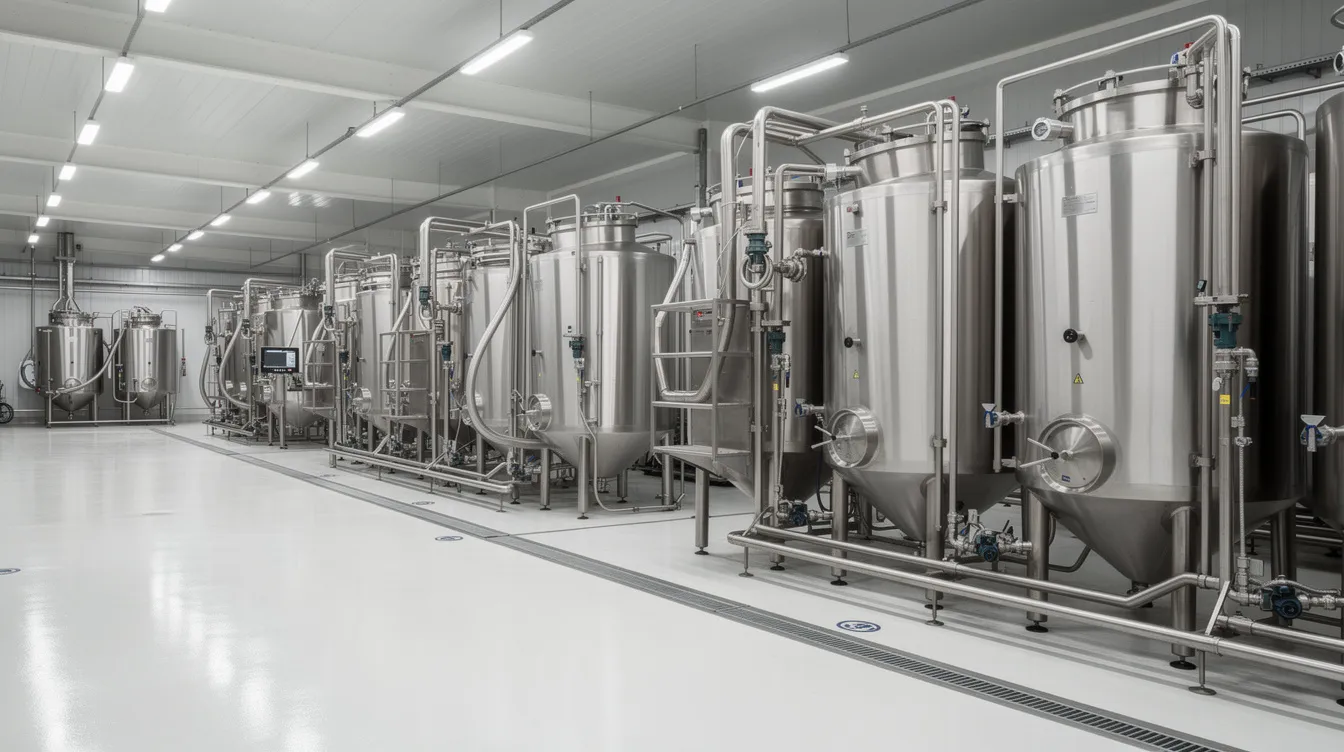
What is DSCR in a Ghee and Butter Manufacturing Project?
The Debt Service Coverage Ratio is a measure of how many times the project’s cash available for debt service covers the annual term-loan obligations – both principal repayment and interest. In the context of a dairy processing plant manufacturing ghee and butter, it tells the lender whether the business can generate enough surplus cash each year to meet its scheduled loan payments.
The conceptual formula is:
DSCR = Cash Available for Debt Service ÷ Total Debt Service (Principal + Interest on Term Loan)
DSCR is calculated by dividing Net Operating Income (adjusted for non-cash items) by Total Debt Service. Total Debt Service refers to the total amount of principal and interest payments due on a loan over a specific period. Net Operating Income in this context is earnings before interest and taxes adjusted for depreciation or operating expenses.
The typical components considered for DSCR in project finance include Profit After Tax (PAT), depreciation (added back as a non-cash expense), interest on the term loan, and any other non-cash charges. Depreciation is added back because, while it reduces accounting profits in the projected profit and loss account, it does not involve any actual cash outflow. A DSCR less than 1.0 indicates that a business does not generate enough income to cover its debt service, risking default.
The exact methodology can vary between lending institutions. Some banks treat existing unsecured loans or subsidies differently in their appraisal formats. A well-prepared project report should align its DSCR calculation with the lender’s CMA Data format to avoid discrepancies during appraisal.
Why Banks Examine DSCR for Ghee and Butter Manufacturing Projects
From a lender’s perspective, DSCR analysis for dairy projects is about measuring the safety margin in projected cash flows. Banks want assurance that after paying interest on the term loan, principal instalments, interest on working capital limits and other fixed financial obligations of the ghee manufacturing business, there is still a meaningful cash surplus remaining.
DSCR is not merely a mathematical ratio. It reflects the cushion available after meeting all debt service – the buffer that decides how resilient the project is when milk fat prices spike or selling prices soften due to competition. A project showing DSCR of 1.10x has almost no room for error, while one showing 1.50x can absorb moderate adversity without defaulting.
In practical bank loan appraisal for a ghee plant or butter plant, DSCR is considered alongside the promoter’s contribution, security and collateral coverage, current ratio, debt-equity ratio, industry risk assessment and the promoter’s historical repayment track record. Banks may also examine the interest coverage ratio and detailed cash flow statements, especially for larger ghee butter manufacturing project finance proposals where project costs run into ₹10–30 crore or more.
DSCR Formula with Practical Illustration for a Ghee & Butter Unit
To make the concept concrete, consider this hypothetical numerical example for a mid-sized industrial ghee and butter manufacturing plant (illustrative figures only – not standard project assumptions):
Assume: 10 TPD ghee + 5 TPD butter unit, in a particular projection year:
| Component | Amount (₹ Crore) |
|---|---|
| Profit After Tax (PAT) | 1.80 |
| Depreciation | 0.60 |
| Interest on Term Loan | 0.70 |
| Cash Available for Debt Service | 3.10 |
| Principal Repayment | 1.50 |
| Interest on Term Loan | 0.70 |
| Total Debt Service | 2.20 |
| DSCR | 1.41x |
Step by step: Cash Available for Debt Service = ₹1.80 + ₹0.60 + ₹0.70 = ₹3.10 crore. Total Debt Service = ₹1.50 + ₹0.70 = ₹2.20 crore. DSCR = 3.10 ÷ 2.20 = 1.41x.
Now consider what happens if the principal repayment for that year rises to ₹2.00 crore (perhaps due to a shorter repayment tenure): Total Debt Service becomes ₹2.70 crore, and DSCR drops to 3.10 ÷ 2.70 = 1.15x – a level many banks would consider uncomfortably tight.
Alternatively, if EBITDA falls due to higher raw material cost and PAT reduces to ₹1.20 crore, Cash Available for Debt Service becomes ₹2.50 crore, and DSCR against the original ₹2.20 crore debt service falls to 1.14x. These variations demonstrate why banks review DSCR calculation for ghee and butter manufacturing project across all projection years, demanding consistency and reconcilability with the projected P&L and balance sheet.

Year-wise DSCR Analysis Over the Term Loan Tenure
DSCR should be examined separately for each year of the repayment period, not just on an average basis. This is especially important for a new ghee manufacturing plant or dairy processing plant where production ramp-up is gradual.
The typical phases include: project implementation and construction (zero revenue), moratorium period (interest may be serviced but no principal due), first year of commercial production at partial capacity (perhaps 40–50% utilisation), stabilisation years (60–75%), and steady-state years at 80–85% or higher. In the first one or two repayment years, DSCR for a ghee manufacturing project may be at its lowest because volumes are still building while interest and instalments have already begun.
In later years, as the outstanding term loan reduces and interest burden declines, DSCR normally improves – assuming margins remain stable and working capital is properly funded. A professional DPR and CMA Data for dairy projects should present a clear table showing year-wise DSCR, minimum DSCR and average DSCR, along with a narrative explaining any weaker early years and what mitigating factors (moratorium, promoter cash injection) support them.
Average DSCR vs Year-wise & Minimum DSCR
Three distinct measures matter:
- Annual DSCR: the ratio for each individual financial year in the projection.
- Average DSCR: the arithmetic average across all repayment years.
- Minimum DSCR: the lowest annual DSCR among all projected years.
An average DSCR of 1.70x may look comfortable on paper, but if Year 1 of repayment shows DSCR of only 1.05x due to heavy principal repayment against still-building revenues, the project faces genuine stress in that critical early period. Banks are trained to spot this.
A healthy DSCR is generally considered to be 1.25 or higher for manufacturing businesses. Lenders typically require a minimum average DSCR of 1.30 to 1.50 over the loan repayment period for manufacturing projects, though acceptable thresholds vary by institution, risk appetite and security structure. There is no single universal number that guarantees sanction. Promoters should focus on both minimum DSCR and average DSCR while designing the repayment schedule for ghee butter manufacturing project finance.
Key Factors Affecting DSCR of a Ghee & Butter Manufacturing Plant
The ghee plant DSCR calculation and butter plant DSCR calculation are highly sensitive to operating assumptions. Promoters must understand these drivers before finalising financial projections.
Capacity utilisation is often the single biggest variable. If the plant operates at 45–50% in Year 1 instead of an assumed 70–75%, sales revenue and EBITDA fall while fixed assets and term-loan instalments remain unchanged. For context, even a small ghee unit can earn ₹50,000–₹1,00,000 per month at modest scale, but industrial plants need substantially higher throughput to service large term loans. Investment for starting a very small ghee unit may range from ₹2–5 lakh, but industrial setups with project costs of ₹3–30 crore demand correspondingly higher utilisation to achieve adequate DSCR.
Milk and milk-fat procurement cost dominates operating expenses. Operating costs for ghee manufacturing are 85–90% raw material expenses. A 3–5% increase in fat cost or cream procurement price can significantly squeeze contribution margins and directly reduce the debt servicing capacity of a ghee and butter manufacturing plant. Seasonal fluctuations in fat content and price volatility of buffalo milk, liquid milk and cream add further uncertainty.
Product mix matters considerably. A balanced mix of retail ghee, bulk ghee, table butter, industrial butter, AMF and other milk-fat-based products diversifies margins. Retail branded ghee – including organic ghee and traditional ghee variants – typically carries higher margins but involves higher packing material cost and distribution expense. Industrial bulk ghee offers stability. Ghee consumption is driven by rising demand for natural foods, and 55% of consumers prefer snacks made with natural ingredients, supporting demand for traditional dairy products.
Selling price and gross margin assumptions must be realistic. The ghee market and global ghee market are competitive, with established ghee manufacturers exerting pricing pressure. Gross profit margins for ghee production range from 20–30%, but these can be eroded by raw material cost increases or aggressive competition in domestic and international markets.
Utilities and manufacturing costs are significant for energy-intensive processes. Continuous ghee boilers, refrigeration for butter, cold storage and steam generation all add fixed operating costs. Poor energy efficiency depresses DSCR even when sales volumes are on target. Fuel expenses and administration expenses must be escalated realistically across projection years.
Working capital constraints can starve the business of cash. Even adequate projected profits may not translate into available cash if receivables are extended or inventory builds up. Under-financed working capital limits can constrain production and sales.
Term loan structure, interest rate, moratorium and repayment tenure all interact. Higher loan size and shorter tenor mean larger instalments and lower DSCR. Interest rates for dairy and food processing sector loans typically range from 9–12% per annum. A balanced debt-equity mix with a reasonable tenure of 5–7 years (sometimes up to 10 years for larger plants) and an appropriate moratorium of 6–18 months generally produces healthier DSCR profiles.
Loan Repayment Capacity Beyond DSCR – Holistic View
Loan repayment capacity for a ghee plant or butter plant must be assessed holistically. Banks look at dairy project debt servicing capacity through multiple lenses: operating EBITDA, cash accrual (PAT + depreciation), working capital movements, tax outgo, maintenance capex, and promoter withdrawals or dividends.
Existing loan obligations of the same entity – for chilling plants, cattle feed units, transport vehicles or other related industries – also affect overall repayment capacity and must be factored into the ghee butter manufacturing project loan repayment analysis. A project report showing consistent, moderate surplus each year is more credible to banks than one with steep spikes in later-year profits but weak early-year coverage.
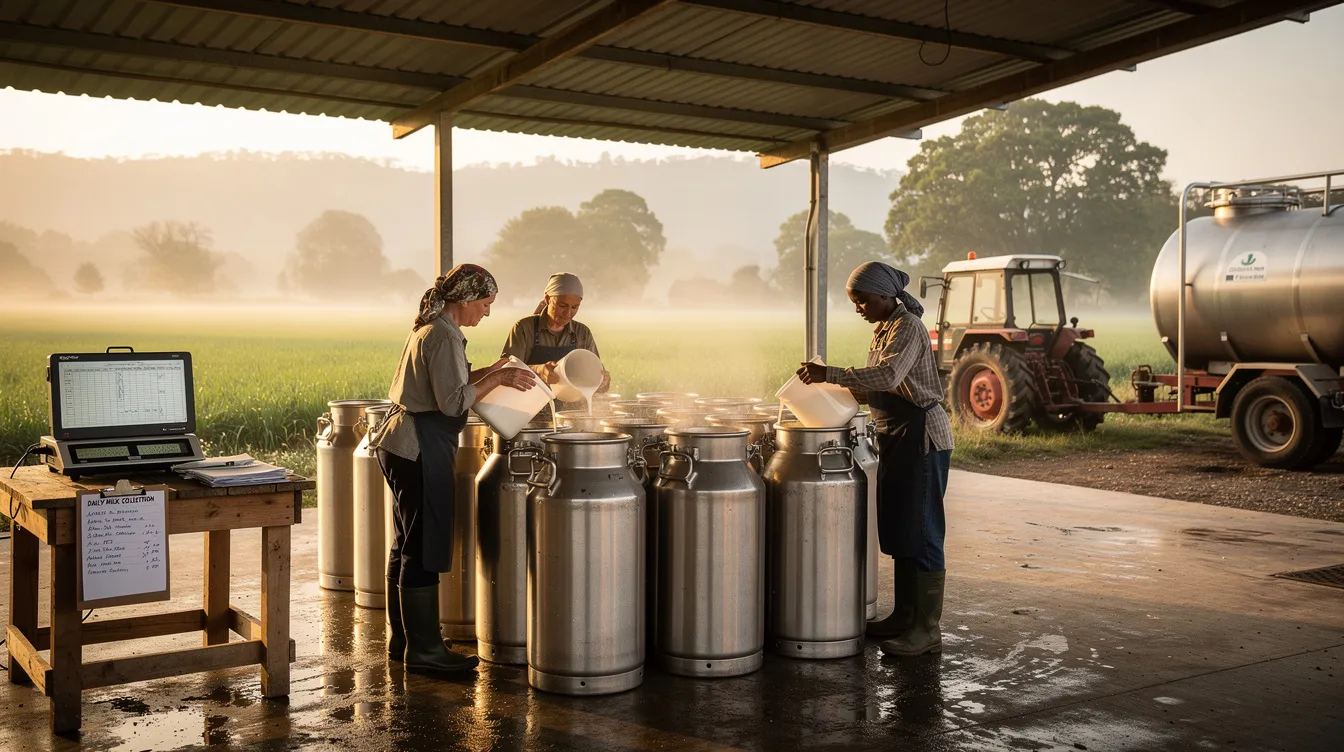
Entrepreneurs should reconcile cash flow projections with the proposed project loan repayment schedule. Debt structures must be aligned with agricultural cash flows, allowing for flexible repayment that accounts for seasonal variations in milk supply and market demand.
Preparing a Practical Term Loan Repayment Schedule
The project loan repayment schedule for a ghee and butter manufacturing project should be designed to align with realistic cash generation rather than follow a rigid equal-instalment pattern.
Key elements include:
- Opening balance at the start of each year
- Disbursement tranches (if applicable)
- Principal repayment for each period
- Closing balance
- Interest rate and annual interest computation
Repayment frequency may be monthly, quarterly or semi-annual in practice, but is usually summarised annually for DSCR calculation in project reports. Instalments should be structured so that heavier repayments fall in years when the plant is expected to operate at stable capacity and margins, with lighter instalments during early ramp-up. This alignment of the repayment schedule with projected cash flow available for debt service improves both the bank’s comfort and the realism of DSCR in the DPR.
Moratorium and Repayment Structuring for Dairy Projects
An appropriate moratorium period on principal repayment is vital for any industrial ghee manufacturing plant. The time needed for land development, civil construction, installation of ghee boilers and butter churners, refrigeration and utilities setup, and trial production can be 9–18 months. Starting principal repayment before the plant generates stable revenue leads to poor first-year DSCR.
The common structure involves servicing interest during construction and moratorium while principal repayments begin from the first or second full year of commercial operations – once capacity utilisation reaches a sustainable level of perhaps 40–50%. For smaller projects, moratorium periods of 6 months may suffice, while larger integrated plants may need 12–18 months.
DPRs should justify the requested moratorium with a realistic implementation schedule. Better-structured moratorium and tenure improve minimum DSCR without artificially inflating profitability assumptions. Sound business decisions on repayment timing can meaningfully improve DSCR analysis for bankable ghee butter plant DPR submissions.
Impact of Project Cost & Means of Finance on DSCR
Total project cost and means of finance directly determine the debt burden and therefore DSCR for a ghee manufacturing project or butter manufacturing project. Total capital investment for mid-scale plants (5–10 TPD) typically ranges from ₹3–10 crore, while larger integrated facilities (10–15 TPD ghee + butter + possibly AMF) can cost ₹25–30 crore.
Consider this: if the same ₹30 crore dairy processing plant is funded with 70% debt (₹21 crore term loan) versus 60% debt (₹18 crore term loan), the annual debt service differs by several crore, changing DSCR materially even if EBITDA is identical. Over-reliance on term loans to fund non-productive fixed assets – excessive land, lavish buildings, surplus equipment – depresses DSCR and impairs overall financial viability.
For a detailed discussion on project cost composition and funding mix, refer to Ghee, Butter & Milk Fat Processing Plant Project Cost & Means of Finance. Banks closely examine the proportion of promoter contribution (typically 10–30% depending on project size and scheme), subsidies and term loan. A balanced means-of-finance structure leads to healthier DSCR and better bankability.
Revenue Projections, Product Mix & DSCR
DSCR ultimately depends on the revenue and margin profile of the ghee and butter manufacturing business. India produces over 3 million tonnes of ghee annually, and the global ghee market was valued at USD 58.99 billion in 2025, with projections suggesting the global ghee market could reach ₹5 lakh crore by 2027. These market growth trends create business opportunities, but individual project viability depends on realistic revenue assumptions.
Selling different SKUs – bulk ghee for B2B, retail ghee in consumer packs, table butter, industrial butter, AMF for export demand – at varied price points and margins affects EBITDA and therefore DSCR. Market research and identification of the target customer group are essential for sound revenue projections.
Realistic capacity utilisation ramp-up is critical: 50–60% in Year 1, 70–75% in Year 2, and 80–85% thereafter is a more defensible assumption than 100% from day one. Banks scrutinise selling price reasonableness against current market rates and competition. For deeper guidance, see Ghee & Butter Plant Revenue, Product Mix & Market Strategy.
Profitability, Break-Even & Their Impact on Repayment Capacity
DSCR should be interpreted alongside profitability analysis and break-even analysis. A project operating below break-even capacity will not generate enough cash to meet debt service sustainably. Break-even for ghee manufacturing typically ranges from 2 to 4 years depending on scale, product mix and market penetration.
Gross contribution, EBITDA, interest, depreciation and tax interact to generate cash accruals. Once the plant crosses its break-even volume, additional sales contribute more directly to cash accrual, thereby improving DSCR and enhancing comfort on butter manufacturing project loan repayment. Gross profit and net profit margins matter, but they must translate into actual cash generation – not just accounting entries.
For a comprehensive profitability and break-even discussion, refer to Ghee & Butter Manufacturing Plant Profitability & Break-Even Analysis. Promoters should avoid building DSCR purely by stretching selling price assumptions; instead, validate margins with realistic raw material cost and market analysis, treating it as part of overall project feasibility assessment.
Financial Projections Required for DSCR Calculation
A robust DSCR calculation in a ghee manufacturing project report or butter manufacturing project report requires fully integrated financial projections – not isolated ratio calculations. The key elements include:
- Projected profit and loss account (7–10 years covering full debt life)
- Projected balance sheet
- Cash flow statement
- Depreciation schedule per asset category
- Term-loan amortisation schedule
- Working capital assessment with inventory, receivable and payable assumptions
- Tax computation
- Key financial ratios including profitability ratios and coverage ratios
DSCR in DPR for a manufacturing plant must reconcile with other project financials: interest in the P&L must match the loan schedule computation, closing loan balance must match the balance sheet, and principal repayment must reconcile with cash outflows. For a reference on the type of integrated projections needed, see Ghee, Butter & Milk Fat Plant Financial Projections for DPR.
Working Capital & Its Impact on DSCR
Even if the projected P&L shows good profits, inadequate working capital limits can starve the business of cash and disrupt term-loan repayment. Cash flow projections for a ghee manufacturing project must factor in seasonality of inputs and variable costs.
The working capital cycle in a dairy processing plant involves procurement of raw materials (raw milk, cream, butter), processing, storage (including cold storage for butter at appropriate temperatures), credit to distributors and retailers, and collection of receivables. Inventory held in raw materials, finished ghee and butter, plus trade receivables, ties up significant funds. If bank working capital limits are under-assessed, the promoter may need to inject short-term funds or – worse – delay loan instalments.
For detailed working capital analysis, see Working Capital Requirement for Ghee & Butter Manufacturing Plant. While DSCR is calculated from term-loan obligations, realistic working capital assessment is necessary to ensure cash is actually available to meet those obligations.
Raw Material Procurement, Milk Fat Economics & Repayment Risk
Ghee and butter project economics are highly sensitive to the cost and availability of milk fat. The ghee manufacturing process is fundamentally a fat-extraction process, and raw material cost constitutes the dominant share of operating costs. Key raw materials include liquid milk, cream, and butter procured from cooperative societies, private dairies or direct milk collection networks.
Seasonal fluctuations in fat content and milk availability – lean season in summer, flush season in winter – create procurement challenges. Upward spikes in milk fat prices without corresponding selling price increases can sharply reduce EBITDA and compress DSCR, even when ghee production volumes are on target. The supply chain for raw materials requires careful management.
Promoters should build margin safety into DSCR calculations using conservative procurement cost assumptions. For a deeper look, refer to Raw Material & Milk Fat Procurement for Ghee and Butter Plants.
Capacity Planning, Machinery Investment & Their Effect on DSCR
Plant capacity and machinery selection should be aligned with realistic supply and market potential. Over-sized plants suffer from underutilisation, poor EBITDA and weak DSCR. Project identification should involve matching raw milk availability, cream separator capacity, ghee boiler sizing, butter churn capacities and packaging lines with the intended product mix.
Ghee manufacturing requires cream separators and butter churners as core machinery raw materials. Ghee kettles must maintain temperatures between 105–120°C for proper clarification. Multi-stage filtration systems ensure high-quality ghee production. Storage tanks should maintain temperatures between 15–25°C, and automated packaging machines are essential for efficient operations. Equipment costs and machinery cost form a substantial portion – often 30–42% – of total project costs.
Higher automation increases upfront capital but improves efficiency, reduces labour cost and enhances fat recovery, boosting cash accrual in operating years. For capacity planning guidance, see Ghee, Butter & Milk Fat Plant Capacity Planning & Product Mix. For equipment cost details, refer to Ghee Manufacturing Plant Machinery & Equipment Cost.
Land, Building, Utilities & Industrial Ghee Plant Setup Cost
Capital expenditure on land, building and utilities for an industrial ghee manufacturing plant should be optimised. Excessive non-productive spending increases term loan requirement and depresses DSCR. Major components include factory land, production building, storage godowns, cold rooms, boiler house, refrigeration plant room, effluent treatment and internal roads.
For planning aspects, see Ghee & Butter Plant Land, Building, Utilities & Factory Layout. To understand how overall setup cost influences required term loan and annual debt service, refer to Industrial Ghee Manufacturing Plant Setup Cost in India. A well-optimised layout and utilities design can lower both project costs and operating costs, improving profitability and DSCR simultaneously.
Manufacturing Process, Operational Efficiency & DSCR
The industrial ghee manufacturing process involves several stages: ghee production involves milk collection and testing, followed by cream separation after milk collection, then butter extraction follows cream separation in ghee production. Ghee is then clarified by controlled heating at 105–120°C. Filtration removes milk solid sediments during ghee production. Quality control systems ensure ghee purity and flavor consistency, maintaining consistent quality and the rich nutty taste that consumers expect from traditional methods.
Better process technology and control systems improve fat recovery, reduce wastage and lower energy consumption, leading to higher EBITDA margins and stronger DSCR. The manufacturing process directly affects operating efficiency and project financials. For details on ghee production technology, see Industrial Ghee Manufacturing Process & Production Line. For butter production process, refer to Industrial Butter Manufacturing Process & Production Line.
Where the product mix includes AMF (Anhydrous Milk Fat) for export or industrial use, refer to AMF Manufacturing Process, Machinery & Production Technology to understand how additional fat products can diversify revenue and support DSCR.

Sensitivity Analysis of DSCR for Ghee & Butter Manufacturing Projects
Stress-testing DSCR for a ghee and butter manufacturing project by running sensitivity scenarios on key assumptions is essential. Relying on a single base case is risky because multiple variables can move adversely at the same time. Sensitivity analysis for DSCR can involve modeling the effects of increased raw material prices or lower production capacity.
Consider these illustrative scenarios:
| Scenario | Typical Impact on DSCR |
|---|---|
| Milk fat cost increases by 5% | EBITDA contracts; DSCR may drop by 0.15–0.25x |
| Selling price reduces by 3% | Revenue falls, margins compress; DSCR weakens |
| Capacity utilisation 10% below projection | Revenue shortfall against fixed costs; significant DSCR reduction |
| Interest rate rises by 1–1.5% | Higher interest burden; both numerator and denominator affected |
| Working capital cycle extends by 15–20 days | Cash locked in inventory/receivables; production may be constrained |
Each scenario reduces EBITDA or increases costs, resulting in lower cash accrual and weaker DSCR. In worst cases, single-year DSCR can dip close to or below 1.00x. Including such sensitivity analysis in a bankable DPR reassures lenders that promoters understand the risks and have considered buffers. Fluctuations in raw material prices can significantly impact the DSCR for ghee manufacturing. Economic analysts and industry trends suggest that building in a 5–10% adverse cost cushion is prudent for a profitable project assessment.
DSCR in Bank Loan Appraisal for Ghee & Butter Plants
Banks use DSCR in conjunction with other ratios and qualitative factors when evaluating ghee manufacturing plant bank finance or butter manufacturing plant bank finance proposals. Compliance and quality control costs are essential components of operating expenses in the dairy industry and are scrutinised alongside revenue assumptions.
Parameters examined alongside DSCR include debt-equity ratio, current ratio, interest coverage ratio, security and collateral coverage, promoter track record and experience, market study, raw material security, regulatory compliance status and overall project viability. The industry performance of the ghee manufacturing sector and food processing industry trends are also considered.
While DSCR is important, bank loan eligibility based on DSCR for dairy project cannot be determined by this single ratio alone. Bank policies, RBI guidelines and internal risk frameworks all shape final sanction decisions. No consultant, business consultant or CA can guarantee sanction solely on the basis of projected DSCR. The rising disposable incomes driving health benefits awareness and nutritional benefits of clarified butter (ghee) may support market demand assumptions, but each project is evaluated individually.
Common Mistakes in DSCR Projections for Dairy Processing Projects
Based on practical experience reviewing DPRs, these are frequently observed errors:
- Assuming immediate high capacity utilisation (80–90% from Year 1) without accounting for procurement ramp-up, quality stabilisation or market development
- Optimistic selling prices that exceed current market rates or assume premium pricing without brand recognition
- Ignoring seasonal milk price variation and fat content fluctuations that affect raw material cost throughout the year
- Underestimating logistics, packing material cost and distribution expenses for branded retail products
- Ignoring escalation in utilities, labour and fuel expenses over the projection period
- Incorrect interest calculation due to mismatched opening-closing loan balances or wrong rate application
- Not modelling moratorium correctly, leading to interest obligations appearing in wrong periods
- Confusing accounting profit (PAT) with cash accrual – ignoring working capital tie-ups, receivable days and inventory build-up
- Presenting only average DSCR and hiding a weak first-year DSCR that could undermine credibility of the entire business plan
- Failing to test downside scenarios, making the DPR appear unrealistically bulletproof
- Ignoring tax in cash accrual calculations or not accounting for the projected pay back period realistically
Promoters should cross-verify all calculations, ensure internal consistency and validate key assumptions with market data before presenting the DPR to lenders.
Improving Loan Repayment Capacity & DSCR for Ghee and Butter Projects
Practical measures to strengthen DSCR and loan repayment capacity include:
Financial structuring: Increase realistic promoter contribution to reduce term-loan burden. Seek applicable subsidies under schemes like PMFME or PMEGP. Negotiate competitive interest rates and choose an appropriate loan tenure and moratorium aligned with project gestation.
Operational improvements: Improve milk fat procurement efficiency and reduce fat losses through better cream separation and butter churning processes. Invest in energy-efficient ghee boilers and refrigeration. Optimise labour deployment to boost EBITDA margins.
Revenue and commercial strategy: Diversify into value-added SKUs – retail ghee, organic ghee, flavored ghee and AMF for export – to earn higher margins and expand the ghee manufacturing business beyond commodity-grade products. Explore institutional contracts for stable demand.
Working capital management: Reduce receivable days through contract terms, manage inventory actively, negotiate credit from raw material suppliers and maintain proper working capital limits.
All measures must be evaluated in context. There is no one-size-fits-all DSCR improvement formula. What works for a ₹3 crore ghee manufacturing unit may not apply to a ₹25 crore integrated dairy processing plant.
DSCR in a Bankable Detailed Project Report (DPR)
A bankable DPR for a ghee and butter manufacturing plant should present DSCR as an output of an integrated financial model – not as a standalone table. The key schedules that must tie together include project cost, means of finance, production and sales projections, raw material and utility consumption, staff cost, overheads, projected P&L, balance sheet, cash flow, term-loan schedule and ratio analysis.
Reconciliation is critical:
- Term loan amount in means of finance must match the opening balance in the loan schedule
- Interest in the P&L must match interest calculated on year-wise outstanding loan
- Principal repayment must reconcile with loan closing balance and cash outflows
- Depreciation in the P&L must match the depreciation schedule for fixed assets
DSCR in the project report should be shown year-wise, with both minimum and average DSCR values. Banks may require these figures in CMA Data formats as well. Other project financials and profitability ratios must support the DSCR narrative consistently.
Role of CA Manish Gugliya & ProjectReportBank.com
CA Manish Gugliya is a practising Chartered Accountant specialising in manufacturing project DPRs, CMA Data preparation, financial projections and project finance support for MSME and industrial borrowers in the industrial world of food processing and dairy.
The advisory role encompasses assisting entrepreneurs and dairy companies in developing realistic project cost estimates, means of finance plans, projected financial statements, DSCR analysis, break-even analysis and overall project viability assessment for ghee and butter manufacturing projects. Through the platform www.projectreportbank.com, customised dairy processing project reports and financial models are developed to suit specific capacities, product mixes and funding structures.
Services typically include preparation or review of detailed project reports, bank finance DPRs, CMA Data, term-loan repayment schedules, DSCR and coverage ratios. Actual bank sanction always depends on the lender’s independent appraisal, promoter profile, security and policy norms. Entrepreneurs planning industrial and commercially viable ghee manufacturing plants or butter plants are encouraged to seek professional assistance in structuring projections and DSCR before approaching banks for term loans.
Conclusion – DSCR as Part of an Integrated Viability Assessment
DSCR and loan repayment capacity for ghee and butter manufacturing projects should always be derived from realistic, integrated financial projections – not computed in isolation or with overly optimistic assumptions. A profitable business on paper does not automatically translate into comfortable debt service if cash flows are misaligned with repayment obligations.
The logical sequence that a sound DPR should follow is: project cost → means of finance → capacity and product mix → revenue and margins → operating profitability → working capital → cash accrual → term-loan repayment → DSCR → sensitivity analysis. When DSCR analysis is combined with break-even, profitability and risk analysis, both promoters and banks gain a clearer picture of the project’s resilience under different market conditions.
CA Manish Gugliya and www.projectreportbank.com serve as professional resources for entrepreneurs and industrial promoters who need customised DPRs, DSCR calculations and bank-oriented project finance assessments for ghee, butter and milk-fat processing plants. Disciplined financial planning at the DPR stage – with careful attention to DSCR for ghee and butter manufacturing project assessment – often prevents repayment stress later and improves the overall bankability of the dairy processing project.

FAQ – DSCR & Loan Repayment Capacity for Ghee and Butter Manufacturing Project
The following questions address common queries that promoters raise about DSCR, loan repayment and DPR preparation for ghee and butter plants.
What is DSCR in a ghee manufacturing project and how is it different from profit margin?
DSCR compares cash available for debt service (PAT + depreciation + interest on term loan) with total annual debt obligations (principal + interest). Profit margin, on the other hand, only indicates profitability as a percentage of sales. A ghee manufacturing plant can have attractive margins of 20–30% but still show low DSCR if term-loan instalments are heavy, working capital absorbs cash, or capacity utilisation is below expectations. DSCR measures actual repayment ability, while profit margin measures operating efficiency – they are related but distinct indicators.
How is DSCR calculated for a butter manufacturing plant in a DPR?
Start from projected PAT for the year. Add back depreciation (non-cash expense) and interest on the term loan. This gives you cash available for debt service. Then divide by total debt service – the sum of principal repayment and interest due for that year. The methodology is essentially the same for butter and ghee within an integrated dairy processing plant, though product-specific margins and working capital requirements may differ. The calculation should be consistent with the CMA Data format required by the lending institution.
Does a high average DSCR guarantee bank loan approval for my ghee butter project?
No. A high average DSCR alone does not guarantee approval. Banks evaluate minimum year-wise DSCR (not just the average), promoter contribution, collateral and security coverage, credit history, market viability, raw material availability, regulatory compliance and internal policy norms before sanctioning a ghee butter plant bank loan. A project with an average DSCR of 2.00x but a first-year DSCR of 0.95x will face serious scrutiny.
Why is depreciation added back when assessing loan repayment capacity?
Depreciation is a non-cash expense deducted in the projected profit and loss account for accounting and tax purposes. It represents the systematic allocation of an asset’s cost over its useful life but does not involve any actual cash outflow in that year. Since DSCR assesses cash-based repayment ability, depreciation is added back to PAT to arrive at cash accrual. This is standard practice in DSCR calculation for manufacturing projects across the food processing industry and other sectors.
Can DSCR change significantly if working capital is under-financed?
Yes, materially. While the DSCR formula focuses on term-loan obligations, in practice under-financed working capital can reduce actual production (due to inability to procure sufficient raw materials), lower sales volumes, reduce EBITDA and disrupt cash flows. This makes it difficult to achieve the projected DSCR in real life, even if the numerical projections in the project report look acceptable. Proper working capital assessment – covering inventory of raw materials, cream, butter, finished ghee, packaging materials and trade receivables – is essential for a realistic DSCR projection.