
Key Takeaways
- In industrial ghee and butter plants, raw material procurement for ghee plant and butter plant is the single largest determinant of project viability – raw materials account for 85–90% of operating expenses, far exceeding machinery, utilities or labour.
- Promoters must decide whether to procure raw milk, cream, white butter or concentrated milk fat. This choice drives the milk procurement system, processing line configuration, working capital intensity and ultimately, profitability.
- Banks and financial institutions closely examine dairy raw material procurement before approving project finance – they scrutinise milk-shed availability, fat percentage assumptions, seasonality impact, supplier agreements and procurement radius.
- From a DPR perspective, plant capacity, product mix and the manufacturing process must be aligned with realistic, year-round milk fat availability supported by field data rather than generic assumptions.
- The rest of this article, written from my advisory perspective as CA Manish Gugliya, gives entrepreneurs, investors and consultants a structured framework to design a robust milk procurement plan for ghee and butter manufacturing units in India.
Introduction: Why Raw Material Procurement Decides Ghee and Butter Plant Viability
In industrial ghee manufacturing and butter manufacturing, raw material and milk fat procurement typically accounts for 75–90% of variable cost. Milk and butter account for 85–90% of ghee production costs in most commercially operating plants. This proportion dwarfs spending on machinery, packaging, utilities and labour combined.
A technically sound ghee manufacturing plant or butter manufacturing unit can still fail if its milk procurement for ghee and butter plant is weak, irregular or overpriced relative to product realisations. I have seen well-equipped dairy plants operating at 40–50% capacity simply because the promoter did not conduct a realistic procurement assessment before placing machinery orders.
The raw material procurement process impacts ghee flavour, yield, and shelf life at every stage. Whether a plant sources raw whole milk, separated cream, white butter, unsalted butter or concentrated milk fat, each route carries different implications for milk collection infrastructure, chilling requirements, storage tanks, cream separators, butter churners and the overall manufacturing process.
Lenders, investors and DPR reviewers routinely ask: “Where will the milk fat come from, in what form, at what average fat percentage, and at what landed cost per kg of fat?” This article addresses those questions directly. The guidance here is focused on commercial dairy plant projects in India – typically above ₹3–5 crore total investment – rather than micro or household ghee businesses.
Ghee Manufacturing Raw Materials: Industrial Feedstock Choices
Ghee is clarified butter – produced by heating butter or cream to remove moisture, milk solids and impurities. FSSAI defines ghee as clarified milk fat derived solely from milk, curd, or cream. The choice of feedstock fundamentally changes the industrial ghee manufacturing process and production line.
- Raw whole milk: Indian cow milk typically has 3.5–4.5% fat, while buffalo milk runs 6–7% fat. Using raw milk requires milk reception, clarification, cream separation, butter production and then ghee production. The benefit is full control over skim milk and SNF recovery, but the infrastructure intensity is high. Key equipment includes cream separators and ghee kettles, along with filtration units that remove impurities from ghee during processing, and storage tanks used to hold processed ghee before packaging.
- Separated cream: Cream at 35–45% fat significantly reduces volume handled. Many plants use cream procurement for ghee manufacturing when nearby dairies can supply reliably. This model simplifies the plant but creates dependence on external cream suppliers.
- White butter / unsalted butter: Many ghee manufacturing plants in North and West India procure bulk white butter (80–82% fat) during flush season and convert to ghee year-round. Ghee is made by heating butter or cream to remove moisture – so using butter means the plant can skip separation and churning stages. However, working capital locked in stored butter can be substantial.
- Concentrated milk fat / AMF: Advanced, vertically integrated plants may use anhydrous milk fat (~99.8% fat). This is detailed in the Anhydrous Milk Fat manufacturing plant project report and suits large-scale dairy operations targeting international markets.
- Processing method impact: Traditional ghee production involves curd preparation and butter extraction, producing ghee with a rich flavour and aroma characteristic of Indian cuisine. Modern ghee production uses automated systems for efficiency and hygiene, ensuring higher consistency and quality. Both methods remain commercially relevant; the feedstock choice directly affects ghee manufacturing plant machinery and equipment cost, storage requirements (cold room vs ambient) and conversion efficiency.
Ghee processing requires cream separators and butter churners at the front end, while ghee kettles are essential for controlled heating and clarification. Automated packaging machines are crucial for filling containers at the back end of the production line.
Butter Manufacturing Raw Materials and Variants
The primary raw material for butter manufacturing plant is high-fat cream, but promoters must also consider cultures, salt and packaging as part of butter manufacturing raw materials. The industrial butter manufacturing process and production line is closely tied to cream quality and fat content.
- Raw milk and separated cream form the base for both table butter and industrial butter. Cream fat percentages of 35–42% are typical for bulk cream procurement for dairy plant operations, and rapid chilling of cream is critical to prevent acidity development.
- Pasteurised high-fat cream fed to continuous butter churners at 38–40% fat optimises butter fat recovery percentage and throughput. The fat content of incoming cream directly determines how much butter a plant can produce butter from a given volume.
- Starter culture and salt: Salted table butter uses food-grade salt. Some product variants use specific lactic acid cultures for flavour development. Unsalted butter intended for ghee conversion avoids salt to reduce clarification losses.
- Product-specific differences: Table butter, unsalted butter, industrial bulk butter and butter earmarked for ghee or AMF all have different expectations for moisture, salt content, microbiological quality and storage time.
- Packaging and utilities: Poly-laminate wraps, cartons, butter tubs and packaging machines are part of raw material planning. Packaging materials for ghee must be food-grade and prevent oxidation. These items influence butter plant raw material cost and working capital.
Raw Milk vs Cream vs Butter Procurement Models
The milk fat sourcing strategy for dairy plant is one of the first strategic choices in any DPR. It impacts milk collection system design, processing complexity and dairy procurement and supply chain management.
- Raw milk procurement model: Requires village milk collection centres, bulk milk coolers, tankers, milk reception docks, in-house cream separators and butter churners. Generates co-products like skim milk, buttermilk and potentially milk powder. Higher CapEx but diversified supplier base across many dairy farmers.
- Cream procurement model: The dairy plant procures 35–45% fat cream from nearby dairies. This means lower volume handled, simpler milk processing plant design, but high dependency on a few bulk cream suppliers. Cream procurement quality standards must be contractually enforced.
- Butter procurement model: Purchase of white butter blocks through cold chain, simplified ghee manufacturing (direct melting and clarification via controlled heating), but exposure to butter market price volatility and limited co-product opportunities.
Table: Raw Milk vs Cream vs Butter Procurement Comparison
| Parameter | Raw Milk | Cream (35–45% fat) | White Butter (80–82% fat) |
|---|---|---|---|
| Volume per kg fat | ~25–30 litres | ~2.2–2.9 kg | ~1.2–1.25 kg |
| Chilling requirement | Immediate, 4°C | Critical, 4°C | Cold storage, -18°C |
| Transport cost per kg fat | High | Moderate | Lower |
| Processing at plant | Full (separate, churn, clarify) | Churn + clarify | Melt + clarify |
| Co-product opportunity | Skim milk, buttermilk | Limited | Minimal |
| Working capital lock-in | Daily cash cycle | Moderate | High (seasonal stock) |
| Supplier dependency | Low (many farmers) | Moderate–High | High |
| Suitability | Integrated dairy operations | Mid-size ghee plants | Seasonal ghee units |
Understanding Milk Fat Economics and Cost per kg of Fat
For ghee production and butter production, the economically relevant unit is recoverable milk fat – not just litres of milk or kg of cream. All DPR calculations should revolve around effective cost per kg of fat.
- Core concepts: Fat percentage determines how much raw material you need per kg of ghee. SNF matters for co-product value. Fat recovery during cream separation, process losses at churning and clarification, butter moisture (typically 15–20%) and final ghee yield all affect economics. Purity and fat content of milk affect ghee yield and quality at every stage.
- Illustrative formula: Cost per kg fat ≈ (procurement price per litre) ÷ (fat% ÷ 100). For example, milk at ₹25/litre with 3.5% fat gives ₹714 per kg fat. The same milk at 4.5% fat gives ₹556 per kg fat – a 22% cost reduction per kg fat from just 1% higher fat content.
- Practical implication: Two milk lots at identical per-litre rates can have vastly different dairy plant procurement economics. A promoter comparing suppliers without adjusting for fat content will miscalculate margins.
- Testing infrastructure: SNF and fat testing in milk procurement at village collection centres using electronic milk analysers is now standard. Fat-based and fat-plus-SNF pricing systems ensure that farmers supplying higher-fat milk are rewarded appropriately.
Indicative Raw Material Conversion Logic for Ghee and Butter
Promoters frequently ask, “How much milk is required to manufacture 1 kg of ghee?” Only indicative ranges can be given – actual yields depend on milk composition and process efficiency.
- Milk to ghee: Roughly 20–25 litres of milk are needed to produce 1 kg of ghee, depending on fat percentage. Milk with ~5% fat may need closer to 20 litres; milk at ~3.5% fat may require 28+ litres. These are illustrative assumptions, not universal standards.
- Cream to butter: From cream at ~40% fat, butter yield is approximately 45–50% by weight of cream input (i.e., 100 kg cream → ~45–50 kg butter). Butter fat content of ~80–82% then determines ghee recovery from that butter.
- Process losses: Clarification losses (foam, sediment removal), handling losses (spillage, souring) and procurement losses in dairy processing plant (spoilage before processing) all reduce the raw material consumption ratio for ghee production. These must be factored conservatively in any DPR.
- Illustrative comparison: To produce 1,000 kg ghee per month (~82% fat recovery from butter), a plant needs approximately 1,220 kg butter or roughly 25,000 litres of 4% fat milk (via the full cream-butter-ghee route). Using cream at 40% fat, approximately 2,700 kg cream would be needed. The volumes and economics differ substantially by route.
Designing a Milk Procurement Network and Milk Collection System
A sustainable milk procurement system for ghee manufacturing requires structured relationships with farmers, societies, cooperatives and aggregators across a defined milk-shed. Effective supply chain management can significantly reduce costs and improve quality.
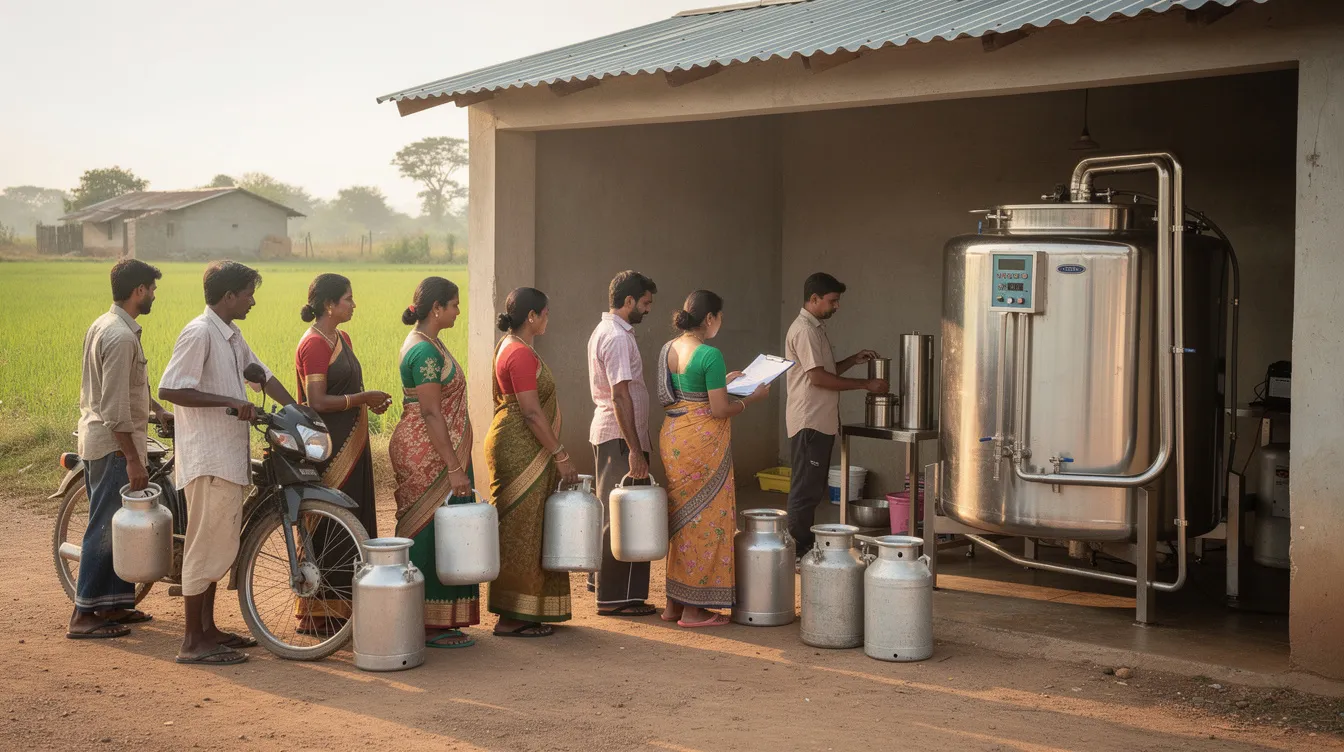
- Village collection centres: Equipped with weighing scales, electronic milk analysers and small bulk milk coolers, these centres form the first link. Fresh milk is collected and tested for quality before processing or dispatch.
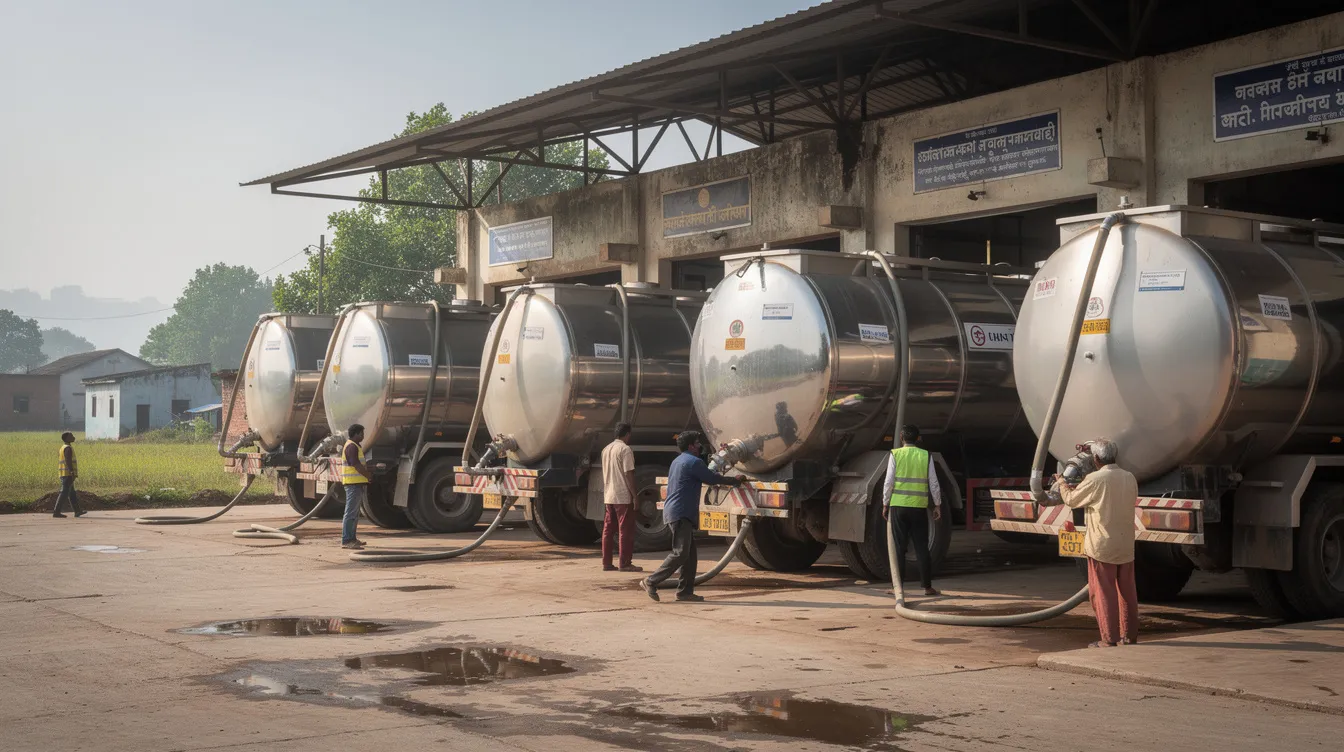
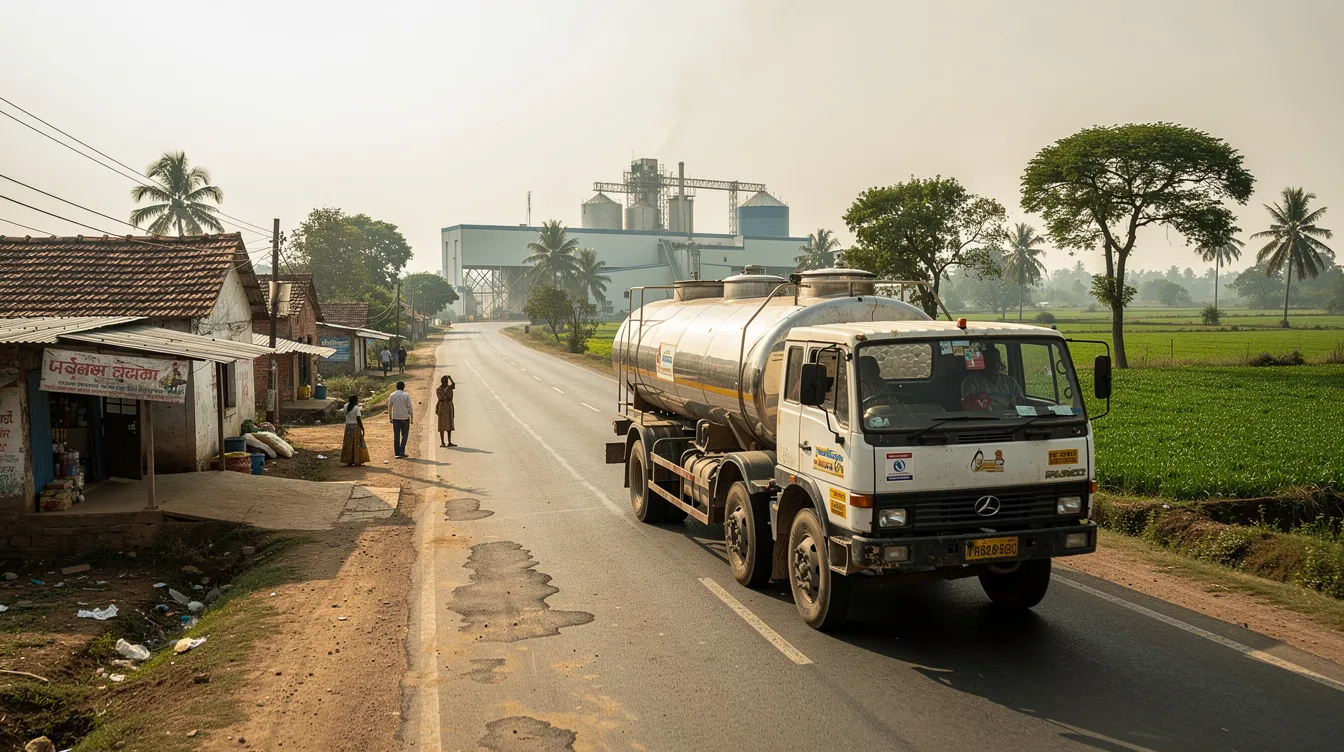
- Bulk milk collection and chilling system: Insulated tanker collection routes connect village centres to the plant. The time from milking to chilling below 4°C should ideally be under 2–3 hours. Cold chain management is crucial to prevent bacterial growth in dairy products.
- Procurement radius: In many Indian projects, the practical radius is 30–80 km, varying by terrain and road quality. Sourcing from local dairy farmers can reduce transport costs and spoilage risks, but excessive distance increases logistics cost and delivery uncertainty.
- Supplementary arrangements: Plants often supplement direct milk procurement with cream from nearby dairy plants, white butter purchases during flush season and contractual purchases from private aggregators to bridge lean-season shortages.
Milk-Shed Analysis and Dairy Raw Material Feasibility for DPR
For any DPR, raw material availability analysis for a dairy project is critically reviewed by banks and should be data-driven.
- Study elements: Livestock population in the catchment area, average yield per animal, marketed surplus (total production minus household and calf consumption), typical fat percentage by breed and seasonal patterns.
- Competition assessment: Existing cooperatives, private dairies, chilling centres and their current milk procurement volumes. Prevailing milk prices and payment terms in the area determine whether a new entrant can attract adequate supply.
- Capacity reconciliation: Proposed plant capacity must be correlated with realistic daily milk fat availability during both flush and lean seasons. Overestimating available fat leads to inflated capacity-utilisation and DSCR projections.
- Documentation: The DPR should include maps or descriptions of procurement radius, major collection routes and potential institutional suppliers willing to supply cream or butter.
Seasonality in Milk Procurement and Its Impact on Ghee/Butter Plants
Seasonal variations influence milk fat composition and ghee production planning. In many Indian milk-sheds, flush season (winter/early spring) brings higher volumes and higher fat percentages, while lean season (summer) brings the opposite.
- Fat variation data: Research from Andhra Pradesh (2023-24) showed cow milk fat dropping from ~4.00% in winter to ~3.49% in summer. Buffalo milk shows similar patterns – winter fat ~9.01%, summer ~8.25%.
- Mitigation strategies: Building butter or ghee stock during flush season, utilising cold storage to smooth supply, and leveraging cream or white butter purchases when direct milk procurement falls short.
- Financial impact: Seasonality affects plant capacity utilisation and working capital (higher stock in flush season requires more cash). Banks scrutinise these assumptions carefully. Adjusting product mix across seasons – more ghee in flush, different dairy products in lean – is covered in ghee, butter and milk fat plant capacity planning and product mix.
Raw Milk Quality Parameters and Acceptance Criteria
Raw milk quality determines ghee and butter quality, yield and shelf life. Rigorous incoming quality controls are essential for ghee production. Fat percentage and acidity levels are critical metrics in ghee raw materials.
- Key parameters: Fat percentage, SNF (milk solids not fat), acidity (lactic acid level), microbial load (assessed through MBRT or plate counts), temperature at receipt, adulteration checks (water, urea, sugar, starch) and organoleptic checks (odour, colour, foreign matter).
- Processing impact: High acidity or microbial load increases clarification losses and damages ghee flavour. Butter produced from poor-quality milk develops off-flavours and poor keeping quality, destroying shelf life.
- Acceptance protocol: On-site testing at milk reception, quick chilling and clear rejection norms are essential – especially for milk intended for fat-rich traditional dairy products like ghee. Quality testing for ghee involves checking fat content and microbial load systematically.
- Compliance: Ghee production requires strict adherence to food safety regulations. Compliance with local regulations is essential for operation of any dairy plant.
Cream Procurement Quality Parameters for Ghee and Butter Plants
When using cream procurement for ghee manufacturing or butter manufacturing, variability in cream quality can directly affect product flavour, yield and shelf life.
- Fat consistency: Cream fat percentage (35–45%) must be consistent for stable butter churn performance and predictable ghee yield.
- Acidity and microbial quality: Low acidity and low microbial count are essential. Aged or poorly handled cream creates oxidised flavours and rancidity – defects that no amount of downstream processing can fix.
- Sensory parameters: Absence of off-odours (onion, garlic, oxidised notes), no phase separation, consistent colour and controlled temperature during transport.
- Contractual standards: Cream procurement contracts should specify minimum fat percentage, maximum acidity level, temperature at delivery, testing method and rejection criteria. This is commercial guidance to protect processing consistency, not legal advice.
Milk Collection, Chilling, Transportation and Plant Reception
The milk collection system for a dairy processing plant is capital-intensive but crucial for maintaining quality from village to processing plant, especially when ambient temperatures routinely exceed 30°C across most of India.
- Village-level operations: Farmer delivers milk, a sample is collected, fat and SNF are tested through an electronic analyser, quantity is recorded and milk is cooled in a bulk milk cooler to 4°C within a few hours. Implementing FIFO helps minimise raw material spoilage in ghee production facilities.
- Transportation: Insulated or refrigerated tankers collect from multiple centres. Route planning minimises travel time and maintains continuous cold chain. A ghee plant needs reliable water and power supply at both collection points and the processing facility.
- Plant reception: The receiving bay includes weighing, sampling, laboratory testing, unloading systems and CIP-enabled pipelines integrated with cream separators and the milk processing line. Plant layout must optimise workflow and safety – detailed in ghee and butter plant land, building, utilities and factory layout.
- Traceability: Tanker and batch codes, supplier IDs and test results form the backbone of traceability. Traceability throughout the production process is essential for quality control.
Procurement Pricing Systems and Recoverable-Fat Based Evaluation
Procurement pricing methods in India include per-litre pricing, fat-based pricing and fat-plus-SNF pricing. A processor making ghee and butter should evaluate economics primarily on a recoverable-fat basis.
- Litre-based purchasing: Operationally simple but risks overpaying for low-fat milk and underpaying high-fat suppliers. This can discourage quality-conscious farmers.
- Fat-based and fat-plus-SNF pricing: Pays per kg of fat (and sometimes per kg of SNF). This aligns incentives for farmers and the ghee plant milk procurement strategy. Purchasing agreements should focus on quality-adjusted pricing metrics.
- Seasonal pricing and contracts: Milk procurement cost for dairy plant varies seasonally. Long-term contracts with farmers, cream suppliers or cooperatives – incorporating seasonal price revisions – stabilise procurement economics.
Raw Material Cost, Co-Products and Overall Economics
Ghee plant raw material cost and butter plant raw material cost form the largest component of cost of goods sold. In the Khatima dairy plant study, milk procurement cost was approximately 76% of total cost of ghee per kg.
- Co-product streams: Raw milk procurement generates skim milk, buttermilk and potentially milk powder or flavoured milk in integrated facilities. These co-products reduce effective raw material cost. Gross profit margins for ghee typically range from 20–30% when co-product revenue is appropriately captured.
- Net cost approach: For DPR and profitability analysis, effective raw material cost attributed to ghee should be assessed net of recoverable value from skim milk or buttermilk, though assumptions must remain conservative.
- Cost drivers: Process yield, clarification losses, transport and chilling costs, procurement incentives, cooling infrastructure and handling losses all influence overall dairy plant raw material sourcing economics.
Table: Raw Material Options for Ghee and Butter Plants
| Raw Material | Typical Fat % | Main Application | Transport/Storage Need | Key Commercial Note |
|---|---|---|---|---|
| Raw whole milk | 3.5–7% (cow/buffalo) | Full processing to ghee/butter | Immediate chilling, insulated tankers | Co-products available; high volume |
| Cream | 35–45% | Butter making, direct ghee | Chilled at 4°C | Lower volume; supplier dependent |
| White butter | 80–82% | Direct ghee conversion | Cold storage at -18°C | Seasonal stock; high working capital |
| AMF | ~99.8% | Industrial ghee, fat blending | Ambient/cool storage | Premium cost; large-scale operations |
Procurement, Plant Capacity Utilisation and Working Capital
Raw material planning for ghee and butter plant directly shapes achievable capacity utilisation and working capital requirement. A ghee manufacturing plant requires 5,000 to 10,000 MT capacity (annually) for commercial viability at industrial scale, and the procurement base must support this.
- Capacity utilisation: If daily milk fat requirement at 80% capacity is, say, 5,000 kg fat, the DPR must demonstrate realistic procurement sources to meet this in both flush and lean seasons. Ghee manufacturing plant setup costs vary significantly by scale, and overbuilding without procurement backing is a costly error.
- Fixed-cost absorption: Low capacity utilisation raises fixed cost per kg of ghee or butter, eroding DSCR and bankability. Total capital investment depends on plant capacity and technology – but returns depend on utilisation.
- Working capital: Daily milk or cream purchases operate on short credit cycles (often cash or 3–7 day payment). Stock of butter or ghee in cold storage, packaging material inventory and customer receivables add to working capital demand. Dairy plants frequently need substantial cash credit limits. Details on how procurement infrastructure and working capital shape total project funding are covered in ghee, butter and milk fat plant project cost and means of finance and industrial ghee manufacturing plant setup cost.
Supplier Risk, Procurement Contracts and Traceability
Depending excessively on one large cream supplier, one cooperative or a small trader group exposes dairy plant raw material sourcing to significant volume and pricing risk. Supplier qualification and audit processes are necessary for quality assurance in ghee sourcing.
- Diversification: Mix direct farmer procurement, village societies, cooperatives, private aggregators and one or two institutional cream or white butter suppliers to spread risk.
- Contract essentials: Product specification, minimum fat content, temperature at delivery, testing method, dispute resolution mechanism, pricing formula (linked to market benchmarks or fat value), minimum/maximum quantity and payment terms.
- Traceability and records: Batch coding, supplier records, regular laboratory testing of milk, cream and butter, and maintenance of rejection and corrective-action logs support food safety systems and lender confidence.
Table: Raw Material Risks and Mitigation
| Risk | Possible Impact | Mitigation Strategy |
|---|---|---|
| Seasonal milk shortage | Low capacity utilisation | Diversify with cream/butter procurement; build flush-season stock |
| Single-supplier dependence | Supply disruption, price pressure | Multiple supplier categories; contractual minimums |
| Quality failures (high acidity, adulteration) | Yield loss, flavour defects, regulatory risk | On-site testing; strict rejection norms; supplier grading |
| Fat percentage drop in lean season | Higher cost per kg fat | Fat-based pricing; seasonal procurement planning |
| Transport delays | Milk souring, bacterial growth | Route optimisation; adequate chilling infrastructure |
Raw Material Planning in a Bankable DPR
From a DPR perspective, raw material procurement for ghee plant and butter plant must be reconciled with installed capacity and projected sales. Break-even for a ghee business ranges from 2 to 4 years, and this timeline depends heavily on procurement assumptions being realistic.
- DPR content: Annual and daily milk fat requirement, assumed average fat percentage, planned mix of feedstocks (milk/cream/butter), procurement radius, supplier types and indicative procurement prices for each route.
- Infrastructure detail: Number of milk collection centres, chilling capacity, tanker fleet, laboratory facilities, quality systems and staffing for procurement operations – this is the milk procurement plan for dairy project that lenders expect to see.
- Seasonality analysis: Separate availability and pricing for flush vs lean season, planned stock build-up, and sensitivity analysis showing impact of 5–10% change in milk fat procurement cost on profitability and DSCR.
- Integration: Raw material assumptions must link directly to production volume, revenue, variable cost, working capital, DSCR and cash flow analysis. All numbers should be project-specific and clearly identified as such.
Bank and Lender Perspective on Dairy Raw Material Procurement
From my advisory experience, lenders ask very pointed questions about dairy plant raw material sourcing before sanctioning medium- or large-scale dairy projects.
- What banks examine: Documented milk-shed study, historical milk availability data, existence of chilling centres, geography and road connectivity, and competition from existing dairy operations in the area.
- Price assumptions: Whether projected milk, cream or butter prices are realistic, how they compare to current regional ghee market levels, and how sensitive project profitability is to procurement price changes.
- Capacity and seasonality: Whether 80–90% utilisation in early years is justified by the procurement base, especially during lean months. Appraisal practices can differ across banks and financial institutions.
- Lender comfort: Strong procurement infrastructure, traceable supplier contracts and realistic working capital planning improve lender comfort. However, no consultant can guarantee loan approval – decisions remain with each bank’s credit committee.
Common Procurement Mistakes in Ghee and Butter Projects
Many otherwise promising dairy projects struggle because of avoidable mistakes in planning milk fat procurement for ghee plant and butter plant.
- Capacity mismatch: Selecting plant capacity purely from machinery supplier brochures without checking milk-shed availability. Assuming uniform milk availability round the year. Ignoring the fall in fat percentage during summer.
- Financial misjudgements: Comparing milk prices without adjusting for fat content. Underestimating transport and chilling costs per litre. Ignoring procurement incentives and commissions paid in the field. Insufficient working capital provisioning.
- Operational gaps: Inadequate chilling capacity, weak laboratory infrastructure, lack of trained procurement staff, no clear rejection norms, and failure to account for spoilage and handling losses in the DPR. Not evaluating competing dairy processors in the procurement region.
Practical Checklist Before Finalising Plant Capacity
Before locking project size and seeking finance, promoters should validate the following:
- Estimate daily milk fat requirement at target capacity
- Confirm preferred feedstock mix (milk vs cream vs butter)
- Identify all potential supplier categories within planned procurement radius
- Conduct preliminary milk-shed survey covering livestock, production, marketed surplus and fat percentage by season
- Assess lean-season availability and identify alternative sources (cream, butter)
- Draft procurement pricing strategy aligned with fat-based evaluation
- Plan testing and quality control arrangements at collection and reception
- Estimate working capital needed to sustain planned stock levels and payment cycles
- Verify alignment of procurement plan with ghee manufacturing plant machinery and equipment cost and overall ghee, butter and milk fat plant project cost and means of finance
Illustrative Financial Comparison of Two Procurement Options
The following example clarifies why recoverable-fat based evaluation is essential when choosing between raw milk and cream procurement. All numbers are illustrative only and do not represent prevailing market prices.
Option A – Raw Milk
- Procurement: 10,000 litres/day at ₹28/litre, fat percentage 4.0%
- Fat available: 10,000 × 0.04 = 400 kg fat/day
- Milk cost per kg fat: ₹28 ÷ 0.04 = ₹700/kg fat
- Additional: Skim milk co-product (~9,600 litres) generates revenue, reducing effective cost
- Infrastructure: Full milk collection, chilling, cream separators, butter churners needed
Option B – Cream (40% fat)
- Procurement: 1,050 kg cream/day at ₹130/kg
- Fat available: 1,050 × 0.40 = 420 kg fat/day
- Cream cost per kg fat: ₹130 ÷ 0.40 = ₹325/kg fat
- Additional: No skim milk co-product; simpler processing but higher per-kg input cost
- Infrastructure: Cream receiving, pasteurisation, butter churning, ghee clarification
In this illustration, cream procurement shows a lower cost per kg fat before considering the co-product revenue that raw milk generates. When skim milk and buttermilk realisations are credited to Option A, the gap narrows. The “right” answer depends on local milk and cream prices, available infrastructure and co-product demand in the specific market.
Every region and time-period has different milk and cream prices. Project-specific analysis is mandatory before finalising procurement strategy.
FAQ – Raw Material Procurement for Ghee and Butter Plants
What is the main raw material for ghee manufacturing?
Ghee is clarified butter – essentially pure animal fat derived from milk. Industrial plants typically use cream or white butter as primary feedstock, though some integrated dairy plants start from raw milk. The choice depends on procurement base, processing capacity and co-product strategy. Ghee production requires high quality milk or cream regardless of the route chosen.
Can a ghee plant purchase white butter instead of raw milk?
Yes. Many commercial ghee manufacturing units procure white butter (80–82% fat) – particularly during flush season – and convert it to ghee through controlled heating and clarification. This simplifies the manufacturing process but exposes the plant to butter market price volatility and limits co-product revenue from skim milk or buttermilk.
How much milk is required to manufacture 1 kg of ghee?
Approximately 20–25 litres of milk are needed, depending on fat percentage. For milk at ~4% fat, expect roughly 25 litres per kg of ghee. Higher fat milk (buffalo at 6–7%) reduces the requirement. These are indicative ranges – actual consumption depends on process efficiency, fat recovery, losses and the specific manufacturing process used.
Do banks check milk availability before financing dairy plants?
Yes. Banks and financial institutions typically examine milk-shed studies, procurement infrastructure, supplier credibility, historical availability data, seasonality and competition from existing dairy processors. A DPR without a convincing raw material availability analysis is unlikely to inspire lender confidence, regardless of how attractive the machinery quotation looks.
How can a ghee plant reduce raw material procurement risk?
Diversify supplier categories (direct farmers, cooperatives, private aggregators, institutional cream suppliers). Use fat-based pricing to align incentives. Build flush-season butter or ghee inventory. Maintain adequate chilling and testing infrastructure. Execute procurement contracts with clear quality and quantity commitments. And above all, align installed plant capacity with realistically available milk fat – not aspirational volumes.
Conclusion: Integrating Procurement Strategy into Project Design
For industrial ghee manufacturing plants and butter manufacturing plants, sustainable access to adequate, good-quality milk fat at competitive landed cost is the real foundation of project success. The ghee market in India continues to grow, demand for quality traditional dairy products is strong, and consumers increasingly expect consistency – but none of this matters if a plant cannot secure its raw material reliably.
Machinery, land and utilities are important. But without a robust dairy raw material procurement plan – supported by milk-shed analysis, supplier diversification, seasonality planning and sound working capital – even sophisticated plants can operate at low utilisation, eroding margins and threatening loan repayment.
From my project-finance advisory experience, the most bankable DPRs are those that demonstrate clear linkage between milk fat procurement for ghee plant, plant capacity, manufacturing process, product mix, cost structure and loan-repayment capacity. Promoters, investors and consultants should treat raw material procurement not as a post-commissioning operational matter, but as a core pillar of project design, documentation and lender discussions from day one.