

Key Takeaways
- A UHT milk plant bank loan is appraised primarily on project viability, projected cash flows and repayment capacity, not only on collateral security.
- A bankable detailed project report, realistic financial projections and CMA Data are essential for UHT milk plant project finance.
- Separate facilities are normally required: a term loan for fixed assets and working capital limits for raw milk procurement, packaging and operations.
- Ratios like debt-equity and debt service coverage ratio guide the lender’s decision, but each bank applies its own norms and policies.
- I, CA Manish Gugliya at ProjectReportBank.com, assist with DPR preparation, projections and loan structuring, but do not guarantee loan sanction.
Introduction: Why UHT Milk Plant Bank Loan Needs Specialised Project Finance
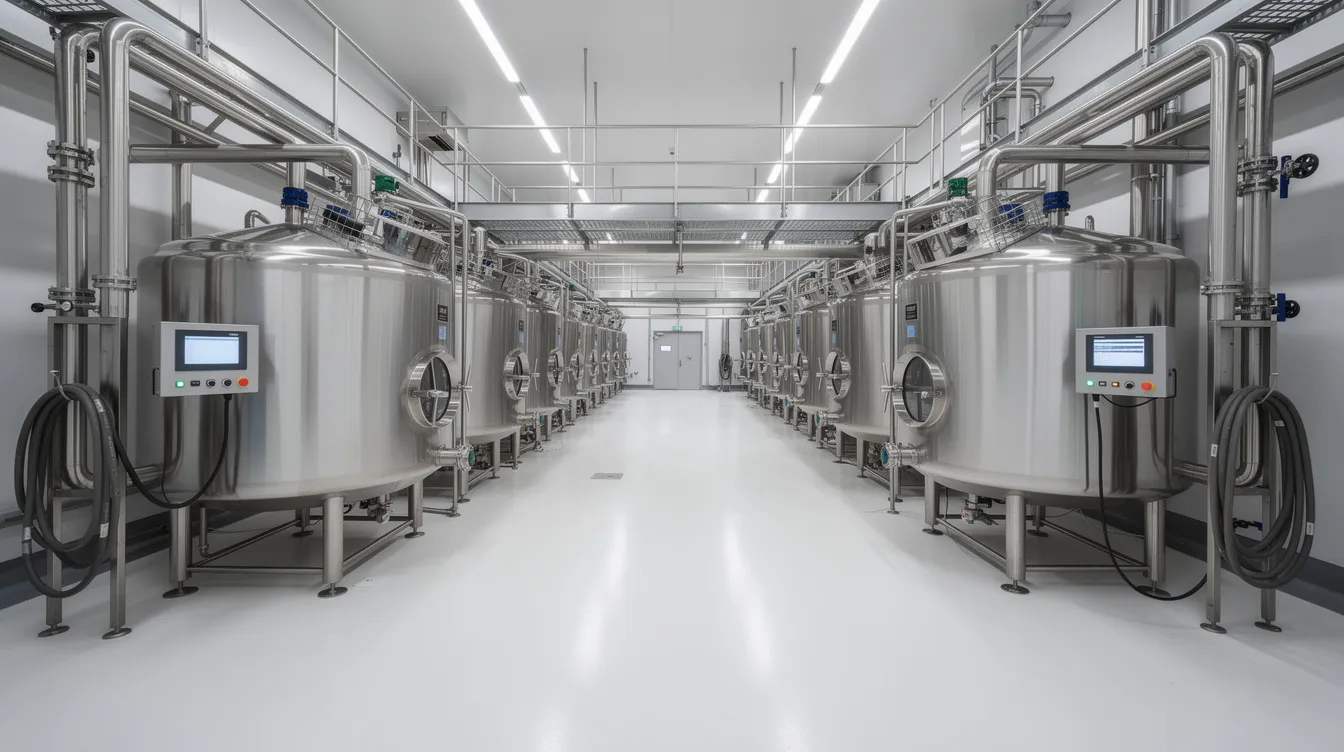
A UHT milk processing and aseptic packaging plant is among the most capital-intensive setups in the dairy processing sector. UHT milk is heated to 135°C to 150°C for sterility, enabling it to be stored at room temperature until opened. Plants designed for 50,000 to 1,50,000 LPD capacity involve aseptic filling lines, refrigeration, boilers, CIP systems, quality-control labs and cold-chain equipment. UHT milk processing plant setup costs range from Rs. 50 to 150 Lacs for smaller units, and scale up to several hundred crores for large facilities. Investment for dairy farming projects linked to milk production and procurement starts at Rs. 10 Lacs, adding further capital needs.
When a lender evaluates a UHT milk plant bank loan, the assessment goes well beyond collateral. Banks examine milk procurement planning, installed capacity, technology selection, market strategy, dairy farming linkages, projected cash flows, DSCR and promoter contribution. A bankable detailed project report and CMA Data with realistic assumptions on milk processing volumes, selling prices, operating costs and capacity ramp-up form the backbone of UHT milk plant project finance.
I am CA Manish Gugliya (FCA, DISA ICAI), a practising Chartered Accountant with over 20 years of experience preparing project reports, financial projections and bank-finance proposals for manufacturing and food-processing projects. This article walks you through types of bank finance, appraisal methods, eligibility, documentation and practical steps to improve the bankability of your UHT milk project.
What Is UHT Milk Plant Project Finance?
UHT milk plant project finance means funding the establishment or expansion of a UHT milk manufacturing business based primarily on the project’s own cash flows and viability. This differs from general balance-sheet lending, where the bank evaluates the borrower’s overall financial position across all businesses.
In cash-flow-based project appraisal, Indian banks focus on projected revenue from milk products, operating margins, DSCR and loan repayment capacity. The project is assessed as a ring-fenced unit. Collateral-backed lending, by contrast, relies mostly on property value. For UHT milk plant financing in India, banks typically combine both approaches: they need to see project viability and security comfort.
A term loan for a UHT milk processing plant is usually sanctioned against a well-prepared DPR for bank finance, supported by standard KYC documents, financial statements and technical quotations.
Types of Finance Required for a UHT Milk Plant
A complete UHT milk project usually requires multiple banking facilities. Term loans and working capital loans are structured for UHT milk processing projects, and sometimes non-fund-based facilities are also needed.
Term Loan
Standard term loans cover 70% to 80% of UHT plant project costs. The term loan finances eligible fixed assets such as:
- Land development (where permitted by the lender)
- Factory building and civil works
- Milk reception, chilling and storage systems
- UHT processing equipment (homogeniser, steriliser)
- Aseptic filling and packaging machinery
- Refrigeration and cold-chain equipment
- Boilers, CIP and water-treatment systems
- Electrical installations and power infrastructure
- Laboratory and quality assurance equipment
- Pre-operative expenses and contingency, subject to lender policy
Working Capital Finance
Working capital loans cover ongoing expenses such as raw milk procurement and utilities. The main components include cash-credit or overdraft limits for daily milk purchase from milk producers, aseptic packaging material, chemicals, consumables, finished-goods inventory and receivables from distributors and institutions.
Other Facilities
Banks may provide non-fund-based facilities such as letters of credit for imported aseptic packaging machinery or UHT modules, and bank guarantees where required by vendors. NABARD facilitates institutional credit for dairy processing infrastructure through commercial banks, acting as a refinancing agency for agricultural and dairy processing loans. Promoter funding and unsecured loans from promoters may form part of the means of finance; their acceptance and subordination terms depend on each bank’s policy.
Typical UHT Milk Plant Project Cost
UHT milk processing plant project cost varies widely. A 20,000-30,000 LPD unit may cost a few crore rupees, while large-scale plants with multiple aseptic lines run into several hundred crores. UHT milk processing plants can produce 100 to 200 million liters annually at full capacity, and UHT milk production capacity ranges from 100 to 200 million liters annually for mid-to-large facilities.
Major cost heads include:
- Land and site development
- Civil construction (factory building, cold rooms, stores)
- UHT processing lines and aseptic packaging machinery
- Utilities: boiler, genset, refrigeration, air compressors, CIP
- Milk collection and chilling infrastructure at village level
- Quality-control lab and testing equipment
- Pre-operative expenses and contingency
How these costs add up depends on plant capacity, product mix (plain UHT milk, flavoured milk, cream), direct or indirect UHT technology, number of filling lines, packaging format (200 ml vs 1 litre packs), level of automation, and whether plant machinery is imported or domestic. For a detailed breakdown, see UHT milk plant project cost and means of finance.
Means of Finance and Promoter Contribution
The total project cost must be matched with identified sources of funding. A typical means-of-finance structure includes promoter’s equity or capital, UHT milk plant term loan, permissible unsecured loans from promoters, and wherever eligible, capital subsidy or interest subsidy under approved schemes. Promotion of dairy processing is supported through various government-backed financial schemes, and banks typically fund 80% to 90% of project costs with required promoter contributions of 10% to 20%.
Banks insist that promoters bring in a reasonable portion of the total cost from verifiable sources. Proof such as bank statements and income-tax returns is reviewed. The Animal Husbandry Infrastructure Development Fund provides debt financing of up to 90% of project costs and offers interest subsidies of 3% for eligible dairy processing projects over 8 years, including a 2-year moratorium. AHIDF supports large-scale dairy processing projects across the country.
The debt-equity ratio is a key parameter. Excessive debt weakens DSCR and repayment capacity. Acceptable ratios differ by bank, scheme and risk profile. Expansion projects may include internal accruals from existing profitable dairy farming or milk processing businesses as part of the means of finance.
UHT Milk Plant Loan Eligibility
UHT milk plant loan eligibility is assessed case by case. Banks follow common parameters before sanctioning bank finance for a UHT milk plant:
- Legal constitution: Proprietorship, partnership, LLP, company, FPO or cooperative; KYC compliance and clean credit history
- Financial capacity: Adequate net worth, ability to bring in margin money, transparent source of capital investment
- Milk procurement: Documented arrangements with dairy farmers, cooperatives or bulk suppliers; distance from milk shed; chilling and transportation facilities
- Technical readiness: Land in borrower’s name or valid long-term lease, statutory approvals in process, realistic plant capacity, confirmed machinery quotations and a clear manufacturing process
- Commercial viability: Product range, distribution plan, target geography, institutional tie-ups, pricing strategy, reasonable sales estimates
- Security and financials: Primary and collateral security, projected profitability analysis, DSCR, repayment capacity and overall project viability
Essential documentation for loans includes project reports and KYC compliance. Banks require various regulatory approvals before loan sanction, including FSSAI licensing.
How Banks Appraise a UHT Milk Project
Indian banks carry out promoter, technical, commercial and financial appraisal before approving UHT milk plant project finance. Technical feasibility and financial viability are critical for securing loans for UHT plants. The appraisal checks consistency between the DPR, financial projections, manufacturing process, plant capacity and market assumptions.
Promoter Appraisal
Banks evaluate promoters’ education, experience in dairy farming, milk processing, FMCG or related sectors, and their track record. Lenders review personal and business credit history, current liabilities, net-worth statements and ability to sustain promoter contribution. A promoter upgrading from a traditional milk processing unit to a UHT plant, for instance, strengthens the case through demonstrated sector knowledge.
Technical Appraisal
This checks whether the proposed plant capacity aligns with local milk availability and target markets, and whether the selected technology is appropriate. Key parameters include installed capacity, phase-wise capacity utilisation, milk collection network, UHT milk plant capacity planning and line balancing, machinery layout, aseptic packaging system, utilities (steam, refrigeration, power, CIP) and quality-control setup.
UHT milk processing requires heating milk to 135°C to 150°C. Banks want to understand the UHT milk manufacturing process and flow chart and how direct versus indirect UHT processing technology affects cost and product quality.
Commercial Appraisal
Lenders study the business model: target cities and regions, retail versus institutional sales, own brand versus white-label, and reliance on distributors. Consumer preference for long-shelf-life dairy products is increasing, and urban retail chains are increasing procurement of UHT milk products. Rising awareness of health drives demand for UHT milk products, and UHT processing reduces logistical costs due to long shelf life.
The global UHT milk market was 130.97 billion liters in 2025, and the UHT milk market is projected to reach 205.42 billion liters by 2034, expected to grow at a CAGR of 5.10% from 2026 to 2034. These market trends indicate strong business opportunities. Banks examine the competitive landscape, shelf-life benefits and distribution strategy. For structuring revenue streams, see UHT milk plant revenue model and product mix.
Financial Appraisal
Banks rely on financial appraisal to decide quantum of term loan, working capital limits and repayment schedule. The financial appraisal process includes assessing debt service coverage ratio for loan servicing capacity. Key metrics include:
- Projected turnover, gross profit and EBITDA
- Gross profit margins for UHT milk typically range from 25-35%
- Break-even point and cash accruals
- Debt-equity ratio and interest coverage
- Sensitivity analysis and payback period
See UHT milk plant financial projections for DPR for building multi-year projections, UHT milk plant profitability and break-even analysis for margin assessment, and UHT milk project DSCR and loan repayment capacity for repayment modelling.

Working Capital Assessment for a UHT Milk Plant
Term loan and working capital are appraised separately. Even a profitable project on paper can face liquidity stress if working capital is underestimated. Raw milk accounts for 70-80% of UHT plant operating expenses, making daily procurement the largest working capital driver.
The main elements of working capital for UHT milk manufacturing include daily raw milk purchases from milk producers, packing material inventory, chemicals and consumables, finished-goods stock for multiple weeks, and credit extended to distributors and institutions. Supplier credit for packaging material, seasonal variations in raw milk availability and price, and market trends in input costs all affect bank limits and promoter margin requirements.
Realistic assumptions on inventory-holding days and receivable days are essential to compute cash-credit needs as part of CMA Data. For sample calculations and cycle analysis, refer to UHT milk plant working capital requirement.
Documents Required for a UHT Milk Plant Bank Loan
Actual checklists differ by bank and scheme, but covering these items usually speeds up processing. A detailed project report is crucial for loan applications and includes financial projections.
Promoter and KYC Documents
- PAN, Aadhaar, address proof, photographs of all promoters
- Partnership deed, MOA/AOA, LLP agreement or registration certificates as applicable
- Net-worth statements, declarations of existing liabilities
- Personal and business profiles highlighting experience in dairy farming, milk processing or FMCG
Business and Financial Documents
- Last 2-3 years’ audited financial statements and income-tax returns (for existing businesses)
- Recent bank statements (6-12 months)
- Existing loan sanction letters and repayment track record
- GST registration and returns; details of contingent liabilities
Project Documents
- Comprehensive UHT milk plant DPR for bank loan covering technical, commercial and financial aspects
- Projected balance sheets, P&L statements, cash-flow and fund-flow statements
- Projected DSCR, break-even analysis, term-loan repayment schedule and working capital assessment
- CMA Data formatted as per bank requirements (Form I to Form VI)
Technical and Commercial Documents
- Land ownership documents or long-term registered lease, site plan, plant layout and building estimates
- Machinery quotations from reputed UHT and aseptic packaging suppliers
- Manufacturing process details, project capacity calculations
- Milk procurement plan, product and packaging plan, distribution or buyer letters of intent
Statutory Approvals
Required approvals vary by state, location and plant size. Environmental clearances and compliance with food safety regulations are necessary for loan approval. These may include FSSAI licensing, pollution-control consent, factory registration, fire safety NOC, electricity connection sanction and local municipal clearances. Promoters should check exact requirements with relevant authorities.
Importance of a Bankable DPR for UHT Milk Plant Bank Loan
A bankable DPR credibly connects technology, plant capacity, milk procurement, market demand and realistic financial projections into a coherent plan. It should cover:
- Technical feasibility and appropriate UHT technology
- Availability of raw materials (raw milk from clean milk production networks)
- Realistic total project cost and clear means of finance
- Phased capacity utilisation and product mix strategy
- Sustainable operating margins, adequate working capital
- Acceptable DSCR and resilience under downside scenarios
For a deeper discussion, see UHT milk plant feasibility study and project viability. A DPR does not guarantee loan approval but enables transparent, structured credit assessment.
Role of CMA Data and Financial Projections
CMA Data is a structured statement summarising historical and projected project financials, working capital assessment and ratios. It is used in term-loan and working-capital appraisal across Indian banks.
CMA Data for a UHT milk manufacturing business should flow from the DPR assumptions: production volumes, selling prices, costs of raw milk and packaging, utilities, salaries and overheads. Internal consistency is critical: installed capacity vs projected sales; milk procurement vs production; profit figures vs balance-sheet reserves; cash-flow estimates vs term-loan instalments.
As a Chartered Accountant, I prepare, review and analyse financial projections and CMA Data for appraisal purposes. Projected figures are estimates based on assumptions; they are not a guarantee of future performance. I recommend including multiple scenarios (base, optimistic, conservative) showing how DSCR and repayment capacity move under varying conditions.
Security and Collateral Requirements
While UHT milk plant project finance is cash-flow-based, banks usually secure their exposure. Primary security includes a charge over all fixed assets created from the term loan (plant, machinery, building) and hypothecation of current assets for working capital. Collateral for loans is often secured through hypothecation of plant and fixed assets, and mortgages or other secured assets are used to satisfy collateral requirements.
Additional collateral may include equitable or registered mortgage of immovable property and personal or corporate guarantees. Adequate insurance of plant, machinery and stocks with bank clause is standard. Collateral-free or guarantee-backed finance may be available to qualifying MSMEs under eligible frameworks, but availability depends on scheme norms, borrower profile and bank policy.
Loan Repayment Period and Moratorium
Term-loan repayment for a UHT milk plant is structured after considering the implementation schedule, trial runs, commercial operation date and projected cash accruals. Repayment periods for loans generally range from 5 to 9 years. Under certain schemes, repayment tenure for loans can extend over 8 years with a 2-year moratorium on principal.
Banks may grant a moratorium during construction and stabilisation, with regular instalments commencing after commercial operations begin. Instalment frequency (monthly or quarterly) and tenure are selected so that DSCR remains comfortable during capacity ramp-up. Promoters should avoid artificially long tenures that inflate interest cost and compress future borrowing capacity.
Step-by-Step UHT Milk Plant Bank Loan Application Process
The process begins with conceptualising the project capacity and product mix, then studying milk availability and industry trends in Indian markets. The next step is estimating UHT milk processing plant project cost and deciding the means of finance, including total capital investment and the split between equity and debt.
Once these fundamentals are settled, promoters should obtain technical quotations from reputed equipment suppliers, then prepare the DPR and financial projections. Working capital assessment and CMA Data preparation follow. All promoter and project documents should be compiled, including a feasibility report and profitability analysis.
The promoter then selects an appropriate lender (PSU bank, private bank, cooperative bank or financial institution) and submits the proposal. Responding to appraisal queries promptly is critical. After appraisal, the bank conducts legal and technical valuation of properties, documentation and creation of security. Banks may provide fund disbursement in phases tied to project milestones, with utilisation certificates and progress reports required throughout implementation.
Common Reasons for Loan Rejection or Delay
Frequent weaknesses include inadequate promoter contribution, unclear source of margin money, unrealistic sales or pricing assumptions and overly aggressive capacity-utilisation projections. In milk processing unit proposals, weak milk procurement planning, underestimation of packaging and utility costs, and ignoring maintenance costs of UHT and aseptic packaging machinery are common oversights.
Financial issues such as insufficient working capital estimation, weak DSCR, mismatch between DPR and CMA Data, and incomplete projections also cause delays. On the compliance side, unresolved land-title issues, inadequate collateral cover and poor repayment track record in existing borrowings raise red flags.
Addressing these issues in advance with professional support can improve the credibility of the proposal, though it cannot guarantee approval.
How to Improve the Bankability of the UHT Milk Project
- Use well-researched, conservative assumptions for sales volumes, prices and costs, consistent with industry trends and local market potential
- Document promoters’ experience and past achievements in dairy farming or milk processing with resumes and research reports
- Obtain multiple competitive quotations for UHT modules, aseptic packaging lines and utilities from established suppliers
- Clearly document milk-supply arrangements, marketing strategies, distribution network design and institutional tie-ups
- Prepare a realistic implementation schedule with adequate contingency, separate working capital assessment, and sensitivity analysis for DSCR under adverse conditions
- Respond transparently and promptly to all lender queries; avoid overstatement of profitability or underreporting of risks
Key Risks in UHT Milk Projects and Mitigation Measures
All UHT milk plant projects face technical, market and financial risks. Lenders expect risk identification and mitigation plans in the DPR.
| Risk | Possible Financial Impact | Suggested Mitigation |
|---|---|---|
| Raw milk availability fluctuations | Capacity underutilisation; revenue shortfall | Diversify milk procurement across multiple dairy farming clusters |
| Seasonal milk-price changes | Operating cost increase of 10-20% in lean season | Build price-variation buffers in projections; forward contracts |
| Packaging-material cost increases | Margin compression on finished milk products | Multi-vendor sourcing; negotiate annual rate contracts |
| Capacity underutilisation | Higher per-unit cost; weak DSCR | Conservative ramp-up assumptions; phased capacity addition |
| Product returns or near-expiry write-offs | Revenue loss; working capital strain | Robust demand forecasting; FIFO inventory management |
| Higher distribution expenses | Lower gross profit margins | Optimise logistics; focus on regions with strong demand |
| Power and steam cost escalation | Utility costs exceeding estimates | See UHT milk plant utilities covering power, steam, water and CIP for planning |
| Quality failures or shelf-life issues | Product recalls; brand damage | Strict UHT milk quality control and shelf-life testing protocols |
| Machinery breakdown | Production loss; delayed deliveries | Preventive maintenance; adequate spares inventory |
| Delayed project implementation | Interest cost overrun during construction | Realistic implementation schedule with contingency |
| Interest-rate changes | Higher debt-servicing burden | Factor rate movement in sensitivity analysis |
| Working capital shortages | Inability to procure raw milk consistently | Separate, adequate working capital limits; promoter margin |
How CA Manish Gugliya and ProjectReportBank.com Can Assist
In my practice spanning over 20 years, I have prepared DPRs, CMA Data, financial projections and bank proposals for food-processing and dairy projects across various industries and regions. My services for UHT milk plant financing in India include:
- Customised DPR preparation covering technical, commercial and financial analysis
- Project-cost analysis and structuring the means of finance
- Working capital assessment and CMA Data preparation
- DSCR and repayment-capacity analysis with sensitivity scenarios
- Assistance with bank presentation and responding to financial queries during appraisal
I do not sanction loans, cannot influence bank decisions and do not certify future projections. My role is to help promoters present a technically and financially sound proposal, improving their prospects for securing funding.
If you are planning a UHT milk processing and aseptic packaging plant in India, contact me through www.projectreportbank.com for a customised DPR and project-finance support tailored to your specific capacity, product mix and location.
Frequently Asked Questions on UHT Milk Plant Bank Loan & Project Finance
These questions address common practical doubts of first-time promoters seeking UHT milk plant financing in India.
Can I get a bank loan for a UHT milk processing plant?
Commercial banks, cooperative banks and financial institutions regularly fund viable UHT milk projects. Approval depends on promoter profile, project feasibility, adequate security and compliance with internal credit policies. A strong UHT milk plant bank loan proposal with a realistic DPR, credible financial projections and satisfactory credit history improves the chances of approval but does not guarantee sanction. Milk producer companies and FPOs are also eligible under certain schemes.
What expenses can be covered under a UHT milk plant term loan?
Term-loan coverage typically includes land development (where permitted), building, UHT processing equipment, aseptic packaging machinery, utilities (boiler, refrigeration, compressors, CIP), quality-control lab, electrical installations and eligible pre-operative expenses and contingencies per bank norms. Pure working-capital items like raw milk, packaging and routine operating expenses are financed separately through working-capital limits.
How much promoter contribution is generally required?
Banks set their own minimum margin requirements. Many MSME and mid-sized UHT projects see promoters bringing roughly 25-40% of total project cost. Under schemes like AHIDF, the maximum limit of debt can reach 90%, requiring 10% promoter contribution. What matters is a transparent, verifiable source of margin money and a gearing level that allows comfortable DSCR and repayment capacity.
Is collateral compulsory for a UHT milk plant loan?
Primary security on project assets is standard. Collateral requirements depend on loan size, scheme, risk rating and bank policy. Some smaller MSME proposals may qualify for guarantee-backed or reduced-collateral facilities. Discuss collateral expectations with your lender early and plan securities accordingly. A Farmer Producer Organisation (FPO) can secure up to Rs. 15 Lacs in capital subsidy and may have different collateral norms under specific schemes.
Are government subsidies or interest subsidies available for UHT milk plants?
Various central and state-level schemes for dairy, food processing or MSMEs may offer financial assistance including capital subsidies, interest subsidies or credit guarantees. For example, AHIDF offers 3% interest subvention for eligible dairy processing projects. Availability and eligibility vary by location, project type and applicant category. Check the current status of schemes on official government portals and with your chosen bank before relying on any subsidy in the means-of-finance plan.
Conclusion
Successful UHT milk plant bank finance requires much more than machinery quotations or a standard project report. It demands coherent alignment of technical design, milk procurement strategy, plant capacity, market demand, total project cost, promoter contribution, working capital planning and realistic cash-flow-based repayment capacity.
A professional DPR, robust financial projections and properly prepared CMA Data make it easier for lenders to evaluate the proposal objectively. If you are an entrepreneur, MSME or investor planning a UHT milk processing and aseptic packaging plant in India, I invite you to engage with me through ProjectReportBank.com for a customised DPR and project-finance support built around your specific business requirements and investment opportunities.