
Key Takeaways
- UHT milk plant project cost covers far more than the processing line – it includes land, buildings, UHT equipment, aseptic packaging systems, utilities, effluent treatment, pre-operative expenses, contingency and working-capital margin.
- Total cost in India varies widely based on installed capacity (from small-scale units to 200,000+ LPD facilities), technology choice, packaging format and location, making only illustrative figures possible without a project-specific assessment.
- Banks evaluate both the project cost breakup and the means of finance – promoter contribution, term loan, working-capital limits and any applicable subsidy – before sanctioning a UHT milk plant bank loan.
- A bankable DPR with realistic financial projections, CMA Data and clear cost classifications is essential for securing funding from any lending institution.
- This article reflects the advisory perspective of CA Manish Gugliya, FCA, DISA (ICAI), a practising Chartered Accountant specialising in DPRs and project finance for dairy processing projects since 2006.
Introduction – Understanding UHT Milk Plant Project Cost
A UHT milk plant is an integrated dairy processing facility that encompasses milk reception, chilling, clarification, standardisation, homogenisation, ultra-high-temperature sterilisation, aseptic storage, aseptic packaging, quality control and multiple utility systems. Understanding the full UHT milk plant project cost is the first step toward building a viable investment proposal – yet many promoters make the mistake of equating the cost of a UHT processing line with the total capital investment.
Setting up a UHT milk processing plant requires higher capital expenditure than pasteurised milk units, primarily because of the specialised sterilisation equipment and aseptic packaging infrastructure involved. At the entry level, UHT milk processing plant setup costs range from ₹20 to ₹30 lakhs for very small pilot-scale units, while a larger 2,000-litre-per-day UHT plant costs ₹50 to ₹70 lakhs. Commercial-scale plants processing 50,000 to 300,000 LPD demand investments running into tens or hundreds of crores, depending on technology and location.
The global UHT milk market stood at 130.97 billion litres in 2025 and is projected to reach 205.42 billion litres by 2034, driven by urbanisation, cold-chain limitations and rising demand for long-shelf-life dairy products. India, with its vast milk production base, presents significant business opportunities for dairy entrepreneurs willing to invest in UHT processing capacity.
As a practising Chartered Accountant, I – CA Manish Gugliya – regularly assist entrepreneurs in preparing detailed project reports, financial projections and CMA Data for dairy processing projects. This article provides a structured overview of project cost classification and financing options. For a broader discussion on establishment requirements, refer to the guide on UHT milk processing plant setup cost in India.
What Is Included in a UHT Milk Plant Project?
A commercial UHT plant is not a single steriliser on a factory floor. It is a complete milk processing plant with reception, processing, packaging, infrastructure and utilities working as an integrated unit. UHT milk processing technology includes sterilisers, homogenisers and aseptic packaging lines, each with distinct cost implications.
The main functional blocks typically include:
- Raw-milk reception, weighing, chilling and basic quality testing – milk must be chilled within two hours of milking for quality preservation.
- Clarification, separation, standardisation and homogenisation before UHT treatment.
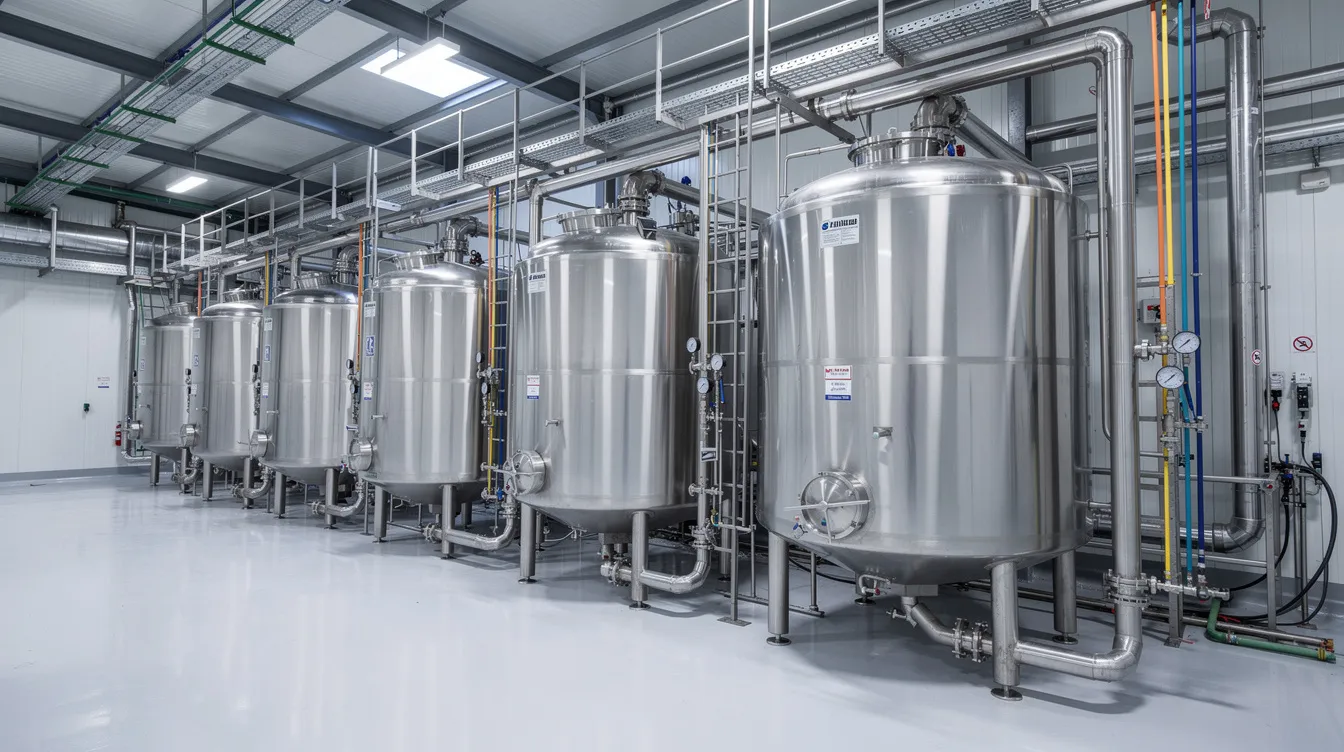
- UHT heating section, holding tube, cooling and aseptic buffer tanks.
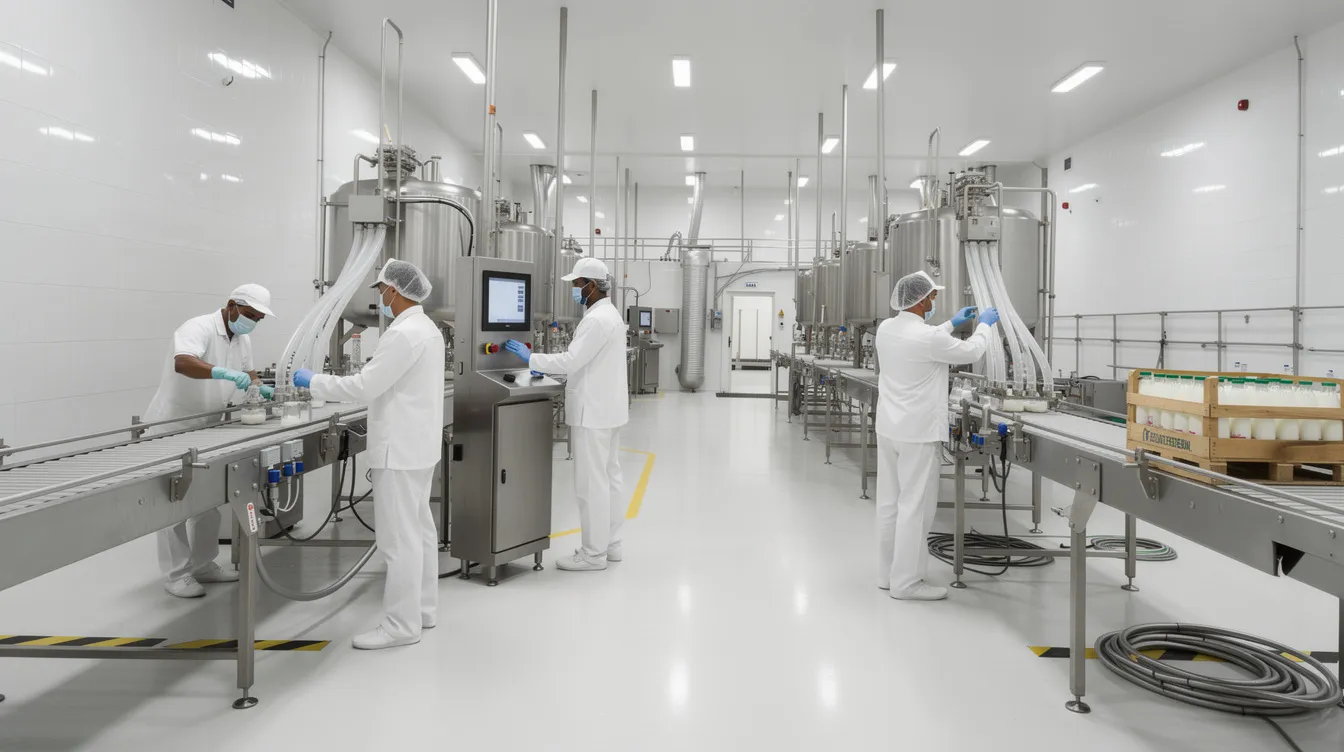
- Aseptic filling, carton packaging, coding and secondary packaging line.
- Cleaning-in-place systems, quality-control laboratory and microbiology lab.
- Utilities: boiler, refrigeration system, compressed air, water-treatment plant, effluent-treatment plant, electrical systems and DG set.
- Finished-goods cold storage, loading bays and dispatch area.
The exact configuration depends on plant capacity, product mix (plain UHT milk, flavoured milk, cream-based beverages and more products), packaging format and whether the project is a greenfield dairy processing plant or expansion of an existing dairy. The UHT milk manufacturing process and flow chart provides further context on how process stages determine equipment scope.
Key Factors Determining UHT Milk Plant Cost in India
The cost of setting up a UHT milk plant in India is shaped by capacity, technology choices, packaging format, location and level of integration. Before approaching any bank or investor, a structured feasibility study and detailed business plan must evaluate these factors. The sub-sections below discuss each cost driver and its financial impact.
Installed Milk-Processing Capacity and Line Utilisation
Plant capacity is a significant cost driver in UHT processing projects. Capacity, measured in litres per day or lakh litres per day, directly influences machinery sizing, building area, utility loads, packaging-line speed and working capital.
Indian UHT plants typically fall into broad bands – 50,000 LPD, 100,000 LPD, 200,000 LPD and above. For reference, the Bhilwara Milk Union’s 25,000 LPD UHT plant was sanctioned at approximately ₹46.82 crore, while Keventer’s 200,000 LPD facility near Kolkata cost around ₹150 crore. Higher capacity UHT plants benefit from economies of scale but require more upfront capital.
Capacity utilisation – for example 50% in Year 1, ramping to 80–90% by Year 3 – affects both equipment sizing and bankable projections. Under-utilised capacity weakens DSCR and strains repayment schedules. Proper UHT milk plant capacity planning and line balancing prevents both under-investment and expensive idle capacity.
Product Mix and Dairy Products to Be Handled
UHT plants may handle standardised milk, toned milk, double-toned milk, flavoured milk and certain dairy beverages. Each product mix affects both machinery scope and project cost.
- Plain UHT milk requires standard processing and packaging, while flavoured variants need additional mixing tanks, ingredient storage and quality-control steps.
- Higher-fat products or cream-based beverages demand more precise process control and chilling capacity.
- Fortified UHT milk products are gaining strong market traction, supported by health and nutrition trends and consumer preference for long-shelf-life dairy products.
The DPR should clearly define the planned product mix because banks will test sales, gross profit margins and working-capital assumptions for each category. Raw milk typically accounts for 70–80% of total operating expenses, so procurement pricing directly influences margins across all milk products.
Processing Technology: Direct vs Indirect UHT and Level of Automation
UHT systems in India are generally either direct (steam injection or infusion) or indirect (plate or tubular heat exchangers). The UHT steriliser is typically a tubular or plate-type system that heats milk to 135°C–150°C for a few seconds.
- Direct UHT systems carry higher equipment cost but offer fast heating and sometimes better product quality for certain dairy products.
- Indirect systems have a relatively lower capital cost and suit standard UHT milk in many plants.
A detailed comparison is available in the guide on direct vs indirect UHT milk processing technology. The automation level – manual valves versus PLC-controlled SCADA systems – significantly affects UHT milk plant CAPEX, though higher automation can reduce manpower cost and improve consistency over time.
Aseptic Packaging Format and Aseptic Filling Line Cost Impact
Aseptic packaging lines can represent 40% to 50% of the total machinery budget for UHT facilities, making this one of the most consequential cost decisions. UHT processing requires specialised aseptic processing and packaging to achieve a long shelf life without refrigeration.
Key factors influencing aseptic packaging plant cost include:
- Pack size and format – 200 ml, 500 ml, 1 litre cartons or family packs.
- Speed of the aseptic filling line (packs per hour) and level of automation.
- Supplier – international brands such as Tetra Pak, SIG or GEA carry premium pricing.
The aseptic filling and packaging process for UHT milk explains why hygienic filling is crucial for shelf stability. Promoters evaluating different carton technologies can review aseptic carton packaging systems for UHT milk for further insight into format and supplier options.
Ongoing packaging-material costs – often imported or licensed – also affect working capital significantly due to minimum order quantities.
Indigenous vs Imported Machinery and Supplier Selection
Indian UHT plants may use fully imported lines, mixed configurations or largely indigenous equipment. Cost considerations include:
- Base-price differences, freight, insurance and customs duties for imported systems.
- Local commissioning support, spare-parts availability and after-sales service.
- Foreign-exchange exposure where payments are denominated in EUR or USD.
Detailed item-wise quotations are essential for realistic budgeting, as discussed in the guide on UHT milk plant machinery and equipment cost. Banks typically expect at least proforma invoices from recognised suppliers as part of the DPR. Obtaining multiple quotations for major items – UHT system, aseptic filler, chiller and boiler – is advisable to validate the UHT processing line cost.
Greenfield UHT Milk Plant vs Expansion of an Existing Dairy
The project cost structure differs significantly between greenfield projects and capacity expansion inside an existing milk processing plant.
A greenfield UHT plant must budget for land purchase, full civil construction, utilities from scratch, laboratory setup and administrative infrastructure. An existing dairy may already have milk reception, chilling, ETP and administrative systems, so investment may focus on the UHT module, aseptic packaging and selective building modifications.
The DPR should explicitly state which infrastructure is existing versus new, as this affects total capital cost and collateral position. Banks reviewing expansion proposals will examine both historical financials of the existing dairy business and projected consolidated performance.
Location, Milk-Procurement Network and Infrastructure Requirements
Location choice links directly to milk procurement cost, market access and infrastructure requirements. States like Gujarat, Rajasthan, Karnataka, Uttar Pradesh and Tamil Nadu are key dairy farming regions where UHT milk demand is growing.
- Land price varies considerably between industrial areas and agricultural zones.
- Distance from milk collection centres directly affects raw material transport costs.
- Availability of reliable power, industrial water, labour and road connectivity influences both capital and operating expenditure.
Detailed layout planning is discussed in the guide on UHT milk plant land, building and hygienic layout requirements. Remote locations may reduce land cost but increase logistics and utility expenses; urban sites present the opposite trade-off.
Detailed UHT Milk Plant Project Cost Components
A professional DPR classifies project cost into standard heads so the bank can clearly see how funds will be applied. The table below summarises these heads:
| Project Cost Head | Main Components | Important Estimation Considerations |
|---|---|---|
| Land & site development | Purchase/lease, registration, levelling, roads, boundary | Ownership type affects bank treatment |
| Building & civil works | Processing halls, aseptic zones, utilities block, warehouse | Hygienic zoning and cleanroom areas raise cost |
| Plant & machinery (UHT line) | Tanks, separators, homogenisers, UHT steriliser, piping | Machinery costs are the largest portion of CAPEX |
| Aseptic filling & packaging | Fillers, conveyors, coders, shrink-wrappers | Can be 40–50% of total machinery budget |
| Utilities & support systems | Boiler, refrigeration, compressed air, WTP, ETP | Often underestimated in initial budgets |
| Laboratory & QC | Testing equipment, microbiology lab, packaging-integrity tools | Required for FSSAI compliance |
| Electrical installations | Transformers, panels, cabling, DG set | A reliable power supply and backup generators are mandatory |
| Other fixed assets | Furniture, IT, vehicles, material handling | Include forklifts and cold-chain vehicles |
| Technical & professional fees | Engineering design, DPR preparation, legal, statutory | A State FSSAI licence and NOC from the Pollution Control Board are required |
| Preliminary & pre-operative | Company formation, salaries during construction, trials | Licensing approvals can take 30 to 60 days |
| Interest during construction | IDC on term loan during implementation period | Based on drawdown schedule and assumed rate |
| Contingency | Civil (modest %) and machinery (higher % for imports) | Covers price escalation and forex risk |
| Working-capital margin | Promoter’s margin on inventory, receivables, expenses | Initial working capital needs to cover first few months |
Land and Site Development
Land may be owned, leased or allotted by an industrial-development authority. Banks treat each type differently within project cost and security valuation.
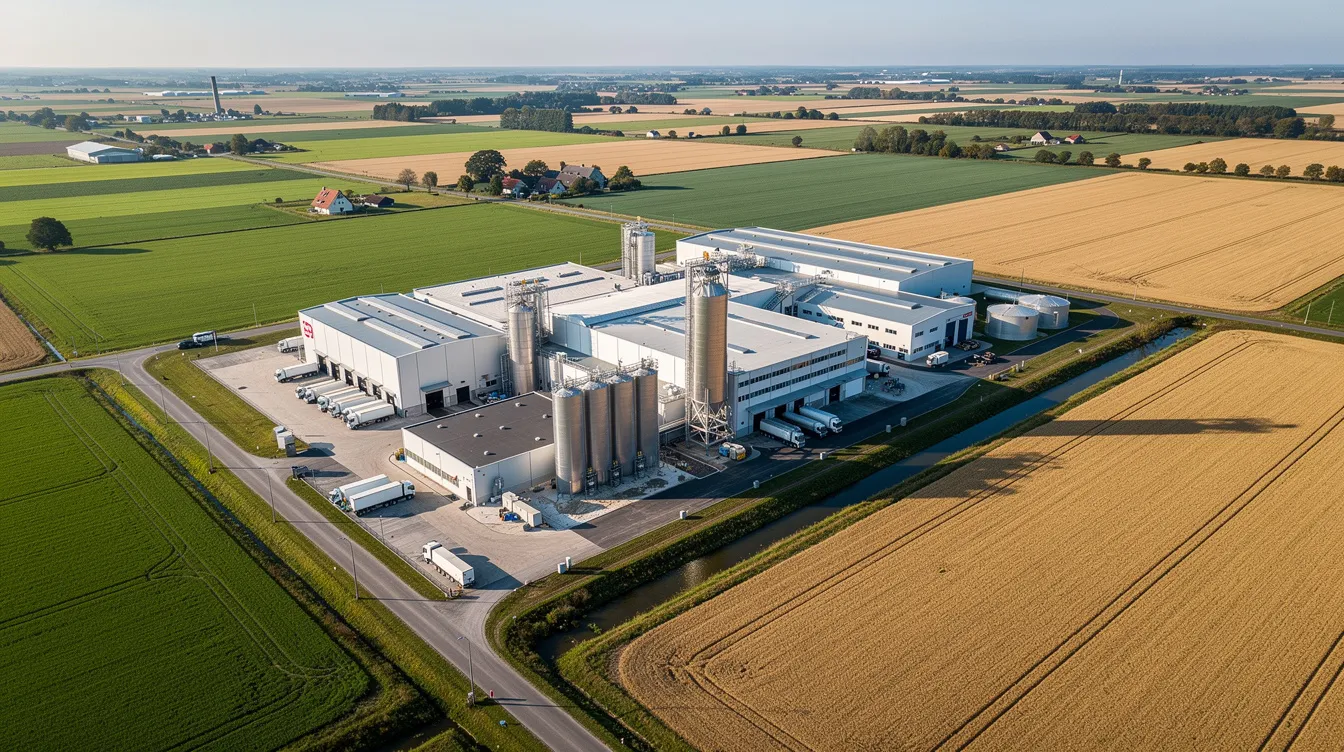
Items typically included are land purchase price or lease premium, stamp duty, registration charges, site levelling, internal roads, drainage, boundary wall and security cabin. For reference, even a small 500-litre-per-day plant requires 1,500 to 2,000 square feet; commercial UHT plants need substantially more. For expansion projects on existing land, only incremental site-development expenses are relevant.
Factory Building, Civil Construction and Hygienic Layout
Building design must address hygienic milk processing, separation of clean and non-clean areas and FSSAI norms. Investments in cleanroom construction, drainage and utility setups are necessary for UHT plant infrastructure.
Key building components include the milk reception dock, UHT processing hall, aseptic packaging hall with controlled environment, utility block, finished-goods warehouse, raw-material storerooms, quality-control lab, administrative offices and staff amenities. The UHT milk plant land, building and hygienic layout requirements guide covers zoning and design standards in detail.
Estimates should be backed by architect or engineer quotations. Underestimating building and civil works is a common mistake that later strains cash flows.
Plant and Machinery for Milk Processing and UHT Line
This cost head covers all core processing and UHT equipment excluding aseptic fillers. Major items include weighing systems, raw-milk storage tanks, clarifiers, cream separators, standardisation systems, homogenisers, the UHT steriliser (tubular or plate type), aseptic balance tanks, pumps, valves, piping and control systems. Machinery costs are the largest portion of capital expenditure in most UHT projects.
Freight, GST, insurance and installation charges should either be included within quoted machinery cost or shown as a separate line. Banks insist on advanced machinery from branded suppliers that complies with food-safety and pressure-vessel regulations.
Aseptic Filling and Packaging Equipment
Aseptic filling and packaging may represent a large portion of the total UHT milk plant capital cost. The scope includes aseptic fillers, conveyors, coding and date-printing equipment, check-weighers, metal detectors, shrink-wrapping systems and palletisation. Industry data shows complete aseptic packaging lines ranging from ₹2.5 to ₹4 crore for moderate-capacity units, with high-speed fully automated lines costing substantially more.
Banks and project evaluators pay particular attention to this cost head due to its size and technical complexity.
Utilities, Support Systems and Infrastructure Requirements
Reliable utilities are critical for continuous UHT operation. Dairy processing typically requires three litres of water per litre of milk processed, and steam demand for UHT treatment is substantial.
Main utility systems include steam generation (boilers), refrigeration plant, compressed-air systems, water treatment and RO, effluent-treatment plant and fire-fighting systems. A reliable power supply and backup generators are mandatory for UHT operations. Mid-sized ETPs (250–500 KLD) can cost ₹1.2 to ₹5 crore depending on treatment technology. The article on UHT milk plant utilities requirements covers power, steam, water and CIP needs comprehensively.
Laboratory, Quality-Control Equipment and IT Systems
Quality-control labs ensure microbiological safety and declared shelf life for UHT milk. Equipment covers raw-milk testing for fat, SNF and adulterants, microbiology lab setups, packaging-integrity test equipment and shelf-life testing. The guide on UHT milk quality control and shelf-life testing explains why these systems are vital for product stability and regulatory compliance.
IT systems, ERP and traceability software may be included here or under other fixed assets, depending on bank format.
Other Fixed Assets, Freight, Insurance, Installation and Commissioning
Non-process fixed assets include office furniture, computers, material-handling equipment, forklifts and vehicles. Equipment installation and debugging typically add 5% to 10% to equipment costs and must be budgeted explicitly.
Freight, transit insurance, unloading, erection, test runs and commissioning should either be included in supplier quotations or estimated separately where offers are ex-works. GST and other taxes on these services affect total funding requirement and input-tax-credit eligibility.
Technical Consultancy, Professional Fees and Approvals
Professional services are an integral part of project cost. Typical items include process and layout design, DPR preparation, CMA Data and bank-funding advisory, and statutory-approval fees. Securing food safety and environmental regulatory compliance is crucial before plant operation – a State FSSAI licence is required for dairy processing, and a No Objection Certificate from the State Pollution Control Board must be obtained. Licensing approvals can take 30 to 60 days to process.
Banks expect DPRs and financial projections to be prepared or reviewed by qualified professionals, especially for higher-value term loans.
Preliminary & Pre-Operative Expenses, Interest During Construction and Contingency
Preliminary and pre-operative expenses cover company formation costs, project office expenses, salaries during construction, travel, vendor visits, training and trial runs. Interest during construction is estimated based on implementation schedule (typically 12–18 months for mid-sized plants) and projected drawdown of the term loan.
Contingency provisions – separate for civil works and machinery – protect against price escalation, currency fluctuations and lead-time changes on imported equipment. Banks usually expect a reasonable contingency and may question overly low or inflated percentages.
Working-Capital Margin for UHT Milk Plant
Working-capital finance is distinct from the project term loan. Only the promoter’s margin on working capital is included in the project cost estimate.
Working-capital components include inventory of raw milk, ingredients and packaging materials, finished-goods stock, trade receivables from distributors and institutional buyers, and operating expenses for a certain credit period. Initial working capital needs to cover operational expenses for the first few months after commissioning.
UHT milk’s longer shelf life compared to pasteurised milk may require higher packaging-material inventory, affecting both project cost and distribution strategy. A proper working-capital assessment is mandatory in both the DPR and CMA Data.
Illustrative UHT Milk Plant Project Cost Table
The table below provides illustrative figures for a hypothetical 100,000 LPD UHT milk plant in India. These numbers are estimates for general understanding only and are not market quotations.
| Cost Head | Illustrative Amount (₹ Crore) | % of Total |
|---|---|---|
| Land & site development | 5.00 | 4.0% |
| Building & civil works | 15.00 | 12.0% |
| Plant & machinery (processing + UHT) | 38.00 | 30.4% |
| Aseptic filling & packaging system | 22.00 | 17.6% |
| Utilities & support systems | 14.00 | 11.2% |
| Laboratory & quality control | 2.50 | 2.0% |
| Electrical installations & other fixed assets | 5.50 | 4.4% |
| Technical & professional fees | 2.00 | 1.6% |
| Preliminary & pre-operative expenses | 4.00 | 3.2% |
| Interest during construction | 5.00 | 4.0% |
| Contingency | 5.00 | 4.0% |
| Working-capital margin | 7.00 | 5.6% |
| Total project cost | 125.00 | 100.0% |
Assumptions: 100,000 LPD installed capacity, indirect UHT system with moderate automation, aseptic carton packaging, greenfield site, 18-month implementation period, general price level estimated for 2026. Actual cost depends on capacity, technology, packaging format, location, vendor quotations and prevailing taxes. A customised DPR and feasibility report are required for bank appraisal.
Treatment of GST, Duties and Input Tax Credit
GST on plant and machinery, services and works contracts, along with customs duties on imported equipment, influence the gross funding requirement. The net project cost for financial feasibility may consider input tax credit eligibility, but banks often fund the gross invoice value initially.
Customs duty, social-welfare surcharge and certain other levies are not creditable and must be built into capital cost. Treatment differs based on project structure – proprietorship versus company – and should be decided in consultation with a Chartered Accountant. Any standardised treatment stated here is illustrative; borrowers should seek project-specific tax and financing advice.
Means of Finance for a UHT Milk Plant
Once the total cost is estimated, the funding plan must be structured to balance promoter contribution, term loans and working-capital limits. Banks examine whether means of finance are firmed up before sanctioning term-loan exposure for any dairy processing plant project finance proposal.
Promoter’s Contribution and Equity Structure
Promoter’s contribution represents the owner’s stake in total project cost – equity share capital, partner’s capital or proprietor’s funds. Sources include own savings, internal accruals from an existing business and proceeds from non-core asset sales.
Unsecured loans from promoters or family may be treated as quasi-equity if subordinated to the bank loan with no fixed repayment schedule, subject to individual bank policy. The percentage of promoter contribution required depends on project risk, scale, collateral and lending norms. True sources of promoter funds must be disclosed transparently in the DPR and loan application.
Bank Term Loan for UHT Milk Plant Project Cost
The term loan is the primary external source for financing eligible fixed assets and associated project costs. Banks determine loan quantum based on percentage of total project cost after promoter margin, projected cash flows, DSCR and available security.
Common features include a moratorium period during construction and stabilisation (illustratively 12–24 months) and a repayment period linked to asset life with instalments aligned to projected cash surplus. UHT milk plant loan eligibility is influenced by promoter track record, credit history, existing liabilities, market feasibility and DPR robustness. Dairy processing units may also qualify under priority sector lending norms, improving access to bank finance.
Working-Capital Finance and Day-to-Day Operations
After commissioning, UHT plants require working-capital facilities separate from the term loan. Typical facilities include cash-credit limits for stocks and book debts and working-capital demand loans where appropriate.
Plants with higher dependence on modern retail or institutional buyers may need larger receivables funding due to longer payment cycles. A proper working-capital assessment, aligned to production and sales projections, is a core part of the DPR for bank finance.
Subsidy, Capital Assistance and Other Funding Sources
Central and state schemes such as AHIDF, DIDF and NPDD may support eligible dairy processing projects through interest subvention or capital assistance. However, eligibility and budget availability must be verified against latest official guidelines from DAHD. Subsidy should not be assumed in means of finance until eligibility is confirmed and the bank agrees to its treatment.
Other potential sources include unsecured loans from promoters or associates, equipment-finance schemes from machinery suppliers or NBFCs, and strategic investors or private equity for larger projects. Financial assistance from any source must comply with lender conditions.
Illustrative Means-of-Finance Structure for a UHT Milk Plant
Based on the ₹125 crore illustrative project cost above:
| Source of Finance | Illustrative Amount (₹ Crore) | % of Total | Key Conditions |
|---|---|---|---|
| Promoter’s equity contribution | 25.00 | 20.0% | Genuine own funds; to be brought in before/proportionate to loan disbursement |
| Term loan from bank/FI | 93.75 | 75.0% | Subject to DSCR, collateral, DPR appraisal |
| Eligible unsecured loans (quasi-equity) | 6.25 | 5.0% | Subordinated to bank; no fixed repayment; bank must approve treatment |
| Total | 125.00 | 100.0% | – |
Working-capital limits (cash credit, WCDL) are sanctioned separately and do not form part of the project cost except through the margin component already included. Figures are purely illustrative. CA Manish Gugliya assists promoters in aligning means-of-finance structure with lender expectations while maintaining a reasonable debt-equity ratio.
Debt-Equity Ratio, Promoter Margin and Bankability
Debt-equity ratio – total long-term debt divided by tangible net worth – is a key metric in project appraisal. In the illustration above, the ratio works out to approximately 3:1, which is within the range observed in many Indian dairy processing projects, though individual bank policies may require tighter ratios for first-time promoters or greenfield plants.
Banks assess whether the promoter margin is genuinely brought in before major disbursements and whether projected DSCR and cash flows can support the planned level of debt. The DPR should present a realistic and sustainable structure rather than attempting to maximise borrowing beyond repayment capacity.
How Banks Appraise a UHT Milk Plant Loan Proposal
Banks evaluate technical, commercial and financial viability together. Key appraisal areas include:
- Promoter background, extensive experience in dairy processing and financial strength.
- Market analysis, distribution strategy and pricing assumptions backed by industry standards.
- Capacity, technology and supplier credentials for the UHT line and aseptic packaging.
- Robustness of milk procurement plan and supply arrangements with farmers.
- Project-cost estimates, supporting quotations and civil-work estimates reviewed for reasonableness.
- Projected profitability, DSCR, break-even point and sensitivity to milk price, packaging cost and capacity utilisation.
- Security structure – primary charge on plant assets and collateral security.
A professionally prepared DPR with CMA Data improves clarity during appraisal but does not by itself guarantee approval. The UHT milk project financial feasibility must stand on its own merits.
Financial Projections and DPR Requirements for UHT Milk Projects
Banks rely heavily on financial projections to judge repayment potential. A detailed project report is important for planning and should contain:
- Assumptions on installed capacity, phased capacity utilisation and product mix.
- Revenue build-up based on sales price, volumes and channel mix.
- Operating-cost estimates: raw milk (70–80% of operating expenses), ingredients, packaging, utilities, manpower and maintenance.
- Projected profit and loss account, balance sheet and cash-flow statement for at least 7–10 years.
- Term-loan repayment schedule, interest calculations and depreciation.
- DSCR analysis, break-even point and sensitivity tests.
UHT milk processing plants typically have gross profit margins of 25–35%, and a well-operated dairy processing plant can achieve profit margins of 20–40% under normal operating conditions. Operating costs tend to increase significantly by the fifth year of operation due to inflation, scale-up expenses and market dynamics. Healthy profitability potential exists but must be supported by conservative, verifiable assumptions.
Chartered Accountants prepare or review projections based on management assumptions and available information – they do not certify future results. Internal consistency among project cost, means of finance and financial statements is critical.
Documents Required for UHT Milk Plant Project Finance
Documentation requirements vary by lender but follow a common pattern:
- Promoter KYC documents, constitution documents (partnership deed, MOA/AOA, LLP agreement).
- Last 3 years’ financial statements and income-tax returns, along with recent bank statements.
- Net-worth statements of promoters.
- Land ownership or lease documents, building plans and civil-work estimates.
- Detailed machinery quotations including UHT line and aseptic packaging with technical specifications.
- Milk procurement plan and any agreements with dairy farmers or cooperatives.
- Market study summary and distribution strategy.
- Regulatory approvals or applications (FSSAI, pollution NOC, factory licence).
- Detailed project report, financial projections and CMA Data.
- Details of existing loans, proposed security and evidence of promoter contribution.
Common Costing and Financing Mistakes in UHT Milk Projects
Many projects run into difficulties not due to technology but due to incomplete costing and weak financial structuring. Common errors include:
- Treating only the UHT line quotation as project cost and ignoring land, civil works, utilities and aseptic packaging investment.
- Underestimating civil works and hygienic-layout modifications required for aseptic zones.
- Excluding freight, installation, commissioning and statutory fees from project cost.
- Ignoring interest during construction and pre-operative expenses.
- Providing inadequate contingency or ignoring foreign-exchange exposure on imported equipment.
- Mismatch between project cost and means of finance with no clarity on promoter margin.
- Treating working-capital limits as part of term-loan funding.
- Assuming immediate full-capacity utilisation or optimistic selling prices without market backing.
- Using inconsistent figures across the DPR and CMA Data.
A careful pre feasibility study, followed by professional DPR preparation, helps avoid these pitfalls and improves bankability.
Preparing a Bankable UHT Milk Plant DPR – Stepwise Approach
- Finalise proposed capacity, product mix (including curd or other dairy products if applicable) and target markets.
- Assess milk procurement potential and logistics from the dairy farming network.
- Shortlist processing technology and aseptic-packaging options through vendor interactions.
- Obtain detailed quotations for plant, machinery, utilities and major services.
- Estimate land, building and infrastructure requirements with architect and engineer inputs.
- Prepare the implementation schedule and estimate preliminary, pre-operative and contingency costs.
- Assess working-capital needs covering inventory, receivables and operating expenses.
- Structure means of finance – equity, term loan and other sources.
- Prepare integrated financial projections, DSCR and break-even analysis.
- Perform sensitivity analysis on key variables such as raw-milk price, capacity utilisation and packaging cost.
- Compile DPR, CMA Data and supporting documents for submission to lenders.
Professional advisory input at this stage reduces rework and delays during bank appraisal. For larger projects, iterative discussions with suppliers, lenders and investors may refine the DPR before finalisation.

Role of CA Manish Gugliya and ProjectReportBank.com
CA Manish Gugliya is a practising Chartered Accountant with extensive experience since 2006 in project-report preparation, CMA Data, DPRs and project finance across various industries including dairy processing. Key services for UHT milk plant projects include:
- Detailed project reports with complete project cost and means-of-finance structuring.
- Financial projections, profitability analysis, DSCR and repayment-capacity assessment.
- CMA Data preparation and working-capital assessment as per bank formats.
- Guidance on classification of capital cost, GST treatment and input-tax-credit implications.
- Reviewing vendor quotations, validating assumptions and aligning DPR with lender requirements.
- Assisting promoters in presenting their bank-loan proposal clearly and transparently.
Professional assistance improves project presentation and planning but cannot guarantee loan sanction or subsidy approval, which depend on lender and scheme discretion.
Frequently Asked Questions on UHT Milk Plant Project Cost and Finance
The following questions address practical doubts that entrepreneurs commonly have about UHT milk plant investment and funding. Answers remain general guidance – actual decisions should be based on a customised DPR and professional consultation.
How early should I involve my bank while planning a UHT milk plant?
Promoters can begin informal discussions once preliminary capacity and location are decided, but formal appraisal usually starts after a reasonably detailed DPR and cost estimate are ready. Early interaction helps understand the bank’s expectations on promoter margin, collateral and documentation, which can influence final project design and timing. CA and technical consultants can align DPR contents with the preferred bank’s appraisal format.
Can an existing pasteurised-milk dairy add a UHT line with lower investment?
An existing dairy with established land, utilities, lab and basic infrastructure may only need to invest in the UHT module, aseptic packaging line and necessary civil modifications. This can reduce capital cost compared to a greenfield plant, but a fresh DPR must document incremental investment, means of finance and impact on overall business cash flows. Banks will review both historical financials and projected consolidated performance.
Is it necessary to install the full aseptic packaging line from day one?
Technically, some promoters consider contract packaging or phased installation. However, aseptic processing and packaging are closely linked, and banks generally prefer integrated in-house capability for large commercial projects. Any phased approach should be supported by firm third-party packaging arrangements, clear costing and risk assessment in the DPR.
How often should UHT milk plant project cost estimates be updated?
In a dynamic cost environment, promoters should update estimates whenever there is a significant change in machinery quotes, construction rates, GST provisions or interest assumptions. Revisiting the DPR and financial model is advisable if more than 6–9 months pass between initial costing and bank submission, as this helps avoid cost overruns and mid-project funding gaps.
What if actual project cost exceeds the DPR estimate after loan sanction?
Significant overruns may require promoters to contribute additional equity or approach the bank for enhancement, which is subject to fresh appraisal and not guaranteed. Realistic initial budgeting, adequate contingency and careful contract management minimise this risk. Promoters should maintain open communication with lenders and consultants if cost escalations emerge during implementation.
Conclusion and Professional Call to Action
Accurate UHT milk plant project cost estimation, a balanced means-of-finance structure and realistic financial projections form the backbone of a bankable project proposal. The reliability of any investment estimate depends on correct capacity selection, complete costing across all heads – land, buildings, machinery, aseptic packaging, utilities and working-capital margin – and a sustainable debt-equity structure that the project’s cash flows can genuinely support.
A well-prepared DPR backed by professional financial modelling creates clarity during discussions with banks, investors and government agencies. It does not promise profits or guaranteed sanction, but it ensures that the project’s financial aspects are presented transparently and completely.
Entrepreneurs and dairy companies planning a UHT milk or aseptic dairy processing project are welcome to contact CA Manish Gugliya through www.projectreportbank.com for assistance with customised DPRs, financial projections, CMA Data and project-finance assessment. Treat published figures as starting points – your final investment decisions should rest on updated quotations, current regulations and qualified professional advice.