
Key Takeaways
- UHT milk quality control begins with high quality raw milk – ultra high temperature heat treatment cannot repair defects like advanced lactic acid build-up, antibiotic residues, or heat-stable enzymes from psychrotrophic bacteria.
- Poor raw milk quality causes fouling, age gelation, off flavours and heavy production losses, directly weakening plant profitability and the bankability of any UHT milk project.
- A robust quality control system spans raw milk procurement, in-process monitoring, aseptic packaging, commercial sterility testing and validated shelf life studies.
- Shelf life assumptions and packaging integrity directly influence working capital cycles, lender confidence and the feasibility of long-distribution UHT and ESL milk products.
- Project promoters must budget adequate laboratory, testing and quality control costs in their DPR rather than treating them as optional overhead.
Introduction: Why Quality Control Determines UHT Milk Success
UHT milk quality control is not a single process step – it is a full-chain discipline stretching from the farm gate to the retail shelf. It covers raw milk selection, process parameters, commercial sterility, aseptic filling and shelf life validation. When any link in this chain breaks, even the best equipment cannot save the final product.
UHT milk is processed at 135–150 °C for 2–5 seconds, destroying most microorganisms. However, this treatment cannot remove heat-stable toxins, pre-formed enzymes, or fix defects like high somatic cell count, adulteration or advanced acidity. By comparison, pasteurization typically occurs at 72 °C for 15 seconds and ESL milk extends shelf life through mild heat treatment – neither approach can substitute for sound raw milk quality. Raw milk quality directly impacts the taste and shelf life of dairy products, whether the end product is UHT milk, pasteurised milk, butter, cheese, yoghurt, cream or any other milk products.
Consider a concrete example: raw milk carrying psychrotrophic bacteria at 6.9–7.2 log CFU/mL produces heat-stable proteases that survive UHT processing and cause age gelation within 2–10 weeks. The resulting batch failures, reduced shelf life and recalls lock up working capital, reduce capacity utilisation and weaken cash flow projections for lenders. The detailed processing sequence is covered in our guide on the UHT milk manufacturing process and flow chart; this article focuses on quality control, raw milk standards and shelf life testing.

What Does UHT Milk Quality Control Cover?
Quality control in a UHT milk plant is a sequence of checks from raw milk reception through market feedback. The table below summarises the key stages, risks, controls and actions.
| Production Stage | Main Quality Risk | Test or Control | Responsible Dept. | Action if Unsatisfactory |
|---|---|---|---|---|
| Raw milk reception | High microbial load, acidity, adulteration | Platform tests, antibiotic screening, TPC | Procurement / QC Lab | Reject or segregate tanker |
| Chilled storage | Lactic acid bacteria causing acidification, temperature rise | Temperature monitoring, acidity recheck | Production / QC | Divert to alternative product |
| Standardisation / separation | Incorrect fat or SNF | Fat/SNF analysis | Production / QC | Re-blend |
| Homogenisation | Cream separation, mouthfeel issues | Pressure checks, cream-rise test | Production | Adjust pressure settings |
| UHT treatment | Under-processing, spore survival | Temperature–time logging, diversion valves | Production / QC | Auto-divert, investigate |
| Aseptic filling | Recontamination, contamination from packaging | Filler hygiene checks, sterile-air monitoring | Production / QC | Stop filler, sanitise |
| Packaging integrity | Leaks, weak seals | Dye penetration, pressure decay tests | QC / Packaging | Quarantine, seal audit |
| Incubation | Surviving microorganisms | Commercial sterility incubation | QC Lab | Hold batch pending results |
| Batch release | Defective product reaching market | Final review of all test data | QA Manager | Release, hold or reject |
| Market surveillance | Customer complaints, distribution abuse | Retained-sample checks, complaint analysis | QA / Sales | Investigate, recall if needed |
These checkpoints connect directly to HACCP systems, which identify and control hazards in UHT milk production processes, and to FSSAI food safety requirements.
Raw Milk Standards for UHT Processing
Raw milk intended for long-life UHT milk needs stricter standards than milk destined for short-shelf-life products. Even milk from cow, buffalo, goat, sheep or other livestock sources must meet parameters well beyond basic procurement norms.
Freshness is non-negotiable. Milk should be cooled to 2–4 °C quickly after milking. At the plant, reception temperature must be 4 °C or below to minimise bacterial growth. Gram-negative psychrotrophic bacteria grow even at refrigerator temperatures, and their enzymes – proteases and lipases – survive UHT treatment and cause bitterness during storage. Research confirms that raw milk with psychrotrophic populations at ~5.5 log CFU/mL leads to gelation after roughly 20 weeks, whereas counts of 6.9–7.2 log shorten usable shelf life to just 2–10 weeks.
Key quality parameters include:
- Organoleptic properties: visual cleanliness, absence of off odours
- Acidity and pH (lactic acid development indicates microbial activity)
- Milk fat, milk solids (SNF), protein content, lactose
- Density and freezing point – raw milk has an average freezing point of –0.54 °C; deviations suggest added water
- Total plate count and spore load: the EU limits total plate count in raw milk to <100,000 CFU/mL at delivery
- Somatic cell count: must not exceed 400,000 cells/mL in the EU; the US maximum somatic cell count is 750,000 cells/mL – high SCC signals mastitis and elevated plasmin activity
- Alcohol stability test, which indicates protein stability in milk during processing – low stability predicts clotting during UHT heating
- Antibiotic residues, aflatoxin M1, pesticides, detergents and neutralisers
Meeting a generic raw milk specification does not automatically prove UHT suitability. A batch passing composition checks may still fail if its alcohol stability is too low or psychrotrophic damage is already advanced.
Raw Milk Reception Tests and Acceptance Criteria
At the reception platform, each tanker undergoes rapid screening before milk enters plant storage. Raw milk is tested for antibiotics, residues, and adulterants before processing. Microbial load testing includes total plate count and spore checks on raw milk.
| Test | Purpose | Defect Detected | Operational Significance | Decision |
|---|---|---|---|---|
| Appearance, odour, taste | Organoleptic screening | Off flavours, discolouration, foreign odour | Flavour carry-over to final product | Reject if abnormal |
| Temperature | Cold-chain compliance | Temperature abuse | Accelerated microbial growth | Reject if >5 °C |
| Clot-on-boiling | Heat stability | Protein instability, high acidity | Fouling, coagulation during UHT | Segregate or reject |
| Alcohol/alizarin test | Protein–mineral stability | Low heat stability | Sedimentation risk | Segregate |
| Titratable acidity / pH | Freshness | Lactic acid development | Age of milk, microbial activity | Reject if beyond limits |
| Lactometer / density | Adulteration screening | Added water (water is the most common adulterant in milk) | Diluted solids, false SNF | Reject or investigate |
| Freezing point | Water addition | Dilution | Revenue loss, regulatory violation | Reject |
| Fat and SNF | Composition | Non-compliance with product standard | Incorrect standardisation | Adjust or reject |
| Methylene blue reduction | Microbial load estimate | High bacterial population (methylene blue test evaluates total microorganisms in raw milk) | Shelf-life risk | Reject or downgrade |
| Antibiotic-residue kit | Inhibitor screening | Veterinary drug residues | Food safety, fermented dairy products failure | Reject |
| Aflatoxin M1 | Mycotoxin contamination | Contaminated feed | Regulatory non-compliance, health risk | Reject if above limit |
| Adulteration panel | Neutralisers, urea, H₂O₂ | Urea is added to increase the SNF content of milk; hydrogen peroxide can cause gastrointestinal issues | Adulterated milk poses serious health risks; milk adulteration can significantly impact nutritional value | Reject |
Numerical limits should be drawn from current FSSAI regulations, BIS/IS methods and plant-specific specifications validated by qualified dairy technologists.
Sampling Procedures and Laboratory Reliability
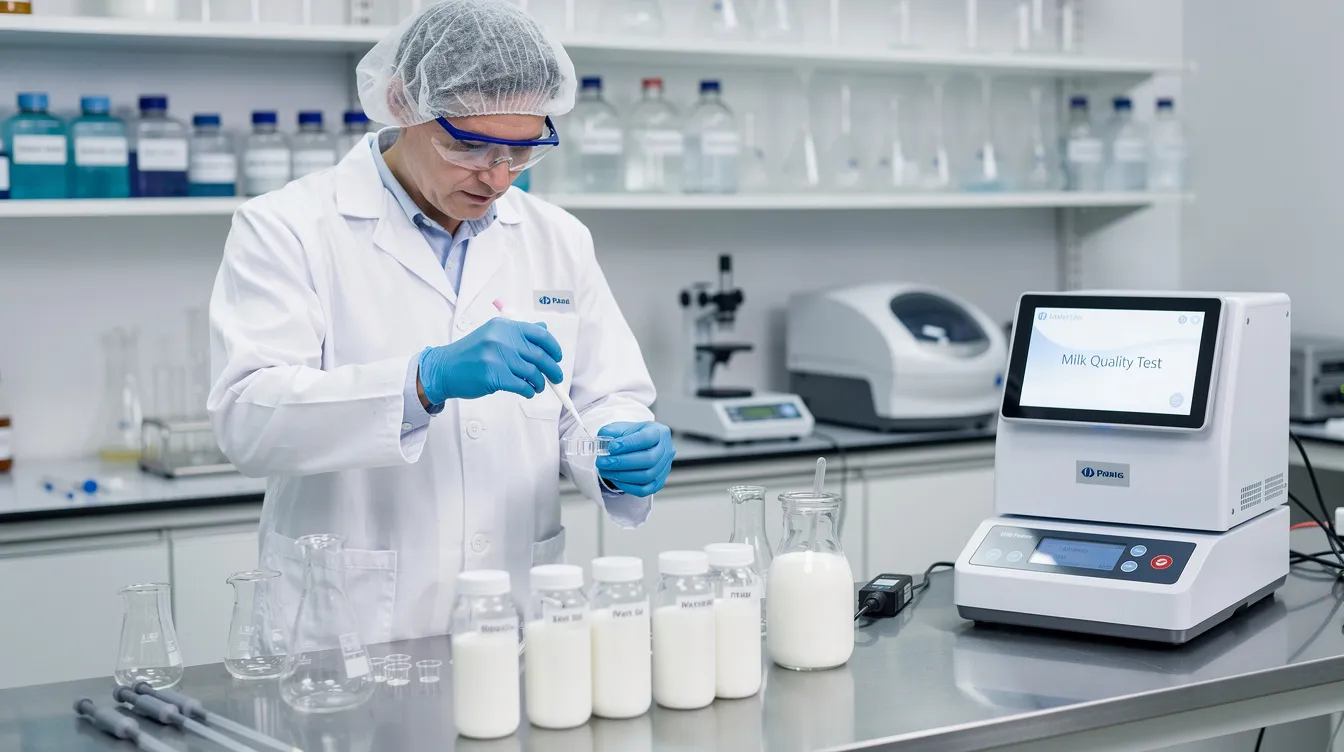
Even the best laboratory equipment cannot compensate for poor sampling. A surface-only sample from an unmixed tanker may miss sedimented contamination, leading to false acceptance of unsuitable raw milk or unjustified rejection of a supplier’s consignment.
Representative sampling requires thorough agitation of tankers, use of sterile sampling dippers or aseptic valves, and correct labelling – date, time, tanker number, route code, supplier identity and intended tests. Composite samples serve routine screening; individual-farm samples are essential for traceability, supplier evaluation and payment disputes.
Samples must be chilled to ≤4–5 °C immediately and transported promptly to the laboratory to prevent artificial lactic acid increase or microbial growth before analysis. Chain-of-custody records protect both the plant and the supplier.
Instrument calibration (lactometers, electronic milk analysers, pH meters, incubators), use of reference samples and participation in proficiency testing or inter-laboratory comparisons are non-negotiable for reliable results. Sampling frequency and laboratory workload scale with production volume – the relationship is discussed in our guide on UHT milk plant capacity planning and line balancing.
In-Process Quality Control During UHT Milk Production
Quality control during production means tracking heating temperature and holding times to ensure sterility, alongside monitoring every upstream step.
- Filtration and clarification remove sediment and reduce downstream fouling.
- Standardisation must deliver accurate fat and SNF targets for each product variant – toned milk, double toned milk, standardised milk, full-cream milk or skimmed milk – verified by periodic laboratory checks.
- Homogenisation pressure and differential pressure are checked against specifications; cream separation in test samples signals inadequate homogenisation.
- Preheating (thermisation heats milk to 63–65 °C for 15 seconds in some systems), deaeration and UHT treatment are monitored via calibrated temperature, flow-rate and pressure sensors linked to automatic diversion valves.
- Viscosity and enzymatic analysis may be performed to confirm sufficient heat treatment of milk at validation stages.
Data logging through SCADA systems creates batch traceability records that strengthen food safety audits and bank due diligence. Process-water quality and product-contact surface hygiene must be verified routinely and connected to the CIP programme discussed later.
Direct and Indirect UHT Processing: Quality Implications
UHT systems fall broadly into direct (steam injection or infusion) and indirect (plate or tubular heat exchangers) categories. Direct systems offer rapid heating and cooling, producing less cooked flavour but requiring strict steam-quality control. Indirect systems involve higher overall heat load, potentially more Maillard-driven flavour changes and greater fouling, demanding more frequent CIP cycles.
From a project-finance angle, quality-related downtime, higher CIP chemical use and energy consumption must be reflected in operating-cost assumptions. Detailed system selection and capital cost considerations are covered in our comparison of direct vs indirect UHT milk processing technology.
Commercial Sterility Testing of UHT Milk
Commercial sterility means the product is free from microorganisms capable of growing and causing spoilage or disease under normal non-refrigerated storage. It does not mean absolute sterility – a small number of highly heat-resistant spores may survive but are not expected to grow under stated conditions.
Commercial sterility is verified using incubation tests at temperatures like 30 °C to 55 °C. Under FSSAI Method No. FSSAI 15.005:2023, sealed final packages are incubated for 7–13 days at 30 °C; products expected to face higher storage temperatures undergo an additional 5–7 days at 55 °C. Failure indicators include package bulging, leakage, pH drop, acidity increase beyond 0.02 % lactic acid, visible curdling or strong off flavours.
Microbiological testing verifies the effectiveness of sterilisation and seals. Pathogenic bacteria can survive pasteurization if toxins are present – the same logic applies to pre-formed toxins in UHT milk. Suspect batches must be quarantined; confirmatory work should use accredited third-party labs. Commercial sterility results drive batch-release decisions, stock-holding time and working-capital planning.
Microbiological Testing Requirements
Microbiological testing must span multiple stages – final-product checks alone are insufficient.
- Incoming raw milk: total plate count, coliform test for milk (RAWMI standards target less than 10 coliforms per mL in raw milk), periodic pathogen screening including Listeria monocytogenes where risk-based assessment warrants it.
- Process water: microbiological checks to ensure contaminated water does not compromise product-contact surfaces.
- Environmental and surface monitoring: swabs from UHT lines, fillers and conveyors to detect biofilms.
- Post-UHT product and finished packs: screening for spoilage flora, heat-resistant organisms and indicators specified in standards.
- Quality control in UHT milk production ensures safety and maintains nutritional properties, including retention of vitamins and protein content.
Hygienic design, validated UHT parameters and aseptic practice remain the primary controls; microbiological testing is a verification tool, not a substitute for good processing.
Physicochemical and Sensory Testing of Finished UHT Milk
Each batch of finished UHT milk must be evaluated analytically and sensorially. Chemical tests monitor fat, protein ratios and pH levels for quality control. Core parameters include fat, SNF or total solids, protein, lactose (where tested), pH, titratable acidity, density and, for certain products, viscosity.
Visual checks cover colour, sediment, cream plugs and uniformity. Sensory evaluations assess taste, colour and off flavours – distinguishing between an acceptable “cooked” note and unacceptable burnt, oxidised or bitter defects. Test ranges vary across product types – including flavoured milk, condensed milk variants and other dairy products – each aligned to FSSAI composition standards and label claims.
Results feed into shelf life trending, customer complaint analysis and decisions on recipe or process adjustments, contributing to overall quality improvement over time.
Aseptic Filling and Packaging Quality Control
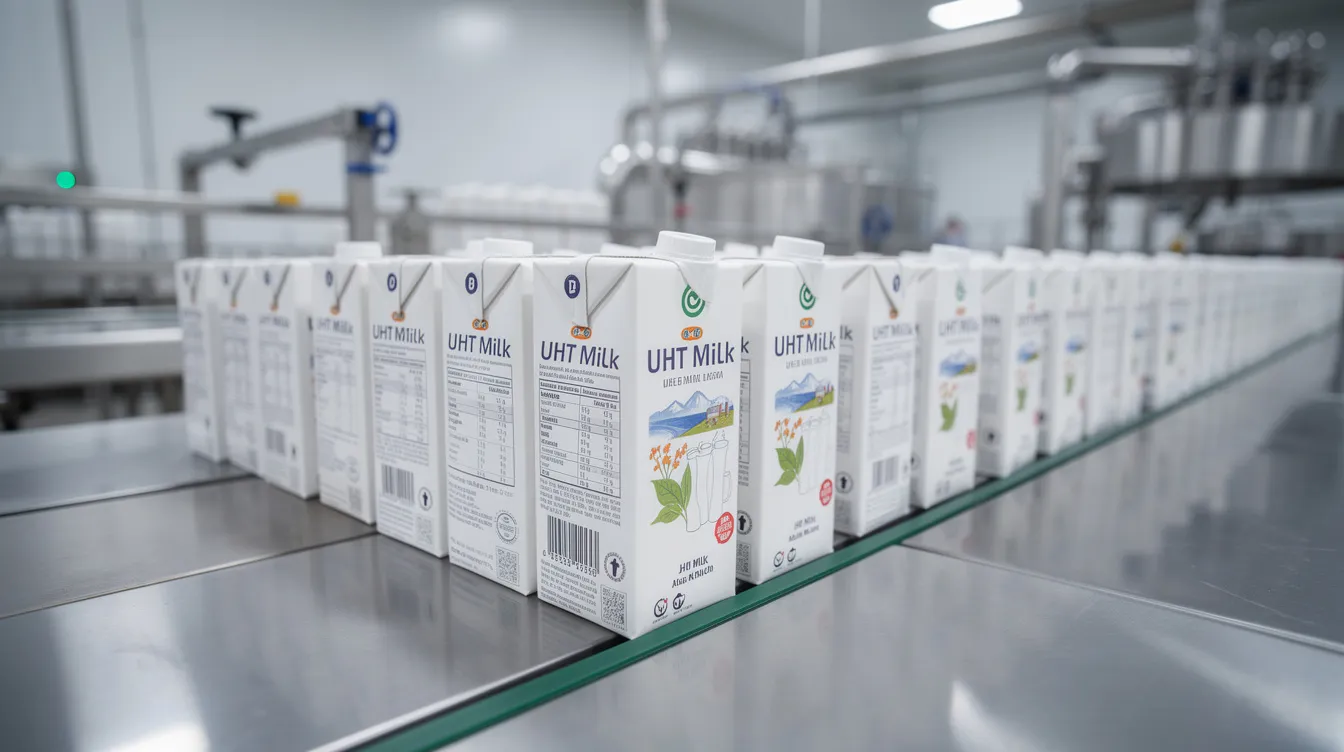
Even perfectly processed UHT milk fails in the market if contamination occurs during filling or packages lose integrity. The aseptic filling and packaging process for UHT milk requires sterilisation of packaging material, sterile-air management and strict hygiene zoning.
Key packaging tests include seal integrity, leak detection – aseptic packaging integrity is evaluated through dye penetration and pressure decay tests – seal-strength measurement, correct carton forming and cap tightness. Legible batch codes, manufacturing and expiry dates enable recall management and supply-chain tracking.
Barrier properties against oxygen and light influence flavour stability and vitamin retention. Detailed packaging-system considerations are explained in our guide on aseptic carton packaging systems for UHT milk.
Shelf-Life Testing of UHT Milk
Shelf life is not a universal fixed number. It must be validated for each product, recipe, package format and distribution condition.
- Real-time shelf-life studies store UHT milk in final packaging at intended conditions for the full proposed period (e.g. 3, 6 or 9 months), with periodic sampling.
- Accelerated studies at elevated temperatures (e.g. 40–45 °C) support product development but cannot automatically replace real-time validation.
- Retained-sample monitoring holds samples from each batch under controlled conditions for periodic commercial sterility, physicochemical and sensory checks.
- Distribution-condition studies simulate real supply-chain scenarios including high ambient temperatures.
Parameters monitored include microbial stability, pH and acidity movement, flavour, odour, colour, sedimentation, fat separation, protein stability (age gelation) and package integrity. Longer claimed shelf life increases inventory-holding periods and working-capital needs – these must be commercially and technically justified in the DPR.
Factors That Reduce UHT Milk Shelf Life
Premature spoilage erodes brand trust, triggers recalls and severely impacts profitability. The table below provides a practical troubleshooting framework.
| Observed Defect | Likely Cause | Investigation Required | Corrective Action |
|---|---|---|---|
| Bloated packs | Surviving spore-formers, post-process contamination | UHT temperature logs, filler sterility audit | Validate UHT parameters, filler overhaul |
| Sour or acidic taste | Under-processing, heat-resistant lactic acid bacteria | Incubation records, raw-milk spore load | Tighten raw-milk spore specifications |
| Gelation / thickening | Psychrotrophic proteases, plasmin activity | Raw-milk psychrotroph history, SCC records | Improve farm cooling, reduce storage time |
| Bitterness | Proteolytic enzyme activity | Peptide profiling, supplier audit | Reject high-psychrotroph milk |
| Fat separation / cream plug | Inadequate homogenisation, high storage temperature | Homogeniser pressure logs, storage audit | Recalibrate homogeniser |
| Package leak / mould at seal | Seal defect, handling damage | Seal-strength data, transport simulation | Filler maintenance, packaging audit |
| Off flavours (oxidised, stale) | Light or oxygen ingress | Package barrier testing | Switch packaging material or improve storage |
Recurring shelf-life issues increase reprocessing, write-offs and the need for contingency buffers in financial projections submitted to banks.
CIP, Water, Steam and Compressed-Air Quality
Cleaning-in-place and utility quality are hidden but critical determinants of product quality and food safety. CIP verification covers chemical concentration, solution temperature, circulation time, flow velocity and sequencing. Rinse-water checks confirm no residual detergents remain. Boiler-steam quality and compressed-air dryness (oil-free, microbiologically filtered) protect aseptic zones.
Water treatment systems (RO, softeners, UV) require periodic microbiological monitoring. CIP performance records support both food safety audits and lender due diligence. Detailed utility design is discussed in our guide on UHT milk plant utilities and CIP requirements.
Quality-Control Laboratory and Testing Equipment
A dedicated laboratory is essential for UHT milk quality assurance. World class laboratory testing requires properly selected, calibrated and maintained instruments. Indicative requirements include:
- Raw-milk testing: electronic milk analyser, lactometer, pH meter, Gerber apparatus, antibiotic-residue kits, adulteration screening kits
- Physicochemical testing: analytical balance, water bath, titration setup, viscometer, colour comparator, spectrophotometer
- Microbiological testing: laminar-flow cabinet, incubators (30 °C and 55 °C), autoclave, colony counter, media preparation area – complex pathogen testing may be outsourced to accredited labs
- Packaging testing: seal-strength tester, leak-test apparatus, environmental chamber
- Calibration: reference standards, maintenance contracts, trained skilled individuals
UHT milk quality control laboratory cost must be budgeted separately from process machinery. The broader investment picture, including automated controls and aseptic fillers, is covered in our guide on UHT milk plant machinery and equipment cost.
Food-Safety Systems, Documentation and Traceability
Strong documentation supports both regulatory compliance and lender confidence. Good Manufacturing Practices, Good Hygienic Practices, HACCP plans, Sanitation Standard Operating Procedures and preventive maintenance form the backbone of any food safety system. RAWMI standards include a Risk Analysis and Management Plan for farms, which exemplifies the supplier-level discipline needed.
Traceability from raw milk route codes to finished batch codes enables quick recalls and limits financial damage. Record types critical for audits include batch production records, lab reports, calibration logs, deviation reports and CAPA documentation. Hygienic zoning and plant layout are addressed in our guide on UHT milk plant land, building and hygienic layout requirements.
FSSAI and Other Applicable Standards
UHT milk producers in India must comply with FSSAI regulations under the Food Products Standards and Food Additives Regulations. These specify identity and composition standards – for example, FSSAI standards require cow milk to have at least 3.2 % fat. Standards for food additives, contaminants, microbiological criteria, labelling and sampling methods are periodically updated, alongside provisions historically rooted in the Food Adulteration Act and the Milk Products Order.
Indian standards draw on BIS/IS methods, Codex Alimentarius guidelines and ISO frameworks. For UHT and sterilised milk, FSSAI mandates compliance with commercial sterility tests and expects total plate count to be nil and coliforms absent in 0.1 g. Promoters should always verify the latest official notifications and consult qualified food safety professionals. Agricultural produce used in dairy processing – including feed quality affecting aflatoxin risk – falls under interconnected regulatory oversight.
Quality Control Cost in an UHT Milk Plant DPR
Quality control is a core production function. Capital costs include laboratory construction, sample-retention rooms, incubation facilities, QC instruments and essential utilities. Operating expenses cover reagents, culture media, test kits, calibration services, annual maintenance, waste disposal and accredited external testing.
Human-resource costs include salaries for quality managers, dairy technologists, microbiologists and lab technicians. Inadequate budgeting leads to higher batch rejections, product returns, potential recalls and brand risk – all destabilising cash flows.
A bankable DPR should separately present quality control laboratory cost alongside the overall investment overview discussed in our guide on UHT milk processing plant setup cost in India.
Quality Risks Considered by Banks and Investors
From a project-finance perspective, lenders increasingly evaluate technical quality risks alongside traditional financial ratios. Banks examine raw milk procurement reliability, chilling infrastructure, quality-based payment systems and the competence of the QC team.
Technology selection, process validation and aseptic filler reliability directly influence the risk of commercial sterility failures. Shelf life assumptions used in financial projections must be backed by validation data – overly optimistic shelf life overstates sales and understates inventory losses. Batch rejection risk, product recall procedures and product-liability insurance should be factored into working-capital and contingency budgets.
Longer shelf life may improve distribution reach, but it also increases finished-goods holding periods and working-capital exposure. Shelf life claims, sales cycles and inventory projections should be commercially realistic in every DPR.
Practical Quality-Control Checklist for Project Promoters
Use this checklist while planning your UHT milk plant or preparing a DPR:
- [ ] Raw milk specifications for UHT products finalised, including heat-stability and psychrotroph criteria beyond generic dairy standards
- [ ] Supplier-approval and monitoring system established with defined sampling for raw milk testing
- [ ] Plant-wide sampling plan documented – incoming milk, in-process, finished product, incubation samples, environmental swabs
- [ ] Laboratory equipment and facilities budgeted; testing and batch-release responsibilities assigned
- [ ] Critical process-monitoring instruments identified; calibration plan in place
- [ ] UHT process and aseptic filler validation planned with equipment suppliers and qualified dairy technologists
- [ ] CIP and sanitation programmes validated
- [ ] Packaging integrity tests, retained-sample system and shelf life study design finalised
- [ ] Recall plan, complaint-handling procedure and regulatory-compliance verification completed
- [ ] Quality control costs included in the DPR as a dedicated cost centre – not an afterthought
Frequently Asked Questions
What are the main quality tests for raw milk used in UHT processing?
Key tests include appearance, odour and taste assessment, temperature at reception, clot-on-boiling test, alcohol stability test, titratable acidity and pH. Routine compositional tests cover fat and SNF, density, freezing point for added-water detection and adulteration screening (neutralisers, detergents, added sugars). Microbiological screening – including total plate count and coliform indicators – and rapid antibiotic-residue tests are critical. Aflatoxin M1 testing is done on a risk basis, with frequency determined by feed-quality risk and regulatory requirements.
Why is raw milk quality important if the milk will undergo UHT treatment?
UHT treatment destroys most vegetative microorganisms but does not neutralise heat-stable enzymes or pre-formed toxins produced during poor storage. High psychrotrophic bacteria produce proteases and lipases that survive UHT and cause age gelation, bitterness or fat separation during storage. Poor heat stability, high somatic cell count or adulterants can cause coagulation, fouling and higher processing losses despite correct UHT temperatures. No amount of processing can achieve product quality from fundamentally defective raw milk.
What is commercial sterility in UHT milk?
Commercial sterility is the condition where UHT milk contains no microorganisms capable of growing under normal, unrefrigerated storage for its intended shelf life. It does not mean absolute sterility. Verification combines incubation tests at defined temperatures and microbiological examination according to validated protocols. The concept enables ambient storage and extended distribution – a critical advantage for consumption in regions without reliable cold chains.
How is the shelf life of UHT milk tested?
Shelf life is verified through structured studies where UHT milk is stored in its final packaging under intended distribution conditions and sampled periodically. Observations include commercial sterility checks, microbiological stability, pH and acidity changes, flavour and odour evaluation, sediment, gelation, fat separation and package integrity. Real-time studies provide the most reliable evidence; accelerated tests support development but must be interpreted carefully.
How should quality-control costs be included in an UHT milk plant DPR?
The DPR should treat quality control as a dedicated cost centre with separate line items for laboratory construction, equipment, incubation and sample-retention facilities. Recurring budgets for reagents, test kits, external accredited-lab fees, instrument calibration and staff training must be included. Realistic allowances for batch reprocessing, occasional rejections and complaint-handling prevent overstated profitability and working-capital projections. This is a health indicator of project seriousness that banks and investors examine closely.
UHT milk quality control is not an overhead – it is the backbone of product safety, shelf life reliability and project bankability. Promoters who invest in a robust quality system from the outset – covering raw milk procurement, validated processing, aseptic packaging and world class laboratory testing – build stronger, more financeable dairy businesses. The dairy industry rewards those who determine quality at the source rather than trying to fix it at the end.
If you are planning a UHT milk plant and need a professionally prepared project report, DPR, financial projections, feasibility study, CMA Data or bank-loan assessment, CA Manish Gugliya (FCA, DISA ICAI) and the highly dedicated team at ProjectReportBank.com are here to provide best service. With more than 20 years of experience assisting entrepreneurs, MSMEs and industrial promoters, we help you build realistic, bankable project documents. Reach out today for expert, risk-aware guidance on your UHT milk processing venture.