

Key Takeaways
UHT milk plant capacity planning and UHT milk processing line balancing determine how many litres and packs per day a plant can realistically produce – not merely what appears on machinery brochures. The gap between rated and saleable output can be substantial.
- For any DPR, bank loan or investment decision, promoters must convert UHT milk plant capacity in LPH into realistic daily and annual saleable output after accounting for CIP/SIP cycles, changeovers, downtime and achievable market demand.
- The effective capacity of a UHT milk production line is controlled by its slowest stage – often the aseptic filling and packaging section – making UHT milk plant equipment sizing and line balancing critical to project viability.
- CA Manish Gugliya, FCA, DISA (ICAI), assists entrepreneurs and lenders in interpreting technical inputs from dairy technologists into practical project economics, financial projections and bankable project reports.
- This article provides step-by-step capacity formulas, an illustrative numerical example and specific guidance for UHT milk plant DPR preparation and bank appraisal in India.
Introduction: Why UHT Milk Plant Capacity Planning Matters
UHT milk plant capacity planning is the structured process of deciding how many litres of ultra high temperature (UHT) milk a plant should be designed to receive, process, pack and dispatch per hour, per day and per year. UHT milk – heated to 135–150°C for 2–4 seconds to achieve commercial sterility – can be stored at room temperature for 6–12 months, making it a high-demand long life dairy product across urban and remote Indian markets.
UHT milk processing line balancing means coordinating the capacities of milk reception, clarification, cream separation, standardisation, homogenisation, UHT sterilisation, aseptic buffer tank storage, aseptic filling, secondary packing, utilities and warehousing so that no single stage becomes a persistent bottleneck. Simply purchasing a 10,000 LPH UHT steriliser and a high-speed filling machine does not guarantee 10,000 LPH of saleable output. Actual production is lower due to CIP/SIP cycles, start-up losses, product changeovers, pack-size changes and minor stoppages.
Overstating UHT milk plant production capacity in a feasibility report can inflate projected sales, understate cost per litre, distort the DSCR and create unrealistic loan repayment expectations. Functions that must be coordinated include raw milk reception from tankers, raw milk storage, standardisation and homogenisation, heat treatment in the UHT sterilizer, aseptic storage, the filling system, secondary packaging, finished-goods warehouse, and outbound logistics.
CA Manish Gugliya is a practising Chartered Accountant and project finance professional who relies on qualified dairy technologists and equipment suppliers for technical numbers, and then converts them into bankable financial projections for UHT milk projects in India.
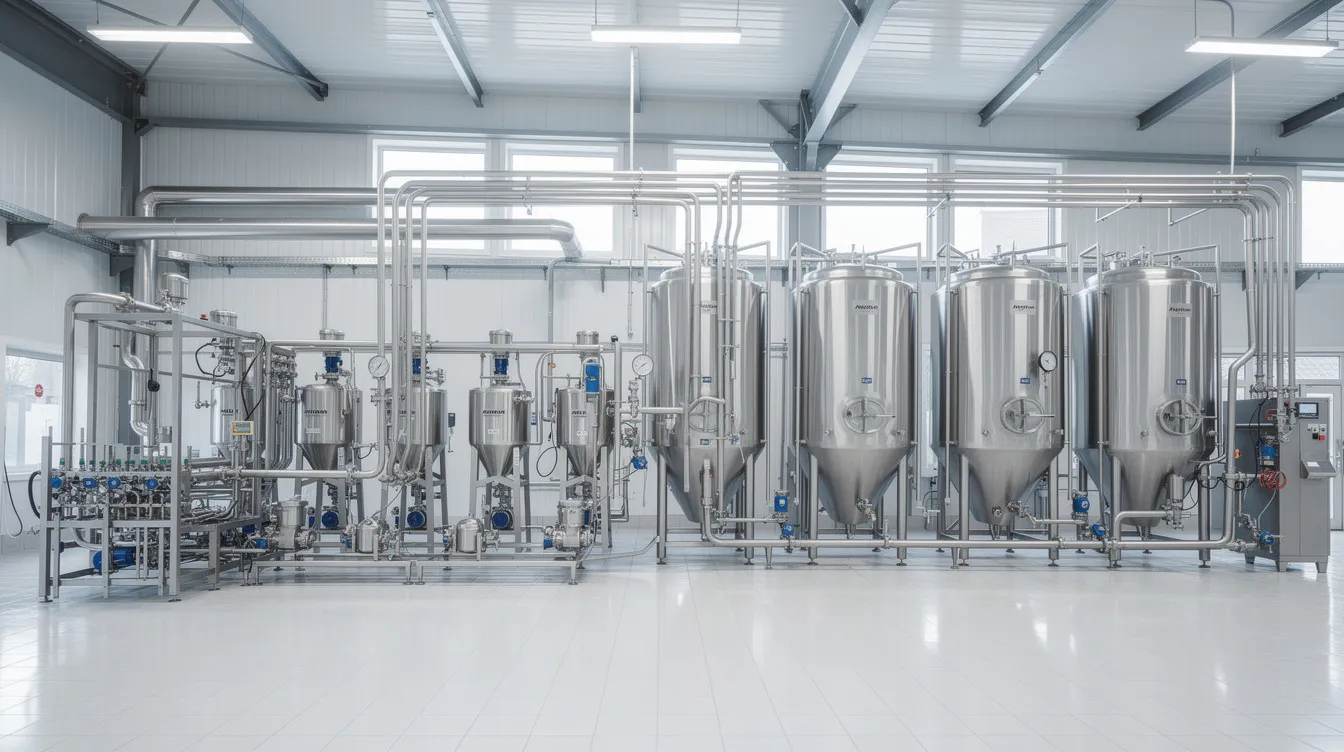
Understanding Capacity in a UHT Milk Plant
Capacity in a UHT milk processing plant is multi-dimensional. Equipment capacity, plant capacity, packaging capacity and annual saleable capacity are distinct concepts.
- Rated machinery capacity – the maximum throughput stated by the supplier (e.g., a UHT steriliser rated at a specific LPH under ideal conditions).
- Installed plant capacity – the aggregate of major rated capacities installed at site.
- Effective processing capacity – actual litres per hour achievable after line efficiency losses. Effective capacity should be calculated considering realistic operating conditions and not just theoretical maximums.
- Saleable production capacity – finished and packed UHT milk available for sale after process and packaging losses.
- Peak capacity – maximum throughput over short bursts; not sustainable continuously.
- Average operating capacity – typical sustained throughput across a full shift.
- Capacity utilisation – actual production divided by installed capacity. Amul’s annual report 2024–25 noted UHT category utilisation at approximately 74%.
- Packaging capacity – packs per minute or packs per hour of the aseptic filling and secondary packing lines.
- Annual achievable production – realistic annual litres and packs sold.
UHT milk production lines can be designed for 1 to 50 tons per hour, and a well-run UHT milk processing plant can produce 100–200 million litres annually. The capacity of the processing line determines the maximum throughput of UHT milk.
Capacity Measurement Units
| Unit | Meaning | Illustrative Conversion |
|---|---|---|
| LPH | Litres per hour | 10,000 LPH (rated) |
| KLPD | Kilolitres per day | 10,000 LPH × 14 net hours = 140 KLPD |
| LLPD | Lakh litres per day | 140 KLPD = 1.40 LLPD |
| PPH | Packs per hour | 10,000 PPH × 0.2 L = 2,000 LPH (200 ml pack) |
| PPH (1 L) | Packs per hour | 10,000 PPH × 1.0 L = 10,000 LPH (1-litre pack) |
All figures illustrative only.
For a DPR and UHT milk plant capacity utilisation analysis, promoters must consistently use the same basis – e.g., UHT milk plant capacity in LPH converted into LLPD and annual litres – and clearly state every assumption.
How to Calculate UHT Milk Plant Capacity
Core formulas for UHT milk plant capacity calculation:
- Daily Rated Capacity = Rated Hourly Capacity × Scheduled Operating Hours
- Effective Daily Capacity = Rated Hourly Capacity × Net Available Production Hours × Practical Efficiency Factor
- Annual Production (Litres) = Effective Daily Capacity × Operating Days per Year
- Capacity Utilisation (%) = Actual Saleable Production ÷ Installed Annual Capacity × 100
Effective capacity calculations should include allowances for downtime, maintenance, and CIP cycles. Net available production hours equal scheduled shift hours minus CIP and SIP cycle time, start-up and shutdown time, product changeovers, pack-size changeovers, scheduled maintenance, unplanned downtime, quality checks, packaging-material replacement and interruptions due to non-availability of raw milk or packaging material. Plant throughput rate dictates continuous running time for UHT processing, and operational efficiency must account for cleaning cycles and maintenance downtime.
Worked Illustration (Assumption-Based)
| Parameter | Value |
|---|---|
| UHT steriliser rated capacity | 10,000 LPH |
| Scheduled operating hours (2 shifts × 8 hr) | 16 hours/day |
| CIP/SIP and changeover losses | 2 hours/day |
| Net production hours | 14 hours/day |
| Practical efficiency factor | 0.85 |
| Effective hourly throughput | 10,000 × 0.85 = 8,500 LPH |
| Effective daily capacity | 8,500 × 14 = 1,19,000 litres/day |
| Operating days per year | 300 |
| Annual achievable production | 1,19,000 × 300 = 3.57 crore litres/year |
All values are illustrative assumptions, not machinery guarantees.
DPRs should never treat equipment supplier brochures as direct annual saleable production. Machinery ratings typically assume ideal conditions, steady product, no changeovers and minimal CIP – conditions rarely found in commercial operations.
Determining the Appropriate UHT Milk Plant Capacity
The right size of a UHT plant in India must balance milk availability, market demand, investment capacity and long-term strategy. A larger plant may lower unit costs but carries risks of underutilisation if demand is uncertain. UHT milk processing requires assessing raw milk supply availability and market demand before freezing capacity.
Key factors to assess:
- Raw milk availability – local dairy catchment, chilling centres. Seasonal milk availability is a critical factor in capacity planning for dairy processing; raw milk supply fluctuates based on seasonal variations in dairy farming. Capacity planning for a UHT milk plant requires balancing raw milk supply variability.
- Market demand – demand forecasting should analyse regional consumption and seasonal demand spikes. Target geography, institutional vs retail demand, and realistic market penetration timelines matter.
- Investment and finance – available equity, term-loan capacity, repayment period.
- Ramp-up pattern – expected UHT milk plant capacity in LLPD over the first 5–7 years.
- Packaging supply chain – aseptic carton and packaging material vendor reliability and lead times.
- Future expansion – modular capacity addition vs one-time large installation.
Promoters can cross-check required installed capacity by starting from target year-3 or year-4 sales in litres, adding process losses, dividing by expected utilisation, and converting back to required LPH and LLPD. For reference, Parag Milk Foods’ Palamaner facility has a UHT manufacturing capacity of approximately 1.70 lakh litres per day within a larger milk processing plant. Capacity choice directly impacts machinery cost, civil work and utilities sizing – see details on UHT milk processing plant setup cost in India. UHT milk processing plant setup costs include both capital and operating expenses.
Product Mix and Capacity Planning
A UHT milk plant rarely produces only one product. Multiple SKUs – plain standardised UHT milk, toned and double-toned variants, full cream, flavoured milk, dairy beverages – and multiple pack sizes (200 ml, 500 ml, 1 litre) significantly influence effective UHT milk processing line capacity. Capacity planning for UHT facilities includes considerations for product mix and flexibility.
Different products affect throughput through variations in viscosity, formulation, milk fat levels and heat sensitivity. Sugar and stabiliser addition for flavoured milk may require separate mixing time. Frequent product and pack-size changeovers on the same aseptic filling line reduce net production time.
Promoters should simulate a weekly production schedule – sequencing products from low-flavour to high-flavour, or low fat milk to high-fat as per technologist guidance – to minimise cleaning and changeover losses.
UHT Processing Line Balancing Concept
The effective throughput of the entire UHT milk processing and packaging line equals the lowest effective capacity among all interdependent stages. Production capacity must match the filling and packaging capabilities, and packaging capacity should match the required daily production volume of UHT products.
Major stages in a typical UHT milk processing plant – detailed in the article on UHT milk manufacturing process and flow chart – include milk reception and weighing, raw milk storage in silos, clarification and cream separator operation, standardisation section, homogeniser, UHT steriliser and holding section, aseptic buffer tank, aseptic filling machine(s), secondary packaging and case packing, and finished-goods warehouse.
To apply the line-balancing rule: calculate effective capacity of each stage after efficiency factors, identify the smallest effective capacity (the bottleneck), and plan 10–20% higher capacity margins upstream and downstream to avoid backlogs or starvation.
Line-Balancing Table (Illustrative)
| Processing Stage | Rated Capacity | Assumed Efficiency | Effective Capacity | Main Constraint | Bottleneck? | Corrective Measure |
|---|---|---|---|---|---|---|
| Milk reception | 15,000 LPH | 90% | 13,500 LPH | Tanker arrival timing | No | Stagger arrivals |
| Raw milk storage | 60 KL silos | – | Buffer for ~6 hrs | Holding time limit | No | Add silo if needed |
| Homogeniser | 12,000 LPH | 90% | 10,800 LPH | Maintenance schedule | No | Standby unit |
| UHT steriliser | 10,000 LPH | 85% | 8,500 LPH | CIP/SIP frequency | Possible | Optimise CIP schedule |
| Aseptic filler (1L) | 10,000 PPH | 80% | 8,000 LPH | Changeovers, reel change | Yes | Add second filler |
| Secondary packing | 12,000 packs/hr | 85% | 10,200 packs/hr | Labour, conveyors | No | Automate case packer |
All values are illustrative assumptions.
Line balancing is an engineering exercise done jointly by promoters, dairy technologists and equipment suppliers. The DPR uses the resulting balanced capacity numbers for realistic financial projections.
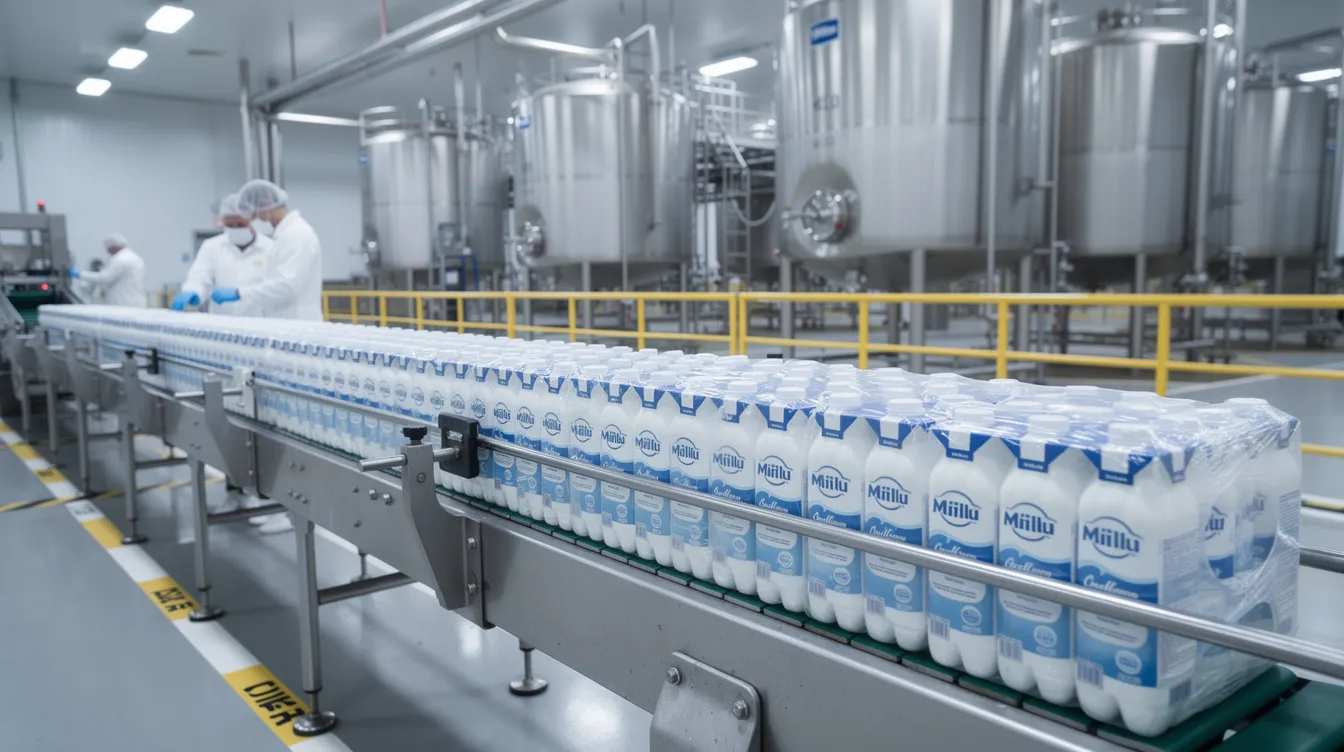
Balancing the UHT Steriliser, Aseptic Tank and Aseptic Filling Lines
In UHT milk plant capacity planning, the relationship between UHT steriliser capacity, aseptic tank sizing and aseptic filling line throughput is the most critical technical decision. The UHT steriliser capacity in LPH must be matched with total aseptic filling capacity (PPH converted into LPH). Undersized filling capacity makes the expensive UHT line underutilised; oversized packaging capacity leads to idle investment. UHT milk must be packaged under sterile conditions to prevent contamination, and aseptic conditions must be maintained throughout UHT processing. UHT milk packaging can include aseptic cartons or pouches.
Aseptic buffer tanks serve a vital role as intermediate storage – buffering processed UHT milk when the filling line stops briefly for maintenance, reel change or coding issues, allowing continuous operation of the UHT unit. The aseptic tank volume and maximum holding time should be specified by the dairy technologist.
Equivalent Filling Capacity in LPH = Packs per Hour × Volume per Pack (Litres)
For example: a filler rated at 10,000 packs/hour for 1-litre packs yields 10,000 LPH equivalent; the same filler running 200-ml packs yields only 2,000 LPH equivalent.
Configurations may include one UHT processing line feeding one or multiple aseptic fillers via an aseptic tank and manifold. Aseptic packaging requires strict sterility standards during the packaging process. For detailed coordination of sterilisation, buffer and packaging, refer to the article on aseptic filling and packaging process for UHT milk. Final matching must be validated with the equipment supplier and dairy technologist.
Milk Reception and Raw Milk Storage Capacity
Milk reception is the start of the chain and can quietly become a bottleneck if tanker unloading, testing and raw milk storage capacity are underestimated. Key elements include the number and size of road milk tankers received per day, unloading rate of reception bays, time for weighment and quality checks (fat, SNF, MBRT), and the capacity of raw milk silos.
If reception is too slow, the UHT line waits for fresh milk. If raw milk silo capacity is too low, trucks queue, increasing operational inefficiency. Conversely, excessively large silos encourage extended holding of raw milk, affecting quality. Raw milk storage capacity should support the chosen production schedule without encouraging unnecessarily long storage periods.
Shift Planning and Production Scheduling
Shift planning converts installed UHT milk processing line capacity into daily and annual production. Different models include single-shift (8-hour) operation in early years, double-shift (16-hour) when demand stabilises, and extended or near-continuous (20–22 hour) operation for large scale production plants.
Illustrative Shift-Planning Table
| Parameter | Shift 1 | Shift 2 | Daily Total |
|---|---|---|---|
| Scheduled hours | 8 hrs | 8 hrs | 16 hrs |
| CIP/SIP and cleaning | 1.0 hr | 0.5 hr | 1.5 hrs |
| Product/pack changeover | 0.5 hr | 0.5 hr | 1.0 hr |
| Maintenance/inspection | 0.25 hr | 0.25 hr | 0.5 hr |
| Net production hours | 6.25 hrs | 6.75 hrs | 13.0 hrs |
Values illustrative only. Actual CIP/SIP schedules depend on product, equipment and food safety standards.
Promoters should align labour schedules, raw milk reception timing and dispatch arrangements with the chosen shift pattern.
CIP, SIP and Changeover Losses
Cleaning-in-place (CIP) and sterilisation-in-place (SIP) are mandatory hygiene steps in UHT milk processing. They are non-negotiable from a food safety perspective and directly reduce available production time. CIP systems clean UHT processing equipment without disassembly and are essential for ensuring compliance with hygiene regulations as prescribed under FSSAI regulations for milk processing units.
Capacity losses arise from daily or batch-wise CIP, SIP before production start, line emptying and product recovery, product-to-product and flavour changeovers, pack-size changeovers, and packaging-material reel changes.
Intelligent sequencing reduces downtime: running similar products sequentially, grouping similar pack sizes, and scheduling major CIP/SIP at shift boundaries. Promoters should insist that the dairy technologist quantify average daily and weekly cleaning time so that realistic net operating hours are used in UHT milk plant capacity calculation.
Utilities Capacity and Line Balancing
Even the best-balanced UHT milk production line cannot achieve its rated capacity if utilities are undersized. Utilities such as steam and electricity must meet peak operating conditions in UHT plants. UHT processing requires fully automatic control systems to prevent contamination.
| Utility | Main Users/Stages | Effect of Undercapacity |
|---|---|---|
| Electrical power + backup | Motors, pumps, refrigeration, control systems | Complete or partial line shutdown |
| Steam (heating medium) | UHT steriliser, CIP, hot water | Reduced UHT throughput, temperature control failure |
| Refrigeration & chilled water | Raw milk chilling, intermediate cooling | Quality deterioration, regulatory non-compliance |
| Compressed air | Pneumatic valves, packaging machines, carton forming | Filler stoppages, inconsistent sealing |
| Process water | CIP, SIP, product make-up | Cleaning delays, extended downtime |
The choice between direct and indirect UHT processing technology affects steam and cooling load – discussed in the article on direct vs indirect UHT milk processing technology. DPRs must reflect whether utilities have been sized to support the declared UHT milk plant production capacity, energy consumption levels and shift pattern. Energy efficiency and energy costs directly influence project economics.
Packaging Material, Secondary Packing and Aseptic Carton Systems
UHT milk filling line capacity and secondary packaging often set the practical ceiling on daily saleable production. Key considerations include availability and lead time of aseptic packaging material (aseptic carton, closures, straws), compatibility with chosen filling machines, and storage conditions (temperature control, humidity, hygiene for packaging material). Coding, labelling, straw or closure application, shrink wrapping, case packing and palletisation must keep pace with the filler.
A high-speed aseptic filler can still be constrained by manual case packing, insufficient labour on the packaging floor, conveyor design limitations or warehouse handling capacity. For details on carton formats, pack sizes and their influence on line throughput, refer to the article on aseptic carton packaging systems for UHT milk.
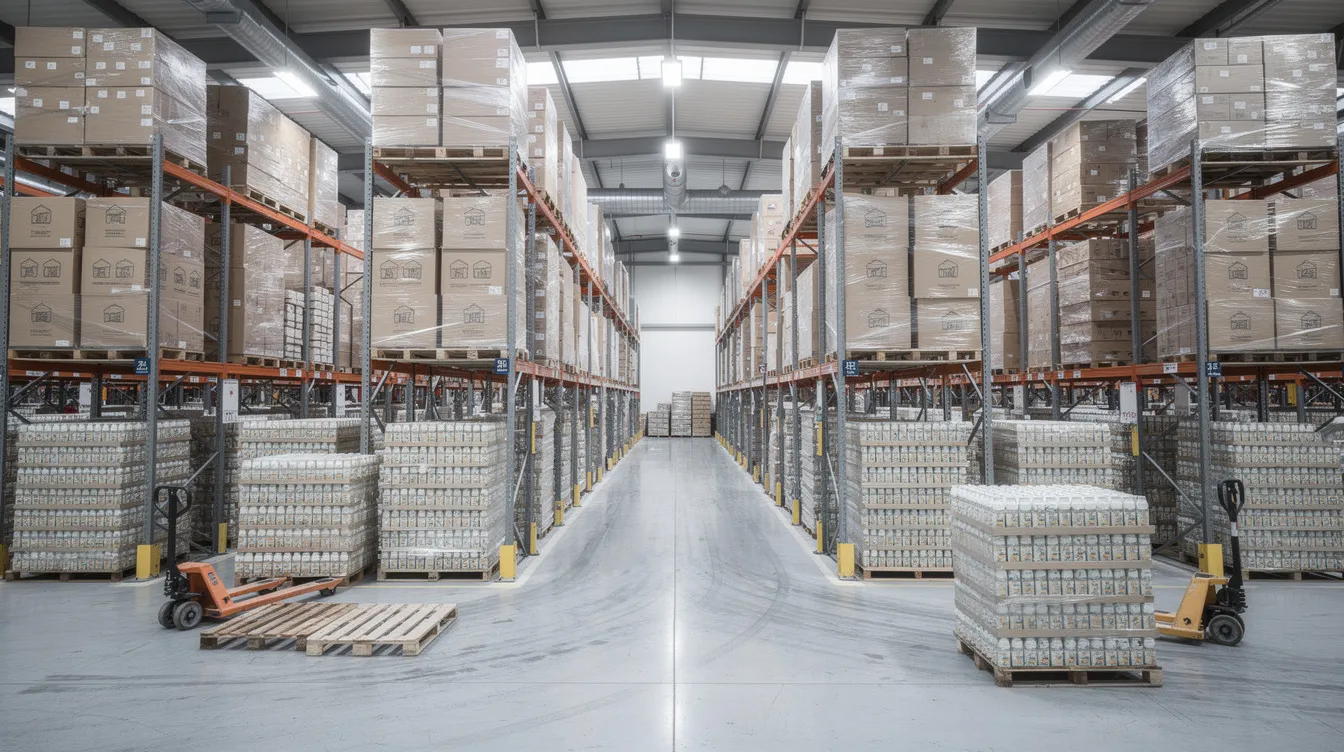
Warehouse and Dispatch Capacity
UHT milk, being shelf-stable with an extended shelf life of 6–12 months at room temperature, requires significant finished-goods storage at ambient temperature. Unlike pasteurized milk or fresh milk, cold storage capacity is not typically required for the final product.
Elements to plan include finished-goods warehouse size (pallet positions, stack height), product-wise inventory norms, batch and date-code traceability, dispatch frequency, vehicle loading bays and separate storage for packaging materials, raw materials like sugar, flavours and other inputs.
Inadequate warehouse capacity can force the plant to slow down production, increase damage risk and limit the ability to build stock for festival demand or institutional tenders. Warehouse size should be linked to planned UHT milk plant production capacity in LLPD.
Bottleneck Identification and Capacity Improvement
Actual operations often reveal bottlenecks different from those anticipated during project planning. Capacity modeling should involve scenario analysis for demand variations and supply disruptions.
Practical identification methods include stage-wise throughput measurement, downtime logs with cause coding, rejection and wastage tracking, monitoring aseptic buffer tank levels (frequent full or empty conditions), utility interruption records and simple overall equipment effectiveness calculations.
Corrective actions include revising production sequencing, adding buffer tanks, installing additional aseptic filling machines, enhancing utilities, improving conveyors and secondary packaging automation, strengthening preventive maintenance, and selectively adding shifts before purchasing new equipment. Modular design allows UHT plants to scale production incrementally and minimise downtime during maintenance. Expansion should address the actual bottleneck – not merely increase UHT steriliser LPH without resolving other constraints.
Capacity Utilisation During the Stabilisation Period
New UHT milk plants in India rarely operate at design capacity from day one. Commissioning, trial production to validate UHT parameters and packaging integrity, gradual build-up of the raw milk procurement network, distributor onboarding, retail acceptance for a new brand, and training of operators on aseptic operations all contribute to lower initial utilisation. The production process stabilises over time as the plant achieves consistent quality across all dairy products and milk products.
DPRs should show year-wise capacity utilisation ramp-up backed by narrative justification. There is no universal ideal utilisation curve – each project must justify assumptions based on market research for UHT milk, competition and procurement strategy. Pure milk brand acceptance takes time, especially for liquid milk products competing with established long shelf life brands.
Capacity Planning for Future Expansion
UHT milk plant capacity planning must look beyond the initial phase. Designing the plant layout and utilities for scalable future expansion improves long-term project economics.
Strategies include reserving space in the UHT processing area and packaging hall for additional machines, designing utilities (boiler, chiller, compressors, electrical distribution) to be expandable in modules, and planning for extra raw milk silos, aseptic tanks and warehouse expansion.
The financial trade-off: installing higher capacity initially benefits from economies of scale but increases debt and interest burden. Installing moderate capacity and upgrading later reduces risk but may cost more per litre in early years. Promoters should build sensitivity scenarios in financial models showing lenders how the project behaves under different capacity expansion timelines.
Illustrative UHT Milk Plant Capacity-Planning Example
All numbers below are hypothetical and used purely for illustration. They are not recommended machinery sizes or performance guarantees.
Configuration assumed:
- UHT steriliser rated capacity: 10,000 LPH
- Scheduled operation: 2 shifts × 8 hours = 16 hours/day
- CIP/SIP and changeover time: 3 hours/day → net production hours = 13
- Practical line efficiency: 85%
- Aseptic filler: 9,000 packs/hour for 1-litre packs
- Secondary packing: 10,000 packs/hour
Calculations:
Effective UHT steriliser throughput = 10,000 × 0.85 = 8,500 LPH Daily processing capacity = 8,500 × 13 = 1,10,500 litres/day
Filler effective capacity = 9,000 × 0.80 (filler efficiency) = 7,200 packs/hr = 7,200 LPH (1-litre packs) Daily filler output = 7,200 × 13 = 93,600 litres/day
| Stage | Rated Capacity | Effective Capacity | Bottleneck? |
|---|---|---|---|
| UHT steriliser | 10,000 LPH | 8,500 LPH (1,10,500 L/day) | No |
| Aseptic filler (1L) | 9,000 PPH | 7,200 LPH (93,600 L/day) | Yes |
| Secondary packing | 10,000 PPH | 8,500 PPH | No |
The filler is the bottleneck. Effective plant output = 93,600 litres/day = 0.94 LLPD. Annual achievable production (300 days) = 93,600 × 300 = 2.81 crore litres/year.
If the product mix includes 200-ml packs, the equivalent LPH drops further because each pack contains only 0.2 litres. Promoters must recalculate for mixed-pack scenarios. These final numbers – not the steriliser’s rated 10,000 LPH – should form the basis for sales and revenue projections in the DPR.
Impact of Capacity Planning on DPR and Financial Projections
UHT milk plant capacity planning is not merely an engineering issue; it directly determines plant cost, working capital, operating margins and loan repayment ability in the DPR. Financial projections assess capital investment and operating costs, and capacity assumptions drive every line item.
Specific financial areas influenced by capacity:
- Plant and machinery cost – bigger capacities need larger or more machines. See UHT milk plant machinery and equipment cost for a detailed discussion on equipment sizing and pricing.
- Civil construction – larger buildings, higher warehouse space.
- Utilities investment – bigger boilers, chillers, compressors.
- Milk procurement and working capital – raw milk accounts for 70–80% of total operating expenses. The nutritional value of pure milk must be preserved through correct high temperature treatment.
- Packaging-material consumption and storage.
- Labour costs per shift and total staff strength.
- Sales volume, revenue and overall profitability – gross profit margins for UHT milk typically range from 25–35%. Operating costs are projected to increase significantly by the fifth year as volumes scale.
- Break-even point and DSCR calculations under different utilisation scenarios.
Lenders typically compare installed machinery capacities with projected sales, check whether raw milk availability supports the proposed output, and examine whether capacity utilisation assumptions are reasonable. Promoters should run sensitivity analysis for different utilisation levels (±10–15%) and include these in the UHT milk plant project report.
Information Required for Capacity Assessment
A practical checklist before freezing capacity in a UHT milk plant DPR:
- Target capacity in LPH, KLPD and LLPD
- Proposed product mix (plain UHT milk variants, flavoured milk, dairy beverages)
- Planned pack sizes and formats (aseptic carton, plastic bottles, pouches)
- Desired UHT processing technology (direct vs indirect, subject to engineering advice)
- Number of shifts and operating days per year
- Milk procurement plan, chilling infrastructure and seasonality data
- Preliminary plant layout concept and scope for expansion
- Equipment quotations with rated capacities, utilities and footprints
- Utility requirements (power, steam, chilled water, compressed air, water)
- Planned CIP/SIP frequency and downtime estimates from suppliers
- Market-demand assessment and distribution plan
- Warehouse and logistics concept (storage days, dispatch pattern)
- Phased expansion roadmap if applicable
CA Manish Gugliya uses these inputs to build realistic capacity-linked financial models and CMA Data. All technical parameters must be validated with qualified dairy technologists and equipment vendors.
Common Capacity-Planning Mistakes in UHT Milk Projects
Frequent issues observed in UHT milk plant DPRs and proposals in India:
- Treating rated capacity as saleable output without deducting CIP/SIP and changeovers → validate daily achievable output with a realistic production schedule.
- Mismatching UHT steriliser and aseptic filling machine speeds → prepare a simple capacity matrix for all stages.
- Ignoring pack-size and product changeover complexity in multi-SKU plants → simulate weekly production schedules.
- Underestimating seasonality in raw milk supply and overestimating annual utilisation → align procurement and marketing plans with capacity.
- Undersizing utilities (especially steam and refrigeration capacity) → obtain utility-load calculations from the equipment supplier.
- Overlooking secondary packaging and warehouse capacity → include downstream stages in line-balancing analysis.
- Assuming 80–90% utilisation from year one → use a conservative ramp-up justified by market evidence.
- Buying excess machinery without confirmed product demand → match installed capacity to realistic market demand.
- Not leaving space in plant layout for future expansion → design civil works and utilities for modular growth.
Regulatory compliance for UHT processing includes food safety systems and hygienic design requirements. UHT milk processing must meet Codex Alimentarius standards, and regulatory compliance includes securing necessary industrial permits. Microbiological safety and shelf stability depend on maintaining harmful microorganisms at zero through correct UHT sterilization parameters – the high temperature UHT milk undergoes must be rapidly cooled to preserve quality.
Practical Recommendations for Promoters and Lenders
Promoters preparing a UHT milk project should ask equipment suppliers for a stage-wise capacity and utilities matrix – not just a consolidated UHT milk production line quote. Involve a qualified dairy technologist early to define line configuration, CIP frequency and product mix feasibility. Prepare a spreadsheet mapping rated and effective capacities for every stage from reception to warehouse.
Ensure that DPR projections are based on effective daily capacity and realistic operating days, not theoretical maximums. Cross-check projected sales volumes with both the market study and processing capacity calculations. UHT milk production planning must align production efficiency targets with achievable market penetration.
Lenders should review consistency between installed capacity, raw milk procurement, utilities and marketing plans. Examine sensitivity of DSCR to lower utilisation in initial years. Verify adequacy of working capital to support the chosen UHT milk plant production schedule. Balanced, evidence-based capacity planning improves the credibility of the project report and the long-term sustainability of the UHT milk business, ensuring that heat energy, heat exchanger sizing, temperature control and all processing parameters support the declared capacity.
Frequently Asked Questions
How is UHT milk plant capacity calculated for a DPR?
Calculation starts from rated UHT processing capacity in LPH, multiplied by net available production hours per day (after CIP/SIP and changeovers), then multiplied by a practical efficiency factor. The result is multiplied by operating days per year to get annual achievable litres. Packaging capacity in packs per hour must also be converted to LPH and compared; the lower of processing and packaging capacity becomes the basis for sales projections. All assumptions should be clearly documented for lender review.
What is the difference between rated and effective UHT milk plant capacity?
Rated capacity is the maximum throughput claimed by the equipment supplier under defined test conditions, usually in litres per hour. Effective capacity is the actual average throughput achievable after accounting for CIP/SIP, start-up, shutdown, changeovers, quality checks, utility limitations and minor stoppages. DPRs and financial projections should always be based on effective capacity.
How should a UHT steriliser be matched with the aseptic filling machine?
Compare UHT steriliser capacity in LPH with combined effective capacity of all aseptic fillers, converted using: packs per hour × pack volume in litres. Fillers should not be significantly slower than the UHT unit; small overcapacity on the filling side absorbs minor stoppages, supported by an appropriately sized aseptic buffer tank. Exact matching must be engineered by the supplier and dairy technologist.
How should capacity utilisation be projected for a new plant?
New plants rarely achieve full utilisation immediately. DPRs should show a conservative year-wise ramp-up, with narrative justification based on market development, milk procurement stabilisation and operator training. There is no universal standard percentage – assumptions must be project-specific and defensible to lenders.
What information do banks examine in UHT plant capacity planning?
Banks typically check whether installed machinery capacities, raw milk availability, utility sizing and projected sales volumes are internally consistent. They examine whether capacity utilisation assumptions are realistic, whether the production schedule supports projected revenue, and whether sensitivity analysis demonstrates adequate DSCR under lower-utilisation scenarios.
Conclusion: Making UHT Milk Plant Capacity Planning Bankable
Technically sound and commercially realistic UHT milk plant capacity planning and UHT milk processing line balancing are central to efficient capital investment, reliable UHT milk production and accurate financial projections. Converting UHT milk plant capacity in LPH into LLPD and annual saleable litres – after factoring in CIP/SIP, changeovers, utilities, product mix and market demand – strengthens project feasibility, working-capital planning and bank-loan appraisal.
Well-documented capacity assumptions reassure lenders that the proposed UHT milk processing plant design, machinery, utilities, warehouse and market plan are consistent with each other. They also demonstrate that the promoter understands dairy processing realities – not just machinery brochures.
Project promoters, dairy companies, consultants and investors planning a UHT milk plant in India are welcome to contact CA Manish Gugliya through www.projectreportbank.com for tailored assistance with UHT milk plant project reports, DPR preparation, CMA Data, financial projections and bank-finance assessment. No loan approval or guaranteed profitability is promised – but a well-prepared, capacity-balanced project report significantly strengthens your case.