
Key Takeaways
- UHT treatment alone does not guarantee shelf stability; the aseptic filling and packaging process for UHT milk must maintain an unbroken sterile chain from the UHT outlet through transfer, filling, hermetic sealing and final dispatch.
- The aseptic packaging line-including sterile tanks, product-transfer pipelines, filling chambers, sealing stations, coding systems and secondary packaging-functions as a single integrated system where failure at any point can compromise commercial sterility.
- Decisions on packaging formats (cartons, bottles, flexible pouches), packaging materials and machinery directly influence shelf life, cost per pack and overall project profitability.
- CIP and SIP are essential protocols in maintaining sanitary conditions, and continuous monitoring is necessary for critical control points throughout aseptic processing.
- A bankable DPR for a UHT milk aseptic packaging plant in India must combine validated technical inputs from equipment suppliers and dairy technologists with realistic capacity utilisation, operating cost and finance projections.
Introduction: Why Aseptic Filling & Packaging Matters for UHT Milk
The aseptic filling and packaging process for UHT milk is the decisive link between heat treatment and a commercially viable shelf-stable product. UHT processing heats milk to 135–150°C for 2–5 seconds, killing all microorganisms including spores and enzymes. Yet this hard-won commercial sterility can be lost in seconds if the downstream transfer, filling or sealing steps are not carried out under validated sterile conditions. Aseptic packaging prevents microbial contamination during filling and extends shelf life up to 12 months when executed correctly.
Three pillars must hold firm for a successful outcome: (i) commercially sterilised UHT milk, (ii) sterilised packaging material and a controlled sterile environment, and (iii) hermetic sealing that blocks re-entry of microorganisms, oxygen and contaminants. Any break in this sterile chain-whether a leaking valve, an improperly sterilised carton surface, or a weak seal-can trigger souring, gas formation, swollen packs, leakage, market complaints, retailer returns and costly product recalls.
This article focuses squarely on the downstream aseptic milk packaging system: from the UHT outlet to final dispatch. It does not reproduce the complete UHT milk manufacturing process or detailed plant-cost calculations, which are addressed in separate articles on ProjectReportBank.com. The intent is to combine practical technical explanation with project-planning, investment and DPR considerations relevant to entrepreneurs establishing a UHT milk processing and aseptic packaging plant in India.
What Is Aseptic Filling and Packaging of UHT Milk?
Aseptic filling means that commercially sterilised UHT milk is filled into pre-sterilized containers within a controlled sterile zone, and then hermetically sealed-all without the product ever contacting non-sterile surfaces or unfiltered air. It is a high-tech processing method for liquid foods that separates product sterilisation from package sterilisation and brings them together only inside a validated sterile environment.
It is important to distinguish the key stages clearly:
- UHT heat treatment sterilises the milk in the processing section.
- Aseptic transfer moves the sterilised milk through closed pipelines to the filling area.
- Packaging-material sterilisation treats carton rolls, bottles, or pouches so that product-contact surfaces are free of viable microorganisms.
- Filling inside a sterile chamber ensures the sterilised product and packaging are combined in a sterile zone.
- Hermetic sealing creates an airtight barrier that prevents exposure to environmental microorganisms.
This is fundamentally different from simply filling hot milk into ordinary containers:
- Filling pasteurised or hot milk into non-sterilised bottles does not achieve validated commercial sterility.
- Such products typically require refrigeration and have a much shorter shelf life.
- Aseptic packaging preserves milk quality without preservatives, enabling ambient storage for several months.
Properly executed aseptic packaging allows unopened UHT milk to move through India’s distribution network largely without a continuous cold chain, subject to validated processing conditions and recommended storage temperatures. Aseptic milk can be stored without refrigeration for up to 12 months depending on packaging type and manufacturer validation. UHT milk can typically be stored at room temperature for 6–9 months unopened. Actual shelf life depends on formulation, packaging materials (multilayer cartons, aseptic plastic bottles, or flexible pouches), process design and validation, and should not be generalised blindly across all products.
How Aseptic Packaging Connects with UHT Processing
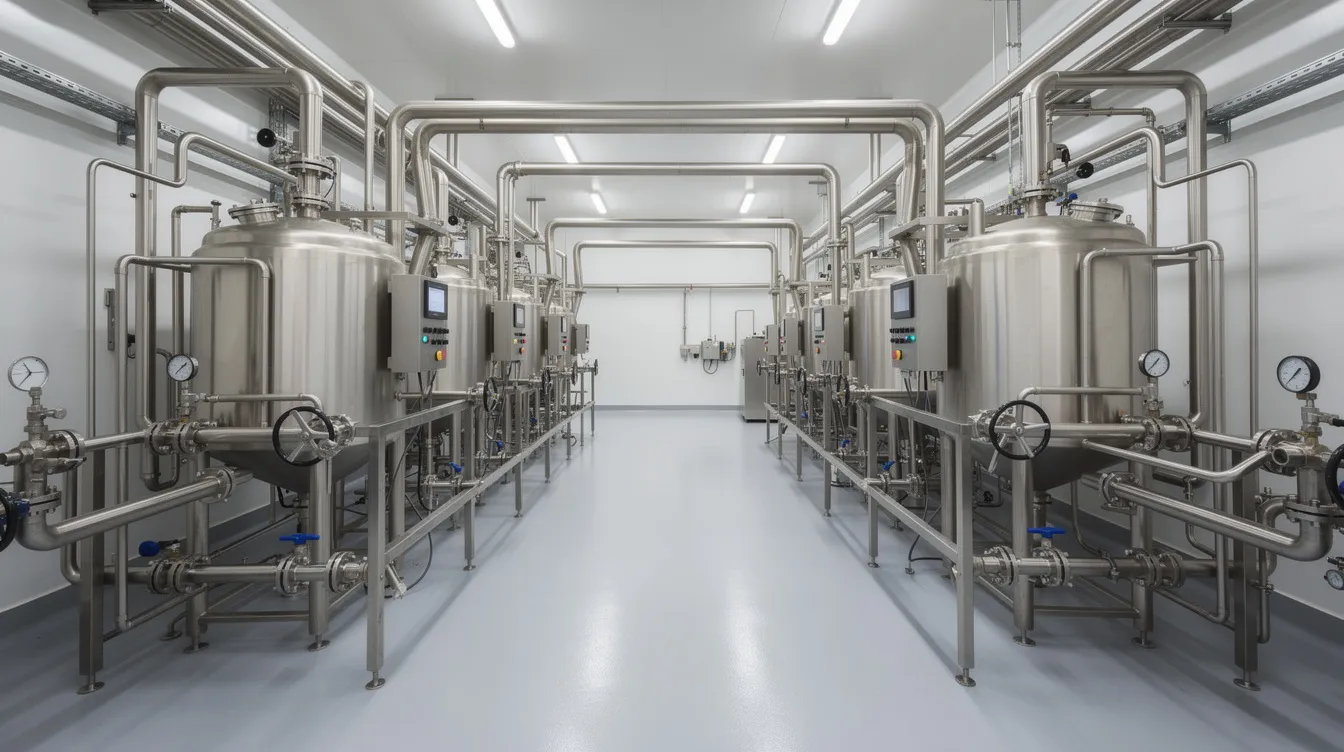
Once milk completes the UHT milk manufacturing process and flow chart, it flows to the aseptic section through closed, sterile pipelines. The outlet of the UHT heat exchanger-whether employing direct and indirect UHT processing technologies-is connected to an aseptic holding or buffer tank and then to the filling machine, forming a continuous sterile path.
Direct heating systems (steam injection or infusion) give a rapid temperature rise and less thermal damage, while indirect systems (plate or tubular heat exchangers) are simpler but may produce slightly different flavour and colour profiles. UHT processing minimizes flavor changes compared to longer heat treatments, and rapid cooling after UHT treatment protects flavor and nutrients in milk. UHT processing also retains most vitamins and minerals in milk. Regardless of method, both require an equally robust aseptic downstream system.
Valves, product-contact pipelines, instrumentation and the aseptic buffer tank must all be designed for CIP and SIP to maintain commercial sterility during production. The absence of refrigeration requirements at the distribution end leads to reduced food waste and spoilage-a significant logistical advantage in Indian markets where cold-chain infrastructure remains inconsistent.
From a project-planning perspective, decisions taken in the processing section (capacity, configuration, product mix) must align with the downstream aseptic packaging plant to avoid bottlenecks or idle capacity.
UHT Milk Aseptic Packaging Process Flow Chart
The following sequence represents the conceptual process flow for an aseptic packaging line. The exact arrangement may vary by packaging format, filling-machine design and equipment supplier.
UHT-treated milk → Aseptic holding or buffer tank → Sterile product-transfer pipeline → Packaging-material sterilisation → Package forming (carton, bottle, or pouch) → Aseptic filling → Hermetic sealing → Coding and online inspection → Secondary packaging → Palletisation → Storage and dispatch
In some lines, the aseptic buffer tank is integrated with the UHT unit; in others, it is a separate sterile product tank with its own controls and sterile-air system. Exact sequencing and equipment layout change with packaging formats such as aseptic paperboard cartons, aseptic PET or HDPE bottles, glass bottles configured for aseptic filling, or multilayer flexible pouches for dairy products and beverages.
Readers preparing DPRs should treat this flow chart as a conceptual guide. Actual line design must be finalised with dairy technologists, process engineers and equipment suppliers before freezing investments.
Step-by-Step Aseptic Filling and Packaging Process for UHT Milk
This core section describes each stage from UHT outlet to dispatch. While technical details vary across suppliers, the underlying principles of sterility, closed transfer, validated sterilisation and hermetic sealing remain consistent across modern aseptic packaging machinery for dairy plants.
Transfer of UHT-Treated Milk
Commercially sterilised milk leaves the UHT unit and flows through closed, sanitary pipelines fitted with aseptic valves, avoiding any open exposure to ambient air. Double-seat or mix-proof valves and hygienic bends are designed to eliminate dead legs where bacteria could survive between cleaning cycles.
- Product temperature, flow rate and pressure are controlled to preserve product quality and prevent backflow or ingress of non-sterile air.
- Proper design of the transfer network reduces product losses during start-up, changeover and shutdown, directly affecting cost of goods sold.
Aseptic Buffer or Holding Tank
The aseptic buffer tank (or sterile product tank) decouples the UHT processing capacity from the filling line, smoothing minor speed variations and accommodating short stoppages without wasting sterilised milk.
Key features include aseptic design, sterile-air blanketing or slight overpressure, hygienic agitator, level instruments and SIP-capable valves. Poor sterile-boundary management-such as improper vent filtration or unsterilised connections-can turn the buffer tank into a contamination source, forcing batch rejection.
Not every plant uses the same size or number of aseptic tanks; configuration should match plant capacity, number of SKUs and desired line flexibility for Indian operating conditions.
Sterilisation of the Filling System
CIP removes soil and residues from internal surfaces; SIP is the additional thermal or chemical step that inactivates remaining microorganisms after cleaning. Both are mandatory before starting aseptic production.
- Typical SIP practices include circulating hot water or steam through the product path, sterilising filling valves and nozzles, and sanitising the filling chamber and sterile-air system.
- Critical process parameters-sterilisation time, temperature and sterile-air filtration integrity-must be monitored, recorded and verified before authorising commercial production.
- Insufficient or rushed SIP can lead to intermittent contamination, invisible during filling but visible later as pack bloating or off-flavours, with serious commercial implications for the dairy industry.
Packaging-Material Sterilisation
All primary packaging materials-carton rolls, preformed cartons, plastic bottles, glass bottles, or flexible pouches-must be thoroughly sterilised before their product-contact surfaces meet the milk. Packaging sterilisation can involve hydrogen peroxide and heat methods, and some validated systems incorporate UV-light treatment as an additional or alternative approach.
- Hydrogen peroxide (often at 35% concentration) combined with hot air drying is widely used for carton sterilisation.
- Sterile-air drying removes sterilant residues to levels prescribed by food safety regulations.
- For DPR and feasibility work, promoters must budget for packaging-material sterilisation modules as part of the aseptic packaging machinery, not as optional accessories.
Package Forming
Roll-fed carton systems form bricks or gable-top packs in-line by shaping and sealing a continuous web inside the sterile zone after in-line sterilisation. Preformed carton and bottle systems (PET, HDPE, glass) receive containers that are sterilised, dried and transferred into the filling chamber under aseptic conditions. Aseptic packaging uses pre-sterilized containers for filling in all formats.
Flexible pouches, including pillow and stand-up designs, use multi-layer films including polyethylene and aluminum (and sometimes EVOH) for oxygen and light barrier properties. These are formed and sealed on automatically controlled machines.
Forming and transport mechanisms must prevent recontamination after sterilisation, with precise mechanical alignment to avoid damage to packaging materials and reduce wastage.
Aseptic Filling of UHT Milk
Sterile UHT milk enters the sterile filling chamber through a closed pipeline and is dosed accurately into each package using volumetric, gravimetric or flowmeter-based systems. The sterilized product and packaging must be combined in a sterile zone-this is the defining principle of aseptic filling.
- Nozzle design and filling speed are optimised to minimise foaming and splashing, keeping the sealing area clean and product losses under control.
- Sensors and automation interlocks stop filling if sterile-air pressure falls, chamber conditions go out of specification, or packaging-material feed is interrupted.
- Filling accuracy affects statutory quantity compliance and per-pack product cost. Well-managed plants achieve tolerances of ±0.2–0.4%, so DPRs should factor realistic filling tolerances when projecting material consumption.
Hermetic Sealing
Hermetic sealing prevents exposure to environmental microorganisms, oxygen and contaminants during the intended shelf life of aseptic milk. Seal types include:
- Longitudinal and transverse heat seals in cartons
- Heat-sealed pouch seams
- Closures and caps in aseptic plastic or glass bottles
Key sealing parameters (temperature, pressure and dwell time) must be precisely controlled. Improper settings cause weak seams, channels, pinholes or wrinkles leading to leakage or early spoilage. Seal quality has a direct impact on customer complaints and brand reputation; equipment maintenance and operator training around sealing stations are critical financial safeguards.
Coding, Traceability and Online Inspection
Each primary pack should carry readable information: batch number, manufacturing date, best-before date, line or machine code, and where used, barcodes or QR codes for traceability and labeling compliance.
- Online inspection systems include cameras checking date codes and print quality, checkweighers verifying fill weight or volume, and automatic rejection of defective packs.
- Robust coding and traceability practices help in focused product recalls, regulatory compliance and internal root-cause analysis.
- DPRs should explicitly budget for coding and inspection equipment, consumables and maintenance-not just the main aseptic filling machine.
Secondary Packaging
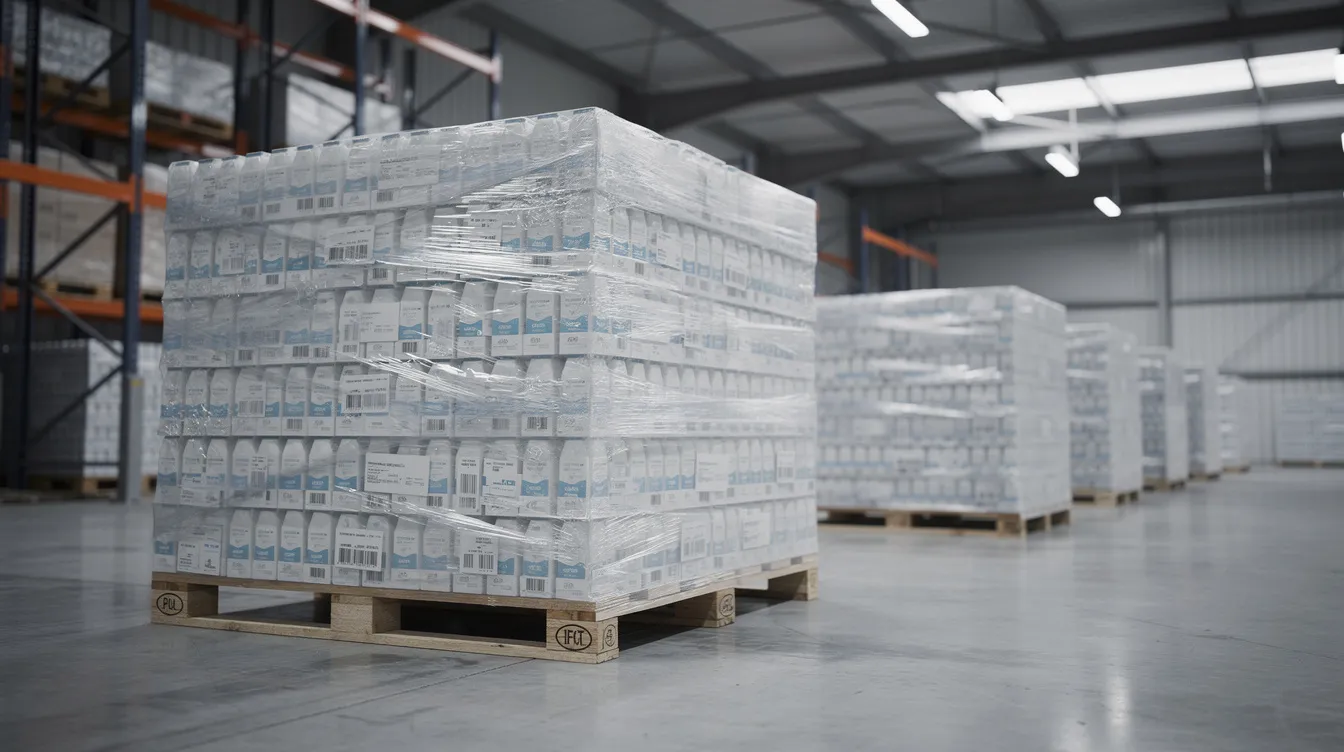
Individual milk packaging units (cartons, pouches, bottles) are grouped into multipacks or cases using shrink film or corrugated fibreboard boxes for easier handling and distribution.
- Manual or automatic case packers, case sealers and palletisers form stable pallets suitable for transport in Indian road conditions.
- Case coding, pallet labeling and warehouse controls maintain FIFO and traceability up to distributor or modern retail warehouse level.
- Secondary packaging costs (cartons, shrink film, strapping, pallets) and labour or automation choices significantly influence overall per-litre distribution cost.
Major Components of an Aseptic Filling and Packaging Line
The table below summarises key systems in a typical UHT milk packaging line, focusing on functions and selection considerations rather than detailed pricing. For cost-related information and supplier benchmarking, refer to the article on UHT milk plant machinery and equipment cost.
| Equipment or System | Main Function | Important Selection Considerations |
|---|---|---|
| Aseptic product tank | Buffer between UHT unit and filler; maintains sterility | Capacity matched to processing and filling speeds; SIP capability; sterile-air system |
| Sterile product-transfer piping | Closed transfer of sterilised milk | Hygienic design; no dead legs; aseptic valves; ease of CIP |
| Aseptic filling and sealing machine | Fills and hermetically seals packages | Packs per hour; format flexibility; sterilisation technology; line efficiency |
| Packaging-material sterilisation section | Sterilises carton, bottle or pouch surfaces | Compatibility with materials; residue control; validated kill rate |
| Sterile-air filtration system | Maintains sterile overpressure in filling zone | HEPA filter integrity; monitoring and alarm systems |
| CIP and SIP system | Cleans and sterilises product-contact surfaces | Chemical and water consumption; automation; validated protocols |
| Coding and printing units | Applies batch, date, barcode information | Print quality; speed; consumable cost; integration with inspection |
| Seal-integrity or leak-testing equipment | Detects defective seals or leaks | Sensitivity; throughput; reject mechanism |
| Conveyor system | Transports packs between stations | Hygienic design; speed matching; gentle handling |
| Secondary packaging line | Groups packs into cases or shrink packs | Manual vs automatic; case sizes; flexibility |
| Palletising arrangement | Forms stable pallets for storage and dispatch | Manual, semi-auto or robotic; pallet pattern flexibility |
| Central automation and control system | Integrates all equipment; data logging | PLC/SCADA capability; recipe management; remote diagnostics; after-sales support in India |
Specifications and make/model decisions should be finalised in consultation with experienced dairy technologists and equipment vendors. The financial model in the DPR must reflect the chosen configuration.
Packaging Formats Suitable for UHT Milk
UHT milk packaging technology in India primarily uses aseptic paperboard cartons, aseptic plastic bottles and flexible pouches, with some niche glass bottle applications for premium dairy products and beverages like flavoured milk, cream and yoghurt-based drinks.
| Packaging Format | Typical Applications | Main Advantages | Key Limitations | Storage & Transport | Machinery Implications |
|---|---|---|---|---|---|
| Multilayer paperboard cartons | Plain milk, flavoured milk, cream, tea-based beverages, desserts | Excellent light and oxygen barrier; lightweight; good printability; reduced logistics cost | Dependent on specific machine-material compatibility; recycling infrastructure developing | Stackable; low breakage; ambient suitable | Requires specific roll-fed or preformed carton filling lines |
| Aseptic PET or HDPE bottles | Milk, flavoured beverages, liquid foods | Plastic bottles in HDPE and PET are durable and moldable; consumer-friendly resealable caps | Oxygen barrier may need additional layers; higher pack weight than cartons | Good stackability; moderate breakage risk | Blow-mould or preform systems; sterilisation modules |
| Glass bottles | Premium milk, organic dairy products | Glass bottles are 100% recyclable and eco-friendly packaging; inert; excellent barrier | Heavy; high breakage risk; higher transport cost | Requires careful handling; higher secondary packaging cost | Specialised aseptic bottle-filling lines; limited high-speed options |
| Multilayer flexible pouches | Budget milk, institutional packs, rural distribution | Low material cost; flexible sizes; multi-layer films block light and air when aluminium or EVOH included | Lower barrier than cartons in basic structures; puncture risk | Lightweight; space-efficient; palletisation needs care | Form-fill-seal machines; pouch-specific sterilisation |
Aseptic cartons reduce logistics costs and environmental impact due to lower weight compared with glass. Specific brand names for packaging technologies are commercial solutions built on general aseptic milk packaging system concepts and should be referenced only as examples.
Structure and Functions of Aseptic Carton Packaging
Aseptic bricks and gable-top cartons generally use multilayer laminates combining paperboard, polyethylene and sometimes aluminium foil. Tetra packs are six-layer laminates for milk packaging, though exact structures vary by supplier and product. Aseptic packaging takes advantage of multi-layer materials to block light and air, preserving nutritional quality and flavor.
- Paperboard layer: Provides structural stiffness, printability and branding surface.
- Inner polyethylene layers: Enable liquid containment and heat-sealable surfaces for sealing.
- Aluminium foil layer: Acts as an oxygen and light barrier, critical for preserving vitamins and minerals and preventing off-flavours.
- Outer polyethylene or polymer coating: Provides moisture resistance and protects the paper from external damage.
The laminate structure must be formable, sealable and sterilisation-compatible with the aseptic carton filling technology, while maintaining mechanical strength during transport. Correct matching of packaging material with product (fat content, added ingredients) and machine settings (temperature, dwell time, cutting profile) must be validated for commercial sterility and physical integrity.
Project promoters should involve both packaging-material suppliers and machine manufacturers early so that the DPR reflects realistic packaging-material consumption and wastage assumptions.
Maintaining the Sterile Zone Around the Filler
The aseptic filling process requires a controlled sterile environment-not achieved by a single piece of equipment, but by a validated system covering product, packaging material and the immediate environment around the filling chamber.
- Sterile-air filtration (typically HEPA or equivalent) and, where applicable, positive pressure inside the filling chamber prevent ingress of unfiltered ambient air during production.
- Hygienic machine design with smooth product-contact surfaces, minimised dead zones and restricted operator entry are fundamental. Research has shown that biofilms-especially Bacillus species-can persist even after CIP on rough stainless steel surfaces, underscoring the need for superior surface finishing.
- Automated alarms and interlocks trigger line stops when sterile-air pressure, filter integrity or filling-chamber conditions go outside validated limits.
- Regular integrity checks on sterile barriers must be performed throughout production.
Proper shutdown and restart procedures after longer stoppages are essential. In some cases, a full SIP and validation cycle may be required before resuming filling, with implications for capacity utilisation and operating cost.
CIP and SIP in an Aseptic Filling Plant
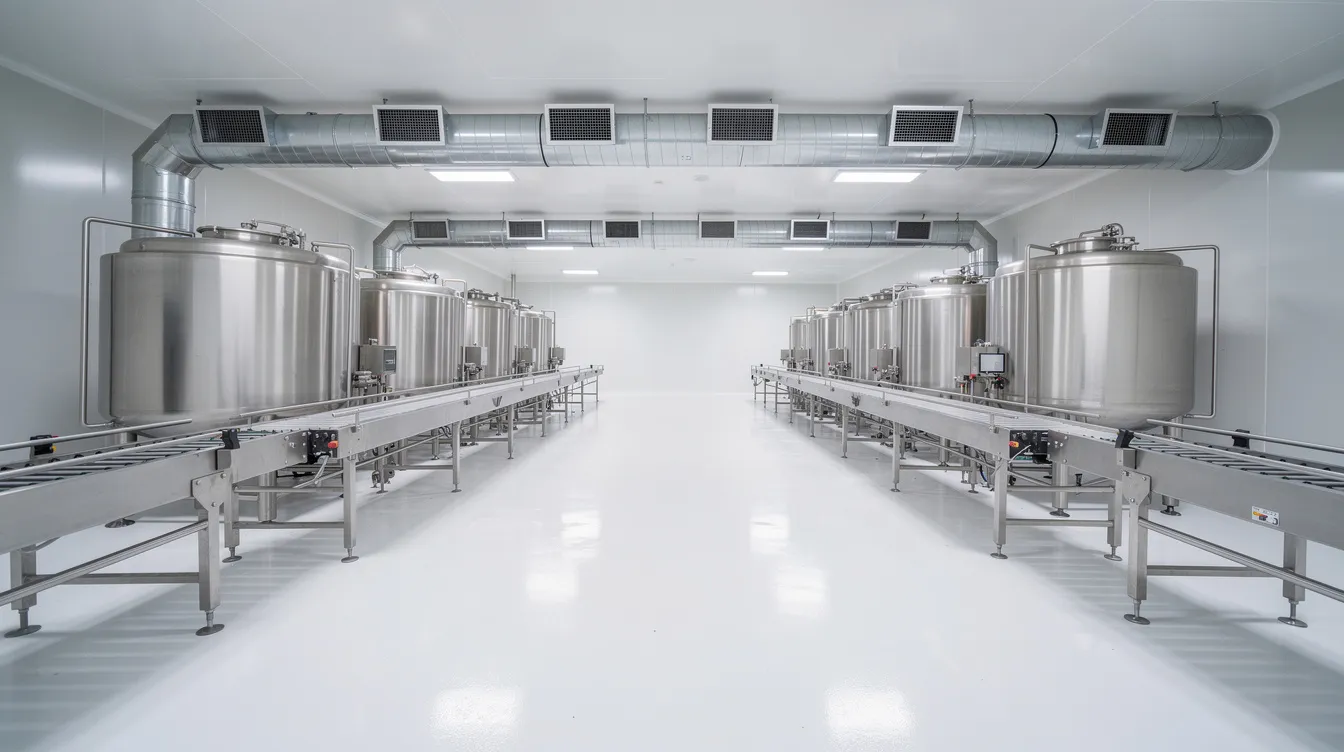
Cleaning-In-Place (CIP) is the automated cleaning of internal surfaces-pipelines, tanks, fillers-without dismantling. Sterilisation-In-Place (SIP) is the additional step that inactivates remaining microorganisms after cleaning. CIP and SIP are essential protocols in maintaining sanitary conditions in any aseptic packaging plant.
An aseptic packaging plant typically runs scheduled CIP cycles (daily or between products) and SIP cycles before starting aseptic runs, along with intermediate rinses during longer production campaigns if recommended by suppliers.
Inadequate CIP leads to build-up of residues, formation of biofilms, rising microbial counts and, eventually, loss of commercial sterility and forced batch rejection. Microbiological integrity is crucial to prevent spoilage in aseptic packaging.
Actual CIP and SIP parameters (chemical concentration, temperature, time, flow velocity) must follow equipment suppliers’ documentation and validated protocols, and should not be generalised across plants. For DPR purposes, factor in consumption of CIP chemicals, water, steam, time lost during cleaning and sterilisation, and effluent-treatment loads while calculating per-litre cost of aseptic milk.
Critical Quality-Control Checks for Aseptic Milk Packaging
Quality control in an aseptic packaging plant covers both process controls during production and separate validation activities done periodically. Continuous monitoring is necessary for critical control points in aseptic processing. Proper validation is crucial for commercial sterility and packaging integrity.
| Control Point | What Is Checked | Risk if Control Fails |
|---|---|---|
| Incoming packaging-material inspection | Material integrity, supplier certificate, lot traceability | Defective material causes seal failures, leaks, contamination |
| Sterilisation-system monitoring | H₂O₂ concentration, temperature, contact time | Surviving microorganisms; compromised commercial sterility |
| Sterile-air quality | Filter integrity, pressure differential, particulate count | Airborne contamination of product or package surfaces |
| Filling accuracy | Volume or weight per pack | Underfilling (regulatory penalty) or overfilling (product loss) |
| Seal integrity | Seal strength, visual inspection, dye or vacuum tests | Leaking packs, microbial ingress, customer complaints |
| Leak testing | Pressure decay, dye penetration | Undetected leakers reaching market; spoilage |
| Pack appearance | Shape, surface, print alignment | Consumer rejection; brand damage |
| Coding accuracy | Date, batch, barcode readability | Traceability failure; recall difficulty; regulatory non-compliance |
| Incubation or sterility testing | Packs incubated at prescribed temperatures for 7–13 days | Undetected post-process contamination reaching consumers |
| Microbiological examination | Total count, coliforms, spore formers | Product safety risk; regulatory action |
| Sensory evaluation | Taste, odour, colour, consistency | Consumer dissatisfaction; quality complaints |
| Retention samples | Stored samples for reference and dispute resolution | Inability to investigate complaints or demonstrate compliance |
| Storage-condition monitoring | Warehouse temperature, humidity | Accelerated quality deterioration; shortened effective shelf life |
Routine in-process checks (hourly coding verification, seal inspection) differ from formal process validation exercises (extended incubation trials proving commercial sterility under worst-case conditions). Both types should be described in project reports and SOPs, as bankers and auditors increasingly examine food-safety management systems in dairy industry projects.
Common Packaging Defects and Their Possible Causes
Even with good equipment, improper settings, worn parts or poor materials can produce defects that impact shelf life, product image and financial performance.
| Defect | Possible Cause | Operational Impact | Corrective Focus |
|---|---|---|---|
| Leaking packages | Weak seal; packaging-material damage; worn sealing jaws | Product loss; retailer returns; brand damage | Check sealing temperature, jaw pressure and alignment; inspect material storage |
| Swollen or bloated packs | Post-fill contamination; residual spores; incomplete sterilisation | Batch rejection; consumer safety risk; potential recall | Verify SIP parameters; review aseptic-barrier integrity; incubation testing |
| Weak or incomplete seals | Low seal temperature; insufficient dwell time; moisture in seal area | Shortened shelf life; field failures | Calibrate sealing equipment; ensure product-free seal zones |
| Deformed cartons | Mechanical misalignment; incorrect forming settings | Consumer rejection; secondary-packaging difficulties | Adjust forming parameters; check material specifications |
| Underfilled or overfilled packs | Flow-meter drift; nozzle blockage; sensor malfunction | Regulatory penalties (underfill); product loss (overfill) | Calibrate metering systems; review checkweigher data |
| Product in sealing area | Foaming; splash during filling; incorrect fill level | Weak seals; leaks | Optimise nozzle design and filling speed |
| Packaging-material delamination or pinholes | Poor storage; material defect; handling damage | Barrier failure; contamination; shortened shelf life | Incoming inspection; supplier quality audit; controlled storage |
| Unreadable or missing codes | Ink exhaustion; printhead misalignment; conveyor speed mismatch | Traceability failure; regulatory non-compliance | Maintain coding equipment; online vision verification |
| High residual sterilant | Incomplete drying; low air temperature; excessive H₂O₂ application | Food-safety concern; off-flavour | Validate drying parameters; monitor sterilant application |
Persistent defects usually require systematic root-cause analysis with active involvement of equipment manufacturers and packaging suppliers-not only on-the-spot adjustments.
Capacity Planning for an Aseptic Packaging Line
For a UHT milk packaging line, rated machine speed (packs per hour) is very different from actual saleable output. Changeovers, CIP/SIP time, stoppages and rejects all reduce effective output.
Key factors influencing capacity planning:
- UHT processing capacity (litres per hour)
- Shift pattern (typically 16–20 operating hours per day)
- Pack sizes (200 ml, 500 ml, 1 litre, etc.)
- SKU mix and changeover frequency
- CIP/SIP frequency and duration
- Expected maintenance downtime
- Line efficiency and reject rate
Illustrative formula:
Annual saleable packs = Effective packs per hour × Operating hours per day × Operating days per year × Line efficiency × Saleable-output factor
Each term represents: rated output adjusted for actual conditions; planned production hours net of changeovers; working days minus maintenance shutdowns; a percentage reflecting real-world machine utilisation; and a factor accounting for rejects and sampling losses.
This formula is a planning aid only. Actual DPR assumptions must be based on vendor guarantees, realistic Indian operating conditions and conservative efficiency figures. Underestimating capacity leads to supply shortages; oversizing the line causes underutilised investment and increased financial stress.
Utility Requirements for Aseptic Filling and Packaging
Utilities are the backbone of aseptic plants. Any interruption in power, sterile air, steam or water can break sterility and force full re-sterilisation or product disposal.
- Electrical power: Continuous supply including backup for critical loads (filling machine, sterile-air systems, automation).
- Compressed air: For pneumatic actuators, valves and machine controls.
- Sterile air: HEPA-filtered, sometimes heated or dried, for filling chamber overpressure and packaging-material drying.
- Process and cleaning water: Treated to suitable quality for CIP, rinsing and steam generation.
- Steam or thermal energy: For SIP, packaging-material sterilisation and hot-air systems.
- Chilled water: Where used for product cooling or environmental control.
- HVAC systems: Controlled-environment systems for the filling room to manage temperature, humidity and air quality.
Consumables such as cleaning and sterilisation chemicals, HEPA filter cartridges, printing ink and packaging-line lubricants are recurring cost elements. Utility sizing (boiler and compressor capacity) must be aligned with peak CIP/SIP loads and continuous operation of both processing and packaging sections.
DPRs should refer to supplier utility lists and consider local conditions (voltage stability, water quality, ambient temperature) while budgeting equipment and contingency provisions.
Packaging-Line Efficiency and Operating Cost
Packaging-line efficiency ties directly to cost per litre: higher downtimes and rejections mean higher overhead per saleable pack.
Major variable and semi-variable cost components:
- Packaging materials (cartons, films, caps, closures)
- Utilities (power, water, steam, compressed and sterile air)
- Cleaning and sterilisation chemicals
- Labour for operations, quality control and maintenance
- Consumables for printing, coding and testing
Fixed cost items include:
- Depreciation and interest on term loans
- Plant overheads and insurance
- Preventive-maintenance contracts
- Annual calibration and validation expenses
Packaging materials typically represent one of the largest per-pack variable costs in UHT milk production, especially when using multilayer laminates or EVOH-based flexible pouches. Even small wastage can materially affect profitability. Include realistic assumptions for line efficiency-accounting for learning curves in the initial year-when preparing financial projections for banks and investors.
Selecting an Aseptic Filling Machine
Selection of an aseptic filling machine should consider not just quoted capacity or initial price, but total cost of ownership and fit with the planned UHT milk packaging line and product strategy.
- Required packs per hour and pack sizes supported
- Current and future product mix (plain milk, flavoured milk, cream, other dairy beverages and liquid foods)
- Level of automation desired
- Sterilisation technology (hydrogen peroxide, heat, UV combinations)
- Compatibility with chosen packaging materials and formats
- Expected line efficiency under Indian operating conditions
- Changeover time between products or formats
- Utility consumption (power, steam, water, compressed air, sterile air)
- Availability of local technical support and spares in India
- Robustness of machine design under Indian ambient conditions (temperature, humidity, dust)
- Integration capability with CIP/SIP systems and central automation
- Ease of operator training
Compare offers using life-cycle costing rather than only the initial aseptic filling machine price in India. Operating costs, downtime costs and packaging-material wastage can exceed the initial investment over the project life.
Questions to Ask an Aseptic Equipment Supplier
This practical checklist guides entrepreneurs during technical and commercial discussions:
- Ask about rated versus guaranteed output at your specific pack sizes.
- Ask about minimum and maximum pack volumes the machine can handle.
- Ask about expected overall line efficiency and typical reject rates under Indian conditions.
- Ask about utility consumption-power, steam, water, compressed air, sterile air-at rated speed.
- Ask about the sterilisation method for both product path and packaging material.
- Ask about typical CIP/SIP and changeover durations.
- Ask about packaging-material compatibility and approved material suppliers.
- Ask about validation documents and support for commercial sterility trials.
- Ask about operator and maintenance training scope and duration.
- Ask about critical spare-parts list, availability, lead times and cost.
- Ask about warranty terms, annual maintenance contract options and exclusions.
- Ask about installation and commissioning scope, performance-guarantee test conditions and delivery timelines.
- Ask about items explicitly excluded from the quotation (civil work, utilities, secondary packaging, etc.).
Document supplier responses and use them as inputs when preparing financial projections and negotiating loan terms with banks.
Project Cost and DPR Considerations for Aseptic Packaging Lines
An aseptic packaging line is often one of the highest single investments within a UHT milk plant and significantly influences working capital, capacity utilisation and break-even.
Key capital components:
- Aseptic filling and sealing machine
- Packaging-material sterilisation modules
- Aseptic tanks and valves
- Conveyors and transfer systems
- Coding, inspection and rejection equipment
- Secondary packaging and palletisation equipment
- Clean-room or controlled-environment infrastructure
- Additional utility equipment (boilers, compressors, HEPA systems)
Related expenditures: installation and commissioning, validation and trial runs, hygienic civil construction, pre-operative expenses, consultancy and training, initial stocks of packaging materials and critical spares.
For the broader project cost picture, refer to the article on UHT milk processing plant setup cost in India.
Financial-modelling aspects to address:
- Working-capital needs for packaging materials inventory
- Expected reject rate and product loss
- Realistic capacity-utilisation ramp-up (conservative in year one)
- Contribution per pack across different SKUs
- DSCR and repayment schedule
- Sensitivity analysis for changes in packaging-material prices, energy cost or interest rates
Indian Regulatory and Compliance Considerations
Aseptic UHT milk plants in India must comply with multiple regulations covering food safety, packaging, labeling, weights and measures, labour, environment and workplace safety.
- FSSAI licensing and standards: UHT treatment is defined under FSSAI regulations as heating in continuous flow at ≥135°C for ≥1 second, followed by aseptic packaging into hermetically sealed containers with ambient preservation for not less than 15 days from manufacture.
- Food Safety and Standards regulations: Cover compositional requirements (fat, SNF), microbiological limits, commercial sterility testing (incubation at 30°C for 7–13 days), and maximum limits for contaminants.
- Labeling rules: Declarations on pack volume, ingredients, allergens, nutritional information and best-before dates must comply with current FSSAI packaging and labeling regulations.
- Legal Metrology: Accurate net quantity declaration and approved measuring systems tie directly to filling accuracy and coding.
- Factory and labour approvals: Applicable factory licences, labour registrations and workplace safety clearances.
- Pollution control: Consents for water discharge, effluent treatment and waste management.
- Fire safety and pressure-system approvals: Where boilers, pressure vessels or ammonia-based refrigeration are used.
- Traceability and recall: Documented procedures for rapid containment of any safety concerns.
Promoters and consultants should always verify current requirements directly from official notifications before finalising plant design or labels.
Why Aseptic Packaging Projects Require Integrated Planning
An aseptic filling project must be planned as an integrated system. The UHT processor, aseptic tank, packaging materials, aseptic filling machine, utilities, laboratory, secondary packaging, storage and distribution network all need to be aligned.
Typical issues when integration is weak:
- UHT processing capacity exceeds filling capacity, causing product hold-ups
- Mismatched packaging formats for target markets
- Inadequate utility capacity leading to interrupted sterilisation cycles
- Laboratory unable to support requisite conditions for microbiological testing
- Storage not designed for ambient UHT milk (exposure to direct sunlight or extreme heat)
Financial consequences include higher product losses, excessive packaging-material waste, frequent stoppages, inability to meet orders, higher maintenance bills and pressures on cash flow and debt-servicing capacity. Integration is especially important when planning expansion phases, where existing pasteurisation or UHT infrastructure is combined with a new aseptic packaging line.
Role of a Professional DPR in UHT Milk Aseptic Packaging Projects
A detailed project report (DPR) should translate validated technical choices into a clear financial and commercial roadmap for lenders and investors.
Key elements the DPR should integrate:
- Technical capacity of processing and packaging sections
- Chosen packaging formats and sizes
- Expected sales volume and product mix
- Capital investment by component
- Operating costs including packaging-material consumption and utility costs
- Working-capital requirement
- Profitability projections and contribution per pack
- Break-even analysis
- DSCR and repayment schedule
- Sensitivity analysis for capacity utilisation, packaging-material prices and interest rates
Technical plant design, line layout and machinery specifications must be prepared and verified by qualified engineers and equipment suppliers. The financial consultant’s role is to ensure the numbers in the DPR are internally consistent with these technical inputs and present a coherent story to lenders.
A strong DPR for an aseptic packaging plant also includes risk-mitigation narratives-backup utilities, supplier diversification, quality management systems-demonstrating to lenders that operational risks are recognised and planned for.
Frequently Asked Questions
This section addresses practical questions that entrepreneurs and financiers in the dairy industry often raise about aseptic UHT milk packaging projects.
Can an existing dairy plant add an aseptic UHT milk packaging line later?
Many pasteurisation-based dairies in India do add UHT and aseptic packaging lines later. However, integration requires careful evaluation of fresh milk reception capacity, processing throughput, utilities, building layout and hygienic zoning. Promoters should assess whether existing space can accommodate sterile rooms, aseptic tanks, CIP/SIP stations and additional utilities without compromising current operations. A feasibility study and updated DPR are typically required, supported by process-flow changes and equipment quotations from reputable suppliers.
How does aseptic packaging change logistics and distribution planning?
Properly packed UHT milk can usually be transported and stored at ambient temperatures until opening, reducing dependence on refrigerated trucks and cold-chain infrastructure. Once opened, UHT milk requires refrigeration like regular milk. This opens distant markets-rural areas, institutional consumers, e-commerce-where cold chain is weak. However, warehouse conditions must still avoid extreme temperatures and direct sunlight. DPRs should model different distribution scenarios when estimating transport costs and stock levels.
What kind of staff training is needed to run an aseptic milk packaging line?
Beyond basic dairy-processing knowledge, operators and supervisors require training on aseptic principles, sterile-boundary management, CIP/SIP sequences, start-up and shutdown procedures, and routine quality checks. Many equipment suppliers offer commissioning-time training, but plants should plan periodic refreshers and competency assessments, especially for sealing, coding and microbiological sampling. Well-trained teams reduce avoidable downtime and losses, improving the financial performance projected in the DPR.
How long does it typically take to commission an aseptic UHT milk packaging line?
Timelines vary by project size, building readiness, utility availability and supplier schedules. Commissioning usually includes installation, dry runs, water tests, CIP/SIP validation and product trials. Commercial sales cannot start immediately after mechanical erection; realistic buffers should be included in project schedules and cash-flow planning to accommodate validation and regulatory steps. Confirm tentative commissioning and validation timelines with each equipment supplier and incorporate them into the project’s implementation chart.
What information is essential for preparing a bankable DPR for a UHT aseptic packaging project?
Key inputs include: proposed plant capacity and product mix; chosen packaging formats and sizes; targeted markets and pricing assumptions; confirmed utility and machinery specifications; estimates of packaging-material consumption and pricing; manpower plan; and preliminary quotations from suppliers. Lenders also expect promoter background, means of finance, term-loan requirements, working-capital assessment, profitability projections and risk analysis with mitigation strategies. Working with professionals familiar with dairy projects helps ensure the technical, commercial and financial aspects of the aseptic packaging line are presented in a coherent and credible manner.
Conclusion and Professional Call to Action
The aseptic filling and packaging process for UHT milk is a complete, validated production chain-from sterile product tank through aseptic filling, hermetic sealing, quality control and secondary packaging-designed to preserve commercial sterility and enable reliable shelf-stable milk distribution. It is not merely a filling machine; it is an integrated system where each component must function within its validated parameters for the entire line to deliver safe, commercially sterile product that consumers can store at ambient temperature for months.
Sound equipment selection, disciplined sterile-zone management, correct packaging-material choices, effective quality-control systems and realistic capacity planning together determine both food safety and long-term project profitability. Aseptic packaging preserves milk quality without preservatives, protects nutritional quality and enables distribution networks that would be unviable with refrigeration-dependent products.
Every plant is unique. Final technical specifications must be frozen in consultation with qualified dairy technologists, process engineers, packaging specialists and machinery suppliers before financial closure.
If you are an entrepreneur, investor, consultant or lender evaluating a UHT milk processing and aseptic packaging project, CA Manish Gugliya, FCA, DISA (ICAI), is available through ProjectReportBank.com for professional support with:
- UHT milk processing plant project reports
- Detailed Project Reports (DPRs) for bank finance
- CMA data preparation
- Financial projections and feasibility assessment
- DSCR and repayment capacity analysis
- Sensitivity analysis and means-of-finance structuring
No guarantee of loan sanction or project approval is made. All technical specifications should be validated by qualified engineers and equipment suppliers.