The maximum Mudra loan amount under the Pradhan Mantri Mudra Yojana is ₹20 lakh – but that does not mean every applicant walks away with it. Banks sanction only what your project cost, cash flow and repayment capacity justify. Here is everything you need to know, based on current PMMY rules and real banking practice.
Key Takeaways
- Under the latest pradhan mantri mudra yojana guidelines, the maximum loan amount is ₹20 lakh, structured across four categories: Shishu, Kishore, Tarun and Tarun Plus.
- The ₹20 lakh ceiling is just a scheme limit. Banks sanction only the portion justified by project cost, business need and repayment capacity – not everyone gets the maximum mudra loan.
- Factors like business vintage, CIBIL score, own contribution, bank statement quality and a professionally prepared project report strongly influence your final sanctioned amount.
- Mudra loans are available to individuals and MSMEs across manufacturing, trading, services and certain allied agricultural activities. Applicants must be between 18 and 65 years old.
- A CA-prepared project report and properly arranged loan file can significantly improve approval chances for higher amounts.
Maximum Mudra Loan Amount Under PMMY Today
Under the current mudra yojana guidelines (post-24 October 2024), the maximum Mudra loan amount available is ₹20 lakh per eligible borrower. The government of india enhanced this limit from the earlier ₹10 lakh ceiling by introducing the Tarun Plus category for proven borrowers who have already repaid a Tarun loan.
- Funding can be used for manufacturing, trading, services, and certain allied agricultural activities – but not pure crop farming.
- Mudra loans remain collateral-free up to the scheme limit. No collateral is required for loans up to ₹10 lakh, and the same principle extends to Tarun Plus, though banks may insist on hypothecation of assets created or a co-obligant.
- Interest rates for PMMY loans vary by lender and are not fixed by the scheme. Each bank, SFB or NBFC sets rates based on its own MCLR structure and risk assessment.
Table of Contents
Evolution of Mudra Loan Limits and Government Objective
PMMY was launched on 8 April 2015 with three categories – Shishu, Kishore and Tarun – and a maximum loan limit of rs 10 lakh. For nearly a decade, loans up to ₹10 lakh were previously available under PMMY as the overall cap. As MSMEs grew and needed larger credit for machinery, vehicles and expansion, the government recognised the gap.
In the Union Budget 2024-25, the Finance Minister announced the new Tarun Plus category. The official notification on 24 October 2024 formally raised the ceiling to ₹20 lakh.
| Period | Maximum PMMY Loan Limit |
|---|---|
| April 2015 – October 2024 | ₹10 lakh |
| From 24 October 2024 onward | ₹20 lakh (Tarun Plus introduced) |
This evolution reflects the ministry’s broader goals: strengthening micro enterprises, promoting self-employment among youth and women, expanding credit access in underbanked areas, and helping small businesses move away from informal moneylenders.
Mudra Loan Categories and Their Maximum Amounts
Under the mantri mudra yojana pmmy, mudra loans are classified into four categories matching different business stages:
| Category | Loan Range | Business Stage | Common Borrowers |
|---|---|---|---|
| Shishu | Up to rs 50,000 | Start-up / micro units | Street vendor, tailor, mobile repair shop |
| Kishore | Rs. 50,001 to rs 5 lakhs | Growing enterprise | Salon expansion, small retail inventory |
| Tarun | Rs. 5 lakhs to 10 lakh | Established, scaling up | Transport operator, manufacturing unit upgrade |
| Tarun Plus | Rs. 10 lakhs to ₹20 lakh | Proven repeat borrower | Mature business with strong track record |
The Tarun Plus category covers loans above ₹10 lakh to ₹20 lakh for repeat borrowers who have fully repaid a Tarun loan. Moving between categories is not automatic – it depends on business performance, repayment history and fresh appraisal.
All four categories are offered by commercial banks, regional rural banks, small finance banks, non banking financial companies and micro finance institutions, often with a Mudra Card facility for working capital.
Why Not Everyone Gets the Maximum Mudra Loan
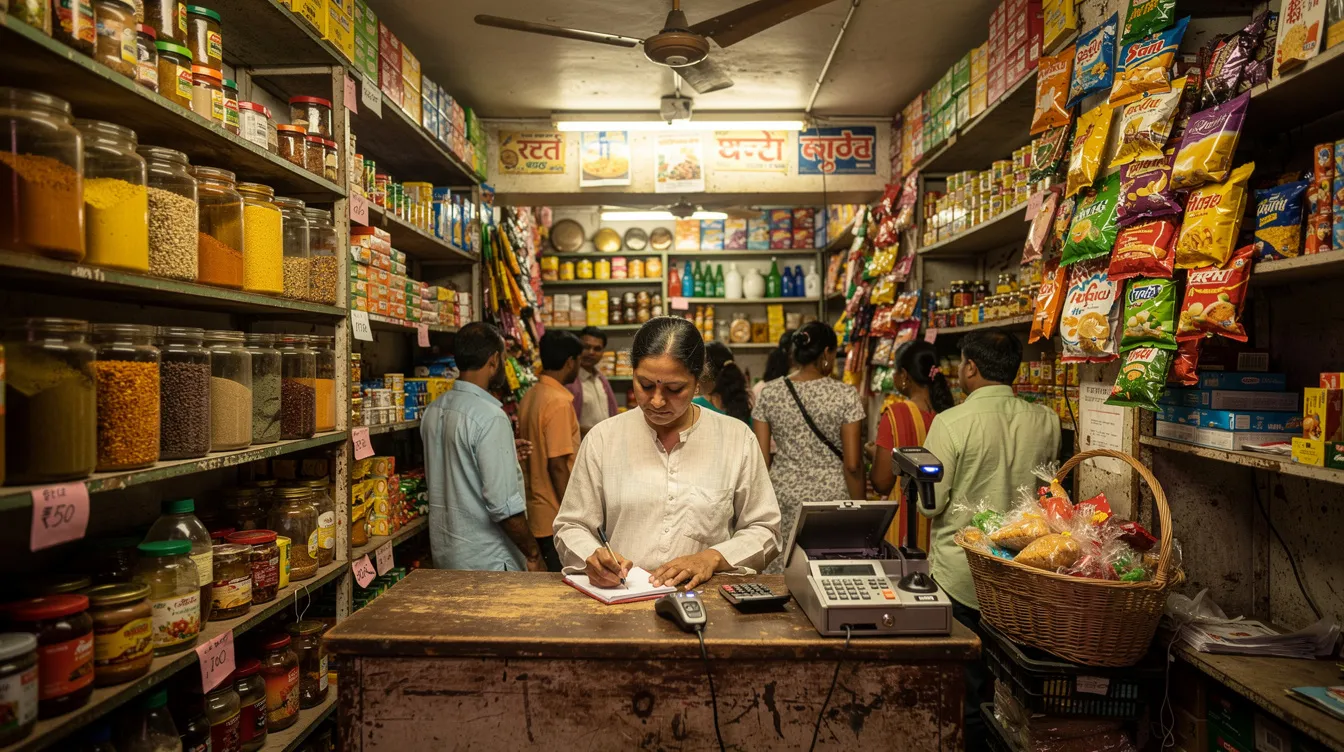
Even though the mudra scheme allows up to ₹20 lakh, banks restrict the amount to what your project and risk profile justify. Lenders assess business requirements and financial viability for loan approval. Here is what they evaluate:
- Actual project cost and working capital need – not just what the borrower requests
- Own contribution or margin money (typically 10–25% for larger tickets)
- Repayment capacity based on past income, expected cash flow and DSCR
- Credit history, CIBIL score and existing EMIs
- Business vintage, experience in the line, and quality of financial documents
For completely new businesses, banks generally prefer the Shishu or lower Kishore range and enhance limits after observing repayment behaviour. From my experience, inconsistent bank statements, frequent cash withdrawals and cheque bounces often result in banks reducing the requested amount by 20–40%.
Focus on right-sized funding rather than chasing the maximum. An amount you can comfortably service will improve future eligibility for higher loans.
How Banks Decide Your Eligible Mudra Loan Amount
While PMMY is a government-backed scheme, financial institutions still follow standard credit appraisal. They compute project cost, subtract your margin, estimate working capital cycle and test EMI serviceability before fixing the sanction.
Typical project cost components:
- Fixed assets: machinery, tools, furniture, shop renovation
- Vehicles: goods carrier, e-rickshaw under the mudra scheme
- Pre-operative expenses: registration, licences, deposits
- Working capital: raw material, inventory, receivables
How banks estimate your eligible loan:
Consider a small manufacturing unit with ₹12 lakh total project cost. The applicant contributes ₹3 lakh as margin. The proposed Mudra loan is ₹9 lakh. If monthly net profit is projected at ₹45,000 and the EMI works out to ₹18,000, the DSCR is comfortable at ~1.5x – the bank is likely to approve. But if profit projections are inflated or the bank statement shows average monthly credits of only ₹25,000, expect a cut.
A professionally prepared project report with CMA Data is what separates approvals from rejections at this stage.
Factors and Documents That Help You Get a Higher Mudra Loan
Higher-ticket mudra loans (rs 5 lakh to ₹20 lakh) are approved only when documentation is complete and the business case is clearly presented.
Factors that persuade banks to sanction more:
- Existing business with 1–2+ years of stable turnover
- Clean CIBIL with no write-offs or major delays
- Healthy banking behaviour and consistent credit flows
- Realistic projections backed by vendor quotations
- Adequate own contribution for Tarun and Tarun Plus ranges
Document checklist for higher Mudra slabs:
- KYC documents include Aadhaar, PAN, and utility bills
- Business proof: Udyam Registration, GST (where applicable), trade licences
- Income documentation includes a bank statement from the last 12 months, ITRs if filed
- Project report and CMA Data with clear cost estimates and cash-flow projections
- Machinery and vendor quotations, proforma invoices
Properly arranged files with correctly sequenced documents speed up appraisal and reduce the risk of cuts.
Practical Examples, Mistakes to Avoid and Expert Tips from CA Manish Gugliya
Case 1 – Sanction reduced: An applicant requests ₹20 lakh under Tarun Plus for a trading business. But his bank statements show irregular credits, CIBIL is 650, own contribution is only ₹1 lakh and the project report uses generic internet templates. The bank sanctions ₹12 lakh after cutting inflated projections and raising margin requirements.
Case 2 – Full sanction: A manufacturing unit owner with 3 years of profitable operations, CIBIL of 740, clean banking and a CA-certified project report applies for ₹10 lakh under Tarun. Every number in the CMA Data matches bank statements. Full sanction approved.
Common mistakes that reduce your loan:
- Asking for the maximum limit without linking it to actual project cost
- Submitting inflated or fake quotations
- Ignoring margin money requirements
- Copying generic project reports from the internet
My practical advice as a CA with 20+ years in MSME finance:
- Align your loan amount with genuine need – avoid over-borrowing
- Maintain clean bank statements for 6–12 months before applying
- Keep Udyam, GST and all registrations updated
- If the bank sanctions less, repay on time and apply for enhancement after 12–18 months
Need a bank-ready project report? Visit ProjectReportBank.com for CA-prepared Mudra loan project reports and expert guidance on arranging your loan file.
Frequently Asked Questions on Maximum Mudra Loan Amount
Can I get ₹20 lakh Mudra Loan for a brand-new business?
Banks rarely sanction ₹20 lakh to a new unit. Most entrepreneurs start under Shishu or Kishore and build up. Tarun Plus requires prior Tarun repayment. A strong project report and solid own contribution can help, but expect a lower initial sanction.
Is collateral required if I apply for the maximum Mudra Loan amount?
PMMY guidelines treat mudra loans as collateral-free up to the scheme ceiling. However, banks may take primary security like hypothecation of assets financed or ask for a guarantor based on internal risk policy.
Can I enhance my Mudra Loan later if I don’t get the maximum initially?
Yes. Eligible borrowers with good repayment history can request enhancement or move to the next category – Kishore to Tarun, or Tarun to Tarun Plus – after 12–18 months, subject to fresh appraisal.
Are interest rates lower for smaller Mudra Loan amounts?
Not necessarily. Rates are linked to the bank’s internal pricing and risk grade, not just ticket size. A well-rated larger case from an established business may even get slightly better pricing than a riskier small loan. RBI does not mandate a uniform rate for this scheme.
- Prepayment of Mudra Loan: Rules, Benefits & Practical Advice (2026 Guide)


- Total Cost of a Mudra Loan: Interest, EMI & Hidden Charges
- Mudra Loan Interest Calculation Explained with Examples
- How Much Mudra Loan Should You Apply for Your Business?

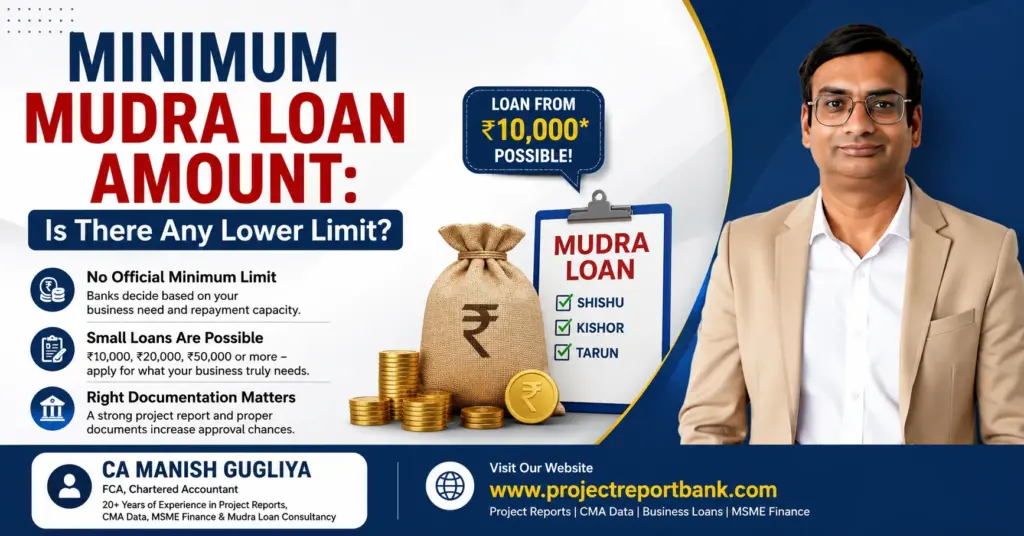
- Minimum Mudra Loan Amount: Is There Any Lower Limit?
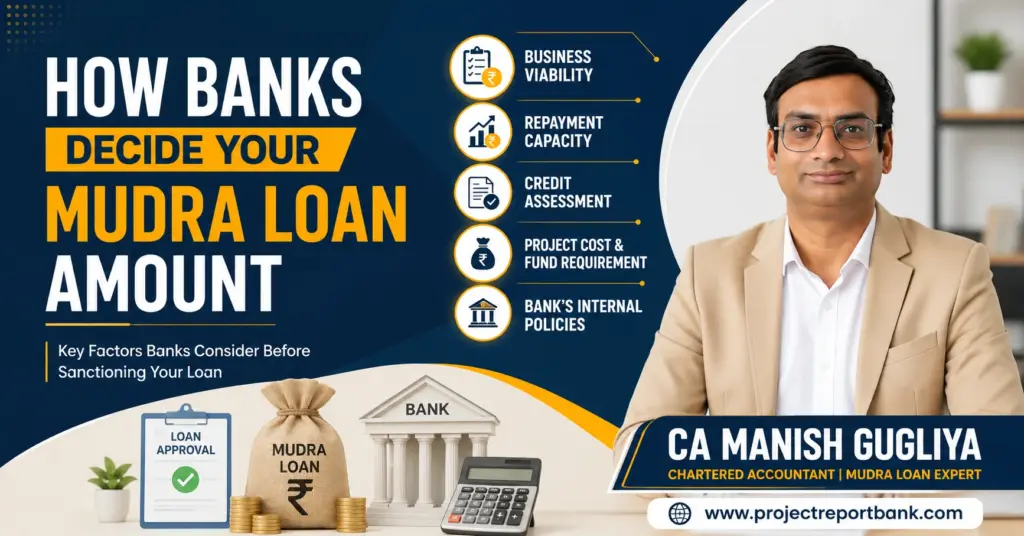
- How Banks Decide Your Mudra Loan Amount
- Which Bank Offers the Lowest Interest Rate on Mudra Loan? A CA’s Expert Comparison

- How to Calculate Mudra Loan EMI Before Applying

- Mudra Loan Interest Rate Explained: How Banks Calculate It