Key Takeaways
- For most Mudra loan cases – especially above Rs 50,000 – a 3 to 6 month bank statement is practically mandatory, while very small ticket or brand-new business cases may get some relaxation.
- Bankers mainly check turnover, cash deposits, cheque returns, EMI behaviour, and average balance in your Mudra loan bank statement – not just your closing balance.
- Both savings and current account statements are accepted, but a regular business current account is preferred for existing micro units.
- Bank statement requirements for Mudra loan vary by category: Shishu loans need lighter documentation, while Kishore and Tarun loans demand 6–12 months of detailed transaction history.
- I (CA Manish Gugliya) will share practical tips, red flags, and alternatives like GST data, UPI history, sales records, and a bank-ready Project Report to improve approval chances under Pradhan Mantri Mudra Yojana.
Introduction: Why Bank Statements Matter for Mudra Loan
A Mudra loan under Pradhan Mantri Mudra Yojana is designed for non corporate, non-farm small enterprises – think street vendors, small shopkeepers, micro manufacturers, service providers, and individual borrowers who need financial assistance to start or expand a business. Mudra loans are categorized into Shishu, Kishore, and Tarun. Shishu loans provide upto Rs 50,000. Kishore loans range from Rs 50,001 to Rs 5 lakhs. Tarun loans range from Rs 5 lakhs to Rs 10 lakhs. And with the recently introduced Tarun+ category, mudra loans are available up to Rs 20 lakh for eligible borrowers. These loans can be availed through commercial banks, small finance banks, NBFCs, and other financial institutions across India.
In my 20+ years as a Chartered Accountant, I have helped thousands of entrepreneurs prepare their Mudra loan applications. And I can tell you this from practical experience: the bank statement is one of the very first financial documents a loan officer opens when screening your file. Bank statements serve as a primary financial reference for lenders to evaluate cash flow, repayment ability, and business consistency.
Many applicants carry a common misconception: “Mudra is collateral-free, so no bank statement is needed.” Others believe that for small loans like Rs 50,000, banks don’t check transactions, or that any one month’s printout is enough. None of this is true in real practice.
The depth of bank statement verification for Mudra loan increases with ticket size, and even small Shishu loans require some basic proof of financial discipline. Eligible borrowers include proprietorship and partnership firms, as well as individual entrepreneurs running micro enterprises engaged in trading, manufacturing, or services.
In this guide, you will learn: which types of statements banks accept, how many months are required, what bankers actually look for, common red flags that can derail your application, alternatives if you don’t have a statement, and practical tips to prepare a strong bank statement before applying.

Table of Contents
What Exactly Is a Bank Statement and Which Formats Banks Accept?
A bank statement is an official, period-wise record of all debits, credits, charges, and closing balance in your bank account. It is generated by the bank or financial institution, typically covering a month or a custom date range you select.
Bank Statement vs Passbook: These are not the same thing. A passbook is a physical booklet that gets updated each time you visit the branch. A bank statement, on the other hand, is a formal summary document – either printed at the branch or downloaded as a PDF from net banking – used as proof for financial and legal purposes.
Types of account statements:
- Current account statement – Typically used by traders, manufacturers, and GST-registered service providers with frequent business transactions. Banks give this the highest weightage for Mudra loan assessment.
- Savings account statement – Commonly used by small proprietors, freelancers, and home-based businesses running their operations through a personal account.
Accepted formats:
Most banks today accept digital statements downloaded directly from net banking in PDF format, provided they are original, unedited, and clearly show the bank logo, IFSC code, account holder’s full name, account number, and the period covered. Statements should clearly show name, account number, and transaction history without any gaps.
For physical statement copies taken at a branch – say, “Statement for period 01-04-2025 to 30-09-2025” – physical copies must typically be signed and stamped by the bank branch, especially for higher ticket Mudra loans in the Kishore or Tarun category.
A lesser-known fact: a bank statement is often needed as secondary proof of address if the address printed on it matches your residence or business address. This can simplify documentation if your utility bills or other documents are not readily available.
One important warning: banks use back-end systems and cross-checks to verify authenticity of digital statements. Never edit, crop, or manipulate a PDF statement. Even password-protected PDFs are acceptable, but tampering is not.
Is Bank Statement Mandatory for Mudra Loan? (Existing vs New Business)
In my practical experience, for most Kishore and Tarun category Mudra loans, some form of bank statement is treated as a must-have. For very small Shishu loans or brand-new ventures, banks may show limited flexibility – but even then, they prefer some transaction proof.
Loans up to Rs 10 lakh require no collateral security under the mudra scheme, but that does not mean documentation is waived. Documents typically required alongside bank statements include identity proof (Aadhaar, passport, PAN) and address proof (utility bills, rent agreement).
For Existing Businesses: If your business has been operating for several months or years, banks will insist on a business bank statement – current or savings – to verify past turnover, GST-linked credits, regularity of sales deposits, cash withdrawals, prior EMI history, and cheque returns. This is especially true for loans above Rs 50,000. For businesses operating for more than 12 months, many public sector banks ask for 6 months’ bank statement as a baseline. For loan amounts above Rs 2 lakh, banks like Bank of Maharashtra also require last two years’ balance sheets and tax returns alongside the statement.
For New Businesses: A proper business statement may simply not exist yet. In such cases, banks may accept a personal bank statement, salary account history, or even a joint account statement to evaluate saving habits, earlier EMI behaviour, and average balance. For new ventures, alternative proofs such as salary slips, Form 16, small savings records, or a strong project report explaining estimated cash flow and EMI coverage can partly compensate. You can explore the complete differences in the guide on Mudra loan documents for new vs existing business.
Clearly, while “no collateral” is a hallmark of the scheme, documentation like bank statements and other documents remain essential for due diligence.
How Many Months of Bank Statement Are Required for Mudra Loan?
There is no single fixed rule in the PMMY guidelines. The official FAQ from Invest India mentions “Bank Statement of defined period” but leaves the exact duration to each bank’s credit policy. In real practice, the bank statement requirements for Mudra loan generally fall into three patterns:
| Duration | Typical Use Case | Loan Category / Amount |
|---|---|---|
| 3 months | Small working capital needs, repeat customers of the same bank, very small ticket loans | Shishu loans upto Rs 50,000; existing bank customers |
| 6 months | Most common requirement; covers seasonal fluctuations, gives a fair picture of turnover and EMI track | Kishore loans Rs 50,001–Rs 5 lakh; standard cases |
| 12 months | Higher ticket loans, new current accounts, fluctuating businesses, or near-maximum Mudra limit | Tarun loans Rs 5–10 lakh; some lenders for all categories above Rs 2 lakh |
To apply for a Pradhan Mantri Mudra Yojana loan, most banks ask you to provide bank statements for the last 6 months as a reference point. Some lenders may require up to 12 months of bank statements for loan applications, particularly when the loan amount is near the maximum loan limit of Rs 10 lakh (or Rs 20 lakh under Tarun+).
For larger loans, banks may ask for financial statements for the last two years – including profit and loss accounts and balance sheets – in addition to the bank statement. Mudra loans have a repayment tenure of up to 5 years, so banks want enough history to judge whether you can sustain EMI payments over that period.
If your business transactions are split across multiple banks, provide all relevant account statements. Hiding an operative account where most business actually happens is a mistake that bankers will usually catch through GST records or other documents.
Which Bank Account Statement Should You Submit? (Current, Savings, Joint, New)
For a bank statement for Mudra loan application, the best option is always the account where actual business money flows – sales deposits, supplier payments, and EMI debits.
Current Account: Most traders, manufacturers, and GST-registered micro enterprises operate current accounts. Banks give this the highest weightage because it clearly reflects business turnover, supplier payments, and the nature of transactions. If you run a beneficiary micro unit under the scheme, a current account statement is your strongest proof.
Savings Account: Small shopkeepers, home-based businesses, and freelancers often run everything through a personal savings account. Banks generally accept this for smaller Mudra loans if the transactions clearly show business-related entries – UPI receipts from customers, regular deposits, and supply payments.
Joint Account: Joint account statements can be accepted, but the Mudra borrower’s name should be one of the account holders. I recommend clarifying profit-sharing and business ownership in the application or project report to avoid confusion during processing.
Newly Opened Account: Accounts with less than 3 months of history are rarely sufficient on their own. Banks may ask for statements from older personal accounts, earlier salary accounts, or the applicant’s previous banking history. If your business account is new, supplement it with a savings account history and a detailed project report.
My practical advice: avoid mixing heavy personal spending with business transactions in one account. Over time, shift your business flows to a dedicated account so the bank can clearly see your enterprise’s financial activity without filtering out personal expenses.

How Do Banks Verify Your Bank Statement for Mudra Loan?
After 20+ years of interacting with bankers and preparing CMA data, I can tell you that loan officers do not just glance at your closing balance. They scan patterns, regularity, and risk factors across the entire statement period.
Here is what bank statement verification for Mudra loan actually involves:
- Business turnover (credits): Do the credit entries match your declared sales? If your GST returns show Rs 10 lakh annual turnover but your bank shows only Rs 2 lakh in credits, that inconsistency will raise questions.
- Nature of deposits: Are deposits coming through digital channels (UPI, POS, NEFT) or mainly large unexplained cash deposits? Consistent business transactions are considered to evaluate repayment ability.
- Existing EMIs and loans: Officers check for existing loan repayments, credit card dues, and whether you have successfully repaid previous loans. This helps them calculate your total monthly obligations and whether the proposed Mudra EMI is comfortably payable.
- Cheque returns and bounces: Even 2–3 bounce instances in the last 6 months can slow down your file or reduce the sanctioned amount. ECS failures and returned cheques signify poor financial planning to the banker.
- Average balance: Maintaining a healthy average balance – not just an end-of-month spike – signals financial discipline. Repeated instances of near-zero or negative balance are a concern.
- Cross-verification: Banks occasionally cross-check suspicious entries by asking for invoice copies, GST return details, or written explanations where credit entries seem inconsistent with declared income.
Interest rates for Mudra loans start at 9.05% p.a. and can go higher depending on the applicant’s risk profile. A clean bank statement directly influences whether you get offered rates at the lower or higher end of the grid.
Common Red Flags in Bank Statements That Can Delay or Reduce Mudra Loan
Even if you meet every eligibility criteria under Pradhan Mantri Mudra Yojana, certain red flags in your bank statement can lead to lower sanction, extended scrutiny, or outright rejection. Here are the ones I see most often in practice:
- Frequent cheque bounces or EMI returns – This is the single biggest red flag. It directly questions your creditworthiness and indicates a poor satisfactory credit track record.
- Prolonged negative balance or unauthorised overdraft use – Repeated months where your balance drops to zero or below, attracting penalty charges of Rs 10 to Rs 500, show lack of financial discipline.
- Large unexplained deposits – A sudden Rs 5,00,000 cash credit just before applying looks suspicious. Multiple cash deposits on the same day from different branches make bankers doubt the genuineness of turnover.
- Heavy cash withdrawals inconsistent with business nature – If you run a digital services business but withdraw Rs 50,000 in cash every week, the mismatch will invite questions.
- Gambling or loan app transactions – Transfers to online gaming platforms, betting apps, or known unregulated lending apps are serious red flags.
- Dormant or inactive accounts – An account with only occasional self-transfers does not prove real business activity, especially for proposals above Rs 50,000.
- Circular transactions – Depositing cash, immediately withdrawing it, and re-depositing it elsewhere looks like artificial inflation of turnover.
How to fix these issues before applying: Start 2–3 months before your planned application date. Clear old dues, stop circular cash transactions, ensure no cheques bounce, and maintain at least some positive average balance. Even small improvements in financial behaviour show up clearly in a 3-month window.
Can You Get a Mudra Loan Without Bank Statement? Practical Scenarios
While a bank statement is strongly preferred, some genuine applicants – especially new entrepreneurs and small-ticket Shishu borrowers – may not have a proper one. Banks do have limited flexibility in such cases.
Realistic scenarios where a statement may be absent:
- A salaried person quitting a job to start a business (only a salary account exists)
- A homemaker starting a tiffin or tailoring service with no prior banking history
- A young entrepreneur who previously dealt only in cash
- Someone whose old account was recently closed and a new one just opened
In such cases, banks may proceed based on alternative financial documents: salary slips, Form 16, income tax returns, a cash book, sales records, and a strong Project Report explaining how the proposed activity will generate enough revenue to service the Mudra EMI.
Government-sponsored camps or special drive initiatives sometimes relax strict document norms for shishu loans upto Rs 50,000, but even then, some minimum proof of income or savings is almost always insisted upon.
Each bank or financial institution has its own credit policy. Be honest about your situation and present whatever supporting proofs you have. Trying to fabricate or borrow someone else’s statement will backfire. For a deeper understanding of document flexibility, see the guide on financial documents required for Mudra loan approval.
Alternatives When Bank Statement Is Weak or Not Available
If your bank statement is thin, irregular, or simply does not exist, you still have options. Here are alternative documents that can support your Mudra loan proposal:
- Updated bank passbook with branch stamp – accepted by many banks for small loans in lieu of a formal statement
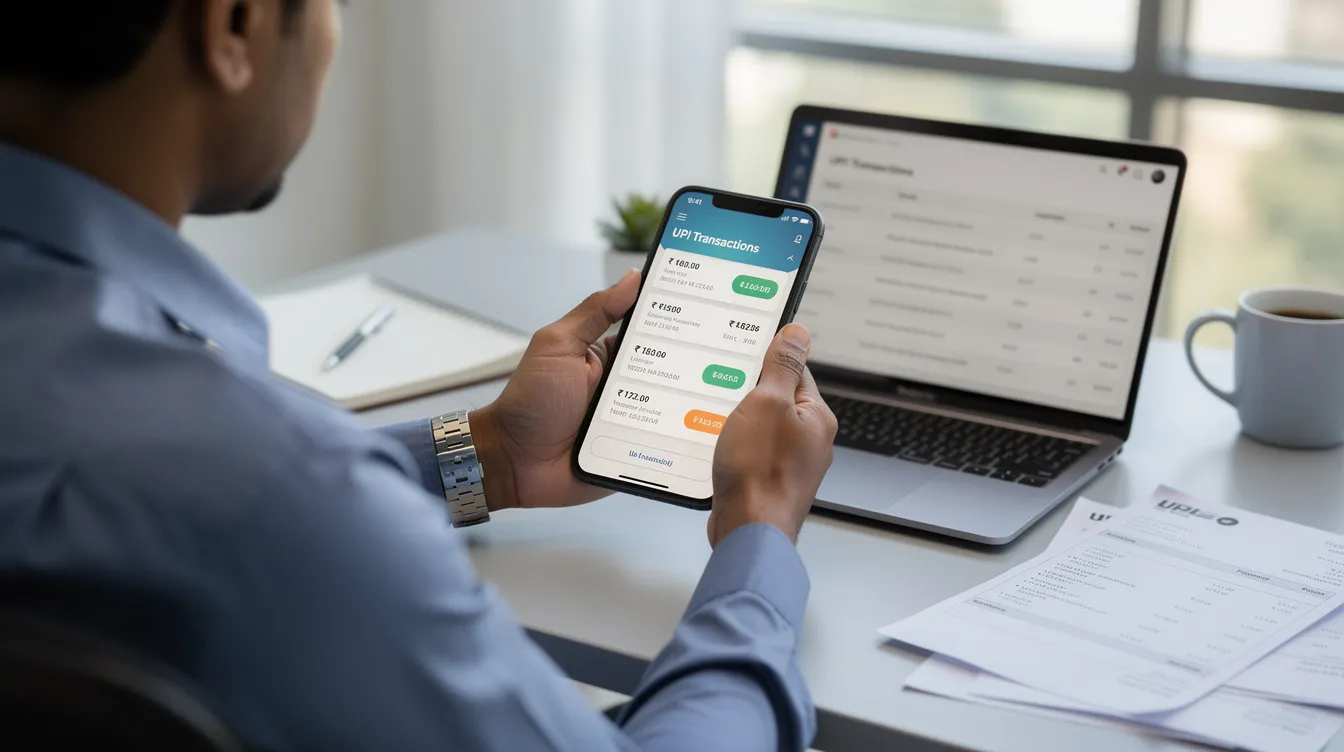
- UPI and wallet transaction history – showing stable sales receipts from customers over several months
- GST returns (GSTR-3B, GSTR-1) for the last 6–12 months – these directly show declared turnover and are cross-verified with bank credits
- Sales records – invoices, cash memos, daily sales register, or even a hand-written cash book that many micro units maintain
- Income tax returns and previous years’ profit and loss statements or balance sheets (where available) – these strongly back the bank statement and help justify higher Mudra limits
- A detailed, bank-ready Project Report explaining project cost, working capital cycle, expected monthly sales, capital assets to be acquired, and EMI coverage ratio
For very small businesses without GST registration, banks may rely more on simple books, photographs of the business place, and KYC documents. You can learn more about this in the guide on Mudra loan without GST.
The key principle: if one document is weak, strengthen your file with two or three supporting ones. Banks assess the overall picture, not just a single piece of paper.
Tips to Improve Your Bank Statement Before Applying for Mudra Loan
Think of this as a 2–3 month action plan before you walk into the bank. These practical steps can meaningfully improve your bank statement for Mudra loan application:
- Route maximum sales through banking channels – Deposit daily or weekly business income via UPI, POS, or direct bank transfers. Avoid keeping large cash at shop or home.
- Reduce unnecessary cash withdrawals – Withdrawing cash immediately after a large deposit looks like a circular transaction and raises suspicion during bank statement verification for Mudra loan.
- Clear old cheque bounces – Ensure zero bounces for at least 3 months before applying. Keep at least the EMI amount plus a small buffer in the account on every due date.
- Separate personal and business spending – Pay suppliers, rent, staff salaries, and business expenses from one main account. This makes business turnover clearly visible without the banker needing to filter out personal spends.
- Maintain minimum average balance – Don’t let your account repeatedly drop below Rs 1,000 or incur recurring penalty charges. A stable average balance – even if modest – shows financial discipline.
- Avoid sudden large deposits – If you need to bring in funds, do it gradually over weeks, not as one lump sum the day before applying. Natural-looking deposits aligned with your business activity are what bankers want to see.
- Keep all related records – For every major deposit, maintain corresponding invoices, sale bills, or customer receipts. If a banker asks “where did this Rs 50,000 come from?”, you should have a clear answer.
Common Mistakes Applicants Make with Bank Statements
Many Mudra loan files are delayed not because of bad business performance, but because of careless handling of bank statements and financial documents. Here are the most frequent mistakes I encounter:
- Submitting incomplete statements – Providing only 3 months when the bank asked for 6, or missing pages from the middle of the statement period.
- Editing or tampering with PDF statements – Hiding pages with cheque returns, blacking out certain entries, or altering figures. This can lead to outright rejection and may even be treated as misrepresentation or fraud.
- Sending password-protected PDFs without sharing the password – Or worse, sending mobile screenshots instead of full official statements from net banking.
- Providing statement from a rarely used account – While full business actually runs through another bank. The banker will usually discover this from GST returns or other documents, and your credibility takes a hit.
- Multiple unexplained cash deposits just before application – Depositing Rs 3–4 lakh in cash over a week to inflate turnover is a classic move that experienced loan officers spot instantly. It often leads the bank to reduce the eligible loan amount.
- Outdated statements – Submitting a statement that is 4–5 months old when the bank wants the latest period. Always get a fresh statement within 2–3 weeks of your application date.
- Not disclosing all accounts – If you have accounts with multiple banks, disclose all. If the bank asks about accounts you didn’t mention and finds them via credit bureau data, it creates doubt about your transparency.
For more on how banks keep asking for additional documents and how to handle it, read can bank keep asking for new documents for Mudra loan.
Practical Examples: Which Bank Statement Should Different Borrowers Submit?
Let me walk you through real-world scenarios so you can identify with a profile similar to your own business.
1. Existing Kirana Shop Owner – Rs 2 Lakh Mudra Loan Ramesh runs a grocery shop and wants Rs 2 lakh for stock. He submits his current account statement for the last 6 months, which shows daily cash deposits of Rs 2,000–5,000 and regular UPI credits. This is exactly what banks want to see – steady business activity with a clear turnover pattern.
2. Freelance Graphic Designer – Rs 1.5 Lakh Kishore Loan Priya works from home and receives all payments via bank transfer and UPI into her savings account. She submits 6 months of savings account statement showing client payments, along with a few invoices. Since she doesn’t have a current account, the savings statement works well for this loan amount.
3. Homemaker Starting a Tiffin Service – Rs 50,000 Shishu Loan Sunita has never run a formal business. She submits her savings account passbook entries showing small but regular UPI receipts from trial orders over 3 months, plus a simple daily sales register. For a Shishu category loan, this combined evidence is usually acceptable.
4. Small Manufacturer – Rs 8 Lakh Tarun Loan Vijay runs a packaging unit and needs Rs 8 lakh to buy new machinery (capital assets for his enterprise). He submits 12 months of current account statement, GST returns, last 2 years’ ITR, and a detailed Project Report covering projected cash flow, working capital, and EMI coverage. At this ticket size, banks undertake thorough scrutiny.
5. New Entrepreneur Leaving a Job – Rs 3 Lakh Kishore Loan Amit quit his IT job to start a mobile repair shop. He has 12 months of salary account statement (showing consistent income and clean EMI history on a previous loans car loan that was loan extended and fully repaid) plus a 3-month statement of his newly opened current account. Combined with a projected business plan, this gives the bank enough confidence to process his file.

Expert Guidance by CA Manish Gugliya on Bank Statement Preparation
Every year, I review hundreds of bank statements while preparing CMA data and project reports for MSME and Mudra finance applications. Here is what I have learned from the banker’s side of the table.
How bankers actually review your file: Your bank statement is never read in isolation. Officers place it alongside your KYC documents, GST returns, income tax returns, and project report. They look for consistency. If your IT return declares Rs 6 lakh income but your bank credits total only Rs 1.5 lakh, that mismatch will need explaining. Similarly, if your project report shows projected monthly sales of Rs 1 lakh but your current statement shows Rs 20,000, the bank may question the viability of the proposed activity.
How to prepare in advance: Organise all active account statements for at least 6 months (12 months is better). Highlight genuine business deposits. Be prepared with an explanation for any large or unusual transaction – “This Rs 2 lakh deposit was sale proceeds from a bulk order for XYZ company, here is the invoice.” Having answers ready shows the banker you understand your own finances.
Financial discipline matters more than you think: Paying EMIs on time, honouring cheques, keeping some buffer balance – these directly influence both the sanctioned amount and the interest rates band offered. Processing fees for Mudra loans vary by bank guidelines, but a strong financial profile can help you negotiate better terms at the next phase of your banking relationship.
When statements alone aren’t enough: Professional help in preparing a bank-ready Project Report and compiling complete Mudra loan documents can significantly improve approval chances. A well-prepared file covering loans, income projections, assets created through the loan, and clear EMI servicing ability tells the bank that you have the necessary skills and knowledge to run your enterprise successfully.
In my experience, even applicants with modest bank statements get approved when the overall documentation package is strong, coherent, and honest. The bank’s job as a refinance agency and lending institution is to assess risk – your job is to make that assessment easy.
Conclusion: Using Bank Statements Smartly for Faster Mudra Loan Approval
The bank statement requirements for Mudra loan are not just a formality. They help banks understand real business strength, repayment capacity, and financial discipline. Whether you are applying for a small Shishu loan or a Rs 10 lakh Tarun loan, your bank statement is your business’s financial story – and it should be a convincing one.
Do not fear this document and do not try to game it. Instead, plan your transactions for at least 2–3 months before applying so the statement naturally supports the loan amount you are seeking. Honest, transparent statements supported by alternative proofs like GST data, sales records, and a detailed project report are far more effective than artificial cash rotations or edited PDFs.
With the right preparation, even first-time entrepreneurs with no prior educational qualification in business or finance can successfully access funding under Pradhan Mantri Mudra Yojana. The scheme exists to provide financial assistance to micro units across India – covering loans for working capital, equipment, trading stock, and business expansion. The government designed it as a micro units development initiative for exactly this purpose.
My final advice: If you are serious about getting your Mudra loan approved without delays, invest time in preparing your bank statement, compile all supporting documents, and consider professional help to build a bank-ready Project Report. The effort you put into documentation today determines how smoothly your loan is assessed based on your actual business potential.

Frequently Asked Questions on Bank Statement Requirements for Mudra Loan
Is a printed passbook enough if I don’t have a PDF bank statement?
Many banks accept an updated, branch-stamped passbook for smaller Mudra loans in the Shishu or low-end Kishore category. However, for larger limits – especially above Rs 2 lakh – most banks prefer a complete PDF or printed statement covering a clear date range. If you only have a passbook, get it updated at the branch and request them to stamp and sign the relevant pages. For higher amounts, ask your bank to generate a formal statement from their system.
What if my bank statement shows very low balance most of the time?
A low balance is not an automatic rejection. Banks are more interested in the flow of money – regular credits and debits showing active business – than the static balance at month-end. If your account shows steady turnover even with a low resting balance, support it with other financial documents like GST returns, sales invoices, or a detailed project report. The key is to demonstrate that your income consistently exceeds your obligations and that you can handle the Mudra EMI.
Can I use statements from two different banks for one Mudra loan application?
Yes. If your business transactions are split across two or more banks, providing all relevant account statements actually gives a more complete picture to the lender. In fact, hiding an account where significant business activity happens can backfire if the bank discovers it through credit bureau reports or GST cross-verification. Be transparent and submit statements from every account that reflects your business operations.
Will the bank call people who sent me money to verify my transactions?
Normally, banks rely on internal verification systems, credit bureau data, and supporting documents rather than calling individual customers or suppliers. However, for very large or suspicious entries – such as a single Rs 5 lakh cash deposit without any corresponding invoice – they might ask you for a written explanation, invoice copies, or proof of the transaction’s source. Routine business credits from known entities or regular UPI payments are rarely questioned in detail.
Can I apply for Mudra loan with only a 1-month-old bank account?
It is technically possible to apply, but very difficult to get approved with just one month of banking history. Most banks want at least 3–6 months of transaction data to assess your business patterns. If your account is new, supplement it with statements from your older personal or salary account, along with a strong project report showing projected turnover and repayment capacity. SBI’s e-Mudra portal, for instance, requires a minimum 6-month deposit account relationship before you can even apply online.
- Why a CA-Prepared Project Report Improves Mudra Loan Approval Chances

- How to Arrange Your Mudra Loan File Before Visiting the Bank

- Common Documentation Mistakes That Delay Mudra Loan Approval
- Udyam Registration for Mudra Loan: Complete Document Guide by CA Manish Gugliya
- Is Project Report Mandatory for Mudra Loan?
- Quotations Required for Machinery and Equipment Under Mudra Loan
- Bank Statement Requirements for Mudra Loan
- Financial Documents Required for Mudra Loan Approval
- Documents Required for New Business vs Existing Business Under Mudra Loan: Complete Comparison Guide