Key Takeaways
- Banks insist on machinery and equipment quotations under Pradhan Mantri Mudra Yojana (PMMY) to fix project cost, decide the loan amount, and verify whether machines suit the proposed business activity.
- For most manufacturing and equipment-heavy service businesses, at least one detailed machinery quotation or proforma invoice is practically mandatory for Mudra loan sanction, especially in Kishore, Tarun and Tarun Plus categories.
- A proper quotation must carry supplier details, GST number, item-wise price, taxes, transport and installation charges, and clear validity period. Missing any of these fields frequently triggers bank queries and delays approval.
- Online, email and PDF quotations are generally accepted if clearly from a genuine supplier, but many bank branches still prefer a signed and stamped quotation on letterhead for file records.
- The machinery list in the project report, machinery quotation and loan application must be identical. Changing machinery after sanction usually needs prior written bank consent.
Introduction: Why Machinery Quotations Matter in Mudra Loans
Under Pradhan Mantri Mudra Yojana, commonly known as mantri mudra yojana pmmy, banks and financial institutions provide collateral free credit up to ₹20 lakh for non corporate, non-farm enterprises. Mudra loans are available in four categories: Shishu loans offering up to ₹50,000, Kishore loans ranging from ₹50,001 to ₹5 lakh, Tarun loans providing ₹5 lakh to ₹10 lakh, and Tarun Plus loans ranging from ₹10 lakh to ₹20 lakh. Tarun Plus is available only for borrowers who successfully repaid previous Tarun loans. Eligible businesses include shop owners, vendors, and service providers, while farming-related businesses are not eligible. You can apply for a Mudra loan online through portals like udyamimitra.in or JanSamarth, or offline through commercial banks, small finance banks, micro finance institutions, and non banking financial companies.
When your PM Mudra loan involves purchasing plant and machinery, the lender needs a reliable equipment cost estimate. This is where machinery quotations become critical. From my experience handling hundreds of Mudra files, many applicants assume any rough estimate will do. That is a misconception. While tiny Shishu loans for working capital may sometimes proceed without formal quotations, asset-creation loans almost always require them. A bank-ready project report must be prepared in sync with your machinery quotation to avoid mismatches that delay sanction.
What is a Machinery Quotation for Mudra Loan?
A machinery quotation for Mudra loan is a written offer from an equipment supplier detailing description, specifications and price of machinery that the borrower intends to purchase. The bank uses this document as the primary equipment cost estimate during project appraisal. A formal quotation is a requirement for a Pradhan Mantri Mudra Yojana loan whenever the term loan component finances assets.
Quotations must be issued on the supplier’s official letterhead. Understand the distinction between three documents: a quotation is a non-binding estimate; a proforma invoice for Mudra loan carries stronger commercial intent and is typically issued before advance payment; a tax invoice is the final sale document issued after delivery, used for accounting and GST input credit.
For GST-registered suppliers, quotations should carry the GSTIN and applicable tax rates. Many branches informally insist on a signed and sealed quotation for physical files, even when an email PDF would technically suffice. Digital quotations on official letterhead are now commonly accepted, but printing them and getting them countersigned strengthens your loan application.
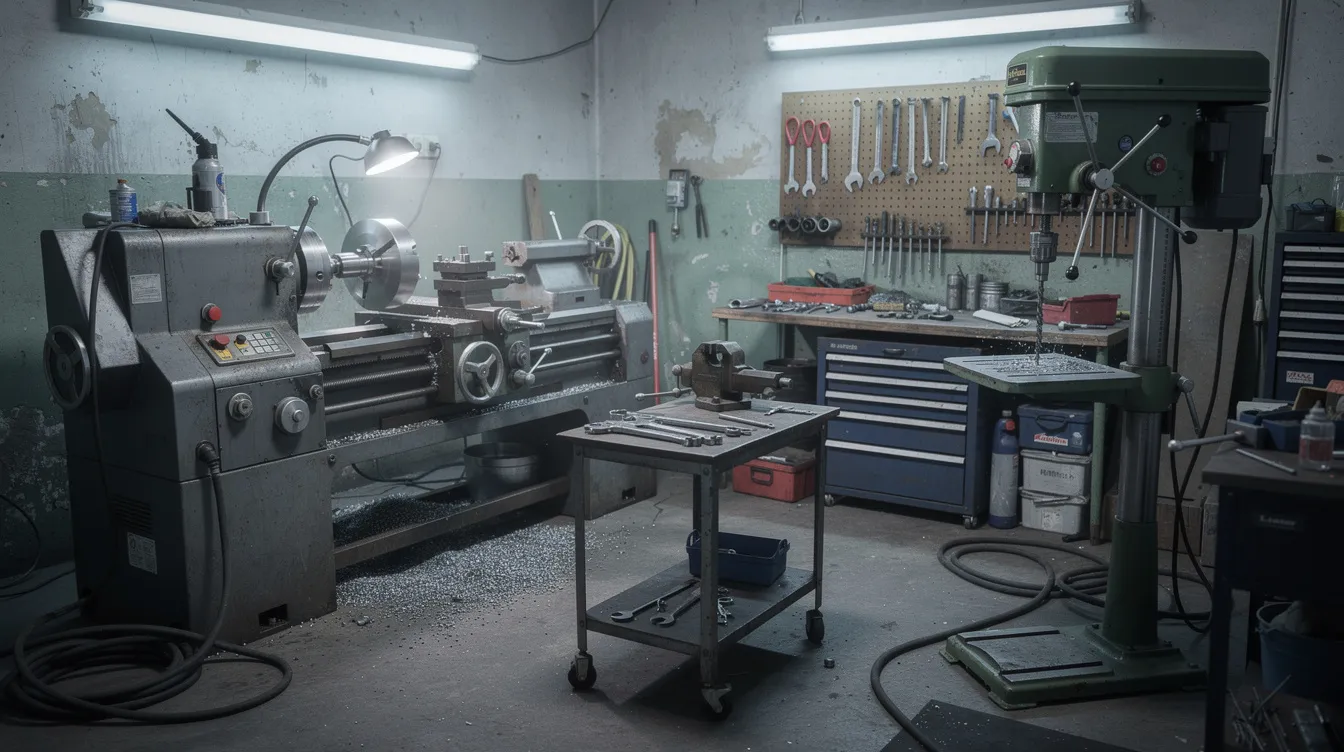
For example, a bakery unit buying a 20-Tray Rotary Rack Oven would receive a detailed machinery purchase quotation from the oven manufacturer listing capacity, power rating, price, GST and delivery timeline. Similarly, a fabrication unit purchasing a lathe machine would get a quotation specifying chuck size, motor HP and warranty terms.
Table of Contents
Why Banks Ask for Machinery and Equipment Quotations Under Mudra Loans
Machinery quotations are not formality. They directly impact project cost calculation, the loan category (Shishu, Kishore, Tarun or Tarun Plus), and the bank’s internal credit note. The lender evaluates the quotation to determine the loan amount, margin requirements and repayment capacity.
Banks ask for quotations to verify project cost so that the figures in the project report match real market prices. They prevent inflated loan amount requests by cross-checking item-wise prices. They assess machinery suitability for the proposed business activity – a textile machine for a garment unit makes sense, not for a restaurant. They verify supplier authenticity through GST registration and address. They estimate working capital needs, since higher machinery cost may increase cash flow requirements. They prevent fraudulent applications involving fictitious invoices. And they support internal sanction memo documentation.
Quotations must detail the equipment specifications and pricing breakdown. They must also specify transportation or installation costs, if applicable. Multiple quotations can help justify project costs to banks. Quotations should align with the business project’s estimated costs.
Consider a Kishore category applicant claiming ₹8,00,000 machinery cost, but the quotation shows only ₹5,20,000. The bank will reduce the eligible loan amount accordingly. Or a Tarun Plus applicant for an auto-garage whose quotation lists a high-end CNC machine unnecessary for current turnover – the bank will question viability and may scale down the sanction. Understanding how banks evaluate sector eligibility during appraisal helps borrowers prepare stronger applications.
Is Machinery Quotation Mandatory Under Mudra Loan? (Practical Bank View)
PMMY master guidelines do not print a single fixed rule about quotations. However, in real branch-level practice, machinery quotations are treated as mandatory for term loans financing equipment. Shishu loans require minimal documentation and may proceed with basic equipment lists. Documents vary by loan category under the Mudra scheme.
Quotation is mandatory when new manufacturing units buy plant and machinery under Kishore, Tarun and Tarun Plus. It is mandatory when existing businesses add a new machine line, generator, or vehicle. It is mandatory for service units where the main asset is equipment – salon chairs, dental chairs, food processing machines, printing presses.
Quotation may not be required for pure working capital loans used for stock and expenses, for very small tools purchased in cash and supported by an estimated list, or for traders using Mudra for inventory with no machinery component.
For machinery replacement, banks may accept an old invoice plus approximate current pricing. For used machinery, quotations may be replaced by valuation reports and seller declarations (covered in a later section).
Practices differ between PSU banks, RRBs, small finance banks and NBFCs. Some ask for one vendor quotation for Mudra loan, others demand two competing quotations above ₹2 lakh. My advice: whenever your loan is for machines, assume a quotation will be asked and arrange it before visiting the branch.
Information Every Machinery or Equipment Quotation for Mudra Loan Should Contain
An incomplete quotation is one of the biggest reasons for queries during Mudra loan processing. Ensure all fields below are present:
| Field | Why It Matters to the Bank |
|---|---|
| Supplier name and legal entity | Confirms vendor identity for verification |
| Supplier address and contact details | Enables physical or telephonic verification |
| Supplier GST Number | The quotation must include the supplier’s valid GST number for authenticity |
| Quotation number and date | Creates audit trail |
| Buyer name and address | Must match borrower or proposed firm name |
| Machinery description | Plain English name matching project report |
| Brand and model number | Prevents substitution or confusion |
| Technical specifications (capacity, power, size) | Confirms suitability for proposed business operations |
| Quantity | Must match project report exactly |
| Unit price and total basic price | Basis for project cost and loan calculation |
| GST rate and amount | Banks re-verify arithmetic |
| Packing, forwarding and freight charges | Captures full landed cost |
| Installation and commissioning charges | Often missed, creates funding gaps later |
| Training charges (if any) | Relevant for specialised or imported equipment |
| Warranty and guarantee details | Impacts asset quality assessment |
| Delivery timeline | Affects disbursement scheduling |
| Validity period | Valid quotations are generally valid for 30 to 90 days |
| Payment terms (advance %, balance) | Determines disbursement structure |
| Supplier signature and company seal | Confirms authorised offer |
Bank officers typically check item description, price, GST and validity first. Any mismatch between project report and quotation – a different model number, altered capacity or inconsistent total – triggers clarification queries. For project report preparation, values in the cost of project table should be directly picked from the latest quotations.

Quotation vs Proforma Invoice vs Tax Invoice for Mudra Loan
Many borrowers confuse whether to submit a quotation for business loan purposes, a proforma invoice, or a machinery invoice. Banks themselves sometimes use these terms loosely.
| Parameter | Quotation / Offer | Proforma Invoice | Tax Invoice |
|---|---|---|---|
| Purpose | Estimate for appraisal | Pre-payment confirmation | Final sale record |
| Mudra loan stage | Before sanction | Before disbursement | After purchase |
| Legal status | Non-binding | Quasi-offer | Legal sale document |
| GST fields mandatory | Preferred | Yes | Yes |
| Payment expected | No | Advance payment | Full or credit payment |
| Accounting treatment | No entry | Booked as advance | Capitalised as fixed asset |
| Bank acceptance | Appraisal stage | Disbursement stage | End-use proof |
At appraisal stage, banks accept a detailed machinery quotation or proforma invoice. At disbursement, banks often ask for a proforma invoice because the bank typically pays the supplier directly after loan approval. After purchase, the tax invoice serves as proof of end-use and asset creation. The safest approach is to obtain both a quotation and a proforma invoice from the same supplier so there is no confusion on machine model or price.
Use of Online / Email Quotations and How Many Quotations Banks Prefer
Post-COVID, many branches have become comfortable with digital quotations. Manufacturer website printouts work as indicative cost estimates. Authorised dealer PDF quotations sent by email are widely accepted if they include letterhead, GST and contact details. E-commerce or B2B portal listings may suffice for basic equipment or small tools, but for major plant and machinery, banks insist on a formal supplier quotation.
While Mudra loan online applications allow document uploads, many branches still ask borrowers to bring physical printouts with self-attestation for the credit file.
For small ticket loans, one bank accepted machinery quotation is usually enough. For higher-value machines above ₹3–5 lakh, some banks ask for two or three quotations to compare pricing and prevent over-invoicing. Public sector banks may internally advise two quotations for the tarun category and Tarun Plus, while NBFCs often accept one strong quotation from an authorised dealer. Where possible, arrange at least two quotations for big-ticket machinery to keep the file moving if one vendor delays.
Changing Machinery After Loan Approval and Special Case of Used Machinery
Entrepreneurs sometimes wish to change machinery model, supplier, or buy used machines after sanction due to price changes or better technology.
Before sanction, the borrower can freely update quotations and project report. After sanction but before disbursement, major changes in machinery type, capacity or cost must be communicated to the bank. Small changes within the same cost bracket are often permitted through an internal note. After disbursement, banks expect end-use to match sanction terms. Replacing machinery or diverting funds without written approval can lead to classification issues.
For example, switching from an imported model to an equivalent Indian model at lower cost requires a revised quotation, proforma invoice and updated project cost sheet.
Regarding used machinery, standard quotations are rarely available. Banks rely on valuation certificates from a Chartered Engineer or approved valuer, seller declarations, past purchase invoices and sometimes bank inspection reports. Banks typically take a conservative value – around 60 to 70 percent of estimated market price – for loan calculation. The borrower should still prepare a used machinery purchase quotation summarising machine details, year of make, serial number and agreed price, signed by the seller. Some lenders refuse to finance machines beyond 10 years of age due to obsolescence.
Common Mistakes in Machinery Quotations That Delay Mudra Loan Sanction
In my experience handling hundreds of Mudra applications, roughly 20 to 30 percent of file queries link directly to errors in machinery quotations.
Fake or manipulated quotations created in MS Word are easily spotted from format inconsistencies, missing GST or wrong contact details. Inflated machinery prices far above market rates lead banks to scale down the loan or doubt borrower intention. Missing GST number or full address makes vendor verification difficult. Expired quotations without updated confirmation stall processing. Handwritten quotations on blank paper without letterhead are refused for equipment above small amounts. Vague descriptions like “machine” instead of “5 HP Dough Kneading Machine, 50 kg capacity” invite queries. Quotation totals not matching the project report in capacity, quantity or amount trigger clarification rounds. Different supplier names on the quotation versus the proforma invoice create confusion. Business activity mismatch – say, a quotation for an offset printing machine when the loan application says “grocery shop” – can cause outright rejection.
Get your machinery quotations reviewed alongside your project report by a professional before submitting your loan application.
Supporting Documents to Submit Along With Machinery Quotations
Machinery quotations alone do not secure sanction. They must fit logically with your complete documentation set and realistic business plan.
Submit your project report for Mudra loan with detailed cost of project, means of finance, profit projections and a machinery list matching the quotation. Include CMA data or financial projections where required. KYC documents include Aadhaar card, PAN card, voter ID and identity proof. Address proof covers electricity bill, rent agreement or rental agreement, shop act license and business registration certificates. Bank statements for last 6 to 12 months help assess turnover and repayment capacity. Kishore loans need a brief business plan and bank statements. Tarun loans require last two years’ financials and a business plan. Include Udyam registration, GST certificate and other documents proving your legal entity status. Vendor details such as machinery catalogues or website printouts support the equipment understanding.
For new versus existing businesses, the exact document mix differs slightly. Well-organised documentation reduces back-and-forth with the bank and speeds up sanction.
Expert Tips from CA Manish Gugliya for Bank-Ready Machinery Quotations
These tips come from two decades of preparing project reports and interacting with PSU and private bank branches on Mudra files.
Always approach genuine suppliers or authorised dealers for machinery supplier quotations. Banks cross-verify larger vendors online or through phone calls. Desktop-created documents rarely survive scrutiny.
Ensure the machinery list in your project report, quotation and loan application form are identical in description, quantity and cost. Update all three together whenever any change occurs.
Cross-check every calculation on the quotation including GST rate and total amount. Banks sometimes re-calculate and query even small arithmetic errors.
Include installation, commissioning and training charges in the quotation so that the full project cost is captured and financed. Otherwise you face a cash crunch after sanction.
Keep quotations recent. As a rule of thumb, renew quotations older than 90 days, especially when steel or imported components are involved and prices are volatile.
For multiple machines, ask the supplier to give a single consolidated quotation with an annexure. This looks more professional and is easier for bankers to verify line by line.
Attach product catalogues or web links so the bank officer quickly understands what the machine does, particularly for specialised or niche equipment used in food processing, textiles or other income generating activities.
If you need help aligning your project report with quotations as per practical banking norms, consider professional consultancy through ProjectReportBank.com.

Frequently Asked Questions on Machinery Quotations Under Mudra Loan
Is machinery quotation compulsory for every Mudra loan?
Not always. Pure working capital Shishu loans for small shopkeepers or street vendors may not require formal quotations. However, any Mudra loan with a term loan component for machinery – typical in Kishore, Tarun and tarun loan categories – practically requires a quotation. The collateral security requirements do not change this; even though PMMY loans are collateral free, quotation requirements remain.
Can handwritten quotations on plain paper be accepted by banks?
In rare cases for very small amounts, a handwritten estimate may pass. But for any equipment above a few thousand rupees, banks strongly prefer typed quotations on supplier letterhead with signature and seal. Submitting handwritten quotations for a Tarun or Tarun Plus loan will almost certainly result in rejection of that document.
Is GST mandatory on machinery quotation for Mudra loan?
If the supplier is GST-registered, yes – the quotation should carry the GSTIN and applicable tax rates. If the supplier is genuinely unregistered (turnover below threshold), mention that clearly. Banks view missing GST on a high-value quotation with suspicion and may ask for clarification.
Can I submit online or email quotations printed from the supplier website?
Yes, PDF and email quotations are generally accepted if they are clearly from a genuine supplier with verifiable contact details. Some branches may still ask you to get the supplier’s physical signature and stamp before filing.
How old can a quotation be for Mudra loan processing?
Most banks prefer quotations no older than 90 days. If prices have changed significantly, the bank will ask for a fresh quotation. In sectors with volatile material costs, renew quotations proactively.
How many machinery quotations should I attach with my loan application?
One detailed quotation is the minimum. For machines costing above ₹3 to 5 lakh, submitting two or three quotations strengthens your case and helps justify pricing. This is a flagship scheme of the government of India and banks take due diligence seriously.
Can I use a quotation from a supplier located in another state?
Absolutely. Inter-state purchases are common. Ensure the quotation reflects IGST instead of CGST and SGST, and accounts for freight charges. Banks are comfortable with out-of-state suppliers if the vendor is genuine and product offerings are relevant.
What if actual machinery price goes up after Mudra loan sanction?
You can request the bank for a revised sanction with updated quotation, though approval is not guaranteed. Alternatively, you can fund the difference from your own margin or choose a lower-specification model within the sanctioned loan amount. Mudra loan interest rates range from 8% to 12% per annum, with rates starting as low as 7.30% per annum depending on the lender. Interest rates are set by individual lenders, not the government. The interest rate and interest applied on your loan do not change based on machinery price revisions.
Do banks verify machinery quotations directly with suppliers?
Yes, particularly for large-value equipment. Bank officers may call the supplier, verify GST registration online, or even visit the vendor location. This is why using authorised dealers and genuine suppliers is critical. An eligible borrower applying through any bank or financial institution – whether micro enterprises funding through a refinance agency or availed through commercial banks – faces these verification steps. Applicants must be aged between 18 to 65 years. The maximum loan amount under Mudra is ₹20 lakh, and Mudra loans do not require collateral or guarantors. Mudra stands for micro units development and refinance agency, and the scheme supports small and micro enterprises, small enterprises, and other legal entity types across India. You can apply online through JanSamarth portal or offline. Applications can be submitted through banks and NBFCs. The scheme covers various credit needs and business purposes of small business owners, ensuring financial assistance reaches those engaged in income generating activities. Whether you need a mudra card for working capital or a term loan for assets, your product offerings depend on the loan category selected. A liability statement and business plan showing adequate cash flow remain essential supporting documents alongside machinery quotations.
Can Mudra loan be sanctioned on the basis of proforma invoice alone without separate quotation?
Yes. A detailed proforma invoice containing all required fields – supplier details, specifications, pricing, GST, delivery and payment terms – often suffices. Banks treat it as equivalent to a quotation at appraisal stage. The key is completeness of information, not the document title.
What if I finally buy a different machine but of similar capacity and price?
Inform the bank immediately. Submit a revised quotation, updated proforma invoice and eventually the tax invoice for the new machine. As long as the replacement machine serves the same business purpose, is within the sanctioned cost bracket, and the bank gives written consent, this is usually manageable.
About the Author
CA Manish Gugliya (FCA) is a Chartered Accountant with over 20 years of practical experience in Project Reports, CMA Data, MSME Finance, Business Loans, and Mudra Loan Consultancy. Through ProjectReportBank.com, he helps entrepreneurs prepare bank-ready project reports, financial documentation, and loan applications that align with the practical requirements of Indian banks.
- Why a CA-Prepared Project Report Improves Mudra Loan Approval Chances


- How to Arrange Your Mudra Loan File Before Visiting the Bank

- Common Documentation Mistakes That Delay Mudra Loan Approval
- Udyam Registration for Mudra Loan: Complete Document Guide by CA Manish Gugliya
- Is Project Report Mandatory for Mudra Loan?
- Quotations Required for Machinery and Equipment Under Mudra Loan
- Bank Statement Requirements for Mudra Loan

- Financial Documents Required for Mudra Loan Approval

- Documents Required for New Business vs Existing Business Under Mudra Loan: Complete Comparison Guide