Key Takeaways
- A single late EMI payment does not automatically disqualify you from getting a Mudra loan. Lenders under Pradhan Mantri Mudra Yojana (PMMY) look at overall repayment behaviour, not one isolated incident.
- Small delays that are quickly cleared carry far less weight than bounced EMIs, written-off accounts, settled loans, or long-overdue balances.
- Banks and financial institutions assess your full credit profile: CIBIL/credit report, existing EMI burden, business cash flow, banking conduct, and the viability of your business plan.
- Borrowers can improve their Mudra loan eligibility after a late EMI by clearing overdue amounts, stabilising repayments for a few months, reducing unnecessary debt, and preparing a realistic project report.
- This guidance is based on the practical experience of CA Manish Gugliya (FCA), MSME finance and Mudra loan specialist at ProjectReportBank.com, with over 20 years in project reports, CMA data, and business loan consultancy.
Introduction: Late EMI Payment and Mudra Loan Eligibility
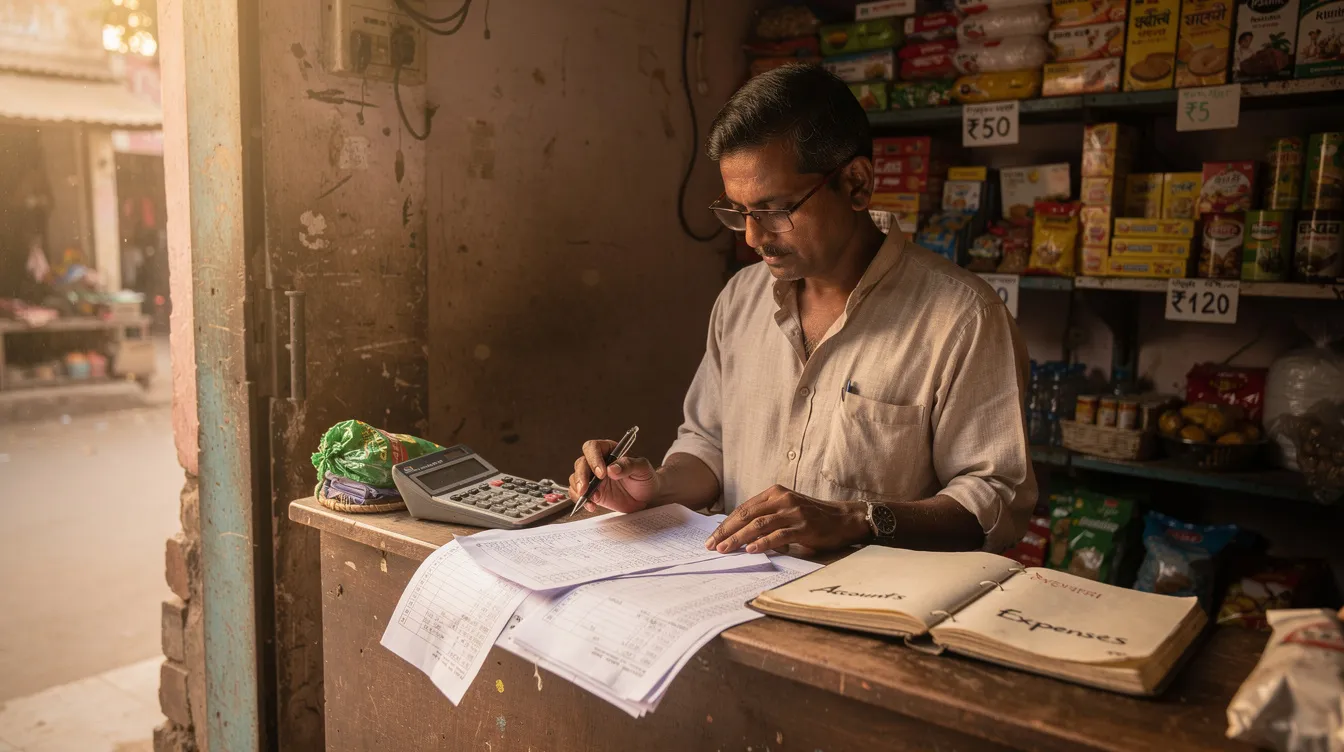
Imagine this: you run a small trading business in India, and three months ago your personal loan EMI bounced because your account was short by a few thousand rupees. You cleared it within a week. Now you need working capital for your business and want to apply for a Mudra loan. The first question on your mind: will that one late EMI kill my chances?
The direct answer is no. A late EMI payment does not automatically make you ineligible for a Mudra loan. But it does become one piece of the puzzle that the lender examines during credit appraisal.
Under the Pradhan Mantri Mudra Yojana, the government provides financial assistance to non farm small businesses, micro enterprises, traders, shop owners, vendors, and service providers through various financial institutions. PMMY loans are classified into four categories: Shishu loans offer up to Rs 50,000; Kishore loans range from Rs 50,001 to 5 lakh; Tarun loans range from 5 lakh to 10 lakh; and Tarun Plus loans range from 10 lakh to 20 lakh. No collateral is required for loans up to 10 lakh. Applicants must be Indian citizens aged 18 to 65 years, and Mudra loans are available for non farm small businesses only. Applicants can include shop owners, vendors, and service providers.
You can apply for a Mudra loan online or offline, and applications can be submitted via the JanSamarth portal. Banks, NBFCs, small finance banks, Regional Rural Banks, Cooperative Banks, and MFIs all participate as lending institutions.
There is a critical distinction between “scheme eligibility” and “lender appraisal.” Scheme eligibility asks: are you an Indian citizen running an eligible non corporate, non farm micro or small business? Lender appraisal asks: based on your credit history, existing liabilities, income, banking conduct, and business viability, does the bank believe you can repay the proposed loan amount?
From my 20+ years of experience advising MSME borrowers, one accidental late EMI matters far less than a pattern of repeated irregular payments, current overdue loans, or unrealistic business projections. The rest of this article explains exactly how lenders draw that line.
What Is Considered a Late EMI Payment?
An EMI (Equated Monthly Instalment) is a fixed monthly payment you make on a loan. It becomes “late” when you do not pay it by the due date mentioned in your loan agreement.
But not all late payments are equal. Here is how different situations are treated:
- EMI paid a few days late: The bank charges a late fee or penalty interest. If you pay before the bureau reporting cycle closes, the delay may not appear on your credit report at all.
- EMI bounced due to insufficient balance: The bank charges a bounce fee (typically Rs 300 to Rs 500). If you clear it on re-presentation or manually within days, the impact stays limited.
- EMI overdue for 30+ days: The lender reports it as “Days Past Due” (DPD) to credit bureaus. This is where the delay starts becoming visible in your credit history.
- Multiple consecutive EMI bounces: A clear pattern forms. The lender flags the account internally and reports escalating DPD codes (30, 60, 90 days).
- 90+ days overdue: Late EMI payments can classify an account as a Non-Performing Asset (NPA). This is a serious adverse mark.
Terms like “settled,” “written-off,” or “restructured” on a credit report indicate much deeper repayment problems than a single delayed EMI. Lenders interpret these very differently when assessing Mudra loan applications.
The key takeaway: a late payment fee at the bank level, an EMI bounce charge, and a formally reported overdue entry are related but not identical situations. What matters for your Mudra loan eligibility is which category your delay falls into and how quickly you corrected it.
Table of Contents
Does Late EMI Payment Affect Mudra Loan Eligibility?
Yes, late EMI payments can influence Mudra loan eligibility, but they are only one part of the lender’s decision. They do not cause automatic rejection.
Think of Mudra loan eligibility in two layers:
- PMMY scheme eligibility: Are you an Indian citizen with an eligible non farm micro or small business seeking a loan amount within the prescribed limits? This layer does not reference a specific CIBIL score.
- Lender-specific credit appraisal: This is where your repayment history, existing EMI burden, income, banking conduct, and business viability come under scrutiny.
Here is what banks and NBFCs typically examine during appraisal:
| Factor | What They Check |
|---|---|
| Repayment behaviour | DPD entries, late payments, bounces on past and current loans |
| Credit bureau report | CIBIL, Experian, Equifax, or CRIF High Mark data |
| Current overdue amounts | Any loans or credit cards with unpaid balances right now |
| Existing EMI burden | Total monthly EMIs vs income or business cash flow |
| Business health | Turnover, bank statement trends, seasonality, profit margins |
| Proposed loan amount | Whether the requested Mudra amount and EMI are realistic |
| Project report quality | Viability of the business plan and use of funds |
Credit scores are generally not checked for Mudra loans in the strict sense that no publicly declared single CIBIL cut-off applies to all banks under PMMY. Each lender uses its own internal credit policy and looks at the full profile. A history of late payments signals higher lending risk to banks, but the decision rests on the complete financial picture.
One Late EMI vs Repeated Late EMI Payments
Lenders look at repayment patterns, not isolated dates.
Single accidental late EMI, quickly corrected: A vehicle loan EMI bounced once in March because the borrower’s business payment arrived two days late. The EMI was cleared within five days. The rest of the 36-month track shows zero delays. Minor delays may be overlooked if they are infrequent and repayments resume quickly.
Two or three late EMIs in a year: The lender notices the occasional lapses. If each was corrected within the same month and there is no current overdue, the concern is moderate. The bank may ask questions but will weigh recent behaviour more heavily.
Frequent EMI bounces over last 6 to 12 months: This creates a pattern that suggests cash flow instability. Lenders treat this as a structural problem rather than an accident. Repeated late payments can lead to stricter loan terms or outright rejection.
Settled or written-off account: The borrower negotiated to pay less than the full outstanding debt. This is the most serious category. It stays on the credit report for years and raises fundamental questions about willingness and ability to repay.
Lenders understand genuine operational issues: a delayed customer payment, a one-time health emergency, a pandemic-era disruption. They are cautious about chronic repayment discipline problems.

How Late EMI Payments Can Affect Your CIBIL/Credit Profile
A credit bureau report is a record of your borrowing and repayment behaviour, compiled by agencies like CIBIL, Experian, Equifax, and CRIF High Mark. Banks check this report even for smaller business loans like Mudra under PMMY.
The main components lenders review:
- Payment history and DPD grid: Each loan account shows a month-by-month record of Days Past Due. Zero means on time. Any positive number (30, 60, 90) shows exactly how late each payment was.
- Current outstanding balances and overdue amounts: What you owe right now and whether any portion is past due.
- Account status tags: “Active,” “closed,” “settled,” “written-off,” “restructured.” Each tells a different story.
Credit bureaus report delayed EMIs which negatively affect credit scores. Delayed EMI payments can reduce your credit score. However, there is no fixed formula like “a late EMI will reduce CIBIL by exactly 50 points.” The actual impact depends on your overall profile, number of accounts, credit utilisation, and length of history. A single short delay on an otherwise strong profile creates a smaller dent than the same delay on a thin credit file with only one or two accounts.
The connection between late EMI and CIBIL score for Mudra loan is indirect: a weaker score and poor repayment pattern may reduce the bank’s confidence, but a reasonable score with only an isolated old issue can still be acceptable in many Mudra cases.
Will One Late EMI Cause Mudra Loan Rejection?
A single late EMI does not automatically disqualify a borrower from a Mudra loan. This is one of the most common fears borrowers carry, and in most practical cases, it is unfounded.
Consider this example: Priya runs a small garment trading business. Her personal loan EMI of Rs 5,000 bounced once in August 2025 because she withdrew cash for an urgent equipment purchase and the auto-debit failed. She paid manually within three days. Her remaining 22 months of EMIs are spotless. Her bank account shows consistent business credits of Rs 80,000+ per month. When she applies for a Kishore Mudra loan of Rs 3 lakh, the lender sees one minor blip in an otherwise clean track. This profile is unlikely to face rejection on the basis of that single delay alone.
Now contrast this with Raj, who has three active loans, multiple credit card balances near their limits, and four late EMI entries in the last six months. Even though each individual delay was only 15 to 20 days, the combination of high utilisation, multiple recent delays, and stretched cash flow paints a riskier picture. The bank’s concern is not about one late payment; it is about the overall pattern.
Many public-sector banks and regional rural banks under PMMY emphasise banking conduct, KYC verification, and business viability alongside credit history. They are not applying a rigid “one late EMI equals no Mudra loan” rule.
If a lender asks about a past late EMI, borrowers should explain the reason honestly and highlight that the problem was resolved and not repeated. Transparency builds trust.
How Banks Check EMI Repayment History for Mudra Loans
All participating banks, banks nbfcs, and MFIs under the Mudra scheme follow a structured appraisal process, even for smaller loan amounts like Rs 50,000 to 5 lakh.
Here is what happens during appraisal:
- Credit bureau pull: The lender requests your credit report to see all existing and past loans, credit cards, their repayment track, and current outstanding or overdue status.
- Bank statement review: They examine your last 6 to 12 months of bank statements for business credits, EMI debits, cheque returns, and overall banking discipline.
- Internal history check: If you already hold an account or had a past loan with the same bank, they review internal conduct reports and ratings.
- Cross-verification: Information given in the Mudra loan application (existing loans, EMIs, income) should match the facts visible in the credit report and bank statements. Discrepancies raise red flags.
Documents required include identity proof and address proof. Mudra loans are processed quickly if documents are complete and the credit profile is clean.
Existing EMI Burden and Mudra Loan Repayment Capacity
Late EMI history is only one concern. Even perfectly timely EMIs can lead to Mudra loan rejection if total EMI burden is too high for the borrower’s business cash flow.
Here is a simple example: a small manufacturer earns net monthly business income of Rs 60,000. He already pays EMIs of Rs 25,000 (personal loan plus vehicle loan). He applies for a Tarun category Mudra loan that would add Rs 12,000 per month in EMI. His total obligation becomes Rs 37,000 out of Rs 60,000, consuming over 60% of net income. Most lenders would consider this stretched, regardless of perfect past repayment.
Different lenders use their own internal “EMI-to-income” comfort levels rather than a uniform PMMY rule. They also consider business stability and profit margins.
Even if there was a past late EMI, strong current cash flow and controlled total EMI load may support the application more positively. Conversely, lenders may sanction lower loan amounts for applicants with past EMI delays combined with tight cash flow.
Clearing small, high-cost loans or credit card EMIs before applying can improve apparent repayment capacity and strengthen your Mudra loan proposal. Mudra loan interest rates range from 9% to 12% for many lenders, though interest rates for Mudra loans are deregulated by banks and some MFIs and NBFCs charge fixed interest rates between 19% and 21%. Interest rates for Mudra loans are generally lower than traditional unsecured business loans, making repayment potentially more manageable.
Late EMI on Personal Loan and Mudra Loan
A personal loan EMI, even though taken for personal use, appears on your credit report and is counted while calculating total liabilities during Mudra loan appraisal.
One or two late EMIs on a personal loan over several years may be viewed as relatively minor if they were quickly regularised and the current track is clean. Repayment history is evaluated when considering loan upgrades or higher limits, so a cleaned-up personal loan track can actually work in your favour.
Repeated late EMIs, personal loans taken from multiple lenders, or a recent top-up personal loan just before applying for Mudra can create concern about financial discipline and over-borrowing.
For a deeper discussion of how personal loan obligations interact with business finance under PMMY, see Mudra loan with existing personal loan.
Borrowers should not hide existing personal loans. Instead, plan EMI obligations so that business cash flow comfortably supports both personal and Mudra loan repayments.
Late Home Loan EMI and Mudra Loan Application
Home loans are typically long-tenure, high-value commitments. Most small business owners and professionals already have one when they apply for a Mudra loan.
A well-managed home loan with a strong repayment record often supports the perception of good credit discipline, even if there was an occasional delay years ago that has not been repeated. Lenders require applicants to maintain a clean repayment record for new loans, but a minor old delay on a large secured loan is rarely treated the same as a recent bounce on an unsecured loan.
Serious delayed EMIs on a home loan, such as 60 to 90+ days overdue, restructuring, or settlement, can affect any new credit request, including Mudra loans. If you faced job loss or a health emergency that caused temporary home loan delays, make sure these are now fully resolved and stable before approaching for business finance.
For guidance on managing both obligations, see Mudra loan with existing home loan.
Credit Card EMI and Mudra Loan Eligibility
Credit card dues and EMI conversions are also considered monthly obligations. Banks see them clearly on both credit reports and bank statements.
There is a practical difference between:
- Regular credit card use with full payment every month: Positive signal. Shows access to credit and responsible usage.
- EMI conversion on card, paid on time: Treated like any other EMI. Adds to monthly obligation but not alarming if manageable.
- Revolving balances with only minimum payments: Red flag. Indicates cash-flow stress and expensive debt accumulation.
High credit card utilisation and repeated overdue amounts can signal financial pressure, which worries lenders during Mudra loan appraisal.
For readers seeking a deeper look at card-related EMI interaction with Mudra eligibility, see how credit card EMI may affect Mudra loan eligibility. If you are carrying outstanding card balances, the article on Mudra loan with credit card outstanding covers how existing card dues interact with business loan planning.
Does the Bank You Choose Matter When You Have Previous EMI Delays?
All participating commercial banks and NBFCs must follow the overall Mudra and RBI framework, but each institution has its own internal policies, risk appetite, and documentation standards.
Some banks may be more conservative with applicants who have recent EMI delays. Others may be more flexible if the business profile and cash flow are strong. Public sector banks may rely more on standardised policies and committee approvals, while certain NBFCs or MFIs may focus on cash-flow-based assessments for very small borrowers.
For a detailed comparison of institution-wise differences, see Do all banks follow the same Mudra loan rules?
One critical point: changing the bank alone does not erase credit history. All lenders see the same bureau data. Borrowers must address the underlying repayment issues rather than only shopping for a lenient lender.
Can Your Existing Bank Be Better After an EMI Delay?
An existing banking relationship, whether current account, savings account, or previous business loan, gives the lender rich information about your real business turnover and repayment behaviour beyond what the credit bureau shows.
Situations where your existing bank may help:
- Long-standing account with 3+ years of stable transaction history
- Mostly timely EMIs except for one or two justified delays
- Good relationship with branch officials who know your business
On the other hand, a poor internal track record with the same bank (frequent cheque returns, chronic overdraft breaches, multiple late EMIs) may make that bank more cautious than an outsider who only sees external data.
For more on using an existing relationship to your advantage, see can an existing banking relationship improve Mudra loan approval?
Do not assume automatic approval simply because you hold an account. Strong documentation, realistic projections, and cleaned-up repayment history are still necessary.
Should You Apply Through a Bank, NBFC or MFI After Late EMI?
You can apply through banks, NBFCs, or MFIs. Each serves slightly different segments:
- Commercial banks and small finance banks: Formal MSMEs, established traders, businesses with documentation like ITRs and GST filings.
- NBFCs: Often more flexible underwriting, faster processing, but potentially higher interest rate.
- MFIs: Very small-ticket Shishu loans to micro entrepreneurs, sometimes using group lending methodology.
Late EMI history will be visible to all three through credit reports. Some NBFCs or MFIs may give more weight to current cash flows than to older minor delays.
For a fuller comparison, see Banks vs NBFCs vs MFIs for Mudra loan.
Approach the channel where you already maintain business accounts or have a positive repayment track, rather than randomly applying everywhere. Avoid multiple simultaneous Mudra applications across several lenders, as this creates many credit enquiries and raises risk perceptions.
What Should You Do Before Applying for Mudra Loan After Late EMI?
If you have had one or more late EMIs and want to improve your position, follow this practical checklist:
- Clear all current overdue EMIs wherever possible. Bring every loan account back to “standard” status. Clearing overdue amounts before applying can improve loan eligibility.
- Ensure sufficient balance in your bank account on EMI due dates for at least the next 3 to 4 months. Avoid any new cheque or EMI bounces.
- Check your credit report from at least one bureau. Verify that closed or cleared loans are updated correctly. Dispute any factual errors well before making the Mudra application.
- Reduce small high-cost debts like short-term personal loans or heavy credit card balances. This lowers your EMI burden and improves repayment capacity in the lender’s eyes.
- Maintain regular EMI payments for a few months to build a clean recent track record.
- Keep business banking transactions transparent. Avoid large unexplained cash deposits or withdrawals.
- Prepare a realistic business plan and project report with reasonable sales and margin assumptions, showing that future cash flows can comfortably handle the proposed Mudra loan EMI in addition to existing liabilities.
- Calculate affordability: Add up all your current EMIs, add the proposed new EMI, and compare against your net monthly business income. If the total exceeds 50% of net income, reconsider the loan amount or tenure.
- Gather all required documents: identity proof, address proof, business registration, bank statements (6 to 12 months), and ITRs if applicable.
- Be honest about past repayment issues if the lender asks. Explain the reason and show what you have done to prevent recurrence.
How Financial Discipline Can Improve Mudra Loan Approval Chances
Beyond CIBIL score, lenders look for overall financial discipline: a pattern of responsible behaviour over time that can offset minor past issues like a single late EMI.
Practical habits that strengthen your profile:
- Maintain sufficient balance on EMI due dates rather than relying on last-minute transfers
- Avoid frequent cash withdrawals of business funds for personal use
- Limit ad-hoc borrowing from informal sources or instant credit apps
- Separate business and personal banking to the extent possible so that business income and expenses are clearly visible during loan appraisal
- Maintain fewer, well-managed loans rather than multiple scattered small debts
- File GST returns, income-tax returns, and basic books of account regularly; these support the credibility of your financial discipline
- Avoid multiple simultaneous loan applications, as each creates a hard enquiry on your credit report
For a deeper discussion, see how financial discipline improves Mudra loan approval.
How Long Should You Wait After a Late EMI Before Applying?
There is no official PMMY rule stating a fixed waiting period (3 months, 6 months, or any other duration) after a late EMI before you can apply for a Mudra loan.
The right timing depends on:
| Situation | Practical Guidance |
|---|---|
| Minor delay corrected months ago, clean track since | Little reason to wait further |
| 30-day overdue resolved 2 months ago | Maintain 2 to 3 more months of clean payments |
| 90-day overdue just cleared last week | Wait 3 to 6 months while building a clean track |
| Settled or written-off account | May need 12+ months of improved behaviour and professional guidance |
| Urgent business funding need | Discuss your case honestly with the banker; do not indefinitely postpone |
Borrowers with very recent or repeated delinquencies should first stabilise repayment behaviour, maintain all EMIs on time, and show consistent banking conduct before applying. In some cases, especially after severe issues like settled accounts, seeking professional guidance to design a staged credit-improvement plan is the better path.
Practical Examples of Late EMI Impact on Mudra Loan Eligibility
These examples are drawn from the types of cases I regularly see in my consultancy practice. They are illustrative; actual lending decisions vary by lender and case.
Example 1: One Isolated EMI Delay
Situation: Amit, a small trader, had his vehicle loan EMI of Rs 6,500 bounce once in March due to low balance. He paid it manually within 5 days. His remaining 30 months of EMI payments are on time. He wants a Kishore Mudra loan of Rs 2.5 lakh.
What the bank sees: One DPD entry (likely under 30 days or not reported if cleared before the reporting cycle). Clean track otherwise.
Possible concern: Minimal. The bank may not even raise the issue.
What Amit should do: Keep bank statements clean for the next 2 months and apply with a clear project report.
Example 2: Three EMI Bounces in Six Months
Situation: Meera has a personal loan and a credit card EMI. Over the last six months, three EMIs bounced (two on the personal loan, one on the card). Each was cleared within 10 to 15 days. She applies for a Tarun Mudra loan of Rs 8 lakh for her food processing unit.
What the bank sees: Multiple DPD entries in recent months across two different accounts. Pattern of irregular payments.
Possible concern: Cash flow instability. Is her business generating enough to handle another Rs 15,000+ monthly EMI?
What Meera should do: Wait 3 to 4 months with zero bounces. Reduce credit card outstanding. Start with a lower Mudra amount (Kishore range) to demonstrate discipline.
Example 3: High EMI Burden, All On Time
Situation: Rajesh, a manufacturer, earns Rs 70,000 net monthly business income. He pays Rs 30,000 in existing EMIs (home loan plus personal loan), all on time. He applies for a Mudra loan with an EMI of Rs 12,000.
What the bank sees: Perfect repayment track. But total EMI would be Rs 42,000 out of Rs 70,000, which is 60% of net income.
Possible concern: Repayment capacity. One slow business month could trigger defaults.
What Rajesh should do: Either request a lower Mudra amount with longer tenure to bring EMI down, or prepay the personal loan partially to reduce the existing burden.
Example 4: Past Delays Cleared, 18 Months of Clean Repayment
Situation: Sunita had three late EMIs on a personal loan two years ago during a health emergency. She settled all dues and has maintained 18 months of perfect repayment across all accounts. She applies for a Kishore Mudra loan of Rs 4 lakh for her tailoring business.
What the bank sees: Historical DPD entries from two years ago, but 18 months of clean recent behaviour.
Possible concern: Low. Recent track is strong. The old delays are receding in relevance.
What Sunita should do: Prepare a project report showing realistic cash flow and explain the health emergency transparently if asked. Her improved discipline is her strongest argument.

Common Mistakes After a Late EMI
Borrowers who panic about past late EMIs often make errors that worsen their position:
- Applying without clearing current overdue EMIs: If your bureau report shows an active overdue amount, most lenders will reject immediately. Clear it first.
- Hiding existing loans on the application form: The credit report reveals every loan. Inconsistencies destroy trust.
- Assuming a good CIBIL score guarantees approval: A score of 750 does not override weak cash flow, excessive EMI burden, or an unrealistic business plan.
- Applying to many lenders simultaneously: Each application triggers a hard enquiry. Multiple enquiries in a short period signal desperation.
- Taking new unsecured debt just before applying: A fresh personal loan or credit card advance right before a Mudra application raises concern about cash flow and borrowing behaviour.
- Ignoring bounced EMI entries in bank statements: The lender reads your bank statement line by line. Returned EMI debits are visible.
- Presenting unrealistic business projections: Inflated sales or margins to justify a higher Mudra ticket size like 5 lakh or 10 lakh backfires when the lender cross-checks against bank statement trends.
For more on choosing the right lender without making costly mistakes, see common mistakes when selecting a Mudra loan bank.
Expert Guidance by CA Manish Gugliya (FCA)
Over 20 years of working with MSME borrowers on project reports, CMA data, and Mudra loan consultancy, I have seen hundreds of cases where borrowers ask one question: “My CIBIL score is _, will I get the loan?”
That question, while understandable, misses the point. The score is a summary. The lender reads the full story.
When I review a Mudra loan case, I look at the same things the bank will look at, but I look at them first, so the borrower is prepared:
Why did the EMI become late? A vehicle loan EMI that bounced because a large customer payment arrived three days after the due date is a very different situation from repeated bounces across multiple accounts because the borrower is living beyond their means. The bank may not ask you outright, but the pattern in your credit report tells the story. One isolated delay followed by 12 months of perfect payments reads as an accident. Four delays in six months reads as a habit.
Has the borrower taken corrective steps? I look at whether the borrower has built a cash buffer. If your monthly business income is Rs 50,000 and your EMI is Rs 8,000, maintaining at least Rs 15,000 to Rs 20,000 as a minimum balance on EMI dates shows the bank that you are not operating on the edge. This is a practical step that costs nothing but changes the perception.
Is the project report realistic? This is where I see the most damage done. Borrowers, sometimes guided by unqualified agents, submit project reports with sales projections of Rs 30 lakh per year for a business that currently turns over Rs 8 lakh. The lender’s credit officer sees through this. Demand estimation, cost structures, seasonality, working capital cycles, and repayment schedules must align with real cash flows. A good project report does not hide past credit challenges. It explains them transparently and demonstrates how the proposed business plan reduces the risk of future late EMIs.
Is the loan amount appropriate? When a borrower’s credit history has some weaknesses, I often advise starting with a smaller, more manageable Mudra amount. A Shishu loan of Rs 30,000 to Rs 50,000 or a lower Kishore amount of Rs 1 lakh to Rs 2 lakh, repaid on time, builds a track record. That track record becomes the foundation for a larger Tarun category loan later. Stretching directly to the maximum 10 lakh limit when your credit profile has recent blemishes is a strategy that often leads to rejection.
What about the overall debt picture? I calculate total existing EMIs, credit card minimum payments, any informal obligations, and the proposed Mudra EMI. I compare this against net monthly business income (not gross turnover, but actual cash available after business expenses). If the total obligation crosses 50% to 55% of net income, I advise the borrower to either reduce existing debt or request a lower Mudra amount.
No consultant can guarantee Mudra loan sanction. The decision rests with the lending institution. But structured financial planning, disciplined repayment behaviour, and proper documentation can shift the odds. A borrower who walks into a bank with a clean recent track, a realistic project report, supporting bank statements, and a transparent explanation of past issues stands on far stronger ground than someone who simply fills a form and hopes for the best.
The scheme launched by the government under Pradhan Mantri Mudra Yojana provides easy access to credit for individuals running micro units across India, whether in manufacturing, trading, or services. The micro units development and refinance agency (MUDRA; mudra stands for Micro Units Development and Refinance Agency) was created to expand funding to small businesses and entrepreneurs who need financial assistance to grow. Its product offerings across the Shishu, Kishore, Tarun, and Tarun Plus categories signify different stages of business growth. The eligibility criteria are designed to provide beneficiary micro unit operators a pathway to credit needs fulfillment and purchase of machinery, equipment, or working capital without requiring security or collateral from the government scheme. Businesses across sectors, from food processing to trading to services, can avail these benefits. Whether you apply online or visit your nearest bank branch to fill the application and submit the required documents, the process is designed to bring assets and funding to enterprises that need it to expand. There is no subsidy component in PMMY, but the lower interest rates and collateral-free structure serve as the scheme’s core advantage.
FAQs on Late EMI Payment and Mudra Loan Eligibility
Can I get a Mudra loan if I had one late EMI last year?
In many cases, a single late EMI that was quickly rectified and not repeated is unlikely by itself to block Mudra loan approval, provided the rest of your repayment and banking track is satisfactory. Lenders weigh your overall profile, not one isolated date.
Should I wait before applying for Mudra loan after clearing overdue EMIs?
While there is no fixed rule, it is generally sensible to maintain a few months of completely timely EMIs and healthy bank statements after clearing dues. This lets the lender see a stable, improved pattern rather than a just-cleared overdue.
Will my old settled or written-off loan stop me from getting a Mudra loan?
A settled or written-off loan is a serious negative remark and many banks treat it cautiously. Some lenders may still consider a case if the event was old (3+ years), the amount was small, and subsequent credit behaviour has been strong. Professional guidance can help design a staged credit-improvement plan.
Does Mudra loan require a minimum CIBIL score?
There is no publicly declared single CIBIL cut-off under PMMY applicable to all banks. Each lender uses its own internal credit policy. Some advisors suggest maintaining a score of 700 or above to improve chances, but this is lender-specific guidance, not an official PMMY rule.
Can I improve my Mudra loan chances if I currently have high credit card dues?
Reducing outstanding card balances, converting manageable amounts to structured EMIs and paying them regularly, and avoiding fresh unnecessary spends for a few months can improve your repayment capacity. This strengthens a future Mudra application by lowering your total monthly obligation.
Does every bank treat late EMI history the same way?
No. All banks see the same credit bureau data, but each bank applies its own internal risk policies. Some are stricter about recent delays; others give more weight to current cash flow and business viability. The underlying repayment issue must still be addressed regardless of which bank you choose.
Will a personal loan EMI affect my Mudra loan eligibility?
Yes. A personal loan EMI is counted as an existing liability during Mudra loan appraisal, even though the personal loan was for non-business use. If the EMI is being paid on time and total obligations are manageable relative to your income, it should not be a barrier. Repeated delays or multiple personal loans may raise concerns.
Can good business income compensate for an old EMI delay?
Strong, consistent business income demonstrated through bank statements and financial records can offset the negative impression of an old EMI delay, especially if all current obligations are being met on time. The lender looks at the entire financial story.
Can repeated EMI delays cause Mudra loan rejection?
Yes. A late EMI payment can affect eligibility for a Pradhan Mantri MUDRA Yojana loan. Repeated delays create a pattern of repayment risk that most lenders will flag during appraisal. The more recent and frequent the delays, the greater the concern.
Should I disclose existing loans in my Mudra loan application?
Always. The credit report reveals every loan you have. Hiding existing loans creates inconsistency between your application and the bureau data, which damages credibility and can lead to rejection.
Can I apply for a Mudra loan if my EMI is currently overdue?
You can submit an application, but most lenders will either reject or hold the case until the overdue is cleared. Clear the overdue first, then apply.
Is there a fixed waiting period after a late EMI before applying?
No official PMMY rule specifies a mandatory waiting period. The appropriate timing depends on severity of the delay, whether dues are cleared, subsequent repayment behaviour, and the urgibility of your business funding need.
Does the bank check my bank statements for EMI bounces?
Yes. Banks review 6 to 12 months of bank statements during Mudra loan appraisal. EMI bounce entries, insufficient balance charges, and cheque returns are all visible and reviewed.
How can I improve my credit profile before applying for a Mudra loan?
Clear all overdue amounts, maintain timely EMIs for several months, reduce unnecessary outstanding debt, check your credit report for errors, and avoid multiple loan applications. Prepare a realistic project report that demonstrates your repayment capacity.
Will a home loan EMI affect my Mudra loan chances?
A home loan EMI adds to your total monthly obligations and affects repayment capacity calculations. A well-managed home loan with clean repayment can actually support your profile. Delayed or restructured home loan EMIs create more serious concerns.
Conclusion: Late EMI Does Not Automatically End Your Mudra Loan Chances
A late EMI payment, whether on a personal loan, home loan, vehicle loan, or credit card, does not automatically end your chances of getting a Mudra loan. The Pradhan Mantri Mudra Yojana was designed to bring credit to non corporate, non farm micro enterprises and small businesses across India, and the eligibility criteria are deliberately broad.
What matters is context. A single accidental delay, quickly corrected and not repeated, is a very different situation from chronic bounces, current overdue amounts, settled accounts, or stretched cash flow. Lenders under PMMY examine the whole picture: your credit history, existing EMIs, business income, banking conduct, and the viability of your business plan. Loan sanction is based on the complete financial profile rather than one isolated factor.
If you have had late EMIs in the past, here is what you can do starting today: clear any current overdue amounts, maintain disciplined repayment behaviour for a few months, rationalise unnecessary debt, keep your bank transactions transparent, and prepare a realistic project report that shows your business can comfortably handle the proposed EMI alongside existing obligations.
A professionally prepared project report does not inflate numbers to chase a larger loan amount. It presents realistic demand, cost, and cash flow projections that the lender can verify against your bank statements and tax filings. This is where the quality of your documentation separates a strong application from a weak one.
At ProjectReportBank.com, I help business owners understand their credit profile, structure their funding requirement realistically, and prepare documentation that improves the quality of Mudra loan applications. No consultant can guarantee approval, but proper planning, clean repayment behaviour, and honest presentation of your financial position can improve the probability of a positive outcome.
- Does Gold Loan Affect Mudra Loan Eligibility? (Expert Guidance by CA Manish Gugliya)


- Which Credit Report Do Banks Check for Mudra Loan?
- Do Banks Check All Existing Loans Before Approving Mudra Loan?

- Does Credit Card Limit Affect Mudra Loan Eligibility?

- Does Car Loan Affect Mudra Loan Eligibility?

- Does Late EMI Payment Affect Mudra Loan Eligibility?

- Does Credit Card EMI Affect Mudra Loan Eligibility?

- Mudra Loan with Credit Card Outstanding – Practical Guide by CA Manish Gugliya

- Mudra Loan With Existing Personal Loan: Can You Still Get Approval?