Key Takeaways
- Banks and NBFCs check existing loans and EMIs through CIBIL/credit bureau reports, bank statements, and application declarations before sanctioning any Mudra Loan under Pradhan Mantri Mudra Yojana.
- Having a personal loan, home loan, car loan, or credit card outstanding does not automatically disqualify you; lenders focus on repayment capacity, credit history, and business cash flow.
- Applicants must demonstrate they can service both existing loan obligations and the proposed Mudra Loan EMI from their income or business earnings.
- There is no guaranteed approval even if you meet basic eligibility; the final decision rests on the lender’s credit appraisal, documentation review, and internal policy.
- The rest of this article explains how existing loans and Mudra Loan eligibility are connected, with practical examples drawn from micro and small business cases.
Introduction: Existing Loans and Mudra Loan Eligibility
“Can I apply for a Mudra Loan if I already have other loans and EMIs?” This is one of the most common questions I hear from small business owners across India.
Mudra stands for Micro Units Development and Refinance Agency. The Pradhan Mantri Mudra Yojana (PMMY) is a flagship scheme of the Government of India, launched on 8th April 2015, to provide collateral free credit to micro enterprises engaged in non-farm income generating activities. As of 2026, Mudra Yojana offers collateral-free loans up to ₹20 lakh across four categories: Shishu (up to ₹50,000), Kishore (₹50,001 to ₹5 lakh), Tarun (₹5 lakh to ₹10 lakh), and Tarun Plus (₹10 lakh to ₹20 lakh). Tarun Plus is available only to entrepreneurs who have successfully repaid previous loans under the Tarun category.
The short answer: yes, banks check for existing loans before approving a Mudra loan application. But an existing loan is not the same thing as an unmanageable debt burden. Lenders focus on whether the borrower can repay the new business loan along with current EMIs from business income and other stable sources.
This article, written from my perspective as CA Manish Gugliya (FCA) with over 20 years of experience in MSME finance, CMA data, project reports, and Mudra Loan consultancy at ProjectReportBank.com, walks you through what banks actually look at, how existing loans affect your eligibility, and what you can do about it.
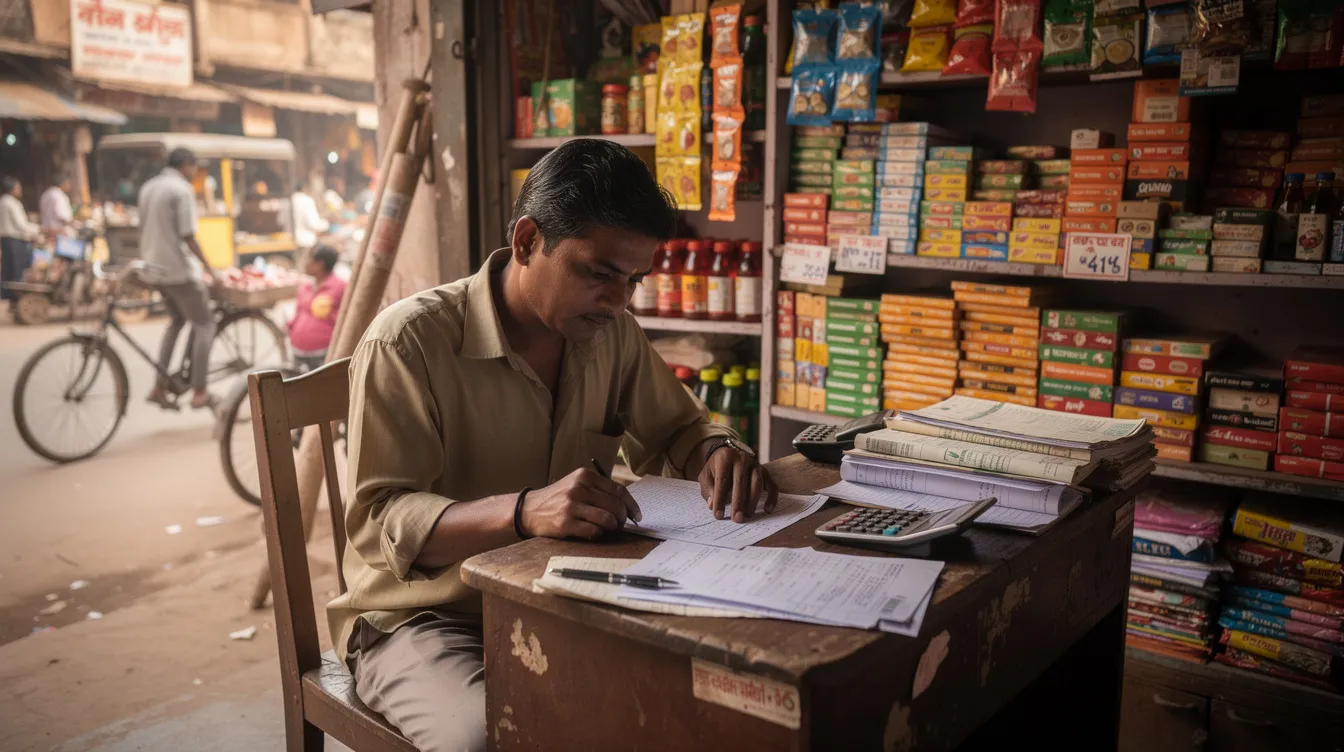
Do Banks Check All Existing Loans Before Mudra Loan Sanction?
Banks and NBFCs verify existing liabilities when assessing any Mudra Loan application. This is standard practice across lenders participating in the PMMY scheme. Mudra loans can be availed from banks and NBFCs, and each of them reviews the applicant’s full credit profile before taking a lending decision.
Lenders evaluate existing loan obligations to determine repayment capacity. A satisfactory track record of repayments is mandatory for loan approval. Banks verify applicants are not willful defaulters or carrying overdue balances. The assessment links existing loans and Mudra Loan eligibility through three factors: repayment capacity, credit discipline, and total EMI obligations.
Procedures differ by lender type. A public sector bank may require detailed financial statements and CMA data for a ₹10 lakh Tarun loan. A small finance bank or microfinance institution (MFI) processing a ₹30,000 Shishu loan may rely on a basic CIBIL pull and account conduct review. For Shishu loans under Straight Through Processing (STP), the MSME ministry’s “Know Your Lender” handbook confirms that credit bureau data is used even in fully digital processing for existing customers.
Eligible businesses include small producers and service providers. Eligibility includes being aged 18 to 65 years. No collateral is required for loans up to ₹10 lakh.
Table of Contents
What Types of Existing Loans Can Banks Consider?
Banks consider almost all active borrowings that appear in your CIBIL report or bank statements. Here is how different loan types factor into the assessment:
| Loan Type | Nature | Typical Impact on Assessment |
|---|---|---|
| Personal loan | Unsecured, higher interest rate | Increases EMI burden; lender checks outstanding and tenure |
| Home loan | Secured, long tenure | Regular repayment seen positively; EMI still counted |
| Car/vehicle loan | Secured, medium tenure | EMI, remaining tenure, and repayment behaviour reviewed |
| Business loan or term loan | Can be secured or unsecured | Purpose matters; productive use viewed differently from consumption |
| Consumer durable loan | Unsecured, short tenure | Small EMI but adds to total obligations |
| Education loan | Often in moratorium stage | Counted if repayment has started |
| Gold loan | Secured against gold assets | Interest/EMI structure examined |
| Credit card dues | Revolving or EMI-converted | High utilization or minimum-payment patterns are red flags |
| Overdraft / cash credit | Working capital facility | Regular utilization and repayment shows business discipline |
The nature of each liability matters. A loan used to acquire capital assets for manufacturing or trading is treated differently from a high-cost personal loan taken for consumption. Agricultural crop loans are not eligible under PMMY, and lenders are aware of this distinction when reviewing your credit profile.
Mudra loans support various income generating activities across sectors including food processing, manufacturing, trading, and services. Loans covering loans for working capital needs or to purchase equipment for a proposed activity are seen as productive borrowing.
How Do Banks Find Your Existing Loans and EMIs?
Modern lenders in India rely on multiple sources to detect existing liabilities:
Credit bureau reports. CIBIL, Experian, Equifax, and CRIF High Mark each maintain records of reported loans. A typical credit report shows all active accounts, sanctioned limits, current outstanding balances, EMI amounts, days past due (DPD) entries, write-offs, settlements, and recent credit enquiries. Credit Bureau reports are used to assess applicants’ overall debt profiles.
Bank statements. Banks analyze bank statements for past six months to check for loan EMIs. Regular EMI debits from your account reveal liabilities even if they are not yet reflected in the bureau due to reporting lag.
Application declarations. Banks require borrowers to declare all existing banking and credit facilities. The Mudra Loan application form itself asks you to list current liabilities. Non-disclosure is risky; it can be treated as misrepresentation and damage your long-term banking relationship.
Internal records. When you apply through your existing bank, the lender already has insight into your account conduct, transaction patterns, and existing facilities extended to you.
Financial documents. For Kishore and Tarun category loans, lenders may ask for ITRs, GST returns, or audited financials. These reveal business turnover and help the bank cross-check declared income against actual earnings.
Trying to hide a personal loan, app-based loan, or credit card outstanding from the lender is not advisable. Banks almost always cross-verify through credit bureaus.
Does Having Existing Loans Automatically Disqualify You from Mudra Loan?
Existing loans do not automatically disqualify borrowers from receiving a Mudra Loan. Banks primarily test repayment capacity and credit behaviour, not the mere existence of other borrowings.
Consider two borrowers:
Borrower 1: A shopkeeper paying a home loan EMI of ₹9,000 and a car loan EMI of ₹4,000, both serviced on time for four years. Monthly business turnover averages ₹2,50,000 with consistent bank credits. This applicant can be a strong Mudra Loan candidate because the total EMI load is modest relative to income.
Borrower 2: A self-employed individual with three short-term personal loans, two app-based loans, and credit cards near their sanctioned limit. Even if the total EMI amount appears similar to Borrower 1, the lender sees higher risk because the debt is unsecured, high-cost, and spread across many creditors.
Lenders look beyond the number of loans. They examine EMI size, remaining tenure, interest rate burden, and whether the loan was taken for productive business purposes or consumption. Individual borrowers and non corporate small business entities are both assessed based on these parameters, though each financial institution has its own risk appetite. One bank may approve a case that another declines.
Banks evaluate business viability and expected cash flows for Mudra loans. If the business plan and projected earnings support the proposed borrowing, existing loans become less of a barrier.
How Existing EMI Burden Affects Mudra Loan Approval
The lender broadly compares:
Total existing monthly EMIs + proposed Mudra Loan EMI versus proven monthly income or business cash flow.
There is no single EMI-to-income ratio fixed for all Mudra Loans. Banks assess debt-to-income ratios when approving higher category Mudra loans (Kishore, Tarun, Tarun Plus), but the acceptable threshold varies. RBI Master Directions on Microfinance Loans cap total loan repayment obligations at 50% of household income for borrowers in the microfinance segment, but this specific rule applies to households with annual income up to ₹3,00,000.
Applicants must demonstrate repayment capacity for both existing loans and new loans. Business cash flow from trading, services, or manufacturing is examined using turnover, margins, bank credits, and GST returns.
A simple illustration:
| Item | Monthly Amount (₹) |
|---|---|
| Net business income | 1,20,000 |
| Home loan EMI | 12,000 |
| Car loan EMI | 5,000 |
| Proposed Mudra EMI | 8,000 |
| Total EMIs | 25,000 |
| Surplus after EMIs | 95,000 |
Banks assess if the total debt burden is manageable relative to income or cash flow. In this case, EMIs take about 21% of income, leaving a comfortable surplus. If existing EMIs already consumed 45-50% of income, the bank might reduce the sanctioned loan amount, ask for a co-borrower, or decline the proposal.
Impact of Specific Existing Loans on Mudra Loan Eligibility
This section gives a concise overview. ProjectReportBank has dedicated guides on each loan type linked below.
Personal loans are unsecured and typically carry higher interest. Banks count their EMI when judging repayment capacity. For a detailed discussion, read Can You Get a Mudra Loan With an Existing Personal Loan?
Home loans are long-tenure secured loans. A regular repayment track on a home loan can sometimes strengthen your profile because it shows credit discipline. See Mudra Loan Eligibility With an Existing Home Loan for more.
Car or vehicle loans are assessed based on EMI size, remaining tenure, and repayment behaviour. More at Does an Existing Car Loan Affect Mudra Loan Eligibility?
Credit card EMIs and outstanding balances signal short-term borrowing and can reduce repayment capacity, especially when utilization is high. Refer to Does Credit Card EMI Affect Mudra Loan Eligibility?, Can You Get a Mudra Loan With Credit Card Outstanding?, and Does Credit Card Limit Affect Mudra Loan Eligibility?. A sanctioned credit limit and the actual utilized outstanding are not the same thing; lenders look at what you owe, not just what you could potentially borrow.
Interest rates for Mudra loans are generally lower than traditional unsecured loans, which means the proposed EMI is often more manageable than a personal loan EMI of the same principal.
Multiple Existing Loans, Late EMIs, and CIBIL Record
The number of previous loans (two versus six) matters less than whether each EMI is affordable and paid on time over the last 12 to 24 months.
Applicant A: Two large secured loans (home and vehicle). Clean CIBIL with zero DPD entries. Adequate business surplus. This borrower presents low risk despite having sizeable outstanding debt.
Applicant B: Five small unsecured loans from apps and NBFCs, frequent 30-60 day overdue entries, and credit card utilization above 80%. Even if total EMI is lower than Applicant A’s, the repayment pattern signals stress.
Lenders check for overdue accounts, settlements, and defaults in repayment history. Written-off or settled accounts are treated as serious negatives. One isolated delay from two years ago may not sink the case, but repeated or recent delays seriously weaken approval chances. Existing Mudra loan repayment history affects eligibility for new loans; if you previously availed a Mudra Loan and serviced it well, that counts in your favour. For more detail, read How Late EMI Payments Can Affect Mudra Loan Eligibility.
CIBIL reports show all loans reported by banks, NBFCs, and MFIs. They do not capture informal borrowing from relatives or local moneylenders. But if those informal loans result in regular debits from your bank account, lenders may notice the pattern during statement review.

Can You Get a Mudra Loan Despite Existing Loans? Practical Scenarios
Mudra Loan with existing loan is possible in many situations:
- Existing EMIs are manageable relative to business income
- Repayments have been regular for at least 12 months
- Business turnover is stable or growing
- The proposed activity will generate additional revenue to support the new EMI
- Credit profile shows a satisfactory credit track record
These factors improve the probability of approval but do not guarantee sanction from any specific bank or NBFC.
The lender also evaluates whether the Mudra Loan will genuinely improve business capacity. A funding request to purchase equipment, expand inventory, or acquire capital assets that increase production is viewed more favourably than borrowing without a clear business purpose. Mudra loans are available for various income-generating activities, and employment creation through business growth is one of the scheme’s objectives.
Applicants should prepare basic projections of income, expenses, and EMI servicing. A well-structured business plan and realistic project report demonstrate to the credit officer that you have the knowledge and planning to repay.
Should You Close Existing Loans Before Applying for Mudra Loan?
Closing every existing loan before applying is not always necessary or wise. Evaluate each loan individually:
- High-interest personal loan with small outstanding: Prepaying this may meaningfully reduce your monthly EMI burden and free up cash flow for the new Mudra Loan.
- Low-interest home loan with years remaining: Closing this early might drain your savings without proportionally improving your monthly surplus.
- App-based loans with erratic repayment history: Clearing these removes red flags from your credit report and simplifies your liability profile.
Premature prepayment should not leave the business short of essential working capital right when you need money for stock, raw material, or operations at the next phase of growth. Consult with a professional before using all savings to close loans, especially if you plan to undertake expansion and need finance for both existing operations and the new venture.
Existing Banking Relationship and Different Lenders’ Approach
Applying through your existing bank can have advantages. The lender already has your bank statements, account conduct history, and transaction patterns. Verification is quicker, and for STP-eligible Shishu loans, the process can be fully digital.
A long-standing savings or current account relationship can support your case but does not guarantee Mudra Loan approval. The scheme provides a framework, but each bank or financial institution applies its own internal risk guidelines.
Public sector banks, private banks, NBFCs, MFIs, and small finance banks all participate in PMMY. Their documentation norms and risk thresholds differ. A borrower rejected by one institution may still be considered by another, provided the overall credit profile is acceptable and documentation is in order.
For deeper reading on these differences, see Can an Existing Banking Relationship Improve Mudra Loan Approval Chances?, Do All Banks Follow the Same Mudra Loan Rules?, and Banks vs NBFCs vs MFIs Under Mudra Yojana.
How to Improve Mudra Loan Eligibility When You Already Have Loans
Follow this checklist before applying:
- Pay every EMI on or before the due date. Even one recent DPD entry can weaken your case.
- Clear overdue amounts where financially possible. Wait a few months after clearing them so updated status reflects in the bureau.
- Avoid new high-cost loans immediately before applying. Multiple recent credit enquiries signal desperation to lenders.
- Keep credit card utilization below 40-50%. Avoid revolving large balances from month to month.
- Maintain clean bank statements with regular business credits, fewer unexplained cash transactions, and consistent inflows.
- Disclose all material existing loans honestly in the application form. Banks cross-check via credit bureaus anyway.
- Prepare a realistic project report showing proposed investment, projected turnover, profitability, and debt servicing ability. Include CMA data for Kishore and Tarun applications.
- Avoid inflating projected turnover or profit. Banks cross-check with GST returns and bank statement turnover.
- Demonstrate necessary skills and experience for the proposed activity, whether in manufacturing, trading, food processing, or services.
- Keep all documents ready. Applications are processed within a few days if documents are complete. You can apply for a Mudra loan online through many lender portals.
There is no subsidy component in PMMY and no guarantee of approval at any stage. Treat the scheme as financial assistance for eligible borrowers who can demonstrate business viability.
Common Mistakes Applicants Make Regarding Existing Loans and Mudra Loan
- Hiding existing loans: Not disclosing app-based loans or personal loans. Banks discover them through CIBIL pulls, leading to rejection and loss of credibility.
- Assuming existing loans mean certain rejection: Many applicants withdraw before even applying. Existing debt and problem debt are different things.
- Applying to multiple lenders simultaneously without a plan: Each application generates a credit enquiry. Too many enquiries in a short period reduce your CIBIL score.
- Keeping high credit card outstanding: Making only minimum payments for months before applying signals financial stress.
- Ignoring old overdue EMIs: An overdue from two years ago still shows on your credit report. Clear it and allow time for the record to update.
- Overstating income to compensate for EMI burden: Banks cross-verify with bank statements and GST returns. Inflated numbers get caught.
- Choosing a lender based on promises of “easy approval”: No agent or broker can guarantee Mudra Loan sanction regardless of your liabilities.
For guidance on selecting the right lender, read Common Mistakes When Selecting a Mudra Loan Bank and How to Choose a Mudra Loan Lender.
Illustrative Example: Mudra Loan Assessment When You Already Have EMIs
Scenario: Rajesh runs a small trading business in Indore. He wants a ₹6 lakh Mudra Loan (Tarun category) to expand his product range and add a delivery vehicle. He is an eligible borrower under PMMY, and his business is a non corporate, non-farm enterprise.
Existing commitments:
- Home loan EMI: ₹11,000/month (regular for 5 years)
- Car loan EMI: ₹5,500/month (regular for 2 years)
- Credit card: ₹18,000 outstanding (utilization ~25%)
Monthly financials:
| Item | Amount (₹) |
|---|---|
| Average monthly business income (net) | 95,000 |
| Home loan EMI | 11,000 |
| Car loan EMI | 5,500 |
| Proposed Mudra Loan EMI (₹6 lakh, 5 years, ~10%) | 12,750 |
| Total EMIs after Mudra Loan | 29,250 |
| Surplus after all EMIs | 65,750 |
What the credit officer examines:
- CIBIL report: shows both loans as “Standard” with zero DPD. Credit card utilization is moderate.
- Bank statements (6 months): consistent credits from business, no bounced cheques.
- GST returns: confirm turnover matching bank statement credits.
- Business plan and project report: clear use of funds (inventory expansion, delivery vehicle as assets created for the beneficiary micro unit).
- Post-EMI surplus: approximately 31% of income goes to EMIs; 69% remains. This is comfortable.
In this case, the loan extended by the bank is likely to be considered favourably. The existing debt burden is manageable, repayment history is clean, and the proposed Mudra Loan has a clear business purpose.
This is an illustrative example based on practical experience, not an official formula or guarantee used by all banks.

CA Manish Gugliya’s Practical View on Existing Loans and Mudra Loan
In over 20 years of working with MSME finance, project reports, and Mudra Loan files, I have observed a consistent pattern: borrowers focus on the wrong question.
The question most applicants ask is: “How many loans can I have before the bank rejects me?” The question they should ask is: “After meeting my existing obligations, does my business cash flow support the proposed Mudra Loan EMI?”
From my experience at ProjectReportBank.com, I can say that a transparent, well-documented case almost always receives better consideration than one where the borrower tries to hide obligations. I have seen applicants get rejected not because they had three existing loans, but because they concealed two app-based borrowings that the bank found during the CIBIL check. That one act of non-disclosure cost them credibility with the lender.
Mudra Loan is a tool for growth, not just an additional borrowing because it appears collateral free and easy. A well-prepared project report helps the credit officer understand your proposed investment, credit needs, revenue assumptions, and ability to service debt. No educational qualification is required to apply; what matters is the viability of the business, whether it is a legal entity, partnership, or individual proprietorship, or any other legal entity structure.
Treat the Mudra Loan as a reference point for the next phase of your business. Use it to expand capacity, acquire working capital, or invest in equipment. As a refinance agency, MUDRA provides funding support to lenders who then extend loans to eligible micro enterprises. The security of your application lies in demonstrating sustainable repayment capacity, not in having zero existing loans.
Existing loans are a reality for most entrepreneurs in India. The focus should always be on disciplined financial behaviour and honest documentation.
FAQs on Existing Loans and Mudra Loan Eligibility
Do small informal borrowings from relatives need to be declared?
Informal family loans do not appear in CIBIL, so the credit bureau will not flag them. But if they result in regular debits from your bank account, the lender may ask about those outflows during statement review. Declare them if the bank asks; honesty avoids complications later. Lender policies differ, so confirm with the specific bank or financial institution where you plan to apply.
Should I close an unused credit card before applying for a Mudra Loan?
Closing a card with zero outstanding reduces your available credit lines on paper but may slightly lower your total credit limit, which can temporarily affect your credit utilization ratio if you carry balances on other cards. If the card has annual charges and you do not use it, closing it can simplify your profile. Do not close a card if it is your oldest credit account, as that shortens your credit history length. Evaluate on a case-by-case basis per your lender’s guidelines.
How long after clearing overdue EMIs should I wait before applying?
Banks prefer to see at least 3 to 6 months of clean repayment behaviour after you clear an overdue. Credit bureau records take time to update; sometimes status corrections take 30 to 45 days after the lender reports the change. Applying too soon after clearing an overdue may still show the old negative entry during assessment.
Can a co-borrower’s income help improve Mudra Loan eligibility?
Some lenders allow a co-borrower or co-applicant whose income can supplement the primary borrower’s repayment capacity. This is more common in higher-value Kishore and Tarun loans. The co-borrower’s credit history and existing liabilities will also be checked. Not every lender offers this option under PMMY, so verify with the specific institution.
Can a self-employed applicant without formal ITR still get a Mudra Loan?
Yes, especially for Shishu category loans where documentation requirements are lighter. For larger loan amounts, lenders may ask for GST returns, bank statement turnover, or basic financial statements as alternative proof of income. Formal ITR filing strengthens your case but is not universally mandated by the PMMY scheme itself. As of February 2025, PMMY had sanctioned ₹33.19 lakh crore across over 52 crore accounts, covering a wide range of applicant profiles. The maximum loan amount under PMMY is ₹20 lakh.
Conclusion
Banks do check existing loans before Mudra Loan approval. They use CIBIL reports, bank statements, and application declarations to assess total EMI burden, repayment history, and overall creditworthiness. This is standard practice, not an exception.
Mudra Loan with existing loan is often possible when the debt burden is reasonable, EMIs are paid on time, and the business shows adequate, stable cash flow. The scheme supports small businesses and microenterprises across India, and millions of borrowers with existing obligations have successfully availed Mudra loans.
No professional or agent can guarantee sanction. Each lender decides based on scheme guidelines, internal policy, documentation, and credit assessment. Focus on maintaining clean credit behaviour, preparing realistic financial projections, and approaching lenders with transparent, complete information.
If you need help preparing a project report, CMA data, or loan documentation that clearly presents your business viability and repayment capacity, ProjectReportBank.com offers professional support designed for entrepreneurs at every stage of their Mudra Loan journey.
- Does Gold Loan Affect Mudra Loan Eligibility? (Expert Guidance by CA Manish Gugliya)


- Which Credit Report Do Banks Check for Mudra Loan?
- Do Banks Check All Existing Loans Before Approving Mudra Loan?
- Does Credit Card Limit Affect Mudra Loan Eligibility?

- Does Car Loan Affect Mudra Loan Eligibility?
- Does Late EMI Payment Affect Mudra Loan Eligibility?
- Does Credit Card EMI Affect Mudra Loan Eligibility?
- Mudra Loan with Credit Card Outstanding – Practical Guide by CA Manish Gugliya
- Mudra Loan With Existing Personal Loan: Can You Still Get Approval?