
Securing a term loan sanction for your hotel project is only half the battle. The real challenge lies in structuring the repayment in a way that your hotel can actually service the debt from its operating cash flows – especially during the critical early years when occupancy is still building up.
A hotel term loan repayment schedule outlines payment timelines for commercial loans in hospitality, and getting this schedule wrong can turn a commercially sound hotel into a financially stressed asset. This guide, written by CA Manish Gugliya, walks you through every aspect of hotel debt structuring and repayment planning for Indian bank finance.
Key Takeaways
- A hotel term loan repayment schedule must be aligned with project implementation timelines, moratorium, occupancy ramp-up, EBITDA and realistic DSCR – not treated as a simple EMI calculation.
- Hotel projects in India typically need a construction and pre-opening period plus at least 2–3 years of gradual occupancy build-up before full principal repayments can comfortably begin.
- DSCR, cash accruals and working capital requirements must be tested through detailed financial projections before freezing the loan amount, tenure, interest rate assumption and repayment pattern.
- The repayment schedule shown in the DPR must reconcile with project cost, means of finance, projected P&L, cash flow, balance sheet and closing loan balances year by year.
- CA Manish Gugliya, as a practising Chartered Accountant, focuses on preparing realistic hotel DPRs, CMA Data and repayment schedules that banks can appraise and promoters can actually service.
Explore Hotel Bank Loan, Project Finance & Feasibility Guides
Explore our hotel finance guides covering bank loans, term loan assessment, DSCR, working capital, CMA Data, project cost, financial projections, feasibility, documentation and debt structuring.
What Is a Hotel Term Loan Repayment Schedule?
A hotel term loan is a long-term financing facility extended by banks or financial institutions to cover capital expenses for a hotel project – land, construction, interiors, furniture, fixtures and equipment (FF&E), pre-opening costs and related expenditures. The repayment schedule, also called an amortization schedule, is the period-wise plan that shows exactly how this loan will be repaid over the agreed tenure.
Each line of the schedule contains specific components: the opening loan balance at the start of that period, the principal instalment due, the interest calculated on the outstanding balance, the total debt service (principal plus interest combined as total payment), and the closing outstanding balance carried forward to the next period. The repayment frequency can be monthly, quarterly or semi-annual depending on the lender’s terms. Loan amortization directly impacts the size of periodic payments and total interest paid over time, making the choice of structure critically important.
The schedule also incorporates the moratorium period – a phase during which principal repayment is deferred. Some loans offer a grace period before repayments begin, typically covering the construction phase and initial months of operation. The repayment pattern can be based on equal principal instalments, EMI-style equal total payments, or structured step-up instalments, depending on lender consent and projected cash flows.
Here is a simplified illustrative table for a ₹20 crore term loan at 10% p.a. with a 2-year moratorium and 10-year repayment:
| Year | Opening Loan (₹ Cr) | Principal (₹ Cr) | Interest (₹ Cr) | Total Debt Service (₹ Cr) | Closing Loan (₹ Cr) |
|---|---|---|---|---|---|
| 1 | 20.00 | 0.00 | 2.00 | 2.00 | 20.00 |
| 2 | 20.00 | 0.00 | 2.00 | 2.00 | 20.00 |
| 3 | 20.00 | 2.00 | 2.00 | 4.00 | 18.00 |
| 4 | 18.00 | 2.00 | 1.80 | 3.80 | 16.00 |
| 5 | 16.00 | 2.00 | 1.60 | 3.60 | 14.00 |
Actual sanction terms vary based on bank policies, borrower profile and project specifics. This example is purely illustrative to explain the structure.
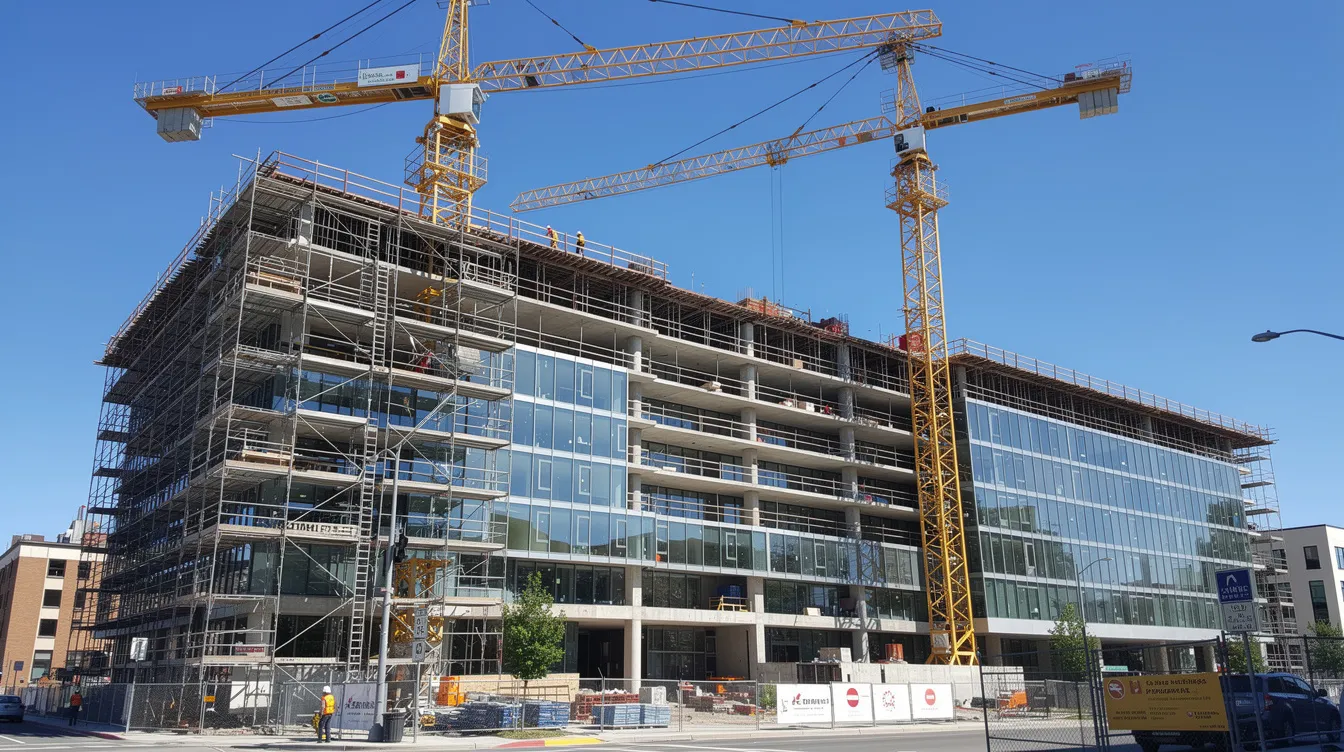
Why Debt Structuring Is Important for a Hotel Project
Getting a loan sanction is only the first step. Incorrect hotel debt structuring can create severe cash-flow stress even when the property is operationally sound and generating positive EBITDA.
The chain works like this: Project Cost → Means of Finance → Term Loan (Debt) → Operating Cash Flow → Debt Service (principal + interest) → DSCR → Repayment Capacity. If any link in this chain is miscalibrated, the hotel faces financial difficulty regardless of its commercial appeal.
There is a critical difference between project viability – meaning the hotel can eventually become profitable with acceptable occupancy, ARR and EBITDA – and the ability to service debt according to a particular repayment schedule. A hotel generating ₹3 crore annual EBITDA may comfortably service ₹2 crore debt service (DSCR of 1.5), but would struggle with ₹3.5 crore debt service (DSCR below 1.0) even though the underlying business is viable.
Indian hotel projects face additional realities: construction delays are common, seasonality affects revenue, dependence on online travel agents (OTAs) compresses margins, and regional demand cycles create volatility. These factors make conservative and flexible repayment terms essential rather than optional. The hotel’s revenue patterns must align with its repayment schedules for effective cash management.
Key Components of Hotel Debt Structuring
A hotel term loan structure is a combination of multiple variables. Changing one element – say, tenure or interest rate – will affect the entire repayment schedule and DSCR. None of these elements has a standard setting; they must be calibrated to the specific scale, location and business model of the proposed hotel project.
Term Loan Amount
The term loan amount arises from the appraised project cost minus promoter contribution and any subsidies. Underestimating project cost can later disturb the repayment schedule significantly.
For example, for a ₹40 crore 4-star hotel with 30% promoter contribution (₹12 crore), the indicative principal loan amount might be around ₹28 crore, subject to lender policy and viability assessment. Hotel loans can range from Rs. 2 lakh to 8 million depending on scale, while hotel loans can be secured or unsecured based on the financing structure. Construction loans finance new hotel developments or renovations, while SBA-equivalent MSME schemes in India help smaller hotels expand while preserving working capital. Secured loans typically have lower interest rates than unsecured loans.
A higher loan amount increases annual debt service and can reduce DSCR, so the DPR must test multiple scenarios before finalising the structure.
Debt-Equity Structure
The debt-equity ratio represents the proportion of debt to promoter equity in the project’s financing. Banks prefer a minimum promoter contribution of around 25%–35% of project cost in many Indian hotel cases, depending on their internal policies.
Adequate promoter equity improves financial resilience: lower leverage means lower yearly principal repayment and better DSCR in early operating years. Senior mortgage loans offer the lowest interest rates among financing options, while mezzanine debt fills financing gaps not covered by senior loans. Promoters should not stretch for the highest possible loan merely to reduce equity, as this can push DSCR below acceptable levels during occupancy ramp-up.
Loan Tenure
Hotel loan tenure – typically 8–15 years including moratorium – influences the size of each principal instalment and total interest cost. Repayment terms typically range from 10 to 15 years for most Indian hotel projects. Hotel loans can have a tenure of up to 96 months under certain schemes, while internationally, amortization periods for hospitality loans typically range from 20 to 25 years.
Longer tenure reduces yearly debt service and may improve DSCR in initial years, but increases total interest paid. Shorter tenure does the opposite and can be risky during stabilization. Tenure should be chosen after reviewing projected cash flows, not just to minimise interest cost on paper.
Moratorium Period
The principal moratorium is a period – typically covering construction plus 6–24 months after commissioning – during which principal repayment is not demanded. Interest may still be payable or capitalised depending on sanction terms. Some banks like Nainital Bank’s Hotel Nirman Scheme offer moratoriums restricted to 18 months, while others allow up to 24 months post commercial operations.
For typical Indian city hotels, the moratorium should usually cover construction, pre-opening and initial 6–12 months of operations so that DSCR in Year 1 of principal repayment is not unduly weak. This is indicative, not a rule.
Repayment Frequency
Payment frequencies for hotel loans are usually monthly but can be adjusted based on cash flows and lender norms. Quarterly instalments are also common. More frequent monthly payments slightly reduce interest cost but demand more regular cash flow discipline.
The chosen frequency should align with the hotel’s typical cash inflow pattern and the bank’s operating norms to avoid mismatch between peak expenses and instalment dates.
Interest Rate
Hotel term loans in India are commonly linked to external benchmarks (such as Repo-linked lending rate) plus a spread. Interest rate structures for loans can be fixed or floating. Interest types include fixed and adjustable, which affect overall cash flow predictability for borrowers. Interest rate risk is a key factor for loans with variable rates, affecting repayment stability.
Interest rates for hotel loans range from 14% to 23% per annum depending on risk profile, though well-credentialed projects with strong collateral may secure rates around 9.5%–11.5% p.a. Interest rates depend on creditworthiness, loan amount, and market conditions, and can vary based on the lender’s policies and borrower profile. A reasonable interest rate assumption should be used in projections, with stress scenarios tested at 1–2% higher.
For perspective, a 1% increase in interest rate on a ₹25 crore loan changes annual interest cost by ₹25 lakh – enough to meaningfully lower DSCR during early years.
Repayment Pattern
The main patterns include: equal principal instalments (where the principal amount repaid each period is the same and interest falls over time), EMI-type equal total payments, and customised step-up structures aligned with projected cash flows. Flexi loans allow interest payments only on withdrawn amounts, offering another variation.
A maturity date indicates when the remaining balance is due, sometimes requiring a balloon payment. Balloon payments may occur at maturity for loans structured with shorter terms than their amortization periods. Prepayment flexibility is important for hotel owners who may need to refinance or sell before loan maturity.

Hotel Project Cost and Means of Finance
Designing a repayment schedule starts with a correct estimate of total project cost – land, building, interiors, MEP, furniture, pre-opening expenses, interest during construction (IDC) and contingencies. According to Hotelivate’s Hotel Development Cost Survey, IDC averaged approximately 14.78% of total project cost for Indian hotel projects, though post-2020 averages have declined to around 11.65%.
The means of finance includes promoter contribution (equity and quasi-equity), term loan, any subsidy, and unsecured loans. A detailed breakup of how these funds are structured is discussed in the guide on Hotel Project Cost & Means of Finance. Promoters should finalise realistic cost and financing before freezing the repayment schedule.
Underestimation of cost or promoter contribution often results in higher-than-planned borrowing, which disturbs the originally assumed hotel term loan repayment schedule and DSCR. CA Manish Gugliya normally prepares a financing plan showing staged drawdown of the term loan according to construction timelines, which becomes the base for IDC and opening loan balance at start of repayment.
How to Determine an Appropriate Moratorium for a Hotel Loan
Consider the typical timeline of a 60–120 room hotel project in India: land acquisition and approvals, 18–30 months of construction, fit-outs, pre-opening recruitment and marketing, soft launch, and occupancy ramp-up over another 12–24 months.
Key phases include the implementation period (construction), commissioning date (opening), pre-opening activities (marketing, staff training, trial runs), initial occupancy build-up and the stabilization period where occupancy and ARR settle at sustainable levels.
Principal should ideally start after the hotel reaches at least operating break-even and begins generating consistent cash accruals. Moratorium on principal does not automatically mean that no interest is payable – treatment depends entirely on sanction terms. During construction, interest may be capitalised into the project cost or serviced from promoter funds.
Practical example: A ₹35 crore hotel project starting construction in April 2026, with expected commissioning in October 2027 and moratorium until March 2029 (covering 18 months of operations). This gives time for occupancy to move from approximately 35% in Year 1 to 55% in Year 2 before principal starts, strengthening early DSCR.
Seeking an unrealistically short moratorium to appear conservative can backfire by depressing early DSCR. Conversely, requesting an excessively long moratorium without justification may not be acceptable to lenders.
Occupancy, ARR, RevPAR and Repayment Capacity
Hotel term loan repayment capacity depends primarily on operating income parameters. Occupancy percentage (for instance, 70 occupied room nights out of 100 available equals 70% occupancy), Average Room Rate (ARR/ADR) and Revenue per Available Room (RevPAR = Occupancy × ARR) are the core revenue drivers.
For a 100-room hotel, even a 5% change in occupancy or ₹500 change in ARR can shift annual room revenue by ₹50–90 lakh. Other income heads – F&B outlets, banquets, conferences, spa and ancillary services – add to the revenue base. Lenders often view EBITDA margin and volatility across these segments while assessing repayment terms.
EBITDA and cash accruals (EBITDA minus tax and reasonable maintenance capex) are more relevant for repayment than net profit alone, because they approximate cash available for term loan instalments. Capital expenditure reserves are necessary for periodic hotel renovations and upkeep, and must be factored in. Financial projections should show a logical ramp-up in occupancy and ARR aligned with the local market, instead of assuming immediate 65–70% occupancy from the first operating year.
Financial Projections Before Finalising Repayment
The hotel term loan repayment schedule should be derived from and tested against comprehensive projected financial statements – not prepared in isolation. Key projected statements include the Profit & Loss Account (revenue, operating expenses, EBITDA, interest, depreciation, profit), Balance Sheet (assets, loan outstanding, equity) and Cash Flow Statement.
The projected interest and principal repayment must exactly match the finance cost and loan movement shown in the P&L and balance sheet year by year. Detailed models for preparing these are explained in the guide on Hotel Financial Projections for Bank Loan & DPR.
Projections should extend at least up to full loan tenure so that the lender can see DSCR and repayment capacity across the entire term. Sensitivity runs – lower occupancy, higher interest – should be included to assess how quickly DSCR deteriorates and whether the proposed schedule remains sustainable. Repayment schedules should incorporate seasonality and cash flow fluctuations specific to the hospitality industry.
DSCR and Hotel Term Loan Repayment
The Debt Service Coverage Ratio (DSCR) measures the hotel’s ability to cover loan payments with its cash flow. It is the single most important ratio banks use to evaluate whether projected cash accruals are sufficient to pay interest and principal as per the repayment schedule.
DSCR = Cash Available for Debt Service ÷ Total Debt Service
Where cash available for debt service typically means EBITDA minus taxes plus non-cash adjustments, and total debt service is interest plus scheduled principal for that period.
Banks look at both annual DSCR (computed year by year) and average DSCR over the loan tenure. Annual DSCR reveals stress in particular years, while average DSCR shows overall strength. For example, if cash available for debt service in a given year is ₹4.5 crore and total debt service is ₹3 crore, DSCR is 1.50. In early years, DSCR might be as low as 1.05, strengthening to 1.8 after stabilization.
For a deeper analysis of DSCR methodology and its application, refer to the guide on Hotel DSCR & Loan Repayment Capacity. Here, the focus is on using DSCR as a design tool: if projected DSCR falls below 1.0 in any year, the repayment schedule needs restructuring – longer tenure, extended moratorium, or lower debt.
Step-by-Step Hotel Term Loan Repayment Schedule Example
This illustrative case study shows how a realistic hotel term loan structure and repayment schedule can be built and analysed. All numbers are for explanation only and do not represent current lending standards.
Assumptions:
- Total project cost: ₹50 crore
- Promoter contribution: ₹17.5 crore (35%)
- Term loan: ₹32.5 crore
- Interest rate assumption: 10.0% p.a.
- Moratorium: 2 years on principal (interest serviced)
- Repayment tenure: 10 years with equal annual principal instalments of ₹3.25 crore
| Year | Opening Loan (₹ Cr) | Principal (₹ Cr) | Interest (₹ Cr) | Total Debt Service (₹ Cr) | Closing Loan (₹ Cr) | Illustrative DSCR |
|---|---|---|---|---|---|---|
| 1 | 32.50 | 0.00 | 3.25 | 3.25 | 32.50 | – |
| 2 | 32.50 | 0.00 | 3.25 | 3.25 | 32.50 | – |
| 3 | 32.50 | 3.25 | 3.25 | 6.50 | 29.25 | 1.20 |
| 4 | 29.25 | 3.25 | 2.93 | 6.18 | 26.00 | 1.35 |
| 5 | 26.00 | 3.25 | 2.60 | 5.85 | 22.75 | 1.50 |
| 6 | 22.75 | 3.25 | 2.28 | 5.53 | 19.50 | 1.60 |
| 7 | 19.50 | 3.25 | 1.95 | 5.20 | 16.25 | 1.70 |
| 8–12 | Declining | 3.25/yr | Declining | Declining | → 0.00 | 1.70–1.85 |
In Year 3, when principal repayment starts, the debt burden is heaviest (₹6.50 crore) and DSCR is at its tightest (1.20). As occupancy stabilises and cash accruals grow while debt service reduces, DSCR improves steadily. Both promoter and lender should pay close attention to Years 3–5, where the hotel is most vulnerable.
Should Hotel Loan Repayment Be Equal Every Year?
Hotel cash flows are often uneven due to occupancy ramp-up, seasonality (tourist seasons, wedding seasons) and economic cycles. Insisting on equal annual repayments may or may not fit the business reality.
- Equal principal repayment: Annual principal amount is fixed, interest declines. Results in higher debt service in early years – potentially harsh during stabilisation.
- EMI-type equal total payment: Combined principal plus interest stays the same amount each period. Simpler for budgeting, but may still be tight in early years when most of the instalment is interest.
- Stepped-up repayment: Lower instalments initially, higher later – aligned to projected occupancy and ARR growth. Requires clear justification and specific bank approval.
Equal payments simplify budgeting and help manage finances predictably. Stepped structures better match cash flows but can lead to higher total interest. Over-optimistic step-up assumptions create stress if actual occupancy underperforms.
Debt Structuring and Hotel Working Capital
A hotel must have sufficient working capital in addition to servicing its term loan. Aggressive loan instalments that consume most cash flow can leave no liquidity for day-to-day operations.
Key working capital requirements include:
- Salaries and wages
- Power and fuel
- Food and beverages inventory
- Linen and housekeeping supplies
- Repairs and maintenance
- Marketing and OTA commissions
- Franchise/management fees
- Statutory dues
Using short-term working capital limits (cash credit/overdraft from a bank account) to plug gaps in term loan repayments is risky and often leads to overdrawn accounts, penal interest and potential stress classification. Penal charges for late payments can reach 36% per annum in some cases.
For detailed working capital planning, refer to the guide on Hotel Working Capital Requirement & Assessment. Term-loan repayment planning must be coordinated with realistic working-capital assessment so that projected cash flow clearly distinguishes between funds available for term loan instalments and funds needed to run the hotel smoothly.
Role of CMA Data in Hotel Loan Repayment Assessment
CMA Data (Credit Monitoring Arrangement statement) is a structured set of financial projections and analyses required by many banks for term loans and working capital facilities in India. It typically includes projected profitability, balance sheets, fund-flow statements, working-capital assessment and the term loan repayment schedule – all prepared on consistent assumptions.
A Chartered Accountant like CA Manish Gugliya helps promoters prepare or review these CMA statements based on information and assumptions shared by the borrower, but does not certify that future projections will be achieved. Banks use CMA Data to assess whether the proposed repayment terms are realistic in the context of projected sales, operating margins, interest burden and working-capital cycle. The comprehensive guide on Hotel CMA Data for Bank Loan explains format and contents in detail.
How Banks Assess a Hotel Term Loan Repayment Schedule
From the lender’s perspective, banks evaluate both project risk and repayment risk. The term loan repayment schedule is a key part of their hotel term loan appraisal process.
Main factors banks typically evaluate:
- Project cost, means of finance and promoter contribution
- Site location, demand drivers and brand/franchise tie-up
- Occupancy and ARR assumptions versus market benchmarks
- Projected revenues, operating expenses, EBITDA and cash accruals
- DSCR (year-wise and average) and repayment capacity
- Existing debts and obligations that must be considered when determining available cash for new loan repayments
- Adequacy of security/collateral and credit score of borrowers
Common eligibility criteria include: a CIBIL score of 650 or higher is often required for favorable rates, applicants must be between 21 to 80 years old, business vintage must be at least 3 years, only self-employed individuals can apply for the hospitality loan, and applicants must be resident Indians. While promoters can check basic details and eligibility online through various lender portals, actual sanction depends on comprehensive appraisal.
Implementation risk (delays in construction or approvals) and sensitivity of projections to lower occupancy or ARR are examined. Stress testing repayment schedules helps ensure manageability under adverse economic conditions. For detailed coverage of bank appraisal methodology, refer to Hotel Term Loan Assessment – How Banks Appraise Hotel Projects.

Repayment Schedule in Hotel DPR
In a professionally prepared Detailed Project Report, the term loan repayment schedule is embedded within the overall financial structure – not attached as an isolated annexure. All schedules must reconcile logically:
Project Cost → Means of Finance → Drawdown of Term Loan → Interest During Construction → Post-commissioning Interest & Principal Repayment → Projected P&L, Cash Flow, Balance Sheet → DSCR
The DPR should show a clear table year by year with opening loan balance, principal repayment, interest, closing balance and total debt service, matching exactly with the loan outstanding shown in projected balance sheets.
Common reconciliation errors include: closing loan balance not matching the balance-sheet figure, interest computed on the wrong opening balance, omission of interest during construction in project cost, and misalignment between moratorium period stated in the narrative and the actual schedule. CA Manish Gugliya’s typical DPRs include cross-checks where the total principal repaid across all years equals the sanctioned term loan amount, ensuring no hidden shortfall in the loan amortization schedule.
Documentation and Bank Appraisal
Even the most well-designed repayment schedule must be supported by proper documentation, realistic assumptions and consistent information across all loan papers. Documents required include the DPR, CMA Data, projected financial statements, sanction letters of existing business loan obligations, property documents, hotel management/franchise agreements, KYC documents and an application form with basic details.
The Hotel Loan Documentation & Bank Appraisal Checklist helps ensure that projections and documents tell a consistent story. Inconsistencies – one document showing a 2-year moratorium and another showing 1-year, or different interest rate assumptions – can lead to delays during appraisal.
The final sanctioned repayment terms will be reflected in the bank’s sanction letter, which may differ from the promoter’s initial proposal if the credit committee requires modifications.
Testing Financial and Commercial Viability
Even a perfectly structured repayment schedule cannot rescue a fundamentally unviable hotel concept. Both financial and commercial feasibility must be established first.
Sensitivity analysis is essential: test scenarios with lower occupancy (10–15% below base case), lower ARR, higher operating costs, cost overruns and higher interest rates to see whether DSCR remains acceptable. Delayed commissioning (6–9 months delay) affects interest during construction, project cost and timing of moratorium expiry, changing the entire repayment schedule.
The Hotel Feasibility Study – Financial & Commercial Viability analysis should precede freezing of the final debt structure. Promoters should not simply extend tenure or insist on balloon payments to make DSCR appear acceptable on paper. Instead, they should reassess project scale, positioning or cost if feasibility under realistic assumptions is weak.
Common Mistakes in Hotel Loan Repayment Planning
Selecting short tenure for lower total interest: Some promoters choose aggressive repayment to save on total interest without checking whether Year 1–3 DSCR is viable. This often leads to cash shortfalls when the hotel is still ramping up.
Starting principal too early: Beginning principal repayment almost immediately after opening, when occupancy is still below 40–45%, creates DSCR below 1.0 even if the hotel has long-term potential. Banks may classify such accounts as stressed.
Over-optimistic revenue assumptions: Expecting 65–70% occupancy from the first year, projecting ARR significantly higher than comparable hotels in the market, and ignoring OTA commissions and discounts leads to inflated cash accrual estimates that cannot support the planned debt service.
Neglecting working capital: Using all early cash flows to pay term loan instalments, leaving insufficient liquidity for salaries, marketing and maintenance, ultimately hurts occupancy and revenue – a vicious cycle.
Technical errors: Mis-treating interest during construction, not including IDC in project cost, ignoring seasonality in monthly cash inflows, not reconciling loan balances with the balance sheet, and calculating DSCR on inconsistent figures. These errors undermine the entire DPR’s credibility.
Assuming sanction equals viability: A loan sanction does not automatically confirm that the project is viable or that the repayment schedule is sustainable. The primary responsibility for informed decisions on sustainable debt lies with the promoter.
Practical Debt Structuring Checklist for Hotel Promoters
- ☐ Confirm realistic total project cost including IDC and contingencies
- ☐ Ensure adequate promoter contribution meeting acceptable debt-equity levels
- ☐ Verify implementation schedule, moratorium and first principal repayment date align with expected opening and stabilization timeline
- ☐ Benchmark occupancy and ARR assumptions against market data for the specific location and segment
- ☐ Ensure F&B and banquet projections are consistent with property size and plan
- ☐ Assess working capital needs separately and confirm cash accruals after operating expenses and taxes cover term loan instalments with acceptable DSCR
- ☐ Calculate both annual and average DSCR across the full loan tenure
- ☐ Run multiple scenarios (base, optimistic, conservative) and document sensitivity analysis
- ☐ Reconcile all schedules – Project Cost, Means of Finance, Loan Drawdown, Repayment Schedule, P&L, Cash Flow, Balance Sheet
- ☐ Review all documents for consistency before submission to the bank to streamline the appraisal process
Role of a Chartered Accountant in Hotel Debt Structuring and DPR
A practising Chartered Accountant supports hotel promoters in translating their business vision into numbers that banks can appraise – particularly for term loan and repayment planning.
Specific contributions include: assessing realistic project cost, advising on means of finance and debt-equity structure, building financial models, drafting the hotel term loan repayment schedule, preparing projected financial statements, DSCR analysis, CMA Data preparation and sensitivity analysis. The CA integrates repayment assumptions into the DPR in a manner that is internally consistent and understandable to bankers.
CA Manish Gugliya has practical experience in hotel project reports, DPR preparation, CMA Data, financial projections and MSME advisory, focusing on balancing promoter objectives with bank appraisal requirements. A Chartered Accountant cannot guarantee loan sanction and does not control bank credit decisions, but can significantly improve the quality and reliability of financial information presented to lenders – helping borrowers submit proposals that are both credible and serviceable.
Frequently Asked Questions
What is a hotel term loan repayment schedule in simple terms?
It is a period-wise table showing how a hotel’s term loan will be repaid over time: opening loan balance, principal due, interest due, total instalment and closing loan balance, based on agreed tenure, interest rate and moratorium. For hotels, this schedule is prepared for the entire tenure up to loan closure so both promoter and bank can see future obligations clearly and calculate whether projected cash flows can service the debt.
How is the hotel loan repayment schedule actually calculated?
The schedule is generated using financial formulas (typically in Excel or banking software) by inputting loan amount, interest rate, moratorium period, repayment tenure and the chosen pattern (equal principal or EMI-type). Interest for each period is calculated on the opening outstanding balance, principal is set as per the agreed pattern, and closing balance is derived as opening balance minus principal repaid. This process continues until the remaining balance reaches zero and the loan is fully repaid.
What is the ideal repayment period for a hotel term loan?
There is no universal ideal tenure. Suitable tenure depends on project size, cash flow projections, stabilization time and lender policies. Many hotel projects in India work with a combined period (moratorium plus repayment) of 10–15 years, though some financing options and schemes allow longer. The right tenure is determined through DSCR analysis on realistic projections – not through arbitrary selection.
Can a hotel term loan repayment schedule be linked to projected cash flows?
Subject to bank consent, repayment can often be structured to align with projected cash flows through stepped-up instalments or slightly back-ended principal. However, banks will still examine DSCR, risk factors and market conditions, so promoters must justify the proposed pattern with detailed projections. Flexible repayment terms are possible but not guaranteed – each lender and each project is assessed individually.
What should I do if actual occupancy is lower than projected and I am struggling with repayments?
Review cash flows and operating costs immediately, speak to the lender early rather than waiting for defaults, and explore temporary restructuring or rescheduling options permitted by bank policy. Consider fresh equity infusion rather than relying solely on more debt. Document the reasons for underperformance – market slowdown, increased competition, delays – and update projections with realistic assumptions before approaching your bank or financial advisor. Early and transparent communication with the lender is always better than allowing accounts to slip into stress classification.
Continue Exploring Our Hotel Project Finance & Bank Loan Guides
Continue with our detailed hotel finance resources covering bank loan appraisal, project cost, CMA Data, working capital, DSCR, financial projections, feasibility, documentation and loan repayment structuring.
Conclusion
Effective hotel term loan repayment planning is about balancing promoter contribution, term debt, realistic moratorium, operating cash flows, working capital needs, debt service and DSCR over the full loan tenure. It is not simply about obtaining the maximum possible loan or the longest possible tenure.
A sustainable hotel debt structure should support long-term asset health and operational excellence. The repayment schedule must be tested against realistic hotel operations, downside scenarios and market conditions before the proposal is submitted for bank appraisal. Hotels in the hospitality sector face unique challenges – ramp-up periods, seasonality, competitive pressure – that make thoughtful debt structuring a necessity, not a luxury.
Hotel promoters and investors planning to avail bank finance for hotel projects can visit ProjectReportBank.com or connect with CA Manish Gugliya for preparation of hotel DPRs, financial projections, CMA Data and repayment schedule analysis. Final sanction decisions always rest with the lending institutions, but well-prepared financial documentation materially improves the quality of the conversation with your banker.