Key Takeaways
- Hotel project cost covers far more than land and building – it includes civil construction, interiors, FF&E, plant and machinery, professional fees, pre-operative expenses, interest during construction (IDC), contingency and working capital margin, all of which must appear in the DPR.
- A correctly structured means of finance – combining promoter contribution, term loan and other admissible sources – must exactly equal the total hotel project cost, with every rupee accounted for.
- Underestimating project cost creates funding gaps, implementation delays, cost overruns and a weak DSCR, which can lead to bank refusal or financial stress after the hotel opens.
- Banks appraise hotel project cost, means of finance, projected occupancy, revenue, DSCR and repayment capacity together before sanctioning a hotel term loan; inconsistency between any of these elements raises red flags.
- This article is written by CA Manish Gugliya, practising Chartered Accountant, who prepares hotel DPRs, project cost estimates, funding structures and financial projections through ProjectReportBank.com, tailored for Indian bank finance requirements.
Explore Hotel Bank Loan, Project Finance & Feasibility Guides
Explore our hotel finance guides covering bank loans, term loan assessment, DSCR, working capital, CMA Data, project cost, financial projections, feasibility, documentation and debt structuring.
Introduction: Why Hotel Project Cost and Means of Finance Matter
Starting a hotel project requires a massive capital investment, and the margin for error at the planning stage is uncomfortably thin. A hotel is not a plug-and-play business – it is a complex real estate and hospitality asset where the project cost structure, funding plan and operating assumptions must align before a single brick is laid.
A typical hotel project cost includes land acquisition, site development, building and civil construction, interiors and fit-outs, furniture fixtures and equipment (FF&E), plant and machinery, commercial kitchen equipment, electrical and HVAC infrastructure, fire and safety systems, professional and consultancy fees, preliminary and pre-operative expenses, interest during construction, contingency provision and a margin for working capital. Missing even one of these blocks in your detailed project report can create problems that surface months – or years – later.
Here is what happens when hotel project cost estimation goes wrong:
- Funding gaps force promoters to scramble for additional capital at unfavourable terms or higher interest rates.
- Cost overruns push up borrowing, increasing annual debt obligations and compressing cash flows.
- Implementation delays raise IDC and postpone revenue generation.
- Weak DSCR (Debt Service Coverage Ratio) signals repayment risk, causing banks to either reject the proposal or reduce the sanctioned loan amount.
Hotel financing requires substantial capital investment and contingency plans. The “means of finance” is the structured combination of promoter contribution, term loan from banks or financial institutions and any other admissible sources that together must equal the total hotel project cost. Get this equation wrong, and the entire proposal unravels.
This article is written from the practical perspective of CA Manish Gugliya for ProjectReportBank.com, with a focus on bankable hotel project reports and real-world hotel project finance in India.
What Is Hotel Project Cost? – Definition and Scope
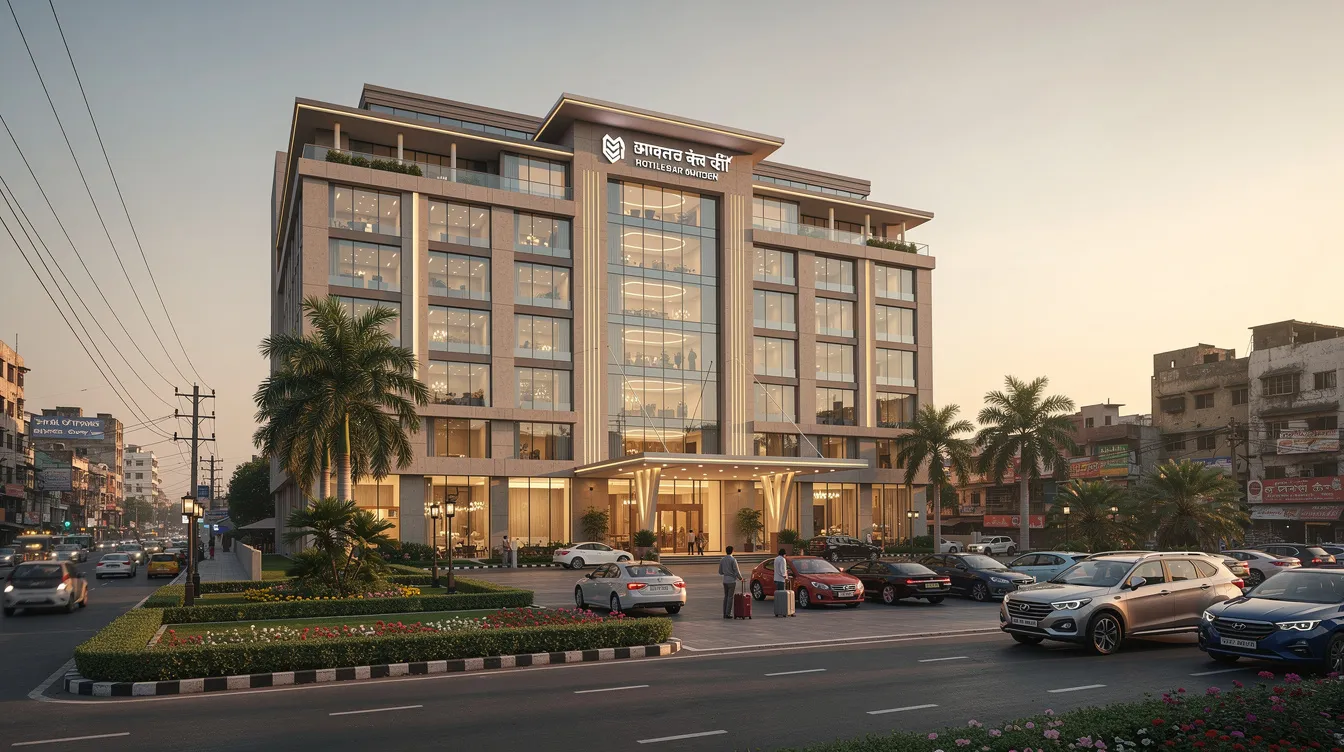
Hotel project cost is the total capital investment required to take a hotel from concept through design, construction, commissioning and pre-opening to the point where commercial operations begin. It represents everything the promoter needs to spend before the hotel starts generating revenue.
It is important to distinguish between related but different financial concepts:
- Project cost – the one-time investment to build and commission the hotel, including all components described above.
- Operating expenses – recurring costs incurred after launch such as salaries, utilities, consumables, maintenance and marketing. Operational costs significantly impact a hotel’s profitability but are not part of project cost.
- Working capital requirement – funds needed to run day-to-day operations after opening, covering inventory, receivables, salary cycles and minimum cash reserves.
- Capital expenditure (hotel CAPEX) – the fixed asset investment portion of project cost, principally land, building, interiors, FF&E and plant and machinery.
- Pre-operative expenditure – all costs incurred before revenue begins, including licences, staff recruitment and training, trial runs and initial marketing.
Hotel project cost typically includes a margin for working capital but not the full working capital cycle that recurs each year. Banks need this distinction clearly drawn in the DPR. Misclassifying operating expenses as project cost – or omitting pre-operative items – can confuse lenders and delay sanction.
Proper hotel project cost estimation forms the foundation for project viability, DSCR analysis and the entire repayment-capacity assessment that banks rely on.
Major Components of Hotel Project Cost
This section walks through each component that should appear as a separate line in a hotel project cost breakup. The items are relevant to typical 2-star, 3-star and 4-star city hotels, business hotels and resorts across India, with scale and quality varying by positioning.
Each sub-section describes what to include and how it typically appears in a hotel DPR prepared for bank finance.
Land Acquisition and Land Development
Land acquisition can range from a minor fraction to a massive portion of the total budget. Urban center sites have significantly higher land costs than suburban markets or Tier-3 locations.
The land cost block includes:
- Purchase price of land
- Stamp duty and registration charges
- Conversion charges (agricultural to non-agricultural, if applicable)
- Brokerage or legal fees linked to title transfer
- Ownership rights documentation and related expenses
Land development is a separate component covering:
- Site levelling and soil treatment
- Boundary wall and compound
- Approach roads within the plot
- Parking area development
- External lighting, landscaping and storm-water drainage
- Basic external utility connections
In practice, some banks treat land differently from other project components. Where land was purchased several years before the project begins, banks may cap the value they accept or require a fresh valuation. This must be discussed transparently in the DPR. I recommend showing “Land Cost” and “Site Development & External Works” as separate lines to keep hotel project cost components visible.
Building and Civil Construction
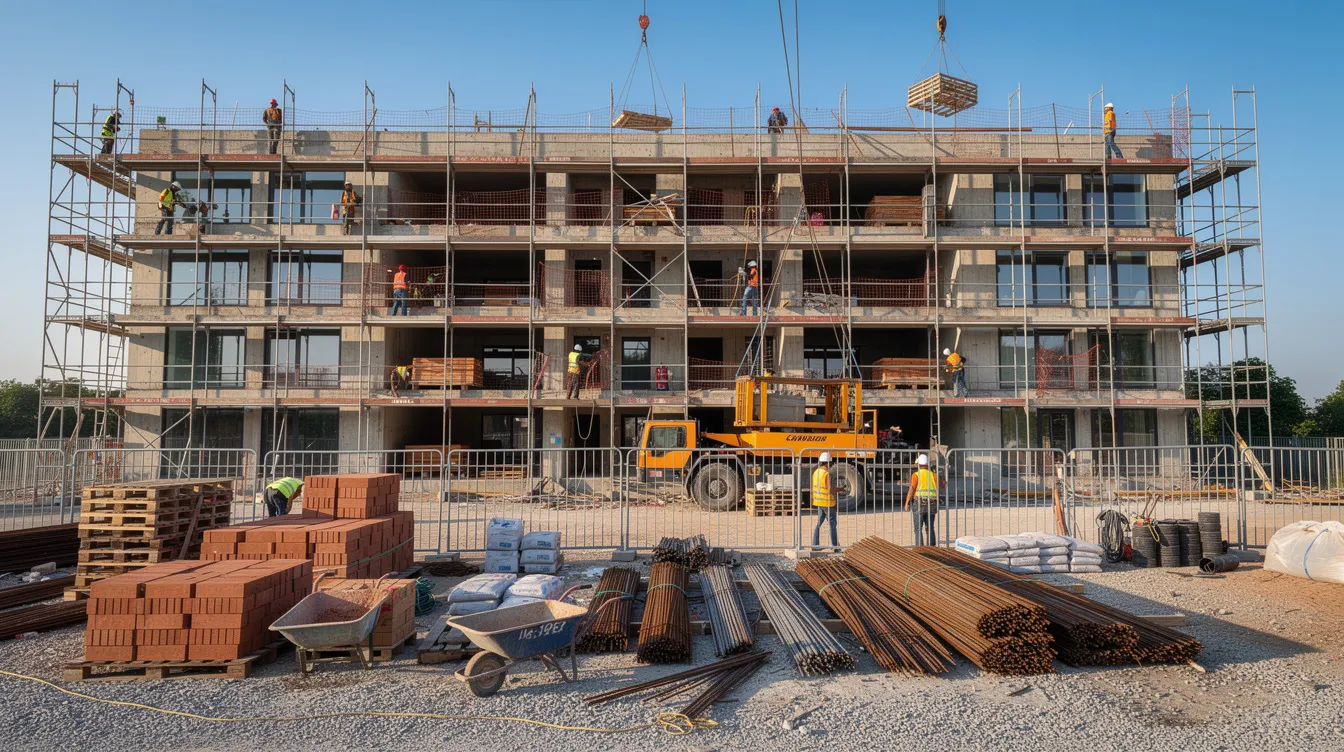
Hotel construction is usually the single largest component, and construction cost is typically calculated per key – with significant variation by tier, design and positioning.
Key built-up areas in a hotel include:
- Guest rooms and corridors
- Lobby, reception and public circulation
- Restaurants and bar areas
- Banquet and conference halls
- Kitchen and back-of-house
- Administrative offices
- Staff facilities (changing rooms, canteen, rest areas)
- Storage, utility and plant rooms
- Parking structures (basement or surface)
Hotel construction costs depend on city location (metro vs Tier-3), soil conditions, number and size of rooms, total built-up area per square foot, structural design (high-rise vs low-rise) and chosen specifications. Luxury hotels feature high-end finishes and complex architectural designs, pushing per-key construction cost far above mid-scale properties. Budget hotels have lower per-key construction costs because finishes, room sizes and amenities are simpler.
Building cost is commonly based on the architect’s estimate or civil contractor’s BOQ, expressed as cost per sq. ft. of built-up area multiplied by total area. For a hotel project report for bank loan, this estimate should be recent, realistic and supported by professional drawings.
Interior & Fit-Out Costs
Interior and fit-out work covers room interiors (flooring, wall panelling, wardrobes, beds and loose furniture), bathrooms (tiling, sanitary fittings, vanity), lobby décor, reception counters, restaurant and bar interiors, banquet hall finishes, decorative ceilings and lighting design.
Interior quality and theme significantly influence hotel positioning – a budget property versus a premium one – and therefore directly affect hotel CAPEX per room. This budget must align with projected average room rates; spending luxury-level amounts on interiors while projecting mid-scale ARR creates an inconsistency that banks will question.
Interior budgets should be based on concept drawings, interior BOQ or vendor estimates – not arbitrary lump-sum numbers. Banks accept interior costs that are proportionate and documented, not figures pulled from thin air.
Furniture, Fixtures & Equipment (FF&E)
FF&E refers to movable items that furnish and equip the hotel. Furniture, fixtures, and equipment usually accounts for 15% to 25% of total development cost, depending on hotel positioning and brand requirements.
Typical FF&E includes:
- Room furniture, mattresses, curtains, televisions, minibars and in-room safes
- Restaurant and banquet furniture
- Office furniture and POS hardware
- Housekeeping trolleys and equipment
- Public-area seating and outdoor furniture (poolside, lawns)
Brand standards can increase FF&E and construction costs substantially. If the hotel will operate under a franchise or management contract, FF&E must comply with the brand’s standard lists and specifications. Franchise financing may include key money from global hotel groups, which can offset some of this cost but often comes with compliance obligations.
I recommend showing separate FF&E sub-lines for guest rooms, restaurants, banquets, back-office and public areas so that the hotel project cost breakup remains transparent to lenders.
Plant, Machinery and Hotel Equipment
This block covers specialised equipment procured from dedicated vendors:
- Commercial kitchen equipment and walk-in coolers
- Laundry machines (washer-extractors, dryers, ironers)
- Lifts and elevators
- HVAC/VRV systems
- DG sets and transformers
- Electrical panels and distribution
- Fire-fighting pumps, sprinklers and alarm systems
- Water treatment and sewage treatment plants
- Hot water systems (boilers, solar heaters, heat pumps)
- CCTV, access-control and public-address systems
- Hotel IT/PMS infrastructure and networking
Vendor quotations for these items should be attached or summarised in the DPR. From a banker’s perspective, under-budgeting HVAC, kitchen or fire-safety systems is a red flag – it signals that the hotel project cost estimation is incomplete and the promoter may come back asking for additional funds mid-construction.
Professional & Consultancy Fees
Soft costs include legal fees, insurance, and project management fees. This cost block also covers architect fees, structural and MEP consultant fees, interior designers, technical advisors and, where applicable, brand or technical-services fees for chain affiliations.
A realistic percentage or fee schedule should be documented in the DPR and shown separately – not buried inside civil work costs. In several assignments I have handled, incomplete provision for professional fees has directly led to cost overruns and funding gaps later.
Preliminary and Pre-operative Expenses
Pre-operative expenses represent all expenditure before commercial operations: company or LLP incorporation, statutory approvals and licences, project-office running costs, salaries of key staff during pre-opening, trial-run expenses, initial marketing campaigns and recruitment and training costs.
Pre-opening costs may include marketing, staff hiring, and cash reserves needed to operate during the soft-opening phase when occupancy ramps up slowly. Banks expect a reasonable and well-explained pre-operative budget, proportionate to project scale and implementation period. These expenses are capitalised as part of the project cost but are fundamentally different from recurring operating expenses after the hotel opens.
Interest During Construction (IDC)
IDC is the interest charged on term loans and other project borrowings during the construction and pre-opening period, before hotel revenues begin. It is capitalised as part of the project cost until the date of commercial operations.
IDC depends on three variables:
- Project implementation period (typically 18–30 months for mid-scale hotels)
- Drawdown schedule of the term loan
- Applicable interest rate
Delays in construction can significantly increase both costs and interest. High interest rates further amplify IDC, especially on large projects with extended timelines. Industry surveys indicate IDC averaging around 14–20% of total development cost for upper-upscale and luxury projects. Many banks include IDC in hotel project cost up to the date of commercial operations, subject to their own policies, so IDC estimation must be consistent with the implementation schedule presented in the DPR.
Contingency Provision
Contingency funds in budgets are necessary to accommodate unforeseen expenses – price escalation of building materials, minor design modifications, specification changes and procurement surprises. It is not a buffer for poor planning; it is a realistic provision for unavoidable cost variations.
I do not prescribe a single universal percentage. Contingency should be reasonable and project-specific, typically applied on core construction, interiors and equipment costs, excluding land. A hotel project cost budget with zero contingency may be viewed by banks as unrealistic and a sign of inadequate planning.
Working Capital Margin Included in Project Cost
After opening, a hotel needs working capital for food and beverage inventory, housekeeping and operating supplies, salary payments, utilities, initial marketing and receivables from corporate clients or travel agents.
Only the margin for working capital – the promoter’s share of the assessed working capital requirement – is normally included in the hotel project cost. The balance is provided by the bank as working capital limits (cash credit or overdraft). A detailed discussion of how banks assess working capital is covered in the guide on hotel working capital requirement and assessment.
Illustrative Hotel Project Cost Breakup (India Example)
To make the concepts concrete, here is an illustrative project cost breakup for a mid-scale 80–100 room hotel project in India, assumed to commence in FY 2026–27. As a preliminary estimate, a 100-room hotel project in India can cost approximately ₹10 crore at the most basic budget level, but mid-scale and upscale properties require significantly more.
Note: All figures below are illustrative and should not be treated as standard project costs, quotations or benchmarks. Actual hotel development cost varies by location, scale, brand positioning, and type of construction.
| Particulars | Illustrative Amount (₹ crore) | % of Total Project Cost |
|---|---|---|
| Land & Site Development | 6.00 | 15.0% |
| Building & Civil Works | 14.00 | 35.0% |
| Interiors & Fit-Outs | 4.40 | 11.0% |
| Furniture & FF&E | 3.20 | 8.0% |
| Plant, Machinery & Hotel Equipment | 3.60 | 9.0% |
| Electrical / HVAC / Fire / Security | 2.40 | 6.0% |
| Professional & Consultancy Fees | 1.20 | 3.0% |
| Preliminary & Pre-Operative Expenses | 1.20 | 3.0% |
| Interest During Construction (IDC) | 2.00 | 5.0% |
| Contingency | 1.20 | 3.0% |
| Working Capital Margin | 0.80 | 2.0% |
| Total Project Cost | 40.00 | 100.0% |
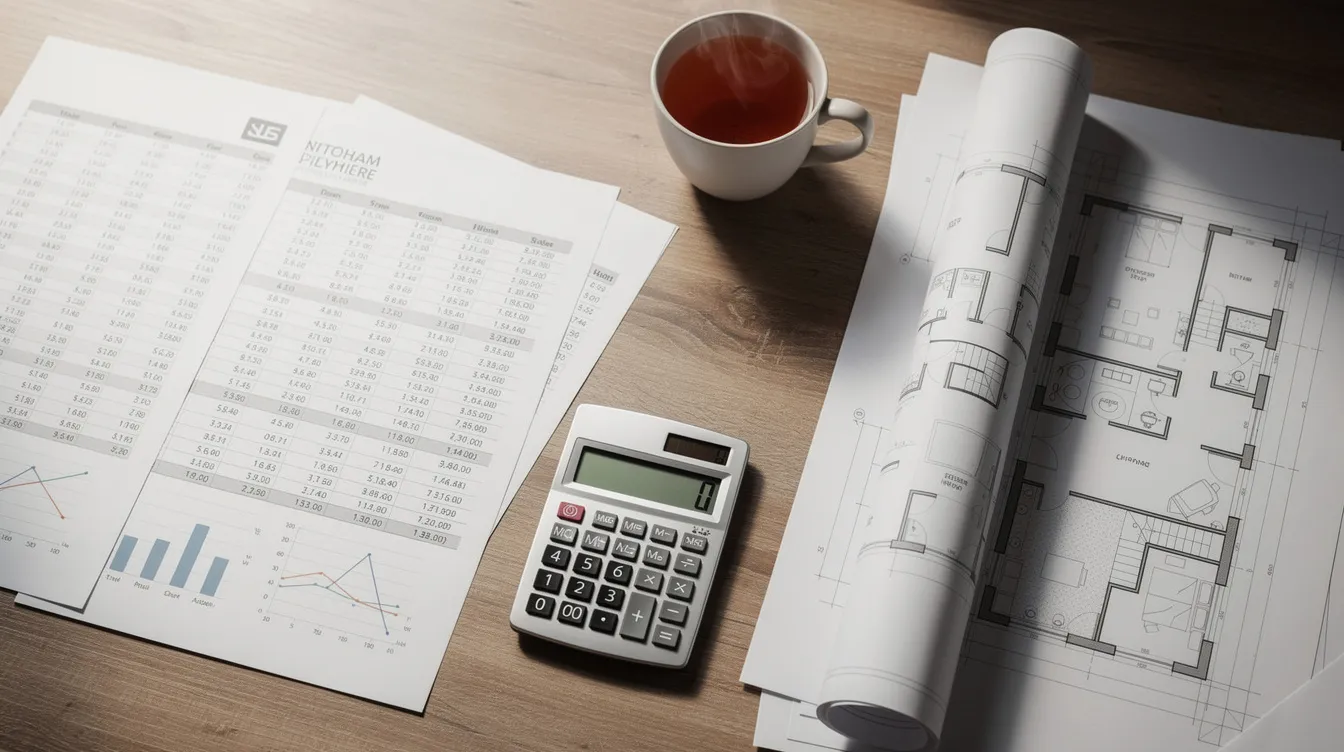
A structured hotel project cost breakup like this helps both the promoter and the lender understand where the money is going. It enables the bank to cross-check each component against industry norms, vendor quotations and benchmark data. More importantly, it forces the promoter to think through every cost block before approaching a bank.
Key Factors Affecting Hotel Project Cost in India
There is no single “standard” hotel construction cost per room in India. Total project costs depend on property scale, location, and brand standards. Here are the key factors that drive variation:
- City and location – metro gateway cities vs Tier-2/3 towns. Location affects both land cost and construction cost.
- Land price and plot size – land cost can be 15–35% of total project cost depending on market conditions.
- Number of rooms and average room size – larger room counts spread fixed costs, while bigger rooms increase per-key cost.
- Total built-up area per square foot – more back-of-house, banquet space or parking adds to the budget.
- Level of finishes and specifications – a star hotel rated 3-star vs a five star hotel will have fundamentally different construction and interior budgets.
- Number and type of F&B outlets, banquet capacity, spa, gym, swimming pool – scale and asset class dictate the complexity of construction and amenities.
- Brand or franchise standards – brand requirements for room sizes, FF&E, technology and services provided can significantly push up costs.
- Imported equipment and energy consumption targets – sustainability features (solar, heat pumps, waste treatment) and green financing benchmarks add to MEP costs.
- Project schedule and inflation – longer construction increases both hard cost and IDC. Costs vary based on location, scale, brand positioning, and type of construction.
In practice, banks cross-check the promoter’s cost figures with their own benchmark data, valuation reports and similar projects while appraising hotel project finance proposals.
What Is “Means of Finance” in a Hotel Project?
Means of finance is the funding structure by which the total cost of a hotel project is proposed to be met. The financing structure affects total project cost and operating capacity – how much debt the hotel carries determines its annual interest burden and repayment schedule.
The governing equation is straightforward:
Total Project Cost = Total Means of Finance
Every rupee of hotel project cost must be backed by an identified and acceptable source of finance. Common sources include:
- Promoter’s own funds / equity – the backbone of any hotel project investment.
- Share capital – contributions from partners or shareholders.
- Unsecured loans from promoters or relatives – subject to bank policy on subordination and quasi-equity treatment.
- Term loan from banks or financial institutions – construction finance is a prevalent route for hotel financing.
- Internal accruals – relevant for expansion projects of existing hotel businesses.
- Equity financing – offering ownership stakes to investors, including private equity firms and institutional investors.
- Mezzanine financing – combines elements of both debt and equity, sometimes used to bridge funding gaps.
- Crowdfunding – pools smaller investments from multiple individual investors, though less common for large projects in India.
- Eligible government subsidies or tax incentives – where applicable and confirmed.
Capital financing for hotels involves a mix of debt and equity. Debt financing allows ownership retention without decision-making power loss, while equity financing dilutes ownership but reduces debt obligations. Project finance relies on the project’s viability, not participant solvency, and project finance limits the initiator’s liability to their own contribution.
Green financing is an emerging option that links loan terms to sustainability performance targets, potentially offering interest-rate benefits for energy-efficient hotel designs.
Not all sources are automatically treated as “promoter contribution” by lenders – short-tenure unsecured loans, for instance, may not qualify as quasi-equity. A well-presented hotel project report for bank loan clearly lays out the project cost and the means of finance on adjacent pages for efficient appraisal.
In the US market, SBA loans offer lower down payments for smaller hotels, but the Indian hotel industry relies predominantly on conventional bank term loans and promoter equity for hotel project funding.
Promoter Contribution in a Hotel Project
Promoter contribution is the portion of hotel project cost brought in by the promoter group through equity, own funds or other acceptable long-term sources. Banks require adequate promoter contribution to ensure that promoters carry sufficient risk and commitment in the hotel project.
Acceptable sources of promoter contribution typically include:
- Capital introduced by promoters into the business
- Unsecured loans from promoters or close relatives, subject to subordination and policy conditions
- Sale proceeds of other assets earmarked for the project
- Internal accruals from existing business operations
- Confirmed equity from identified investors
There is no universal fixed percentage for promoter contribution for hotel loan proposals. Requirements vary by bank, project risk, security cover, promoter profile and applicable regulatory guidelines. High financial leverage typically involves 20–30% equity contribution, though many Indian lenders prefer 30–40% as promoter stake for hotel projects, depending on the strength of the proposal.
Timing matters. Banks generally expect a substantial portion of promoter funds to be brought in upfront or concurrently with term-loan disbursements. A promoter who plans to bring equity only at the tail end of construction will face pushback. Proof of promoter funds – bank statements, investment statements, property valuations – should be ready before approaching lenders.
Debt-Equity Ratio in Hotel Project Finance
The debt-equity ratio measures the relationship between borrowed funds and the promoter’s own funds deployed in the project:
Debt-Equity Ratio = Total Long-Term Debt ÷ Tangible Net Worth (Equity)
For example, if the total project cost is ₹40 crore with promoter contribution of ₹14 crore and a term loan of ₹26 crore:
Debt-Equity Ratio = 26 ÷ 14 = 1.86 : 1
Why do banks scrutinise this ratio?
- Higher debt increases annual interest and principal repayment, raising break-even occupancy.
- Excessive leverage weakens DSCR, reducing the margin of safety against revenue shortfalls.
- High debt reduces financial flexibility to absorb unexpected operating expense increases or market downturns.
- Project finance relies on future cash flows for viability; an over-leveraged project leaves little room for deviation from projections.
Different banks and financing options have different maximum debt-equity norms. The appropriate structure must be tailored to each hotel project’s risk profile and promoter strength. A project with a strong promoter, prime location and branded operations may secure a higher leverage ratio than a first-time promoter’s budget property in a Tier-3 town.
How to Calculate Term Loan Requirement for a Hotel Project
The conceptual formula is:
Proposed Term Loan = Total Project Cost – Eligible Promoter Contribution – Other Accepted Long-Term Sources
Using the earlier illustrative example:
| Item | Amount (₹ crore) |
|---|---|
| Total Project Cost | 40.00 |
| Less: Promoter Contribution | 14.00 |
| Less: Other Sources (e.g., subsidy) | 0.00 |
| Proposed Term Loan | 26.00 |
While this is how promoters initially arrive at the hotel term loan requirement, the final sanctioned loan amount depends on the bank’s internal appraisal, policy caps, DSCR calculation, collateral cover and regulatory norms. Banks may also back-calculate the sustainable loan amount from projected cash flows – if the hotel’s cash flow supports only ₹22 crore of debt servicing, the sanction may be capped there regardless of the promoter’s request.
Illustrative Means of Finance Structure
Continuing with the same ₹40 crore hotel project:
| Source | Amount (₹ crore) | % of Total Project Cost |
|---|---|---|
| Promoter Contribution (Equity / Own Funds) | 12.00 | 30.0% |
| Subordinated Unsecured Loans from Promoters | 2.00 | 5.0% |
| Term Loan from Bank / FI | 26.00 | 65.0% |
| Total Means of Finance | 40.00 | 100.0% |
Debt-Equity Ratio: 26.00 ÷ 14.00 = 1.86 : 1
This structure assumes the bank treats subordinated unsecured loans as quasi-equity. If the bank does not, the effective equity reduces to ₹12 crore and the ratio rises to 2.17 : 1 – which some lenders may consider aggressive. An optimal financing structure for an Indian hotel project generally targets a debt-equity ratio between 1.5 : 1 and 2.5 : 1, depending on project fundamentals and lender appetite.

Project Cost vs Term Loan – Clearing a Common Misunderstanding
Total hotel project cost is not the same as the loan amount the bank will sanction. Banks rarely finance 100% of project cost.
Several items may be partly or fully excluded from term-loan eligibility:
- Land purchased long before the project, valued well above current market or original cost
- Speculative cost escalation not backed by quotations
- Excessive contingency beyond policy norms
- Certain soft costs or professional fees exceeding internal benchmarks
- Expenditure already incurred before loan sanction (in some cases)
Promoters must be prepared to fund such excluded items, any cost overruns and any shortfall between sanctioned and requested loan amounts from their own resources.
Over-inflating hotel project cost in the hope of extracting a larger loan is a strategy that backfires more often than it succeeds. Banks compare proposed costs against benchmark data from similar projects and industry norms. An inflated cost estimate damages the proposal’s credibility and can lead to outright rejection.
How Banks Assess Hotel Project Cost and Means of Finance
Lenders evaluate both the quantum and the reasonableness of hotel project cost and means of finance. Traditional bank loans typically require substantial collateral and a feasibility study as a starting point.
Banks typically check:
- Benchmark comparison of proposed cost per room or per sq. ft. against industry data
- Review of architect and contractor estimates for civil construction
- Examination of vendor quotations for equipment, FF&E and specialised systems
- Validation of land value through independent valuation reports
- Scrutiny of professional-fee, pre-operative and IDC budgets for reasonableness
- Adequacy and timing of promoter contribution
- Realistic term-loan sizing relative to project economics
- Market viability, which requires detailed analysis of market conditions, competitive supply and demand dynamics
Beyond hard cost verification, banks focus on projected occupancy, average room rates, revenue mix, operating margins and cash flows to assess whether the hotel can actually generate enough to repay. Debt repayment is based on project cash flows and occupancy rates, not merely on asset coverage.
For a deeper understanding of the bank’s appraisal process, refer to the detailed guide on hotel term loan assessment.
Linking Project Cost to Financial Projections
Hotel project cost directly drives several financial-projection variables:
- Depreciation – calculated on asset values created by the project cost
- Interest – determined by the borrowing level (term loan amount and interest rates)
- Repayment schedule – dictated by loan amount, tenure and moratorium period
- Tax impact – depreciation and interest reduce taxable income
- Profitability and cash flow – shaped by the interaction of all the above with revenue and operating expenses
Room revenue, F&B revenue and other income must be modelled consistently with the hotel’s size and standard proposed in the project cost. A 100-room upscale hotel with ₹1 crore per-key cost cannot project the same ARR as a 100-room budget property.
Financial projections should cover at least 7–10 years, presenting projected P&L, cash flow, balance sheet and key ratios. In my practice, robust financial models are central to preparing a credible hotel project report with financials for bank loan appraisal. The project cost, financial projections and repayment capacity must tell one consistent story.
Hotel Project Cost, Borrowing Level and DSCR
DSCR – Debt Service Coverage Ratio – compares the cash available for debt service with annual debt obligations (interest plus principal repayment). It is the single most important ratio that determines whether the bank believes the hotel can comfortably repay its loans.
The debt-service coverage ratio for hotel projects should be 1.4–1.7, meaning the hotel generates ₹1.40 to ₹1.70 of free cash for every ₹1.00 of debt servicing required. Projects falling below this range face questions about financial viability.
Higher hotel CAPEX funded largely through debt increases annual debt servicing. This requires stronger occupancy, higher ARR and better operating margins to maintain adequate DSCR. Realistic hotel project cost estimation and a well-balanced means of finance are essential to avoid an overstretched debt structure that leads to low DSCR and potential stress.
Readers seeking a detailed breakdown of how DSCR is calculated and its role in bank appraisal should refer to the guide on hotel DSCR and loan repayment capacity.
Working Capital Requirement and Margin for a Hotel
After opening, a hotel typically requires working capital for:
- Monthly salaries and wages
- Food and beverage inventory
- Housekeeping materials and operating supplies
- Utilities (electricity, water, fuel)
- Sales and marketing expenses
- Credit extended to corporate clients or travel agents
Banks assess both term-loan and working-capital needs in an integrated manner. The project cost includes only the working capital margin – the promoter’s share – while the bank provides working capital limits for the balance.
In the DPR, working-capital estimates and margins should be consistent with projected occupancy, ARR and operating-cost assumptions. A detailed discussion of assessment methodology is available in the guide on hotel working capital requirement and assessment.
CMA Data and Its Role in Hotel Project and Working Capital Finance
CMA Data is a structured financial-information format – covering past actuals, current estimates and projected financials – commonly required by Indian banks when sanctioning term loans with working capital limits. It forms an integral part of the hotel project finance documentation.
For hotel projects, projected CMA statements must align with the project cost, means of finance, expected ramp-up in occupancy and the proposed repayment schedule. Any disconnect between the DPR’s financial projections and the CMA Data raises questions during financial analysis by the bank.
A practising Chartered Accountant can assist in preparing and reviewing CMA Data based on assumptions and information provided by the entrepreneur, ensuring internal consistency before submission. For a complete walkthrough, refer to the guide on Hotel CMA Data for bank loan.
How Banks Assess Proposed Term Loan and Repayment Capacity
Banks assess not only asset coverage and collateral but also the hotel’s ability to generate sufficient cash flow to service the term loan over its tenure. The evaluation covers:
- Projected occupancy ramp-up, ARR and GOP (Gross Operating Profit) margins
- Calculation of DSCR across the loan tenure
- Assessment of promoter track record and management capability
- Adequacy and quality of collateral offered
- Alignment of repayment tenor with expected cash flows and stabilisation timeline
Banks may adjust the loan amount, moratorium period and repayment schedule to align with their risk assessment and policy norms. A promoter requesting a 10-year repayment with a 2-year moratorium may find the bank offering a 12-year repayment with a 3-year moratorium based on occupancy ramp-up analysis.
For a more detailed discussion of how lenders appraise hotel term loan proposals, refer to the guide on hotel term loan assessment.
Common Mistakes in Estimating Hotel Project Cost and Funding Structure
In my experience, many hotel project proposals rejected at the first appraisal stage suffer from basic estimation and structuring errors rather than a lack of potential in the hotel business itself. Here are the most common ones:
Cost-Estimation Mistakes:
- Ignoring site development costs (boundary, drainage, parking, landscaping)
- Under-budgeting interiors and FF&E relative to the hotel’s positioning
- Missing professional fees or burying them within construction cost
- Leaving out pre-operative expenses entirely
- Omitting IDC or assuming a zero-contingency budget
- Using outdated cost data or rates from similar projects in different cities
Financing Mistakes:
- Overestimating bank finance eligibility and assuming the bank will finance 100% of project cost
- Relying on short-term unsecured funds as long-term promoter contribution
- Delaying equity infusion to later stages while expecting early loan disbursement
- Not accounting for the gap between proposed and potentially sanctioned loan amount
Financial Consequences: Each of these errors leads to funding gaps, need for expensive top-up loans at higher interest rates, delayed hotel opening, lower DSCR and increased stress on hotel cash flows once operations begin.
Project Cost Overrun – What If Actual Cost Exceeds DPR Estimates?
Hotel project cost overrun occurs when actual spending exceeds the approved DPR cost. Common causes include design changes mid-construction, approval delays, escalation in prices of building materials and equipment, and inadequate contingency provision in the original budget.
Typical consequences include:
- Requirement of additional promoter funds beyond what was initially planned
- Need for a revised term-loan proposal and fresh bank appraisal
- Increased IDC because the construction period extends
- Possible extension of moratorium period
- Compressed DSCR – total debt rises while projected revenue (based on the same number of rooms) remains unchanged
Early stage cost estimates often have accuracy variance of ±30–50%. After detailed BOQ, vendor quotes and specifications, variance reduces to ±5–10%. Timely monitoring, phased approvals and realistic budgeting significantly reduce the risk of cost overruns derailing a hotel project.
Hotel Project Cost: New Greenfield Projects vs Expansion/Renovation
Greenfield hotel projects involve the full spectrum of project cost components – from land to building to interiors to equipment, pre-operative expenses, IDC and working capital margin. Everything is built from scratch.
Expansion or renovation projects are different. The hotel project cost typically covers only incremental CAPEX – additional rooms, upgraded interiors, new restaurant, expanded banquet space or equipment replacement. Land and base building costs may not apply.
For expansion:
- Banks consider the existing hotel’s operating history, financial statements, occupancy, ARR and DSCR performance.
- Internal accruals from the existing business, along with unutilised security margins, may play a significant role in funding.
- The DPR must clearly distinguish between existing assets and incremental project cost, showing incremental revenue and cash-flow impact.
A new hotel project demands a full business plan and feasibility study built from assumptions, while an expansion can rely partly on demonstrated operating performance – representing less risk from the bank’s perspective.
Importance of a Detailed DPR for Hotel Project Finance
A detailed project report is a comprehensive document connecting the project concept, technical details, project cost, means of finance, implementation schedule, market analysis (including feasibility study), financial projections, DSCR and risk assessment.
A well-prepared hotel DPR for bank loan presents a logical flow:
Project Concept → Project Cost → Means of Finance → Revenue Assumptions → Operating Expenses → Profitability → Cash Flow → DSCR → Repayment Schedule → Project Viability
Banks rely heavily on DPR quality. Inconsistencies – for example, 100 rooms in the cost section but 120 rooms in revenue projections – immediately raise concerns. Similarly, a mismatch between projected occupancy and local regulations governing tourism supply will undermine credibility.
From my perspective, strong DPRs integrate engineering estimates, financial structuring and realistic operating assumptions into one cohesive document rather than treating each as an isolated schedule. The hotel project report with financials should read as one unified narrative of how the hotel will be built, funded, operated and repaid.
Practical Checklist Before Approaching a Bank for Hotel Project Finance
Property and Technical Documents:
- Clear title documents for land or property
- Approved or draft building plans and architect’s drawings
- Civil construction estimate or contractor BOQ
- Quotations for major equipment, kitchen, laundry, HVAC and fire systems
- FF&E estimates with vendor references
- Interior design budget and concept
- Project implementation schedule with milestones
Financial Documentation:
- KYC and financial statements of promoters and borrowing entity
- Proposed hotel project cost breakup (component-wise)
- Proposed means of finance with source details
- Proof of promoter contribution (bank statements, investment records, property valuations)
- Financial projections (P&L, cash flow, balance sheet) for 7–10 years
- DSCR calculation and repayment schedule
- Working-capital assessment
- CMA Data (if required by the lender)
Regulatory and Compliance Items:
- List of key approvals and licences – municipal building permission, fire NOC, pollution clearance, tourism registration, FSSAI licence, excise/bar licence (where applicable)
- Note that local regulations and requirements vary by state and city

Arriving at this level of preparedness before the first meeting with a lender significantly improves the quality and speed of bank appraisal. Investment decisions by banks are driven by documentation quality as much as by the project’s underlying economics.
Conclusion: Building a Bankable Hotel Project Proposal
Successful hotel project finance rests on three pillars: accurate hotel project cost estimation, well-balanced means of finance with adequate promoter contribution, and realistic financial projections demonstrating repayment capacity. None of these three can be prepared in isolation – they must reconcile with each other.
The DPR should clearly show: how much the hotel project will cost, where the necessary funds will come from, how the hotel will generate revenue, and whether operating cash flows can comfortably service the proposed term loan. A proposal where these elements align has a far higher probability of bank sanction and long term success.
In hotel project finance assignments, I generally find that the quality of the proposal depends not merely on how detailed the project cost is, but on whether the project cost, funding structure, operating assumptions and repayment capacity logically reconcile with each other. That internal consistency is what separates bankable proposals from rejected ones.
As CA Manish Gugliya, practising Chartered Accountant, I assist entrepreneurs and businesses in preparing professional hotel DPRs, project reports with financials, CMA Data and structured proposals for hotel project finance in India through ProjectReportBank.com. If you are planning to start, acquire, expand or renovate a hotel, consider getting your project cost estimation and funding structure professionally reviewed before approaching banks. That early stages investment in preparation can save months of delay and significantly improve your chances of securing the right financing at the right terms.
Frequently Asked Questions (FAQ)
Is land cost always financed by banks as part of hotel project cost?
The treatment of land cost varies between banks and schemes. Some lenders finance a portion of recent land acquisition cost as part of the project, while others cap land inclusion or treat land purchased long before the project separately. Where land was already owned, banks may accept it as part of promoter contribution at a valuation rather than as a financeable cost. Promoters should clarify land-cost treatment with the prospective lender early in discussions to avoid surprises in the appraisal.
Can I include GST and taxes in the hotel project cost presented to the bank?
Certain taxes like GST on capital goods, construction services and equipment may be eligible for input tax credit and are therefore treated differently by lenders. DPRs usually present base cost plus applicable taxes, but banks may adjust which components they treat as financeable depending on the borrower’s ability to claim input credit. The net cost after input credit adjustment is what typically gets financed. It is advisable to discuss GST treatment specifically with the lender and reflect the correct position in the project cost.
How early should I finalise my hotel brand or franchise while preparing the project cost?
Brand or franchise selection affects room size specifications, FF&E standards, technology requirements, pre-opening fees and ongoing royalty structures. These directly impact several hotel project cost components. Ideally, the brand category – if not the specific brand – should be finalised before completing the detailed project cost and financial projections. Changing brand standards after the DPR is submitted can require a complete revision of cost estimates, revenue assumptions and the financing structure.
Can subsidy or government incentive be considered in means of finance?
Eligible capital subsidies or incentives under state tourism policies can sometimes be shown as a source in the means of finance. However, banks typically verify scheme guidelines, eligibility criteria and timing of receipt before accepting subsidies as a funding source. Most lenders treat subsidies as additional comfort rather than primary funding – meaning the project’s viability must stand even without the subsidy. Do not build the entire financing structure around an incentive that has not yet been sanctioned.
Should I prepare multiple cost and funding scenarios for discussion with the bank?
Preparing a base case alongside one or two alternative scenarios – for example, a slightly higher cost with more conservative debt, or a phased construction approach – can be useful during early lender discussions. However, each scenario must be internally consistent: the project cost, means of finance, revenue projections, DSCR and repayment schedule must all reconcile within each scenario. Presenting inconsistent or unrealistic alternatives wastes the bank’s time and can undermine confidence in the base-case proposal.
Continue Exploring Our Hotel Project Finance & Bank Loan Guides
Continue with our detailed hotel finance resources covering bank loan appraisal, project cost, CMA Data, working capital, DSCR, financial projections, feasibility, documentation and loan repayment structuring.
Professional Disclaimer
All numerical examples, cost figures, percentages and structures mentioned in this article are for illustration and general guidance only. They do not constitute recommendations, quotations, financial advice or guaranteed norms.
Actual hotel project cost, means of finance, loan terms and bank requirements vary substantially based on location, project design, hotel positioning, promoter profile, lender policy, regulatory environment and market conditions prevailing at the time of appraisal and sanction.
References to bank finance, subsidies, incentives or government schemes do not imply eligibility or approval. All lending decisions rest solely with the respective financial institutions after their independent appraisal and due diligence.
Readers should obtain project-specific professional, legal, technical and financial advice before making any investment, borrowing or contracting decision relating to a hotel project.