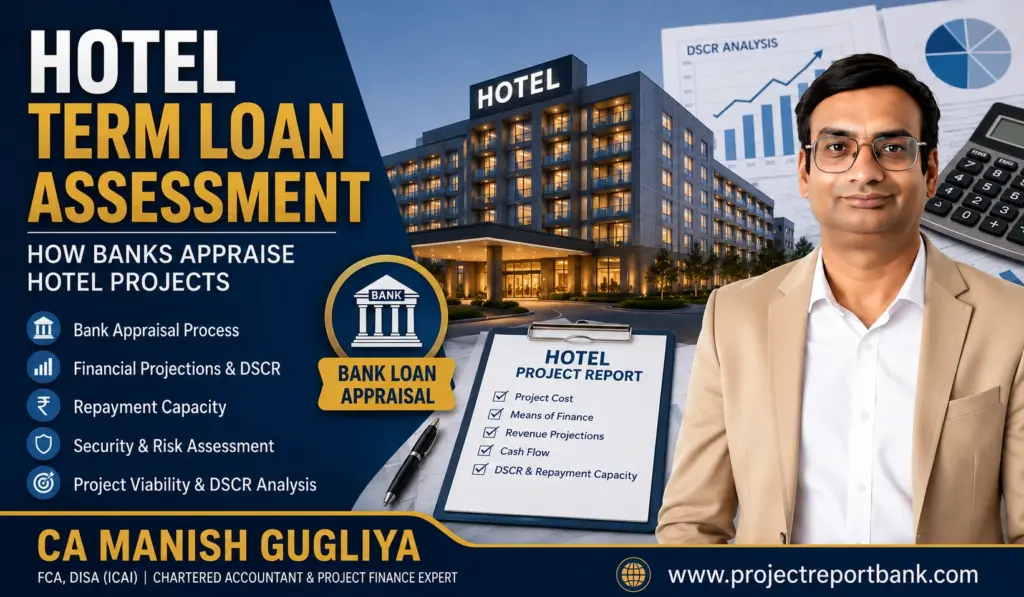
Key Takeaways
- Banks appraise a hotel term loan primarily on projected cash flows – occupancy, ARR, RevPAR, EBITDA, and DSCR – rather than relying solely on land value, collateral, or total project cost.
- Realistic financial projections, sensible project cost estimates supported by quotations, and adequate promoter contribution form the backbone of any successful hotel loan appraisal.
- DSCR-based repayment capacity, appropriate loan tenure and moratorium aligned with the hotel’s ramp-up period, and rigorous sensitivity analysis are core elements banks examine during hotel project loan appraisal.
- Promoter credibility, hospitality experience, and the ability to sustain the hotel business during initial low-occupancy years carry significant weight in the evaluation.
- A well-prepared hotel DPR and CMA Data, ideally prepared by an experienced professional like CA Manish Gugliya, significantly improves clarity and speeds up discussions with banks and financial institutions.
Explore Hotel Bank Loan, Project Finance & Feasibility Guides
Explore our hotel finance guides covering bank loans, term loan assessment, DSCR, working capital, CMA Data, project cost, financial projections, feasibility, documentation and debt structuring.
Introduction – How Banks Really Look at a Hotel Project
Hotel financing is fundamentally different from financing most conventional businesses. Project finance for a hotel relies on future cash flows for viability, not just the current value of land or buildings. When a bank receives a proposal for a term loan to build, expand, or renovate a hotel, the central question is straightforward: can this hotel generate enough revenue and profit to repay the debt over the loan tenure?
Banks do not sanction a bank loan for hotel project merely because the promoter owns prime property, or because total project costs look impressive on paper. Security and collateral matter, but they are supporting factors. What truly drives the appraisal is whether the hotel business can realistically produce sustainable cash flows – after covering operating expenses, taxes, and capital maintenance – to service interest and principal repayments year after year.
The key hotel-specific drivers that shape this assessment include location, number of rooms, occupancy ramp-up assumptions, ARR (Average Room Rate), RevPAR (Revenue per Available Room), food and beverage revenue, banquet and event income, operating margins, project cost, means of finance, and the debt service coverage ratio (DSCR). Each of these is examined not in isolation, but as part of an interconnected financial model. As CA Manish Gugliya, a Chartered Accountant with hands-on experience in hotel project reports, DPRs, CMA Data, and hotel project finance documentation, I have seen firsthand how banks approach these proposals. This article explains, step by step, how banks appraise a hotel project before sanctioning a term loan – it is not a generic guide on how to obtain a hotel loan.
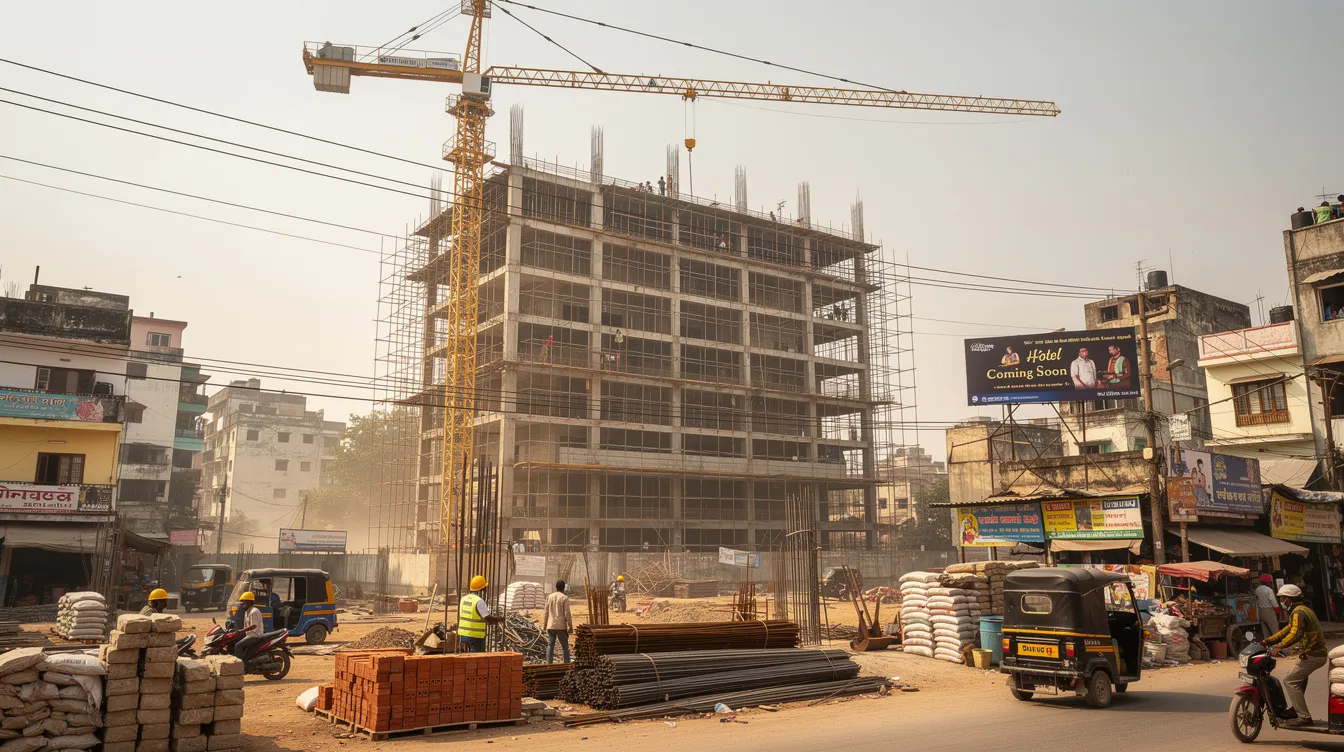
What Is Hotel Term Loan Assessment?
Hotel term loan assessment is the structured process by which banks and financial institutions analyse a hotel project’s feasibility and repayment capacity before granting a long-term loan. Assessing a hotel term loan requires a specialized approach compared to standard commercial lending because hospitality assets function simultaneously as real estate and a daily operating business. Revenue depends on occupancy, pricing power, and service quality – variables that shift with seasons, economic conditions, and competition.
Term loans in the hospitality sector are typically used for creation of fixed assets: land development, civil construction, rooms and interiors, furniture and fixtures, HVAC systems, kitchen and laundry equipment, elevators, electrical and fire-fighting systems, IT and hotel management systems, and pre-operative expenses. This is distinct from working capital limits, which fund day-to-day operations such as inventory, staff salaries, utilities, and short credit cycles once the hotel is operational.
The appraisal covers technical, commercial, and financial dimensions of the hotel project, including project appraisal parameters, promoter profile, and market viability. Hotel loans in India can have interest rates starting from approximately 1.25% per month for certain lender categories, though rates vary widely based on borrower profile, project risk, and lender policy. While the examples in this article relate primarily to India – covering public sector banks, private banks, and NBFCs – the underlying appraisal logic is broadly similar across lenders globally.
How Banks Appraise a Hotel Project – Overall Process
A typical hotel project loan appraisal follows a defined workflow. It begins with receipt of the proposal or DPR, followed by preliminary screening to check basic eligibility – promoter profile, project location, and whether the concept fits the lender’s sectoral appetite. If the proposal clears initial screening, the bank conducts a site visit, assesses the market, and then moves to detailed appraisal. The credit note is prepared, reviewed by the credit committee, and if satisfactory, a sanction is issued with terms captured in the loan agreement.
The key appraisal pillars include: promoter background and financial health, project concept and positioning (business hotel, resort, mid-scale, upscale), location and market study, detailed project cost, means of finance, implementation schedule, revenue and cost assumptions, projected profitability, cash flows, DSCR, security, and statutory approvals. Initial evaluations of hotel loans include analyzing location, competitive set, and market demand – these feed into every subsequent layer of analysis.
These elements are deeply interlinked. Location impacts occupancy; occupancy impacts revenue; revenue drives EBITDA and DSCR, which in turn guide the loan amount and repayment schedule. Many Indian banks use internal rating models and risk scoring designed specifically for hospitality projects. The DPR and CMA Data feed directly into these models, making the quality of documentation critically important.
Assessment of the Hotel Promoter
Banks begin hotel loan appraisal by judging the promoters. The operational expertise of the sponsor significantly impacts loan underwriting. Lenders look for hospitality experience, a track record in managing properties – ideally through economic cycles – and a clear understanding of hotel operations. Educational and professional background, existing businesses, and knowledge of the hospitality industry are all evaluated.
Lenders examine audited financial statements, ITRs, net worth statements, and existing debt obligations to assess whether the promoter can support the project during the initial low-occupancy years. A robust personal net worth enhances loan approval chances, particularly for greenfield projects where there is no operating history. A credit score above 750 is generally considered ideal for hotel loans by most lenders.
Bankers also review repayment history, CIBIL/credit bureau reports, banking behaviour, and relationship with existing lenders. For first-time hoteliers entering the hospitality sector, promoter quality and the ability to bring in and sustain own contribution become even more critical. Hospitality lenders specifically assess the sponsor’s track record in managing properties through economic cycles – a promoter with strong financials but no hospitality experience may strengthen the case by engaging a professional hotel operator or signing a management contract, thereby reducing perceived operational risk.
Hotel Location and Market Assessment
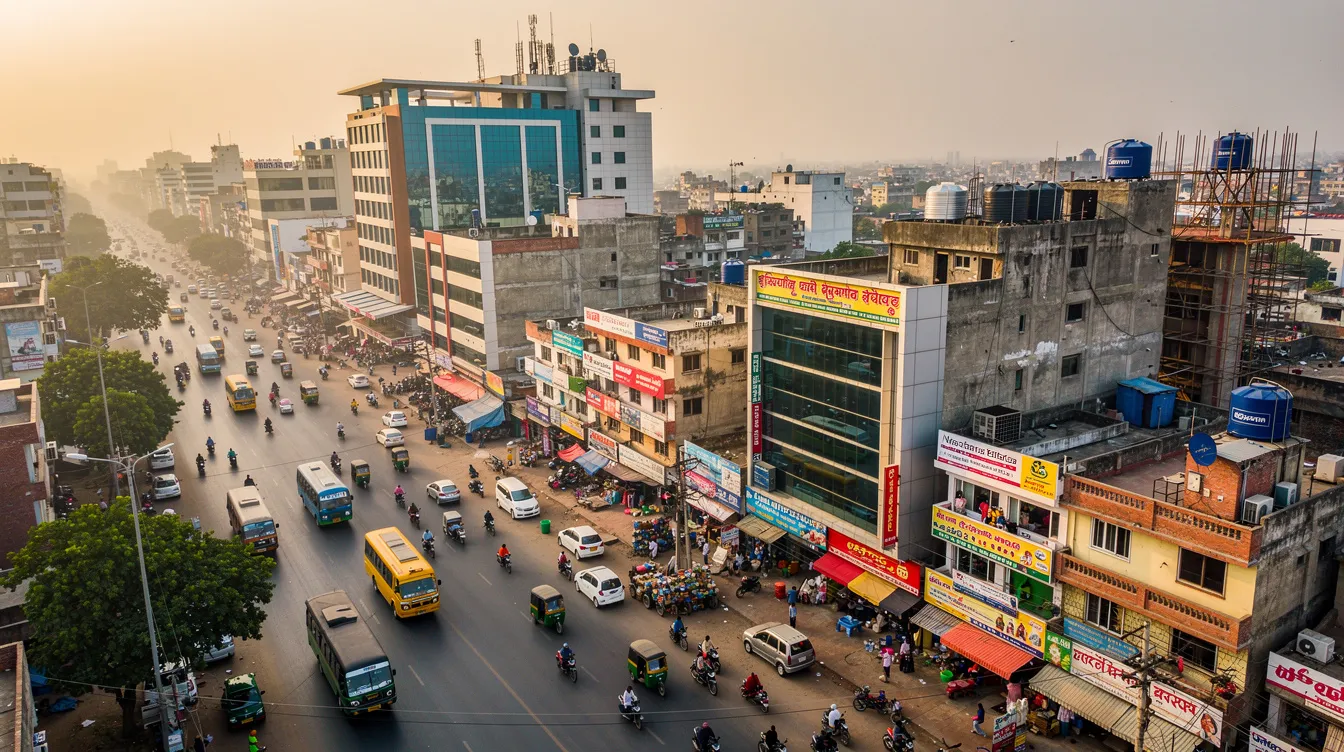
In the hotel business, location is often the single biggest driver of viability. Banks invest considerable effort in understanding demand drivers around the proposed site. Market viability requires detailed analysis of market conditions – not broad national averages, but micro-market specifics.
Typical demand segments include business and corporate demand near industrial areas, IT parks, and SEZs; tourist demand near heritage sites, beaches, and hill stations in the tourism sector; religious travel near pilgrimage centres; and medical or educational demand around hospitals and universities. Market dynamics such as supply and demand directly impact hotel revenues and occupancy, making this analysis central to the process.
Banks compare the proposed room inventory and category with existing and upcoming competing hotels, local occupancy trends, seasonality, and prevailing rate bands. Seasonality and demand volatility are key financing risks that lenders weigh carefully. If a market already has 500 rooms under construction while demand supports only 300 additional rooms, the growth outlook weakens.
A feasibility study is essential for assessing project viability. Overly optimistic assumptions – ignoring competition, upcoming supply, or the economic cycle – can derail hotel term loan assessment entirely. The DPR should attach a concise market study covering catchment analysis, competitor mapping, indicative occupancy and ARR benchmarks, and commentary on future room supply.
Assessment of Hotel Project Cost
Banks scrutinise total project costs across clearly defined heads: land (if financed), site development, building and civil works, rooms and interiors, furniture and fixtures, plant and machinery (kitchen, laundry, HVAC, DG sets, elevators), IT and hotel management systems, pre-operative expenses, professional fees, interest during construction (IDC), contingency, and margin for working capital where applicable.
Lenders cross-check cost reasonableness using benchmark cost-per-key ranges for the relevant city and segment, engineers’ estimates, and quotations from reputed suppliers. Industry consultants such as NOESIS provide illustrative ranges – for a mid-scale hotel, land cost may be 15–25% of total development cost, civil and structural works around 35–40%, FF&E and interiors approximately 12–16%, and MEP services 12–15%. Lenders typically require capital reserves for furniture, fixtures, and equipment in hotel financing, recognising that FF&E has a shorter economic life and needs periodic replacement. Franchise agreements often mandate periodic physical upgrades to maintain property standards, which further justifies these reserves.
The risk of underestimation is real – it leads to cost overruns, funding gaps, and a weakened DSCR. Overestimation is equally problematic, inflating the capital base and creating suspicion about cost padding. Lenders prefer a realistic contingency provision – typically a modest percentage of hard costs – to accommodate inflation and scope changes.
Consider a practical illustration: for an 80-room mid-scale hotel in a Tier-2 Indian city, a realistic cost per key of ₹30 lakh results in a project cost of approximately ₹24 crore (excluding land). If a DPR assumes only ₹18 lakh per key for the same location and quality, the total drops to ₹14.4 crore – a ₹9.6 crore gap that would surface during construction, creating exactly the kind of shortfall banks want to avoid.
Means of Finance and Promoter Contribution
Hotel project finance typically blends promoter contribution (equity, internal accruals, and acceptable unsecured loans from identifiable sources), term loan from banks, and sometimes subsidies or soft loans from state tourism incentive schemes, all captured in a “means of finance” table. Debt financing includes loans from banks or lending institutions, while equity financing involves offering ownership stakes to investors. In some cases, mezzanine financing – which combines elements of both debt and equity – or investments from angel investors may also feature in the financing structure.
Banks examine whether sources are firm and transparent. Documented own funds, sale of another asset, internal accruals from existing businesses, or clearly identified unsecured loans are acceptable. Risk distribution among participants is crucial in project finance – the lender wants to know that the promoter has meaningful skin in the game. Hospitality loans generally have lower leverage due to increased volatility in the sector, which is why promoter contribution norms tend to be higher than for some other commercial projects.
The importance of a balanced debt–equity structure cannot be overstated, though acceptable norms differ among banks, schemes, and hotel risk profiles. Timing matters too: lenders often insist that a substantial portion of promoter funds be injected upfront or at least proportionately before major term loan disbursements begin. The DPR should clearly reconcile total project cost with means of finance and show no unexplained gap funding. Green financing options, which support projects with positive environmental benefits, are also gaining attention where hotels incorporate energy efficiency, solar, or water reuse systems.
Hotel Revenue Assessment
For hotel term loan assessment, lenders deeply analyse revenue build-up by segment. Net operating income and RevPAR are critical metrics for hotel financing analysis, and each revenue stream is tested against market reality.
Room revenue is calculated as: Available Room Nights × Occupancy Rate × ARR. For example, an 80-room hotel has 29,200 available room nights per year. At 60% occupancy and an ARR of ₹4,000, annual room revenue works out to 29,200 × 0.60 × ₹4,000 = ₹7.01 crore. Banks expect a realistic ramp-up – perhaps 50% occupancy in year one, rising to 65–70% by year three.
Food and beverage revenue is typically projected as a percentage of room revenue or as a per-occupied-room spend, depending on the business model. Whether the hotel operates an all-day dining restaurant, a specialty outlet, or a limited-menu coffee shop meaningfully affects projections. Banquet and event revenue – weddings, conferences, corporate events, and social functions – plays a particularly important role in Indian Tier-2 and Tier-3 cities, where banquet-driven hotels can generate significant income, though this revenue stream is sensitive to local culture, seasonality, and competition.
Other revenue sources include spa, transport, laundry, mini-bar, recreational facilities, and commissions. Lenders analyze historical seasonal cash flow fluctuations when assessing hotels, so assumptions must correspond with the hotel’s category, location, and facilities rather than being arbitrary high percentages.
Occupancy, ARR and RevPAR Assessment
Three metrics sit at the heart of hotel revenue appraisal. Occupancy rate is the percentage of available room nights sold: Rooms Sold ÷ Rooms Available. Average Room Rate (ARR or ADR) equals Room Revenue ÷ Rooms Sold. Revenue per Available Room (RevPAR) equals Room Revenue ÷ Rooms Available, or equivalently, Occupancy × ARR.
Evaluation of RevPAR includes both average daily rate and occupancy rate – it captures how well a hotel fills rooms and at what price. For example, at 70% occupancy and an ARR of ₹4,500, RevPAR works out to ₹3,150. If occupancy drops to 60% with the same ARR, RevPAR falls to ₹2,700 – a 14% decline from just a 10-percentage-point drop in occupancy.
Bankers compare projected occupancy and ARR with current performance of comparable hotels, local market benchmarks, and third-party feasibility reports. Projections with immediate 75–80% occupancy in the first year of a greenfield hotel, or an ARR far above existing competition, usually trigger scepticism. Such assumptions are typically revised downward during the appraisal, sometimes significantly.
Operating Expenses and EBITDA Assessment
Main operating cost heads in hotels include salaries and wages, staff welfare, power and fuel, water, food and beverage cost, repairs and maintenance, housekeeping and laundry, marketing and OTA commissions, administration and general expenses, insurance, licence fees, and property-related costs. Operational costs can significantly impact debt obligations, so banks examine each line item carefully.
Lenders compare cost ratios against industry benchmarks – for example, payroll as a percentage of total revenue, energy cost per room, or food cost as a percentage of F&B revenue – using data from comparable hotels or industry reports. EBITDA (Earnings before Interest, Tax, Depreciation, and Amortisation) is central to judging term loan repayment capacity because it represents the cash operating surplus available before financing costs and capital charges.
Consider a simple bridge: if a hotel generates ₹10 crore in annual revenue with ₹6.5 crore in operating expenses, EBITDA is ₹3.5 crore (35% margin). Now, if revenue drops just 5% to ₹9.5 crore but fixed costs remain largely unchanged at ₹6.3 crore, EBITDA falls to ₹3.2 crore – an 8.6% decline from only a 5% revenue drop. This operating leverage effect is precisely why banks are cautious about revenue assumptions.
Hotel Financial Projections and Cash Flow
Detailed 7–10 year financial projections, aligned with loan tenure, are standard in hotel project loan appraisal. These include projected profit and loss account, balance sheet, and cash flow statement. Banks expect projections to be internally consistent: occupancy and ARR assumptions must feed room revenue, which drives F&B and other income, while costs must scale realistically with occupancy and inflation.
Depreciation, interest cost, and tax impact net profit differently from cash accrual. Lenders focus more on cash accrual for debt servicing than on accounting profit alone. Proper cash flow statements should capture hotel construction period outflows, moratorium-period interest, and the timing of principal repayment – all linking to bankable DSCR numbers. CMA Data prepared alongside these projections helps structure the information in formats that credit officers are accustomed to evaluating.
DSCR and Hotel Loan Repayment Capacity
The Debt Service Coverage Ratio is defined as Cash Available for Debt Service ÷ Total Debt Service (interest plus principal). It is arguably the most important metric in hotel term loan assessment. A higher DSCR is often required for hotels than for traditional commercial properties, reflecting the sector’s inherent revenue volatility. Lenders typically seek a minimum DSCR of 1.25x to 1.40x for hotel loans, with many banks preferring a debt-service coverage ratio in the range of 1.4 to 1.7 for hotel projects, depending on the risk profile.
Banks assess both yearly DSCR and average DSCR across the loan tenure. Weak DSCR in early years – which is common given the ramp-up period – may call for a longer moratorium or a restructured repayment schedule rather than an outright rejection.
Here is a simplified example: suppose a hotel’s stabilised EBITDA is ₹3.5 crore, and after taxes and necessary non-debt outflows, cash available for debt service is ₹3.0 crore. If that year’s interest plus principal repayment totals ₹2.2 crore, the DSCR is 3.0 ÷ 2.2 = 1.36x – acceptable but not strongly cushioned. If occupancy drops and EBITDA shrinks to ₹2.5 crore, cash available falls to ₹2.0 crore, pushing DSCR down to 0.91x – below the threshold. Default can occur if repayment schedules are not followed, so banks want assurance that even under stress, the hotel maintains adequate coverage. Promoters should prepare projections ensuring that even with slightly lower occupancy, the DSCR does not collapse.
Determining the Appropriate Term Loan Amount
Banks do not simply finance a fixed percentage of project cost. They triangulate between eligible project cost, promoter contribution, security value, and DSCR-based repayment capacity. Some elements – like land – may be partially financed or only considered as collateral rather than as part of “eligible cost” for the loan. Loan-to-Value ratios for hospitality loans typically range from 55% to 65%, though specific norms vary.
If projected cash flows support only a limited debt servicing capacity, banks may sanction a lower loan amount than requested, even where collateral is strong. For example, a project costing ₹30 crore with 40% promoter funds (₹12 crore) might still receive only ₹15–16 crore as a term loan – not the full ₹18 crore requested – because the hotel’s projected cash flow does not justify higher EMIs. This is a critical insight for entrepreneurs preparing their business plan: the loan is ultimately sized by repayment capacity, not just by investment need.
Loan Tenure, Moratorium and Repayment Schedule
Banks decide tenure and moratorium based on the construction period, expected date of commencement of commercial operations (DCCO), and the time needed for occupancy to stabilise. For mid-scale hotels in India, moratorium periods typically cover construction plus 6–24 months of operations, followed by equated or structured instalments. Longer loan tenures typically result in lower interest rates in many cases, though total interest outgo increases.
Overly short tenure or early repayment start can severely strain cash flows, especially in the first 2–3 years when occupancy is building up. Stretching tenure from, say, 10 years to 12 years on a ₹15 crore loan at 10.5% reduces the annual principal component, improving DSCR during critical ramp-up years – even if the borrower pays somewhat more in total interest over the life of the loan. This trade-off is a practical strategy that experienced project management advisors help borrowers evaluate.
Break-Even Analysis for Hotel Projects
Operating break-even in the hotel context is the level of occupancy and average rate at which total revenue covers all operating and fixed costs before debt servicing. Break-even occupancy can be approximated as: Fixed Costs ÷ (Contribution per Available Room Night).
For example, if annual fixed costs are ₹4.5 crore and each occupied room night contributes ₹1,800 after variable costs, the break-even occupancy for a 100-room hotel is ₹4.5 crore ÷ (100 × 365 × ₹1,800) = approximately 68%. The margin of safety – the difference between projected occupancy and break-even occupancy – tells bankers how vulnerable the hotel is to downturns or off-season dips. A healthy cushion here indicates less risk and strengthens the case for access to credit support.
Sensitivity Analysis in Hotel Loan Appraisal
Stress testing for hotel loans simulates adverse scenarios to evaluate financial resilience. Banks or financial consultants test key assumptions – primarily occupancy, ARR, project cost, the interest rate environment, and operating expenses – to see how the hotel performs under pressure.
For example, if base-case occupancy is 70% and ARR is ₹4,500, a sensitivity scenario might test 60% occupancy and ARR of ₹4,000. If this drops EBITDA from ₹3.5 crore to ₹2.2 crore and pushes DSCR from 1.4x to below 1.0x, the project’s resilience is weak. Cost escalation of 10–15% during construction is another scenario that affects IDC and total capital employed. A project that remains cash-positive and maintains reasonable DSCR even under stress is viewed as fundamentally stronger. The DPR should summarise at least two to three sensitivity cases instead of presenting only one optimistic base case.
Security and Collateral Assessment
Primary security for hotel term loans typically includes mortgage of land and building, and hypothecation of financed plant and machinery, furniture and fixtures, and other movable assets. Hotel loans can be secured by real estate and equipment, making this a multi-layered security structure. The ability to service debt is assessed through both cash flow analysis and collateral valuation.
Collateral security, where required, may include additional properties, personal guarantees of promoters, corporate guarantees of group entities or partners, and assignment of hotel revenues or insurance policies. Banks obtain valuation reports from approved valuers and insist on adequate insurance coverage. Loan-to-Value is one parameter – typically 55–65% for hospitality – but not the sole determinant.
Strong collateral cannot fully compensate for weak cash flow or poor DSCR. In most cases, lenders must be comfortable with both the security and the hotel’s repayment capacity before sanction.
Statutory Approvals and Documentation
Banks look for clear land title, building plan sanctions, local authority permissions, fire NOC, pollution or PCB clearance where applicable, liquor licence where relevant, trade licence, GST registration, electricity and water connections or permissions, and hotel classification if planned. Financial and KYC documentation includes promoter PAN and Aadhaar, company or LLP incorporation papers, partnership deeds, MOA/AOA, past financial statements, income tax returns, bank statements, and net worth statements.
Quotations, BOQs, and contractor agreements support project cost validation. A well-structured hotel DPR and financial projections support feasibility claims. Exact approvals vary by state, local body, hotel size, and the nature of the hotel project – these must be checked against applicable regulations and the specific bank’s policy at the time of proposal submission.
Role of DPR in Hotel Term Loan Assessment
A hotel Detailed Project Report should contain the project concept, market and location study, detailed project cost, means of finance, implementation schedule, operating assumptions, and full financial projections with DSCR. It connects the logical chain: Concept → Market Potential → Room Inventory and Facilities → Project Cost → Means of Finance → Revenue and Expense Assumptions → Profitability → Cash Flow → DSCR → Repayment Capacity.
Banks rely heavily on the DPR during internal credit note preparation. Vague or overly optimistic DPRs lead to queries, delays, and downward revision of terms. Industry experience confirms that most hotel loan rejections happen because the file is built like a standard business loan without factoring in seasonality, ramp-up delays, and revenue-linked repayment structures. In my practice, I prepare realistic, bank-oriented DPRs and CMA Data that align with typical credit appraisal formats – without claiming any guarantee of loan sanction.
Common Reasons Hotel Loan Proposals Face Difficulty
The most common problems observed during hotel loan appraisal include unrealistic occupancy or ARR assumptions, underreported project costs, weak promoter contribution, heavy dependence on unsecured loans with unclear sources, and incomplete land title or statutory approvals. Inadequate hotel operations planning is a major financing risk that banks flag early.
Technical gaps are equally damaging: inconsistent financial projections where room nights do not match occupancy, EBITDA does not tally with the cash flow statement, or DSCR is miscalculated. Missing or outdated market studies and generic template DPRs are frequently rejected. Sometimes the project is fundamentally sound, but documentation or presentation is poor, leading to reluctance at the credit committee level. These issues can often be rectified before submission – by revisiting assumptions, phasing the project, improving equity contribution, or restructuring the loan tenure and moratorium to meet specific goals.
Illustrative Hotel Term Loan Assessment Example
The following table presents a purely illustrative example of a 70-room mid-scale business hotel in an Indian Tier-2 city, using realistic 2025–2026 assumptions. This is for educational purposes only.
| Parameter | Illustrative Value |
|---|---|
| Number of rooms | 70 |
| Total project cost (excl. land) | ₹21.0 crore |
| Promoter contribution | ₹8.4 crore (40%) |
| Proposed term loan | ₹12.6 crore |
| Debt–equity structure | Approx. 60:40 |
| Stabilised occupancy (Year 3) | 68% |
| ARR (Year 3) | ₹4,200 |
| Annual room revenue (Year 3) | ₹7.3 crore |
| Total revenue (incl. F&B, banquets) | ₹10.2 crore |
| EBITDA | ₹3.6 crore |
| Loan tenure | 12 years |
| Moratorium | 2 years (construction + initial ops) |
| Indicative average DSCR | 1.45x |
A banker reviewing this page of numbers would note that the DSCR of 1.45x provides reasonable comfort under base-case assumptions. However, the credit officer would immediately test what happens if occupancy settles at 58% instead of 68%, or if ARR stays at ₹3,800. If DSCR drops below 1.2x under such scenarios, the bank might recommend a lower loan amount or longer tenure. The analysis of the balance sheet, revenue build-up by year, and cash flow waterfall would complete the evaluation. Brand and flag affiliation can influence cash flow stability for hotel investments, so a management tie-up with a known operator would also be viewed favourably.
Actual sanctions depend entirely on specific bank policies, risk appetite, and up-to-date market conditions.

Practical Tips Before Submitting a Hotel Loan Proposal
Verify total project cost with quotations and realistic per-key benchmarks for the relevant city and segment. Ensure the means of finance is fully tied up – avoid over-reliance on unsecured loans without clear agreements. Validate occupancy and ARR assumptions with local consultants, operators, or industry reports and advisory firms, and prepare at least base, conservative, and optimistic scenarios.
Calculate DSCR year-wise and adjust tenure, moratorium, or the loan amount so that DSCR remains comfortable, especially in the first three to five years. Ensure that the business plan reflects the benefits of any capital investment, subsidy, or scheme the project seeks to access. Engaging a professional experienced in hotel project finance and CMA Data – such as a Chartered Accountant familiar with bank loan appraisal strategies – can materially improve the quality and consistency of projections.
Frequently Asked Questions
The following FAQ addresses common practical queries that remain even after understanding the main hotel term loan assessment process. Answers are general in nature – exact requirements vary by bank, scheme, and project. No response should be treated as a universal rule.
How do banks treat initial operating losses in hotel term loan appraisal?
Banks expect hotels to incur lower occupancy and sometimes accounting losses in the first one to two years. What matters is whether projected cash accrual becomes positive within a reasonable period and whether DSCR trends upward as the hotel stabilises. DPRs should explicitly show ramp-up years with gradually increasing occupancy rather than assuming full stabilised performance from day one. This growth trajectory gives lenders confidence in the development of the property over time.
Can renovation or upgradation of an existing hotel also get a term loan?
Many lenders provide term loans for renovation, refurbishment, room addition, or brand conversion, subject to viability and security. For such projects, past performance data provides valuable credit support, and post-renovation projections are tested against the hotel’s historical key accounts. Project cost heads shift more towards interiors, FF&E, and systems rather than land and civil construction.
Does having a branded operator or franchise improve hotel loan appraisal?
A strong brand affiliation can improve revenue predictability for hotels and strengthen the proposal by enhancing perceived occupancy potential, ARR credibility, and operational standards. However, banks still independently verify projections and do not rely solely on brand strength. The agreement terms, operator fees, and management contract structure must be factored into the financial projections accurately.
Can a hotel project without owned land get a bank loan?
Some banks consider projects on long-term leasehold land or management contracts if the lease terms are clear, sufficiently long, and legally robust. The security structure changes accordingly, and such cases are more sensitive – usually requiring stronger cash flow comfort and thorough legal scrutiny. Freehold ownership generally involves less risk from the lender’s perspective.
Is it necessary to have a Chartered Accountant prepare the DPR and projections?
Regulations may not always mandate a CA-prepared DPR. However, banks generally take more comfort when financials and CMA Data are prepared or vetted by experienced professionals who understand project appraisal formats and banking expectations. Involvement of a professional like CA Manish Gugliya can help align assumptions, ratios, and documentation with what term loan appraising officers typically expect to see – improving clarity without guaranteeing any specific outcome.
Continue Exploring Our Hotel Project Finance & Bank Loan Guides
Continue with our detailed hotel finance resources covering bank loan appraisal, project cost, CMA Data, working capital, DSCR, financial projections, feasibility, documentation and loan repayment structuring.
Conclusion – Building a Bankable Hotel Term Loan Proposal
Successful hotel term loan assessment depends on a balanced combination of realistic project cost, adequate and well-timed promoter contribution, defensible revenue assumptions backed by genuine market data, sustainable operating margins, healthy cash flows, and acceptable DSCR. Collateral and property value support the proposal, but they do not replace the need for strong projected repayment capacity in hotel project loan appraisal.
Hotel promoters and entrepreneurs in India should treat hotel project finance as a structured exercise in project appraisal and documentation, not merely a form-filling activity. Every assumption – from occupancy to ARR to cost per key – will be questioned, tested, and benchmarked. The investment of time and effort in preparing a credible, bank-ready proposal pays significant dividends during the appraisal process.
CA Manish Gugliya assists entrepreneurs and businesses with hotel DPRs, CMA Data, financial projections, and bank-oriented documentation to help borrowers present their bank loan for hotel project in a clear, professional, and appraisal-friendly manner. No guarantee of loan sanction is implied – but a well-prepared proposal is always the strongest foundation for a constructive conversation with any lender.