

Key Takeaways
- A bank loan for a ghee manufacturing plant in India is typically structured as promoter equity plus a term loan for fixed assets plus working-capital limits covering milk, cream, butter and packaging inventory.
- Banks do not lend based on machinery quotations alone – they appraise a complete, bankable DPR covering plant capacity, ghee manufacturing process, raw material requirements, revenue model, DSCR and loan repayment capacity.
- Project cost for a commercial ghee manufacturing unit in the 5–20 TPD range depends heavily on automation level, product mix (ghee, butter, AMF) and land-building scenario, and must be matched with realistic cash flows.
- DSCR, working-capital cycle and break-even capacity utilisation are as important as headline profitability when a bank evaluates term loan and working capital for a ghee, butter and milk-fat processing plant.
- As CA Manish Gugliya, I assist promoters with Detailed Project Reports, financial projections, CMA Data, project cost and means-of-finance structuring so that their dairy processing plant bank loan proposal is technically sound and financially defensible.
Introduction – Bank Loan for Ghee Manufacturing Plant
Setting up an industrial ghee manufacturing plant, butter plant or milk-fat processing plant in India requires significant capital investment – spanning land, factory building, ghee boilers, cream separators, continuous ghee lines, boilers, refrigeration and food-grade utilities. India produces over 3 million tonnes of ghee annually, India’s dairy market is valued at approximately ₹13 lakh crore, and the global ghee market is projected to reach ₹5 lakh crore by 2027. The rising demand for desi ghee, organic ghee and clarified butter across Indian cuisine, sweet shops and export markets makes this a profitable business segment – but only when financed and executed correctly.
In my experience, most commercially viable projects are financed through a mix of promoter contribution, term loan for fixed assets and separate working-capital finance for milk, cream, butter and packaging inventory. A detailed project report is necessary to obtain a bank loan for a ghee manufacturing plant – the difference between collecting a few machinery quotations and preparing a structured, bankable DPR is often the difference between a smooth sanction and months of back-and-forth with the bank’s credit team.
This article is written for promoters, dairy entrepreneurs, MSMEs and investors planning ghee, butter and milk-fat processing plants and seeking institutional project finance in India. It covers total project cost, means of finance, DSCR, working-capital cycle, break-even analysis and loan repayment capacity – insights drawn from practical project-finance experience.
Understanding Project Finance for Ghee, Butter & Milk Fat Processing Plants
Ghee manufacturing plant project finance refers to long-term, project-specific funding where banks primarily evaluate project viability, cash flows and security rather than just the borrower’s existing business. The funding structure depends on the exact project configuration:
- Greenfield ghee manufacturing plant – for example, a new 10 TPD ghee and 5 TPD table butter unit
- Expansion of an existing dairy processing plant to add a butter or AMF line
- Modernisation or automation of manual ghee kettles into a continuous ghee production line
- Capacity enhancement to meet export demand or large B2B contracts
Ghee manufacturing plant finance often also covers table butter, white butter, industrial butter, anhydrous milk fat and other dairy product lines processed on shared equipment. From a bank appraisal perspective, project finance for a dairy processing plant in India is assessed on technical feasibility, market feasibility and financial feasibility – including realistic assumptions on sourcing, selling prices and achievable operating margins.
While preparing the DPR and financial projections, promoters must clearly categorise which components belong to the ghee manufacturing unit, which to butter or AMF, and which are common utilities, because this impacts both project cost allocation and term-loan eligibility.
Components of Total Project Cost
Lenders analyse the total project cost in detail before deciding the loan quantum for an industrial ghee plant project loan. Both underestimation and overestimation hurt bankability. Typical major cost heads for a commercial ghee, butter and milk-fat plant include:
- Land purchase or long-term lease
- Site development, boundary wall, internal roads and drainage
- Factory building and food-grade processing block – raw milk reception, cream room, butter room, ghee boiler room, packing hall, cold storage
- Utilities block – boiler room, refrigeration plant, electrical substation, water treatment, ETP and CIP systems
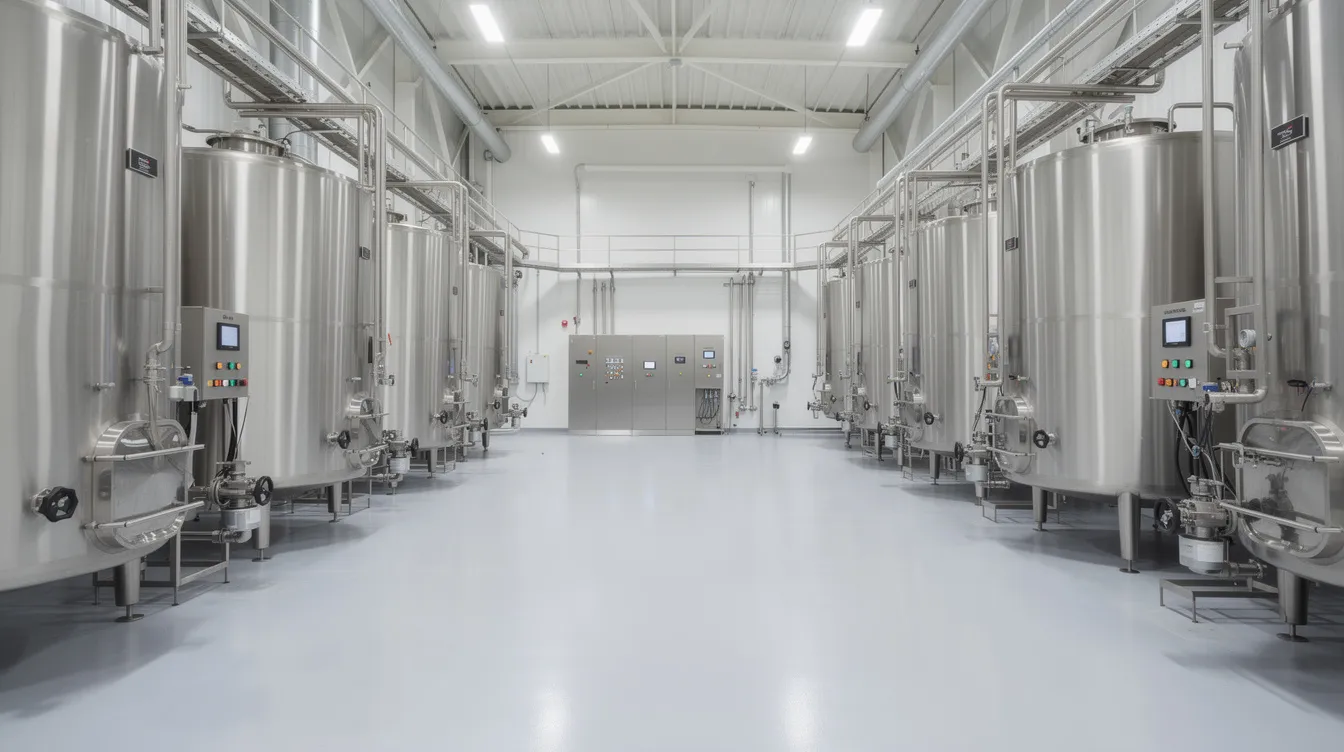
- Core milk processing machinery – cream separators, butter churns, ghee boilers, continuous ghee-making systems, clarification and filtration units, AMF equipment if applicable
- Packaging machinery for tins, pouches and jars, date coding and secondary packing
- Material-handling equipment, cold rooms, chillers and insulated storage
- Electrical installations, control panels, wiring and process automation
- Quality control and microbiology laboratory – testing equipment for fat, moisture, FFA and microbiological load
- Pre-operative expenses – consultancy, design, interest during construction, company formation, initial manpower training
- Contingencies for price variations and minor design changes
- Margin money for working capital to support the first full operating cycle
Detailed cost break-ups and typical cost ratios are discussed in the dedicated resource on ghee and butter plant project cost. Banks cross-check project cost not only with quotations but also with benchmark costs from similar dairy projects they have funded, so the capital cost figures in the DPR must be realistic for the selected capacity and technology level. Setting up a commercial ghee manufacturing plant can take 12 to 18 months depending on land clearances, building construction and machinery procurement timelines.
Project Means of Finance and Dairy Plant Debt-Equity Ratio
Project means of finance describes how the total project cost will be funded – through promoter contribution, term loan, internal accruals and eligible subsidies. Banks closely examine this structure for any ghee plant bank finance proposal. Typical components include:
- Promoter’s equity or internal accruals from an existing business
- Unsecured loans from promoters or group concerns, subject to each bank’s policy on quasi-equity
- Term loan from banks or financial institutions for land, building and machinery
- Working-capital limits (cash credit, WCDL) for inventories and receivables
- Subsidies and incentives – schemes such as PMEGP (offering 25–35% capital subsidies for ghee manufacturing), the PMFME scheme (providing 35% capital subsidy for upgrading micro food processing enterprises), NABARD support for dairy processing units with subsidised interest rates, and the Animal Husbandry Infrastructure Development Fund which supports dairy processing infrastructure with interest subvention
Promoters typically need to bring in 10% to 25% of the total project cost as margin money. The dairy plant debt-equity ratio should be designed so that debt remains sustainable given projected cash accruals. A slightly higher equity contribution can strengthen loan eligibility. For existing profitable dairies undertaking expansion, part of the project cost may be funded from retained earnings, which banks view positively. Promoters should not simply maximise the sanctioned term loan – instead, structuring means of finance should start from projected DSCR, repayment capacity and risk tolerance.
Term Loan for Ghee Manufacturing Plant – Eligible Assets & Structure
A term loan for a ghee manufacturing plant typically finances long-lived fixed assets, repaid over 5–10 years (up to 15 years in certain bank policies) with a suitable moratorium during construction and stabilisation. Term loans are typically used for long-term capital expenditure in manufacturing. Banks commonly require a minimum margin for project financing – for example, Indian Bank’s food and agro-processing policy specifies approximately 25% margin for new machinery and 30% for landed property and buildings.
Common assets considered for term-loan financing include:
- Land and site development (where permitted by the bank)
- Factory and processing building, cold-storage block, utility block
- Process machinery – ghee boilers, continuous ghee plants, cream separators, butter churns, AMF systems, clarification and filtration systems
- CIP systems, boilers, refrigeration, air compressors and electrical substation
- Packaging machinery, labelling and coding equipment
- ETP, water treatment, QC laboratory equipment and material-handling equipment
The extent of term-loan coverage and margin requirement varies by institution, region and borrower profile. The repayment schedule is finalised after reviewing project cash-flow projections, planned moratorium, capacity ramp-up and sensitivity to milk-fat prices. Collateral security – such as mortgage of immovable assets or additional properties – and primary security (charge on fixed assets and plant machinery) play an important role in the assessment, though viable cash flows remain the primary criterion.
Working Capital Finance for Ghee, Butter & Milk-Fat Processing
Working capital loans are essential for day-to-day operations in ghee manufacturing – covering milk and cream procurement, butter stocks, packaging material, power, labour and credit to customers – separate from the term loan. Key working-capital drivers include:
- Procurement of raw milk, cream and butter, with seasonal peak requirements during flush seasons
- Storage of cream, white butter and ghee in cold storage and ambient warehouses
- Inventories of packaging materials – tins, PET jars, pouches, cartons, labels and consumables
- Finished-goods stock to service distributors, institutional buyers and export demand
- Trade receivables from distributors, wholesalers, modern trade and B2B customers
Banks structure cash credit or working-capital limits often assessed on a projected sales basis, with margins of 20–25% on stocks and book debts. The Working Capital Requirement for Ghee & Butter Manufacturing Plant page covers detailed norms and an example operating cycle. In many projects, butter plant working capital and ghee working capital are combined into a single cash-credit facility, but the DPR should still explain separate inventory norms for each product category for appraisal transparency.
How Banks Appraise a Ghee Manufacturing Plant Project
In my experience preparing ghee and butter plant loan proposals, banks follow a structured appraisal process covering promoter, project, financials, security and risk factors before sanctioning any dairy processing plant bank loan. A bankable project report should detail the sourcing of raw materials and sales strategies, and a project report includes 14 mandatory sections that banks typically evaluate. Banks generally examine:
- Promoter background, dairy industry experience and track record
- Promoter net worth, credit history and banking conduct
- Project location, access to milk sheds and labour availability
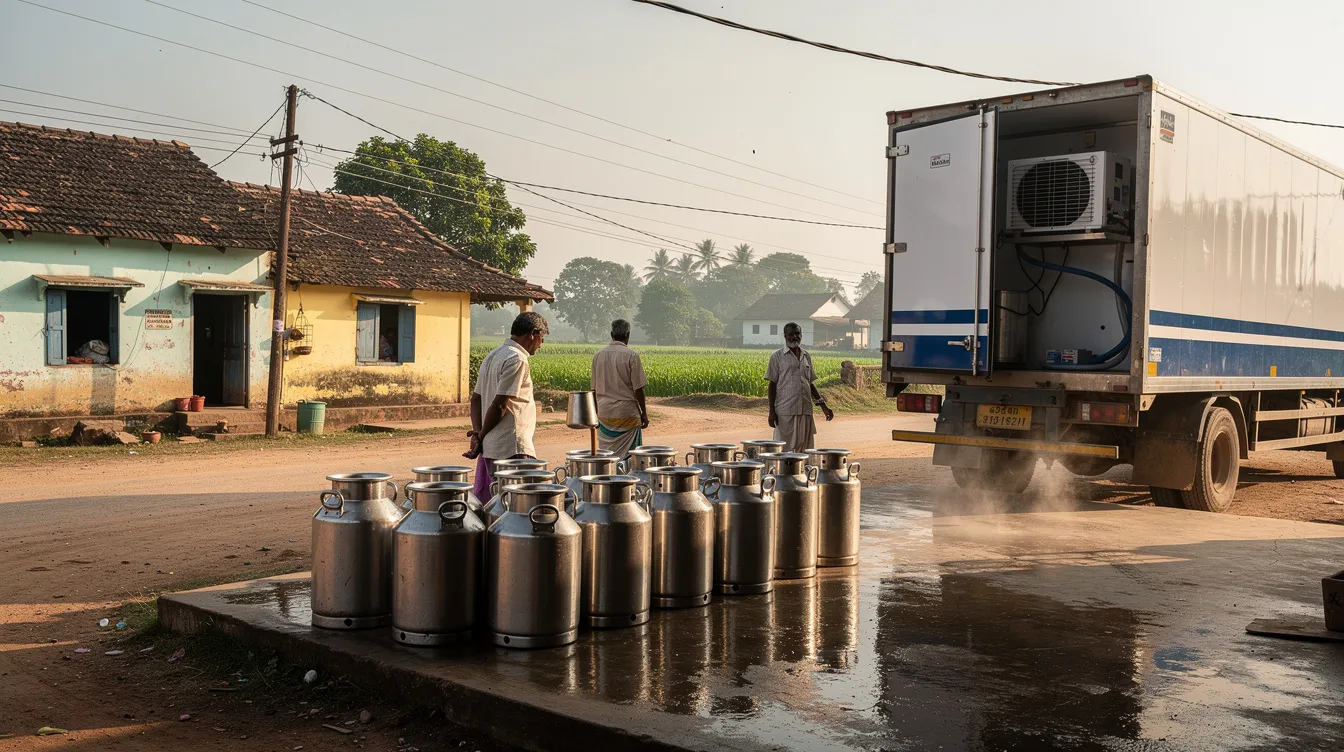
- Raw material availability and procurement strategy – milk collection network, dairy cooperatives, dairy farmers
- Technology selection, dairy machinery supplier credentials and after-sales support
- Installed production capacity, realistic capacity-utilisation ramp-up and bottlenecks – a ghee plant typically needs an annual production capacity of 5,000–10,000 MT for commercial viability
- Product mix between ghee, table butter, industrial butter, AMF
- Selling prices, customer segments, retail distribution, competition
- Projected gross margins, EBITDA, cash accruals over the loan tenure
- Working-capital cycle, debtor norms and customer concentration risk
- Proposed term-loan amount, repayment schedule and projected DSCR
- Primary and collateral security – land/building mortgage and third-party properties
- Statutory approvals – FSSAI licence is mandatory for ghee manufacturing units in India, along with pollution control and factory licence
- Sensitivity of margins to raw milk and milk-fat price fluctuation
A well-prepared ghee plant project report for bank loan should pre-empt these questions with structured explanations and reconciled numbers. For new entrepreneurs without prior dairy experience, banks may place additional emphasis on hiring experienced plant-management staff and quality assurance teams. No DPR or consultant can guarantee approval – final decisions rest with each bank’s credit committee.
Capacity Planning, Product Mix & Revenue Strategy
Correct capacity planning and product mix selection are central to project viability and bank comfort. A ghee manufacturing plant may produce:
- Ghee – cow, buffalo milk variants, A2, organic ghee for the growing ghee market
- Table butter and white butter for branded retail and institutional channels
- Industrial butter for bakery and food manufacturing clients
- AMF and milk-fat blends for B2B and export customers
- Value-added fat-rich products where technically feasible
Detailed frameworks for deciding ton-per-day capacity and proportion of ghee versus butter or AMF are provided in Ghee, Butter & Milk Fat Plant Capacity Planning & Product Mix. Banks look for consistency between installed capacity, raw milk availability, planned fat recovery, product mix and sales volumes. Fifty-five percent of consumers now prefer snacks made with natural ingredients, which is driving market growth for premium ghee variants. Revenue strategy should cover geographic coverage, brand positioning, institutional sales and private-label opportunities, detailed further in the resource on revenue model and product mix for a ghee processing plant.
Raw Material & Milk-Fat Procurement Planning
From a bank’s risk perspective, sustainable and cost-effective raw milk, cream and butter procurement is one of the most critical assumptions in any ghee manufacturing plant DPR. Raw materials account for 85–90% of total operating expenses in ghee production, making procurement planning decisive for viability. Key raw materials and procurement factors include:
- Availability of raw milk in the catchment area – volumes, average fat percentage, buffalo milk versus cow milk
- Choice between direct milk procurement through milk collection centres, cream procurement from dairies, or white-butter purchase – each route involves a different cream method and yield profile
- Seasonality of milk production and its impact on capacity utilisation
- Procurement-price assumptions and historical volatility in local milk-fat prices
- Procurement network design – village-level collection, chilling centres, tie-ups with dairy cooperatives
- Storage, transit losses, quality checks and quality-rejection norms, and their impact on effective yield
Common procurement models and yield-calculation examples are explained in Raw Material & Milk Fat Procurement for Ghee and Butter Plants. Over-optimistic procurement prices or assuming very high fat content without evidence can artificially inflate margins and mislead DSCR analysis – banks often detect this during appraisal.
Plant Machinery, Technology & Ghee Manufacturing Process
Correct machinery and technology choice directly influences capital cost, operating cost, yield, energy consumption, labour requirement and ultimately financial projections for ghee plant bank finance. Ghee manufacturing plants require cream separators and butter churners as core equipment. Key machinery requirements typically include:
- Milk reception and chilling systems (for integrated dairy processing)
- Cream separator and cream pasteurisation lines for cream separation
- Butter churn or continuous butter-making equipment
- Ghee boilers or automatic continuous ghee manufacturing systems, replacing traditional ghee kettles in modern plants
- Clarification, filtration and de-aeration units to produce clear, aromatic ghee
- AMF production equipment where the project includes anhydrous milk fat – detailed in the Anhydrous Milk Fat (AMF) Manufacturing Plant Project Report and AMF Manufacturing Process, Machinery & Production Technology
- Packaging machinery for retail packs and bulk tins
- CIP systems, refrigeration, boilers, air compressors and control panels
Indicative machinery configurations and cost ranges for different capacities are available at Ghee Manufacturing Plant Machinery & Equipment Cost. The ghee manufacturing process broadly involves cream separation, butter churning, clarification and heating, removal of milk solids, filtration and packing – described in detail at Industrial Ghee Manufacturing Process & Production Line. Machinery choice must ensure consistent quality and support quality control standards required by FSSAI and export markets.
Land, Building, Utilities & Factory Layout Considerations
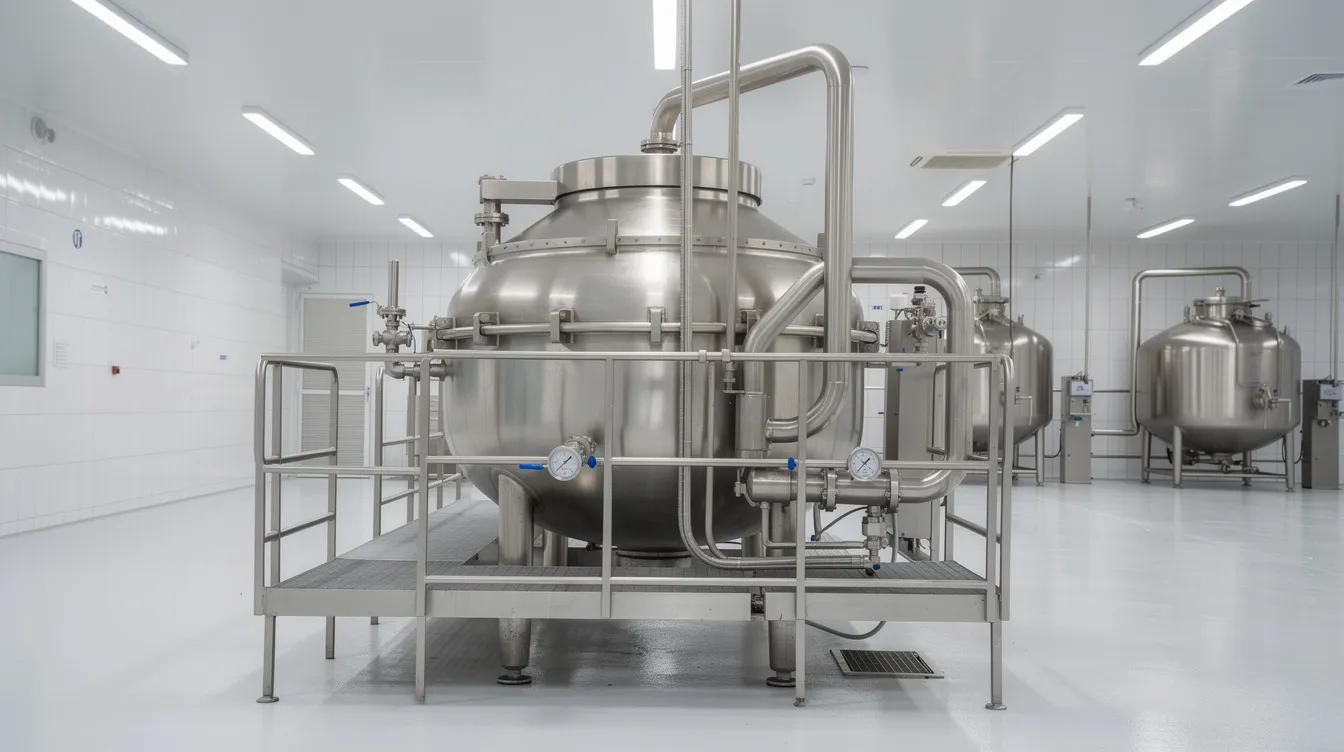
For food processing projects, lenders evaluate not only equipment but also land, factory building, utilities and hygienic layout – these affect regulatory compliance and operational efficiency. Key considerations:
- Required land area for a 5–20 TPD ghee and butter plant, considering future expansion
- Zoning, industrial approvals and location suitability within a dairy development belt
- Building design with separate zones for liquid milk reception, cream and butter processing, ghee boiling, packing, cold storage and administrative block
- Utility requirements – boiler capacity, refrigeration capacity, electrical load, water source, CIP, drainage and ETP
- Factory layout for food safety – unidirectional product flow, segregation of raw and finished areas, cold chain infrastructure
Sample layouts and space norms are discussed in Ghee & Butter Plant Land, Building, Utilities & Factory Layout. Banks may seek building estimates from registered civil engineers and cross-verify plinth area and cost during appraisal. A logically designed, hygienic layout also supports FSSAI licensing and other statutory clearances.
Revenue Assumptions, Financial Projections & DSCR
The core of a bankable ghee manufacturing plant DPR is a coherent set of revenue assumptions and financial projections that flow from capacity, product mix, procurement and pricing realities. Revenue assumptions should cover:
- Installed capacity and phased utilisation over the first 5–7 years
- Product mix by volume and value – retail ghee, bulk ghee, table butter, industrial butter, AMF, by-products
- Selling prices by product and channel – distributors, institutions, exports – and expected escalation
- Geographic market and distribution strategy
Financial projections include income, expenditures and break-even points. The report must include financial projections for five years. Project reports must include machinery costs, plant capacity and financial projections covering:
- Projected profit and loss statement and projected balance sheet
- Cash-flow statement and fund-flow statement
- Detailed schedules for capacity utilisation, sales, raw-material cost, manufacturing expenses, power and fuel, wages, interest, depreciation, tax and term-loan repayment
Templates and ratio explanations are available at Ghee, Butter & Milk Fat Plant Financial Projections for DPR. DSCR – cash available from business divided by annual loan obligations – is the single most scrutinised ratio. Banks look at both year-wise and average DSCR. DSCR must be greater than 1.5 for loan approval in most bank appraisals, though MoFPI scoring guidelines reward projects with DSCR above 2.5. For a detailed walkthrough, refer to DSCR & Loan Repayment Capacity for Ghee and Butter Manufacturing Project.
Profitability, Break-Even Analysis & Project Viability
While headline profitability matters, banks look deeper at break-even capacity, margin of safety and sensitivity of profits. Ghee’s gross profit margins typically range between 20–30%, but operating costs are primarily driven by raw materials at 85–90% of OpEx, which means even small procurement-cost swings can impact viability. Key elements of financial analysis include:
- Contribution per kg of ghee and butter – selling price minus variable costs
- Fixed overheads – salaries, maintenance, interest, administrative expenses
- Break-even sales volume and break-even capacity utilisation
- Margin of safety between projected sales and break-even volume in the first 3–4 years
- Sensitivity scenarios – 10% increase in raw milk price, 5% drop in realisation, delayed ramp-up
Detailed examples of contribution and break-even computations are at Ghee & Butter Manufacturing Plant Profitability & Break-Even Analysis. Banks may apply their own stress tests to assess project strength. Viability also depends on sufficient working-capital support, appropriate debt-equity structure and manageable fixed-cost levels.
Project Feasibility, Project Cost vs Debt Repayment Capacity
Feasibility spans multiple dimensions – technical feasibility (technology, machinery, layout), market feasibility (demand, competition, pricing, export potential), financial feasibility (profitability, DSCR, IRR) and overall commercial viability. Some apparently profitable ghee manufacturing business plans struggle because of:
- Insufficient working capital leading to underutilisation
- Excessive term debt and high interest burden
- Unrealistic capacity-utilisation ramp-up assumptions
- Procurement-cost escalation not matched by selling-price increase
- Weak market access or over-dependence on a few large buyers
Feasibility analysis frameworks are discussed in depth at Ghee & Butter Manufacturing Plant Feasibility & Project Viability. Promoters should avoid designing project cost only to maximise the bank loan. Instead, work backwards from sustainable cash accrual, comfortable DSCR and realistic capacity ramp-up. A slightly smaller, well-utilised manufacturing plant with conservative gearing can be more bankable than an oversized, highly leveraged ghee manufacturing unit with optimistic forecasts.
Documents Generally Required for Ghee Plant Bank Loan
Exact document requirements vary by bank, loan size and borrower profile. Mandatory business licences include Udyam Registration, FSSAI licence and GST Registration. Typical documents for a ghee plant bank loan include:
- KYC documents of promoters and borrowing entity
- Constitution documents – partnership firms deed, LLP agreement, memorandum and articles of association
- Promoter net-worth statements, details of assets and liabilities
- Last 3 years’ income-tax returns of promoters and existing business
- Existing bank loans, OD statements and sanction letters
- Last 6–12 months’ bank statements
- Land documents, building estimates from registered valuers or engineers
- Machinery quotations and proforma invoices from reputed suppliers
- Detailed project report for ghee plant – including financial projections, DSCR analysis, CMA Data and working-capital assessment
- Licences, approvals or in-principle clearances
- Audited financial statements for existing dairy processing units (expansion projects)
- Details of proposed collateral security and valuation reports
Early compilation speeds up dairy plant project finance and reduces follow-up queries. Documentation must be consistent with DPR assumptions – land-size, building plans and machinery quotations should match the capacity shown in the business plan.
Common Mistakes Promoters Make in Ghee Plant Project Finance
In my practical DPR and bank-finance work, several recurring mistakes reduce chances of smooth sanction:
- Finalising machinery quotations before freezing realistic capacity and product mix
- Assuming nearly 100% capacity utilisation from year one without accounting for market development
- Underestimating working-capital requirement or ignoring the receivable cycle in institutional sales
- Overlooking seasonal variation in milk-fat supply and prices, leading to unrealistic uniform-month assumptions
- Overestimating selling prices by comparing only with premium branded retail ghee manufacturers and ignoring distributor margins
- Ignoring actual fat yields and process losses in the ghee manufacturing process
- Relying excessively on debt with minimal promoter contribution, making DSCR weak
- Using generic, copy-paste project-report templates that do not reflect specific plant design or location realities
- Not reconciling project cost with sources of finance, causing gaps between term-loan amount, equity and subsidy
While promoters may encounter claims that a ghee manufacturing project report can be generated in under 10 minutes, auto-generated reports rarely withstand bank scrutiny. Professional financial modelling, sensitivity analysis and structured CMA Data help identify these gaps before the project is presented to lenders.
Industrial Ghee Plant Setup Cost – Illustrative Structure & Example
Industrial ghee manufacturing plant setup cost in India varies significantly by capacity, automation, integration with a dairy plant and region. Investment for a small ghee unit can range from ₹2 lakh to ₹5 lakh for a cottage-scale operation, while a small-scale unit may earn ₹50,000–₹1,00,000 per month. However, commercial-scale plants require far larger investments. For a deeper understanding of how assumptions impact total cost, refer to Industrial Ghee Manufacturing Plant Setup Cost in India.
Illustrative Example Only – Hypothetical 10 TPD Ghee + 5 TPD Butter Plant:
| Component | Indicative Amount (₹ Crore) |
|---|---|
| Land & Site Development | 2.50 |
| Building & Civil Works | 6.00 |
| Plant & Machinery | 8.50 |
| Utilities, ETP, Electrical | 5.00 |
| Lab, Pre-operative, Contingency | 2.50 |
| Margin Money for Working Capital | 2.50 |
| Total Illustrative Project Cost | ~27.00 |
Illustrative Means of Finance:
| Source | Indicative Share |
|---|---|
| Promoter Contribution | ~25–30% |
| Term Loan | ~55–60% |
| Working-Capital Limits | Assessed separately |
All figures are illustrative. Actual costs and financing depend on capacity, location, technology, bank norms and promoter profile.
The bank would examine whether projected cash accruals comfortably service the proposed term loan, whether promoter contribution is infused upfront, whether working capital is sufficient, and whether DSCR under sensitivity scenarios remains acceptable across the project period.
How CA Manish Gugliya Can Assist with Ghee, Butter & Milk-Fat Project Finance
I work as a Chartered Accountant and project-finance consultant specialising in Detailed Project Reports and bank-finance proposals for industrial and food manufacturing plants, including ghee, butter and milk-fat units. Key services include:
- Preparation of detailed project report for ghee plant and dairy processing plant DPR for bank loan
- Estimation and structuring of project cost and means of finance – land, building, machinery requirements and working-capital margin
- Financial projections – P&L, balance sheet, cash flow, fund flow and ratio analysis
- CMA Data preparation aligned with RBI and individual bank norms
- Working-capital assessment for combined ghee and butter plants
- DSCR analysis, loan-repayment capacity assessment and suggestions for suitable moratorium and repayment tenure
- Break-even analysis, sensitivity analysis and feasibility evaluation
- Structuring dairy plant project finance proposal documents and responses to bank appraisal queries
While professional DPRs improve clarity and presentation, final term-loan and working-capital sanctions remain at the sole discretion of the bank after independent appraisal. No consultant can guarantee financial assistance or loan approval.
FAQs – Bank Loan & Project Finance for Ghee Manufacturing Plant
How can I get a bank loan for a ghee manufacturing plant?
Prepare a technically sound detailed project report covering plant capacity, product mix, procurement model, project cost and means of finance. Include financial projections, DSCR and working-capital assessment. Compile all required documents – KYC, land papers, machinery quotations, existing financials – and approach banks or NBFCs that actively finance dairy processing plants. Be prepared to clarify assumptions during appraisal. The CGTMSE scheme allows micro and small enterprises to secure collateral-free loans, and Mudra loans provide collateral-free funding up to ₹10 lakh for smaller projects. SC/ST and women entrepreneurs can access loans between ₹10 lakh and ₹1 crore under specific MSME-focused schemes that offer subsidized funding with flexible terms for small units in the dairy sector.
What percentage of ghee plant project cost will a bank usually finance?
There is no universal percentage. Banks assess a comfortable debt-equity ratio based on project viability, promoter profile, collateral availability and internal policies. In practice, promoters should plan to bring a reasonable share – often 25–30% or more – as equity. Government subsidies and capital subsidies, where applicable, are treated as additional support rather than a substitute for promoter contribution. For smaller projects, collateral-free options may apply under specific government schemes like Pradhan Mantri Mudra Yojana.
Is a DPR compulsory for obtaining a ghee plant bank loan in India?
For most term loans for new ghee manufacturing units, banks expect a structured DPR, especially when project cost goes beyond micro-enterprise scale. Some schemes for very small loans may accept simplified formats, but a detailed, internally consistent DPR – connecting capacity, production, raw material, sales, profitability, working capital, cash accrual and repayment – significantly improves clarity and reduces queries.
Can machinery and working capital be financed under the same facility?
Banks typically sanction term loan (for machinery, building and other fixed assets) and working-capital finance (for inventory and receivables) as separate facilities, even though they are part of the same overall loan package. Term loans are generally required for project costs along with working capital finance, and projections should clearly show how both will be serviced from project cash flows.
Can a new entrepreneur without dairy experience obtain project finance for a ghee plant?
It is possible, but banks may scrutinise promoter background, net worth, ability to bring equity, quality of DPR and strength of the technical team more closely. New entrepreneurs can reduce costs of perceived risk by partnering with experienced dairy professionals from the National Dairy Development Board network or established animal husbandry and dairy development programmes, appointing qualified plant managers and presenting a realistic, conservative business plan with robust quality assurance arrangements.
Financial Disclaimer & Closing Note
All project-cost figures, DSCR examples and financing structures referred to in this article are illustrative and based on general industry patterns as of 2026. Actual numbers vary widely depending on capacity, location, technology, procurement model and market strategy. Bank loan for ghee manufacturing plant approval is always subject to each lender’s independent credit appraisal, regulatory guidelines, internal policies, promoter credentials, security and actual project viability at the time of assessment. Financial projections, CMA Data and DPRs are prepared or assisted based on assumptions and information provided by the promoter and should not be treated as guaranteed outcomes. Promoters should obtain project-specific financial, technical, legal and regulatory advice before committing capital to any ghee, butter or milk-fat processing project.
A successful bank loan for a ghee manufacturing plant depends on a well-designed project, realistic capacity and product mix, prudent means of finance, robust cash-flow and DSCR analysis, and a bankable DPR that clearly links capacity, procurement, ghee production, sales, profitability and repayment capacity. Financing should be structured around repayment capability – not just asset value. If you are planning to reduce costs and build a financially defensible ghee manufacturing project, investing in a professionally prepared DPR is the most practical first step before approaching any bank or financial institution.