

Key Takeaways
- A bankable cheese manufacturing plant project report integrates market study, technical design, project cost, means of finance, profitability and DSCR, with each element built on verifiable assumptions rather than optimistic projections.
- Product mix decisions (mozzarella, cheddar, processed cheese, blocks, slices, spreads) directly shape plant capacity, machinery selection, working capital and margins; treating “cheese” as a single product in the DPR is a common reason for bank-appraisal delays.
- Indian banks evaluate cheese plant term-loan proposals on project feasibility, promoter profile, DSCR (typically ≥1.25 average), repayment schedule and internal consistency of financial projections, not on headline profit claims.
- CA Manish Gugliya, FCA, DISA (ICAI), through ProjectReportBank.com, helps promoters structure customised cheese plant DPRs, financial projections and CMA Data based on actual technical inputs and reasonable assumptions.
- This hub article provides an end-to-end roadmap for planning, evaluating and financing an industrial cheese manufacturing project in India, linking out to 16 specialised guides for deeper study on each topic.
Introduction: Why a Bankable Cheese Manufacturing Plant Project Report Matters
Value-added dairy processing in India has moved well beyond pouch milk and paneer. Demand from QSR chains, pizza outlets, bakeries, cloud kitchens and organised retail has created a growing market for commercially manufactured cheese, from mozzarella to processed cheese slices. For promoters, this shift represents a tangible business opportunity, but one that carries more planning complexity than a conventional liquid-milk dairy.
Cheese manufacturing is more complex because of product diversity, milk-to-cheese recovery ratios, ripening inventories, cold-chain dependence and working-capital intensity. Cheese manufacturing requires a structured project report to secure financing, and a generic business plan will not satisfy bank appraisal requirements. A bankable detailed project report for a cheese plant must integrate cheese market assessment, industry trends, product selection, capacity planning, milk procurement, manufacturing process design, machinery, utilities, project cost, means of finance, revenue model, working capital, profitability, DSCR, loan repayment and project risks into one consistent document.
As a practising Chartered Accountant since 2006 and founder of ProjectReportBank.com, I have observed across dozens of DPR engagements that the quality of assumptions is more important than merely presenting attractive projected profits. Banks test the logic behind numbers, not just the numbers themselves.
This article is the central hub for the “Cheese Manufacturing Plant Project Report & DPR” cluster. It guides promoters, dairy companies, MSMEs, cooperatives and investors through every aspect of planning and financing a cheese plant, while pointing to 16 specialised supporting articles for detailed treatment of specific topics.
What Is a Cheese Manufacturing Plant Project Report / DPR?
A project report for a cheese manufacturing plant outlines technical, commercial, financial and operational feasibility of the proposed unit. In the Indian banking context, a Detailed Project Report (DPR) is a structured document that goes beyond a brief project profile; it covers every dimension a lender needs to evaluate before sanctioning a term loan.
The difference between a generic project profile downloaded from the internet and a customised bankable DPR is substantial. Generic profiles use template assumptions for milk prices, capacity utilisation and selling prices that rarely match a specific promoter’s location, product strategy or financing pattern. Key sections of a cheese project report include market analysis and financial projections, but these must reflect actual local conditions, not national averages lifted from a research report.
Cheese manufacturing projects require integration of technical details (manufacturing process, plant configuration, recoveries, ripening periods) with financial analysis (project cost, operating expenses, revenue, profitability, DSCR). Treating these as separate exercises creates inconsistencies that surface during bank scrutiny.
The report serves as a roadmap for entrepreneurs, investors and financial institutions. Promoters use it for decision-making; lenders use it for appraisal and term-loan assessment; government agencies use it for subsidy or scheme evaluation. Copied or standardised cheese plant project reports, with unrealistic milk prices or 100% capacity utilisation from Year 1, regularly fail bank scrutiny.
Executive Summary of the Proposed Cheese Manufacturing Project
Executive summaries summarize project goals, capital requirements and profitability metrics in 1-2 pages. Written last but placed first in the DPR, this section gives bankers and investors a quick snapshot of the entire cheese manufacturing plant project.
An effective executive summary should cover:
- Promoter profile: experience in dairy or food processing, existing business track record
- Business constitution: proprietorship, partnership, LLP or private limited company
- Proposed location: district, state, proximity to milk procurement area, access to cold chain and consumption centres
- Planned cheese products: e.g., mozzarella for pizza outlets, cheddar for processing, processed cheese blocks and slices for institutional buyers, retail cheese spreads
- Installed capacity: daily or annual cheese output (MT per day or per annum), corresponding milk-processing requirement (litres per day), phased capacity utilisation over 5-7 years
- Indicative project cost: land, building, plant and machinery, cold storage, utilities, pre-operative expenses and margin for working capital
- Means of finance: promoter contribution versus term loan
- Implementation schedule: e.g., 12-15 months from financial closure to commercial production
- Headline financial indicators: projected sales in stabilised year, EBITDA margin range, average DSCR, payback period or IRR, with a clear note that all figures are illustrative
Market Opportunity and Industry Trends for Cheese Manufacturing in India
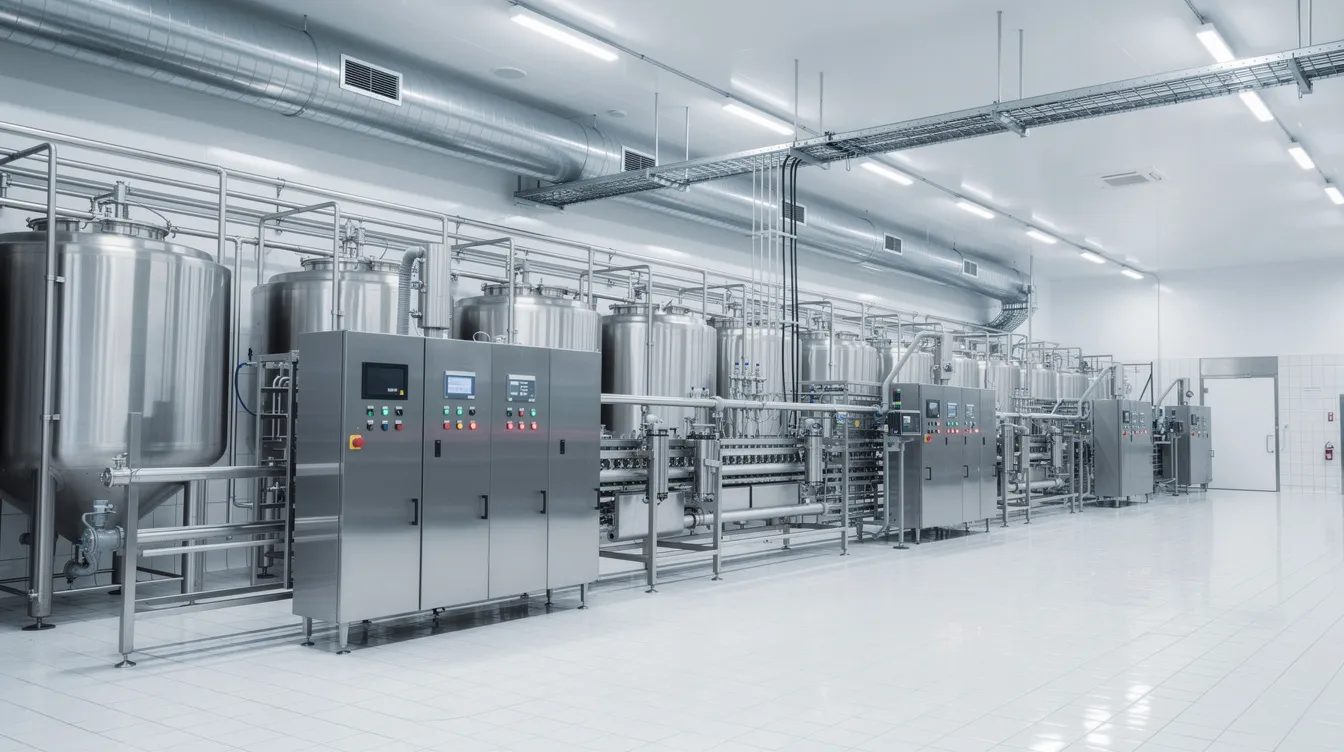
Market analysis examines demand trends for dairy and cheese products at national, regional and local levels. The global cheese market was valued at USD 98.0 billion in 2025 and is expected to reach USD 153.08 billion by 2034, growing at a CAGR of 5.1% from 2026 to 2034. Cheese demand is increasing due to higher dairy protein consumption, and emerging markets including India are seeing increased cheese consumption driven by urbanisation and fast food culture.
Within India, about 80% of the cheese market by volume is processed cheese (slices, blocks, spreads) used by QSRs, bakeries and institutional kitchens. Institutional demand from hotels, restaurants, cloud kitchens and industrial food processors requires bulk packs with consistent quality. Organised food retail, e-commerce and quick commerce platforms are expanding shelf space for cheese blocks, cheese slices, grated cheese and spreads, creating opportunities for branded or private-label manufacturers.
Cheese manufacturing projects must assess market competition and price strategies. The competitive landscape includes large national dairy brands, strong regional cooperatives and local players. A new plant must differentiate through product quality, packaging formats, consistency and timely delivery. Market potential is region-specific: proximity to high-consumption corridors (metro cities, tourist belts) matters, but so does economical access to raw milk. The dairy market continues evolving; India’s cheese imports were estimated at about 195,000 MT in 2025, even as domestic production capacity expanded.
In a DPR, the cheese industry and market section should cite credible sources, present a comprehensive market overview, avoid exaggerated market-size claims and link local demand analysis directly with the proposed product mix and market segmentation.
Selection of Cheese Products and Product Mix Strategy
Product selection is a strategic decision that shapes plant design, machinery requirements, ripening needs, working capital and margins. Promoters should align their product mix with identified market segments and price trends rather than trying to manufacture every cheese type from the outset.
Key products commonly considered in Indian cheese manufacturing plant projects:
- Mozzarella cheese: mozzarella is widely used in pizzas and restaurants; requires stretching equipment and quick freezing
- Cheddar cheese: a natural cheese requiring longer ripening and specific storage; aged cheeses can take weeks or longer to develop flavour
- Processed cheese blocks and tins: needs cooking and emulsifying systems; shorter shelf-life cycle
- Cheese slices and processed cheese strips: popular in burgers, sandwiches and retail; needs slicing and individual wrapping lines
- Cheese spreads: requires blending, specialised tub packaging and precise moisture control
- Cheese sticks and cheese arcade formats: niche retail products targeting snack consumption
- Institutional packs: bulk formats for hotels, QSRs and food processors
Product mix influences milk requirement, cheese recovery percentage, fat/SNF standards, salt content and moisture levels, all of which affect yield, cost per kg and projected gross margins. Packaging type (cheese block, slices, shredded packs, tubs) affects both machinery selection and working-capital investment.
The DPR should present a clear product-wise production and sales plan, showing percentage share of each product in total volume and revenue. For detailed product-specific guidance, see the supporting articles on mozzarella, cheddar and processed cheese manufacturing linked in the navigation table below.
Plant Capacity and Product-Mix Planning
A cheese manufacturing plant requires capacity in the range of 5,000 to 10,000 MT or more, depending on target market size and milk availability. Installed capacity (nameplate capacity from machinery suppliers) differs from achievable production after accounting for downtime, maintenance and seasonal variation. DPRs should use realistic capacity utilisation trajectories: 40-50% in Year 1, rising to 70-80% by Year 3-4.
Capacity planning works backwards: start from planned cheese output per day, then calculate daily milk intake using product-specific recovery ratios. Mozzarella yields are typically around 10-11% of milk weight; cheddar yields are lower (around 8-9%) due to lower moisture and longer ripening. The production capacity affects the machinery design and staffing requirements in cheese plants, so these decisions must be sequenced correctly.
A plant focusing on mozzarella may have faster throughput but requires larger cold storage for high-moisture finished product. Cheddar or specialty cheeses require longer ripening, tying up storage capacity and working capital. Seasonal milk availability (flush and lean seasons) must be factored into production planning.
Break-even capacity utilisation is around 65-80% for most cheese plants. Do not select capacity merely based on the lowest machinery quotation; capacity must be justified by realistic demand projections, milk availability and promoter management bandwidth.
Milk Procurement and Raw-Material Planning
Milk procurement is the largest operating-cost component. Milk procurement accounts for 75 to 88% of raw material costs and 70 to 85% of variable operating expenses in a typical cheese manufacturing unit. Banks examine whether milk procurement assumptions in the DPR are realistic and sustainable.
Daily milk requirement is calculated from planned cheese production, divided by expected recovery ratios for each product, plus process losses. Raw milk sourcing should be hygienic and reliable, with agreements with local dairy farms, village-level milk societies or cooperatives. Procurement radius, bulk milk coolers and chilled transportation must be budgeted. Current cow milk prices in Maharashtra hover around ₹34 per litre for milk with ~3.5% fat and ~8.5% SNF, with buffalo and premium milk costing more.
Key non-milk raw materials include starter cultures, ingredients bacterial cultures, rennet, salt, calcium chloride, emulsifying salts (for processed cheese) and cheese ingredients such as butter oil and stabilisers. Packaging materials (laminates, pouches, cartons, labels) add to raw material requirements.
The DPR should state assumptions for milk purchase price, cultures and ingredient costs, packing material rates and expected annual inflation, with brief justification. Quality testing at milk reception (MBRT, fat/SNF, adulteration checks) must be factored into both capital and operating expenditure.
Industrial Cheese Manufacturing Process: Overview
The cheese production process involves steps such as pasteurisation, curd cutting and aging, with specific variations depending on the cheese type being manufactured.
Core steps in most industrial cheese plants:
- Milk reception, weighing, chilling and quality testing
- Standardisation of fat/SNF, filtration and clarification
- Pasteurisation (meeting pasteurized process cheese standards where applicable)
- Cooling to inoculation temperature, addition of starter culture and rennet; cheese is made by coagulating milk proteins with rennet or acids
- Controlled coagulation, curd cutting; the curd is cut, heated and stirred to remove whey
- Product-specific processing: stretching (pasta filata) for mozzarella, cheddaring and milling for cheddar, cooking and emulsifying for the processed cheese manufacturing process
- Pressing, moulding, salting (brine or dry)
- Ripening in temperature- and humidity-controlled rooms where applicable
- Packaging, metal detection, labelling, cold storage and dispatch
The various unit operations involved in cheese manufacturing each affect yield, energy usage, labour and effluent load. A bankable DPR must describe this process flow accurately, since it feeds directly into cost estimates.
Machinery, Utilities and Infrastructure Requirements
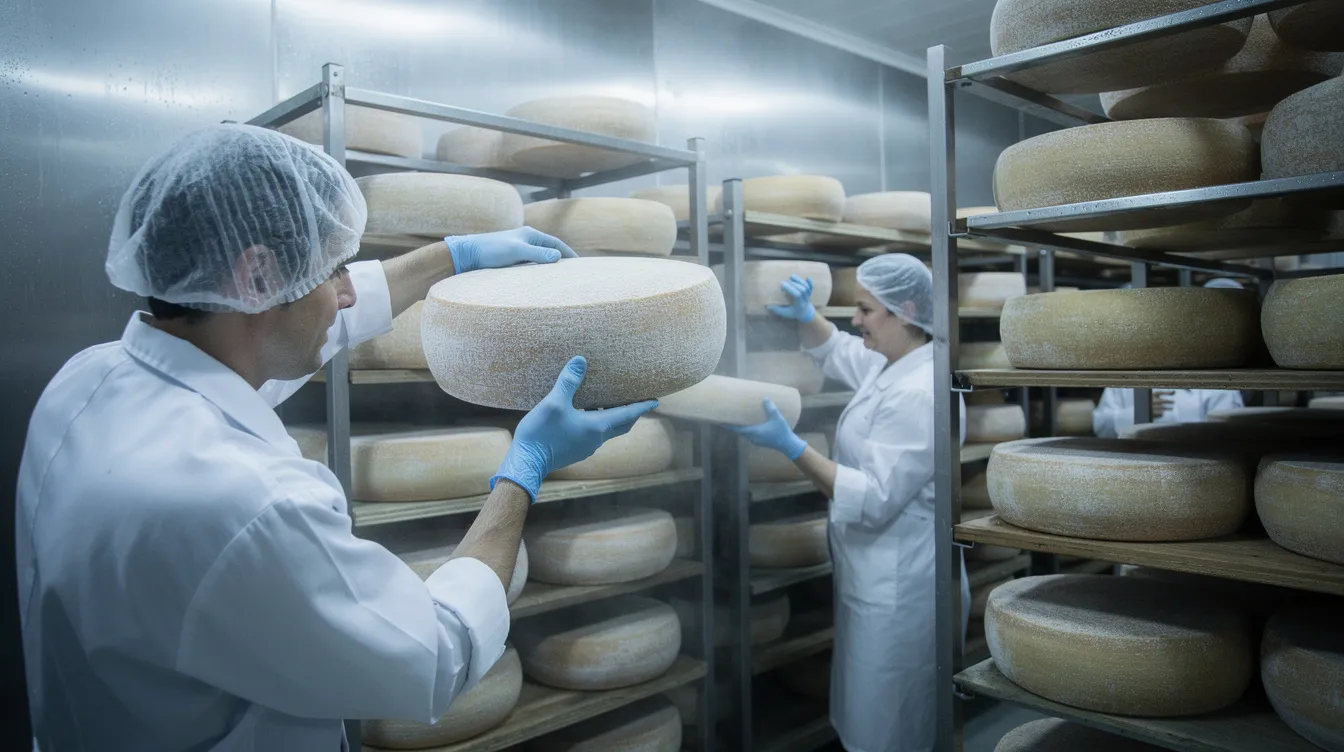
Machinery selection must follow final decisions on product mix and capacity. A cheese plant requires investment in pasteurizers and cheese vats as core processing equipment, but the full list extends well beyond these.
Process machinery: milk reception tanks, weigh scales, storage tanks, cream separators, pasteurisers, standardisation systems, cheese vats, curd cutters, whey drainage systems, mozzarella stretchers, cheddaring equipment, presses, moulds and processed cheese cookers.
Supporting equipment: CIP systems, pumps, valves, conveyors, brining tanks, slicing and shredding machines, vacuum pack machines and packaging lines for both retail and institutional formats.
Utilities and infrastructure: boilers and steam distribution, refrigeration plant, cold rooms and ripening chambers, chilled water systems, compressed air, electrical panels, DG sets, water-treatment plants and effluent-treatment facilities. Utility requirements include power, water and refrigeration demands that are substantial recurring costs. Effective waste management is essential, including effluent treatment and solid waste disposal strategies.
Plant layout must separate raw material, processing and finished goods areas to prevent contamination. Quality control measures in cheese production necessitate microbiological testing and hygiene protocols, requiring a dedicated laboratory. The setup requires land, permits and utility connections as prerequisites before construction begins.
Regulatory compliance with food safety standards like HACCP is important for institutional buyers and export markets. The DPR should indicate whether machinery is predominantly domestic or imported, and name technology partners where applicable.
Navigation Table 1: Setup, Products and Technical Planning
Explore the detailed cheese plant setup and technical-planning guides:
| Planning Area | Detailed Guide |
|---|---|
| Initial investment planning | Cheese Manufacturing Plant Setup Cost in India |
| Machinery selection | Cheese Plant Machinery & Equipment Cost in India |
| Mozzarella production | Mozzarella Cheese Manufacturing Plant |
| Processed cheese production | Processed Cheese Manufacturing Plant |
| Cheddar production | Cheddar Cheese Manufacturing Plant |
| Manufacturing technology | Industrial Cheese Production Process |
| Capacity and product selection | Cheese Plant Capacity Planning & Product Mix |
| Investment and funding structure | Cheese Plant Project Cost & Means of Finance |
These linked articles provide deeper technical and cost insights. The current hub article focuses on integrating them into a complete cheese manufacturing plant project report.
Cheese Plant Project Cost Components
The cheese manufacturing plant project cost in a DPR should be presented as a structured estimate, separating tangible fixed assets, intangible costs and margin for working capital. Machinery costs account for 45 to 55% of total setup costs; capital expenditure for machinery is therefore the single largest cost head.
Major project-cost components:
- Land acquisition or leasehold premium, site development
- Factory building and civil works (production blocks, cold rooms, ripening chambers, utility areas, admin block)
- Plant and machinery (domestic and imported)
- Refrigeration and cold-storage infrastructure
- Utilities (boilers, compressors, water treatment)
- Laboratory equipment for quality control
- Electrical installations, material handling, vehicles
- Furniture, office equipment, IT systems
- Preliminary and pre-operative expenses: company formation, approvals, interest during construction, consultancy fees, trial run expenses, contingencies
- Margin money for working capital as required by banks
Total capital investment varies widely. Indicative ranges: ₹10-25 crore for a small plant, ₹30-80 crore for mid-capacity and ₹80-200+ crore for large-scale automated facilities. Infrastructure costs depend on location, automation level, imported versus indigenous machinery and cold-storage scale.
Means of Finance and Promoter Contribution
The usual financing structure for a cheese manufacturing plant in India involves promoter equity (typically 25-30% of project cost), term loan from a bank or financial institution, and sometimes unsecured loans subject to lender approval.
Key points for the DPR:
- Government subsidy or grant should not be treated as guaranteed; present the project as viable without subsidy, then show subsidy benefits separately
- Banks assess debt-equity ratio (generally not exceeding 3:1 for MSME food-processing units), promoter margin availability and collateral
- The DPR should include a clear means-of-finance table mapping each project-cost head to proposed finance sources and ensuring consistency with interest and repayment schedules
- Capital investments from project funding sources must match the total project cost exactly
Revenue Model and Product-Wise Sales Planning
A robust revenue model allocates projected sales across product categories: mozzarella, cheddar, processed cheese, blocks, slices, spreads, institutional packs and private-label products. A single aggregated “cheese sales” line will not satisfy appraisal requirements.
For each product, the DPR should specify planned production volume, expected selling price per kg (ex-factory), targeted customer segment and proposed sales channel. Cheese production can yield gross profit margins of 30-40% when capacity utilisation, product mix and procurement costs are well managed.
Revenue assumptions should account for introductory discounts, credit terms, returns and regional price variations. Year-wise selling-price escalation must be based on reasonable expectations. Ancillary revenue from whey, trimmings or contract manufacturing can be included only if technically and commercially planned.
Operating Cost Structure and Profitability Drivers
Milk accounts for 70-80% of operating expenses in cheese manufacturing. A cheese plant’s operating costs are 70-85% driven by milk expenses, making procurement pricing the single most sensitive variable in any profitability analysis.
Variable costs: raw milk, starter cultures, enzymes, salt, packaging materials, consumables, production-linked electricity and fuel, outsourced logistics.
Fixed and semi-fixed costs: staff salaries, repairs and maintenance, quality-control lab expenses, insurance, admin and office costs, minimum energy for cold storage.
Financial costs: interest on term loan and working-capital limits, depreciation on buildings and machinery.
Operating costs may increase by the fifth year due to wage escalation, raw material consumption growth and maintenance requirements on aging equipment. Direct and indirect costs must both be captured in the projected profit and loss account.
Profitability metrics in the DPR include gross profit, EBITDA, profit before tax, net profit and cash accrual. Expected ROI for cheese plants is 11-18% under normal conditions, but achieving this requires realistic capacity ramp-up, conservative selling-price assumptions and transparent sensitivity to milk-price increases.
Financial Projections Required in a Cheese Manufacturing Plant DPR
Financial projections include capital expenditure, operating costs and break-even analysis, along with integrated statements for at least 5-7 years. A complete cheese plant project report must include:
- Projected profit and loss account
- Projected balance sheet
- Cash-flow and fund-flow statements
- Fixed-asset schedule with depreciation
- Term-loan repayment schedule with interest calculation
- Working-capital assessment
- Break-even analysis
- DSCR (year-wise and average)
- ROI, IRR and net present value
- Sensitivity analysis
Internal consistency is non-negotiable. Sales volumes must align with capacity utilisation. Milk consumption must match cheese output and recovery factors. Interest expense must match loan amounts. Closing stocks must agree with working-capital calculations.
Income and expenditure projections should include scenario analysis testing adverse conditions: 5-10% higher milk price, 5% lower selling price, delayed capacity utilisation and moderate project cost overruns, with clear impact on DSCR and viability.
Working-Capital Requirement and Inventory Planning
Working capital in cheese manufacturing is substantial. Funds are tied up in milk and ingredients, cheese under ripening (weeks or months for certain cheese types), finished goods in cold storage, packaging material stock and trade receivables.
Major working-capital components include raw-material inventory, packaging costs and stock, in-process cheese under ripening, finished goods in cold rooms, debtors linked to credit terms and minimum operating cash. Trade credit from milk and ingredient suppliers partially offsets the requirement, but the working-capital cycle in cheese manufacturing is longer than in most dairy product categories.
The DPR should assess peak working-capital needs, propose an appropriate cash-credit limit and include promoter margin money in overall project cost. Expenditure projections must align with realistic inventory and receivable assumptions.
DSCR and Loan-Repayment Capacity for Cheese Projects
DSCR (Debt Service Coverage Ratio) measures cash available for servicing the term loan divided by total debt obligations (principal plus interest) for each year. Banks prefer a minimum average DSCR of 1.25 to 1.50 for food-processing projects.
Cheese plant cash generation is influenced by gradual capacity utilisation, working-capital absorption during ramp-up and capital-intensive cold-storage infrastructure. Banks examine both year-wise DSCR and average DSCR rather than relying on a single figure that hides weak early years.
Moratorium periods on principal repayment are sometimes available for new cheese manufacturing units, but interest continues. Artificially inflating selling prices or underestimating costs to improve DSCR will likely be questioned during appraisal. Honest sensitivity analysis and, where needed, resizing equity contribution or loan tenure is the better approach.
Bank Loan and Term-Loan Appraisal for a Cheese Manufacturing Plant
Banks appraise cheese plant term-loan proposals across multiple dimensions:
- Promoter assessment: background, credit history, financial strength, technical and managerial capability, experience in dairy or allied sectors
- Project assessment: location suitability, milk availability data, market tie-ups, reasonableness of plant capacity and product mix, authenticity of machinery quotations and civil cost estimates
- Financial appraisal: correctness of project cost and means of finance, adequacy of promoter contribution, realistic projections, working-capital sufficiency, DSCR and loan-repayment plan
- Statutory compliance: FSSAI licence, pollution control clearance, factory licence, building plan approval, fire NOC; these are often pre-conditions for full disbursement
Key regulatory procedures and approvals should be tracked in the DPR implementation schedule. A professionally prepared cheese manufacturing plant DPR supports faster bank appraisal but does not guarantee loan sanction, which depends on bank policy, risk assessment and promoter credentials.
Project Feasibility and Risk Assessment for Cheese Manufacturing
Risk assessment strategies are vital for identifying potential market and operational risks. A balanced DPR examines feasibility under technical, market, financial, commercial and managerial headings.
Technical feasibility: suitability of process technology, machinery suppliers’ track record, scalability, availability of skilled manpower, adequacy of utilities and effluent-treatment infrastructure.
Market feasibility: strength of demand, competition mapping from key players, customer access, logistics constraints, dependence on few institutional buyers. The global processed cheese market and processed cheese market are growing, but local competitive dynamics matter more than global trends for a specific plant.
Financial risks: milk price volatility, lower-than-expected selling prices, slower capacity ramp-up, project cost overruns, interest-rate increases, working-capital pressure. The processed cheese market has performed positively in recent years, but individual project economics depend on execution.
Operational risks: consistency of milk quality, cold-chain reliability, spoilage, product recall, training gaps. The DPR should include a sensitivity analysis table testing adverse conditions (5-10% cost overruns, 10-15% drop in sales volumes or prices, delayed implementation) and their effect on DSCR.

Navigation Table 2: Financial Planning and Bank Finance
Explore the detailed financial-planning and bank-finance guides:
| Financial Area | Detailed Guide |
|---|---|
| Revenue planning | Cheese Manufacturing Plant Revenue Model |
| Profit and return assessment | Cheese Manufacturing Plant Profitability |
| Projected financial statements | Cheese Plant Financial Projections |
| Operating finance | Cheese Plant Working Capital Requirement |
| Debt-servicing capacity | Cheese Project DSCR & Loan Repayment Capacity |
| Technical and commercial viability | Cheese Plant Feasibility Study & Project Viability |
| Project-finance application | Bank Loan for Cheese Manufacturing Plant |
| Bank appraisal and repayment | Cheese Project Term Loan Assessment |
These focused articles contain detailed calculations, examples and banker-oriented formats, complementing the overview provided in this main hub article.
Contents Structure of a Bankable Cheese Plant DPR
A comprehensive cheese plant DPR for bank loan should typically contain:
- Promoter and company profile
- Project background and objectives
- Cheese industry overview and comprehensive analysis of market growth, cheese consumption patterns and market trends
- Proposed product mix, installed capacity and unit operations
- Manufacturing process description
- Raw-material and milk procurement plan with human resource requirements
- Location analysis and site justification
- Land and building details with plant layout
- Machinery and equipment list with quotations covering machinery and technology requirements
- Utilities, infrastructure and effluent treatment
- Manpower planning
- Statutory and regulatory approvals
- Implementation schedule
- Project cost estimate (costs project economics and detailed insights on each head)
- Means of finance
- Working-capital assessment
- Revenue and pricing assumptions
- Projected financial statements (profit and loss account, balance sheet, cash flow)
- DSCR analysis, break-even, ROI, IRR and net present value
- Sensitivity analysis and risk assessment
- Supporting documents: quotations, land documents, machinery supplier correspondence, buyer intent letters
Documents and Information Required for DPR Preparation
Assembling accurate inputs upfront saves time and improves DPR quality. Promoters should prepare:
Promoter-level documents: PAN, Aadhaar, photographs, CVs, existing business financial statements (last 3 years), income-tax returns, net-worth details.
Project-level documents: constitution documents (partnership deed, MOA/AOA, LLP agreement), land ownership documents or lease proposals, building plan or civil-cost estimate, preliminary plant layout, quotations for major machinery dated in the current financial year.
Operational inputs: proposed product mix and capacity, milk procurement plan with indicative sources and pricing, expected selling prices, target markets, planned credit terms, manpower deployment and salary levels.
Finance-structure inputs: desired loan amount and tenure, proposed promoter contribution and sources, existing loans, banking relationships and target government schemes (without assuming automatic approval).
Providing detailed and realistic information helps prepare a more accurate and bank-ready cheese manufacturing plant DPR.
Common Mistakes in Cheese Manufacturing Plant Project Reports
Many cheese plant DPRs face delays or rejection not because the business idea is weak, but due to avoidable errors in assumptions and documentation.
Technical-planning mistakes: freezing the machinery list before finalising product mix and capacity; ignoring realistic cheese recovery ratios; underestimating ripening capacity and cold-storage needs; omitting effluent-treatment and lab facilities from project cost; applying the same recovery assumptions for mozzarella, cheddar and processed cheese when each has distinct characteristics governed by pasteurized processed cheese standards and different moisture levels.
Financial-projection errors: assuming full-capacity utilisation from Year 1; using unrealistic selling prices without competitive analysis; underestimating milk procurement costs and packaging costs; ignoring marketing and distribution expenses; presenting very low working capital; showing attractive accounting profit but weak cash flow.
Banking-related issues: inconsistent term-loan repayment schedule; DSCR calculated incorrectly; mismatch between means of finance and interest calculations; assuming subsidies as guaranteed project funding; copying assumptions from unrelated dairy or paneer projects.
A professional DPR should present conservative but credible projections, acknowledge constraints and include sensitivity checks. This approach builds more confidence with bank appraisers than overly aggressive numbers.
Role of CA Manish Gugliya and ProjectReportBank.com in Preparing Cheese Plant DPRs
CA Manish Gugliya, FCA, DISA (ICAI), has been in practice since 2006 and founded ProjectReportBank.com to assist MSME and industrial promoters with DPR preparation, CMA Data and project finance documentation.
Professional assistance includes:
- Structuring project cost and means of finance
- Evaluating capacity and product assumptions from a financial-feasibility perspective
- Preparing integrated financial projections (P&L, balance sheet, cash flow, working capital, term-loan schedule)
- Calculating DSCR, break-even, ROI, IRR and net present value
- Conducting sensitivity analysis
- Organising the DPR in formats aligned with Indian bank appraisal practices
- Coordinating financial information with technical inputs from the promoter and consultants
All projections are prepared on the basis of information, quotations and assumptions supplied by the promoter and technical experts. They are not certified forecasts, and actual results may differ. CA Manish Gugliya and ProjectReportBank.com do not guarantee bank sanction or profitability; the focus is on helping promoters present a transparent, consistent and well-reasoned cheese manufacturing plant DPR.
Frequently Asked Questions
These questions address practical queries raised by promoters planning a cheese manufacturing plant in India.
What is typically included in a cheese manufacturing plant project report for bank loan?
A bankable cheese manufacturing plant project report normally includes promoter profile, industry and market analysis, product mix and capacity details, manufacturing process description, raw-material and milk procurement plan, land and building particulars, machinery list with quotations, utilities and manpower planning, statutory-approval summary, itemised project cost, means of finance, working-capital assessment, revenue and cost assumptions, projected financial statements, DSCR, break-even, ROI/IRR, sensitivity analysis and risk assessment, along with supporting documents.
Can one cheese manufacturing plant handle mozzarella, cheddar and processed cheese together?
A single commercial cheese plant can produce multiple products, provided process design, equipment selection and ripening/storage areas are planned accordingly. The DPR must define capacities and product-wise throughput, and reflect additional machinery (e.g., mozzarella stretchers, processed-cheese cookers, ripening rooms) and working-capital requirements in both project cost and financial projections.
How is the milk requirement estimated for a proposed cheese manufacturing plant?
Milk requirement is calculated from planned cheese output (kg per day) for each product, divided by expected milk-to-cheese recovery ratios and adjusted for process losses. Mozzarella recovery is typically around 10-11% of milk weight; cheddar around 8-9%. The DPR should show these calculations transparently and confirm that daily procurement volumes are feasible within the chosen procurement radius and seasonal patterns.
Why is working capital so important for a cheese manufacturing unit?
Cheese manufacturing ties up substantial funds in milk and ingredients, cheese under ripening for weeks or months, finished products in cold storage and receivables from distributors. Without adequate working-capital finance and promoter margin, the plant may struggle to utilise installed capacity or maintain supply commitments, even if machinery and buildings are fully in place.
Who can help prepare a customised cheese manufacturing plant DPR and CMA Data in India?
Promoters can engage professionals such as CA Manish Gugliya through ProjectReportBank.com, who work with the promoter’s technical team and machinery suppliers to prepare customised cheese manufacturing plant project reports, financial projections and CMA Data aligned to bank formats. The quality of the DPR depends on accurate project information and realistic assumptions supplied by the promoter; no consultant can guarantee loan approval.
Conclusion and Next Steps
A successful cheese manufacturing project in India requires alignment of market demand, product mix, plant capacity, milk procurement strategy, manufacturing technology, project cost, working capital, profitability and debt-servicing capacity. Each of these elements must be captured in a coherent cheese manufacturing plant project report that stands up to bank scrutiny.
Rather than relying on generic or copied project profiles, promoters benefit from investing in a customised, assumption-driven DPR that reflects their specific location, product strategy, milk sourcing arrangements and financial plan. This approach improves the quality of discussions with lenders and reduces the risk of appraisal delays.
Entrepreneurs, existing dairy units, cooperatives and investors planning a cheese manufacturing plant are invited to connect with CA Manish Gugliya via ProjectReportBank.com for assistance in structuring project cost and means of finance, preparing detailed financial projections and CMA Data, and organising a bankable cheese manufacturing plant DPR tailored to their proposed project.