

Key Takeaways
- Cheese project term loan assessment focuses specifically on financing fixed assets of a cheese manufacturing plant-buildings, machinery, ripening rooms and cold chain-and is evaluated separately from working capital finance.
- Indian banks appraise promoter profile, technical feasibility, market demand, project cost, means of finance and debt service coverage ratio before sanctioning the loan.
- A technically sound cheese manufacturing project can still face rejection if project cost, promoter contribution, CMA Data and repayment schedule are not properly presented.
- Loan tenure, moratorium period and interest structure must align with projected cash flow from the cheese plant for sustainable repayment.
- Professional DPR, CMA Data and realistic financial projections prepared from a bank-appraisal perspective improve the quality-but never guarantee the outcome-of term loan appraisal.
Introduction: Why Cheese Project Term Loan Assessment Is Different
As a practising Chartered Accountant since 2006, I have reviewed dozens of dairy and food-processing loan proposals. Cheese project term loan assessment is distinctly more layered than a general business loan because the cash flow cycle of cheese production involves unique timelines driven by milk procurement, cold chain infrastructure, cheese aging and product-mix-dependent revenue patterns.
Setting up a cheese manufacturing plant in India demands significant capital expenditure on processing machinery, food-safety-compliant buildings, ripening and maturation rooms, and refrigeration systems. The global cheese market was valued at USD 98.0 billion in 2025 and is expected to reach USD 153.08 billion by 2034, which means opportunity is real-but so is the scrutiny lenders apply before releasing funds. Setting up a cheese plant requires significant capital investment in machinery alone, making the bank’s appraisal far more detailed than for a trading or service business.
Lenders evaluate milk availability, cheese plant capacity, product mix (mozzarella, processed cheese, cheddar and other variants), plant utilisation, storage period and market linkages before deciding on a bank loan for a cheese manufacturing plant. Even when technology and market analysis appear sound, banks may decline or scale down the proposal if promoter contribution, debt–equity ratio, DSCR or the repayment structure are weak or poorly documented. Readers wanting deeper cost-side clarity can refer to resources on cheese manufacturing plant setup cost in India and cheese plant project cost and means of finance, while this article stays focused on bank appraisal and repayment capacity.

What Is a Cheese Project Term Loan Assessment?
Cheese project term loan assessment is the bank’s structured evaluation of a term loan proposal for financing long-term fixed assets of a cheese manufacturing unit-not routine working capital. Term loans are repaid over a fixed tenure through instalments, and the assessment determines not just the sanction amount but also loan tenure, moratorium period, interest rate spread and security requirements.
The term loan typically finances fixed assets such as:
- Land development and boundary walls, where lending policy permits
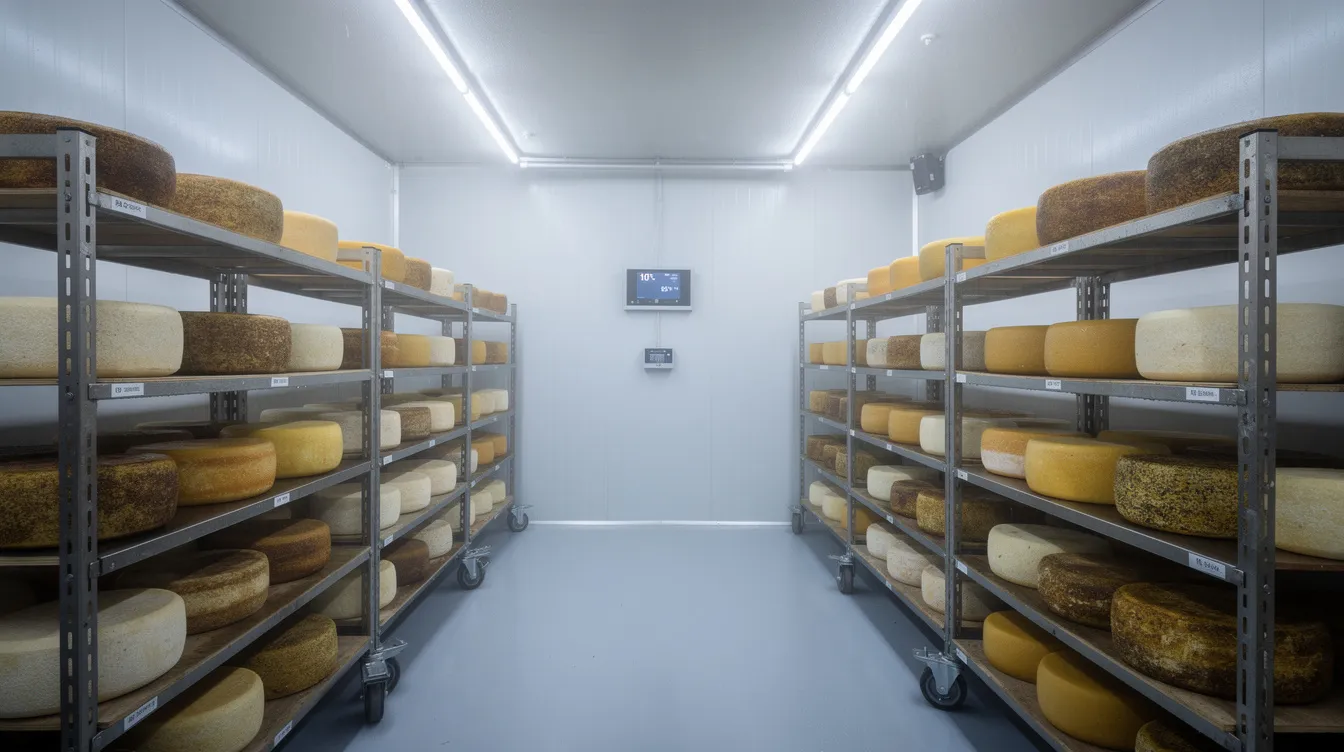
- Factory building, ripening rooms and cold rooms (where colder temperatures and humidity control are crucial for cheese aging processes)
- Cheese processing machinery, cheese vats, presses and moulding systems
- Milk reception, chilling and bulk storage tanks
- Pasteurisation and processing equipment linked to the industrial cheese production process
- Refrigeration, cold-storage systems and insulated piping
- Boilers, compressors, utilities and effluent treatment plant
- Packaging machinery for blocks, slices and processed cheese products
- Laboratory and quality-control equipment and essential electrical installations
Working capital-covering raw materials like milk, ingredients, packaging, salaries, power and receivables-is appraised separately, even when the same bank sanctions both facilities together for a dairy processing project term loan.
Term Loan Versus Working Capital Finance for a Cheese Plant
A cheese manufacturing project normally needs both a term loan (for capital expenditure on fixed assets) and working capital limits (for the operating cycle covering milk procurement, inventory during the maturation cycle, and receivables). Many first-time promoters attempt to manage both from one facility, which banks view negatively during appraisal and which can weaken cheese project debt repayment capacity.
| Parameter | Term Loan | Working Capital |
|---|---|---|
| Purpose | Capital expenditure-building, machinery, utilities | Operating cycle-stock, receivables, expenses |
| Assets Financed | Land, factory, equipment, cold chain | Raw milk, packaging, finished goods inventory |
| Repayment Method | EMI or structured instalments over fixed tenure | Self-liquidating through sales cycle |
| Assessment Basis | Projected cash flows, DSCR analysis | Operating cycle, turnover, stock statements |
| Security | Mortgage of fixed assets, hypothecation of plant | Hypothecation of current assets |
| Moratorium | Common during construction and stabilisation | Rare for standard CC/OD facilities |
| Key Financial Documents | DPR, CMA Data, financial projections, repayment schedule | Stock statements, ageing, turnover data |
Cheese making has a longer inventory cycle because certain cheese types must mature for weeks or months. This makes it essential to align term loan EMIs and working capital limits with the same production and sales assumptions.
Key Factors Banks Examine in a Cheese Project Term Loan Assessment
Term loan appraisal combines technical, financial and market perspectives tailored to the manufacturing process of cheese production. Here are the major factors:
Promoter Profile and Experience: Banks assess education (dairy technology, food processing, management), prior experience in dairy or FMCG, track record in perishable supply chains, net worth, credit history and existing banking conduct. A clean loss account history and strong personal financials build confidence.
Technical Feasibility: This covers capacity design (e.g., 5 MT/day or 10 MT/day), plant layout, FSSAI and pollution norms compliance, choice of technology, power and water availability, effluent treatment and the implementation schedule. The use of appropriate technology and machinery is critical in cheese production, and banks verify this through equipment specifications and supplier credentials.
Product Mix and Marketability: High-margin cheese products can differ significantly from commoditised bulk cheese in terms of profitability. A planned mix across mozzarella cheese manufacturing plant products, processed cheese manufacturing plant output, and cheddar cheese manufacturing plant variants affects pricing, utilisation and refrigeration load. Banks evaluate this through cheese plant capacity and product mix details.
Raw Milk Procurement: Cheese production depends on consistent high-quality milk availability. Lenders evaluate milk acquisition cost and stability of supply, including catchment area, collection radius (typically 50–80 km), fat and SNF quality standards, chilling infrastructure and seasonal variation between flush and lean months. Collaboration with local dairy farms ensures a reliable raw milk supply and strengthens the proposal.
Commercial Viability and Market Analysis: Market demand for cheese must be validated through distributor arrangements and market studies. Banks examine demand from HoReCa, QSR chains, bakeries, B2B food processors and modern retail. A robust cheese manufacturing plant revenue model demonstrates commercial viability.
Financial Viability: Focus areas include operating margins, cash accruals, break-even quantity, interest coverage ratio, debt–equity structure, payback period and sensitivity analysis. Cheese manufacturing plant profitability must be demonstrated under realistic assumptions.
Security and Collateral: Banks examine primary security (financed fixed assets) and collateral (land, building, other properties) plus personal guarantees. Coverage norms vary bank to bank. Under NDDB scheme guidelines, collateral security equal to 1.5 times the loan amount may be required for certain dairy infrastructure projects, though this is not universal.
For larger cheese plant project finance, lenders may also insist on an external TEV or independent feasibility review, similar in intent to a techno-economic appraisal.
Project Cost Considered by Banks in Cheese Plant Appraisal
In cheese plant credit appraisal, total cost must be logically structured and supported by quotations and estimates. Major components banks expect:
- Land purchase or lease premium and site development
- Factory building, ripening rooms, cold rooms and utilities block
- Core processing plant and cheese plant machinery and equipment cost
- Refrigeration systems, chilling plants and insulated doors
- Utilities: boiler, steam lines, air compressors, water treatment, effluent treatment
- Electricals, DG sets, internal electrification and panels
- Laboratory and quality-control instruments
- Furniture, computers, ERP or dairy-plant software
- Preliminary and pre-operative expenses (company formation, consultancy, trial-run expenses)
- Interest during construction, where the implementation period justifies inclusion
- Contingency margin for cost escalation
- Margin money for working capital if the bank’s format includes it as part of project cost
Cheese manufacturing plants typically have a production capacity of 5,000–10,000 MT annually, and the total cost scales accordingly. Unrealistic underestimation or inflation of any cost head is flagged during cheese project loan appraisal and can delay or weaken approval.
Means of Finance and Promoter Contribution
After project cost, banks closely examine means of finance, promoter contribution and debt–equity structure. Typical components include:
- Promoter’s equity from identifiable, tax-compliant sources
- Bank term loan for eligible fixed assets
- Unsecured loans from promoters or group concerns, subject to subordination norms
- Capital subsidy or grant under relevant government or dairy sector schemes (e.g., AHIDF interest subvention of 2.5%)
- Internal accruals in case of expansion of an existing dairy product or cheese unit
| Component | Illustrative Amount (₹ Lakh) |
|---|---|
| Total Project Cost | 500.00 |
| Promoter’s Own Contribution (25%) | 125.00 |
| Bank Term Loan (65%) | 325.00 |
| Unsecured Loans / Subsidy (10%) | 50.00 |
All figures above are illustrative only and not a standard formula.
Banks verify the genuineness of promoter contribution through bank statements, ITRs, capital account statements and source of funds. Unexplained cash injections become a major reason for adverse cheese plant term loan assessment outcomes. For more on arranging funds, see cheese plant project cost and means of finance.
How Banks Calculate the Eligible Term Loan Amount
The amount requested in the application is only a starting point. After appraisal, banks may sanction a lower, equal or occasionally higher amount based on eligibility. Main considerations include:
- Portion of project cost qualifying as bank-financeable fixed assets
- Applicable margin requirements and minimum promoter contribution
- Target debt–equity norms for dairy processing project term loan proposals
- Borrower’s repayment capacity from projected DSCR and cash flows
- Security and collateral coverage
- Implementation risk-greenfield, brownfield or expansion
Simplified Illustrative Calculation:
| Item | Amount (₹ Lakh) |
|---|---|
| Total Project Cost | 500.00 |
| Less: Non-financeable items (prelim expenses, contingency) | 30.00 |
| Eligible Fixed Asset Cost | 470.00 |
| Less: Minimum Promoter Margin (25%) | 117.50 |
| Less: Subsidy Component | 25.00 |
| Maximum Eligible Term Loan (indicative) | 327.50 |
This is a simplified example. No single formula applies across all Indian commercial banks or NBFCs.
Financial Projections Required for Cheese Plant Loan Appraisal
Lenders rely on well-prepared financial projections to judge whether the cheese plant can service debt comfortably. Cheese projects require an extensive review of projected financial metrics to ensure creditworthiness. Standard projection components for at least 7–10 years include:
- Year-wise capacity utilisation consistent with cheese plant capacity and product mix
- Product-wise sales volumes and selling prices
- Raw milk requirement, conversion yields and procurement cost (raw materials, especially milk, account for 70–80% of operating costs)
- Cost of ingredients, packaging materials, cultures and preservatives
- Power, steam, refrigeration and water costs
- Employee costs, repairs, quality-control expenses and factory overheads
- Selling, distribution, freight and marketing expenses
- Projected profit and loss account, balance sheet and cash-flow statement
- Working capital assessment connecting to cheese plant working capital requirement
- Financial ratios assess the credit strength of a loan proposal-including profitability ratios, leverage ratios and coverage ratios
- Internal rate of return reflects the project’s expected earnings and is often computed alongside net present value
- Term loan repayment schedule linked to projected cash flows
Gross profit margins for cheese manufacturing range from 30–40%, but these vary by product mix and scale. Projections should show a logical ramp-up-starting at lower capacity utilisation in year 1 and gradually increasing-rather than assuming 90–100% utilisation from day one. For detailed modelling guidance, refer to cheese plant financial projections.
DSCR and Repayment Capacity in Cheese Project Term Loan Assessment
The debt service coverage ratio is the ratio of cash available for servicing debt to total debt obligation in a given year. It is central to cheese project debt repayment capacity assessment.
Conceptual formula: DSCR = (Net Profit after Tax + Depreciation + Interest on Term Loan) ÷ (Principal Repayment + Interest on Term Loan)
Banks look at year-wise DSCR over the entire tenure to identify weak years, average DSCR for the project period, and cash-flow sufficiency during low-capacity years. A debt service coverage ratio of 1.25x is generally the minimum preferred by lenders, though NDDB requires DSCR ≥ 1.5 for dairy infrastructure projects after applying a 10% sensitivity adjustment.
Stress factors typical to cheese projects that affect DSCR:
- Lower-than-projected capacity utilisation in the first 2–3 years
- Higher raw milk prices or lower fat/SNF content increasing variable costs
- Longer cheese maturation and inventory holding leading to delayed cash realisation
- Delayed payments from institutional buyers and modern retail
- Increase in interest rates during the loan term
| Year | Cash Accrual (₹ Lakh) | Total Debt Service (₹ Lakh) | DSCR |
|---|---|---|---|
| Year 1 | 48.00 | 42.00 | 1.14 |
| Year 2 | 62.00 | 52.00 | 1.19 |
| Year 3 | 78.00 | 52.00 | 1.50 |
| Year 4 | 88.00 | 52.00 | 1.69 |
| Year 5 | 95.00 | 52.00 | 1.83 |
| Average | 1.47 |
Illustrative DSCR profile only. Actual figures vary by project.
Sensitivity analysis tests project viability under variable conditions-such as a 10% rise in milk cost or a 5% drop in selling price-and banks consider this a non-negotiable part of the appraisal. A loan for cheese production must be structured to align with the cash flow cycle of cheese aging. For a dedicated deep dive, see cheese project DSCR and loan repayment capacity.
Loan Tenure, Moratorium Period and Repayment Schedule
Carefully structured tenure and moratorium are crucial for aligning EMIs with the cash-flow pattern of a cheese manufacturing plant. Banks consider:
- Construction and installation period based on civil work, machinery delivery and erection
- Trial runs and stabilisation phase, when only limited commercial sales may happen
- Date of commercial operations (DCO) and ramp-up period to normal capacity
A moratorium period is a principal holiday during construction and early operations. Interest is usually serviced during this time, though unpaid interest may capitalise into the loan per lender norms. Under NDDB infrastructure schemes, moratorium of up to 2 years on principal is permitted within a maximum tenure of 10 years.
Repayment schedules can be structured as equal monthly or quarterly instalments, or as step-up structures where instalments increase after utilisation improves. Covenants and loan terms must accommodate the cash generation cycle of cheese production businesses. While a longer tenure reduces individual instalments, very long terms increase total interest outgo and may not be acceptable to all lenders. An appropriately designed cheese plant loan moratorium period protects early-year DSCR without unnecessarily extending the overall tenure.
Working Capital Impact on Overall Term Loan Viability
Even though working capital is a separate facility, its adequacy directly affects whether the term loan can be repaid on time. Insufficient operating funds disrupt production and sales, weakening effective DSCR. Major working capital components for a cheese manufacturing plant include:
- Raw milk procurement and transportation cost
- Ingredients (cultures, enzymes, emulsifying salts, new flavors) and packaging material inventory
- Work-in-progress and finished goods, including cheese under maturation-the aging, curing and inventory holding costs for cheese can last from weeks to years
- Refrigerated storage, logistics and distribution expenses
- Trade receivables from distributors, HoReCa and modern trade customers
- Minimum cash, wages and overheads to sustain operations during lean seasons
Cash flow dynamics for cheese production involve unique timelines due to aging and perishability. Underestimating the cheese plant working capital requirement leads to production interruptions, under-utilisation and weaker cash flows-even if the original term loan projections seemed viable.

Documents Required for Cheese Project Term Loan Assessment
Complete and consistent documentation significantly speeds up cheese plant loan appraisal. Here is a practical checklist:
Promoter Documents: PAN, Aadhaar, address proof, biodata and experience profile, last 3 years income-tax returns, net-worth statement, 6–12 months bank statements, details of existing loans and credit reports.
Business and Constitution Documents: Partnership deed or LLP agreement, Memorandum and Articles of Association for a company, PAN of the firm or company, GST registration, Udyam registration if MSME, board resolutions or authority letters for borrowing.
Project Documents: Detailed cheese manufacturing project report (DPR), project cost break-up, means of finance statement, machinery quotations with specifications, building cost estimates and layout, land ownership or lease documents, implementation schedule, raw milk procurement plan and market analysis.
Financial and Banking Documents: Historical financial statements and GST returns, projected financial statements, CMA Data where requested, DSCR workings, proposed term loan repayment schedule, working capital assessment, statements of existing banking facilities.
Statutory and Technical Approvals: FSSAI registration, local municipal or panchayat approvals, building plan approvals, electricity sanction, pollution control board consents, factory registration and fire safety clearances. Cheese manufacturing requires compliance with food safety standards and hygiene regulations. All cheese projects must secure necessary licenses and certifications to operate legally. Readers should verify exact requirements for their state, location and capacity.
Role of DPR and CMA Data in Cheese Plant Loan Appraisal
A well-prepared Detailed Project Report and CMA Data form the backbone of cheese project term loan assessment. A cheese plant DPR should logically connect:
- Proposed capacity and product mix, drawing on a cheese plant feasibility study and project viability framework
- Raw milk requirement, procurement radius and chilling infrastructure
- Equipment list and machinery cost
- Project cost and means of finance
- Sales assumptions, price positioning and target customer segments
- Operating expenses, working capital and profitability
- DSCR and repayment schedule
CMA Data is a standard banking format focusing on historical and projected financials, fund flows and working capital assessment, often insisted upon by commercial banks for MSME loans and SME borrowers.
A Chartered Accountant typically assists in preparing, validating and presenting DPR, financial projections and CMA Data based on information and assumptions provided by the promoter. The responsibility for authenticity of data and documents remains with the borrower.
Common Reasons for Rejection or Downward Revision of Cheese Plant Term Loans
Many otherwise promising cheese projects face delays or reduced sanction amounts due to avoidable weaknesses:
- Insufficient or inconsistently documented promoter contribution and margin money
- Weak credit history, past NPAs or irregular banking conduct
- Overstated plant capacity or unrealistic capacity utilisation ramp-up
- Inflated building or machinery costs unsupported by credible quotations
- Aggressive selling price assumptions not aligned with the competitive landscape and current market analysis
- Underestimation of raw milk cost and non-recognition of seasonal price variation in fixed costs and variable costs
- Inadequate working capital built into projections, creating cash-flow gaps
- Lack of clear milk procurement arrangements-contingency plans must address supply chain disruptions and quality control protocol
- Limited marketing tie-ups for B2B and HoReCa segments
- Collateral or primary security coverage not meeting internal policy norms
- Incomplete land titles, regulatory approvals or statutory licences at appraisal stage
- Year-wise DSCR falling below the lender’s comfort level, especially in early years
- Mismatch between figures in DPR, CMA Data and financial statements
- Sensitivity analysis absent or indicating very thin margins of safety
Understanding these pitfalls helps promoters proactively strengthen their cheese manufacturing plant bank loan proposal.
How to Strengthen a Cheese Manufacturing Plant Loan Proposal
With proper preparation, many typical objections in cheese project term loan assessment can be addressed in advance. Here is an actionable checklist:
- Finalise realistic installed capacity and phased utilisation consistent with a cheese plant feasibility study and project viability assessment
- Choose a commercially viable product mix after studying segment-specific economics
- Obtain detailed and comparable quotations from reputed equipment suppliers
- Document raw milk procurement strategy through arrangements with farmers, cooperatives or aggregators
- Build a focused sales and distribution plan indicating target geographies, institutional buyers and branding approach aligned with a robust cheese manufacturing plant revenue model
- Ensure promoter contribution is routed through traceable banking channels and backed by tax returns
- Prepare integrated financial projections and CMA Data consistent with technical details
- Run sensitivity analysis on milk cost, selling price, capacity utilisation and interest rates
- Align proposed loan tenure and moratorium with the period required to reach stable utilisation and cash flows
- Maintain good conduct in existing banking relationships; address any overdue exposures before applying
- Identify key players in your target market and validate cheese demand through concrete institutional or distributor commitments
Professional advisory support can help structure and present the proposal from a banker’s viewpoint, improving clarity and completeness-and ultimately supporting long term success of the funding effort.
Illustrative Cheese Project Term Loan Assessment Example (Educational Only)
This section presents a simplified, hypothetical example only for educational understanding. Real projects will differ in cost, margins, interest rates and sanction terms.
Project Profile: A greenfield cheese manufacturing plant processing approximately 20,000 litres of milk per day into mozzarella and processed cheese. Cheese manufacturing plants of this scale serve as a useful dairy product investment reference.
| Parameter | Indicative Value |
|---|---|
| Total Project Cost | ₹5.00 Crore |
| Promoter Contribution (25%) | ₹1.25 Crore |
| Proposed Term Loan (65%) | ₹3.25 Crore |
| Subsidy / Unsecured Loans (10%) | ₹0.50 Crore |
| Working Capital Requirement | ₹0.80 Crore (separate) |
| Installed Capacity | ~3,000 MT/year |
| Year 1 Capacity Utilisation | 45% |
| Year 3 Capacity Utilisation | 65% |
| Year 5 Capacity Utilisation | 80% |
| Estimated Annual Sales (Year 3) | ₹8.50 Crore |
| Operating Profit (Year 3) | ₹1.40 Crore |
| Cash Accrual (Year 3) | ₹0.78 Crore |
| Proposed Tenure | 8 years including 18-month moratorium |
| Average DSCR (Years 1–7) | ~1.45 |
| Indicative Payback Period | ~6.5 years |
Profit generated from cheese operations is directly affected by the final product mix and market positioning. A 10% rise in milk procurement price or a slower-than-expected sales ramp-up can materially alter the DSCR profile and reduce the bank’s comfort. This example should not be used as a direct benchmark for any actual bank loan application. Borrowers should prepare project-specific profitability analysis, preferably with professional guidance. Industry trends suggest continued strong demand, but each company must validate its own market access and strategic goals.
The example also illustrates how butter or whey by-products may partially offset raw milk costs in an integrated plant, though the economic viability of such integration depends on scale and market conditions.
Frequently Asked Questions on Cheese Project Term Loan Assessment
How much term loan can a cheese manufacturing project generally obtain?
The eligible term loan depends on project cost, promoter contribution, DSCR, collateral coverage, borrower profile and the lender’s internal norms. There is no fixed maximum. Under certain dairy sector schemes, banks have financed up to 75–90% of eligible project cost, but the actual sanction is always case-specific. The time required for appraisal also varies by lender and project complexity.
What level of promoter contribution is commonly expected?
Most lenders expect a minimum of 20–25% of project cost as promoter equity for a standard cheese plant, though this can vary under specific government schemes where subsidies reduce effective margin requirements. Subsidy is generally not treated as a substitute for genuine equity by the lender.
Is collateral always required for a bank loan for a cheese manufacturing plant?
Most lenders require primary and collateral security. In certain cases, CGTMSE coverage or scheme-based comfort may reduce-but not always eliminate-the need for additional collateral for MSME loans. Collateral norms are lender-specific and depend on the borrower’s risk profile and exposure size.
Can a new entrepreneur without prior dairy experience obtain finance?
Yes, but banks look for additional comfort factors such as hiring experienced technical staff, preparing a robust DPR, partnering with strong buyers, and demonstrating a clear understanding of the manufacturing process and investment required. Expected profitability and funding structure must be credible even if the promoter is new to the industry.
How do raw milk prices affect repayment capacity?
Raw materials, especially milk, account for 70–80% of operating costs. A sustained rise in milk procurement price directly compresses operating margins and lowers cash accruals available for debt service. Sensitivity analysis on milk price is a standard part of financial analysis during cheese plant credit appraisal. The lender will also examine whether the borrower has diversified procurement sources to mitigate price volatility, since any lump sum increase in milk cost can disrupt repayment schedules.
Professional Assistance from CA Manish Gugliya and ProjectReportBank.com
As a practising Chartered Accountant since 2006, I assist entrepreneurs and businesses with:
- Preparation and review of cheese manufacturing project report and DPR tailored to bank formats
- Structuring of project cost and means of finance aligned with realistic market and banking expectations
- Preparation of detailed financial projections, CMA Data, DSCR analysis and repayment scheduling
- Working capital assessment so that term loan and working capital limits are consistent and bank-ready
- Support in sensitivity analysis, feasibility assessment and responding to typical banker queries during appraisal
These services are offered online across India through ProjectReportBank.com, helping promoters and consultants obtain professionally prepared documentation for a bank loan for a cheese manufacturing plant without geographical constraints.
If you are planning a cheese manufacturing plant or expansion, I invite you to reach out for DPR and loan-appraisal support. Professional preparation can strengthen your proposal, but sanction decisions always remain with the lender based on its appraisal and policy.