

Key Takeaways
- A bank loan for cheese manufacturing plant projects in India typically combines a term loan for fixed assets (building, cheese vats, refrigeration, utilities) and working capital limits for milk procurement, ingredients, inventory and receivables.
- Banks focus on promoter strength, milk procurement system, realistic capacity utilisation, product mix (mozzarella, processed cheese, cheddar), market tie-ups and DSCR-based repayment capacity-not just machinery quotations or collateral.
- A detailed, internally consistent DPR, CMA Data and cheese plant financial projections based on actual quotations and assumptions supplied by the promoter are critical for sanction.
- Lending terms (margin, collateral, interest rate, eligible assets, subsidy treatment) vary across banks, schemes and states; all figures and examples in this article are indicative only and must be cross-checked with the concerned lender and latest scheme guidelines.
- CA Manish Gugliya and ProjectReportBank.com assist in preparing customised, bankable reports and financials for cheese manufacturing projects, while final approval always rests with the bank.
Introduction: Financing a Modern Cheese Manufacturing Plant
Establishing a cheese manufacturing plant in India demands substantial capital investment across milk reception, pasteurisation, cheese vats, brining systems, pressing equipment, ageing rooms, refrigeration, cold storage, packaging lines and quality-control laboratories. Dairy processing requires specialized equipment, which involves high capital expenditures that most promoters cannot fund entirely from their own resources. This is precisely where a bank loan for cheese manufacturing plant projects becomes essential-providing structured project finance for mozzarella, processed cheese, cheddar and other value-added dairy products.
The global cheese market was valued at USD 98.0 billion in 2025, and cheese demand in emerging economies like India is primarily driven by growing consumption in fast food chains, household kitchens and expanding culinary applications. These industry trends make cheese production an attractive investment opportunity, but banks do not sanction loans based on market potential alone.
From my experience as a practising Chartered Accountant since 2006, I can say that banks look well beyond collateral. They appraise the milk supply chain, product mix, market arrangements, implementation schedule, profitability analysis, cash flow and repayment capacity before committing funds. The financing structure for a medium or large industrial cheese manufacturing unit differs meaningfully from that of a smaller MSME dairy unit in terms of scale, documentation depth, security norms and appraisal rigour.
The sections below cover how lenders in India structure cheese plant project finance, what documents are required, how banks appraise proposals and how a robust DPR improves sanction-readiness.
What Is a Bank Loan for a Cheese Manufacturing Plant?
A cheese manufacturing plant loan is typically a composite package comprising a term loan, working capital facility and sometimes non-fund-based limits. Structured financing should distinguish between term loans for fixed assets and working capital facilities-each assessed under different norms. Different banks may treat land cost, second-hand machinery, vehicles, margin for working capital and pre-operative expenses differently, so applicants must confirm eligibility item-wise with the lender and applicable scheme.
Term Loan: Fixed-Asset Finance for Cheese Manufacturing
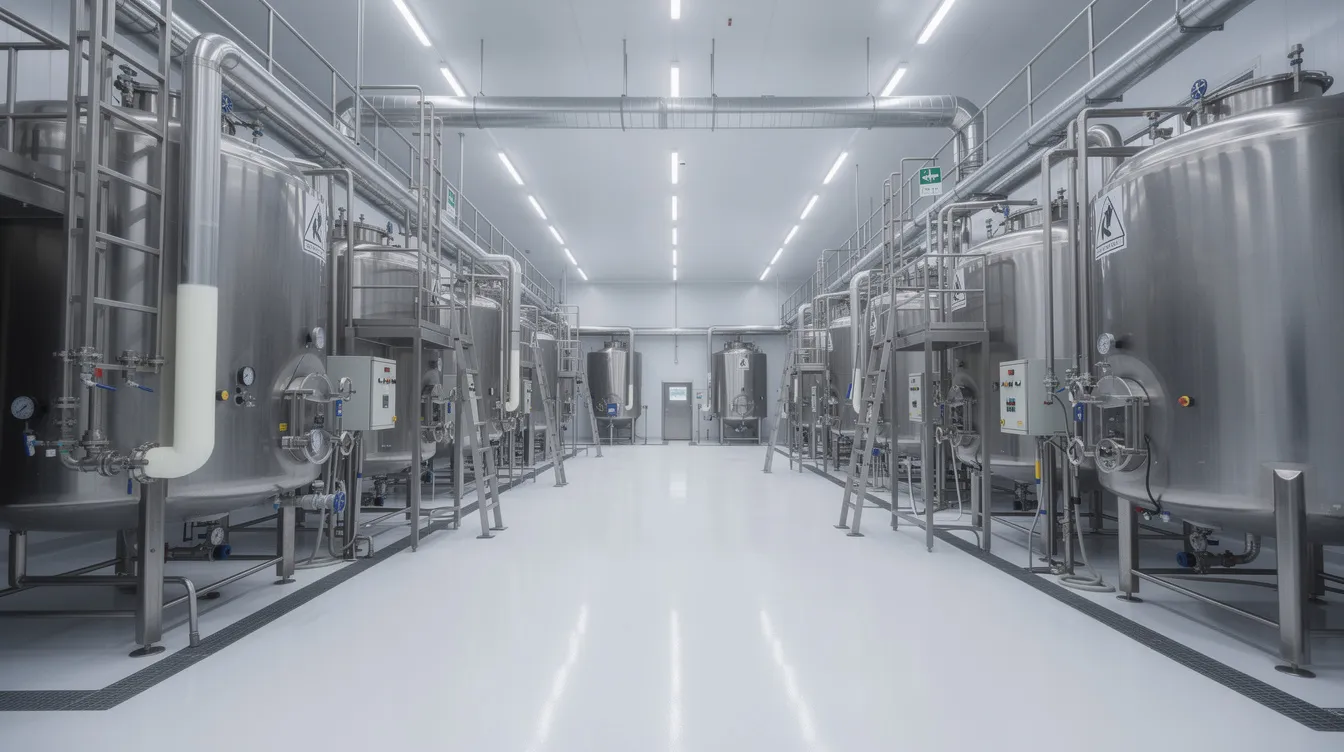
Term loans finance eligible fixed assets. Typical items include factory building and civil construction, milk reception dock, raw milk chilling tanks and pasteurisation and standardisation systems. Cheese-specific equipment covered may include cheese vats, curd handling systems, hoops and presses, brine tanks, stretching and moulding lines for a mozzarella cheese manufacturing plant, emulsifying kettles for a processed cheese manufacturing plant, and ageing infrastructure for a cheddar cheese manufacturing plant.
Supporting assets typically include:
- Refrigeration plants, blast freezers and insulated cold rooms
- High-speed packaging machinery
- Laboratory and quality-control equipment
- Boilers, generators, water-treatment and effluent treatment systems
- Electrical installations
Pre-operative expenses, interest during construction and a reasonable contingency may also be considered, subject to each bank’s credit policy. Some lenders may limit or exclude land cost or second-hand machinery from term loan eligibility-this must be confirmed at proposal stage. Machinery costs are generally the largest portion of capital expenditure for cheese projects.
Working Capital Finance: Cash Credit and Other Limits
A cheese plant requires substantial working capital for daily milk procurement from dairy farmers (often 2–3 times the rated capacity during flush season), cultures, rennet, salt and other ingredients sourced from various feedstocks. Raw materials account for 70–80% of operating expenses in cheese plants, making the procurement cycle a dominant factor in working capital sizing.
Packaging costs for films, pouches, laminates and corrugated boxes add to inventory. Aged inventory risks create cash flow gaps, particularly for cheddar and certain processed products where ageing ties up capital for months. Receivables from distributors, institutional buyers and QSR chains further stretch the cycle.
Power, steam, refrigeration, labour and logistics expenses also drive the requirement for cash credit or overdraft facilities. For detailed methodology, see the guide on cheese plant working capital requirement.
Non-Fund-Based Facilities for Machinery and Trade
Medium and large cheese projects often need letters of credit for imported cheese vats, pasteurisers and packaging machinery. Banks may also issue bank guarantees for electricity deposits, EPC contracts or performance obligations. These limits are sanctioned after considering total exposure, promoter track record and available security.
Project Factors Banks Examine Before Financing a Cheese Plant
Lenders undertake a holistic appraisal combining technical, commercial and financial considerations. Key parameters include:
- Proposed installed capacity (typical cheese manufacturing plants require annual production capacity of 5,000–10,000 MT for medium-to-large units)
- Type of cheese and proportion in the cheese plant capacity and product mix
- Milk availability, procurement radius and competition from other dairy units
- Product yield and recovery assumptions
- Plant utilisation ramp-up over 5–7 years
- Cold-chain and distribution networks
- Customer segments-retail, HORECA, institutional supply contracts
- Management and technical experience
- Statutory and food-safety compliance (FSSAI, pollution control, factory licence)
Milk supply chain reliability directly impacts profit margins in cheese manufacturing. Banks will scrutinise seasonal price trends, fat and SNF quality and procurement arrangements. Key considerations include location, market research and plant layout. Mozzarella units are typically more power and refrigeration intensive, while cheddar projects involve longer ageing and higher working-capital lock-in.
Typical Project Cost Components for a Cheese Manufacturing Plant
Accurate project costing underpins bankable project economics. Underestimation during implementation can cause funding gaps and commissioning delays.
| Cost Head | Nature |
|---|---|
| Land and site development | Fixed |
| Factory building | Fixed |
| Plant and machinery | Fixed |
| Utilities (power, water, steam) | Fixed |
| Refrigeration and cold storage | Fixed |
| Packaging systems | Fixed |
| Quality-control laboratory | Fixed |
| Effluent treatment plant | Fixed |
| Furniture and office equipment | Fixed |
| Preliminary and pre-operative expenses | Soft cost |
| Interest during construction | Soft cost |
| Contingency | Provision |
| Working-capital margin | Current |
All figures must be aligned with actual quotations. Indicative only.
For deeper machinery-cost discussion, see cheese plant machinery and equipment cost. Entrepreneurs often begin by estimating overall cheese manufacturing plant setup cost in India before approaching a bank. Project cost for a 10–20 MTPD plant varies widely depending on location, automation level and equipment origin.
Means of Finance for Cheese Manufacturing Projects
Project cost must be matched with a realistic means-of-finance structure. Banks typically require an equity contribution of 15% to 30% of total project cost as promoter margin, with higher margins applied for land and second-hand machinery.
| Source | Indicative Share |
|---|---|
| Promoter contribution (equity) | 25–30% |
| Term loan from bank | 60–70% |
| Capital subsidy (if eligible) | As sanctioned |
| Working capital (separate limit) | As assessed |
Illustrative only; not a standard financing pattern.
Unsecured loans from promoters or group entities may be treated as quasi-equity by some banks, subject to subordination. Capital subsidy inclusion should be conservative and backed by eligibility confirmation-delayed or non-sanctioned subsidy can create serious funding gaps. For detailed capital-structure guidance, see cheese plant project cost and means of finance.
Key Cheese-Plant Finance Guides
Explore supporting resources on ProjectReportBank.com:
- Setup cost for a cheese manufacturing plant
- Cheese plant machinery and equipment cost
- Project cost and means of finance for cheese plants
- Financial projections for cheese manufacturing
- Working capital assessment for cheese plants
- DSCR and loan repayment capacity for cheese projects
- Cheese plant feasibility study and project viability
Eligibility for a Cheese Manufacturing Plant Loan in India
Eligibility norms differ across banks, but common aspects lenders review before sanctioning a cheese factory loan in India include:
- Acceptable constitutions: proprietorships, partnerships, LLPs, private/public limited companies, cooperatives or producer companies
- Promoter’s dairy or food-processing experience and technical qualifications
- Strong credit history and personal guarantees from key promoters
- Net worth and capacity to bring traceable margin money
- Clear title or long-term lease on land required for the plant setup
- Firm machinery quotations and defined machinery requirements
- Documented milk-procurement arrangements demonstrating reliability and pricing strategy
- Preliminary marketing or off-take strategy evidencing cheese demand
- Projected repayment capacity based on DSCR and acceptable primary and collateral security
Banks also assess the technical complexity of food processing and dairy market volatility when determining the risk profile of cheese projects.
Documents Required for a Cheese Manufacturing Plant Bank Loan
Complete documentation significantly speeds up appraisal. Documentation and licenses are essential for setting up a cheese plant and securing project funding. Banks normally provide their own checklist, but the following covers most items required.
Promoter and Entity Documents
- PAN and Aadhaar of all key promoters, photographs, address proof
- Partnership deed, LLP agreement, memorandum and articles of association, certificate of incorporation
- Udyam registration (for MSMEs), GST registration
- Last 3–5 years’ income-tax returns and latest bank statements (6–12 months)
- Net-worth statement, details of existing loans and liabilities
- Consent for credit reports; brief profiles covering education and dairy experience
Project and Technical Documents
- Detailed project report covering capacity, product mix, the industrial cheese production process, layout, utilities, human resource requirements and implementation schedule
- Land documents (sale deed, encumbrance certificate, property tax receipts or registered lease)
- Building plan, civil-construction estimate, site layout
- Machinery quotations from reputed suppliers; utility requirements for power, water, steam and refrigeration
- Milk-procurement plan, raw material requirements and transportation requirements
- Pollution-control and effluent-treatment arrangements
Financial Documents
- Project cost and means-of-finance statement
- Projected profit and loss account, balance sheets and cash-flow statements for 5–7 years; income and expenditure projections based on capacity ramp-up and realistic assumptions
- Financial projections should include cash flow forecasts, capital investment, operating costs analysis and break-even analysis over 3 to 5 years
- Term-loan repayment schedule and cheese project DSCR and loan repayment capacity calculations
- Sensitivity analysis on milk price, selling price and capacity utilisation
- CMA Data, working-capital assessment
- Audited financials for existing units (expansion projects)
Approvals and Registrations
Food safety and regulatory approvals are critical in cheese manufacturing loan proposals. Proof of regulatory compliance is necessary for food processing loans. Typical requirements include:
- FSSAI licence, factory licence, pollution-control consent to establish and operate
- Building-plan approval, fire NOC, electricity-supply sanction, water-connection permissions
- GST registration and applicable state registrations
Cheese manufacturing facilities must adhere to high sanitation standards and environmental regulations. Required approvals vary by location, plant size and product range-always confirm with local authorities and the lending bank.
How Banks Appraise a Cheese Manufacturing Project
Appraisal typically covers promoter, technical, market, financial and security dimensions. A strong DPR and consistent CMA Data enable faster outcomes.
Promoter Appraisal
Banks study promoter qualifications, years of business experience, dairy-sector exposure and financial strength through net worth, assets and liabilities. Credit history-repayment behaviour, overdue patterns, restructuring-directly influences perceived risk.
Technical Appraisal
This examines manufacturing process, machinery suitability, installed capacity, product yield and the various unit operations involved in cheese production. Utilities sizing, milk procurement logistics, cold storage capacity and implementation timeline with milestones are all scrutinised.
Market Appraisal
Banks evaluate demand across market segmentation-retail, HORECA, QSR chains and institutional buyers. The competitive landscape, price trends, distribution networks and regional breakup of demand feed into capacity-utilisation assumptions. Demonstrating customer demand through letters of intent significantly enhances loan proposals. The cheese market performed strongly in recent years, with increasing demand for new flavors and cheese types across various channels.
Financial Appraisal
Key ratios and metrics include debt-equity ratio, current ratio, DSCR, interest-coverage ratio, break-even point, internal rate of return and payback period. Lenders look for well-structured financial profiles including debt service coverage ratios and break-even point. Expected ROI and net present value are key financial metrics in the financial analysis. Variable costs, operating costs and utility costs are examined against revenue scenarios modelled through the cheese manufacturing plant revenue model. Acceptable levels vary by lender and risk profile. Raw material consumption patterns and processing charges are tested for sensitivity.
Security Appraisal
Primary security includes hypothecation of plant, machinery and movable assets, plus mortgage of factory land and building. Banks may ask for additional collateral or liquid securities. Personal guarantees from promoters are standard. Credit-guarantee coverage like CGTMSE may apply for eligible MSME units, subject to current scheme rules and bank approval, but should never be assumed automatically.
Step-by-Step Loan Application Process for a Cheese Plant
- Finalise plant capacity and product mix
- Confirm land and infrastructure availability
- Obtain firm machinery quotations
- Prepare milk-procurement and marketing strategy
- Estimate complete project cost and decide promoter contribution
- Prepare DPR, CMA Data and financial projections
- Submit application with all supporting documents
- Respond to technical and financial queries from the bank
- Complete legal, valuation and security formalities
- Obtain sanction and review all conditions
- Bring required promoter contribution and meet pre-disbursement conditions
- Execute documentation and obtain phased disbursements
A sanction letter is not the same as disbursement. Funds are released in stages after verifying progress, margin contribution and utilisation of earlier tranches.
Term Loan and Working Capital Must Be Assessed Together
Focusing only on the term loan while underestimating working capital is a common reason technically sound cheese projects struggle post-commissioning. Cash remains tied up in raw milk, cultures, salt, packaging materials, cheese under ageing and credit extended to buyers. Inadequate working capital forces a plant to operate below viable capacity, eroding margins and DSCR and creating repayment stress despite apparent cheese manufacturing plant profitability.
Importance of a Bankable Cheese Plant DPR
Banks distinguish between a basic proposal and a bankable Detailed Project Report. A comprehensive business plan is essential for securing a cheese manufacturing plant loan. The DPR must systematically connect installed capacity to daily milk requirement, product mix to yields and recovery, selling prices to market study, and operating expenses to realistic costs-all feeding into profitability, cash accruals and loan repayment.
A robust DPR also demonstrates the working-capital cycle, break-even point, DSCR trend and project risks with sensitivity analysis. All projections are prepared based on information, quotations and assumptions supplied by the promoter and do not constitute a guarantee of any specific financial outcome. For deeper evaluation, see cheese plant feasibility study and project viability.
Government Schemes, Subsidies and Credit-Guarantee Support
Cheese manufacturing units may be eligible for central and state-level support. Government schemes may offer credit-linked subsidies for food processing projects under programmes administered by MoFPI and state industrial departments. Financial assistance categories include MSME credit facilities, food-processing capital subsidy, dairy-infrastructure support and cold-chain incentives.
Mudra Loans and MSME Loans are available for eligible cheese manufacturing units at smaller scales. Bank of Baroda, for instance, finances food and agro-based units including mini dairy units with 2 to 10 milch animals under dedicated schemes. Various consultancies offer project reports for different loan schemes, and reports prepared by qualified professionals are generally accepted by major banks like SBI and Bank of Baroda. Schemes and guidelines change frequently; applicants must always verify latest details on official portals and with their bank.
Subsidy inclusion in means of finance should remain conservative until eligibility is confirmed. Credit-guarantee coverage does not remove the need for project viability.
Common Reasons for Rejection or Delay in Cheese Plant Loans
Practical issues observed in cheese plant loan appraisals include:
- Weak or inadequately documented promoter contribution
- Adverse credit history or unexplained liabilities
- Incomplete land or ownership documents
- Unrealistic capacity utilisation or yield assumptions
- Unsupported selling-price estimates disconnected from the competitive landscape
- Underestimation of milk, utility and packaging costs
- Missing machinery quotations or inconsistency between DPR and CMA Data
- Inadequate working-capital assessment and overdependence on unverified subsidies
- Poor milk-procurement planning with no demonstrated supply contracts
- Absence of market or off-take evidence and pending regulatory approvals
Corrective actions include revising projections with conservative assumptions, increasing promoter margin, regularising land records, reconciling DPR figures with CMA Data and securing preliminary buyer interest letters.
Illustrative Cheese Plant Financing Example (Indicative Only)
Consider a proposed 15 MTPD mozzarella and processed cheese unit. All figures below are purely illustrative.
| Component | Indicative Amount (₹ Crore) |
|---|---|
| Building and civil works | 2.50 |
| Plant and machinery | 6.00 |
| Utilities and refrigeration | 1.80 |
| Pre-operative and contingency | 0.70 |
| Working-capital margin | 0.50 |
| Total project cost | 11.50 |
| Promoter contribution (30%) | 3.45 |
| Term loan (70%) | 8.05 |
Assuming moderate capacity utilisation (55% in Year 1 rising to 80% by Year 3), gross profit margins for cheese plants typically range from 30–40% depending on product mix and raw material costs. A plant with cheese manufacturing plant operating costs at 70–80% raw materials would need disciplined procurement to sustain margins. The DSCR should trend above 1.25 from the first full year of operations, strengthening to 1.40–1.60 by Year 3. Actual costs project economics depend on location, technology and market conditions. The expected ROI and net present value must be recalculated for each specific project.
How to Improve the Chances of Loan Approval
- Ensure adequate, well-documented promoter contribution with clear banking trails
- Maintain clean banking and repayment conduct for at least 12 months before applying
- Obtain multiple comparable quotations for major machinery
- Confirm utility requirements (power, water, cooling) before freezing project cost
- Build a realistic milk-procurement plan backed by agreements with dairy farmers and farmers cooperatives
- Capture preliminary buyer interest or distributor discussions in writing
- Use conservative capacity-utilisation and selling-price assumptions
- Ensure internally consistent DPR, CMA Data and financial projections
- Include sensitivity analysis and respond promptly to bank queries
- Account for plant based and specialty cheese types if targeting niche market segmentation
Role of CA Manish Gugliya and ProjectReportBank.com
We at ProjectReportBank.com, under the guidance of CA Manish Gugliya, FCA, DISA (ICAI), assist entrepreneurs and dairy businesses in preparing customised DPRs, CMA Data, financial projections and project-cost assessments for cheese manufacturing units. Our services include structuring the loan amount and working-capital requirements, developing means-of-finance statements, preparing realistic cash-flow and loan-repayment schedules, and aligning DPR assumptions with quotations, proposed capacity and product mix.
All projections are prepared on the basis of information, quotations and assumptions provided by the promoter. They support bank appraisal but do not assure profitability or guarantee sanction. Final credit decisions, applicable interest rates, margins and security requirements are determined by the bank as per their internal policies and prevailing regulations.
Conclusion: Preparing for a Bank Loan for Cheese Manufacturing Plant
Obtaining a bank loan for cheese manufacturing plant projects in India requires more than submitting a loan form. A viable project must demonstrate strong promoters, secure milk procurement, suitable technology, a balanced product mix, adequate working capital and credible market assumptions supported by a detailed and internally consistent business plan and project report. Financial projections that include capital investment, operating costs, feasibility studies and sensitivity analysis-combined with compliance-ready documentation and proactive communication-significantly improve the likelihood of timely sanction.
For assistance in preparing a customised cheese manufacturing plant project report, CMA Data and financial projections tailored to your specific capacity, location and financing requirements, contact CA Manish Gugliya through ProjectReportBank.com.
Frequently Asked Questions
Can I get a bank loan for a cheese manufacturing plant if I am new to the dairy business?
First-time entrepreneurs can obtain finance if they demonstrate adequate capital, sound market understanding and strong technical support-for example, experienced plant managers or external consultants with dairy-sector exposure. Prior experience is an advantage but not always a mandatory requirement if other aspects of the proposal, including the cheese manufacturing unit’s technical plan and financial viability, are convincing.
How long does it typically take to get a cheese plant loan sanctioned?
Timelines vary by bank, document completeness and project complexity. Well-prepared proposals with full documentation, including a comprehensive suite of project planning documents, often move from application to sanction within a few weeks to a few months. Delays usually stem from incomplete paperwork, pending regulatory approvals or the need for additional due diligence on investment opportunities of this nature.
Do banks insist on visiting the proposed cheese plant site before sanction?
Many lenders conduct pre-sanction site visits to verify the land required, access roads, utility availability and promoter preparedness. For greenfield projects this may happen even before construction begins, while for expansion of existing dairy units it may be combined with inspection of current facilities and operations.
Is it necessary to finalise all machinery suppliers before approaching the bank?
While signed purchase orders are not always required at application stage, banks generally expect firm quotations and shortlisted suppliers for major equipment so that the project cost and technical appraisal are grounded in realistic figures. Having detailed insights into equipment specifications strengthens the overall proposal.
Can an existing fluid-milk dairy convert part of its capacity into cheese production using bank finance?
Yes. Many existing dairy units approach banks for expansion or diversification into cheese manufacturing. Such cases require a specific DPR showing incremental capital investment, additional milk requirement, revised revenue model and integrated financial projections for the combined business, along with a clear explanation of how the manufacturing process changes with the addition of cheese production lines.