
Key Takeaways
India’s demand for mozzarella, processed cheese and cheddar cheese is growing rapidly, driven by expanding QSR chains, modern retail and changing food habits across major cities and Tier-2 centres. This creates genuine investment opportunities for entrepreneurs and dairy companies. However, only projects supported by a rigorous cheese plant feasibility study are positioned to succeed in the long term.
A feasibility study is far more than projected profit on a spreadsheet. It must validate market demand, evaluate milk procurement cost and quality, confirm technical capacity, estimate total capital investment, assess working capital needs, project cash flow and measure DSCR before a single rupee is committed to a cheese manufacturing plant. For Indian conditions in 2024–2026, assumptions around raw milk price, cheese yield, product mix and capacity utilisation are the most sensitive variables in any cheese plant business plan. A structured feasibility study improves bankability for term loans and working capital, but it does not guarantee loan sanction or subsidy. CA Manish Gugliya and ProjectReportBank.com can assist with customised feasibility studies, detailed project reports, financial projections and bank-finance proposals for new plant setups or expansion of existing cheese factories.
- A complete feasibility study evaluates market viability, technical requirements and financial returns-not just accounting profit.
- Raw milk cost typically accounts for 70–80% of cheese production expenses, making procurement economics the single largest feasibility variable.
- Most dairy project failures occur at the concept stage, before proper feasibility work is done-pre-feasibility studies prevent costly mistakes.
- Sensitivity analysis across milk price, cheese yield, capacity utilisation and selling price is essential before declaring any cheese project viable.
- Professional feasibility documentation strengthens the project’s bankability but final lending decisions rest with the financial institution.
Introduction: Why Every Cheese Project Needs a Feasibility Study
India’s cheese consumption has expanded significantly over the 2020–2025 period. The domestic cheese market was estimated at approximately USD 1,869 million in 2025, with mozzarella alone capturing roughly 35% of market share by type, driven by pizza chains, foodservice and retail demand. Processed cheese slices, cubes and spreads continue to grow through modern trade channels in Tier-1 and Tier-2 cities, while cheddar cheese finds increasing institutional and QSR use.
Many entrepreneurs see this demand and jump directly to ordering machinery or acquiring land without assessing the commercial viability of their proposed project. In my experience preparing project reports, this is where most dairy project failures originate-at the concept stage, before proper homework is completed. Actual success depends on factors like milk quality and procurement cost, cheese recovery, practical capacity utilisation, realistic selling prices, distribution channels, capital costs and term-loan repayment ability.
A cheese plant feasibility study is a structured pre-investment exercise that should be completed before finalising land, building, machinery orders or approaching banks for large limits. This article, written in my professional capacity as CA Manish Gugliya, a practising Chartered Accountant since 2006 with experience in DPRs and financial projections for manufacturing projects in India, walks you through every element that a robust feasibility assessment must address.
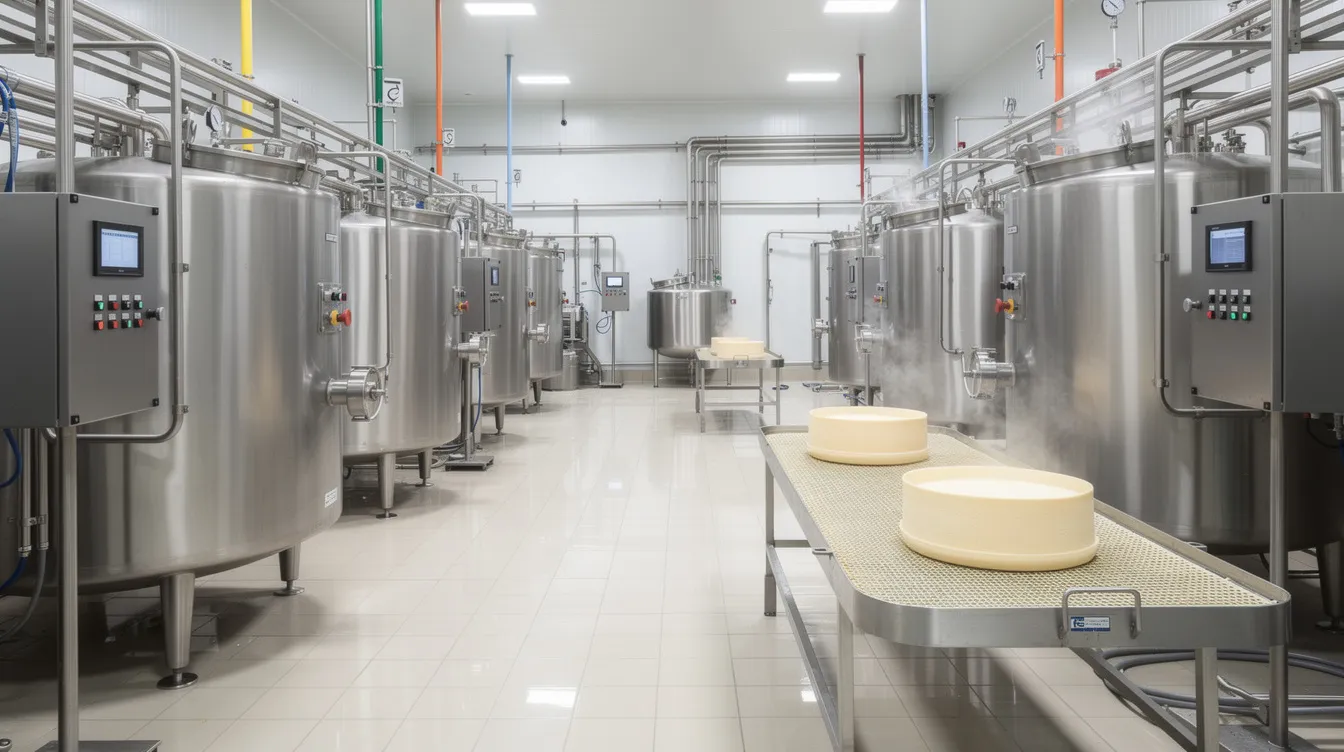
What Is a Cheese Plant Feasibility Study?
A cheese plant feasibility study is a decision tool that examines whether a proposed cheese manufacturing project should proceed as planned, be modified, postponed or dropped entirely. Feasibility studies evaluate technical, financial, regulatory and market factors in an integrated manner. A professional cheese plant feasibility report for India will normally cover all these dimensions together, including an executive summary and market analysis.
To clarify common confusion, here is how related documents differ:
- A basic project idea is a concept-for example, “I want to start a 10 TPD mozzarella cheese unit near Anand, Gujarat.”
- A pre-feasibility study is a preliminary assessment that helps confirm project viability before significant investment. It assesses whether the concept warrants deeper analysis.
- A feasibility study is a rigorous, high-level viability check across market, technical, financial and risk dimensions.
- A detailed project report (DPR) goes deeper into design, engineering, cost estimation and projections for a project that has already passed the feasibility test.
- Financial projections (P&L, cash flow statement, balance sheet) quantify the expected financial outcomes.
- CMA Data is prepared specifically for submission to banks as part of the loan appraisal process.
A pre-feasibility study assesses project viability before significant investment, preventing costly mistakes in dairy projects. Feasibility focuses on whether the project is worth doing at all under current assumptions, while a DPR refines the design of a project that has cleared the initial feasibility filter.
Why a Feasibility Study Is Critical Before Setting Up a Cheese Manufacturing Plant
Cheese manufacturing involves high capital expenditure, sustained working capital needs and heavy dependence on milk supply and energy prices. Building a cheese plant requires careful consideration of capital investment and infrastructure. Wrong decisions at this stage-oversized capacity, unsuitable location, inadequate milk sourcing-are difficult and expensive to reverse.
A well-structured feasibility study helps:
- Validate market demand for the chosen cheese types and pack sizes in the target geography
- Select a realistic and bankable plant capacity and product mix
- Evaluate raw milk availability, quality and procurement cost within a practical radius
- Choose suitable technology and machinery vendors for the new plant
- Estimate total project cost and funding requirement, including contingency
- Assess working capital needs considering seasonality in milk and demand
- Examine projected profitability, cash flow and DSCR
- Identify key project risks and build mitigation strategies to manage operational and market risks
Key factors to evaluate feasibility include market demand, site location and regulatory compliance. Early-stage feasibility often prevents over-investment in large, underutilised plants or sub-scale micro units that can never cover fixed costs. Pre-feasibility studies also provide a cost-per-tonne model that helps promoters compare alternatives before committing resources.
Market Feasibility of a Cheese Manufacturing Plant
Rising consumption of pizzas, burgers, baked snacks and ready-to-eat foods in India-especially post-2020-has driven increasing demand for mozzarella, processed cheese and cheddar. Globally, the cheese market was valued at USD 98.0 billion in 2025 and is projected to reach USD 153.08 billion by 2034, growing at a CAGR of 5.1% from 2026 to 2034. In India, volume grew from about 151,000 tonnes in 2020 to 258,000 tonnes in 2025. Current market data is essential for accurate feasibility studies.
Globally, cheese consumption patterns are rising: in Brazil, per capita cheese consumption grew from 2.5 kg to 5.6 kg between 2007 and 2022, and is projected to reach 7.974 kg by 2030. Around 90% of consumers consume dairy products several times weekly, confirming the structural demand base for cheese as a dairy product.
Market segments to analyse for an Indian cheese manufacturing plant include:
- Retail consumers via modern trade, kirana stores and e-commerce
- Hotels, restaurants and cafés (HORECA)
- Quick-service restaurants and pizza chains
- Bakeries, cloud kitchens and institutional kitchens
- Food-processing companies that use cheese as an ingredient
- Wholesalers and distributors
- Private-label customers
- Potential export channels, where quality and compliance justify it
You must conduct thorough market research to identify target consumer segments. The assessment should cover target geography (typically a 300–500 km radius around the proposed project), competitor brands, local dairy cooperatives and existing cheese processors. Demand assumptions should be supported by distributor discussions, buyer enquiries, letters of intent or credible industry reports-not just generic national data. Market analysis should assess target audience and distribution channels alongside pricing strategy, expected customer margins, credit terms and customer concentration risks.
Product Mix Feasibility and Its Impact on the Cheese Plant
Choosing the right combination of mozzarella, processed cheese, cheddar, slices, spreads, shredded cheese and bulk blocks is central to any cheese plant feasibility study. The chosen product mix directly affects:
- Required machinery-mozzarella stretching and forming equipment differs substantially from sliced processed cheese lines
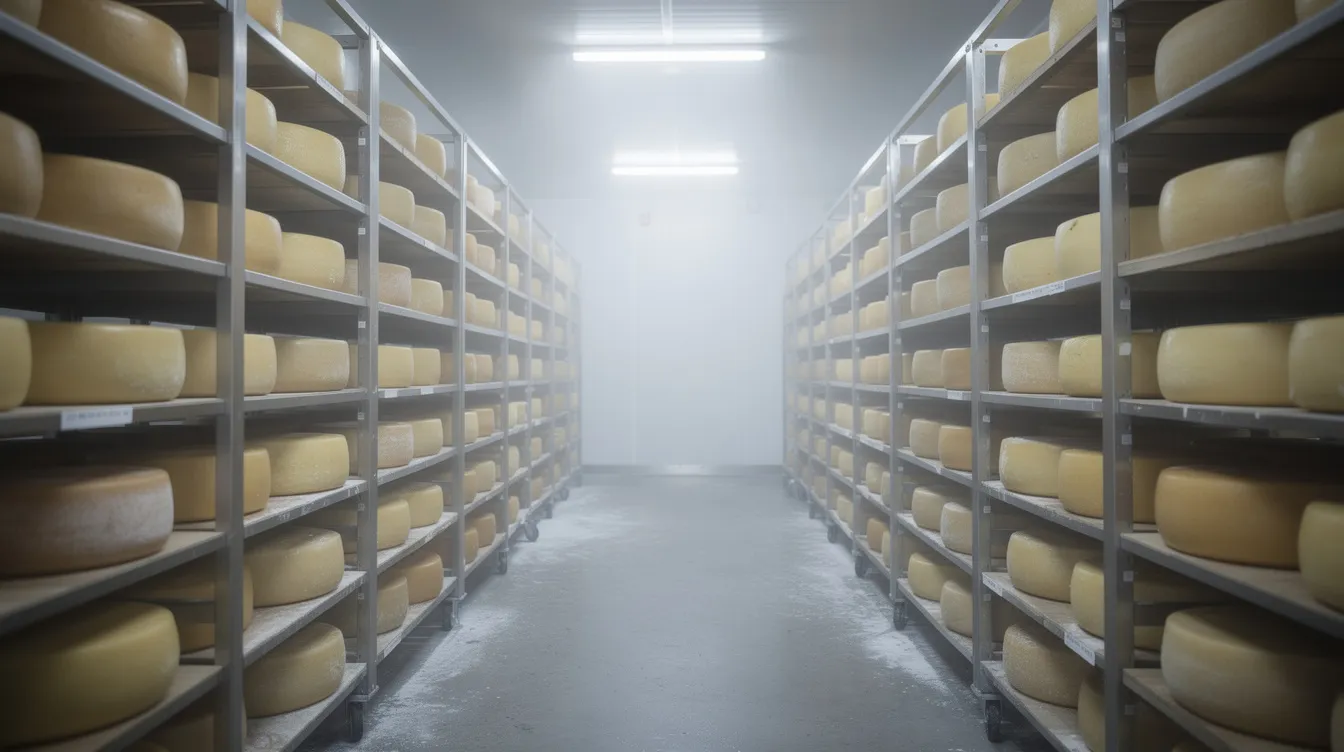
- Need for maturation rooms-cheddar and certain hard cheeses require climate-controlled ripening rooms; aged cheeses require climate-controlled ripening rooms to prevent spoilage
- Cold storage space and inventory days
- Production cycle length and batch planning
- Gross margins and by-product utilisation
- Working-capital intensity, particularly for ripened cheeses where inventory days can stretch to months
Different SKUs-200 g retail packs versus 2–5 kg institutional blocks-influence packaging machinery, labelling and distribution logistics. A plant focused on convenience products like cheese slices and spreads will have a very different infrastructure profile from one producing aged cheddar blocks.
For deeper product-specific analysis, I recommend reviewing these specialised guides:
- Cheese plant capacity and product mix planning for detailed capacity decisions
- Mozzarella cheese manufacturing plant technical and commercial requirements
- Processed cheese manufacturing plant configuration and market fit
- Cheddar cheese manufacturing plant with maturation and cold-storage considerations
Technical Feasibility: Capacity, Process Flow and Plant Design
As a practising CA, I always coordinate with technical consultants or dairy technologists to ensure that financial numbers and technical configuration are aligned. A disconnect between the two is one of the fastest ways to produce a misleading feasibility study.
Core technical elements to cover:
- Proposed installed capacity (e.g., X tonnes per day) with realistic ramp-up plan. A cheese manufacturing plant can produce 5,000 to 10,000 MT annually at scale.
- Number of working days per year and shifts per day (e.g., 300 days, 2 shifts)
- Milk quality requirements-fat, SNF, microbiological standards-and their impact on cheese yield. Cow milk is typically standardised to 3.5–4.0% fat, while buffalo milk at 5–6% fat produces higher yields.
- Cheese recovery assumptions for each product line: soft cheeses yield 15–18%, while cheddar and natural cheeses drop to 10–12%
- Process flow from milk reception, clarification, standardisation and pasteurisation through coagulation, curd cutting, whey handling, pressing, brining, stretching (for mozzarella), moulding, cooling, packaging and cold storage
Cheesemaking requires continuous, high-pressure water supply and reliable electrical power-any interruption can ruin an entire batch. The availability of skilled labour is important for cheese production, particularly for quality-sensitive operations like curd handling and cheese grading.
Plant layout must consider smooth product flow, segregation between raw and finished zones, CIP systems, hygiene standards and future expansion possibilities. Automation level-manual, semi-automatic or automatic-affects labour cost, consistency and capital cost significantly.
Supporting systems include quality-control laboratory, online testing, cold rooms, maturation chambers, packaging room, whey handling, effluent treatment and utilities integration. For a detailed process walkthrough, refer to the guide on industrial cheese production process.
Raw Milk Procurement Feasibility
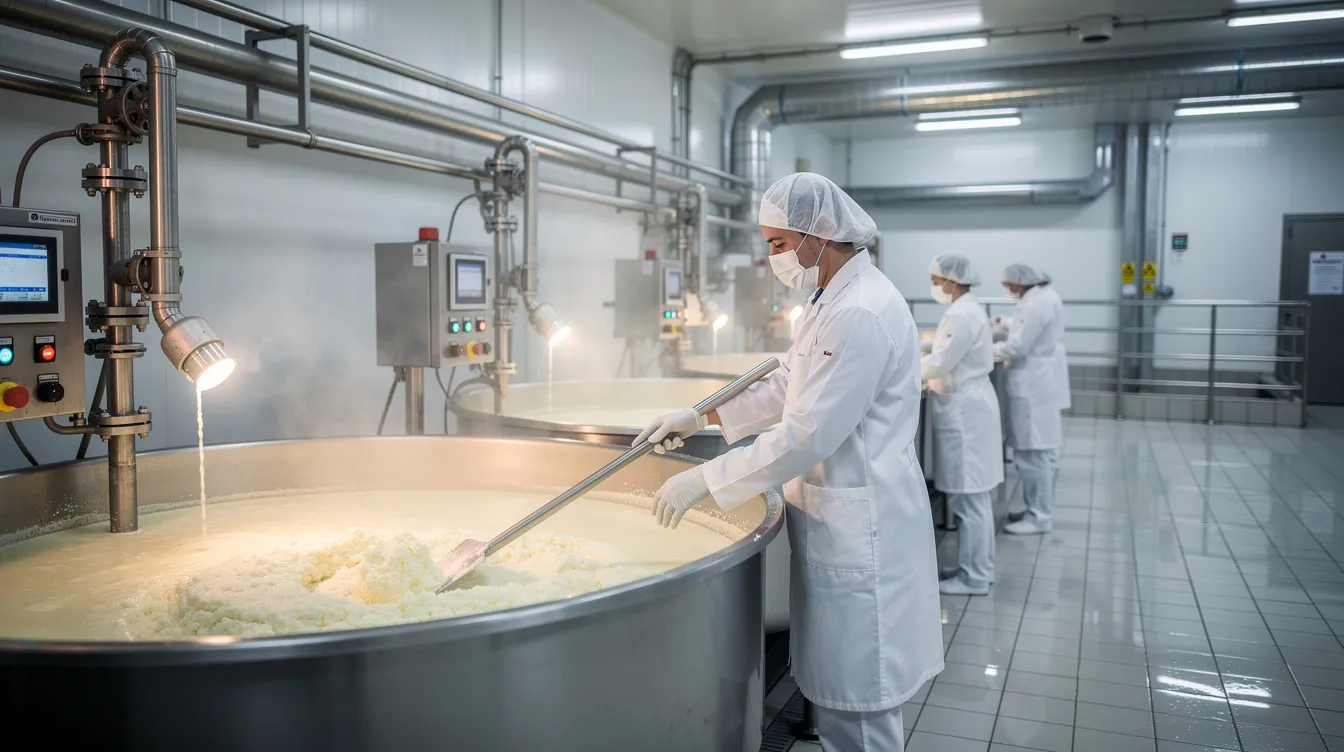
In any cheese manufacturing business feasibility, raw milk procurement is usually the single largest cost element and a key risk factor. Access to a reliable, high-quality milk source is essential for cheese production, and milk supply consistency is crucial for production viability.
Key aspects to analyse:
- Daily milk requirement at full capacity. For perspective, cheese production requires approximately 8,800 litres of milk per tonne of mozzarella.
- Seasonal milk availability-flush season (October–March) brings lower prices and higher volumes; lean season procurement prices can rise sharply from ₹28–35/L to ₹38–48/L.
- Practical procurement radius considering road conditions, chilling centres and logistics cost
- Use of cow, buffalo or mixed milk and how that affects yield, texture and product positioning
- Milk chilling and transportation arrangements
- Price-setting mechanism with farmers, cooperatives or bulk suppliers. Under the DIDF framework, farmers receive approximately ₹46.15/L for full-cream milk.
- Impact of competing dairies and local chilling plants on cost stability
- On-site testing (fat, SNF, adulteration checks) and rejection protocols
Here is a short illustration of why milk cost assumptions matter: if your planned yield is 12% (120 kg cheese per 1,000 litres of milk) and milk costs ₹35/L, your milk cost per kg of cheese is approximately ₹292. If actual yield drops to 10.5% due to poor milk quality, the same milk cost per kg of cheese rises to ₹333-a 14% increase that directly erodes net profit. Unrealistic assumptions on milk price or cheese yield can make a project look highly profitable on paper but unviable in practice.
Location, Land and Infrastructure Assessment
Plant location decisions are central to both procurement and market logistics. A poorly chosen location can add ₹2–5 per kg in transport costs, reduce product shelf life and increase working-capital lock-up.
Evaluation points:
- Proximity to milk-surplus districts and to key sales centres, including major cities and industrial clusters
- Road connectivity for tankers and refrigerated vehicles, including highway access
- Availability and reliability of power supply, transformer capacity and DG backup
- Adequate water source and quality for process, CIP and boiler use
- Land size to accommodate factory building, raw milk reception, utilities, ETP, cold storage and future expansion
Compliance-related considerations include zoning restrictions, food-processing approvals, effluent disposal norms and distance from residential areas. Location choices influence logistics cost per kg, product quality, working-capital lock-up in transit and even employee retention.
Machinery and Technology Assessment for a Cheese Manufacturing Plant
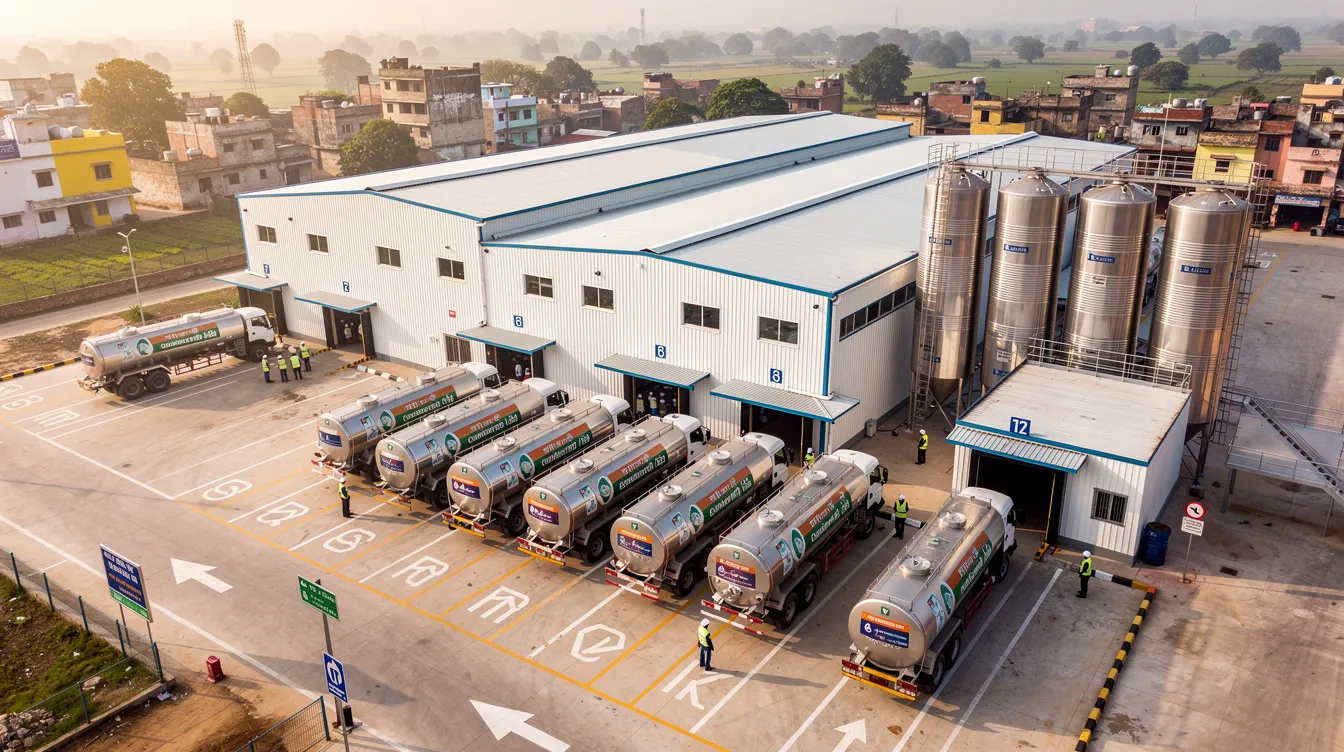
Different cheese products require overlapping but distinct sets of equipment, which must be aligned with the final capacity plan. Machinery costs are the largest portion of capital expenditure in most cheese plant projects.
Major machinery groups include:
- Milk reception, weighing and chilling systems
- Pasteurisers, homogenisers, standardisation equipment
- Cheese vats, curd cutting tables, draining and cheddaring equipment
- Stretching and moulding machines for mozzarella
- Cookers, blenders and forming equipment for processed cheese
- Presses, moulds and brining systems
- Slicers, shredders, dicing equipment and vacuum packers
- Cold rooms, blast chillers and maturation chambers
- CIP systems, material-handling equipment and laboratory instruments
When evaluating equipment costs, I advise promoters to obtain multiple vendor quotations with clear capacity and utility consumption details. Distinguish between rated capacity and realistic throughput under Indian operating conditions. Budget for installation, commissioning, freight, duties and basic spares. Evaluate after-sales support and availability of local technicians. Always maintain a contingency provision on machinery and utilities to cover specification changes or price movements between quotation and order.
For typical price ranges and configuration options, refer to the guide on cheese plant machinery and equipment cost.
Regulatory and Quality Feasibility
Regulatory compliance and food-safety systems must be built into the project at the feasibility stage to avoid costly redesign later. Dairy processing is heavily regulated to ensure food safety, and feasibility studies should identify all permits and licenses required for dairy processing.
Key areas:
- FSSAI registration and licensing, including compliance with milk and milk product standards (moisture, fat-in-dry-matter, pH, microbiological norms)
- Factory-related approvals-factory licence, building plan sanction, fire and safety clearances
- State Pollution Control Board permissions for effluent and emissions, including ETP requirements. For small dairy-processing units (50–100 KLD), ETP CapEx ranges from ₹35–70 lakh up to ₹1.5–3 crore for ZLD-ready systems.
- Electrical safety clearances and boiler registrations
- Packaging and labelling rules under legal metrology requirements
- GST registration and entity formation
Food safety standards must be adhered to in dairy processing. Implementing quality systems like HACCP-based controls, traceability from milk collection to final product, product recall procedures and routine lab testing is essential. Specific approvals vary by state and local authority-promoters should consult local professionals for the latest requirements.
Project Cost Assessment for a Cheese Manufacturing Plant
A comprehensive cost model must cover all capital expenditure and the initial margin money for working capital before presenting the project to investors or bankers. Capital expenditure for a cheese plant includes land, machinery and building construction. Initial project investments include equipment, legal expenses and operational costs.
Major components of project cost:
| Component | Typical Coverage |
|---|---|
| Land and site development | Purchase or lease, boundary wall, approach road, levelling |
| Factory building and civil works | Production hall, cold rooms, administration, utilities area |
| Plant and machinery | All cheese production, refrigeration and cold storage equipment |
| Electrical installations | Transformers, DG sets, internal electrification |
| Utilities | Steam or hot-water systems, compressed air, water treatment |
| Laboratory and QC equipment | Testing instruments, sampling systems |
| ETP and waste handling | Effluent treatment, solid-waste management |
| Office and IT | Furniture, computers, ERP or accounting software |
| Vehicles | Milk tankers, insulated or refrigerated delivery vans |
| Pre-operative expenses | Consultancy, design, interest during construction, trial runs |
| Contingency | Typically 5–10% on machinery and civil cost |
| Working-capital margin | Initial cash requirement for operations |
A small cheese plant line typically costs several million pounds to build in international terms. For reference, a milk-processing plant of 10,000 LPD in India carries a CapEx of ₹5.05–7.30 crore excluding land; adding cheese lines, cold storage and ETP raises this materially. Larger integrated projects (50,000–100,000 LPD) can range from ₹60–104 crore depending on product mix.
It is important to distinguish between costs that can normally be financed by term loans and those that promoters must fund themselves. For deeper cost breakdowns, see cheese manufacturing plant setup cost in India and cheese plant project cost and means of finance.
Means of Finance and Promoter Contribution
A balanced capital structure is essential for the commercial viability and bankability of a cheese factory feasibility study. Typical sources of finance include:
- Promoter’s equity or share capital contribution
- Term loan from banks or financial institutions for eligible project cost
- Unsecured loans from promoters or related parties, subject to bank acceptance
- Working-capital limits (cash credit, WCDL, LC/BG facilities)
- Government subsidies or incentives, where applicable, subject to scheme rules and approval
Under schemes like the Dairy Processing & Infrastructure Development Fund (DIDF), promoter margin is often 20%, with the loan component covering 80%. Interest rates for dairy-processing project loans currently range from approximately 8.50–9.55% p.a. at banks like SBI. Working capital finance through NDDB channels carries rates around 7.70% p.a. (floating).
Promoter contribution must be realistic and in cash-not only in kind. The debt-equity ratio should align with expected cash generation and DSCR. Uncertain subsidies should not be treated as guaranteed funding before formal sanction. Securing funding requires presenting a credible financial plan that matches the project’s risk profile.
Revenue Model Assessment for Cheese Production
The revenue model converts technical and market assumptions into product-wise sales projections, which then feed financial projections.
Key aspects:
- Product-wise production volumes based on capacity utilisation ramp-up (e.g., 50%, 65%, 75%, 80% in initial years)
- Expected cheese recovery from milk for each product
- Realistic selling prices per kg, differentiated for institutional and retail segments. In India, mozzarella blocks sell at different price points than retail-packed processed cheese slices-the weighted average realisation must be modelled carefully.
- Packaging sizes and MRP structures for consumer packs versus bulk blocks
- Distributor and retailer margin structures
- Realisation from whey or by-products
- Adjustments for sales returns, trade schemes and promotional discounts
A specialised guide on cheese manufacturing plant revenue model provides detailed formats and examples for revenue projection.
Operating Cost Assessment and Cost Model
The cost model is central to any cheese manufacturing plant feasibility assessment because small percentage changes in milk cost or yield can materially change margins. The operating cost for cheese plants is driven by raw materials, especially milk. Operating costs for cheese manufacturing are primarily driven by milk, accounting for 70–80% of expenses.
Major operational costs:
- Raw milk and standardisation ingredients (cream, skim milk)
- Starter cultures, rennet, emulsifying salts, flavours, salt and other recipe inputs
- Packaging materials (films, pouches, cartons, labels)
- Power, fuel, steam, refrigeration and water costs
- Direct labour, technical staff and management salaries
- Repairs, maintenance and spares
- Quality-control and laboratory expenses
- Cold storage running costs
- Transportation and distribution, including refrigerated logistics
- Selling expenses, trade discounts, promotional spend
- Administrative overheads, insurance, statutory fees
- Interest on working-capital borrowings
A per-kg cost model should be built for major products. For illustration (not a benchmark): if mozzarella has a variable cost of ₹280/kg and sells at ₹380/kg, the contribution margin is ₹100/kg. If processed cheese spread has a variable cost of ₹220/kg and sells at ₹310/kg, the contribution is ₹90/kg but with lower capital costs. This demonstrates why product mix selection directly affects gross profit and overall operational efficiency.
Financial Feasibility and Integrated Projections
Technical and market feasibility must ultimately translate into robust financial statements for at least 7–10 projected years for a typical Indian cheese project. The financial analysis section should project revenues and assess operating costs comprehensively.
Projection components include:
- Year-wise projected profit and loss account showing revenue, cost of goods sold, operating expenses, interest, depreciation and tax
- Projected balance sheet including fixed assets, working capital, term loans and net worth
- Cash flow statement highlighting operating, investing and financing cash flows
- Fund-flow statement for the project implementation period
- Working-capital assessment detailing inventory, receivable, payable and bank-finance needs
- Term-loan repayment schedule showing instalments, interest and outstanding balance
Assumptions must be internally consistent across production volumes, sales, raw-material consumption, inventory levels, credit terms and borrowing figures. Taxation, depreciation rates and interest costs must reflect applicable law and indicative lender terms as of the projection year.
For formats and banking expectations, refer to the detailed guide on cheese plant financial projections.
Profitability Assessment and Return Analysis
Stakeholders should not look only at net profit but also at cash-based and return-based indicators before declaring a cheese plant project viable. Gross profit margins for cheese typically range between 30–40% at plant level, but actual margins vary significantly based on product mix, scale and input costs.
Key metrics to assess:
- Gross contribution per kg or per tonne of cheese
- EBITDA margin at plant level
- Profit before tax and profit after tax
- Return on investment and return on capital employed
- Payback period on promoter’s equity and on total project cost. The project payback period for cheese manufacturing can be around four years in well-structured projects.
As a simple illustration: if total capital investment is ₹10 crore, annual net profit after stabilisation is ₹2.5 crore and annual debt repayment is ₹1.2 crore, the internal rate of return and net present value calculations must confirm that the project generates positive value. A healthy accounting profit without adequate operating cash flows can still lead to stress in term-loan repayment and working-capital management.
For deeper margin analysis, refer to the guide on cheese manufacturing plant profitability.
Working-Capital Feasibility and Inventory Cycle
Cheese plants often face heavy working-capital requirements because of high raw-milk input values, substantial inventory of maturing cheese and extended credit to trade customers.
Working-capital elements:
- Raw milk and ingredient inventory days (daily receipts versus production schedules)
- Packaging-material stocks and reorder policies
- Work-in-process and maturing cheese inventory-cheddar may require 3–12 months of maturation
- Finished-goods inventory in cold rooms and in transit
- Trade receivables based on credit periods to distributors, retailers and institutional buyers
- Credit available from suppliers
- Minimum cash balance for routine operating expenses
Projects focused on fresh mozzarella or processed cheese have far shorter inventory cycles than those with significant matured-cheese portfolios. A cheddar-heavy product mix can multiply working-capital requirements by two to three times compared to a fresh-cheese plant of similar capacity.
Working-capital assessment leads to bank-finance limits (cash credit or working-capital term loan) and promoter margin requirements. For detailed formats, see the guide on cheese plant working capital requirement.
DSCR and Loan Repayment Capacity
DSCR (Debt Service Coverage Ratio) is the ratio of cash available for servicing debt to the total debt servicing requirement (interest plus principal) in a given year.
Illustrative DSCR formula:
DSCR = (Net Profit After Tax + Depreciation + Interest on Term Loan) ÷ (Interest on Term Loan + Principal Repayment Instalment)
For example, if annual cash available for debt servicing is ₹2.40 crore and annual debt obligation is ₹1.20 crore, the DSCR is 2.00. A sample DPR under the PM-FME scheme for a 108,000 kg/year cheese unit showed a DSCR of approximately 2.92-comfortably above most lender thresholds.
Critical considerations:
- Year-wise DSCR is more important than average DSCR. An apparently acceptable average can hide serious stress if one or two years show very low coverage during the ramp-up phase.
- Moratorium periods, repayment tenures and instalment structures directly affect cash-flow comfort.
- Lenders look for DSCR levels consistent with their internal policies-these expectations should guide the structuring of debt and promoter contribution.
For deeper DSCR illustrations, refer to the guide on cheese project DSCR and loan repayment capacity.
Break-Even and Capacity-Utilisation Analysis
Break-even analysis helps promoters understand the minimum sales or capacity utilisation level at which the cheese manufacturing unit covers all its costs.
Key concepts:
- Fixed costs: salaries, depreciation, interest, basic utilities, administrative expenses
- Variable costs: milk, ingredients, packaging, power (partially), distribution
- Contribution per unit: selling price minus variable cost per kg
- Break-even volume: Fixed Costs ÷ Contribution per kg
Illustration (for reference only, not an industry benchmark):
| Item | Amount |
|---|---|
| Annual fixed costs | ₹1.80 crore |
| Average contribution per kg | ₹90 |
| Break-even volume | 200,000 kg/year |
| Installed capacity (at 80% utilisation) | 400,000 kg/year |
| Break-even capacity utilisation | 50% |
| Margin of safety | 30 percentage points |
In the PM-FME example mentioned earlier, break-even utilisation was approximately 40–50% in initial years. A margin of safety above 20 percentage points provides reasonable resilience, particularly for projects financed with higher debt.
Sensitivity and Scenario Analysis for Cheese Plant Viability
A robust cheese plant feasibility study must test how results change when key assumptions are varied. Relying only on a single “best guess” case is insufficient for any serious profitability analysis.
Key variables to stress:
- Increase in milk procurement cost by 5%, 10% and 15%. Globally, UK farm-gate milk prices rose by over 50% since the mid-2010s, reaching 33.99 pence per litre in April 2026. Every 1 penny increase in milk price adds about £88 per tonne of cheese-a useful reference for how price volatility transmits through to cheese cost.
- Reduction in cheese yield below planned levels
- Lower selling prices due to competitive pressure
- Slower ramp-up in capacity utilisation
- Increase in project cost due to delays
- Higher interest rates on term loan or working capital
- Longer receivable cycles increasing working-capital needs
Prepare at least three scenarios: base case (most realistic), optimistic case (better demand and stable input costs) and conservative case (adverse milk price or slower sales growth). The sensitivity analysis should show how net present value, internal rate of return, DSCR and payback period vary under each scenario. A positive NPV indicates project feasibility in over 80% of Monte Carlo simulations in well-structured projects, but a project should not be declared feasible merely because the most optimistic scenario produces an attractive return.
Major Risks in Cheese Manufacturing and Mitigation Measures
Every cheese plant project faces technical, commercial and financial risks. Cheese production requires effective risk assessment and contingency planning. Strategies to manage operational and market risks are essential in a feasibility study.
| Risk | Mitigation |
|---|---|
| Milk price volatility and seasonal availability | Diversified procurement from multiple suppliers, long-term arrangements, buffer stock planning |
| Inconsistent milk quality affecting yield | On-site testing, rejection protocols, supplier grading systems |
| Lower-than-expected cheese recovery | Process audits, training, conservative yield assumptions in projections |
| Dependence on few institutional buyers | Diversify across retail, HORECA, QSR and distributor channels |
| Product spoilage or cold-chain failures | Adequate refrigeration backup, temperature monitoring, insurance |
| Longer inventory holding for matured cheese | Phased product introduction, adequate working capital, cold-room capacity |
| Competitive pricing pressure from established brands | Focus on quality, niche products, institutional relationships |
| Project delays and cost overruns | Realistic implementation schedule, contingency provision |
| Shortage of skilled technical manpower | Training programmes, competitive wages, tie-ups with dairy institutes |
| Regulatory non-compliance | Proactive licensing, HACCP implementation, periodic audits |
The competitive landscape in various industries, including the dairy market, means that new consumers must be attracted through differentiated product quality, reliable supply and a reasonable price.
Related Cheese Project Guides
The following resources on ProjectReportBank.com provide deeper coverage on specific aspects of cheese plant planning and complement this feasibility-focused article:
- Cheese plant capacity and product mix – Detailed guidance on selecting installed capacity and matching product mix to market demand and technical capability.
- Industrial cheese production process – Step-by-step breakdown of production processes from milk reception to finished cheese, covering making cheese at commercial scale.
- Cheese plant machinery and equipment cost – Comprehensive review of equipment costs, vendor evaluation and configuration options for Indian cheese plants.
- Cheese manufacturing plant setup cost in India – Total cost breakdown covering land, civil work, machinery, utilities and pre-operative expenses.
- Cheese manufacturing plant revenue model – Formats and examples for building product-wise revenue projections.
- Cheese plant financial projections – Integrated financial statements, assumption frameworks and banking presentation formats.
Bankability of the Cheese Project
Bankability is distinct from pure profitability. A proposed project can appear profitable but still be difficult to finance if its risk profile, documentation or promoter credentials are weak.
Banks and financial institutions in India typically examine:
- Promoter background, qualifications, dairy industry or food-processing experience and credit history
- Detailed market assessment and confirmed or potential customer relationships
- Milk-procurement strategy and existing arrangements with farmers or societies
- Technical quotations and machinery selection, including vendor credentials
- Comprehensive project cost estimates, means of finance and promoter contribution details
- Security and collateral available, subject to scheme requirements and bank policy
- Financial projections, working-capital assessment and DSCR analysis
- Implementation schedule and readiness-land possession, basic approvals, quotations, own funds availability
Strong technical and financial viability significantly improves bankability, but final decisions rest with the lending institution. A professional cheese plant DPR for bank loan normally follows and builds upon the feasibility findings, addressing lender-specific formats and documentation requirements. Industry trends, the global economy and the outlook for dairy production all influence lender appetite.
Documents and Information Required for a Cheese Plant Feasibility Study
Feasibility quality depends heavily on the accuracy and completeness of initial information shared by the promoters. Structured information allows the feasibility study and subsequent detailed project report to be customised to the specific cheese manufacturing project rather than being generic.
Typical data and documents to be gathered:
- Promoter profiles, experience details and existing business activities
- Proposed location details, basic land documents or lease terms, site photographs
- Indicative product range and target plant capacity with preferred product mix
- Information on potential suppliers for milk procurement, current local milk prices and existing relationships
- Preliminary market data, competitor list and any discussions with distributors or institutional buyers
- Vendor quotations or budgetary offers for major machinery and utilities
- Rough civil and building estimates or architect’s concept
- Utilities data (power availability, water source, proposed boiler or refrigeration systems)
- Regulatory and licensing information, if any applications have been initiated
- Broad financing plan including available promoter funds, proposed bank term loan and working-capital requirement
- Last 2–3 years’ financial statements of existing businesses from reliable sources, where promoters already operate companies
How CA Manish Gugliya and ProjectReportBank.com Can Assist
As CA Manish Gugliya, FCA, DISA (ICAI), practising since 2006, I regularly assist Indian entrepreneurs and dairy companies in evaluating manufacturing projects, including cheese manufacturing plant feasibility. My work draws on practical experience across in depth analysis of dairy plant economics, DPR preparation and bank-finance proposals.
Services I can assist with:
- Customised cheese plant feasibility studies covering market, technical and financial viability
- Detailed project reports aligned with bank formats and technical consultant inputs
- Project-cost assessment and means-of-finance planning, including debt structuring
- Integrated financial projections and working-capital assessments
- Assistance in preparing CMA Data and related financial information for bank-loan proposals
- DSCR analysis, break-even and sensitivity analysis tailored to the specific project
While professional documentation improves the project’s presentation and clarity, it cannot guarantee profitability, loan sanction or subsidy approval. I invite readers to reach out through ProjectReportBank.com for a preliminary discussion regarding their proposed cheese plant or expansion plan.
Frequently Asked Questions on Cheese Plant Feasibility
Is a cheese manufacturing plant always profitable in India?
Not necessarily. Profitability depends on local milk economics, plant size, product mix, selling prices, operational efficiency and finance cost. Some projects deliver strong returns by the fifth year while others struggle due to weak assumptions or poor execution. A project-specific profitability analysis is essential before committing capital.
How early should I start the cheese plant feasibility study?
Feasibility work should start before finalising land or paying major advances for machinery. At this early stage, capacity, configuration and funding structure can still be changed without large sunk costs. In my experience, promoters who invest in feasibility assessment early save significantly more than the study cost itself.
Can an existing dairy plant be expanded into cheese manufacturing?
Many liquid-milk dairies can add cheese lines if they have adequate milk supply, space and utilities. A focused feasibility study should compare adding a cheese section to building a new plant, evaluating infrastructure requirements, equipment costs and financial viability of each option.
What size of cheese plant is suitable for a new entrepreneur?
There is no universal ideal size. It depends on milk availability, market access, promoter capital and risk appetite. Feasibility analysis often suggests starting with a scalable medium capacity rather than an under-scale micro plant or an over-ambitious mega project. Long term sustainability matters more than initial scale.
How much milk is required for a cheese manufacturing unit?
Milk requirement depends on the cheese type and yield. As a reference, mozzarella production requires approximately 8,800 litres of milk per tonne. For cheddar, yields are lower (10–12%), requiring even more milk per tonne. Dairy production planning must account for seasonal variation in availability and quality.
Which cheese product is best for a new plant?
Mozzarella currently dominates about 35% of the Indian market by type and benefits from strong QSR and foodservice demand. However, the “best” product depends on local market conditions, buyer relationships, milk type and the promoter’s business plan. Product selection should emerge from the feasibility study, not precede it.
How is DSCR calculated for a cheese project?
DSCR equals cash available for debt servicing (net profit after tax plus depreciation plus interest on term loan) divided by total debt servicing obligation (principal repayment plus interest on term loan) for each year. An average DSCR above the lender’s threshold is necessary, but year-wise analysis matters more. This is where a detailed project report with year-by-year cash flow analysis provides valuable insights.
What are the major risks in cheese manufacturing?
Key risks include milk price volatility, inconsistent milk quality, lower-than-expected cheese recovery, cold-chain failures, dependence on few buyers, competitive pricing and regulatory non-compliance. Each risk should have a documented mitigation strategy in the feasibility study. A reference to the environmental impact of dairy processing, including whey and effluent management, should also be included.
Can government subsidy be included in the project cost?
Eligible subsidies under schemes like PM-FME, DIDF or state incentive programmes can be considered in the means of finance, but they should not be treated as assured funding unless formally approved. Conservative feasibility modelling assumes the project remains viable even without the subsidy component.
Is a feasibility study required for a bank loan?
While banks primarily require a DPR and CMA Data, the study aims of a feasibility assessment feed directly into these documents. Most key players in dairy lending expect to see evidence that market, technical and financial viability have been examined. The feasibility study forms the analytical foundation for bank-finance documentation.
What determines the feasibility of a cheese plant?
Feasibility is determined by the integration of market demand validation, raw milk procurement viability, technical configuration, total cost of capital investment, working-capital cycle, projected profitability, cash flow generation and debt repayment capacity. No single factor-whether attractive market data or low initial investment-establishes feasibility on its own.
What is the difference between a feasibility study and a DPR?
A feasibility study determines whether the proposed project should proceed at all. A DPR (detailed project report) refines the project design, provides engineering details, cost estimates and integrated financial projections for a project that has already passed the feasibility test. Both are complementary but serve different purposes in the investment decision process.
Conclusion
A cheese manufacturing plant is a capital-intensive, technically demanding project where market demand alone does not guarantee success. The dairy industry in India offers genuine investment opportunities, but integrated assessment of market feasibility, raw milk availability, technical design, project cost, working-capital cycle, profitability, cash flow and DSCR is essential before committing resources.
A disciplined cheese plant feasibility study enables promoters and investors to take informed decisions, refine project scope and improve bankability before large sums are committed. Whether you are evaluating a new plant or expanding an existing dairy plant into cheese production, structured analysis is non-negotiable.
I invite Indian entrepreneurs, dairy companies and investors to contact me, CA Manish Gugliya, through ProjectReportBank.com for assistance with a customised cheese plant feasibility study, DPR, financial projections or bank-finance proposal tailored to your specific project.