
Key Takeaways
- Dairy project term loan assessment evaluates both eligible project cost and realistic repayment capacity – not simply how much a promoter wants to borrow.
- Banks separately scrutinise project cost, means of finance, dairy plant profitability, cash flow, DSCR and working capital before arriving at the final term loan amount.
- A bankable DPR, robust dairy plant financial projections and properly prepared CMA Data strengthen the appraisal process, though they never guarantee sanction.
- Term loans primarily finance fixed capital assets – civil work, dairy processing machinery, utilities, ETP, cold storage – while milk procurement and day-to-day expenses are funded through working capital limits.
- Actual loan eligibility, interest rates, collateral and repayment terms depend on lender-specific policies, risk profile of the dairy project and overall financial strength of the promoters.
Introduction – Why Dairy Project Term Loan Assessment Matters
For any dairy processing plant in India, term loan appraisal is the backbone of project finance. It directly determines whether the project can practically be implemented. Assessing a term loan for a dairy farming project involves both technical feasibility and financial viability – verifying capital expenditure and working capital requirements together as one integrated proposition. Lenders check business plans and repayment capacity before extending any exposure.
Simply owning land, holding machinery quotations or presenting a DPR for a dairy project does not automatically establish eligibility for a dairy plant term loan. Banks appraise the entire proposal as a complete financial package: Project Cost → Eligible Project Cost → Promoter Contribution → Debt (Term Loan + Working Capital) → Revenue → Profitability → Cash Flow → DSCR → Repayment Capacity.
From a project finance perspective, lenders focus on two dimensions: what can prudently be financed through a term loan for a dairy processing plant, and whether projected cash flow from dairy operations can safely service that debt. This article walks through how banks and financial institutions typically assess such proposals.
What Is Dairy Project Term Loan Assessment?
Dairy project term loan assessment is the structured process by which a bank evaluates a dairy processing project’s cost, funding mix, risks and repayment capacity before deciding the quantum of term loan. It goes far beyond a techno economic feasibility study – it integrates technical, commercial and financial appraisal into a single credit decision.
A critical distinction exists between total project cost (everything needed to make the plant operational) and eligible project cost (the portion the lender is willing to finance under its internal norms). The components include promoter contribution as equity, the term loan for fixed assets, working capital limits for day-to-day milk procurement, and sometimes unsecured or subordinated loans treated as quasi-equity.
A ₹25 crore dairy plant project cost does not mean a bank will automatically sanction 70% of that amount. The bank may exclude ineligible items and adjust based on DSCR and cash flow constraints. This appraisal differs fundamentally from a small dairy farm loan or dairy farm loan online for purchasing milch animals; here the focus is on industrial-scale dairy processing plants, cold chain infrastructure and value-added dairy products.
What Can a Dairy Project Term Loan Finance?
Term loans for dairy processing plants are designed to finance long-term capital expenditure. Dairy farm loans can provide high amounts based on farm size and project scope, but lenders classify each item into term-loan-eligible or otherwise.
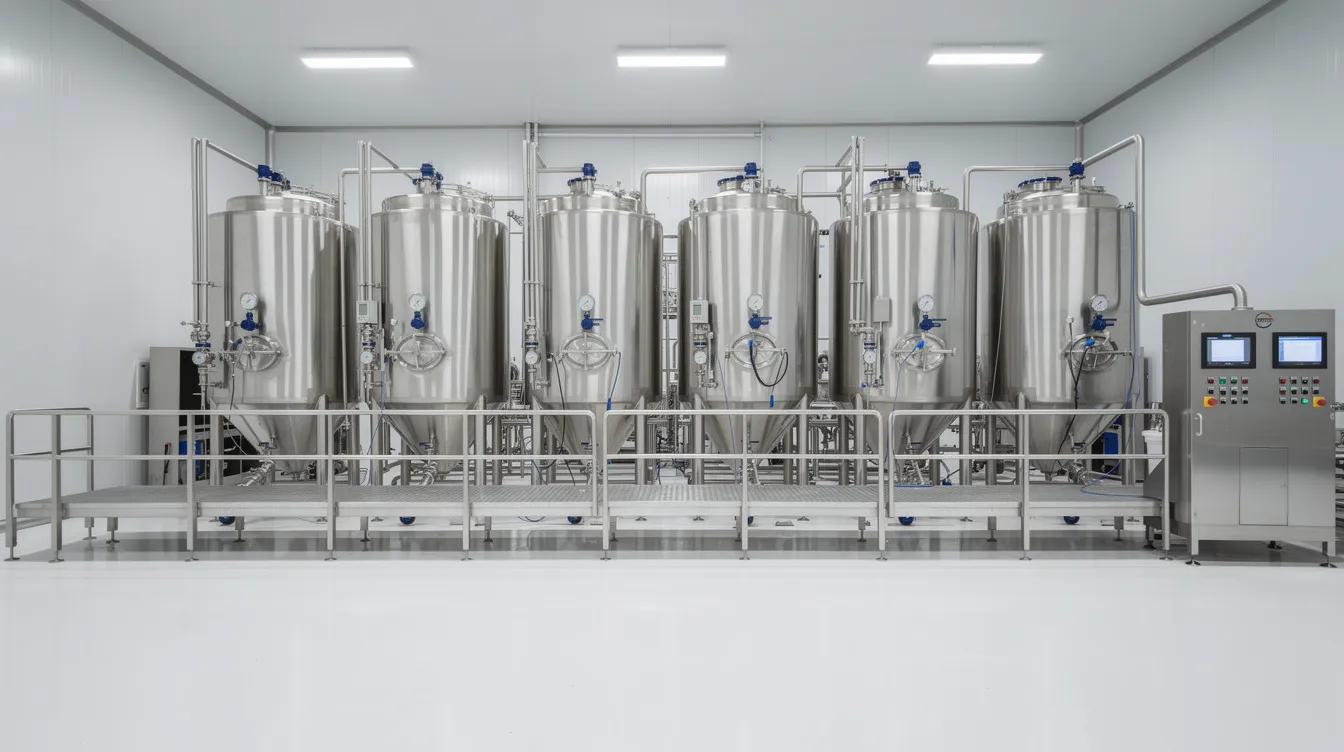
Major eligible capital expenditure heads include land development (where permitted), factory building and civil works, milk reception docks, processing machinery (pasteurisers, homogenisers, separators, cream separators, paneer and ghee lines), storage tanks, chilling systems, refrigeration plants, boilers, steam systems, electrical substations, DG sets, cold rooms, laboratories, packaging machinery and ETP. Associated costs such as installation, electrification, pre-operative expenses and a reasonable contingency margin are also generally eligible. In the dairy farm segment, dairy farm loans can also fund purchasing cows or buffaloes, constructing a cattle shed or setting up a gobar gas plant for processing dung alongwith bedding material and other farm wastes.
| Category | Typically Term Loan Eligible | Typically Working Capital / Not Eligible |
|---|---|---|
| Processing machinery, cold storage, ETP | Yes | – |
| Building & civil construction | Yes | – |
| Raw milk procurement cost | – | Working capital |
| Cattle feed, concentrate feed, fodder | – | Working capital (dairy farm) |
| Marketing & distribution expenses | – | Revenue expenditure |
| Salaries & wages (operational) | – | Working capital |
During bank appraisal, the sanctioning authority also checks whether any part of the project is financed through separate dairy schemes, government subsidies such as the Dairy Entrepreneurship Development Scheme (which provides capital subsidies for dairy projects), or soft loans, and adjusts the eligible project cost accordingly.
Step-by-Step Dairy Project Term Loan Assessment
Banks follow a logical sequence rather than treating the proposal as a simple dairy loan. The main appraisal steps are: (1) assess total project cost, (2) assess machinery and equipment, (3) appraise land, building and infrastructure, (4) examine installed capacity, (5) evaluate milk procurement, and (6) evaluate utilities. Each step feeds into the financial evaluation that follows. This framework mirrors how credit officers read a DPR for a dairy processing plant and cross-check assumptions before recommending sanction.
Step 1 – Assess Total Dairy Plant Project Cost
Banks scrutinise the total project cost line by line. For a mid-sized 1–2 LLPD dairy plant, the appraisal covers land development, factory building, plant and machinery, utilities, refrigeration, ETP, cold storage, laboratory equipment, furniture, essential servants quarters, pre-operative expenses and contingency. For detailed benchmarks, promoters should review dairy plant project cost and means of finance.
Credit officers compare proposed costs against industry benchmarks, supplier quotations, local civil construction rates and previously sanctioned dairy projects. A properly prepared DPR supports each item with quotations, rate analyses and assumptions. For many banks, part of the initial working capital margin may also be capitalised within project cost for term loan assessment.
Step 2 – Assess Machinery & Equipment Investment
Dairy processing plant machinery and equipment cost is typically one of the largest components – often 40–60% of total project cost for a greenfield milk processing plant. Lenders review the complete machinery list: milk reception tanks, pasteuriser, homogeniser, cream separator, UHT plant, paneer and curd vats, butter and ghee equipment, CIP systems, storage silos and packaging lines.
Banks verify that installed capacity is consistent across the DPR, supplier quotations and projected production volumes. Technology level and automation must match the targeted dairy processing plant machinery and equipment cost profile. Lenders also consider supplier track record, warranty, after-sales service, and may insist on independent valuation for second-hand equipment.
Step 3 – Assess Land, Building & Infrastructure
While some lenders do not finance bare land directly, they assess adequacy, title and location because these impact project risk and security. Key civil elements include the milk reception bay, processing hall, cold rooms, boiler area, ETP zone, administrative block, internal roads on properly raised ground, providing adequate space and adequate space for operations, and drainage systems. Dairy projects must comply with local environmental and food safety regulations including FSSAI and pollution control norms, which indirectly affect loan appraisal. For space norms, readers may refer to dairy plant land, building and infrastructure requirements.
Step 4 – Examine Installed Capacity & Capacity Utilisation
From a project finance perspective, installed capacity in LLPD and assumed ramp-up directly drive sales, raw milk requirement and working capital. Technical feasibility in dairy farming includes herd size and composition evaluation at the farm level, while for processing plants it involves matching machinery capacity with market demand. Banks expect gradual ramp-up – for instance, 50% utilisation in Year 1, 65% in Year 2, and 75–80% from Year 3 onwards. A 2 LLPD plant at 60% utilisation processes approximately 1.2 lakh litres per day, and revenue estimates must flow from this realistic base. Refer to dairy plant capacity planning for detailed guidance.
Step 5 – Examine Milk Procurement Infrastructure
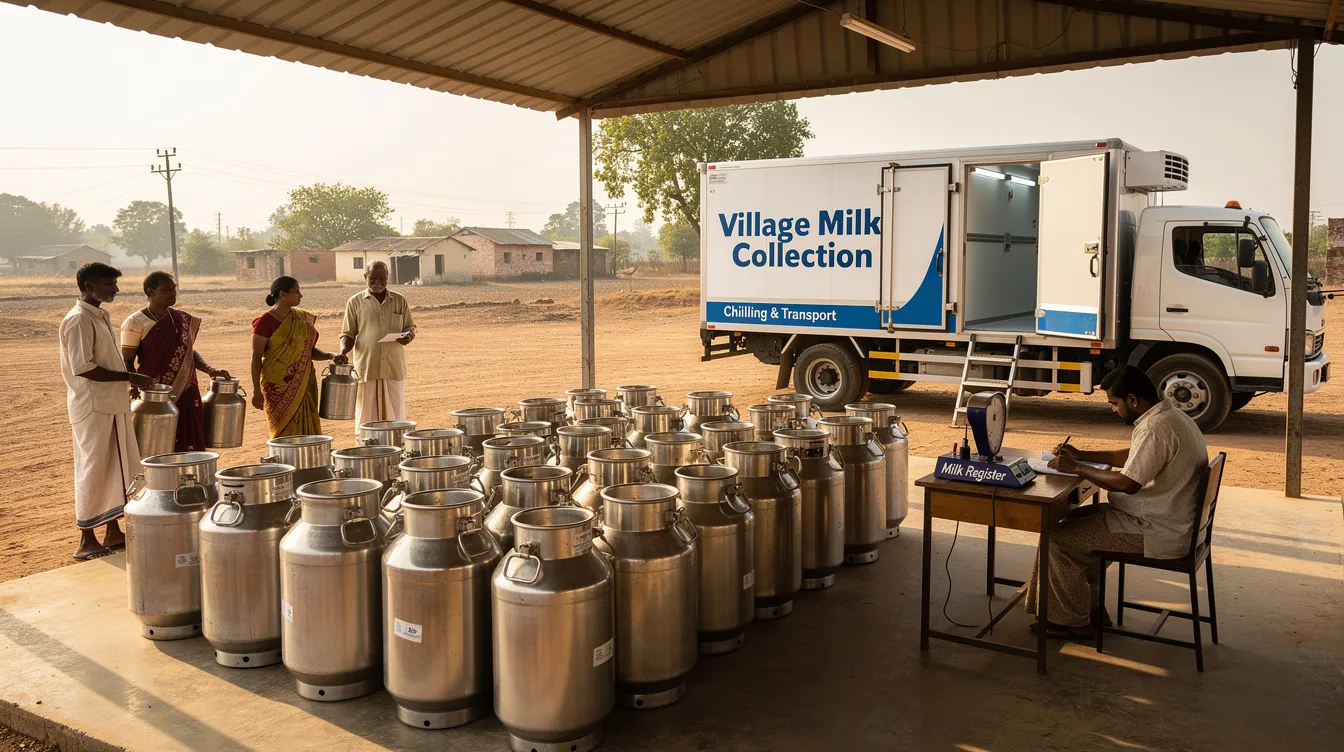
A dairy processing project is only viable if sustainable raw milk procurement is possible. Banks review milk collection and procurement infrastructure including village-level collection centres, bulk milk coolers, transport tankers, chilling arrangements and farmer networks.
The DPR should specify procurement radius, expected milk availability by season, procurement pricing assumptions and arrangements for quality testing. Monitoring milk yield and ensuring a reliable market for milk sales are critical both at the farm level and for the processing plant. At the farm level, adequate veterinary aid from the nearest veterinary aid centre, necessary disease control measures using suitable drugs, timely breeding with preferably frozen semen or high quality semen, and ensuring healthy animals through proper care are all essential. Farmers must provide proper shade and cool drinking water especially during peak heat period, sprinkle sufficient water to reduce heat stress and reduced feed intake, feed colostrum to calves, conduct periodic tests on animals regularly, and source good quality animals – including adult animals, pregnant cows and milch cattle – from the nearest livestock market or nearby livestock market and other livestock markets. Even scheme animals must be kept animals indoor during extreme weather in properly constructed sheds where promoters construct shed on properly raised ground. Veterinary care is vital for minimising mortality rates. These farm-level factors directly influence milk production volumes and milk sales for the processing plant. Banks verify these aspects during field visits.
Step 6 – Evaluate Utilities & Support Systems
Utilities – power, water, steam, refrigeration, compressed air and effluent treatment – have both capital and operating cost dimensions. Lenders assess whether the proposed power load, transformer capacity, boiler rating and ETP capacity are technically adequate. Operating costs for electricity, fuel and water must be reflected consistently in the projected P&L. For detailed benchmarks, see dairy plant utilities requirements.
Assessment of Means of Finance
The fundamental equation is: Total Project Cost = Promoter Contribution + Term Loan + Other Eligible Sources (subsidy, unsecured loans, internal accruals). Promoter contribution is essential and exhibits financial commitment to the dairy project. The Debt-to-Equity Ratio measures financial leverage and varies by lender policy – there is no single universal ratio mandatory for every dairy project debt equity ratio assessment.
Interest rates for dairy farm loans typically range from 8% to 15% annually depending on the lender and scheme. Under certain dairy schemes, interest subvention of up to 3% is available through NABARD-supported programmes. Banks require adequate funds from promoters before first disbursement. A CA certificate confirming the same person has invested equity is standard.
| Means of Finance | Illustrative Share |
|---|---|
| Promoter Contribution | 25–35% |
| Term Loan | 55–65% |
| Subsidy (if eligible) | 5–15% |
Revenue Model & Dairy Plant Profitability Assessment
Lenders carefully study the dairy plant’s proposed revenue model. A successful dairy project must demonstrate a realistic profit margin after all operating costs. The typical product mix for an integrated dairy plant includes pouch milk, curd/dahi, paneer, ghee, butter, cream, flavoured milk and milk powder.
The DPR should show proposed selling prices, daily volumes, seasonal variation and channel margins. Processing charges, feeding cost and cattle feed expenses at the farm level (where feeding and fodder management impacts around 60% of daily operational costs) must be realistically reflected. Proper feed management is essential since feed constitutes a major cost. For detailed guidance, see integrated dairy plant revenue model and product mix.
Assessment of Financial Projections for Dairy Projects
Banks rely heavily on 7–10 year dairy processing plant financial projections when assessing a dairy processing project loan. Financial viability assessments should include prepared cash flow projections for 5 to 7 years. Key statements include the profit and loss statement, balance sheet, cash flow analysis and income expenditure statement covering estimated annual expenditure.
Calculations of IRR, NPV and DSCR are key in assessing dairy project viability. Internal Rate of Return is the expected annualised yield from the project, while Net Present Value evaluates profitability of the dairy investment. The Break-Even Point indicates the operational level where revenues equal costs, and a low break-even point indicates a safer margin against market fluctuations. Stress testing scenarios is important to evaluate dairy project resilience against market changes. The Current Ratio compares current assets to current liabilities to measure liquidity.
Working Capital Assessment Alongside Term Loan
Banks do not evaluate a dairy processing plant term loan in isolation; they simultaneously examine dairy plant working capital requirement. Dairy farming relies on biological assets and perishable outputs, making working capital management especially critical.
Calculating working capital requirements is crucial before milk sales stabilise cash flow. Typical needs include raw milk procurement, packaging material, ingredients, wages, power, transport and inventory of finished dairy products. Some lenders treat initial working capital margin as part of project cost. Inadequate working capital can cause even a technically sound dairy project to underperform.
DSCR & Repayment Capacity Assessment
The Debt Service Coverage Ratio measures a project’s ability to service debt – the ratio of cash available for debt servicing to total annual term loan obligation (interest plus principal loan amount repayment). A minimum Debt Service Coverage Ratio of 1.25 is typically desired by lenders, though higher and stable DSCR indicates stronger repayment capacity.
Typical repayment structures should match the cash-generation pattern of dairy operations. Repayment periods for dairy loans can extend up to 10 years, with repayment periods for NABARD-linked loans typically ranging from 3 to 7 years, and NABARD loans offering a grace period of 3 to 6 months. NBFC business loans typically have tenures up to 5 years. Dairy farm loans also offer flexible repayment tenures from 1 to 7 years. Loan repayments are usually made in monthly or quarterly installments. The loan repayment period depends on project size and lender policy. For detailed analysis, see dairy project DSCR and loan repayment capacity.
CMA Data and Its Role in Dairy Project Bank Appraisal
CMA Data for a dairy processing plant bank loan is a structured set of past and projected financial statements used by banks to assess term loan and working capital proposals. It captures projected sales, raw material consumption, operating expenses, current assets, current liabilities, bank borrowing and key financial ratios, including bank statements analysis.
For dairy project finance, lenders cross-check that CMA Data figures match the DPR and repayment schedule. Any mismatch reduces credibility. While a Chartered Accountant may help compile CMA Data, this does not mean the CA is certifying that future performance is guaranteed – projections remain estimates.
How Banks Determine the Final Term Loan Amount for a Dairy Project
After examining all components, the bank decides the final loan amount, which may be lower than proposed. Lenders evaluate existing loans and the financial history of the borrower, and a CIBIL score of 650 or above is preferred for loans. Monitoring the end-use of funds is necessary post-loan sanction, and loan disbursement occurs in stages after bank approval.
| Appraisal Factor | Impact on Sanction |
|---|---|
| Low DSCR in initial years | Possible reduction in loan amount or longer tenure |
| Weak promoter contribution | May require higher equity or reject proposal |
| Ineligible cost components | Excluded from eligible project cost |
| Excessive existing debt | Reduced comfort, lower exposure |
| Poor credit history | Higher scrutiny or rejection |
Illustrative Example – Dairy Project Term Loan Assessment
The following example is purely illustrative and does not represent an actual bank sanction.
| Particulars | Illustrative Amount (₹ Crore) |
|---|---|
| Land / Development | 1.00 |
| Building & Civil Work | 4.00 |
| Plant & Machinery | 9.50 |
| Utilities (Power, Steam, Refrigeration) | 1.80 |
| ETP & Other Infrastructure | 0.70 |
| Pre-operative Expenses | 0.80 |
| Contingency | 0.70 |
| Margin for Working Capital | 0.50 |
| Total Project Cost | 19.00 |
| Promoter Contribution (30%) | 5.70 |
| Proposed Term Loan | 13.30 |
A bank would test whether projected annual cash accrual (say ₹2.8–3.5 crore from Year 2 onwards) adequately covers interest (approximately ₹1.2–1.4 crore at assumed rates) plus principal repayment (₹1.5–1.9 crore annually over a 7-year repayment period with moratorium). If resulting DSCR is 1.40–1.70, the structure is generally considered serviceable. If early-year DSCR is weak, the bank may suggest increasing promoter contribution or extending the repayment schedule.

Factors That Can Reduce Dairy Project Term Loan Eligibility
- Inflated project cost relative to industry norms or market quotations
- Inadequate promoter contribution or weak net worth
- Overly optimistic milk sales volumes and selling prices
- Unrealistic capacity utilisation from Year 1 (banks prefer gradual ramp-up)
- Inadequate milk procurement arrangements or ignoring seasonal availability
- Under-sized utilities or missing ETP planning
- Low DSCR or thin cash accrual in initial years
- High existing leverage or poor banking track record
- Missing quotations, incomplete DPR or absence of statutory approvals
Common Mistakes in Dairy Project Loan Proposals
Common errors include projections back-calculated to justify a desired loan amount, mismatch between machinery capacity and projected milk production, ignoring seasonal fluctuation in supply and demand, and underestimating marketing and distribution costs. Assuming maximum capacity utilisation and aggressive selling price from Year 1 erodes credibility during dairy project credit appraisal. Some promoters ignore depreciation and maintenance, overstating dairy plant profitability and DSCR. Promoters should have their DPR, projections and CMA Data reviewed by experienced professionals before submission to the financing bank’s branch.
DPR for Dairy Project Term Loan – What Banks Expect
A detailed project report is required for bank loan applications. A bankable dairy project DPR integrates promoter profile, project concept, market analysis, milk procurement strategy, technical configuration, detailed project cost, means of finance, working capital requirement, projected financial statements, dairy project break-even analysis, sensitivity analysis and a realistic repayment schedule aligned to cash flow.
KYC documents and bank statements are needed alongside the DPR. From the promoter’s perspective, the DPR and financial model are tools to understand and present project viability – not merely paperwork aimed at obtaining finance. For a comprehensive overview, refer to bank loan and project finance for a dairy processing plant.
Conclusion – Building a Bankable Dairy Project Term Loan Proposal
Successful dairy project term loan assessment rests on the combined strength of a technically feasible dairy processing project, reasonable project cost, adequate promoter contribution, sustainable revenue model, realistic working capital planning, healthy cash accrual and serviceable debt structure.
Lenders look beyond the headline loan amount and carefully examine dairy project financial viability and risk factors before fixing sanctioned exposure. A well-prepared DPR, robust dairy processing plant financial projections and professionally structured CMA Data significantly improve clarity during bank appraisal.
As a practising Chartered Accountant experienced in DPR preparation, CMA Data compilation, financial projections and project finance advisory for dairy processing plants, I help promoters present realistic and bank-oriented proposals. Dairy farm loan applications can be submitted online or offline, but the quality of preparation makes the decisive difference.
Prepared by CA Manish Gugliya, ProjectReportBank.com – specialising in bankable DPRs, CMA Data, financial modelling and dairy project term loan advisory for MSME and corporate clients.
Frequently Asked Questions (FAQ)
The following questions address practical doubts that promoters and consultants frequently raise about dairy project term loan assessment beyond what is covered above.
How is a dairy project term loan assessed in practice?
Banks evaluate technical feasibility, project cost, means of finance, promoter profile, market potential, projected financials, working capital, DSCR and security – usually through a DPR, CMA Data and field visits. The assessment focuses on both eligible project expenditure and the dairy plant’s ability to generate stable cash flow. Applicants must be Indian citizens and residents to qualify, and the minimum age for dairy farm loan applicants is usually 18 years. Experience of 6 months to 2 years in dairy farming or processing is generally preferred by lenders.
Does the bank always finance a fixed percentage of dairy plant project cost?
No. Banks first determine eligible project cost, then apply internal norms on margin, debt-equity comfort and DSCR to arrive at maximum permissible term loan. Strong promoter contribution, healthy projected DSCR and adequate security improve lender comfort, but final exposure depends on individual bank policy and credit committee approval. Some dairy farm loans are available without collateral requirements, and approval can occur in just a few days for smaller facilities and small dairy units.
What DSCR is required for a dairy project loan?
While there is no single universal benchmark, most lenders look for a minimum annual DSCR of 1.25, with average DSCR over the loan tenure ideally exceeding 1.50. The Kisan Credit Card scheme offers interest rates as low as 4% for eligible borrowers, and loan amounts under MUDRA can range from ₹50,001 to ₹5 lakh for smaller dairy unit proposals – each with different DSCR expectations.
What can promoters do if the bank reduces the proposed term loan?
Promoters can revisit project cost, increase their contribution, phase expansion, adjust capacity or fine-tune the product mix and repayment schedule. Revising the financial model and DPR with professional support often helps align the proposal with what is realistically financeable. Promoters should visit the nearest branch to discuss options and ensure all documentation – including bank statements and detailed financial projections – is current and consistent.
How does milk procurement affect dairy project loan appraisal?
Milk procurement is the lifeline of any dairy processing project. Banks verify farmer networks, bulk milk coolers, seasonal availability and procurement pricing. Over-optimistic assumptions about raw milk availability – without verifiable infrastructure near a nearby livestock market or established farmer relationships – can cause banks to reduce exposure. Promoters should demonstrate established procurement arrangements, quality testing protocols and fair payment systems to strengthen their dairy project bank loan appraisal. For personal loan or livestock loans aimed at individual farmers, lenders may evaluate availability of a nearest livestock market and a nearest veterinary aid centre separately.
📊 Operations & Financial Planning: Utilities | Revenue Model & Product Mix | Financial Projections | Working Capital | CMA Data | DSCR & Repayment Capacity
🏦 Bank Finance, Viability & Returns: Bank Loan & Project Finance | Term Loan Assessment | Feasibility & Viability | Break-Even Analysis | ROI, IRR & Payback | Sensitivity & Risk Analysis