
Key Takeaways
- A dairy processing plant depends on robust utility infrastructure – power, water, steam, refrigeration, compressed air and effluent treatment – and weak utility planning can cripple production even when core process machinery is adequate.
- Dairy plant utilities typically account for 20–35% of total plant and machinery CAPEX, and materially affect bankability, operating costs and profitability.
- Dairy plant power requirement, dairy plant water requirement, dairy plant refrigeration system and dairy plant ETP must be sized from actual process design, capacity and product mix – not generic thumb rules.
- Utility assumptions feed directly into DPR preparation, financial projections, DSCR calculations and appraisal by banks and financial institutions.
- This article is written from the practical perspective of CA Manish Gugliya of ProjectReportBank.com, drawing on experience with dairy processing plant DPRs and bank finance in India.
Introduction – Utilities as the Backbone of a Dairy Processing Plant
Machinery alone does not run a dairy plant. A pasteuriser cannot heat milk without steam. A cold room cannot maintain temperature without a functioning refrigeration compressor unit. Packaging lines stall without compressed air and stable electricity. In practice, dairy plants rely on five core service utilities to process milk – power, water, steam, refrigeration and effluent treatment – alongside several supporting systems that together form the operational backbone of the facility.
Whether you are planning a 1 LLPD plant processing pasteurised milk and curd, or a 5 LLPD integrated dairy processing plant manufacturing paneer, ghee, butter and flavoured milk, every litre of milk intake demands properly engineered utilities to maintain food safety, product quality and continuous operations. Yet across India, plants are routinely installed with adequate processing equipment but under-sized transformers, insufficient chillers, or non-existent ETPs – creating bottlenecks, compliance issues and financial stress that could have been avoided at the planning stage.
This article explains what each utility does, what determines its capacity, and how it affects your Integrated Dairy Processing Plant Setup Cost in India. All figures cited are indicative; actual requirements must always be finalised through detailed engineering and supplier data for your specific project.
What Are Utilities in a Dairy Processing Plant?
In a dairy project, “utilities” are the supporting infrastructure that enables core process machinery to function. A homogeniser, separator or FFS packaging machine is process equipment. The boiler supplying steam to the pasteuriser, the chiller maintaining cold room temperature, and the transformer energising every motor – these are utilities.
Major dairy plant utilities include:
- Electrical power – motors, refrigeration compressors, lighting, packaging lines, automation and control systems
- Water – process water, cleaning, boiler feed water, cooling tower make-up
- Steam and boiler system – heating for pasteurisation, hot water generation, CIP support, product processes
- Refrigeration and chilled water – milk cooling systems, cold storage, process cooling via heat exchangers
- Compressed air – pneumatic controls, filling lines, valve actuation, automation
- Hot water system – sanitation, crate and bottle washing, CIP
- Water treatment – filtration, softening, reverse osmosis, disinfection
- CIP support utilities – hot water, chemical dosing, drainage
- Effluent Treatment Plant (ETP) – treating dairy wastewater before discharge
- DG set / backup power – continuity for critical loads during grid outages
- Basic HVAC and ventilation – processing area environmental control
When preparing a dairy processing plant DPR, each utility must be itemised separately from processing lines. For the machinery side, refer to Dairy Processing Plant Machinery & Equipment Cost in India.
Why Utility Planning Is Critical in a Dairy Project
Under-sizing utilities caps your effective capacity. Over-sizing inflates CAPEX and drags down returns. Both are red flags in bank appraisal. Utilities are critical for food safety and product quality in dairy processing – and they are equally critical for financial feasibility.
Utilities directly influence:
- Production capacity – inadequate steam or refrigeration can prevent you from running at rated LLPD
- Product quality – correct pasteurisation temperature, rapid milk chilling and hygienic cleaning all depend on utility reliability
- Cleaning and sanitation – CIP effectiveness is a function of water, steam, chemicals and drainage working together
- Energy consumption and cost – electricity, fuel and water are among the largest recurring expenses after raw milk procurement
- Downtime risk – single-point failures of a boiler, chiller or transformer can halt the entire plant
- Environmental compliance – an inadequate ETP invites regulatory action and can delay project sanctions
- Overall dairy plant CAPEX, project IRR and DSCR
In a typical DPR, dairy plant utility cost forms roughly 20–30% of the combined machinery and utilities budget. Utility planning must therefore run parallel to Dairy Plant Capacity Planning, not as an afterthought.
Dairy Plant Power Requirement and Electrical Infrastructure
Electricity powers approximately 20% of a dairy’s total energy consumption (the rest being primarily thermal energy from steam), but it drives every motor, pump, compressor and control system in the facility. Understanding dairy plant power requirement starts with distinguishing connected load from maximum demand.
The main contributors to dairy plant electrical load include:
- Milk reception, unloading and raw milk chilling systems
- Process equipment – separators, homogenisers, pasteurisers, pumps, agitators
- Refrigeration compressors, chilled water pumps, cooling towers and cold rooms
- Packaging lines (FFS machines, pouch packing, curd cup lines)
- Boiler auxiliaries (feed-water pumps, ID/FD fans)
- Water pumps, CIP systems, crate washers, laboratory equipment
- ETP blowers, pumps and associated drives
- Lighting, HVAC for labs and offices, ventilation in utility rooms
Electricity is essential for pumps, compressors, and lighting – and the practical way to estimate electrical needs is by listing all equipment and their power consumption, then applying diversity factors to arrive at maximum demand.
Connected Load vs Maximum Demand: Connected load is the arithmetic sum of all motor and equipment ratings in kW or kVA. Maximum demand is the highest simultaneous load likely during actual operation, accounting for the fact that not every machine runs at full load at the same time. Peak electrical demand determines transformer and switchgear capacity – and this figure is used for negotiating contracted demand with the power utility.
Transformer Requirement: Transformer capacity (500 kVA, 1000 kVA etc.) is chosen based on maximum demand, power factor, motor starting currents and a margin for expansion. Integrated dairy plants with value-added product lines need significantly higher electrical load than a simple milk pasteurisation plant of the same LLPD. Power factor correction capacitors minimize reactive power issues and reduce electricity bills.
DG Set / Backup Power: Backup power systems prevent product spoilage during electrical outages in dairy plants. Critical loads – refrigeration plant, cold rooms, milk storage, packing lines with product inside – must be covered by DG sets. Segregating “essential” from “non-essential” loads avoids unnecessary DG oversizing. Lenders routinely check whether DG provisioning in the DPR is realistic for the location.
Energy Efficiency: Energy-efficient motors (IE3/IE4), VFDs on pumps and compressors, efficient refrigeration systems, and good power factor management can materially reduce dairy processing plant power consumption. Heat recovery systems lower energy demand and improve sustainability in dairy plants. Such measures improve EBITDA over the project’s life – a fact that strengthens the DPR during bank appraisal. Data from energy audits of Indian dairies suggests electrical consumption of approximately 45.7 kWh per kilolitre of milk processed, with refrigeration alone consuming around 55% of total electrical energy.
Water Requirement for Dairy Plant – Quantity and Quality
Dairy plant water requirement is driven by product mix, cleaning regime and utilities – not simply by litres of milk processed. Two 2 LLPD plants can have very different dairy plant water consumption profiles depending on whether they produce only pasteurised milk or also manufacture paneer, curd and ghee.
Water is consumed across:
- Process water for reconstitution, standardisation and product-contact operations
- CIP systems and manual equipment cleaning
- Floor and drain washing, crate and can washing, tanker cleaning
- Boiler feed water and cooling-tower make-up
- Laboratory use, hand-wash, staff sanitation and canteen
Water usage in dairy plants typically ranges from 1:1 to 2:1 with milk in modern semi-automated to automated facilities. DAHD data shows manual plants consuming 3–4 litres of water per litre of milk, while fully automated plants with recovery can bring this below 1:1. Modern plants adopt water recovery measures to reduce consumption, and integrated water recycling systems help reduce operational costs significantly. Water conservation and reuse strategies enhance sustainability in dairy processing – and reduce water costs in the operating budget.
Dairy plants require high-pressure water for cleaning and cooling in various sections of the facility.
Water Quality: Water quality must exceed drinking water standards for dairy processing. Process and potable water should meet microbiological and chemical safety levels appropriate for food processing. Typical treatment steps include filtration, softening (especially important for boiler feed water and CIP), reverse osmosis where high-purity water is needed, and UV or chlorination for disinfection. Quality requirements should be verified against local norms and customer specifications. Contamination from poor water quality can compromise product shelf life and food safety.
For DPR preparation, the water source (borewell yield, municipal supply, tanker backup) and applicable permissions must be documented. Both water treatment CAPEX and recurring costs – chemicals, regeneration salt, membrane filtration replacements, pump power – must be budgeted.
Steam Requirement in Dairy Processing and Boiler Sizing
Steam is the primary heating medium in dairy operations. Dairy plants require steam at 140–150°C for most heating operations, and steam temperature must be maintained between 140 and 150°C to ensure effective pasteurisation, CIP and product heating. Efficient steam generation reduces operational costs and environmental impact in dairy plants.
Key steam-consuming operations include:
- Milk pasteurisation and cream pasteurisation via plate or tubular heat exchangers
- Hot water generation for CIP, crate and bottle washing and general sanitation
- Product heating for ghee, khoa, paneer and other dairy products
- Evaporation and drying sections where milk powder is manufactured
- Steam-based sterilisation of equipment and pipelines
Steam load is conceptually estimated by summing the demand of each consumer (from supplier data), identifying which processes overlap in time, and allowing for distribution losses and a safety margin. Industry data suggests basic liquid milk plants require approximately 55–90 kg of steam per kilolitre, while multi-product plants may need 90–150 kg per kilolitre.
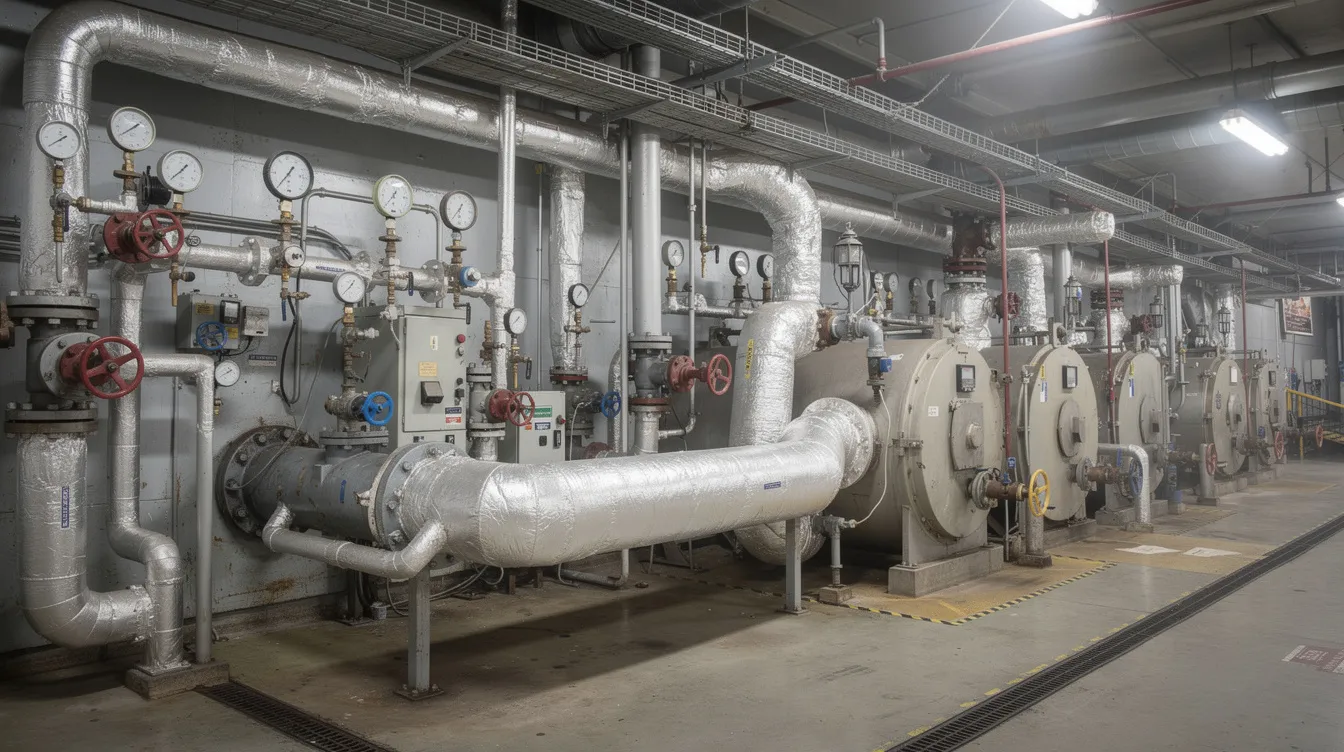
Dairy Plant Boiler Requirement: Boiler capacity depends on LLPD handled, product lines, automation level, shift pattern, CIP frequency and whether evaporation or powder production is involved. Boiler efficiency typically ranges from 80–92% in dairy plants, and this efficiency directly affects fuel consumption and operating cost. Heat losses in piping can amount to around 15%, and roughly 10 kg of steam is lost per hour for every 100 metres of uninsulated pipe. Poor steam system design leads to heat loss and increased energy consumption – a form of energy waste that directly erodes margins.
A safety margin of 10–20% above peak steam requirements is standard practice. Fuel options – biomass, briquettes, LDO, furnace oil, PNG – each carry different cost, emissions and handling implications. The boiler house requires its own civil block, fuel storage and chimney as part of Dairy Plant Land, Building & Infrastructure Requirements. Banks examine boiler sizing, fuel-cost assumptions and efficiency parameters alongside steam requirement in the DPR to validate operating cost projections.
Refrigeration System for Dairy Plant – Cooling, Chilling and Cold Storage
Refrigeration is critical for dairy product safety. It is among the most power-intensive and operationally essential dairy plant utilities, directly determining product shelf life, spoilage risk and quality consistency. From the moment raw milk arrives at the plant to the moment finished dairy products leave the cold room, the refrigeration system is working.
Refrigeration is required for:
- Raw milk chilling at collection centres and at plant reception – aligned with Dairy Plant Milk Collection & Procurement Infrastructure
- Chilled storage of raw and pasteurised milk in insulated tanks and refrigerated bulk tank systems
- Process cooling in heat exchangers for yoghurt, paneer cooling, butter hardening
- Chilled water system for continuous process streams at defined temperatures
- Cold storage rooms for packed milk, curd, paneer, butter – each at specific temperature ranges
- Deep-freeze storage for ice cream or frozen products
Refrigeration Load: The cooling load includes product cooling, environmental heat gain, and equipment heat gain. Key drivers include milk processing capacity, inlet and outlet temperatures, product mix (milk vs ice cream vs cheese), ambient climate, insulation quality of tanks and cold rooms, number and frequency of door openings, and production schedule peaks. Refrigeration requirements must be calculated by qualified engineers. Refrigeration of one tonne of milk product requires approximately 100–120 MJ of electrical energy – a significant cost driver.
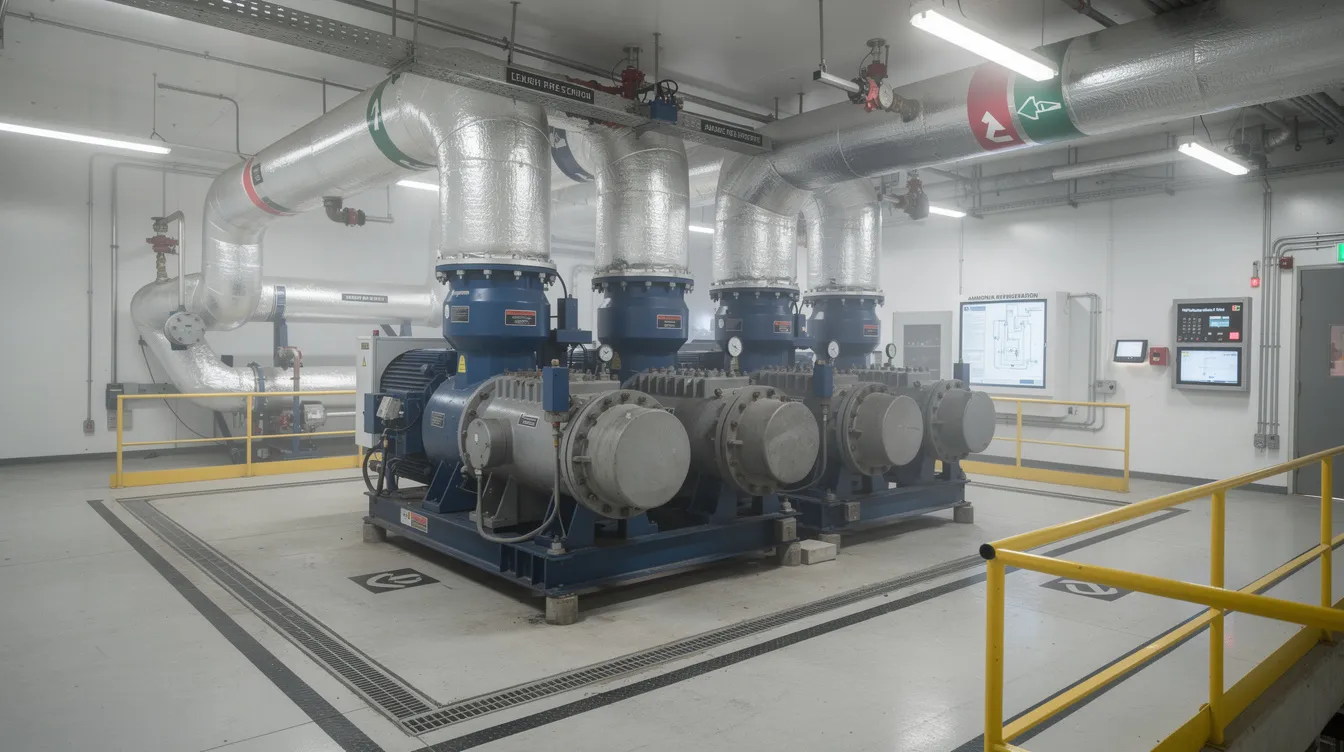
Refrigeration System Selection: Large and medium dairy processing plants in India commonly use central ammonia-based refrigeration systems. Ammonia-based refrigeration systems enhance energy efficiency in dairy plants and offer superior performance at scale, though they carry regulatory and safety requirements. Smaller plants may use Freon, HFC or HFO-based packaged chillers – competing technologies that offer simpler installation but often at lower efficiency for large cooling loads. Air-cooled condensers are increasingly preferred due to rising water costs, though evaporative condensers remain common where water supply is adequate. An air cooled condenser unit eliminates the need for cooling tower water treatment but may reduce efficiency in very hot climates. Components include compressors (screw or reciprocating compressors depending on scale), condensers, evaporators, ice-bank tanks, chilled water circulation loops and insulated piping.
Cold Storage: Different products demand different storage temperatures and humidity – chilled milk at 2–4°C, butter at -15 to -20°C, ice cream at -25°C or lower. Total cold-storage volume and temperature range strongly influence dairy plant refrigeration requirement, electrical load and insulation CAPEX. Jacketed tanks with glycol or chilled water circulation are used for certain process streams.
Energy Cost of Refrigeration: Refrigeration compressors and chilled water pumps typically consume the largest share of dairy plant electricity requirement. A basic refrigeration system can account for over half the plant’s electrical consumption. Energy efficiency measures – high-efficiency compressors, VFDs, proper condenser sizing, systems designed to capture waste heat and reuse it (for example, collecting heat from condenser discharge for pre-heating boiler feed or wash water), good insulation and air-locks in cold rooms – can substantially improve operating margins. Reducing pressure drops across evaporators and condensers also helps maintain efficiency. Even modest improvements here directly reduce the cost of refrigeration and improve project feasibility.
Effluent Treatment Plant (ETP) for Dairy Industry
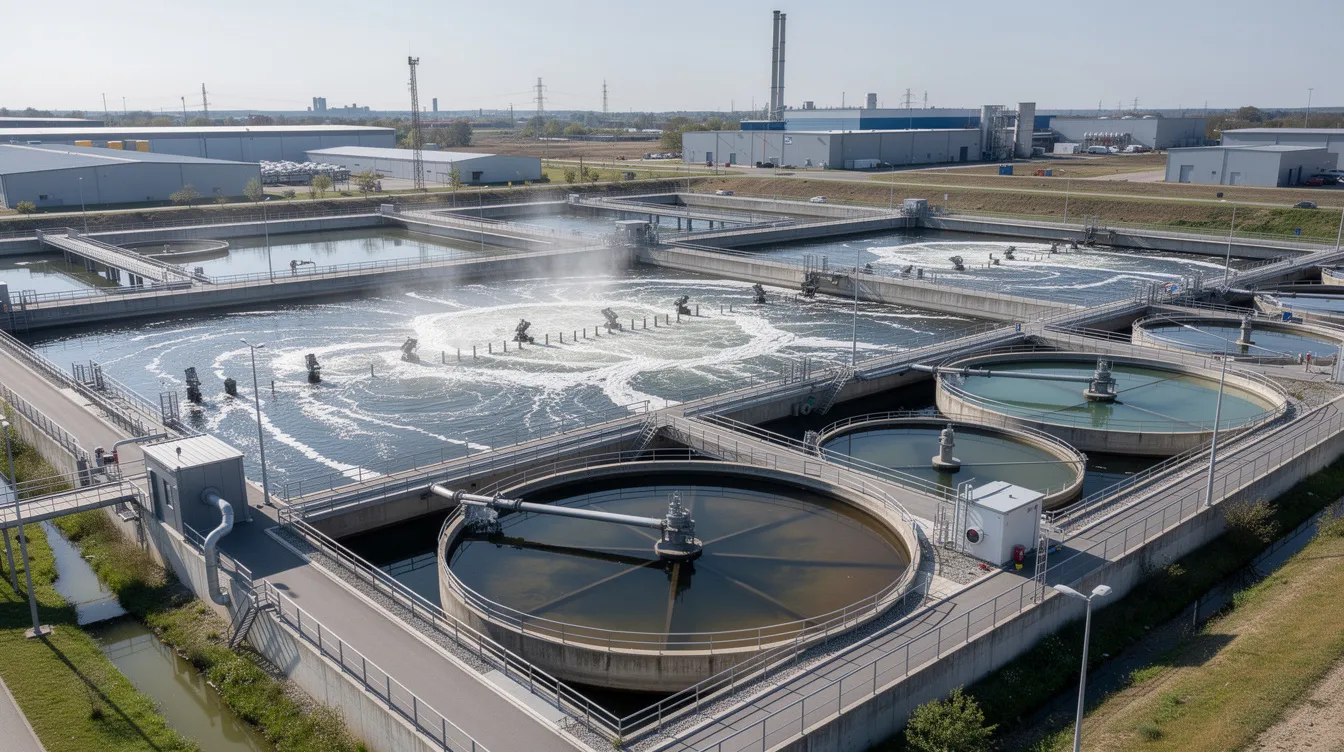
Every dairy processing plant generates wastewater with high organic content. A dairy plant ETP is mandatory from both environmental and project-finance perspectives. Effluent treatment systems manage wastewater and are important for regulatory compliance – and DPRs submitted without ETP provisions are routinely questioned by banks.
Sources of dairy plant wastewater include:
- CIP return solutions and rinses
- Equipment, tank and floor washing
- Milk and product spillages reaching drains
- Crate and bottle washing
- Boiler blowdown and cooling tower bleed
Dairy wastewater is characterised by high BOD (typically 1,000–2,500 mg/L) and COD (1,800–4,000 mg/L), along with suspended solids and fat/oil/grease. These organic loads – from milk solids, proteins and fats – must be treated to meet CPCB discharge norms before release to any water body.
ETP Capacity: ETP sizing should be based on expected wastewater generation, peak-flow hours and effluent strength – not simply equated with total freshwater consumption. Typical treatment stages include screening and equalisation, oil and grease removal, biological treatment (aerobic or anaerobic), secondary clarification, sludge management and sometimes tertiary treatment if reuse or stricter norms apply. Both ETP CAPEX (civil and electro-mechanical) and recurring costs (power, chemical dosing, sludge handling, operator salaries) must be provided for in the DPR.
Environmental Compliance: Promoters should consult the relevant State Pollution Control Board for location-specific discharge standards, consent requirements and monitoring obligations. Inadequate ETP provisions are viewed negatively by lenders and can delay environmental clearances.
Other Critical Utilities – Compressed Air, Hot Water, CIP, HVAC and Fire-Fighting
While power, water, steam, refrigeration and ETP are primary, several other systems are equally essential for reliable dairy operations and must be captured in the DPR.
Compressed Air: Pneumatic equipment requires compressed air at approximately 600 kPa (6 bar) for valve actuation, filling and sealing machines, conveying and automation. Compressed air must be filtered, dried, and sterilised – particularly for dairy applications where contamination can compromise food safety and packaging integrity. Compressed air failures can halt production entirely in dairy plants. A watch glass or inline moisture indicator is often used to monitor air quality at point of use.
Hot Water System: Separate hot water tanks and circulation loops serve cleaning, crate and bottle washing and some processes. Temperature control, recirculation and insulation are key design factors. Heat from process streams or waste heat recovery can pre-heat water, reducing boiler load.
CIP System: CIP utilities automate cleaning and sanitization processes in dairy operations. CIP design strongly affects water, steam, chemical and ETP loads. Cleaning frequency, cycle duration and the number of CIP sets determine the consumption of all supporting utilities.
HVAC and Ventilation: Processing and packing rooms may require temperature and humidity control. Positive-pressure ventilation in hygienic zones prevents contamination. rhr units or air handling units maintain conditions within specification.
Fire-Fighting Infrastructure: Integrated dairy processing plants typically require hydrant systems, fire-water storage, pumps and internal sprinklers per applicable norms. Fire-water storage and pump house layout must be integrated with Dairy Plant Land, Building & Infrastructure Requirements.
Utility Requirements by Dairy Plant Capacity and Product Mix
Dairy plant utility requirements scale not only with LLPD capacity but also with the range of products manufactured, operating hours and level of automation.
- A 1 LLPD plant focused on pasteurised milk and basic curd has modest steam and refrigeration demands
- A 5 LLPD integrated plant with butter, ghee, paneer and cheese lines multiplies refrigeration, steam and ETP requirements significantly
- Adding milk powder or evaporation shifts steam consumption sharply upward and may require additional boilers
- Plants operating 2–3 shifts spread loads differently, affecting peak demand for power and refrigeration
Even two 2 LLPD plants can differ sharply in boiler, chiller and ETP sizing depending on whether they prioritise liquid milk or high-value products like ghee, flavoured milk and fermented products. A utility system should have a safety margin of 10–20% for peak demand across all major systems, and DPR writers must link utility tables to realistic production ramp-up assumptions (Year 1 at 40–60% utilisation), as lenders scrutinise this alignment.
| Utility | Main Purpose | Major Load Drivers | Key Planning Consideration |
|---|---|---|---|
| Electrical Power | Motors, compressors, lighting, packaging | Capacity, product mix, refrigeration load, shifts | Transformer sizing, DG backup, energy efficiency |
| Water | Processing, cleaning, boiler feed, cooling | Product mix, CIP frequency, automation level | Source reliability, treatment, reuse potential |
| Steam / Boiler | Pasteurisation, CIP hot water, product heating | LLPD, product lines, evaporation/powder | Fuel choice, boiler efficiency, distribution losses |
| Refrigeration | Milk chilling, cold storage, process cooling | Capacity, ambient climate, product mix, cold rooms | Compressor efficiency, insulation, cold chain |
| Compressed Air | Pneumatic valves, packaging, automation | Automation level, number of packaging lines | Air quality, pressure stability, redundancy |
| ETP | Treating dairy wastewater before discharge | Water use, product mix, cleaning frequency | Regulatory compliance, CAPEX + operating cost |
| Plant / Project Factor | Effect on Utility Requirement |
|---|---|
| Milk processing capacity (LLPD) | Increases peak electrical load, steam demand, water and ETP volumes |
| Product mix (value-added products) | Raises refrigeration tonnage, steam consumption, ETP organic load |
| Operating hours / shifts | Spreads or concentrates peak demand; affects sizing of backup systems |
| Automation level | Reduces water and labour; may increase electrical and compressed air load |
| CIP frequency | Adds to water, steam, chemical and ETP loads |
| Cold storage requirement | Directly increases refrigeration capacity and electrical consumption |
| Inclusion of powder / evaporation | Substantially increases steam, water and ETP requirements |
| Future expansion plan | Requires provision in transformer, boiler house, ETP and refrigeration layout |
Dairy Plant Utility Cost and CAPEX Planning
Many promoters focus on processing machinery quotations and are surprised by the additional cost of utility infrastructure. Major utility-related CAPEX heads include:
- Electrical infrastructure – transformer, HT/LT panels, cabling, earthing, power factor correction
- DG set with fuel storage and acoustic enclosure
- Boiler and accessories – feed-water tank, chimney, fuel handling, water treatment for boiler feed
- Refrigeration plant – compressors, condensers, evaporators, chilled water tank, cooling tower, insulated pipelines
- Water treatment plant – softener, RO, filtration, raw and treated water storage, pumps
- Compressed air system – compressors, air receivers, dryers and filters
- ETP civil works and electro-mechanical equipment
- Utility buildings, piping networks, valves, insulation and instrumentation
Based on experience with projects documented at ProjectReportBank.com, utilities can form 20–30% of the machinery-plus-utilities budget, though actual shares vary with product mix. Promoters should obtain itemised quotations for each utility package and distinguish clearly between processing and utility equipment in the project cost section of the DPR, linking to Dairy Plant Project Cost & Means of Finance in India. The more cost transparency provided, the more cost effective the appraisal process becomes.
Utility Operating Cost and Impact on Dairy Plant Profitability
Utility operating costs form a major component of manufacturing expenses, second only to raw milk cost in many dairy plants. They directly increase operating costs if not managed well.
Key recurring components include:
- Electricity charges for motors, compressors, cold rooms, HVAC, ETP
- Fuel cost for boilers (biomass, FO, PNG, briquettes)
- Water charges and borewell pumping power
- Chemicals for water treatment, CIP and ETP
- Maintenance costs and spares for boilers, compressors, pumps, cooling towers
- Manpower for utility operation, maintenance and compliance
Energy-efficient design and sound O&M practices improve EBITDA margins and DSCR – both are critical indicators for lenders. DPR financial models should separately capture utility consumption norms per litre of milk processed and include sensitivity analysis for electricity tariff and fuel-price escalations. Even small improvements in efficiency – whether from better insulation, VFDs, or reduce efficiency losses through proper maintenance – compound significantly over a 7–10 year loan tenure.
Incorporating Utility Planning into a Dairy Plant DPR
In a professional dairy processing plant DPR, each major utility gets its own subsection under both technical and financial sections. Integrated utility management can optimize energy and water use across the facility – and the DPR should reflect this.
For each utility, the DPR should capture:
- Designed capacity (boiler TPH, refrigeration TR, transformer kVA, ETP m³/day)
- Equipment list with vendor quotations specifying make, model and basic specifications
- Installation, commissioning, piping, cabling and civil foundation costs
- Space and building requirements (boiler house, refrigeration room, DG house, ETP area)
- Expected consumption figures aligned with projected production volumes
- Maintenance budgets, operator requirements and annual repair provisions
- Depreciation, insurance and contingency for cost overruns
Utility assumptions must be internally consistent with projected milk procurement, product mix, capacity utilisation and working hours – and must tally with power, fuel and water costs in the projected P&L and CMA Data. Banks typically expect vendor quotes and basic utility layouts as annexures.
How Banks and Financial Institutions View Utility Planning
Lenders do not only examine topline projections. They verify whether utilities are adequately sized and realistically costed to support planned revenues. A crucial role of the DPR is to demonstrate this alignment convincingly.
Typical utility-related checks during appraisal include:
- Whether dairy plant power requirement is supported by available grid connection, sanctioned load, transformer sizing and DG backup
- Whether water availability, source and treatment are established
- Whether boiler and steam networks are adequate for the product mix
- Whether the dairy plant refrigeration system and cold storage capacity match milk handling volume
- Whether a suitably designed ETP for the dairy industry is included with adequate recurring cost provision
- Whether utility CAPEX is supported by vendor quotations and technical specifications
- Whether operating cost assumptions for oil, fuel, electricity and chemicals are reasonable and stress-tested
Absence of proper utility planning can lead to queries, conditions precedent or reduction in sanctioned limits. A detailed, realistic design improves lender confidence. At ProjectReportBank.com, dairy plant DPRs are prepared to ensure utility sections align with financial projections, supporting smoother credit appraisal.
Conclusion – Integrating Utilities into Overall Dairy Plant Planning
Successful dairy plant planning in India requires integrating capacity, product mix, machinery, utilities, infrastructure, milk procurement, project cost, operating cost and financing into one coherent framework. Under-sized utilities restrict production, compromise quality and create compliance risks. Over-sized utilities lock up capital, increase fixed charges and reduce project returns.
Thoughtful design of dairy plant utilities – power, water, steam, refrigeration, compressed air and ETP – improves both technical reliability and financial viability, determine the confidence of lenders and investors. Every system, from the boiler to the cold room to the ETP, plays a role in whether the project delivers the returns projected in its DPR.
If you are planning a dairy processing project, CA Manish Gugliya and ProjectReportBank.com can assist with preparation of dairy processing plant project reports, DPRs, financial projections, CMA data and bank-finance documentation – ensuring that utility planning is professionally integrated with your project’s technical and financial framework.
FAQs on Dairy Plant Utilities, DPR and Finance
Can I use thumb-rule ratios (like kWh or water per litre of milk) to finalise my utility design?
Thumb rules – such as water-to-milk ratios or kWh per kilolitre – are useful as a starting point for feasibility discussions. However, final dairy plant utility requirements must come from equipment suppliers, process designers and qualified engineers who factor in your specific product mix, shift pattern, automation level and site conditions. Banks prefer DPRs where utility sizing is backed by validated supplier data rather than generic industry averages.
At what stage of my dairy project should I freeze the utilities design?
Utility planning should run alongside machinery selection and capacity planning – not after construction begins. Boiler house dimensions, refrigeration plant room layout, transformer yard location and ETP footprint all influence building design. Freezing utilities after civil construction starts often leads to costly retrofits. Ideally, utility specifications should be reasonably finalised before land and building design is locked.
Do banks in India insist on an ETP for all dairy projects?
Environmental requirements depend on plant size, product mix, location and applicable State Pollution Control Board norms. In practice, most organised dairy plants handling significant volumes are expected to provide appropriate wastewater treatment. DPRs submitted without any ETP provision are frequently viewed unfavourably by lenders and may face delays in both environmental clearance and credit sanction.
How much can energy-efficient utilities really impact my project’s financial feasibility?
Reduced power and fuel consumption directly improves operating margins and DSCR over the 7–10 year loan tenure typical for dairy projects. For example, VFDs on refrigeration compressors, heat recovery from condensers, and efficient boiler operation can cumulatively save several percentage points of operating cost annually. Lenders appreciate realistic efficiency measures that are supported by supplier guarantees and audit data rather than aspirational claims.
Can I phase utilities as my dairy business grows?
Phasing is practical and often advisable – but it requires planning from Day 1. Provide adequate space for a second boiler, additional refrigeration modules or an expanded transformer. Design the ETP with upgradability in mind. The DPR should show phase-wise CAPEX and capacity utilisation so that initial investment is right-sized while future expansion does not require demolition or relocation of existing utility infrastructure.
📊 Operations & Financial Planning: Utilities | Revenue Model & Product Mix | Financial Projections | Working Capital | CMA Data | DSCR & Repayment Capacity
🏦 Bank Finance, Viability & Returns: Bank Loan & Project Finance | Term Loan Assessment | Feasibility & Viability | Break-Even Analysis | ROI, IRR & Payback | Sensitivity & Risk Analysis