
Key Takeaways
Even the most advanced 1 LLPD dairy plant will fail commercially without a reliable milk collection and chilling network that connects farmers through village collection centres, bulk milk coolers and insulated tanker transport to the processing facility. Dairy plant milk collection infrastructure is not a secondary concern-it determines whether expensive processing machinery operates at full capacity or sits idle.
This infrastructure must be planned during the DPR stage alongside capacity selection, project cost estimation and bank finance structuring-not after civil work and machinery orders are placed. Retrofitting a procurement network after commissioning almost always leads to cost overruns and underutilisation.
The basic procurement chain runs as follows: farmers produce and deliver raw milk to village milk collection centres where testing and weighing takes place, milk then moves to bulk milk coolers or chilling centres for rapid cooling to about 4 °C, insulated tankers transport chilled milk to the dairy plant’s reception dock, and from there it enters processing and packaging lines for conversion into dairy products such as pasteurized milk, curd, cheese, butter, ghee, yoghurt and powder.
Quality parameters-fat content, SNF, adulteration checks and microbial load-and temperature control through rapid chilling are as important as volume when designing a milk procurement network. Hygiene at all stages affects the quality and shelf life of milk and its derivative products.
This article is written from the perspective of CA Manish Gugliya of ProjectReportBank.com, focusing on project planning, DPR preparation, capital cost, working capital and bankability of dairy milk procurement systems in India.
Introduction: Why Milk Collection Infrastructure Decides Dairy Plant Success
Raw milk is a highly perishable, daily-collected raw material that directly drives capacity utilisation and profitability of any commercial dairy processing plant in India. Unlike manufactured inputs, milk cannot be stockpiled or delayed-it must be collected within four hours of milking, cooled rapidly and transported without breaking the cold chain.
Simply installing pasteurizers, homogenisers and packing machines cannot ensure viability. The real foundation is a robust milk collection system for the dairy plant capable of supplying required litres per day around the year, through flush and lean seasons alike.
The typical flow looks like this: farmers → village milk collection centre → milk testing (fat, SNF, adulteration, basic hygiene) → bulk milk cooler or milk chilling centre → insulated milk tanker → dairy plant milk reception → processing into liquid milk, cream, butter, cheese, ghee, yoghurt, paneer and other milk products. Milk procurement planning must start during feasibility study and DPR preparation, alongside land selection, machinery decisions and finance structuring.
Why Milk Procurement Infrastructure Is Critical for a Dairy Plant
Raw milk is among the most temperature-sensitive agricultural commodities. At ambient temperatures common across India (30–45 °C in peak summer), bacterial populations can double every 20 minutes. Milk should be cooled to +4 °C or below immediately after milking-and ideally, milk must be cooled to +4 °C within two hours after milking-to preserve quality and prevent spoilage. Without this, even re-chilled milk carries elevated microbial load that creates defects in curd, cheese, paneer and UHT products.
Key challenges that proper dairy milk procurement infrastructure must address:
- Daily collection requirement across morning and evening milking cycles
- Seasonal fluctuations-flush season (October–February) vs lean months (May–July) can show 30–50% variation in milk production
- Distance from milk-producing villages and competition from cooperatives and private dairies
- Transportation cost, tanker turnaround time and chilling requirements
Without adequate milk procurement volume, expensive processing lines-whether 50,000 litres/day or 5 LLPD-may operate at only 30–50% capacity, badly affecting project IRR and DSCR. Bank appraisers and equity investors examine the milk procurement system closely, including catchment area, chilling capacity and logistics, before making funding decisions.
Determining Daily Milk Procurement Requirement
Daily milk procurement must be linked to installed capacity, product mix, fat and SNF targets, expected capacity utilisation and seasonal availability. For a 50,000 litres/day plant targeting 75% utilisation, average daily procurement should be around 40,000–50,000 litres. For a 1 LLPD pasteurized milk plant targeting 80% utilisation in the first year, assume daily average procurement of around 0.9–1.1 lakh litres, with higher procurement during flush season to build products like ghee or SMP.
A 2 LLPD plant may need peak-season procurement of 2.2–2.5 lakh litres/day, while a 5 LLPD integrated plant could require 5.5–6.0 lakh litres daily at peak. These numbers are illustrative and must be customised during DPR preparation based on actual field data.
Procurement planning should be coordinated with dairy plant capacity planning so that chosen capacity is realistic for local milk availability and future expansion potential.
Capacity Planning and Assessing Milk Availability
In dairy project planning, milk availability should be examined alongside installed capacity because projected production and revenue ultimately depend on the plant’s ability to procure adequate raw milk consistently. Assessing catchment-area milk production requires evaluating livestock population, average yield per animal, percentage marketed as saleable surplus after home consumption and calf feeding, and the share already collected by competing buyers.
Marketable surplus is typically 50–70% of total milk production in a given area. Existing cooperatives and private players may already be procuring a significant portion. Understanding the cattle and buffalo mix matters because buffalo milk typically has higher fat content-important for ghee, cream and cheese-while cow milk may be more suitable for liquid milk and processed milk products.
Procurement growth over 3–5 years-through farmer enrolment, productivity improvement programmes and network expansion-should be projected realistically rather than assumed optimistically.
Designing the Dairy Milk Procurement Network
The typical hierarchy runs from individual milk producers in villages to village milk collection points, then to BMC centres or bulk milk chilling centres, and finally to the central dairy processing plant.
Network scale changes with plant size. A 50,000 litres/day plant might operate 10–15 village collection centres within a compact radius, while a 5 LLPD plant may require 150–250 collection centres spread across multiple districts depending on milk density.
Key considerations for milk procurement route planning include:
- Procurement radius and road connectivity, especially condition during monsoon
- Collection timing-morning and evening routes aligned with milking schedules
- Tanker turnaround time and loading efficiency
- Whether cooperative or private procurement networks offer denser coverage in underserved areas
Digital mapping, GPS tracking and simple route-optimisation tools can reduce transport cost per litre and improve collection efficiency.
Village Milk Collection Centre Infrastructure
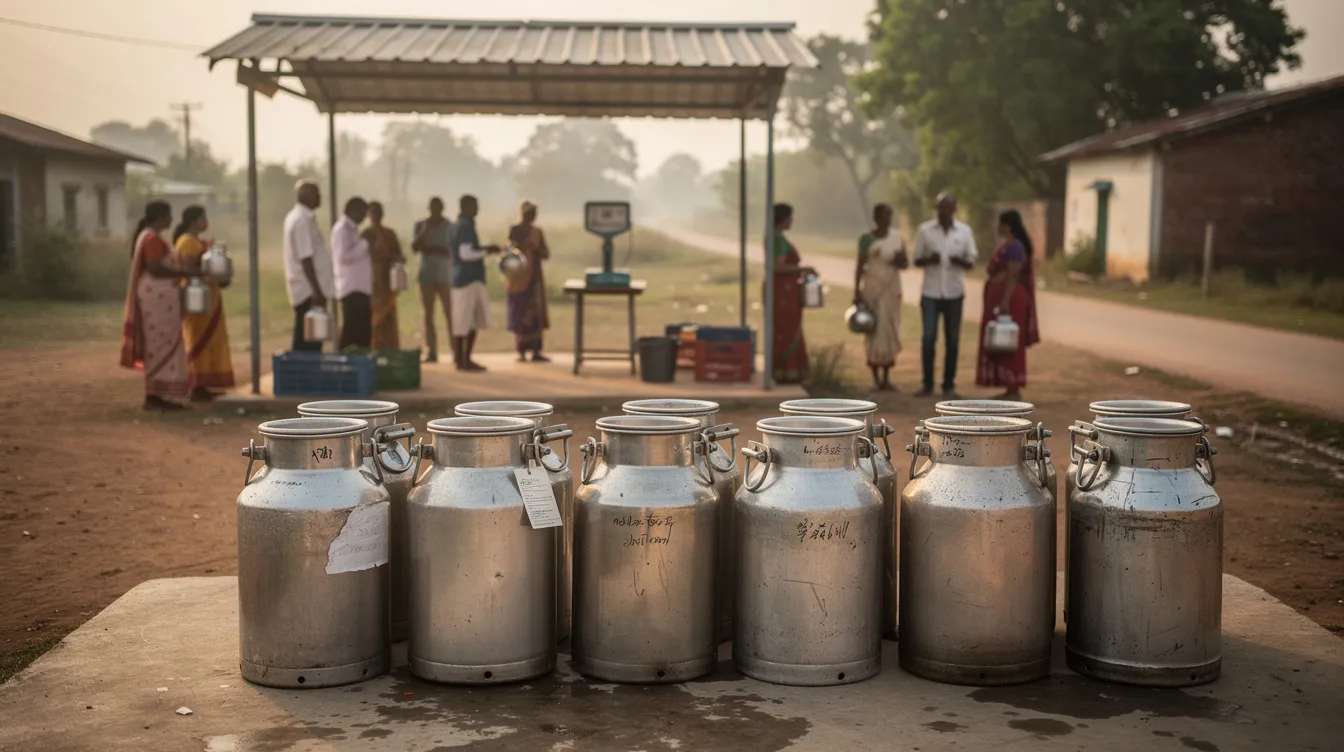
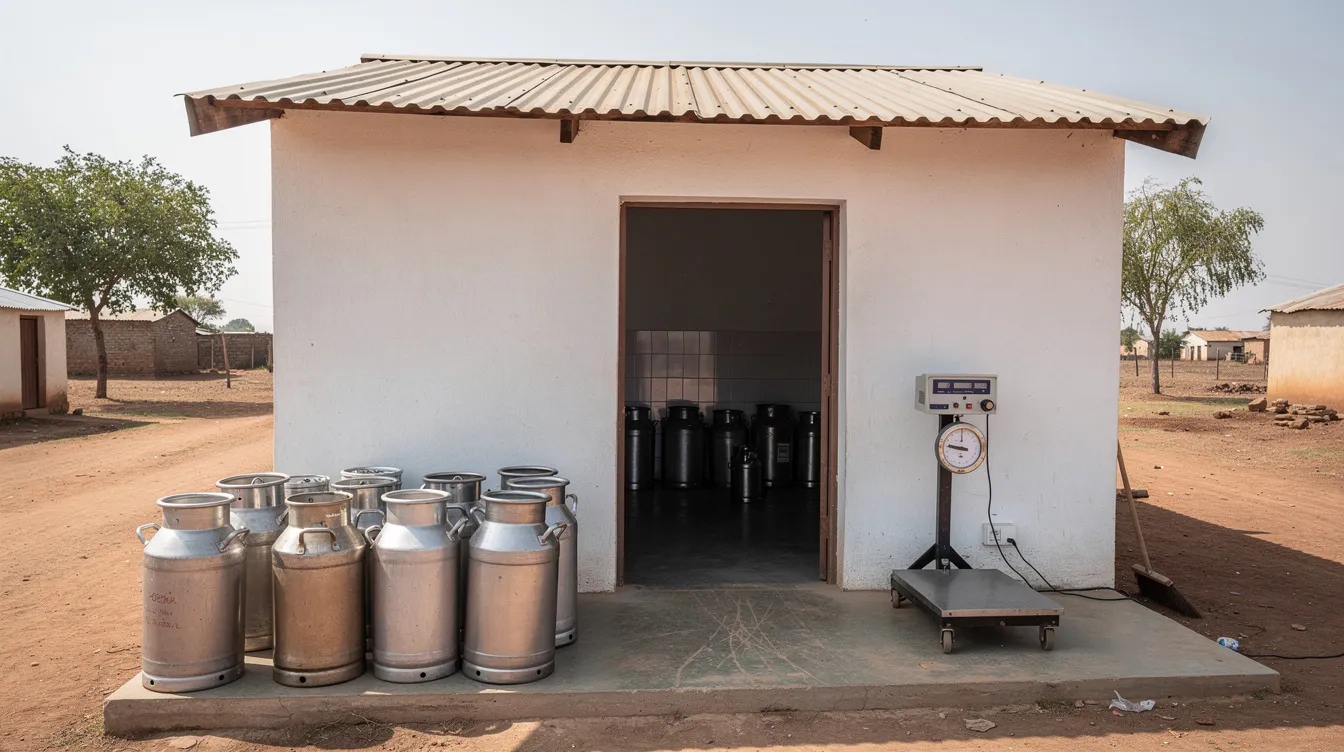
A village milk collection centre is the primary interface between the dairy plant and farmers, handling raw milk reception, basic milk testing and farmer payment on a daily basis. The physical setup typically includes a small collection room or shed (about 15–30 m²), covered platform, impervious flooring, drainage, potable water supply, electricity and basic lighting.
Key milk collection centre equipment includes:
- Stainless steel milk cans and milk collection accessories such as funnels, strainers and trays-containers used for milk collection should be easy to clean
- Electronic weighing scale (100–300 kg capacity) for recording weight accurately
- Milk analyser for fat and SNF testing, lactometer, alcohol test set and thermometer
- Milk testing equipment for density checks (normal milk density ranges from 1.028 to 1.033 g/ml at 15 °C), freezing point analysis for water-addition detection, and basic adulteration screening
Record-keeping infrastructure is equally important: farmer ID codes, daily milk collection records, fat and SNF reports, printed slips and integration with accounting or ERP systems where feasible. Reliable electricity (or solar backup) and running water for cleaning cans and accessories are essential utilities.
Automatic Milk Collection Units and Digital Systems
Automatic Milk Collection Units (AMCUs) are integrated systems that combine weighing, milk testing, data capture and automatic billing to support transparent dairy milk procurement. The process follows clear steps: farmer identification (via RFID card or code), milk reception in a jar, auto weighing, fat and SNF testing via milk analyser, and on-the-spot calculation of payment value based on rate charts.
AMCUs generate printed receipts, update each farmer’s daily and monthly milk collection records and transmit procurement data to the dairy plant server through GSM or internet connectivity. A modern facility integrates digital control infrastructures for process management, and digital traceability in the supply chain enhances lot identification and product quality across the entire procurement network.
Benefits include reduced disputes about fat content, faster throughput during peak collection hours, easier payment reconciliation and improved farmer confidence.
Bulk Milk Coolers (BMCs) and Milk Chilling Infrastructure
Rapid chilling of raw milk to about 4 °C is essential because it slows bacterial growth, maintains shelf life and preserves the taste and texture needed for products like yoghurt, cheese, butter and paneer. Milk should be cooled as quickly as possible to +4 °C within two hours after milking. Even short delays at ambient temperature can cause irreversible quality deterioration.
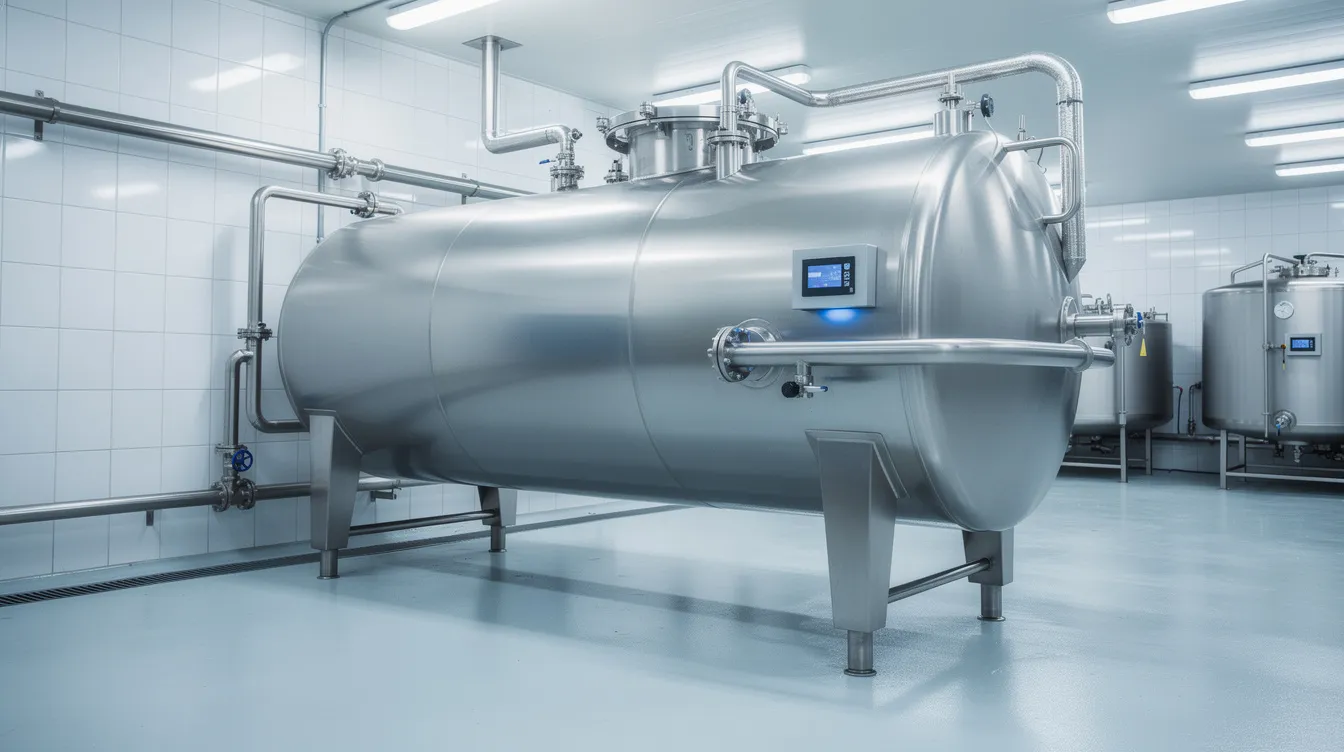
Bulk milk coolers are stainless steel, insulated tanks with agitators and direct expansion or indirect cooling systems. Bulk cooling tanks have capacities from 300 to 40,000 litres-from small 500-litre units at farm level to 5,000-litre or larger installations at central BMC centres. Selection depends on average and peak milk volume at each location.
Operational targets include chilling milk from about 30–35 °C to 4 °C within 2–3 hours, with continuous gentle agitation to keep fat globules uniformly distributed. Three-phase electricity, stabilisers and backup DG sets are necessary, especially in areas with load-shedding. In remote locations where power is unreliable, lactoperoxidase treatment can preserve milk for 7–8 hours at 30 °C as a temporary measure, though it is not a substitute for mechanical chilling.
Bulk milk cooler cost varies widely by capacity, brand and specification. Indicative ranges suggest ₹1.5–6 lakh for 500–1,000 litre units, ₹5–9 lakh for 1,000–2,000 litre units and ₹8–18 lakh for 2,000–5,000 litre units. Promoters should collect updated quotations during DPR preparation rather than relying on published estimates.
Location Planning for Milk Collection and Chilling Centres
Correct siting of collection centres and BMC centres reduces transport distance, collection time and milk losses. Key site-selection factors include cluster of milk-producing villages, expected volume per village, distance from main roads and all-weather road connectivity. Milk collection centers should be close to roads for accessibility, and they must remain accessible for transport vehicles even during monsoon.
Environmental and utility considerations include reliable electricity for BMCs, water availability, drainage, waste-water disposal and adequate space for expansion if milk volume doubles in 3–5 years. Procurement radius around each BMC should ideally allow collection from 8–15 surrounding villages within a few hours of milking without compromising milk temperature.
Procurement Radius and Dairy Cold Chain
Procurement radius is the effective distance up to which it is economical and technically practical to procure raw milk for a dairy plant or BMC centre. Factors influencing a practical radius include road conditions, vehicle speed, climate, availability of intermediate chilling and the total time constraint-milk must be collected within four hours of milking.
There is no single ideal radius. A 1 LLPD plant with dense milk availability might operate within 30–50 km, while a 5 LLPD plant may extend to 100+ km provided strong chilling infrastructure is distributed throughout the catchment. DPRs should justify assumed procurement radius by mapping villages, estimating travel time and ensuring routes fit within operating cycles.
Milk Transportation Infrastructure
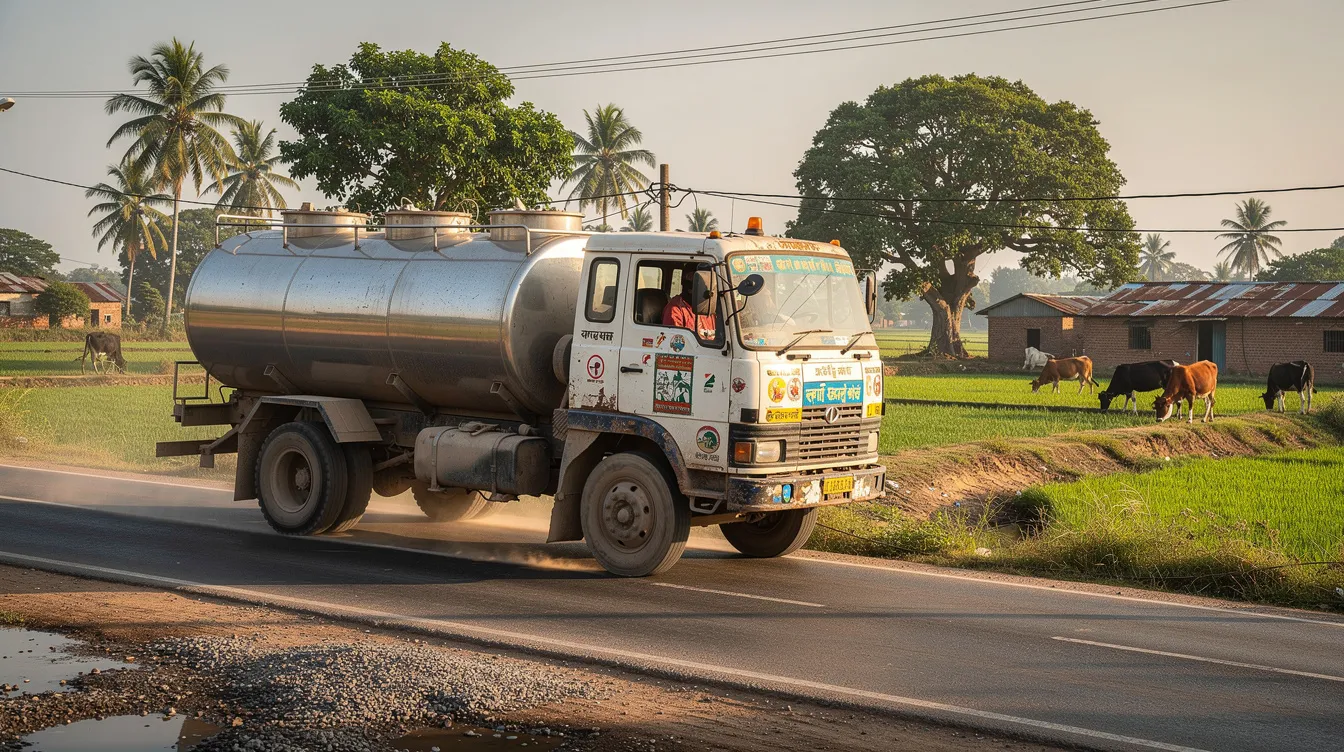
At the local level, raw milk is carried from farm to collection centre using motorcycles with insulated boxes (50–100 litres), small pickup vans with cans, or mini-tankers for 1,000–2,000 litres. Milk transport should be as quick as possible to prevent spoilage.
For longer distances, milk should be transported in insulated road tankers to maintain temperature. Insulated road tankers transport milk while keeping it chilled, using stainless steel inner shells and PUF insulation designed to limit temperature rise to below 1 °C over several hours.
Tanker capacities should match route volume: 3,000–5,000 litres for hilly or narrow roads, 9,000–12,000 litres for medium routes and 18,000–20,000 litres for highway routes. Indicative costs from MOFPI norms suggest approximately ₹18.6 lakh for a 5 KL tanker, ₹21.3 lakh for 9 KL and ₹30 lakh for 15 KL. Tankers require cleaning and sanitisation-internal CIP or manual washing with hot water and approved detergents-after each trip.
Raw Milk Reception Infrastructure at the Dairy Plant
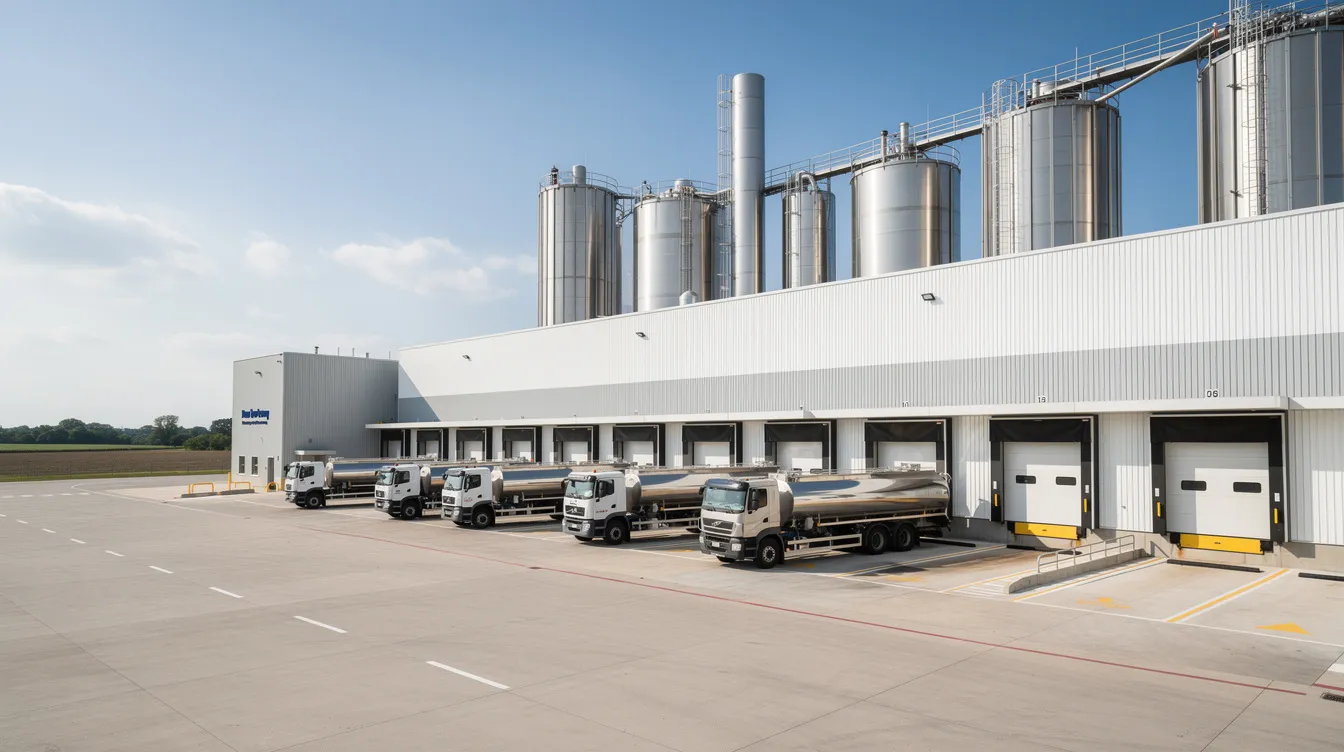
The milk reception dock is where tankers arrive, are weighed, sampled, tested and unloaded into raw milk silos. Infrastructure includes approach roads, weighbridge for gross and tare weight, reception platform, unloading pumps, stainless steel pipelines, strainers and an air eliminator for accurate flow measurement.
Sampling and testing arrangements at reception include quick tests for fat, SNF, acidity, organoleptic checks and alcohol test. Raw milk silos can store between 50,000 to 500,000 litres depending on plant scale, equipped with agitators, temperature sensors and CIP systems. UHT systems that heat and cool milk to kill bacteria and extend shelf life, homogenizers used to break down fat droplets in milk, and other processing equipment beyond reception are covered in the dedicated guide on dairy processing plant machinery and equipment cost.
Some modern dairy facilities also consider diversification into plant-based beverage lines, which commonly integrate enzymatic processing and homogenization. Plant-based milk processing requires adapting traditional dairy infrastructure since plant-based processing relies on extraction and enzymatic breakdown rather than animal milk handling. Such lines require wet milling and extraction equipment, and filtration separates insoluble fibers from liquid extracts. Water makes up over 90% of plant-based milk, and chilled and ambient versions have different distribution requirements. Aseptic fillers keep the product fresh without refrigeration before opening. While these are separate processing streams, promoters planning future diversification should consider reception and utility layouts that can accommodate both dairy and plant-based lines.
Quality Control and Milk Testing in Procurement
Quality control must start at the village collection centre, continue at BMC centres and culminate at the plant’s central laboratory. Quality control labs test incoming materials and finished products for safety and compliance across the entire chain.
Routine tests at village level include:
- Organoleptic check (smell, taste, colour) and temperature measurement
- Lactometer reading-normal milk density ranges from 1.028 to 1.033 g/ml at 15 °C
- Fat testing via Gerber test or electronic analyser, and SNF estimation
- Basic adulteration checks for added water, sugar, starch and urea
- Alcohol test (68% alcohol stability test) to identify high-acidity milk; milk acidity above 0.19% indicates poor quality that may curdle during pasteurization
- Freezing point depression as a more precise indicator of water addition
At the central plant lab, more detailed tests include microbial counts, resazurin tests that measure bacteria content in milk samples, somatic cell count analysis (a somatic cell count over 400,000 per ml indicates udder disease), antibiotic residues and phosphatase tests for pasteurisation verification. Payment systems linked to fat and SNF content incentivize farmers to supply increased quality milk and reduce adulteration risk.
Farmer Procurement Models and Dairy Producer Network
A dairy plant can build its dairy farmer network through different procurement models, and no single model suits all regions or plant sizes.
Direct milk procurement from individual farmers at company-operated centres offers maximum control over quality and testing but requires significant capital investment in collection centres. Procurement through village collection agents reduces infrastructure needs but can compromise transparency. The cooperative milk procurement model-implemented successfully across India-mobilises many small producers through a dense grid of centres. FPO and producer company models offer similar collective benefits with more formal governance. Bulk procurement from third-party suppliers or existing dairies provides quick volume but limited control over quality.
Many private milk processing plants use hybrid systems-some direct centres plus agency-based procurement-depending on local conditions. Bankers generally prefer formalised and documented procurement arrangements.
Farmer Development, Services and Retention Strategy
A stable dairy milk procurement system depends on long-term, trust-based relationships with farmers. Transparent milk testing in front of producers, immediate display of fat, SNF and weight readings, and printed slips for every transaction build confidence.
Timely payment-weekly or 10-day cycles-with clear communication of milk procurement price keeps farmers loyal. Support services such as veterinary health camps, artificial insemination, feed supply and training on clean milk production further strengthen retention. Digital payments via NEFT or UPI and farmer apps providing SMS alerts for statements help producers track their income from the market for their produce.
Milk Procurement Price, Working Capital and Cash Cycle
Raw milk purchases constitute a major part of operating cost. The cash-flow pattern involves daily outflow for milk procurement against delayed inflow from sale of processed milk and dairy products.
Illustrative example (assumptions clearly labelled): a 1 LLPD plant paying an average of ₹30–35 per litre and procuring 80,000 litres daily faces an outflow of approximately ₹24–28 lakh per day. With a 10–15 day farmer payment cycle and 20–30 day receivable period from distributors, working capital tied up can reach ₹5–7 crore on the procurement side alone.
Product mix affects the cash cycle-pouch liquid milk rotates faster than cheese, ghee or powder which require longer inventory holding including cold storage. Banks typically finance part of working-capital needs through cash credit limits, but realistic estimation during project planning is essential.
Capital Cost of Milk Procurement Infrastructure
Dairy procurement CAPEX covers multiple layers: village collection infrastructure, BMC and chilling centres, transportation fleet and IT systems. All these must be budgeted alongside plant machinery and buildings.
Key asset categories include:
- Civil works at collection and BMC centres (sheds, platforms, drainage)
- Milk collection centre equipment-weighing scales, milk analysers, AMCUs
- Milk collection accessories-stainless steel cans, strainers, buckets and trays, which carry meaningful cumulative cost across dozens of centres
- Bulk milk coolers and generators
- Insulated milk tankers and smaller pickup vehicles
- IT infrastructure-procurement software, connectivity devices, servers or cloud subscriptions
Approximate costs per collection centre and per BMC can be estimated at DPR stage using indicative ranges, but final investment decisions must rest on current supplier quotations and site-specific designs.
Integration With Dairy Plant Land, Building and Site Infrastructure
The milk collection and procurement system must integrate smoothly with the physical layout of the main dairy plant. Layout considerations include dedicated entrance and exit for milk tankers, adequate turning radius, parking space, proximity of weighbridge to reception dock and safe pedestrian routes.
Utilities around the milk reception area-chilled water, steam, compressed air, CIP lines and effluent drainage-must be planned holistically. Broader site planning topics are covered in the guide on dairy plant land, building and infrastructure requirements. Reception and tanker-handling areas should be designed so the plant can scale-say from 1 LLPD to 2–3 LLPD-with minimal disruption.
Milk Procurement Infrastructure Within Total Project Cost
Capital expenditure elements such as BMCs, vehicles and centre equipment are grouped under fixed assets, while milk purchases, fuel, testing reagents and staff salaries appear in operating statements and working-capital estimates. Pre-operative costs may include initial farmer mobilisation, training programmes and trial procurement runs.
Lenders and investors expect the DPR to show procurement-related CAPEX and OPEX clearly. These numbers feed into the overall dairy plant project cost and means of finance planning. Underestimating procurement infrastructure cost often leads to cash strain when additional BMCs, tankers or centre upgrades are needed soon after commissioning.
Relationship With Overall Dairy Plant Setup Cost
Milk procurement infrastructure is one pillar of the integrated dairy project alongside processing machinery, cooling equipment, utilities, cold storage, packaging and marketing infrastructure. Selection of product mix-liquid milk vs curd, paneer, UHT or powders-influences both plant capacity and required procurement volume.
When preparing a comprehensive feasibility study, promoters should assess how procurement investment fits within the total budget presented in an integrated project report. For detailed discussion on overall cost structure, refer to the resource on integrated dairy processing plant setup cost in India. Sensitivity analysis-for example, 10–20% lower milk availability than expected-should be run to see how procurement shortfalls impact revenues and debt-service capability.
Milk Procurement Planning in a Dairy Plant DPR
Milk procurement planning is a core component of a professional dairy plant DPR, not a supporting footnote. It directly supports bank loan appraisal and investor decisions. A DPR should cover estimated installed capacity, phased capacity utilisation, total annual raw milk requirement and mapping of potential procurement villages.
Evaluating milk availability requires secondary data from government and NDDB sources, field surveys, baseline studies and assessment of existing dairy presence. The DPR must outline the proposed number of collection centres, BMC capacity, tanker fleet size, procurement radius and procurement model with justification. Financial sections should include procurement price assumptions, cost per litre, quality-based incentive schemes, projected working capital and risk factors.
How Banks and Lenders Evaluate Milk Procurement Arrangements
Banks and financial institutions in India assess the realism of the proposed dairy milk procurement system before sanctioning term loans. Typical appraisal points include confirmation of milk availability in the catchment area, evidence of surveys or agreements with farmer groups, existing competition and the promoter’s track record.
Appraisers examine whether projected milk procurement capacity supports planned utilisation levels (for example, 60–70% in year 1 rising to 85–90% by year 4). They also verify that procurement-related CAPEX and working-capital needs are adequately covered in means of finance. Robust field data and realistic assumptions significantly strengthen a project’s financing prospects.
Major Risks in Dairy Milk Procurement and Mitigation Measures
Procurement risk is one of the most critical operational risks in a dairy project. Key risks include:
- Seasonal shortage of raw milk in lean months
- Procurement price increases due to competition from other dairies
- Farmers switching to competing buyers
- Poor milk quality, adulteration or high microbial load from mixed sources
- Power failure at BMC centres causing spoilage
- Transport disruption during floods, strikes or fuel shortages
Mitigation measures include diversifying catchment across multiple village clusters and districts, maintaining backup generators at all BMC locations, implementing preventive maintenance schedules, using quality-based pricing to incentivize compliance and building strong farmer relations through timely payment and development services. The DPR should include a risk and mitigation matrix focused on milk procurement.
Common Mistakes When Planning Milk Collection & Procurement Infrastructure
Many dairy projects struggle not because of machinery issues but due to underdeveloped milk collection infrastructure and incorrect assumptions. Common mistakes include:
- Fixing plant capacity first and assessing milk availability later
- Assuming “milk is easily available” without proper field surveys
- Underestimating seasonal variation and its impact on utilisation
- Installing too few collection centres or insufficient BMC capacity relative to catchment
- Ignoring transport time, road conditions and monsoon-season access
- Weak milk testing systems with no standard operating procedures
- Assuming immediate 90–100% plant utilisation from day one
- Ignoring working-capital lock-in created by daily milk procurement against delayed receivables
Illustrative Planning Example: 1 LLPD Dairy Plant Milk Procurement System
This example is illustrative and intended to demonstrate methodology, not serve as a universal benchmark.
Assumptions: 1 LLPD target, initial capacity utilisation of 70% in year 1 rising to 90% by year 4, product portfolio dominated by pouch milk with some curd and ghee. Milk is collected from approximately 40–60 villages within a 40–60 km radius, with average daily surplus of 1,500–2,500 litres per village yielding a total potential of 1.0–1.2 LLPD.
Network design: 15–20 village milk collection centres each equipped with weighing scales, milk analysers and testing kits. Of these, 8–10 centres fitted with BMCs of 2,000–5,000 litres forming local chilling hubs.
Transport: Two 9,000–12,000 litre insulated tankers running two trips daily, plus one smaller vehicle for backup and difficult routes.
Indicative CAPEX categories for the procurement side include collection centre equipment, BMCs, civil works, vehicles and IT systems. Based on the total amount of milk procured at an average price of ₹30–35/litre, working capital of approximately ₹5–7 crore may be required for the procurement cycle alone.
Conclusion: Aligning Milk Procurement Infrastructure With Bankable Dairy Projects
A successful dairy processing plant requires a well-designed dairy milk procurement system that can consistently deliver the right quantity and quality of raw milk at economically viable cost. Farmers, collection centres, BMCs, tankers and plant reception form one integrated cold chain. Weaknesses at any point lead to losses, quality failures and under-utilised capacity.
A professionally prepared DPR should integrate procurement design with processing capacity, land and building plans, machinery selection and finance structure. Promoters planning commercial dairy projects in India-whether 50,000 litres/day or 5 LLPD-can benefit from working with experienced project finance professionals who understand how all the milk supply, infrastructure and financial pieces fit together.
CA Manish Gugliya and ProjectReportBank.com offer customised dairy processing plant project reports covering detailed milk procurement infrastructure planning, project cost estimates, financial projections and bank loan support for entrepreneurs and dairy companies across India and other countries.
Frequently Asked Questions
How much milk procurement infrastructure is required for a 1 LLPD dairy plant?
A 1 LLPD plant typically requires 15–20 village milk collection centres, 8–10 BMCs of 2,000–5,000 litres capacity, 2–3 insulated tankers and supporting IT and testing infrastructure. The exact requirement depends on milk density in the catchment, road connectivity and seasonal supply patterns. During DPR preparation, these numbers should be derived from field surveys rather than assumed.
What is a BMC in dairy procurement?
A BMC or bulk milk cooler is a stainless steel, insulated milk cooling tank with a refrigeration system and agitator, used to rapidly chill raw milk from ambient temperature to about 4 °C. Bulk cooling tanks can hold 300 to 40,000 litres of milk depending on the scale of the collection centre or chilling hub. BMCs are a critical component of the dairy cold chain.
Do banks fund milk collection centres and BMCs as part of dairy plant loans?
Many banks and development finance institutions treat milk procurement infrastructure-including BMCs, vehicles and collection-centre equipment-as eligible fixed assets within the overall dairy plant project loan. However, treatment varies by lender and scheme. Under NABARD-supported models, for instance, a 2,000-litre BMC project with total cost of approximately ₹11.78 lakh can be financed with 80% loan and 20% margin money, yielding an IRR of around 25%.
How does seasonality affect milk procurement for a dairy plant?
Flush season (typically October–February in many Indian states) can deliver 30–50% more milk than lean months (May–July). This variation directly impacts plant utilisation, product mix decisions and working-capital requirements. DPRs should model this seasonality explicitly, showing how excess flush-season milk might be converted into ghee, SMP or other storable products while lean-season strategies may include broader catchment development or approved procurement from additional sources.
Is it practical to start a dairy plant without a fully developed procurement network?
Starting operations without a substantially developed procurement network is risky. However, phased development-beginning with core collection centres and BMCs while expanding the network over 2–3 years-is a common and practical approach. The critical requirement is that minimum viable procurement infrastructure is operational before plant commissioning, with a clear rollout plan approved in the DPR and accepted by the financing institution.
📊 Operations & Financial Planning: Utilities | Revenue Model & Product Mix | Financial Projections | Working Capital | CMA Data | DSCR & Repayment Capacity
🏦 Bank Finance, Viability & Returns: Bank Loan & Project Finance | Term Loan Assessment | Feasibility & Viability | Break-Even Analysis | ROI, IRR & Payback | Sensitivity & Risk Analysis