
Key Takeaways
- Dairy plant project cost includes land, civil construction, plant and machinery, utilities, ETP, pre-operative expenses, interest during construction and working capital margin – not just equipment price.
- For a medium-to-large integrated dairy processing plant (50–100 KLPD), total project cost can run into several tens of crores depending on land, product mix, automation level and utility infrastructure.
- Means of finance typically combines promoter contribution, term loan and working capital finance; the structure must be realistic enough to keep DSCR and repayment manageable.
- Banks appraise dairy plant project finance based on project cost reasonableness, means of finance, milk procurement strategy, market assessment, cash flows and DSCR – not just machinery quotations.
- A bankable DPR should logically connect technical configuration, dairy plant layout, project cost, financing structure and detailed financial projections.
Introduction: Why Dairy Plant Project Cost & Finance Structure Matter
One of the most frequent questions I receive from dairy entrepreneurs planning a processing unit is deceptively simple: “What will a 50 KLPD or 100 KLPD dairy processing plant actually cost, and how will the bank finance it?”
The answer is never a single number. Dairy plant project cost is far more than the price of a pasteurizer and a packaging line. It includes land, civil construction, utilities, effluent treatment, refrigeration, cold storage, pre-operative expenses, interest during implementation and initial working capital margin. Estimating the cost of a dairy plant project requires a comprehensive financial breakdown – something many promoters realise only after the bank returns their first proposal with a list of queries.
This article is focused on medium-to-large integrated dairy processing plants in India – typically 10 KLPD to 100 KLPD and above – where substantial capital investment and structured project finance are involved. Dairy processing is growing rapidly to meet increasing consumer demand, and India’s dairy sector has room for thousands of local processors, but only those with realistic cost estimation and sound financing will succeed.
I will walk you through the detailed components of dairy plant project cost, the impact of capacity and product mix, fixed versus working capital, typical means of finance, debt-equity structure, DSCR considerations and what banks look for in a DPR. For machinery pricing specifics and integrated plant setup details, I will reference separate dedicated guides at the appropriate points.
What Is Included in Dairy Plant Project Cost?
In a bank DPR and term loan appraisal, “total project cost” represents every rupee needed to make the dairy plant operational and ready to generate revenue. It is not simply the cost of equipment.
Here is how the main categories break down:
| Category | Key Items |
|---|---|
| Fixed Capital Investment | Land, site development, civil construction, plant and machinery, utilities (boiler, refrigeration, ETP), electricals, cold storage, vehicles, furniture, laboratory |
| Pre-Operative & Preliminary Expenses | Consultancy, DPR, FSSAI manufacturing license, pollution clearances, trial runs, operator training, recruitment, initial marketing |
| Interest During Construction (IDC) | Interest on term loan during construction period before revenue starts |
| Contingency | Provision for price escalation, design changes (typically 5–10% of base CAPEX) |
| Working Capital Margin | Promoter-funded portion of initial working capital to cover raw milk, packaging stock, receivables and operating expenses until cash flows stabilise |
Total Project Outlay = Fixed Capital + Pre-Operative Expenses + IDC + Contingency + Working Capital Margin
In my experience working on project reports, one of the most common mistakes promoters make is treating the machinery quotation as the total project cost. Capital expenditure (CapEx) and operational expenditure (OpEx) must be carefully calculated, and the DPR must present a complete picture. Banks in India appraise dairy plant projects on total project cost and corresponding means of finance – not isolated quotations.
Land and Site Development Cost
For a commercial dairy processing unit, land requirement depends on plant capacity, product mix and dairy plant layout. A 10 KLPD integrated plant may need 1–2 acres; a 50 KLPD multi-product facility may require 3–5 acres or more depending on cold storage, ETP and future expansion provision. For context, even a 500-litre-per-day plant requires 1,500 to 2,000 square feet of built-up area.
Land cost varies widely by region – rural India near milk-producing clusters can be significantly cheaper than industrial zones near cities, but proximity also affects logistics and easy access to raw materials and markets. Owned land appears in project cost at acquisition value; leased land is treated differently and usually not financed by term loan.
Key site development items include levelling, internal roads for milk tanker movement, boundary wall, drainage, storm-water management, parking and loading bays, and designated utility zones. As plant capacity increases, land and site development cost as a percentage of total project cost tends to decline, reflecting economy of scale.
Building and Civil Construction Cost
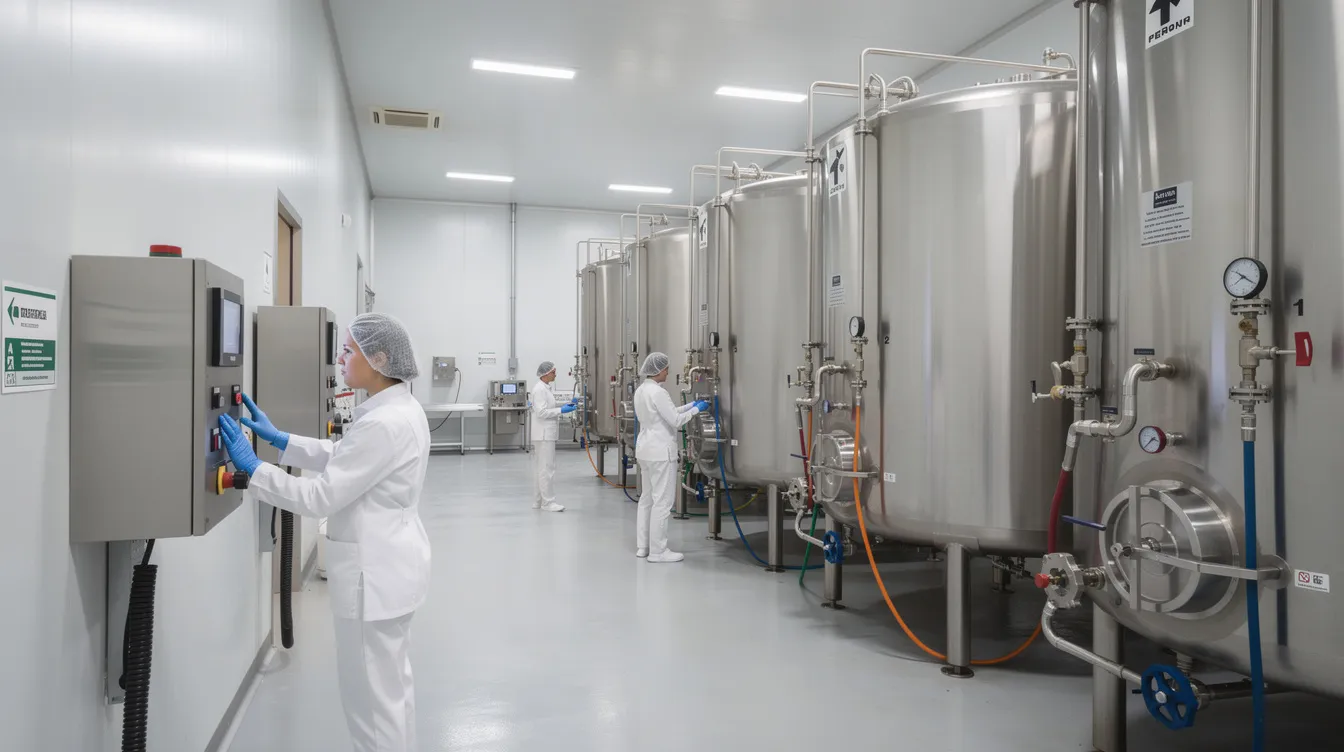
Dairy plant civil construction is not a standard industrial shed. Production zones require hygienic, washable, and food-grade construction with acid-resistant flooring, proper drainage slopes and insulated cold rooms. The ideal dairy plant process flow is single-directional – from raw milk reception through processing to dispatch – and the dairy processing layout includes reception, processing, and storage rooms designed to prevent cross-contamination.
Key functional areas to budget in civil cost:
- Milk reception and testing bay
- Processing hall
- Packaging and filling section
- Cold storage and walk-in chillers
- Raw material and packaging stores
- Utility block (boiler room, refrigeration, DG set)
- ETP area
- Quality-control laboratory
- Administrative offices, change rooms, canteen
Civil cost often represents 25–40% of total fixed assets for a greenfield dairy plant, varying with RCC versus PEB structure, building height, floor finish and insulation specifications. Integrating process-flow engineering with architectural design at the DPR stage avoids expensive layout changes during construction. Proper dairy plant layout increases efficiency and product quality from day one.
Dairy Plant & Machinery Cost
Plant and machinery is typically the single largest cost component after civil work. Dairy processing plants require significant capital investment for machinery, and requirements depend heavily on planned plant capacity and product mix.
Major equipment groups for a modern milk processing plant include:
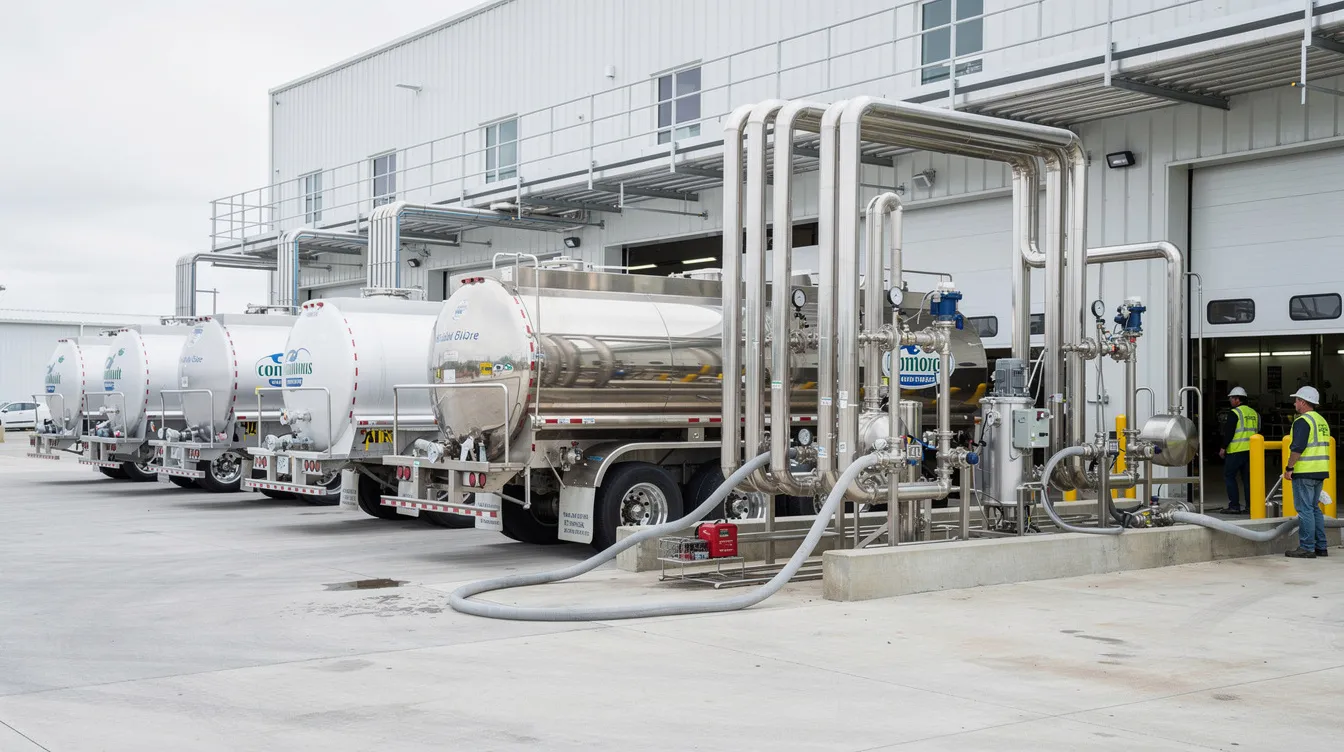
- Milk reception, weighing and dump tanks
- Milk chillers (essential for reception and pre-treatment of fresh milk)
- Pasteurizers and homogenizers (core processing equipment)
- Cream separators and standardization systems
- Clean in place (CIP) systems
- Product-specific equipment (paneer presses, curd incubation tanks, ghee kettles, butter churns)
- Spray dryer and evaporator for whole milk powder or skimmed milk powder production
- Packaging sections utilizing automatic filling machines and cup sealers
- Refrigeration compressors, walk-in chillers and cold room panels
A plant’s automation level affects capital expenditure significantly – fully automatic PLC/SCADA lines cost more upfront but can reduce product loss and labour cost over time. Domestic versus imported machinery also creates wide price differences, especially for milk powder, cheese and UHT lines.
For a detailed breakdown of dairy processing plant machinery and equipment cost, refer to our dedicated machinery cost guide, which covers equipment-level pricing across capacities.
Utilities & Supporting Infrastructure Cost
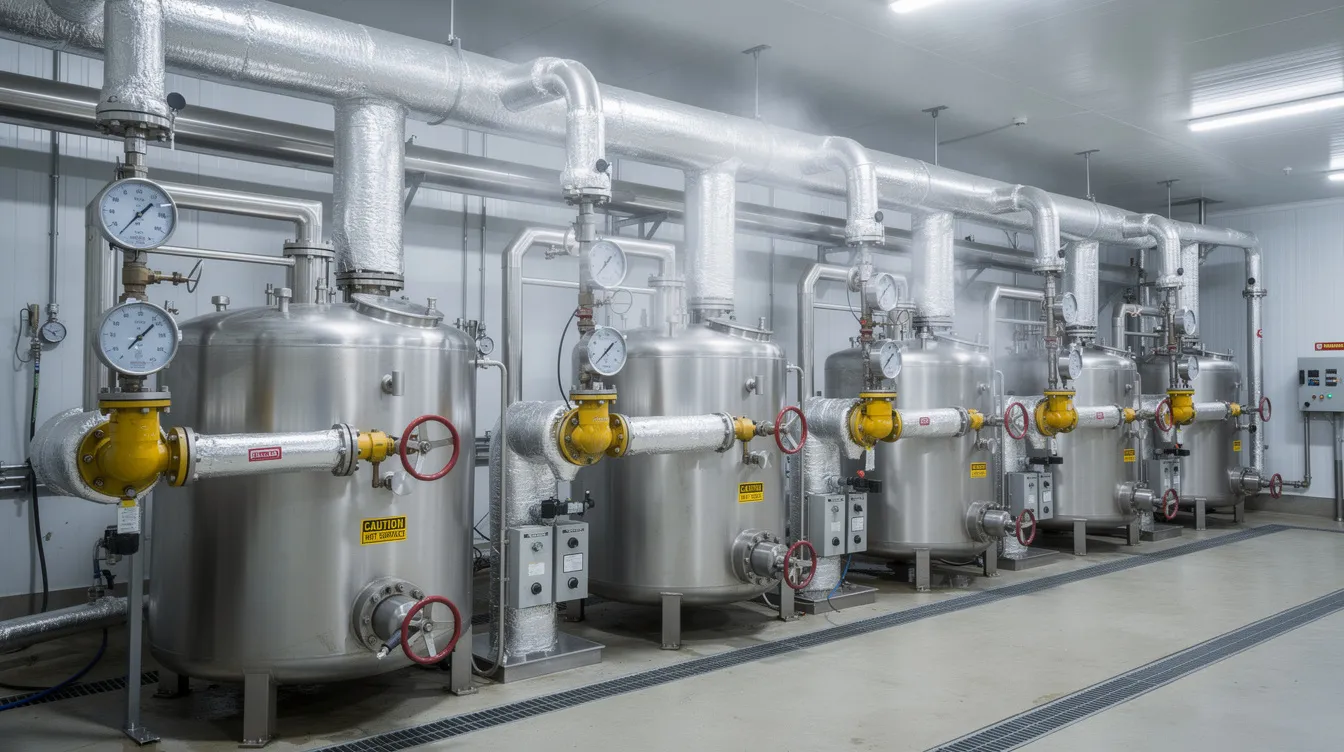
Utilities are the backbone of any dairy processing plant and can account for a substantial share of CAPEX, particularly for integrated plants. Dairy plants consume significant quantities of electricity, water, refrigeration, and steam daily.
Main utility systems include:
- Boiler and steam distribution – boilers should be sized according to thermal energy demand for pasteurization, CIP and ghee manufacturing
- Refrigeration plant (ammonia or freon-based systems with chilled-water/glycol circuits)
- Water treatment plant (softener/RO) – milk processing requires three litres of water per litre of milk, and water supply is critical for cleaning-in-place (CIP) processes
- Compressed air systems
- DG set for power backup – utilities include boiler systems, refrigeration, and power backup generators
- Electrical substation and internal distribution
- Effluent treatment plants (ETP) – essential for treating wastewater from dairy operations; ETP costs can range from ₹60–120 lakh for a 100 KLD system, and ZLD provisions multiply this 3–5 times
- Utilities housing includes dedicated structures for boiler rooms and electrical substations
Inadequate sizing of utilities is a common practical mistake I encounter in project reports. Under-specified steam or refrigeration capacity leads to either operational bottlenecks or costly mid-project redesigns. Storage facilities need insulated warehouses for finished dairy products, and integrated cold chain beyond the plant (refrigerated vehicles, distributor cold rooms) may also need budgeting.
Pre-Operative Expenses, Interest During Implementation & Contingencies
Pre-operative expenses cover everything needed before the plant starts earning revenue: company incorporation, project consultancy, DPR preparation, architectural and engineering design, statutory fees (FSSAI manufacturing license, State Pollution Control Board NOC, factory license), trial runs, operator training, recruitment and initial marketing expenses.
Interest during construction (IDC) is the interest on the term loan during the period the dairy plant is being built and is not yet generating revenue. For medium dairy plants, construction can take 12–18 months; if the schedule slips, IDC accumulates and inflates project cost.
Contingency provision – typically 5–10% of base CAPEX – is essential for price escalation and design changes. In my experience, many promoters under-provide contingency and later face cost overruns that force additional margin requirements from banks or, worse, stall the project mid-way.
Working Capital Requirement & Margin for a Dairy Processing Business
Working capital is critical for any dairy processing business because milk procurement from farmers or collection centers often requires cash or 24–48 hour payment, well before sales revenue stabilises. Working capital covers various operational costs including salaries, transport, and utilities.
Key working capital components:
- Raw milk stock (in tankers and silos)
- Process inventory (cream, skim milk, products under processing)
- Finished goods in cold storage (curd, paneer, butter, milk powder)
- Packaging material inventory
- Trade receivables from distributors and institutional buyers
- Minimum cash and bank balance
Sources that reduce working capital: supplier credit on packaging, advance from institutional customers, and short credit periods in certain markets.
| Item | Definition | Typical Funding Source |
|---|---|---|
| Total Working Capital Requirement | Full cycle cost of raw materials, inventory, receivables minus payables | Mix of promoter margin + bank WC limits |
| Working Capital Margin | Promoter-funded portion included in project cost | Promoter equity / long-term sources |
| Bank Working Capital Limit | Cash credit, WCDL sanctioned by bank | Bank facility (separate from term loan) |
Working capital is needed for raw milk procurement before sales cash flow stabilises. The margin portion is included in total project cost, while the bank’s working capital limit is appraised and sanctioned separately.
Capacity-Wise Dairy Plant Project Cost Structure
Project cost patterns change significantly with capacity and configuration. A small dairy processing plant costs ₹20 to ₹30 lakhs at the micro level, while a larger 2,000-litre-per-day unit costs ₹50 to ₹70 lakhs. But for commercially meaningful integrated plants, the numbers are substantially higher.
| Capacity | Nature of Plant | Indicative Investment Character | Key Cost Drivers |
|---|---|---|---|
| 10 KLPD | Pasteurized milk + curd + paneer | ₹5–7.5 crore excluding land | Civil design, packaging lines, cold storage |
| 20–25 KLPD | Multi-product (milk, curd, paneer, ghee) | ₹10–15 crore range | Automation level, product-specific equipment, ETP |
| 50 KLPD | Integrated multi-product with higher automation | ₹25–50 crore range | Milk powder/UHT addition, advanced refrigeration, dairy plant layout |
| 100 KLPD | Large integrated with UHT/powder/cheese capability | ₹60–104 crore | Spray dryer, advanced packaging, ZLD, cold chain |
Per-litre CAPEX declines as capacity increases, but absolute investment rises sharply. Actual dairy processing plant project cost depends on land price, state location (Uttar Pradesh, Tamil Nadu, Gujarat, Maharashtra and other states each have different cost dynamics), civil specifications, machinery origin, process automation and environmental compliance.
How Product Mix Changes Dairy Plant Investment
Two 50 KLPD plants can have very different project costs. A plant producing only pasteurized milk and basic curd will cost significantly less than one adding paneer, ghee, butter, cheese, flavoured milk and milk powder.
Popular dairy products include paneer, ghee, curd, and milk at the basic level, but regional demand adds variety – shrikhand is highly demanded in Gujarat and Maharashtra, mishti doi is a popular dairy product in West Bengal, and lassi and makhan have strong cultural demand in Punjab. Different products require various types of processing, storage, and packaging equipment.
Cost implications by product family:
- Liquid milk products (toned milk, standardized milk, market milk, flavoured milk): relatively standard processing and packaging lines
- Fermented products (curd, yogurt, buttermilk): incubation tanks, cold chain
- Paneer and table butter: coagulation, pressing, cutting equipment – paneer businesses can achieve profit margins of 20–30%
- Ghee: fat separation, ghee kettles, clarification systems
- Butter production requires filtration, skimming, and pasteurization of milk with dedicated churning equipment
- Milk powder: spray dryer and evaporator – high capital, high energy; UHT milk processing plants have gross profit margins of 25–35%, with operating costs at 70–80% raw milk
- UHT milk: the market is projected to reach 205.42 billion liters by 2034
Packaging requirements can significantly increase investments depending on formats used (pouches, cups, tubs, tetra packs, bulk). Adding value-added products typically increases total project cost by 30–35% compared to simple liquid-milk plants but can substantially improve profits and long term sustainability if demand is validated.
Integrated Dairy Processing Plant Setup Cost – Linking Project Cost & Layout
An “integrated” dairy plant receives, chills, standardises and processes milk into multiple dairy products with end-to-end utilities, packaging and cold chain. The total setup cost combines land, civil, core processing machinery, product-specific equipment, utility systems, cold storage, ETP, vehicles, pre-operative expenses and working capital margin.
Infrastructure requirements, plant layout and zoning decisions influence both CAPEX and later operating efficiency. Milk collection infrastructure involves collection centers and bulk milk coolers in the procurement network feeding the plant.
For a deeper dive into integrated dairy processing plant setup cost in India, including capacity-wise CAPEX and configuration details, refer to our detailed guide.
Means of Finance for Dairy Plant Project Cost
Once project cost is established, the next step is determining how the dairy plant will be funded:
Project Cost = Promoter Contribution + Term Loan + Other Long-Term Sources + Working Capital Facilities
For most medium and large dairy plants, fixed assets are funded through promoter equity and term loans from banks or financial institutions, while working capital is supported by a mix of margin money and bank working capital limits.
Government schemes support dairy entrepreneurs in India through multiple channels. NABARD offers 25% to 33.33% capital subsidies under eligible dairy schemes. The DIDF scheme provides interest subvention for cooperatives and milk unions. The PMFME Scheme provides grants up to ₹10 lakhs for micro food processing. State-specific dairy schemes exist alongside central programs, and MSME Udyam Registration is free and takes 10 minutes for eligible units. Financial assistance availability must be verified at the time of application.
A balanced means of finance should support comfortable DSCR and provide cushion for cost overruns, rather than targeting the highest possible bank loan.
Promoter Contribution & Margin Requirements
Promoter contribution is the amount that promoters bring into the project from their own resources – treated as equity or quasi-equity for debt-equity calculations. Banks examine adequacy of contribution, ability to bring funds at the right time and documented source of funds.
The exact percentage varies by lender, scheme, project size and security. For large-scale dairy processing plants, promoter equity typically represents 30–40% of total CAPEX, with term debt covering 60–70%.
Under-reporting project cost to inflate the apparent “percentage” of bank loan is counterproductive. During actual implementation, the funding gap surfaces, and arranging additional funds mid-project becomes difficult and expensive.
Term Loan for Dairy Processing Plant
A term loan finances eligible fixed assets: land development, civil construction, dairy plant machinery, utilities, cold storage, electricals and other permanent infrastructure. Key parameters include loan amount relative to project cost, repayment tenure (typically 7–12 years), moratorium period during construction and stabilisation (6–18 months), interest rate, and security (primary charge on assets plus collateral where required).
For larger integrated dairy plants with milk powder and UHT sections, repayment period and moratorium sometimes need careful structuring because ramp-up to optimum capacity utilisation can take 2–3 years. Entrepreneurs should not finalise term loan assumptions without discussing with potential lenders or a project finance advisor.
Working Capital Finance for Dairy Plant Operations
Working capital finance includes bank-funded facilities – primarily cash credit on inventory and receivables – used to support day-to-day operations once the dairy plant is commissioned. The dairy business requires significant working capital because daily milk procurement from farmers demands immediate payment while sales realisation from distributors may take longer.
Working capital limits are appraised separately by banks but must be consistent with the working capital assessment in the DPR and CMA data. The margin money portion is counted within total project cost as part of promoter contribution.
Debt-Equity Ratio & Its Role in Dairy Plant Financing
Debt-Equity Ratio = Total Long-Term Debt / Promoter’s Equity
For example, if a dairy plant project has ₹12 crore equity and ₹24 crore term debt, the debt-equity ratio is 2:1. There is no single “correct” ratio for all dairy projects – acceptable ratios depend on project risk, product mix, promoter background, security coverage and bank policy.
Higher leverage increases interest and principal obligations, which can depress DSCR and amplify risk if capacity utilisation or milk margins do not ramp up as projected. At the DPR stage, evaluate a range of debt-equity structures and check how each impacts repayment capacity over the projection period.
Illustrative Project Cost & Means of Finance for a Dairy Plant
The following is a purely illustrative example for a hypothetical 50 KLPD integrated dairy plant producing milk, curd, paneer and ghee, with a total project cost of ₹35 crore. Actual numbers must be customised for each project.
Illustrative Project Cost Breakup:
| Component | Amount (₹ Crore) | % of Total |
|---|---|---|
| Land & Site Development | 2.50 | 7% |
| Building & Civil Work | 8.75 | 25% |
| Plant & Machinery | 12.25 | 35% |
| Utilities & ETP | 4.55 | 13% |
| Electricals, Vehicles, Furniture | 1.75 | 5% |
| Pre-Operative, IDC & Contingency | 3.20 | 9% |
| Working Capital Margin | 2.00 | 6% |
| Total Project Cost | 35.00 | 100% |
Illustrative Means of Finance:
| Particulars | Amount (₹ Crore) | % of Project Cost |
|---|---|---|
| Promoter Contribution | 12.25 | 35% |
| Term Loan | 22.75 | 65% |
| Total | 35.00 | 100% |
This structure would need to be validated against projected cash flows to ensure that DSCR remains comfortable under realistic capacity utilisation assumptions, especially in the initial 2–3 years when the plant is ramping up.
Dairy Plant Project Cost vs Means of Finance – Understanding the Difference
This distinction is fundamental but often confused:
| Project Cost – Where Money Will Be Spent | Means of Finance – Where Money Will Come From |
|---|---|
| Land & site development | Promoter contribution (equity) |
| Building & civil work | Term loan from bank |
| Plant & machinery | Unsecured loans (if accepted by bank) |
| Utilities, ETP, cold storage | Government scheme subsidy (if eligible) |
| Pre-operative expenses, IDC | Internal accruals from existing business |
| Working capital margin | Other long-term sources |
In a proper DPR and CMA data, total project cost (uses) must exactly equal total means of finance (sources), and the projected balance sheet should reflect the same structure. Confusion between these two sides often leads to incomplete funding plans and implementation delays.
How Banks Assess Dairy Plant Project Finance
Banks appraise the overall viability of the dairy processing plant – credit decisions depend on multiple interlinked factors:
| Appraisal Area | What the Bank Examines |
|---|---|
| Promoter Profile | Background, experience in dairy industry or food business, net worth |
| Milk Procurement | Supply arrangements, consistency, quality assurance, proximity to collection centers |
| Market & Product Mix | Local demand for dairy products, competition, key players, product margins |
| Project Cost | Reasonableness of estimates, validated quotations, industry standards compliance |
| Means of Finance | Adequacy of promoter contribution, debt-equity ratio, source documentation |
| Financial Projections | Sales, profitability, DSCR, break-even, cash flow, annual turnover projections |
| Security | Primary security (land, building, machinery), collateral, hypothecation of stocks |
| Compliance | FSSAI manufacturing license, State Pollution Control Board NOC, factory license, GST registration (mandatory after ₹20 lakhs turnover), local trade license from municipal authorities |
Obtaining environmental clearance and food safety certifications are necessary prerequisites. State FSSAI license is needed for turnover below ₹20 crore. A local trade license is required from municipal authorities, often at gram panchayat or municipal corporation level.
DSCR & Loan Repayment Capacity for Dairy Projects
DSCR (Debt Service Coverage Ratio) measures how comfortably the project’s cash profits can cover annual term loan principal and interest obligations. It is calculated from projected P&L and cash flow – essentially net cash available for debt service divided by total debt service for that year.
Financing decisions directly affect DSCR: higher term loan amount, shorter repayment tenure or higher interest cost can reduce DSCR below comfort levels, especially if milk margins compress or capacity utilisation ramps up slowly. Financial projections in the DPR should show year-wise DSCR over the full loan tenure, with attention to the lowest DSCR year where repayment stress is highest.
Different banks have different internal DSCR thresholds – no single benchmark is universally applicable.
Dairy Plant Financial Projections & CMA Data
Credible financial projections connect project cost and means of finance with future profitability and cash flows. Key projection components include:
- Product-wise sales volume and value based on realistic capacity utilisation ramp-up
- Raw milk and ingredient costs (raw materials being the dominant expense)
- Utility, labour, packaging and administrative costs
- Depreciation, interest on term loan and working capital
- Income tax and resulting profit after tax
- Projected balance sheets, cash-flow statements and year-wise DSCR
Assumptions must be internally consistent and reflect actual market conditions. Small dairy processors with local customer bases perform very well when projections are grounded in reality rather than optimistic best-case scenarios. CMA data for bank working capital assessment should flow logically from the same financial model without contradictions.
Sensitivity Analysis & Risk Assessment in Dairy Plant Projects
Dairy processing is sensitive to fluctuations in raw milk prices, selling prices, energy costs and capacity utilisation. A robust DPR should test project viability under adverse scenarios:
- Increase in raw milk procurement price by 10–15%
- Reduction in average selling price or rising demand not materialising as projected
- Slower capacity utilisation ramp-up
- Increase in fuel or power costs
- Change in interest rates on term loans
| Major Risk | Possible Mitigation |
|---|---|
| Milk procurement price volatility | Long-term supply agreements with farmers and cooperatives |
| Market and demand risk | Diversified product mix across cities and rural India |
| Construction delay / cost overrun | Realistic timelines, adequate contingency, regular monitoring |
| Regulatory delays | Early initiation of FSSAI, pollution control, factory license processes |
| Power / water availability | DG backup, water recycling, proper utility sizing |
Banks increasingly appreciate DPRs that transparently present sensitivity analysis rather than only optimistic base-case projections.
Project Cost Overrun & Financing Gaps – Practical Issues
Cost overrun occurs when actual expenditure exceeds budgeted project cost due to price escalation, design changes, delays or underestimation. Common causes in dairy plant implementations include inadequate contingency, changes in product mix mid-way (adding paneer or ghee lines after initial sanction), underestimation of ETP and utilities, and slow statutory approvals leading to higher IDC.
When significant overruns occur, banks typically ask promoters to bring additional margin or request term loan enhancement (subject to fresh appraisal). Either option impacts DSCR and project economics.
Good practices to manage overrun risk:
- Realistic cost estimation with competitive but credible quotations
- Adequate contingency provision (5–10% of base CAPEX)
- Clear implementation schedule with milestones
- Regular monitoring of actual versus budgeted expenditure
- Avoid deliberately understating project cost to show lower initial investment
Dairy Plant DPR for Bank Loan – What Should It Contain?
A Detailed Project Report (DPR) for a dairy processing plant is a comprehensive document integrating technical configuration, dairy plant layout, market analysis, project cost, means of finance and financial projections.
A professional DPR should cover:
- Promoter background and experience
- Industry overview and market assessment for dairy products
- Technical description: capacity, product mix, process flow, technology
- Milk procurement strategy and supply arrangements
- Detailed machinery list and utility requirements
- Land and building plan with layout drawings
- Project implementation schedule
- Detailed project cost with component-wise breakup
- Means of finance with source documentation
- Working capital assessment
- Projected P&L, balance sheet, cash flow (5–10 years)
- DSCR analysis, break-even analysis and sensitivity analysis
- Regulatory compliance plan (FSSAI, SPCB NOC, quality assurance systems)
A well-prepared DPR does not guarantee loan sanction but significantly improves the quality of discussion with banks, reduces back-and-forth queries and demonstrates professional planning by the promoter.

Conclusion & Professional Assistance
A dairy plant project should be planned by starting from realistic total project cost – covering land, civil work, plant and machinery, utilities, pre-operative expenses and working capital margin – then designing a balanced means of finance, and finally building detailed financial projections to test DSCR and repayment capacity.
Underestimating project cost or over-relying on bank loans creates serious stress once the plant starts operations, particularly in the first 2–3 years when capacity utilisation is still ramping up.
As a Chartered Accountant and project finance consultant, I focus on preparing bankable DPRs, CMA data and DSCR analyses grounded in realistic numbers and practical implementation experience. At ProjectReportBank.com, we assist new entrepreneurs and established promoters planning integrated dairy processing plants in India with:
- Detailed Project Report (DPR) for bank loan
- Project cost estimation and means of finance structuring
- Financial projections, CMA data and DSCR analysis
- Loan repayment schedules and feasibility analysis
If you are planning a dairy processing plant and need professional assistance with your project report, reach out through ProjectReportBank.com. Please note that final loan sanction always depends on the lender’s credit appraisal and policy – no consultant can guarantee approval.
CA Manish Gugliya ProjectReportBank.com
FAQs on Dairy Plant Project Cost & Finance
How much does a medium or large dairy processing plant cost in India?
For commercially meaningful capacities, total project cost varies significantly. A 10 KLPD integrated plant (pasteurized milk, curd, paneer) typically costs ₹5–7.5 crore excluding land. A 50 KLPD multi-product plant can range from ₹25–50 crore, while 100 KLPD integrated facilities with milk powder or UHT capability can exceed ₹60–100 crore. Small dairy processors at the micro level (500–2,000 LPD) can sometimes be set up within ₹20–70 lakhs, but these are fundamentally different investments. Any online “per litre” cost thumb rules should be treated as very approximate – each project requires a tailored DPR for accurate budgeting.
Is working capital included in dairy plant project cost?
In bankable DPRs, only the initial working capital margin – the promoter-funded portion – is included as part of project cost. The balance working capital requirement is expected to be financed through bank working capital limits such as cash credit. Project cost reflects the long-term funding required to make the plant operational, including the initial build-up of inventories and receivables. Lenders separately appraise the adequacy of working capital arrangements alongside the term loan.
What documents are usually required for dairy plant project finance?
Major document categories include: KYC and financial statements of promoters (ITR, balance sheets of existing businesses), proof of land ownership or lease, civil and layout drawings, machinery quotations from vendors, detailed project cost statement, DPR with financial projections, projected CMA data for working capital, and details of licenses – FSSAI manufacturing license, State Pollution Control Board NOC, factory license and GST registration. Banks may request additional documents depending on their procedures, security requirements and whether government financial assistance or scheme benefits are being availed.
How do banks calculate whether my dairy plant can repay the loan?
Banks study projected cash flows based on realistic capacity utilisation and margin assumptions, then compute whether annual cash profits are sufficient to cover interest and term loan instalments with an adequate safety margin – this is the DSCR. They also examine sensitivity: what happens to repayment capacity if milk procurement price rises or selling price falls. Strong collateral alone does not substitute for inadequate repayment capacity; both robust cash flow and sufficient security matter in credit appraisal for any dairy plant bank loan.
Is a Detailed Project Report (DPR) compulsory for obtaining a dairy plant bank loan?
While each bank has its own documentation policy, for medium and large dairy processing plants a detailed project report is practically essential. The lender must understand technical configuration, project cost, means of finance and financial projections in an integrated manner. Some banks may have their own formats or request modifications, but a professionally prepared DPR greatly reduces delays and clarification rounds. Treat DPR preparation as a core planning exercise for your dairy processing business – not merely as paperwork for the bank.
📊 Operations & Financial Planning: Utilities | Revenue Model & Product Mix | Financial Projections | Working Capital | CMA Data | DSCR & Repayment Capacity
🏦 Bank Finance, Viability & Returns: Bank Loan & Project Finance | Term Loan Assessment | Feasibility & Viability | Break-Even Analysis | ROI, IRR & Payback | Sensitivity & Risk Analysis