How much will your 3 star hotel actually cost to build? What occupancy and room rate can you realistically achieve? How much term loan can the projected cash flow support, and will a bank consider the project viable? These are the questions that matter before you commit capital to a hospitality project in India. A comprehensive 3 star hotel project report is the document that answers all of them-connecting your hotel business idea with hard financial data, market analysis, and debt-servicing capacity in a format that banks and financial institutions can appraise.
This guide walks you through every stage: from concept and cost estimation to revenue modelling, financial projections, feasibility, and bank loan assessment. Whether you are a first-time promoter or an experienced hotelier planning expansion, the goal is the same-prepare a strong project report that stands up to credit scrutiny.
Key Takeaways
- Your 3 star hotel’s total project cost, realistic occupancy, ARR/ADR, and projected cash flow capacity to service debt must be established early-these drive every decision in the DPR.
- A bankable hotel project report for bank loan proposals must connect market feasibility, detailed project cost, means of finance, revenue model, projections, DSCR, and risk analysis in one internally consistent document.
- For a typical 40 to 80 room 3 star hotel, building cost, interiors, and FF&E together form the bulk of CAPEX; land cost, funding mix, and operating efficiency decide long-term profitability and ROI.
- Financial projections in a hotel DPR should be driven by room inventory, occupancy ramp-up, ARR, F&B contribution, and realistic operating costs-not by arbitrary percentage growth.
- Lenders evaluate promoter profile, project viability, DSCR, security, and sensitivity to downside scenarios before sanctioning a 3 star hotel term loan in India.
Explore 3-Star Hotel Project Report Guides
Explore our complete 3-Star Hotel Project Report and DPR guides covering setup cost, equipment, project cost, revenue, financial projections, occupancy, feasibility, project finance and bank loan assessment.
What Is a 3-Star Hotel Project Report?
A 3 star hotel project report-often called a detailed project report or DPR-is a bank-focused document that converts a hotel concept into numbers, timelines, and viability analysis. It serves as a strategic roadmap for both the promoter and the lender.
In India, the three-star hotel classification is part of the Ministry of Tourism’s voluntary star-classification scheme, administered through the HRACC process. A typical three-star hotel has 40 to 80 rooms and various dining options, along with required guest room facilities, food and beverage services, public areas, safety systems, and staff facilities.
Key components of a hotel project report include:
- Executive summary and promoter background
- Project concept: business or leisure positioning, room count, star category
- Market analysis: demand generators, competition, and supply influencing factors
- Project cost: land, construction, interiors, FF&E, pre-operative expenses, contingencies
- Means of finance: equity, term loan, working capital
- Revenue assumptions and operating cost estimates
- Financial projections: projected profit and loss, cash flow, projected balance sheet, depreciation chart, repayment schedule
- DSCR, break-even analysis, and sensitivity analysis
- Conclusion on project feasibility and debt-servicing capability
A simple business plan outlines the concept. A bankable DPR goes deeper-granular cost estimates backed by quotations, structured funding, and 7–10 year financial projections suitable for term-loan appraisal and CMA data preparation.
Who Needs a 3-Star Hotel DPR?
A structured 3 star hotel DPR is required whenever serious capital-₹5 crore to ₹60 crore or more depending on scale and land-and bank finance are involved. Typical users include:
- First-time hotel entrepreneurs planning a new-build property in a major city or tier-2/3 location
- Existing hoteliers upgrading from lodge or budget format to 3 star standards
- Promoters undertaking brownfield acquisition, renovation, expansion, or conversion of commercial property into a hotel
- Banks and FIs that require a bankable project report before sanctioning construction finance, FF&E funding, or working capital
- Investors, JV partners, and private lenders evaluating returns, payback, and risk
- Applicants under state tourism incentive or MSME schemes that demand a detailed project report and feasibility study
Key Decisions Before Preparing the Hotel DPR
Several strategic decisions must be frozen before financial modelling begins, because they drive project cost, revenue potential, and bank eligibility:
- City and microlocation: CBD, highway, industrial cluster, pilgrimage centre, or cruise tourism hubs-each impacts achievable ARR and occupancy differently. India aims to develop cruise tourism hubs at five major ports, opening new demand pockets.
- Target segment: business vs leisure vs mixed; independent vs franchise; mid-market positioning vs upper midscale
- Room inventory: number of keys (e.g., 36, 48, 60, 72), category mix (standard, deluxe, suite), and scope for future expansion based on FSI
- Facilities: all-day dining, speciality restaurant, bar (where permitted), banquet hall, meeting rooms, gym, parking-each adds to both CAPEX and revenue potential
- Ownership model: owned land vs long-lease; ground-up construction vs conversion; market facilities and beverage facilities scope
- Staffing model: in-house vs outsourced laundry, housekeeping, security; affects fixed vs variable cost split and staff welfare provisions
- Financing structure: approximate equity contribution, expected term-loan amount, target debt-equity ratio (1.5:1 or 2:1), repayment tenure (10–15 years), moratorium period
- Sustainability and ESG measures are increasingly important in hotel development planning-solar power, STP, water recycling, and energy conservation measures should be factored into design and cost
Revising these assumptions midway forces a DPR rewrite. A pre-DPR feasibility discussion is always advisable.
3-Star Hotel Setup Cost in India
The 3 star hotel setup cost in India varies widely by city, land status, construction standard, and room count. These figures are indicative, not universal.
Major cost heads include:
- Land purchase or lease deposit (often 10–25% or more of total project cost)
- Civil construction: structure, shell, roofing, façade
- Interiors and finishes: guest rooms, lobby, corridors, restaurant, banquet
- MEP works: electrical, HVAC, plumbing, fire-fighting, lifts, STP
- FF&E and operating equipment: furniture, fixtures, IT systems, kitchen equipment
- Pre-operative expenses: architectural fees, statutory approvals, interest during construction, pre-opening marketing, initial recruitment, interior design costs
- Contingencies and price escalation (5–10% minimum), plus margin for working capital
For context, land and building costs for a 200-room hotel project can reach Rs. 57.45 crore, with total capital investment at Rs. 121.27 crore. For the 3 star economy/midscale segment, current benchmarks suggest ₹45–60 lakh per key excluding land.
| Hotel Size | Cost per Key (₹, excl. land) | Approx. Total (excl. land) |
|---|---|---|
| 30 rooms | ₹45–60 lakh | ₹13.5–18 crore |
| 50 rooms | ₹45–60 lakh | ₹22.5–30 crore |
| 75 rooms | ₹45–60 lakh | ₹33.75–45 crore |
Illustrative only. Actual investment depends on location, specifications, amenities, and positioning.
For deeper, room-wise and component-wise estimates, see the dedicated guide on 3-star hotel setup cost in India.
Equipment, Furniture, Fixtures and FF&E
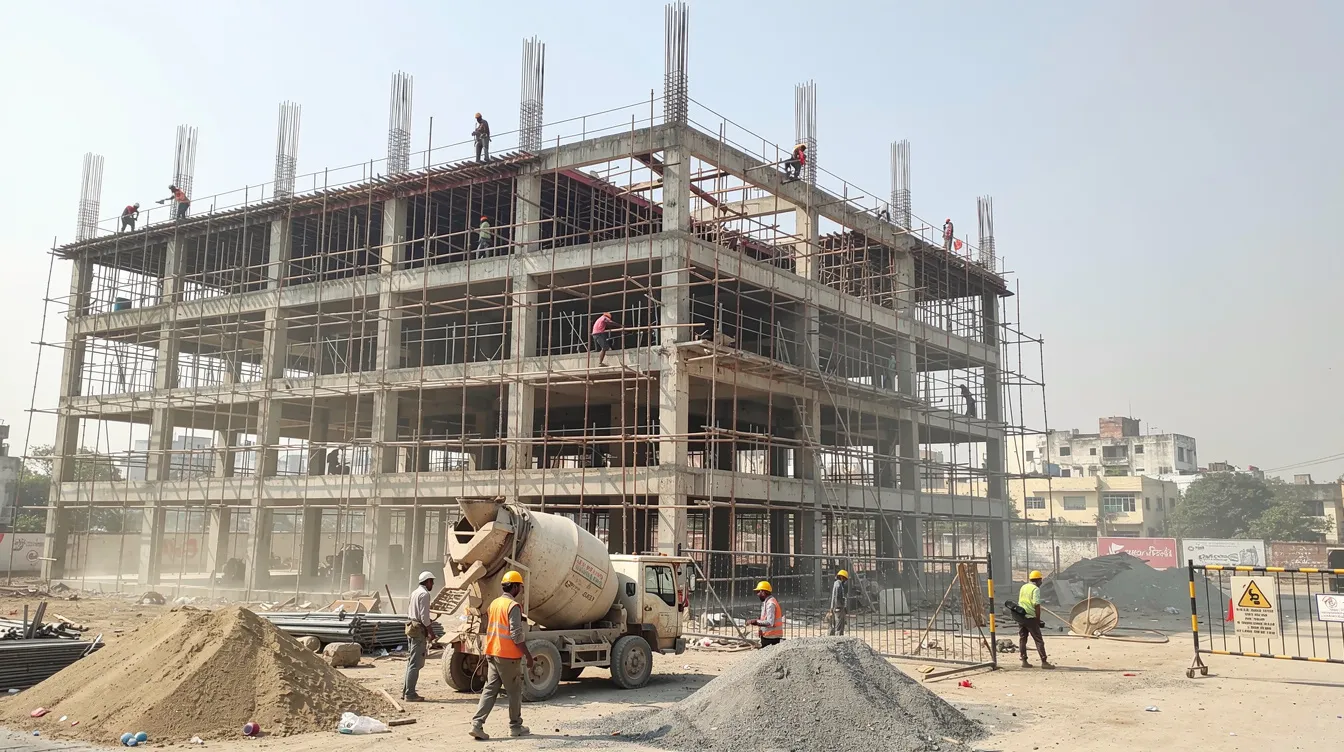
FF&E-Furniture, Fixtures & Equipment-can represent 20–35% of non-land CAPEX in a quality 3 star hotel. Major categories include:
- Guest-room furniture: beds, mattresses, side tables, study desks, wardrobes, luggage racks, curtains, linen, in-room electronics (TVs, minibars)
- Public areas: lobby and reception counters, lounge seating, signage, decorative lighting, front-office hardware (computers, POS terminals)
- F&B and kitchen: restaurant tables and chairs, bar counters, commercial kitchen equipment (ranges, ovens, refrigeration, exhaust, dishwashers), banquet service equipment
- Back-of-house: laundry machines, housekeeping trolleys, cleaning equipment, engineering tools, staff cafeteria furniture
- Security and IT: CCTV, access control, PMS, accounting software
FF&E is depreciated over shorter useful lives than civil construction, directly affecting the depreciation chart and projected profit analysis. Adequate budgeting here avoids guest dissatisfaction and costly early replacements.
For a detailed, itemised schedule, refer to the 3-star hotel equipment, furniture & FF&E list with cost.
Project Cost and Means of Finance
Banks scrutinise both total hotel CAPEX and how it is funded. A balanced structure is critical for any 3 star hotel DPR for bank loan proposals.
Total project cost typically includes: land or leasehold rights, building and site development, interiors, FF&E, pre-operative expenses, contingencies, and margin for working capital. For a 200-room hotel reference project, working capital required for two months was estimated at Rs. 6.54 crore.
Funding sources:
- Promoter’s equity (generally 30–40% of total project cost excluding land)
- Unsecured loans from promoters/relatives (subject to bank norms)
- Term loan from bank or FI (typically 60–70% of eligible project cost)
- Working capital facilities (CC/OD) sanctioned alongside the project loan
The debt-equity ratio for a hotel project typically ranges from 1.5:1 to 2:1. Promoter contribution must generally be infused upfront and evidenced. Maximising borrowing may seem attractive but weakens DSCR, reduces flexibility during downturns, and increases instalment payable burden.
For a deeper breakup, see the guide on 3-star hotel project cost & means of finance.
Explore the Complete 3-Star Hotel Project Report Guide
Use the table below to navigate detailed guides on every aspect of a 3 star hotel DPR:
| Planning Area | Detailed Guide |
|---|---|
| Setup Cost | 3-Star Hotel Setup Cost in India – 30, 50 & 75 Room Hotels |
| Equipment & FF&E | 3-Star Hotel Equipment, Furniture & FF&E List with Cost |
| Project Financing | 3-Star Hotel Project Cost & Means of Finance |
| Revenue Planning | 3-Star Hotel Revenue Model – Rooms, F&B, Banquet & Other Income |
| Operating Performance | 3-Star Hotel Occupancy, ARR, RevPAR & Break-Even Analysis |
| Financial Model | 3-Star Hotel Financial Projections for DPR |
| Feasibility | 3-Star Hotel Feasibility Study & Project Viability |
| Bank Finance | Bank Loan for 3-Star Hotel – Project Finance Guide |
| Bank Appraisal | How Banks Assess a 3-Star Hotel Term Loan Proposal |
3-Star Hotel Revenue Model
A hotel’s revenue model is not limited to room sales. A 3 star hotel revenue model typically blends rooms, F&B, banquets, and ancillary income. Revenue projections are critical for showing financial viability in a hotel report.
Primary revenue streams:
- Room revenue (the dominant share in most hotels)
- Restaurant and coffee shop revenue
- Bar revenue (where permitted)
- Banquet and conference income, event and wedding packages
- Ancillary services: laundry, transport, commissions
Basic room-revenue formula: Available Rooms × Occupancy % × ARR × Days = Approximate Room Revenue
Example: 60 rooms × 65% occupancy × ₹3,000 ARR × 365 days = approximately ₹4.28 crore per year in room revenue alone. F&B and banquet contributions can add 20–50% depending on facilities and demand patterns.
Realistic capacity assumptions-covers per day for the restaurant, average spend per cover, banquet utilisation days-are essential. For a restaurant project report or detailed revenue-mix models, see the guide on 3-star hotel revenue model – rooms, F&B, banquet & other income.
Occupancy, ARR/ADR and RevPAR
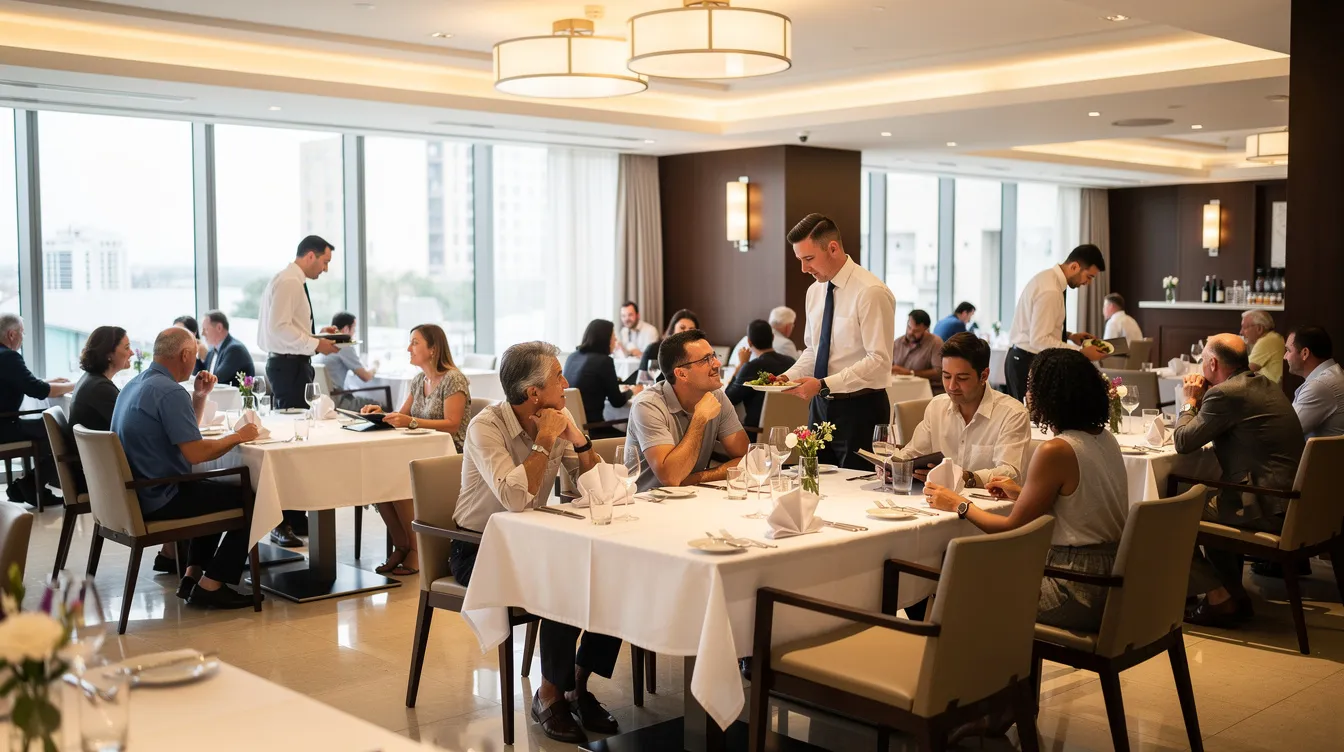
Three key performance indicators for hotels drive top-line projections in any hotel DPR: occupancy rate, ADR (Average Daily Rate, also called ARR), and Revenue per Available Room (RevPAR). Lenders scrutinise these closely.
- Occupancy % = (Rooms Sold ÷ Rooms Available) × 100
- ARR/ADR = Total Room Revenue ÷ Number of Rooms Sold
- RevPAR = Room Revenue ÷ Rooms Available = ARR × Occupancy %
Projected occupancy rate and average daily rate are key financial metrics in hotel reports. National branded-hotel occupancy in India has averaged around 67–68% in recent years.
DPRs should allow for ramp-up: Year 1 at 40–55% occupancy, Year 2 improving, and mature occupancy reached gradually. Assuming 80–90% from opening is unrealistic and fails stress tests.
Break-even occupancy is the level at which contribution from rooms and other revenue covers operating expenses plus interest and depreciation. For a reference 200-room hotel project, the break-even point was calculated at 62% occupancy-an even point that tells both promoter and banker how much cushion exists.
Overly aggressive assumptions may inflate projected profits but damage DPR credibility. For detailed formulas and break-even examples, see the guide on 3-star hotel occupancy, ARR, RevPAR & break-even analysis.
Operating Expenses and Hotel Profitability
Hotel business profitability depends as much on controlling costs as on achieving occupancy and ARR. Operational expenditures for hotels include salaries, utilities, and maintenance costs-and much more. A hotel’s operational plan includes staffing requirements and management policies that directly shape the cost base.
Key operating expense heads:
- Payroll and staff benefits (often 25–35% of revenue)
- Food and beverage cost of sales (raw material for F&B)
- Power, fuel, water, and solid waste generation management
- Repairs, maintenance, and housekeeping consumptions
- OTA and travel-agent commissions (15–25% of room revenue)
- Marketing, insurance, licence renewals, property tax
- Administrative overheads, IT subscriptions, professional charges
Fixed costs (core salaries, minimum utilities, insurance, interest) persist regardless of occupancy. Variable costs (F&B raw material, casual wages, OTA commissions) scale with business volume. This high fixed-cost structure makes occupancy the single most critical driver of profitability.
Financial Projections Required in a 3-Star Hotel DPR
Any serious 3 star hotel project report for bank loan must include integrated, assumption-driven financial projections-usually for 7–10 years, aligned with loan tenure.
Required statements:
- Projected profit and loss account
- Projected balance sheet
- Projected cash flow / fund flow statement
Supporting schedules:
- Room-inventory and occupancy schedule, F&B revenue schedule
- Salary and manpower planning, power requirement and utility estimates
- Depreciation chart for different asset blocks (machinery Rs values, building, FF&E)
- Term-loan drawdown and repayment schedule, interest calculation
- Working capital assessment and limits
Financial projections should include capital expenditures, working capital, and break-even analysis. The rate of return for the reference hotel project was 16%, a useful benchmark for plant economics evaluation.
Analytical outputs banks focus on: DSCR (year-wise and average), break-even, hotel ROI, IRR, and ratio analysis. Projections must flow from operational assumptions-not arbitrary percentage growth.
For detailed projection structures, see the 3-star hotel financial projections for DPR.
DSCR and Loan Repayment Capacity
Debt Service Coverage Ratio is one of the most critical indicators banks use to assess whether a 3 star hotel can repay its term loan from internal cash generation.
DSCR = (Net Profit after tax + Depreciation + Interest on term loan) ÷ (Interest on term loan + Principal repayment for the year)
Illustrative example: If annual cash accrual (net profit + depreciation + interest) is ₹3.50 crore and annual debt service (interest + principal) is ₹2.50 crore, DSCR = 1.40×. Indian banks typically expect average DSCR of 1.20–1.50× for hotel projects.
A structured DPR presents base-case DSCR and shows how it changes under stress-lower occupancy, weaker ARR, or higher operating costs. Repayment structure (moratorium period, tenure, pattern) materially affects early-year DSCR. Unrealistic EMI assumptions distort the entire viability analysis.
3-Star Hotel Feasibility and Project Viability
Financial projections alone do not prove feasibility. A robust 3 star hotel feasibility study examines market, operations, and financials together. Conducting thorough market research is necessary for understanding demand for three-star lodging. Market and demographic analysis helps identify target customers and competition in hotel feasibility studies.
- Market feasibility: catchment analysis, demand generators (corporate hubs, hospitals, educational institutions, religious sites for spiritual tourism, domestic tourists), competition mapping, seasonal occupancy trends, and key trends in the hotel industry
- Operational feasibility: ability to attract competent staff, utility availability, regulatory environment, alignment of project layout principles with target segment
- Financial feasibility: realistic project cost per key, occupancy ramp-up, achievable ARR, operating margins, hotel ROI
India’s hospitality industry contributes 7.5% to GDP. India’s hotel room supply is currently 110,000 rooms, and the tourism demand has been growing at 8.8% annually. India’s hospitality industry ranks 34th in travel competitiveness, having improved from 65th position between 2013 and 2019-reflecting increasing interest and investment opportunities in the sector. India continues to draw more tourism, driven by an increasing number of domestic tourists.
The chain is: Market Feasibility → Operational Feasibility → Financial Feasibility → Debt-Servicing Feasibility. Skipping any link leads to over-optimistic DPRs.
For independent viability assessment methodology, see the 3-star hotel feasibility study & project viability guide.
Bank Loan for a 3-Star Hotel Project
Most 3 star hotel projects in India rely on bank term loans to fund construction, interiors, and FF&E. A well-structured hotel project report for bank loan is essential for loan approval.
Typical requirements:
- Clear title or long-term lease of project property
- Approved building plans and statutory permissions
- Realistic project cost and implementation schedule
- Promoter assessment: background, net worth, credit history, existing liabilities, capacity to bring margin money
- Loan structure: term-loan quantum as percentage of eligible cost, proposed security (primary charge on hotel assets, collateral), indicative tenure with moratorium
- Cash-flow-based assessment: projected profitability, DSCR, break-even, sensitivity analysis
Interest rates, collateral norms, and sanction conditions differ by bank, scheme, and risk profile. The DPR should be flexible enough to support multiple lender evaluations.
For process steps and typical loan structures, see the bank loan for 3-star hotel – project finance guide.
How Banks Assess a 3-Star Hotel Term Loan Proposal
Beyond documents, banks apply a structured appraisal framework balancing promoter strength, project viability, and security.
Promoter Assessment
Experience in hospitality or other businesses, execution capability, capital strength, CIBIL score, existing banking relationships, and financial data of promoter entities.
Project Assessment
Land title, approvals status, reasonableness of civil and interior estimates, construction timeline, contractor capacity, and whether scale matches demand in the proposed project location.
Market Assessment
Location attractiveness, demand generators, competitive hotels and their occupancy/ARR range, market trends, and how the proposed 3 star positioning fits available demand.
Financial Assessment
Projected P&L, cash flow, DSCR, break-even, sensitivity to lower occupancy or ARR, and alignment between projections and actual market data. Banks assess total working capital needs and service required for ongoing operations.
Security & Risk
Primary security (hotel assets), additional collateral, guarantees, risk mitigants including conservative assumptions and adequate contingency.
For deeper insight into credit-appraisal thinking, see how banks assess a 3-star hotel term loan proposal.
Documents Generally Required for Hotel Project Finance
Documentation requirements differ by lender and ticket size. A broad checklist includes:
- KYC and entity documents: PAN, Aadhaar, constitution documents (Partnership Deed, LLP Agreement, MoA/AoA), GST registration
- Financial background: last 3 years’ audited financials and ITRs, net-worth statements
- Banking records: 6–12 months’ bank statements, existing loan details, credit reports
- Property documents: title deeds, lease agreements, mutation records, encumbrance certificates, approved building plans
- Project documents: detailed project report / DPR, project cost and means-of-finance statement, CMA data, 7–10 year projections, plant and equipment suppliers’ quotations
- Licences and approvals: local body permissions, fire NOC, pollution clearances-regulatory compliance in hotel projects includes obtaining licenses and approvals related to safety, health, and the environment
How to Prepare a Bankable 3-Star Hotel DPR
A practical step-by-step sequence to prepare a project report that banks can appraise:
- Define project concept: location, room count, facilities, target segment; validate with basic demand and competition checks
- Conduct market and feasibility study: supply and demand analysis, competition mapping, clear understanding of achievable tariffs
- Finalise configuration: room inventory, F&B scope, banquet, other facilities; freeze architectural layout based on project layout principles
- Estimate project cost: obtain civil, interior, and MEP estimates; compile FF&E budgets; estimate pre-operative expenses and contingencies
- Determine funding plan: decide promoter contribution, evaluate debt-equity ratio, structure term-loan requirement and working capital assessment
- Build projections: set occupancy ramp-up, ARR by year, F&B assumptions, staffing and salary budgets, utilities and overheads; prepare integrated financial statements
- Analyse viability: calculate DSCR (year-wise and average), break-even occupancy, ROI/IRR; perform sensitivity analysis for downside scenarios
- Prepare final DPR: executive summary, detailed sections for project, market, cost, finance, projections, SWOT analysis, risk analysis-supported by annexures a banker can independently verify
Common Mistakes in Hotel Project Reports
Many hotel project reports fail not due to the project itself but due to unrealistic assumptions or weak structuring:
- Assuming 75–85% occupancy from Year 1 with no ramp-up allowance
- Projecting ARR well above comparable hotels in the same micromarket
- Underestimating construction or interior cost; omitting contingencies
- Budgeting insufficient FF&E, especially soft furnishings and back-of-house
- Ignoring pre-operative expenses and interest during construction
- Unrealistic F&B or banquet revenue without corresponding facilities or demand
- Inadequate staffing budgets; ignoring OTA commissions (15–25% of room revenue)
- Assuming very long tenures or unrealistically low interest rates
- Preparing projections not linked to actual room inventory and achievable rate
- Presenting a single optimistic scenario as the base case with no sensitivity analysis
Sensitivity Analysis – What If Assumptions Go Wrong?
Lenders always ask “what if” questions. Sensitivity analysis can demonstrate how various factors affect financial projections. A good DPR should present at least three scenarios:
| Scenario | Occupancy | ARR Change | Cost Change | Indicative DSCR Impact |
|---|---|---|---|---|
| Base Case | As projected | As projected | On budget | Comfortable (e.g., 1.40×) |
| Moderate Stress | 10–15% lower | 10% lower | On budget | Reduced (e.g., 1.15–1.25×) |
| Higher Cost / Delay | As projected | As projected | 10% overrun + 6-month delay | Strained early years |
Illustrative only. Actual impact depends on specific project parameters.
This analysis helps both promoter and banker understand risk tolerance-how far performance can dip before DSCR falls below acceptable levels. It is not meant to discourage projects but to ensure debt burden remains manageable under realistic downside conditions.
Is a 3-Star Hotel Project Profitable?
There is no universal answer. Profitability depends on total capital investment per key, land cost, financing structure, achievable occupancy and ARR in the specific micromarket, F&B and banquet potential, and operating efficiency.
A hotel can show high occupancy but deliver weak returns if tariffs are too low relative to cost, or if project cost is disproportionately high. High leverage depresses net profit even when the hotel is operationally healthy. Balanced promoter contribution improves sustainability.
Promoters should look beyond accounting profit to cash flow, DSCR, project IRR, and equity IRR when evaluating whether a 3 star hotel is the right investment compared with other business options. The key drivers-location, demand, cost discipline, and finance structure-collectively determine viability, not any single metric.
Professional Perspective of CA Manish Gugliya
Over multiple hotel and hospitality assignments, my focus has always been on linking concept, numbers, and bankability. A robust 3 star hotel project report should answer four practical questions:
- Is there sufficient market demand?
- Is the total project cost reasonable?
- Can the hotel generate stable operating cash flows?
- Can those cash flows comfortably service the proposed debt?
DPR preparation is not just document drafting-it involves rigorous assumption testing, cross-checking with market realities, and structuring finance such that both promoter and lender risk is balanced. Professional involvement can help refine assumptions, avoid common pitfalls, and present the hotel project in a language and format that banks understand. While no professional can guarantee loan approval, a well-prepared, data-backed DPR substantially improves the quality of credit appraisal.

Frequently Asked Questions
What is a 3 Star Hotel Project Report and how is it different from a normal business plan?
A 3 star hotel project report is a structured, data-driven document designed primarily for bank and lender appraisal. Unlike a basic division-level business plan that outlines a concept, a DPR includes granular cost estimates, quotations from plant and equipment suppliers, structured means of finance, and detailed 7–10 year financial projections with DSCR, break-even, and sensitivity analysis. It follows a format that credit committees can independently verify and appraise.
How much promoter contribution is generally required for a 3-star hotel term loan in India?
Promoter contribution typically ranges from 30% to 40% of total project cost excluding land. Some lenders may require higher equity if the promoter lacks hospitality experience or if the project is in an unproven location. The margin money must generally be infused upfront and evidenced before term-loan disbursement begins. A higher equity base also strengthens DSCR and improves negotiating position on interest rates.
How many years of projections should be included in a 3 Star Hotel DPR?
Most banks expect 7 to 10 years of integrated financial projections for hotel term loans, aligned with the proposed loan tenure. This period should cover the construction phase, ramp-up years, stabilisation, and sufficient repayment history. Projections should include projected P&L, balance sheet, cash flow, and DSCR for each year.
Can a bank finance both hotel construction and FF&E under the same term loan?
Yes, most banks can finance civil construction, interiors, and FF&E under a single term-loan facility, provided the total eligible project cost and promoter margin norms are met. However, the bank may require separate cost breakups and quotations for civil, interior, and FF&E components. Some lenders may also structure separate sub-limits within the overall sanction.
Is a separate feasibility study necessary before preparing the DPR?
While not always mandatory, a separate feasibility study adds significant credibility-especially for larger projects, unproven locations, or first-time promoters. It independently validates demand, competition, achievable ARR, and occupancy before the promoter commits to land purchase or large contracts. For smaller projects in established markets, feasibility analysis may be incorporated within the DPR itself.
Explore More 3-Star Hotel Project Report Guides
Continue exploring our 3-Star Hotel DPR guides covering setup cost, equipment, project cost, revenue, financial projections, occupancy, feasibility, project finance and bank loan assessment.