Key Takeaways
- A diagnostic centre project report for bank loan is a bankable document proving technical, commercial and financial feasibility of your proposed diagnostic centre, not just a set of projected financial statements.
- Project cost, diagnostic equipment planning, realistic test volumes, revenue model, working capital and DSCR together determine loan eligibility and repayment capacity from a lender’s perspective. A project’s financial viability is crucial for securing bank loans or investor funding.
- DPR structure and assumptions must reflect the actual business model; a standalone pathology lab, an imaging centre offering X-ray, ultrasound, CT or MRI, or a comprehensive diagnostic centre each requires distinct financial modelling instead of generic templates.
- Banks closely examine promoter profile, means of finance, profitability, cash flow, sensitivity analysis and statutory compliances before sanctioning a diagnostic centre term loan and working capital facility.
- ProjectReportBank.com, under the guidance of CA Manish Gugliya, prepares customised diagnostic centre DPRs, CMA data and financial projections tailored to real equipment quotations, project cost and local market conditions.
Explore Diagnostic Centre DPR Guides
Explore our complete series on Diagnostic Centre project planning, equipment, financial projections and bank finance.
Explore Hospital Project Report Guides
Explore our complete Hospital Project Report guides covering general hospitals, multi-speciality hospitals, cancer hospitals, diagnostic centres and eye hospitals.
What Is a Diagnostic Centre Project Report / DPR?
A diagnostic centre project report (or detailed project report) is a structured document submitted to banks and NBFCs to demonstrate the feasibility and bankability of a new or expansion diagnostic project in India. It is the primary input for a lender’s internal credit appraisal. A project report for a diagnostic centre requires a structured approach that goes well beyond assembling financial tables.
A bankable DPR covers three dimensions: technical feasibility (proposed diagnostic services, medical equipment, infrastructure and regulatory readiness), commercial feasibility (local demand, competition, pricing benchmarks based on market research) and financial viability (project cost, projected profitability, cash flows, DSCR and repayment capacity). Diagnostic tests help determine the nature of diseases, and the DPR must demonstrate that the proposed centre can deliver these services at volumes and tariffs that sustain the loan.
An informal business plan may assume optimistic volumes or rely on generic templates. A formal DPR for bank loan, by contrast, requires verifiable assumptions, logical linkages between numbers, and reconciliation across projected P&L, balance sheet and cash flow. Banks use the DPR to understand the concept, examine assumptions, calculate DSCR and decide term loan, working capital and collateral structure.
Typical configurations a DPR may cover in India include:
- Standalone pathology diagnostic lab (biochemistry, haematology, microbiology)
- Imaging/radiology centre (X-ray, ultrasound, CT, MRI)
- Combined pathology + imaging diagnostic centre
- MRI/CT scan centre attached to a hospital
- Comprehensive multi-modality diagnostic facility in metro or tier-2/3 city
In practical project appraisal, each configuration needs a customised financial model. MRI/CT projects are capital intensive with large depreciation; basic pathology labs are more working-capital intensive due to reagent and consumable stocking. The private-sector diagnostic services market is growing across low and middle-income countries, and the diagnostic center market is witnessing rapid expansion of organized centres, making bankable DPR preparation more relevant than ever.
What Should a Diagnostic Centre DPR Contain?
While formats vary between lenders, a professional diagnostic centre project report India version typically follows a logical sequence from promoter profile to financial indicators. Key components of a project report include the executive summary and market analysis, along with technical, financial and bankability sections. The executive summary should include the project overview and expected return on investment.
Promoter Profile: Banks assess the promoter’s medical qualifications (MBBS, MD Pathology or Radiology), professional registrations with the Medical Council, years of clinical or business experience, existing clinics or diagnostic laboratories, financial strength (net worth, ITRs for 2-3 years), credit history (CIBIL score) and any past loan track record. A diagnostic center requires specialized doctors for various tests, and the promoter’s ability to attract qualified healthcare professionals matters.
Project Concept: Define the nature of diagnostic services (e.g., routine pathology plus digital X-ray and 4D ultrasound test capability), proposed location (city, catchment population, distance from major hospitals), target segment (OPD patients, corporate health check-ups, detailed medical check up packages) and positioning (mid-range, premium, 24×7 emergency diagnostics). The project should outline diagnostic centre desired facilities and sophistication level.
Market Assessment: Summarise the local healthcare ecosystem: existing hospitals, referring doctors, current diagnostic facilities, approximate daily OPD load, demand estimation covering patient volumes and service pricing, and competition analysis. Demand estimation in a market study should assess patient volumes and service pricing based on practical field work. The diagnostic market is expanding due to rising lifestyle diseases, making market analysis that assesses local healthcare needs and competitor analysis essential. India’s urban consuming class growth has driven demand across the healthcare sector.
Technical Details: Describe built-up area; a diagnostic center typically requires around 5,000 square meters of space for a large multi-modality facility, though smaller centres operate in 1,000-2,000 sq ft. Technical feasibility must include specifications for space and equipment requirements. Cover layout zoning (sample collection, processing, imaging rooms, reporting), diagnostic equipment list (biochemistry analyzers, X-ray, CT scan, MRI depending on scope), IT systems (LIS/RIS/PACS, HIS integration), power backup and infection-control arrangements. A clear operational plan detailing staffing and workflows should be included. Quality management protocols are essential for maintaining high standards in diagnostic services. Biomedical waste management is regulated under specific guidelines that must be followed.
Project Cost: Present a structured summary of total diagnostic centre project cost: land/building or leasehold improvements, civil and interior works, medical equipment (a major investment for diagnostic laboratories), air-conditioning and electricals, IT hardware and software, furniture, pre-operative expenses, initial marketing and regulatory fees, contingency and margin money for working capital. Setting up a diagnostic center costs approximately Rs.1.29 crore for a mid-scale pathology plus imaging facility.
Means of Finance: Clearly state the funding pattern: promoter contribution (own funds, typically 20-35% of project cost), term loan from bank, separate equipment finance if applicable, and any subsidy or government scheme support. Financial projections should cover capital expenditure and operational expenses comprehensively.
Revenue Assumptions: Detail proposed test and imaging menu, expected daily patient footfall, test/scan volumes, average per-test realisation, ramp-up over 3-5 years, and assumptions for institutional contracts or corporate packages. Diagnostic centers can perform over 20 types of tests, and the revenue model should reflect realistic service mix.
Operating Expenses: Cover manpower planning (doctors, technicians, phlebotomists, radiographers, reception, housekeeping), salaries, reagents and consumables, equipment AMC/CMC, electricity, rent, IT, linen, waste management, insurance, administrative and marketing expenses.
Financial Projections: Attach projected P&L, Balance Sheet and Cash Flow for 7-10 years, with key ratios (gross margin, EBITDA margin, net profit margin, return on capital employed) and working capital assessment (stocks, receivables, payables cycle).
Bankability Indicators: Include break-even analysis (in terms of revenue and test volumes; the break-even point for a diagnostic lab is around 58% capacity utilisation), payback period, year-wise and average DSCR, and sensitivity analysis showing impact of lower volumes or higher costs on repayment capacity.
Diagnostic Centre Project Cost and Equipment Planning
Accurate estimation of diagnostic centre project cost in India is the foundation of any DPR because it drives term loan requirement, promoter contribution and future repayment obligations. New equipment purchases, civil works, IT systems and regulatory compliance fees must all be itemised with proper vendor quotations.
Project cost should be broken into: civil and interior works, HVAC and electricals, core diagnostic equipment (analyzers, X-ray, ultrasound, CT, MRI), non-medical equipment (genset, UPS), IT systems (LIS, RIS, PACS, networking), furniture and fixtures, pre-operative expenses, deposits and initial working capital margin. Medical equipment is a major investment for diagnostic laboratories; for instance, a 16-slice CT costs approximately Rs.35-120 lakh, while an MRI 1.5T runs Rs.3-5 crore according to current industry data.
Equipment planning should always start from the proposed service mix and expected utilisation. Choosing between 16-slice and 64-slice CT based on projected case load, referral pattern and budget is more defensible than purchasing the highest-end system available. Over-investing in under-utilised high-end diagnostic equipment can depress DSCR and delay break-even, while under-investing may restrict revenue and accreditation opportunities.
For a practical reference on major diagnostic equipment and approximate investment ranges, readers can consult the dedicated equipment cost guide. Lenders insist on proper equipment quotations from recognised vendors, with GST and installation charges, attached to the DPR. Raw material and reagent costs, often underestimated, also need inclusion in the project cost.
Pathology Lab, Imaging Centre and MRI/CT Components
“Diagnostic centre” is an umbrella term. Some projects are pathology-only, some imaging-only, and some integrated centres covering wide scope of diagnostic procedures. Each requires distinct assumptions in the diagnostic centre DPR preparation.
Pathology Laboratory
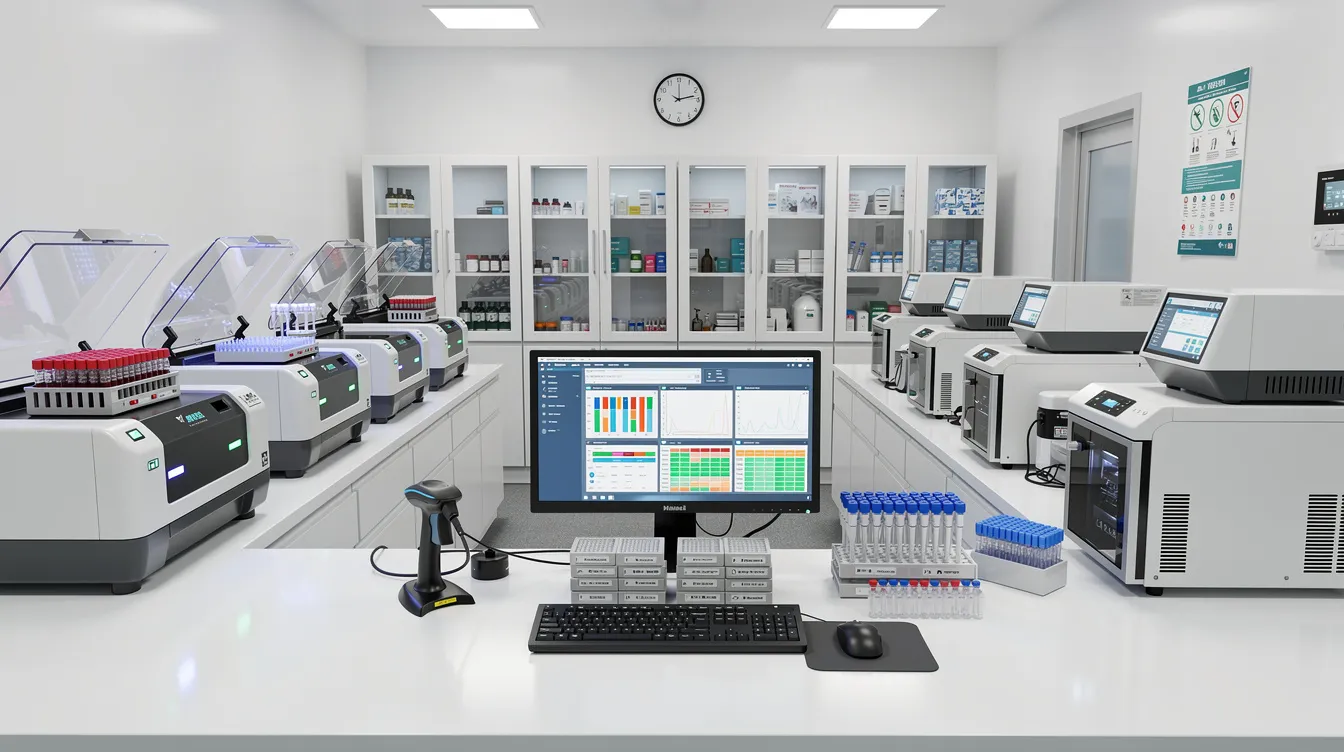
A pathology diagnostic lab DPR focuses on sample collection logistics, analyzers (biochemistry, haematology, immunoassay), reagents, quality control processes and NABL-ready infrastructure. Pathological tests include hematological and sputum tests, along with blood test, stool test, semen test, pregnancy test, BP test, MMR test and other tests. Working capital stocking for reagents and consumables carries higher relative importance here; monthly reagent cost for a mid-volume lab (100-150 tests/day) runs Rs.40,000-60,000.
Different business models apply: walk-in patients, home collection, hospital outsourcing and franchise/collection centres, each with distinct revenue and receivable cycles. The National Accreditation Board for calibration laboratories (NABL accreditation) is increasingly expected for credible pathology labs.
Readers focusing on laboratory projects can refer to the bankable DPR guide for pathology lab projects and the detailed pathology lab setup cost and equipment list.
Imaging / Radiology Centre
Imaging centre DPRs for X-ray, ultrasound, mammography and similar modalities are more capital intensive per square foot than basic diagnostic laboratories. Lenders assess projected utilisation of each modality, per-scan tariff and competitive landscape. Common tests include X-rays, ultrasounds, and ECGs. Diagnostic centers perform various tests including blood and urine tests alongside imaging studies. Regulatory compliance requires obtaining necessary licenses and clearances for operation: AERB compliance for radiology equipment and PNDT considerations for ultrasound, for example. The Clinical Establishments Act addresses minimum standards for diagnostic centres. Regulatory compliance requirements vary by location and specific services offered.
A separate guide on DPR and bank finance for imaging centres covers this segment in detail, including an ENT specialist or cardiological test facility where applicable.
MRI / CT Scan Centre
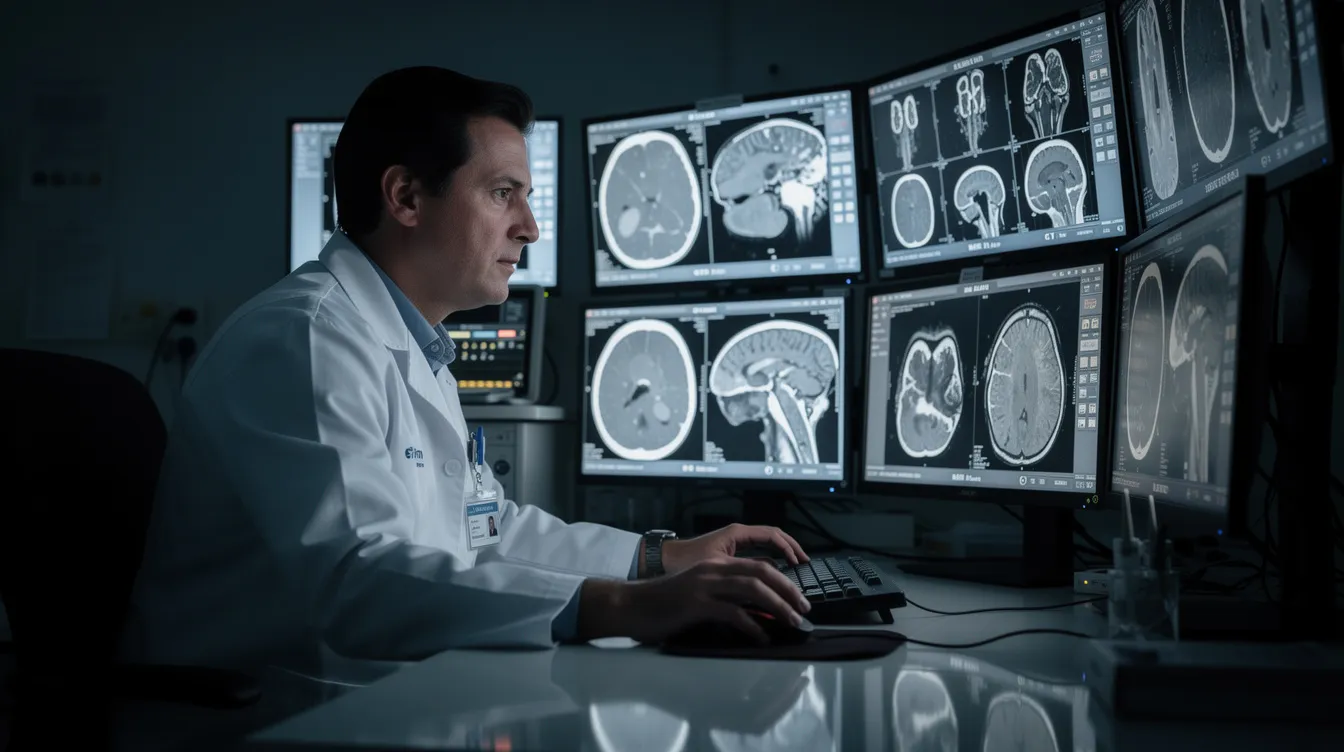
MRI and CT scan centre projects involve very high equipment cost, requiring careful structuring of project finance, term loan tenure and moratorium so that DSCR remains acceptable despite large EMI and depreciation outflow. Location (standalone vs attached to multi-speciality hospital or nursing home), number of referring doctors, emergency load and potential tie-ups with TPAs influence realistic volume assumptions. Diagnostic technologies like IVP test, eye checkup pertaining to refractive anomalies or ocular ailments, and nervous system checkups may also feature in comprehensive centres, with respective fields required for specialized doctors in their respective fields.
The supporting resource on MRI and CT scan centre setup cost and equipment investment provides typical project cost components and investment ranges.
Revenue Model and Financial Projections
From a lender’s perspective, projected revenue and profitability must be commercially justifiable, not merely mathematically possible. The process of building realistic projections requires grounding each number in local market conditions.
Typical diagnostic centre revenue streams include: routine pathology tests (diagnostic check up, thorough diagnostic check up), specialised profiles (thyroid, tumour markers), imaging studies (X-ray, ultrasound, CT scan, MRI), preventive health packages (which can increase per-patient revenue), corporate and PSU health check-ups, hospital outsourcing contracts and home collection for attending patients. Health packages can increase per-patient revenue by bundling quite a number of diagnostic tests into a single offering. Medical tourism also contributes to demand in metro cities.
The basic relationship is: Annual Revenue = Test/Scan Volumes x Average Realisation per Test/Scan. A proper diagnostic centre revenue model must consider service-wise mix, varying tariffs, discounts to corporates and annual ramp-up. Average monthly revenue for a medium diagnostic center is Rs.7.80 lakh for a basic pathology-plus-imaging setup; centres with CT/MRI capacity operating at stable utilisation can achieve Rs.17.5 lakh per month or more.
Utilisation should be built gradually: 30-40% capacity in year 1, 50-60% in year 2, stabilising later. Assuming 80-90% utilisation from the first year is a common mistake that most banks will view as unrealistic.
The DPR’s projected P&L should show revenue, cost of reagents/consumables, gross margin, employee cost, other operating expenses, EBITDA, depreciation, finance cost and profit before/after tax. Balance Sheet projections must reflect build-up of fixed assets, term loan outstanding, current assets (inventory, receivables) and current liabilities. A matching Cash Flow statement demonstrates liquidity and cash accrual available for debt servicing.
For deeper understanding of profitability and projection methodology, refer to the dedicated guide on diagnostic centre revenue model and financial projections.
Diagnostic Centre DPR – Detailed Guides
The following table helps readers navigate to in-depth guides linked from this hub article.
| Detailed Guide | What It Covers |
|---|---|
| Diagnostic Centre Project Cost in India | Setup cost, infrastructure and overall project investment |
| Diagnostic Centre Equipment List & Cost | Major diagnostic equipment and equipment investment |
| Pathology Lab Project Report / DPR | Bankable DPR for pathology laboratory projects |
| Pathology Lab Setup Cost & Equipment | Laboratory setup and equipment planning |
| Imaging Centre Project Report / DPR | DPR and bank finance for imaging centres |
| MRI & CT Scan Centre Setup Cost | MRI/CT equipment and capital investment |
| Diagnostic Centre Revenue & Financial Projections | Revenue assumptions, profitability and projections |
| Bank Loan for Diagnostic Centre & Pathology Lab | Project finance, documentation and bank loan process |
| Diagnostic Centre DSCR, Working Capital & Repayment | Working capital assessment, DSCR and debt repayment capacity |
Bank Loan and Project Finance for a Diagnostic Centre
From a lender’s perspective, the diagnostic centre bank loan project report must clearly show the proposed capital structure: promoter’s own funds, term loan, equipment finance and working capital limits.
The typical structure involves:
- Term loan for fixed assets (civil, interiors, core medical equipment, IT, furniture)
- Separate equipment finance/lease for high-value diagnostic equipment where applicable
- Working capital facility (cash credit/overdraft) based on inventory and receivables
Promoter contribution generally ranges from 20-35% of project cost, varying by scheme and lender. MSME loans can cover costs for diagnostic center setup, and diagnostic center loans can be collateral-free under government schemes such as CGTMSE for amounts up to Rs.2 crore. The DPR should model rate of interest assumptions, repayment tenure (5-7 years for term loan; longer for MRI/CT in some cases), and moratorium on principal during construction and initial operations.
Security arrangements typically include:
- Primary security: hypothecation of equipment and other fixed assets
- Collateral security: residential/commercial property or third-party guarantee as per bank norms (not always mandatory under certain schemes)
- Personal guarantees from promoters
The DPR should articulate how projected cash accrual (PAT + depreciation) comfortably covers interest and principal obligations in each repayment year. The step-by-step guide on bank loan for diagnostic centre and pathology lab covers documentation, loan application and bank appraisal procedures in detail.
Working Capital, DSCR and Loan Repayment Capacity
Many promoters focus on project cost and ignore working capital and DSCR. Banks treat these as key components of diagnostic centre loan repayment capacity.
Working Capital: Diagnostic centres need ongoing funds for reagent inventory, consumables, staff salaries, rent, electricity, AMC payments and marketing, as well as to finance credit given to corporate clients and insurance/TPA bills. The DPR should estimate working capital based on realistic inventory days (30-45 days for reagents), receivable days (45-60 days for corporates) and payable periods. Proper planning around working capital prevents cash shortfalls during the initial ramp-up.
DSCR (Debt Service Coverage Ratio): In simple terms, DSCR = Cash Available for Debt Service / (Interest + Principal Repayment). Lenders examine year-wise and average DSCR while evaluating a diagnostic centre bankable project report. Different banks may have different benchmark DSCR levels; for instance, Kalyan Janata Bank specifies a minimum DSCR of 1.5 for professional loans to doctors and diagnostic centres. Other lenders may accept 1.25 or above. The article avoids quoting any single number as a rigid industry standard. Sensitivity analysis in financial projections is important to assess potential risks such as lower volumes or cost overruns.
Repayment Capacity: The DPR must show stable or improving DSCR during the entire loan tenure, allowing for realistic ramp-up and considering maintenance costs and equipment replacement in later years. A feasibility study and feasibility report should demonstrate the loan amount is serviceable under multiple scenarios.
The specialised guide on diagnostic centre DSCR, working capital and repayment capacity provides detailed numeric illustrations and sensitivity scenarios.
How Banks Evaluate a Diagnostic Centre DPR
Banks aim to assess both the viability of the diagnostic centre and the creditworthiness of the borrower. The DPR serves as the primary input, supplemented by site visits and independent checks.
Qualitative factors lenders commonly examine: promoter profile, clinical and managerial experience, integrity and credit history (CIBIL scores), existing banking relationships, and whether the project has doctors with requisites measures in place for medical testing quality.
Project-related factors: location suitability (visibility, accessibility, parking), catchment population, presence of referral hospitals and clinics, competition density, and whether the proposed service mix including diagnostic purposes aligns with local demand.
Technical scrutiny: appropriateness of equipment capacity relative to projected volumes, authenticity of quotations, compliance with regulatory norms (AERB, PNDT, Biomedical Waste Rules, local municipal permissions), and NABL accreditation plans. Plant economics must hold up under the proposed configuration.
Financial appraisal: reasonableness of test and scan volumes, average billing rates vis-a-vis local tariffs, realistic operating expenses, net margin trends, cash flow stability, DSCR, break-even time and adequacy of promoter contribution. The break-even point for a diagnostic lab is around 58% capacity utilisation as a benchmark.
Overly aggressive projections (very high patient volumes from the first month or steep annual growth without basis) reduce the DPR’s credibility. A concise sensitivity analysis showing the impact on DSCR if volumes are 15-20% lower than projected, if project commissioning is delayed by six months, or if equipment cost or interest rate is higher than expected demonstrates that key risks have been thought through.
Documents and Information Required for Preparing the DPR
This is a practical checklist of information typically requested when preparing a detailed project report for diagnostic centre finance:
Promoter Information:
- KYC documents (PAN, Aadhaar, address proof)
- Educational and professional qualification certificates
- Registration with Medical Council
- Brief CV and details of existing business or employment
Entity Details:
- Registration documents (proprietorship, partnership deed, MOA/AOA for company)
- GST registration, Udyam registration for MSME benefits where applicable
Project-Specific Data:
- Location address, ownership/lease status with draft or executed lease deed
- Floor area and layout, list of proposed diagnostic services
- Intended working hours, staffing plan and tentative salary structure
Technical and Cost Inputs:
- Itemised equipment list with vendor quotations
- Civil and interior cost estimates, HVAC and electrical quotes
- IT and software cost, furniture quotations, estimated pre-operative expenses
Financial Background:
- Last 2-3 years’ financial statements and income-tax returns
- Bank statements for at least 6-12 months
- Details of existing loans and repayment track
Regulatory Documentation:
- Local municipal approvals, building plan sanction status, trade licence
- AERB registration status/plans for radiology, PNDT certificate process for ultrasound
- Biomedical waste disposal tie-up, shop and establishment registration
The checklist may vary according to lender, project size and whether the project is greenfield or expansion.
Common Mistakes in Diagnostic Centre Project Reports
In my experience with diagnostic projects, many DPRs face delays or rejection not due to concept weakness but due to unrealistic numbers or technical inconsistencies.
- Demand estimation errors: Assuming very high patient volumes without a credible referral base, ignoring local competition, or copying generic “100 patients/day” assumptions from sample reports
- Equipment planning mistakes: Missing installation, site-modification and calibration costs; not including AMC/CMC in operating expenses; selecting new equipment beyond practical utilisation capacity just to appear “hi-tech”
- Working capital underestimation: Ignoring credit terms offered to corporates and TPAs, insufficient provision for initial marketing, assuming all patients pay cash immediately
- Projection inconsistencies: Mismatch between asset schedule and depreciation, inconsistencies between term loan schedule and interest expense, cash flow statements that do not reconcile with balance sheet changes
- Instant break-even assumption: Showing very high profit margins from the first year, which rarely matches real-life ramp-up for diagnostics
- Template reuse: Using the same cost and revenue structure for pathology-only, imaging-only and comprehensive diagnostic centres, whereas each sub-segment has different economics
A bankable diagnostic centre DPR must be internally consistent and externally defensible. Numbers should add up, and assumptions should be supported by market research and equipment/vendor quotations.
FAQs on Diagnostic Centre Project Report / DPR for Bank Loan
How many years of projections are generally prepared in a Diagnostic Centre DPR?
Most banks in India expect 5-7 years of detailed financial projections. Projects with MRI/CT centres may extend to 8-10 years, covering year-wise P&L, Balance Sheet, Cash Flow and DSCR calculations. Exact requirements vary by lender and scheme.
Is NABL accreditation mandatory for a diagnostic centre DPR?
NABL accreditation is not legally mandatory for all labs at the time of loan sanction. Banks increasingly view a clear plan for quality systems and eventual accreditation as a positive factor for pathology labs, so the DPR should mention the promoter’s roadmap and related cost.
Can one DPR cover pathology, X-ray, CT and MRI under the same project?
Yes. A single comprehensive diagnostic centre DPR can cover multiple modalities, provided that project cost, equipment list, staffing, revenue assumptions and utilisation are separately worked out for each segment and then consolidated in the final financial projections.
Do banks insist on personal guarantees or collateral for diagnostic centre loans?
Many lenders seek personal guarantees and may ask for collateral security depending on loan size, borrower profile and scheme. However, schemes like CGTMSE allow collateral-free loans up to certain limits. Security terms are finalised per lender policy.
Can projections in a standard sample report be reused for my project?
While sample reports are useful for understanding structure, each diagnostic centre project report should be customised to the specific city, catchment, equipment quotations and promoter profile. Copying generic projections is a common reason for weak appraisal feedback from bankers.
Conclusion: Preparing a Bankable Diagnostic Centre Project Report
A diagnostic centre project report for bank loan must logically connect project concept, detailed project cost, diagnostic equipment selection, means of finance, revenue model, operating expenses, profitability, cash flow, working capital, DSCR and overall repayment capacity. Assumptions should be commercially reasonable and defendable with market research, quotations and experience rather than optimistic just to make numbers look attractive.
In practical project appraisal, lenders appreciate DPRs that are technically sound, conservative where there is uncertainty, and fully reconciled across all financial statements. CA Manish Gugliya and ProjectReportBank.com regularly prepare customised diagnostic centre, pathology lab, imaging centre and MRI/CT DPRs, CMA data and financial projections as per Indian banking norms.
Planning a new Diagnostic Centre, Pathology Lab or Imaging Centre and require a customised DPR for bank finance? Ensure that your project report is built around your actual project cost, equipment quotations, proposed services and realistic operating assumptions rather than relying on a generic template. Professional preparation at the DPR stage can strengthen your case during bank appraisal.
Explore All Diagnostic Centre DPR Guides
Continue exploring our complete series on Diagnostic Centre project planning, equipment, financial projections, repayment capacity and bank finance.
Explore More Hospital Project Report Guides
Continue exploring specialized Hospital DPR guides for project planning, financial projections and bank finance.