Key Takeaways
- Mudra Loan renewal is possible in certain forms, such as annual renewal of working-capital limits (CC/OD) or fresh Mudra finance after full repayment, but it is never automatic and always requires bank assessment.
- Good repayment history and having successfully repaid previous loans under Pradhan Mantri Mudra Yojana improve your chances, but do not create a guaranteed right to another loan.
- “Renewal” can mean different things depending on your situation: continuing a CC/OD limit, requesting additional funds (enhancement), extending the repayment tenure, or applying afresh after closing the earlier Mudra account. Each is treated differently by banks.
- Borrowers should first check their outstanding balance, understand their real business need, prepare updated documents, and then speak to their existing bank to learn whether their case will be treated as renewal, enhancement, or a new Mudra application.
- Policies differ across banks, regional rural banks, small finance banks, and NBFCs. There is no single national rule that forces every lender to renew a Mudra Loan.
Introduction: What Borrowers Really Mean by “Mudra Loan Renewal”
I am CA Manish Gugliya (FCA), a practising Chartered Accountant with over 20 years of experience in project reports, CMA data, MSME finance, business loans, and Mudra Loan consultancy. One of the most common questions I receive from small business owners across India is: “Can my Mudra Loan be renewed?”
The trouble is, almost every borrower means something different when they say “renewal.”
Some want another Mudra Loan after fully repaying the first one. Others have a running Cash Credit (CC) or Overdraft (OD) limit that is coming up for annual review. Some want to increase their loan amount because the business has grown. A few are struggling with EMIs and want the repayment period extended. And some want to close one facility and take another, possibly at a different bank.
The Pradhan Mantri Mudra Yojana (PMMY), launched on April 8, 2015, by the hon’ble prime minister, provides collateral-free financial assistance to micro enterprises engaged in manufacturing, trading, and services. Mudra loans are available in four categories: Shishu (loans upto Rs 50,000), Kishor (Rs 50,001 to Rs 5 lakh), Tarun (Rs 5 lakh to Rs 10 lakh), and the recently introduced Tarun Plus (above Rs 10 lakh and up to Rs 20 lakh) for entrepreneurs who have availed and successfully repaid loans under the Tarun category.
So, can a Mudra Loan be renewed? The short answer: in many cases, yes, but not automatically. Whether it is a working-capital limit renewal, enhancement, or fresh Mudra finance after repayment, the bank or financial institution will reassess your business, repayment track record, and present requirement before approving anything. There is no single national rule that forces every lender to renew Mudra Loans; each bank follows the PMMY framework plus its own credit policy and risk assessment.

Table of Contents
What Does “Mudra Loan Renewal” Actually Mean in Banking Terms?
In practical banking terms, “renewal” is a specific action. It mainly applies to working-capital limits such as CC or OD accounts, where the sanctioned limit expires after a defined period (usually 12 months) and needs to be re-approved. Borrowers, however, use the word loosely for several different situations.
Here are the main situations borrowers refer to as “Mudra Loan renewal”:
Renewal of a working-capital facility (CC/OD): If your Mudra Loan was sanctioned as a Cash Credit or Overdraft limit, the bank will review it periodically. Working capital facilities require annual review or renewal, and the bank decides whether to continue, increase, or reduce the limit based on your business performance and account conduct.
Fresh Mudra finance after closure: Once you have fully repaid a term loan and the account is closed, any new requirement is processed as a fresh application. From the borrower’s perspective, it feels like renewal. In bank records, it is a new loan.
Enhancement (increase) of an existing Mudra limit: If your business has grown and you need more funds, you can request a higher loan amount. This is called enhancement and requires a fresh assessment of your cash flow, turnover, and repayment capacity.
Extension of repayment tenure: Sometimes a borrower does not need additional funds but wants to stretch out EMIs over a longer period. This is not renewal; it is a tenure extension or rescheduling, subject to bank approval.
Restructuring or rescheduling: For stressed accounts where EMIs have become difficult, banks may modify terms. This is a separate, stricter process.
Foreclosure followed by fresh borrowing: Some borrowers close their existing loan early and then apply for a new, often larger, Mudra Loan. This is a combination of early closure and fresh finance.
Each of these is treated differently by banks. The table below summarises the key differences:
| Borrower Situation | What It Usually Means in Bank Practice | Is Fresh Assessment Required? | Is It Automatic? |
|---|---|---|---|
| Trader with Rs 5 lakh Mudra CC limit coming up for yearly review | Renewal of working-capital limit | Yes; bank checks turnover, account conduct, stock | No |
| Manufacturer repaid Rs 3 lakh Kishor term loan; now needs Rs 7 lakh | Fresh Mudra Loan application (Tarun category) | Yes; treated as a new loan with full assessment | No |
| Business owner wants Rs 2 lakh more on existing Rs 4 lakh term loan | Enhancement or top-up | Yes; bank checks outstanding, cash flow, repayment capacity | No |
| Borrower struggling with current EMIs; wants longer tenure | Tenure extension or restructuring | Yes; requires bank approval and viability assessment | No |
| Borrower closes old Mudra Loan early, applies for a new one | Foreclosure + fresh application | Yes; fresh documentation and assessment | No |
Can a Mudra Loan Be Renewed?
Working-capital Mudra facilities (CC/OD) are usually renewed periodically, subject to review. For example, Indian Bank’s Tarun Plus Mudra product requires working capital limits to be renewed on an annual basis, subject to norms and satisfactory account conduct. Similarly, Canara Bank’s Weaver Mudra scheme has the working capital loan valid for one year, subject to annual renewal.
A Mudra term loan does not have a formal renewal process like other loans. Under the Pradhan Mantri Mudra Yojana, term loans have a fixed repayment schedule; once repaid, the loan closes. Any further finance is treated as a new application or enhancement. Mudra term loans do not require renewal like a working capital facility does.
Mudra Loan renewal or repeat finance always needs lender approval. There is no concept of automatic extension like renewing a subscription. The bank will look at your repayment history, current business health, and proposed use of funds.
Under PMMY, banks may consider further finance for eligible borrowers who have successfully repaid previous loans. The natural progression is from Shishu to Kishor to Tarun, and for those who qualify, Tarun Plus (above Rs 10 lakh and up to Rs 20 lakh). This pathway rewards borrowers with a satisfactory credit track record.
Policies may vary from bank to bank. Public sector banks, regional rural banks, small finance banks, and NBFCs each have their own credit policies layered on top of the PMMY guidelines. Borrowers should confirm with their own lender whether their case is eligible for renewal, enhancement, or a new Mudra sanction.
Mudra Loan Renewal Eligibility: What Banks Actually Look At
There is no separate uniform “Mudra Loan renewal eligibility” law published by the government. In practice, however, banks look at a standard set of factors before agreeing to continue or increase finance:
- Quality of repayment track: on-time EMIs, no or minimal delays. A clean repayment history is essential for Mudra loan eligibility.
- Current outstanding amount and whether any instalments are overdue. If you are a defaulter on any existing facility, banks will be reluctant.
- Business continuity: the enterprise must still be active and operational. The applicant must be engaged in non-farm, income-generating micro-enterprises in manufacturing, trading, or services to qualify for renewal.
- Business turnover and recent trends: stable, increasing, or falling revenue matters.
- Cash flow sufficiency to handle EMIs or CC interest, along with adequate stock and debtor levels.
- Purpose of additional or continued finance: clear, business-related, and realistic. The proposed activity should be well defined.
- Existing liabilities: other loans, credit-card dues, outside borrowings. Banks look at total debt burden.
- Conduct of bank account: frequent cheque bounces, heavy unexplained cash withdrawals, or ECS failures signal risk.
- Credit history: a healthy internal bank rating and favorable credit history is required for loan eligibility. The credit bureau report matters.
- Up-to-date documentation: KYC, GST registration, income-tax returns, basic accounts, as applicable.
The general PMMY eligibility criteria include being an Indian citizen and not being a defaulter. Proprietorship and partnership firms are eligible for Mudra loans, as are individual borrowers. The scheme is for non corporate small and micro enterprises, and no educational qualification or specific degree is required; what matters is that you possess the necessary skills to run the proposed activity.
Under PMMY limits (Shishu up to Rs 50,000, Kishor Rs 50,000 to Rs 5 lakh, Tarun up to Rs 10 lakh, Tarun Plus up to Rs 20 lakh), the bank will also check whether the requested renewed or enhanced amount fits the proper category. No collateral security or mortgage is required for loans up to Rs 10 lakh under the scheme. Interest rates for Mudra loans are deregulated, meaning each bank sets its own rate based on risk assessment and cost of funds.
Even if all basic conditions are positive, renewal or repeat Mudra finance is still at the discretion of the bank based on its credit policy and risk comfort.
Does Good Repayment History Help in Mudra Loan Renewal?
Good, timely repayment is one of the strongest positives in any Mudra Loan renewal or repeat finance case. A satisfactory past repayment track record is necessary for loan renewal.
When a borrower has successfully repaid previous loans under Pradhan Mantri Mudra categories, it builds a verifiable credit history and demonstrates that the borrower respects financial commitments. Banks practically use this data: they review EMI payment history, any days-past-due records, cheque returns on ECS mandates, and internal risk ratings before deciding on renewal or enhancement.
That said, even a perfect track record does not create an unconditional “right” to another Mudra Loan. The bank will also check current turnover, profit margins, and total debt levels. Successful repayment of a previous Mudra loan can improve chances of obtaining a larger loan, but the bank’s credit committee still needs to be satisfied with the current financial position.
Under some bank schemes, like Tarun Plus (covering loans above Rs 10 lakh and up to Rs 20 lakh), a formal condition is that the borrower must have already availed and successfully repaid a Tarun Loan. This is one of the clearest examples where the PMMY framework rewards clean repayment with access to higher limits.
Can You Renew a Mudra Loan Before It Is Fully Repaid?
“Renew before fully repaid” mainly applies in two situations:
CC/OD working-capital limits: Banks usually review these annually. If account conduct is satisfactory and business performance is stable, the bank may renew the limit with or without a change in amount. This review happens while the facility is active and in use; the borrower does not need to bring the balance to nil before renewal.
Running term loans where additional funds are needed: If you still have an outstanding term loan but need more capital, the bank typically treats the request as an enhancement or a separate loan. The bank will check your outstanding balance, repayment track, and revised cash flows before deciding. The existing loan does not necessarily need to be closed first.
In my experience, borrowers are not always required to close the old Mudra Loan before applying again. Many banks allow another facility alongside the existing one, provided total obligations remain within reasonable repayment capacity. However, if there are overdue EMIs or irregular conduct, banks may first insist on regularisation before considering any renewal or new Mudra finance.
Mudra Loan Renewal After Repayment or Closure
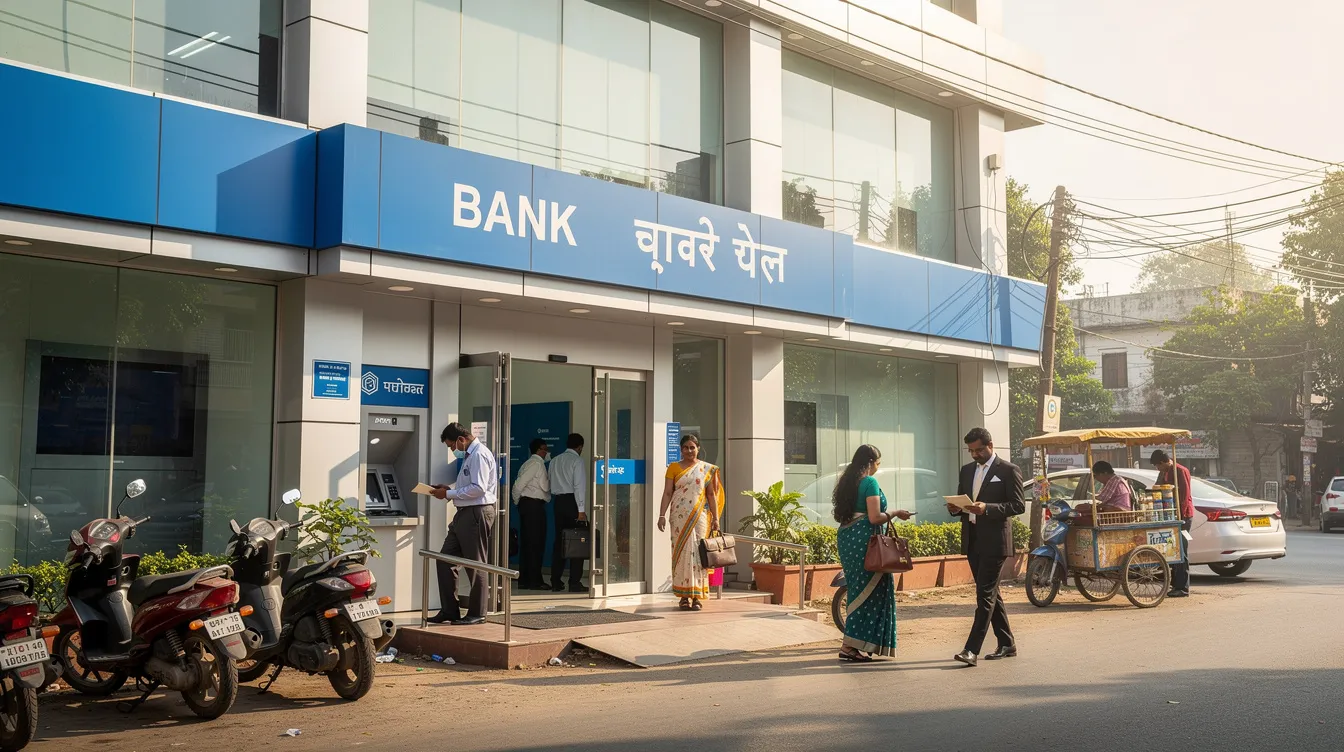
When a borrower has fully repaid a Mudra Loan and the account is closed, any new requirement is normally processed as a fresh application, even if the same bank and same scheme are used. From the borrower’s perspective, this feels like “renewal after closure,” but in the bank’s internal records it is a new Mudra sanction with a new account number and fresh documentation.
Practical steps after closure: get a loan closure letter from the bank, maintain proof of full repayment, and then approach the bank with updated business details for the new requirement. For example, a borrower moving from Shishu to Kishor, or Kishor to Tarun category, will need to show that the business has grown to justify the higher loan amount.
Having successfully repaid previous loans under PMMY strongly supports the case, but the bank will again look at current turnover, proposed use of funds, and existing liabilities before approving another Mudra Loan. Moving to higher limits like Rs 10 lakh or even Tarun Plus (up to Rs 20 lakh) is easier when there is a clean track record under the earlier Mudra sanction. As of December 2024, PMMY had provided 51.41 crore loans amounting to Rs 32.36 lakh crore since launch, with roughly 20% going to new entrepreneurs; the rest include repeat or progressing borrowers.
Step-by-Step Mudra Loan Renewal / Repeat Finance Process
Here is a practical, numbered process for what to actually do before asking your bank for Mudra Loan renewal, enhancement, or fresh sanction.
Step 1: Review your existing Mudra Loan. Check the loan type (term loan vs CC/OD). Note the sanction amount, outstanding balance, and remaining tenure. Confirm whether the account is standard, meaning no overdue EMIs or penal charges.
Step 2: Clarify your requirement. Decide exactly what you need: continuation of a CC limit, additional working capital for stock or raw material, funds for new machinery, or a seasonal inventory build-up. Quantify the amount realistically instead of asking vaguely for “maximum possible.” The beneficiary micro unit should be clear about how the funding will be used.
Step 3: Check your repayment and account conduct. Review whether any EMIs were missed or delayed. Go through bank statements for cheque returns, ECS failures, and cash transaction patterns. A clean record at this stage makes the conversation with the bank easier.
Step 4: Talk to your existing branch. Meet the relationship manager or loan officer. Explain whether you are seeking renewal of a CC/OD limit, enhancement of an existing facility, or a new Mudra Loan after closure. Ask clearly how the bank will treat your request and what internal process applies.
Step 5: Prepare updated documents. Keep KYC documents, business registration, GST details, income-tax returns (where applicable), and bank statements ready. For larger amounts, prepare a basic project report or CMA data showing projected turnover and cash flows. Proof of a single active facility may be necessary during the application process.
Step 6: Submit the application or request. Fill in the applicable Mudra Loan or enhancement form. Attach supporting documents, quotations for proposed expenditure, and any security or guarantee details if required as per bank policy.
Step 7: Bank assessment. The bank examines your repayment track, credit report, business performance, and overall credit exposure. Your application is assessed based on the bank’s internal credit appraisal norms. A field visit or telephonic discussion may be conducted to verify business operations.
Step 8: Sanction or modification. Based on assessment, the bank may approve, decline, or modify the requested amount or tenure. Terms such as interest rate, margin, security, and repayment schedule are finalised. If your loan is covered under the credit guarantee fund for micro units (CGFMU), guarantee cover may need to be renewed or extended.
Step 9: Documentation and disbursement. New or revised loan documents are executed. For working-capital renewal, the existing CC/OD account may continue with a revised sanction. For new term loans, a new account is opened and disbursement is made. Any capital assets or assets created with the loan extended must be used for the stated business purpose.

Documents Required for Mudra Loan Renewal or Repeat Finance
Document requirements vary by bank, loan size, and borrower profile. Documents typically required for loan renewal include KYC documentation and recent financial statements, but not every borrower will be asked for every item below.
Commonly requested documents include:
- KYC documents of the proprietor, partners, or directors (PAN, Aadhaar, voter ID, driving licence)
- Proof of business existence: GST registration, Udyam certificate, shop and establishment licence, or trade licence
- Existing Mudra Loan account statement or loan passbook
- Last 6 to 12 months’ bank statements of the main business account
- Recent income-tax returns, where applicable (especially for higher Mudra limits)
- Basic financials: estimated profit and loss, balance sheet, or turnover summary
- Details of existing loans (home loan, vehicle loan, other business loans, unsecured borrowings)
- Project report or CMA data for larger enhancement or fresh sanction, showing how funds will be used and repaid. This should cover the repayable schedule and projected income.
- Quotations or invoices for machinery, equipment, or other assets to be purchased
I always advise borrowers to ask the branch for a specific checklist. Banks sometimes relax documentation for small Shishu tickets and insist on more detail for amounts near Rs 10 lakh or above.
Can Mudra Loan Renewal Be Done Online?
Some banks and financial institutions now allow online initiation of Mudra Loan renewal or fresh Mudra applications through their websites or mobile banking apps, especially for existing customers. Digital submission of forms and document uploads has become more common in recent years.
However, even if the request is started online, the bank will still carry out verification, assessment, and sometimes in-person KYC or a branch visit before final approval. One bank may offer full digital journeys for small working-capital renewals, while another may insist on a physical visit for even small Mudra Loans.
Borrowers should check their own bank’s digital channels or speak with the branch to know whether their particular Mudra Loan renewal can be processed partly or fully online.
Is Mudra Loan Renewal Automatic?
Mudra Loan renewal is never fully automatic in the sense of being guaranteed without bank review.
For CC/OD working-capital facilities, banks carry out an annual review and, if satisfied with conduct and business viability, may renew the limit. But this is a conscious credit decision, not a default auto-renew. Banks like J&K Grameen Bank set a validity of three years for WC facilities, subject to annual review based on genuine trade transactions and satisfactory track record.
Term loans under Mudra run for a fixed repayment period. Once fully repaid, they close automatically, and any further finance is treated as a new application. There is no mechanism where a closed term loan “renews” on its own.
Before any renewal, the bank will normally check repayment history, account conduct, changes in business, existing liabilities, and overall credit risk.
Can the Mudra Loan Amount Be Increased During Renewal?
Increasing the sanctioned amount is called “enhancement.” It may be considered when the business has grown and needs more working capital or investment in capital assets.
Enhancement is not automatic. It requires a fresh assessment of:
- Current turnover and how it compares to the original sanction stage
- Stock and debtor levels
- Profit margins
- Cash flow sufficiency for higher EMIs or interest
- Category limits under PMMY (for example, not crossing the Rs 10 lakh limit of the Tarun category unless eligible under the bank’s Tarun Plus scheme)
Example: A small manufacturing unit initially got Rs 4 lakh under the Kishor Mudra category as a term loan. After two years of timely EMIs and increased turnover, it approaches the bank for Rs 8 lakh in total financing. The bank may either sanction a top-up on the existing loan or approve a new Tarun category loan after proper assessment. If the requirement is above Rs 10 lakh (say Rs 15 to 20 lakh), some banks may shift the borrower from standard Mudra to the Tarun Plus scheme, depending on their product structure. Mudra loans range from Rs 50,000 to Rs 20 lakh across all categories.
Mudra Loan Renewal vs Repayment Period Extension
Mudra Loan renewal and extension of repayment period are two different things, even though borrowers often mix them up.
Renewal generally refers to continuing or re-approving a CC/OD limit or sanctioning fresh funds. Repayment-period extension relates to changing EMIs or lengthening the tenure of an existing term loan, usually because of cash flow stress. If your main problem is that current EMIs are high and difficult to manage, you should read the dedicated guide on Mudra Loan repayment period extension, which covers restructuring and tenure modification in detail.
Requests for tenure extension are subject to bank policy and viability assessment and are not standard “renewals.”
Mudra Loan Renewal vs Normal Repayment Period
Every Mudra term loan is sanctioned with a normal repayment period (for example 3 to 5 years) agreed at the time of sanction. This is separate from any future renewal or fresh sanction discussion. A loan that is repayable over 48 months does not signify that renewal will happen at the end of those 48 months.
Borrowers should not confuse the original repayment schedule with the concept of renewing or taking another Mudra Loan once the first one is over. For detailed information on standard repayment tenures, refer to the separate article on Mudra Loan repayment period.
Should You Foreclose an Existing Mudra Loan Before Applying Again?
Foreclosure means closing the loan earlier than scheduled by paying the entire outstanding balance. Some borrowers think they must foreclose to apply for a new Mudra Loan, but this is not always necessary.
Many banks allow additional Mudra or MSME facilities alongside existing ones, provided total EMIs remain within reasonable repayment capacity. Before deciding to foreclose, consider:
- Remaining tenure and outstanding balance
- Any foreclosure charges, if applicable as per bank policy (some banks charge nil for Mudra Loan foreclosure)
- Whether early closure will strain business cash flow
- Whether the bank is actually insisting on closure for a particular new scheme or enhancement
If you are considering early closure for strategic reasons, read the dedicated guide on Mudra Loan foreclosure before taking a rushed decision.
Check Your Outstanding Balance Before Asking for Mudra Loan Renewal
Before approaching the bank for renewal, enhancement, or a new Mudra Loan, know your exact outstanding balance, remaining tenure, and any overdue amounts. Key figures to note:
- Principal outstanding
- Accrued but unpaid interest (if any)
- Next EMI date and amount
- Any penal interest or charges due because of delays
Understanding these numbers helps you discuss requirements confidently and realistically with the bank officer. If you are not sure how to get these details from bank statements or online banking, refer to the guide on how to check Mudra Loan outstanding balance.
Can Existing Loans Affect Mudra Loan Renewal Approval?
Banks will always look at the borrower’s total existing obligations while deciding Mudra Loan renewal or additional finance. “Existing loans” includes home loans, vehicle loans, personal loans, credit-card dues, other business loans, and informal borrowings that show up in bank statements or credit reports.
Having other loans is not automatically negative. The key question is whether total EMIs and interest are affordable relative to actual business income and household expenses. For a deeper discussion on how existing borrowing is evaluated, see Do banks check existing loans for Mudra Loan?.
Does CIBIL or Credit History Matter for Mudra Loan Renewal?
For most banks, credit bureau reports (such as CIBIL) are standard tools to assess risk both at the time of first Mudra sanction and at the time of renewal or fresh Mudra finance. The micro units development and refinance agency (MUDRA) does not prescribe a universal minimum score, but banks use bureau data as one input in their credit decisions.
Mudra Loans do not always require very high scores, especially for small Shishu loans. But serious negative issues like write-offs, settlements, or recent multiple defaults can make renewal or repeat finance difficult. Do not assume that a particular CIBIL score (like 700 or 750) guarantees approval; banks also look at income, business viability, and banking conduct.
Borrowers who want to understand which credit report banks usually check can see the detailed guide on which credit report banks check for Mudra Loan.
What If You Have Made Late EMI Payments?
Many small businesses face occasional cash-flow pressures and may have paid one or two EMIs late. This does not automatically disqualify them from renewal.
Banks differentiate between isolated, small delays that were quickly cleared and frequent or prolonged overdue EMIs that show structural financial stress. Repeated late payments may reduce the bank’s comfort level for increasing limits or giving another Mudra Loan, especially at higher ticket sizes in the sector.
If you have had past delays, regularise all dues, maintain several months of clean repayment, and then approach the bank with a proper explanation and supporting business data. For more on how delayed EMIs affect eligibility, read late EMI payment and Mudra Loan eligibility.
Common Reasons Mudra Loan Renewal or Fresh Finance May Not Be Approved
This is a practical, non-exhaustive list of reasons why banks may decline Mudra Loan renewal, enhancement, or a new Mudra sanction, even if the borrower feels eligible:
- Consistently poor repayment history or chronic overdue EMIs
- Irregular banking conduct (frequent cheque bounces, ECS returns)
- Weak or falling business turnover with inadequate cash flow
- Business closure or long inactivity of the current account
- Very high existing loan burden relative to income
- Insufficient documentation or mismatch between turnover claimed and bank statement evidence
- Adverse entries in credit reports (write-offs, settlements, multiple recent loan enquiries)
- Requested loan amount not supported by actual business size or requirement
- Internal bank policy changes, sector restrictions, or risk appetite adjustments at the lending stage
A rejection from one bank does not mean the borrower is permanently ineligible everywhere. Improvement in financial profile and documentation can change outcomes in the future.
How to Improve Your Chances Before Approaching the Bank
As an experienced CA, I advise borrowers to prepare well before asking for Mudra Loan renewal or another Mudra Loan under PMMY:
- Maintain regular EMIs and clear any overdue amounts promptly.
- Keep business banking transactions routed through the main account to reflect genuine turnover. Banks want to see that the account is active and transactions are consistent with your undertake and business operations.
- Prepare updated financial information: a basic P&L, turnover summary, and stock details.
- Keep GST returns and income-tax returns filed on time, where applicable.
- Avoid taking multiple new consumer loans or BNPL credits right before applying. This reduces lender concerns about over-leveraging.
- Correct major errors in credit reports by raising disputes with bureaus if needed.
- Prepare a simple but realistic project report or CMA data, especially for higher limits closer to Rs 10 lakh or beyond. This should cover how the funds will be used, the projected revenue from the proposed activity, and how EMIs will be repaid.
- Be ready to clearly explain how the renewed or additional funds will generate enough cash to repay.
An honest discussion with your CA or financial adviser before approaching the bank helps ensure that numbers and projections are realistic rather than inflated.
Practical Example: How a Bank May Treat a Mudra Loan Renewal Request
This is an illustrative case study using a fictional but realistic scenario.
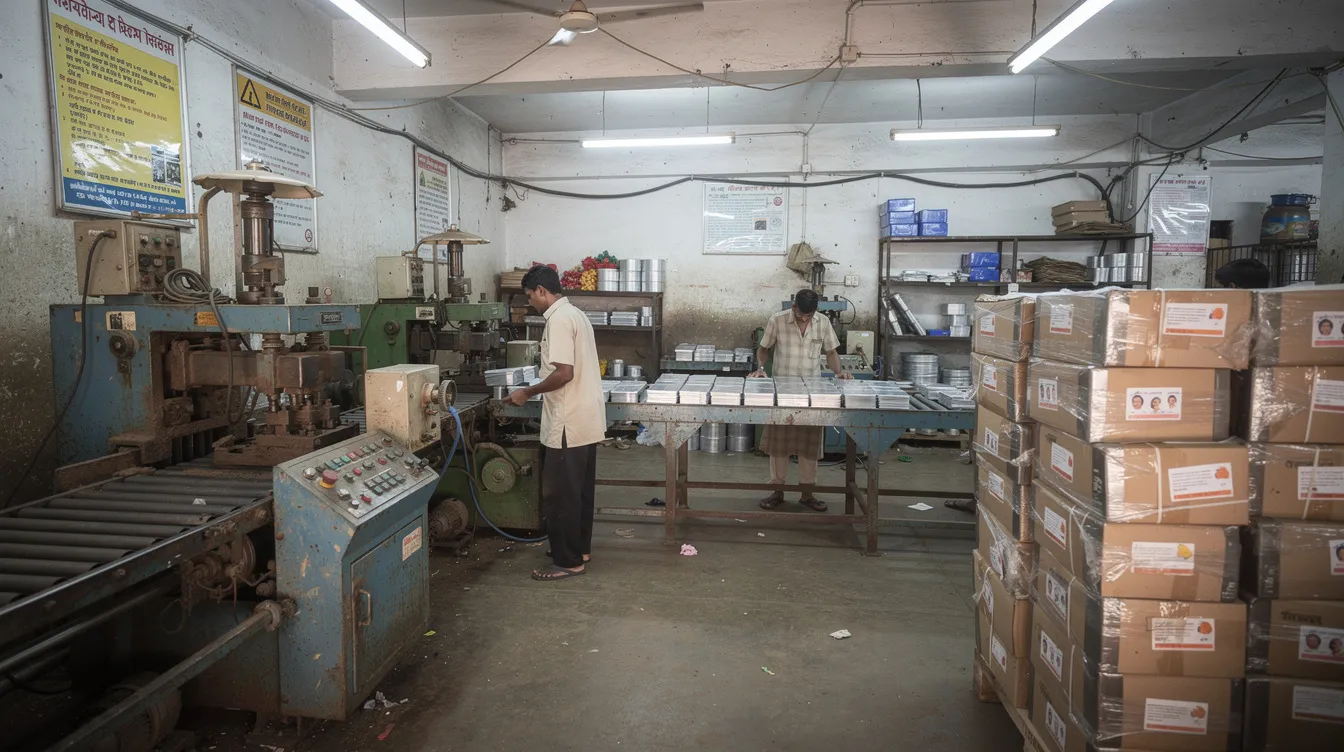
Starting situation: In 2022, Ramesh runs a small snack manufacturing unit in a semi-urban area. He applied for and received a Mudra term loan of Rs 7 lakh under the Tarun category. The purpose was purchasing a small frying and packing machine (capital assets) and stocking raw material (working capital). The loan was repayable over 48 months with monthly EMIs. No collateral was required for this loan amount.
Repayment record: Over 24 months (2022 to 2024), Ramesh paid all EMIs on time. His bank account showed consistent sales receipts and regular business transactions.
New requirement: By late 2024, Ramesh’s turnover has increased. He now needs an additional Rs 5 lakh: Rs 3 lakh for a new packing machine and Rs 2 lakh for higher inventory to meet festive demand.
How the bank assesses:
- Existing outstanding: approximately Rs 3 lakh left on the original loan
- 24 months of clean repayment history
- Latest bank statements and GST returns confirm higher sales
- Debt-to-income ratio and projected cash flows after expansion are reviewed
- The bank checks whether Ramesh’s total exposure (Rs 3 lakh existing + Rs 5 lakh new = Rs 8 lakh) fits within the Tarun category limit of Rs 10 lakh
Possible outcomes:
- The bank may sanction an enhancement or a new Mudra term loan to reach a total exposure of up to Rs 10 lakh under the Tarun category.
- Alternatively, it may approve a separate CC limit for working capital instead of funding everything through a term loan.
- If the bank finds Ramesh’s cash flow projections too aggressive, it may moderate the amount (say, approve Rs 3.5 lakh instead of Rs 5 lakh) and review again after six months.
Ramesh’s case shows how a bank approaches a practical Mudra Loan renewal request. The outcome depends on hard numbers, not assumptions.
Mudra Loan Renewal Checklist
Before visiting the bank, run through this checklist:
- ✓ Existing Mudra Loan type identified (term loan / CC / OD)
- ✓ Outstanding balance and remaining tenure noted
- ✓ EMI/payment history reviewed and any overdue EMIs cleared
- ✓ Business still active, with latest turnover figures compiled
- ✓ Purpose and exact amount of required finance calculated realistically
- ✓ Bank statements and key financial documents updated and organised
- ✓ GST/ITR/business registrations up to date, where applicable
- ✓ Simple project report or CMA data prepared if asking for higher limits
- ✓ Discussion held with CA or adviser to validate projections
- ✓ Appointment or meeting planned with the lending branch to understand their specific Mudra Loan renewal process
Frequently Asked Questions About Mudra Loan Renewal
These FAQs address common shorter queries that may not have been fully covered earlier.
Can a Mudra Loan be renewed after I have fully repaid it?
After full repayment, the old Mudra account is closed. Any further requirement is normally processed as a fresh Mudra application. From a borrower’s perspective, it effectively works like renewal or repeat finance. The bank will conduct a fresh assessment of your business, credit history, and funding requirement before approving.
Will my Mudra working-capital (CC/OD) limit be renewed every year automatically?
CC/OD limits under PMMY are usually reviewed annually. Banks may renew them if account conduct and business performance are satisfactory, but the decision is not automatic. Each year, the bank’s credit team examines turnover, stock movement, repayment discipline, and overall risk before continuing the limit.
Can I apply for Mudra Loan renewal or a new Mudra Loan with a different bank?
Borrowers are generally free to approach another bank or financial institution for fresh Mudra finance after repaying earlier loans. The new lender will independently check repayment history, credit reports, and business viability before sanctioning. Having a closure certificate from the previous bank strengthens the application.
Is Mudra Loan renewal the same as restructuring a stressed loan?
No. Renewal typically refers to continuing or re-approving finance for a reasonably standard account. Restructuring is a special exercise for stressed loans where terms are relaxed (tenure, EMI, moratorium) due to repayment difficulty. Restructuring involves stricter internal approvals, and the account may be classified differently in the bank’s books.
Does having successfully repaid previous loans guarantee that my Mudra Loan renewal request will be approved?
Successful repayment under Pradhan Mantri Mudra Yojana is a strong positive factor, but it does not guarantee approval. Banks will still examine present business performance, existing liabilities, credit history, and the viability of the new requirement before deciding. The ministry and PMMY guidelines do not mandate that banks must approve every repeat application from a previous borrower.
Final word from CA Manish Gugliya:
“Mudra Loan renewal” is not one standard or automatic process for every borrower. The correct route depends on whether you have a term loan or working-capital facility, whether your loan is outstanding or fully closed, whether your business needs additional funds or just a continuation of existing limits, and what your lender’s specific credit policy requires.
Before approaching the bank, understand your existing loan status, calculate your genuine business requirement, maintain proper repayment records, and prepare updated financial information. Then have an honest, informed conversation with your lender about the applicable renewal, enhancement, or fresh-finance process.
I have seen borrowers succeed at every stage of the Mudra journey when they come prepared with realistic numbers and clean documentation. I have also seen well-intentioned applications get declined because the borrower assumed renewal was automatic. Preparation makes the difference.
- Mudra Loan Closure Process: How to Properly Close a Mudra Loan After Full Repayment

- Mudra Loan NOC After Closure: Step-by-Step Guide by CA Manish Gugliya

- Mudra Loan Closed but Still Showing Active in CIBIL: What to Do?
- Can a Bank Refuse to Renew a Mudra Loan? Reasons, Rules & Next Steps
- What Documents Are Required for Mudra Loan Renewal? (Practical Guide by CA Manish Gugliya)

- Can a Mudra Loan Be Renewed? Eligibility, Process & Practical Guide (By CA Manish Gugliya)

- How to Check Mudra Loan Outstanding Balance? (Practical Guide for Borrowers)
- Can You Foreclose a Mudra Loan? Process, Charges & Rules (Expert Guide by CA Manish Gugliya)
- Can Mudra Loan Repayment Period Be Extended? (Practical Guide by CA Manish Gugliya)