Immediate Answer: Was Your Mudra Loan Rejected Due to Wrong Project Cost?
If your Mudra loan application was recently rejected, there is a strong possibility that the project cost shown in your project report was unrealistic, incomplete, or not properly supported by documents. This is one of the most common reasons for rejection across Shishu, Kishore, and Tarun categories, especially for loan amounts under ₹10 lakh.
In simple terms, project cost means the total money required to start or run your business – including machinery, furniture, opening stock, shop setup, and enough working capital for the first few months of operations. It is not the same as loan amount. It is the full picture of what your business needs.
Quick symptoms that your rejection was due to wrong project cost:
- Bank said “project not viable” or “investment not justified”
- Bank officer commented that machinery cost looks inflated for your business type
- No working capital was shown in your project report
- The cost you mentioned does not match the quotations you submitted
- Your project cost was copy-pasted from someone else’s report
- You asked for 100% bank finance with zero own contribution
- Total cost looked too high or too low for your locality and activity
- Figures in application form and project report did not match
This problem is extremely common among shopkeepers, small manufacturers, service providers, and home-based business owners applying under PM Mudra Yojana.
As a Chartered Accountant with nearly 20 years of experience preparing Mudra loan files, I can tell you – with correct project cost estimation and a properly structured project report, the same loan can often be reconsidered or successfully re-applied at the same or a different bank.
Table of Contents
Introduction: Why Correct Project Cost Decides Your Mudra Loan Approval
The mudra loan project cost is the heart of your entire application. When a bank manager opens your file, the first thing they look at is whether the total investment makes sense for the type of business you want to start or expand. From this one number, they judge your loan amount, your monthly EMI, and whether your business can actually repay.
Under PM Mudra Yojana (PMMY), Mudra loans are available up to ₹10 lakhs across three categories – Shishu (up to ₹50,000), Kishore (₹50,001 to ₹5,00,000), and Tarun (₹5,00,001 to ₹10,00,000). Mudra loans support Micro, Small, and Medium Enterprises (MSMEs) and can be used for income-generating activities. Since these are typically given as a business loan without property collateral, the bank depends heavily on a realistic project cost and solid financial projections instead of security.
Mudra loans require a project report for application, and the project cost section inside that report is where most files either win or lose.
In this article, you will learn:
- What exactly is project cost and what it includes
- How banks verify your project cost behind the scenes
- Which expenses to include and which to avoid
- Step-by-step method to estimate project cost correctly
- Real examples for restaurant, retail shop, and service business
- How to correct project cost after rejection and get approved
This guidance is based on nearly 20 years of preparing project reports, CMA data, and MSME loan files for different banks in India – not just theory.
At a glance – most common project cost mistakes leading to rejection:
- Missing or zero working capital
- Figures copied from another business plan without customisation
- Machinery value inflated far above market rate
- GST, transport, and installation costs completely ignored
- Sales projection unrealistically high for the investment shown
What Is “Project Cost” in a Mudra Loan? (Explained in Very Simple Language)
Project cost is simply the total money needed to start your business or expand it until it can run smoothly on its own. It is not just the amount you are asking the bank for – it is the complete picture of every rupee your business will need.
Project costs for a Mudra loan include fixed capital and working capital expenses. Let me break these down:
Fixed Capital (one-time purchases):
- Machinery and equipment
- Furniture and fixtures
- Computer and printer
- Shop renovation, interior work, signboard
- Tools, instruments, or display units
Working Capital (day-to-day running expenses for initial months):
- Opening stock or raw material
- Staff salary for 2–3 months
- Rent, electricity, internet bills
- Packing material, fuel, small repairs
- Marketing and advertising for initial months

Simple examples to understand:
- Tea stall: Fixed capital = stall setup, gas stove, utensils, table, chairs, signboard. Working capital = tea leaves, milk, sugar, cups, gas refill, helper salary for 2 months.
- Mobile shop: Fixed capital = display counter, glass showcase, billing system, CCTV. Working capital = initial stock of phones and accessories, rent deposit, electricity.
- Agarbatti unit: Fixed capital = agarbatti making machine, drying racks, packaging machine. Working capital = raw material (bamboo sticks, masala, perfume), labour cost, packing material, transport.
Key difference:
- Project cost = Total investment needed (your money + bank’s money)
- Loan amount = Only the portion you are asking the bank to give
- Owner contribution (margin) = The portion you will invest from your own pocket
Asking for 100% of project cost as bank loan usually worries the banker. Banks may require margin money for Mudra loan applications – typically 10% to 25% depending on the category and bank policy.
Why Banks and Different Lenders Carefully Verify Project Cost in Mudra Loans
Think from the banker’s perspective. They are giving money without taking your house or land as security. Their only protection is the strength of your business idea and your ability to repay. So they verify every number you show.
If your mudra loan project cost is inflated, the bank fears you might misuse the extra money. If it is too low, they worry you will run out of funds and default. Either way, the loan becomes risky.
Why banks verify project cost – key reasons:
- To check repayment capacity – can the business generate enough profit to pay EMI?
- To calculate DSCR (Debt Service Coverage Ratio) – is cash flow sufficient?
- To reduce risk of NPAs (Non-Performing Assets) on their books
- Internal audit compliance – every sanctioned file is reviewed later
- RBI norms require prudent lending, even for small loans
- Comparison with similar loans sanctioned earlier at the same branch
- Protection against fraud or misuse of scheme funds
- Compliance with PMMY scheme guidelines
Mini case from practice: A beauty parlour applicant applied for a ₹9 lakh Mudra loan. The project cost included luxury Italian-style chairs and premium imported mirrors that were completely unnecessary for a small-town locality. The bank manager compared these with what other parlours in the area used, found the furniture cost inflated, and rejected the file. A simple correction – replacing luxury items with practical, locally-sourced furniture – would have saved the application.
When project cost is wrong, it distorts the entire cash flow statement, balance sheet, and financial projections in your project report. The bank’s internal appraisal sheet – which functions like a simplified version of CMA data – becomes unreliable. That is why even a ₹2 lakh Mudra loan gets scrutinised if the numbers do not add up.
Difference Between Correct and Incorrect Project Cost (Quick Comparison)
Many entrepreneurs are not rejected because their business idea is bad. They are rejected because the cost is presented wrongly – either too high, too low, or split incorrectly between fixed and working capital.
Here is a simple comparison:
| Aspect | Correct Project Cost | Incorrect Project Cost |
|---|---|---|
| Quotations | Based on actual vendor quotations with GST | Round “guess” figures without any document |
| Working capital | Includes 3–6 months operating expenses | Zero or negligible working capital shown |
| Machinery pricing | Matches local market rate for business scale | Inflated or deflated compared to actual market |
| GST and taxes | Included in all applicable items | Completely ignored |
| Transport & installation | Listed separately with realistic amounts | Not mentioned at all |
| Owner contribution | 10–25% shown as promoter margin | Asks 100% financing from bank |
| Consistency | Same figures in application, report, quotations | Different numbers in different documents |
| Contingency | 5–10% buffer included | No contingency at all |
| Business scale match | Matches locality, experience, customer potential | Oversized investment for tiny market |
| Item breakup | Detailed, item-wise with individual costs | One lump-sum figure without any breakup |
If your project cost looks like the right column above:
- The bank will likely reject or significantly reduce your loan amount
- Your file will be flagged during internal audit
- The branch manager will lose confidence in your business understanding
- Reapplication will require complete rework of your project report
From my experience reviewing bank files during audits, files with unrealistic project cost are the easiest to spot. Bank managers know this, which is why they are strict about this particular section.
Components of Project Cost for Mudra Loan: Complete Checklist
A proper mudra loan project cost must cover all genuinely required components while excluding personal or ineligible expenses. Here are the main broad heads:
- Land/building – usually only rent deposit in Mudra (not purchase)
- Plant and machinery
- Equipment and tools
- Furniture and fixtures
- Interior work and branding
- Computer, printer, and basic software
- Initial inventory or opening stock
- Working capital for 3–6 months
- Pre operative expenses (expenses before business starts)
- Professional and registration charges
- GST and other applicable taxes
- Contingency (5–10% buffer)
Detailed component table:
| Expense | Include in Project Cost? | Simple Example |
|---|---|---|
| Machinery | Yes | Flour mill machine for atta chakki shop |
| Equipment | Yes | Mixer grinder for restaurant kitchen |
| Furniture | Yes | Display racks for kirana store |
| Computers & printer | Yes | Billing computer for retail shop |
| Initial inventory/stock | Yes | First 2 months stock of mobiles & accessories |
| Security deposit | Yes | Deposit for rented shop space |
| Rent advance | Yes | 2–3 months advance rent |
| Interior work | Yes | Painting, tiles, basic partition |
| Signboard & branding | Yes | Shop name board, flex banner |
| Transport of machinery | Yes | Delivery charges for heavy machine |
| Installation charges | Yes | Electrician/plumber for machine setup |
| Registration/licenses | Yes | FSSAI, trade license, Udyam registration |
| GST on machinery | Yes | 18% GST on machine purchase |
| Professional fees | Yes | CA fees for project report preparation |
| Electricity connection | Yes | New commercial meter deposit |
| CCTV & security | Yes (if needed) | 4-camera CCTV setup for shop |
| POS machine/billing software | Yes | Card swipe machine, billing app |
| Contingency | Yes | 5–10% of total for unexpected costs |
Items that cannot be part of project cost:
- Personal vehicle EMIs or car purchase for family use
- Old credit card dues or personal loan repayments
- Home renovation or marriage expenses

For example, a small grocery store’s project cost maps neatly into these heads: racks and shelves (furniture), weighing machine and fridge (equipment), opening stock of groceries (inventory), rent deposit (advance), and 3 months of expenses (working capital).
How to Estimate Project Cost Properly – Step-by-Step Method I Use for Clients
The best approach is to build your cost estimate from scratch based on your actual business – not by copying someone else’s report or downloading a random project report format from the internet.
Here is the step-by-step process I follow for my clients:
Step 1: Define your exact business type and scale. What exactly will you sell or manufacture? How many customers per day? Example: “Small restaurant, 25 seats, serving lunch and dinner in a tier-2 city.”
Step 2: List every fixed asset you need. Write down every machine, furniture piece, equipment, and setup item. For a coaching centre: benches, whiteboard, computer, AC, board, inverter, CCTV.
Step 3: Collect real quotations for machinery and equipment. Visit local dealers, get GST-inclusive quotations on their letterhead. Get at least 2–3 quotes for comparison. Never guess.
Step 4: Estimate furniture and interior costs. Get an estimate from a local carpenter or interior vendor. Include painting, tiles, partition, display units.
Step 5: Calculate 3–6 months of working capital. List monthly expenses: rent, salary, electricity, raw material, packing, fuel, internet. Multiply by 3 to 6 months. Working capital covers expenses like salaries, utilities, and materials.
Step 6: Calculate opening stock or inventory. How much stock do you need to fill your shop on day one? For a grocery store, this could be ₹1–3 lakh of initial inventory.
Step 7: Add rent deposit and advance. Most landlords ask for 2–6 months advance or security deposit. Include this.
Step 8: Include license, registration, and professional fees. Trade license, FSSAI (for food), Udyam registration, CA fees for project report.
Step 9: Add GST on applicable items. If machinery costs ₹3 lakh + 18% GST = ₹3.54 lakh. Show the real total, not just the base price.
Step 10: Add transport and installation. Heavy machinery needs delivery, unloading, installation, wiring, plumbing. These are real costs.
Step 11: Add miscellaneous expenses. Stationery, initial advertising strategies, small tools, cleaning supplies, first aid kit.
Step 12: Add contingency of 5–10%. Unexpected costs always arise. A 5–10% buffer shows the banker you are a practical business owner.
After preparing this list, separate owner contribution and bank loan requirement. Check if the ratio (typically 10–25% own money, rest as loan) fits bank expectations. This same stepwise method works whether you are filling an online application through Jan Samarth portal or submitting offline at a branch.
Fixed Capital vs Working Capital in Mudra Loan Project Cost
Mixing up fixed capital and working capital is one of the biggest reasons a mudra loan project cost looks wrong to bank managers. These are two very different types of expenses, and banks want to see them separated clearly.
Fixed capital = Money spent once to set up the business:
- Machinery and heavy equipment
- Furniture, counters, shelves, display racks
- Computer, printer, POS billing system
- AC, generator, tools, permanent signboard
- Shop renovation, flooring, wiring
Fixed capital costs cover machinery, equipment, and infrastructure – things that last for years and do not need to be bought again every month.
Working capital = Money needed to run the business day-to-day:
- Raw material or trading stock
- Employee salary and wages
- Monthly rent and electricity
- Packing material, consumables
- Fuel, courier, local transport
- Small repairs and maintenance
| Aspect | Fixed Capital | Working Capital |
|---|---|---|
| Purpose | Setting up business | Running business daily |
| Frequency | One-time expense | Recurring every month |
| Example | Buying a fridge | Buying milk stock for the fridge |
| Bank treatment (large loans) | Funded as term loan | Funded as working capital loan or OD |
| Stays in business as | Asset (depreciates) | Gets consumed and replenished |
| Risk if missing | Business cannot start | Business starts but runs out of cash |
Mini case – mobile shop: Investment in display racks, glass showcase, billing counter, and CCTV = fixed capital (around ₹1.5 lakh). First 2 months stock of mobile phones and accessories = working capital (around ₹3 lakh). If the applicant shows ₹4.5 lakh total but puts everything under “machinery,” the bank gets confused about how the money will actually be used.
In bigger MSME loans, banks give a separate term loan for fixed capital and a cash credit or overdraft facility as working capital loan. In Mudra scheme loans, both are often combined into a single term loan – but the project report must still show them separately so the bank can assess viability.
Which Expenses Must Be Included in Mudra Project Cost (and Often Missed)
Many applicants show only the main machinery and forget several real costs. This makes the project look artificially cheap – but actually makes it unviable because the business will not have enough money to operate.
Checklist of expenses that should be included (where applicable):
- GST on machinery and equipment (18% GST on a ₹4 lakh machine = ₹72,000 – a big number to ignore)
- Transport of machinery from dealer to your location
- Installation charges – electrician, plumber, civil work for fixing machines
- Wiring and plumbing directly related to machine setup
- Basic interior – painting, tiling, partition walls
- Branding and signboard – board, flex, shop name painting
- CCTV and security system (if business type requires it)
- POS machine or card swipe device
- Small tools, utensils, and consumables specific to business
- Initial marketing and advertising – pamphlets, online listing, opening event
- 3–6 months working capital – rent, salary, electricity, raw material
- Opening stock of goods for sale or raw material for manufacturing
- Rent security deposit and advance
- License and registration fees (FSSAI, trade license, Udyam)
- Professional fees for project report and CMA data preparation
- Contingency buffer (5–10%)
Business-specific examples:
- Restaurant: Tandoor installation cost (₹8,000–₹15,000 for chimney, gas line, civil work) is separate from tandoor purchase price
- Dairy unit: Milk chilling machine requires dedicated electrical wiring, concrete platform, and water connection – installation can cost ₹20,000–₹40,000
- Namkeen manufacturing unit: Packaging material (pouches, labels, sealing rolls) for first 2–3 months is genuine working capital
- Boutique: Mannequins, hangers, trial room curtain, full-length mirrors are all fixed capital items often forgotten
- Repair workshop: Compressor, jack, washing setup all need plumbing and drainage – an installation cost that applicants routinely miss
Including these costs does not scare the bank. It shows you have practical understanding of what it takes to actually run the business – and that increases the banker’s confidence in your file.
Which Expenses Should NOT Be Included in Mudra Loan Project Cost
Some applicants try to cover personal liabilities inside the project cost. This immediately creates distrust in the banker’s mind and can lead to outright rejection.
Do NOT include any of these in your project cost:
- Existing personal loan EMIs or repayment
- Old credit card dues
- House renovation or construction
- Marriage or family ceremony expenses
- Personal car or two-wheeler purchase (unless directly used for business delivery)
- Repayment of informal hand loans from friends/relatives
- Speculative stock market or crypto trading
- Gold purchase as personal investment
- Closure of any existing business loan or loan against property
- Medical treatment bills
- Education fees for children
- Any cash requirement without clear business justification
Why is each of these a problem? A Mudra loan is a business loan meant for income-generating business activities. If the bank discovers that project cost includes personal items, it is treated as potential misuse. During internal audit, such files get flagged, and the branch manager faces questions.
Real-life style example: A client once showed ₹1.5 lakh under “miscellaneous expenses” in a ₹7 lakh project. On enquiry, it turned out ₹80,000 of this was for repaying a relative’s loan and ₹30,000 for home whitewashing. I advised removing these items completely and redistributing the genuine business needs properly. After resubmission with a clean project cost, the bank processed the file without further objection.
Simple rule of thumb:
- If you cannot point to exactly where this item will be used inside your shop or factory, do not include it
- If the expense existed before your business idea, it is not a project cost
- If it benefits your family and not the business, keep it out
- If the bank officer visits your shop and cannot see this item, it should not be in the report
How Wrong Project Cost Affects Your Cash Flow Statement and EMI Repayment
A cash flow statement is simply a table showing how money comes into your business (from sales) and how it goes out (rent, salary, material, EMI, etc.) every month. If enough cash is left after all expenses and EMI, the business is viable. If not, the bank rejects.
When project cost is underestimated:
- You do not have enough working capital to buy stock
- Low stock means fewer sales
- Fewer sales mean less cash coming in
- EMI becomes difficult to pay
- Business fails within a few months
When project cost is overestimated:
- Loan amount increases unnecessarily
- Monthly EMI becomes too high for your actual sales level
- DSCR drops below safe level (banks want DSCR above 1.5 for loan approval)
- Bank either rejects the file or significantly reduces the loan amount
Interest rates for Mudra loans vary between 8.85% and 24% per annum depending on the lender and category. Even a small increase in loan amount at these rates can push your EMI significantly higher.
Simplified numeric example – salon business:
| Scenario | Realistic Project Cost | Inflated Project Cost |
|---|---|---|
| Total project cost | ₹5,00,000 | ₹8,50,000 |
| Loan amount (after margin) | ₹4,00,000 | ₹7,50,000 |
| Monthly EMI (approx. at 12%, 5 years) | ₹8,900 | ₹16,700 |
| Expected monthly revenue | ₹50,000 | ₹50,000 |
| Expenses (rent, salary, material) | ₹32,000 | ₹32,000 |
| Cash available for EMI | ₹18,000 ✅ | ₹18,000 ❌ |
| DSCR | ~2.0 (safe) | ~1.08 (risky) |
In the inflated scenario, even though the business earns the same revenue, the EMI eats up almost all available cash. The bank sees this in financial projections and rejects the file.
One wrong base figure in project cost distorts your entire profit & loss projection, balance sheet, and cash flow statement. All three documents in a project report are interconnected – and all of them start from the project cost.
Common Project Cost Mistakes I See in Mudra Loan Files (At Least 15)
These mistakes are not from textbooks. They come from actual bank loan files I have reviewed, corrected, and resubmitted over the years. If you recognise even 2–3 of these in your own file, you likely know why your loan was rejected.
- Using round figures without any quotation – writing “Machinery ₹3,00,000” without any vendor quote. Banks immediately suspect this is a guess.
- Copying cost from someone else’s project report – every business is different. A bakery in Indore is not the same as a bakery in Pune.
- Zero working capital shown – this tells the bank you have no idea how daily operations will be funded.
- Ignoring GST on machinery and equipment – an 18% GST on ₹5 lakh machinery means ₹90,000 is missing from your project cost.
- No installation or transport cost – heavy machines need delivery, unloading, wiring. This costs real money.
- Double counting the same asset – listing “computer” under machinery AND under furniture/fixtures.
- Equipment value far above market rate – Common Banking Mistake: Applicant shows ₹5 lakh machinery for a tiny locality shop where similar businesses usually start with ₹1–2 lakh.
- Old second-hand machinery shown at new price – banks will check. If the machine is used, show used price with honest disclosure.
- No rent deposit included – landlords in most cities demand 3–6 months security deposit.
- Unrealistically low furniture cost – showing ₹15,000 for furniture when the shop clearly needs ₹50,000+ worth.
- Overloading marketing expenses – ₹2 lakh marketing budget for a ₹5 lakh project makes no sense.
- Missing contingency – unexpected costs always come. No buffer = no practical planning.
- Mismatch between project cost in application form and in project report – Common Banking Mistake: Application says ₹7,50,000 but project report says ₹8,20,000. Instant red flag.
- Including personal assets or expenses – home AC, family car, children’s school fees do not belong here.
- Not breaking up items properly – writing “Shop Setup ₹4,00,000” as one line item instead of furniture ₹80,000 + interior ₹1,20,000 + equipment ₹1,50,000 + signboard ₹50,000. Banks need detail.
- Using outdated quotations – a quotation dated 8 months ago may no longer reflect current market prices.
Avoiding these mistakes alone moves your file ahead of the majority of applications sitting on the bank manager’s desk. Most banks receive dozens of poorly prepared files every week. A clean, consistent file stands out immediately.
How Banks Verify Project Cost: What Really Happens Behind the Desk
When a bank manager or credit officer receives your Mudra loan file, the project cost page is often the first section they study. Here is what actually happens:
Verification methods banks use:
- Comparison with past sanctioned cases – every branch has records of what they approved for similar businesses. If your grocery shop cost is double what others in the same locality received, they will question.
- Checking with local vendors – the officer may call the machinery dealer whose quotation you submitted. Is the price genuine? Does the dealer confirm the order?
- Internet price verification – managers routinely check equipment prices on IndiaMart, Amazon Business, or manufacturer websites.
- Internal benchmark charts – many banks maintain standard cost benchmarks for common business types.
- Reviewing GST-inclusive invoices – are the quotations from GST-registered vendors? Are they dated recently (within 30–60 days)?
- Site inspection – for larger Tarun-category loans, the bank may visit your location to verify if the space, infrastructure, and setup match your cost claims.
- Matching cost with locality – Mumbai pricing in a small Madhya Pradesh town will be questioned immediately.
- Cross-checking with CMA data and financial projections – do the projected sales support the claimed investment? Does the DSCR work?
- Checking quotation authenticity – unsigned, undated, or photocopied quotations raise suspicion.
- Verifying owner contribution – can the applicant actually bring their share of margin money?
Mini case study – dairy unit: A dairy farmer applied for ₹8 lakh Mudra loan. The project showed a milk chilling unit at ₹4.5 lakh. The bank manager visited the site, found the quoted machine was a larger capacity model than needed for 200 litres per day. He asked for a revised quotation for the right-sized machine (₹3.2 lakh). With corrected cost and adjusted projections, the bank sanctioned ₹6.5 lakh – a slightly reduced loan, but still approved.
Public sector banks, private sector banks like HDFC Bank, ICICI Bank, and Axis Bank, regional rural banks, cooperative banks, and even microfinance institutions broadly follow similar verification logic for Mudra loans. The documentation depth may vary – a PSB branch may ask for more paperwork than an NBFC – but the core check remains the same.
Showing realistic figures with supporting documents makes verification quick and smooth, directly increasing your approval chances.
Documents and Financial Papers Banks Expect to Support Your Project Cost
Project cost cannot just sit on plain paper. It must be backed by proper financial documents and quotations that the bank can verify.
Key supporting documents:
- Machinery quotations on vendor letterhead or email (GST-inclusive, dated within 60 days)
- Furniture and interior estimates from local carpenter or interior contractor
- Rent agreement draft or written estimate of deposit and monthly rent
- GST-inclusive proforma invoices for major equipment
- Vendor quotations for raw material or initial inventory
- Simple business plan note describing the activity, customers, and revenue model
- Complete project report including financial projections for 3–5 years
- Basic cash flow and profit projections month-wise for first year
- Last 6–12 months bank statements (especially for existing business owners)
- Old balance sheet and profit & loss statement for existing MSME businesses
- Government scheme documents if applying under PMEGP loan or other loan schemes
- Udyam registration certificate
How each document helps:
- Quotations prove real market price – the bank can verify with the vendor
- Bank statements prove your transaction level and existing income
- Balance sheet shows your current investment level and net worth
- Financial projections show whether revenue can cover EMI
- Rent agreement confirms location and recurring cost
For larger working capital limits and CC/OD facilities, detailed CMA data is required, and its figures must perfectly match the project cost breakup. Even for Mudra loans, smart applicants keep their documents aligned so that any document file preparation looks professional and consistent.
Restaurant Example: Sample Mudra Loan Project Cost Calculation
Let me walk you through a real-style example. Suppose a first-time entrepreneur wants to open a small 25–30 seater restaurant in a tier-2 city in 2026, applying for a Mudra Tarun loan of around ₹9–10 lakh.
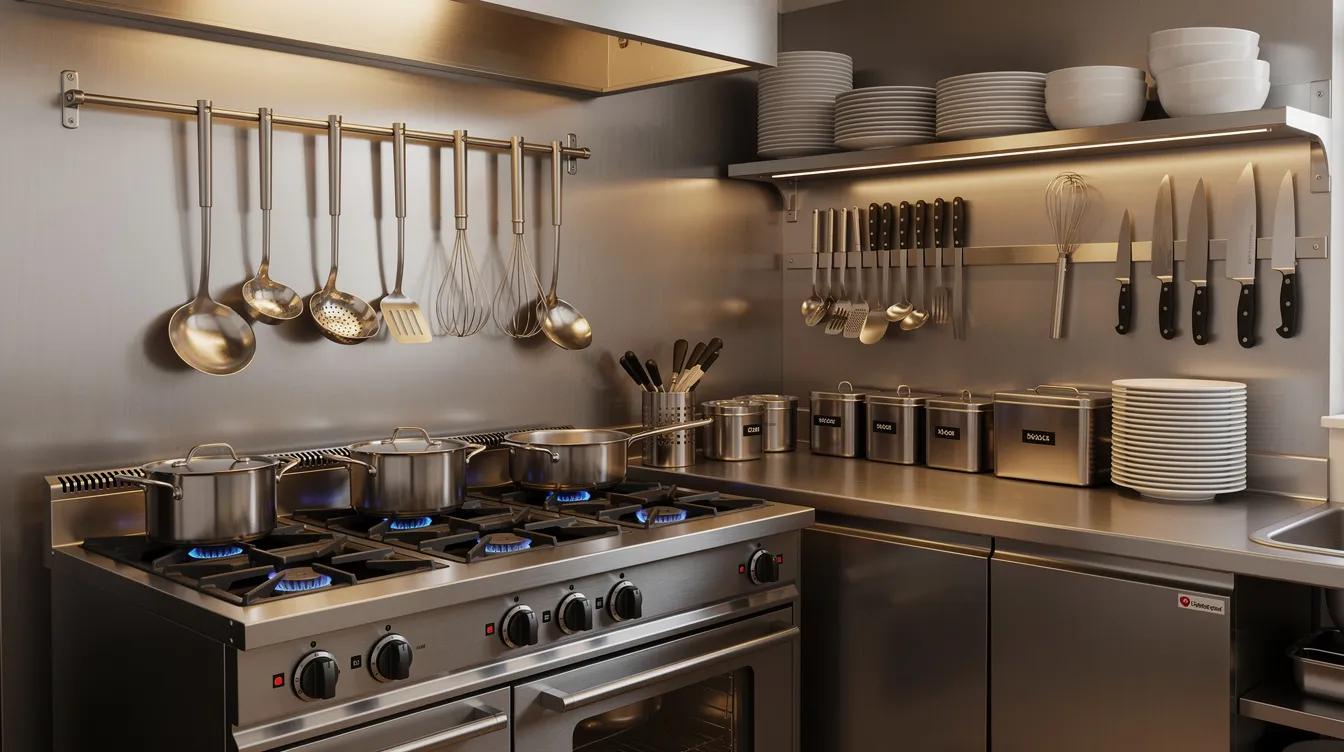
Fixed Capital (one-time setup costs):
| Item | Estimated Cost |
|---|---|
| Kitchen equipment (commercial gas range, tandoor, exhaust) | ₹1,20,000 |
| Refrigerator and deep freezer | ₹60,000 |
| Furniture – 8 tables + 30 chairs | ₹80,000 |
| Billing counter with POS system | ₹25,000 |
| AC / coolers (2 units) | ₹50,000 |
| Interior work (paint, tiles, partition, lighting) | ₹70,000 |
| Signboard and branding | ₹15,000 |
| CCTV (4 cameras with DVR) | ₹18,000 |
| Small music system | ₹8,000 |
| Computer and printer for billing | ₹25,000 |
| Utensils, crockery, service items | ₹30,000 |
| Installation, wiring, plumbing for kitchen | ₹25,000 |
| Transport of equipment | ₹10,000 |
| Fixed Capital Subtotal | ₹5,36,000 |
Working Capital (first 3 months of operations):
| Item | Monthly | 3 Months |
|---|---|---|
| Raw material (grocery, vegetables, spices) | ₹40,000 | ₹1,20,000 |
| Cook and helper salaries (3 staff) | ₹25,000 | ₹75,000 |
| Rent | ₹15,000 | ₹45,000 |
| Electricity and gas | ₹8,000 | ₹24,000 |
| Marketing (Zomato listing, pamphlets, opening event) | – | ₹15,000 |
| Packaging material (parcels, containers) | ₹5,000 | ₹15,000 |
| Rent security deposit | – | ₹30,000 |
| Working Capital Subtotal | ₹3,24,000 |
Contingency (5% of total): ₹43,000
Total Project Cost: ₹9,03,000
Means of Finance:
- Owner’s contribution (margin ~15%): ₹1,35,000
- Bank loan (Mudra Tarun): ₹7,68,000
This structured breakdown – with every item listed, realistic local pricing, and adequate working capital – looks credible to bank officers who have seen many similar restaurant files. It shows practical knowledge and improves loan approval chances significantly.
Retail Shop Example: Grocery or Mobile Shop Mudra Project Cost
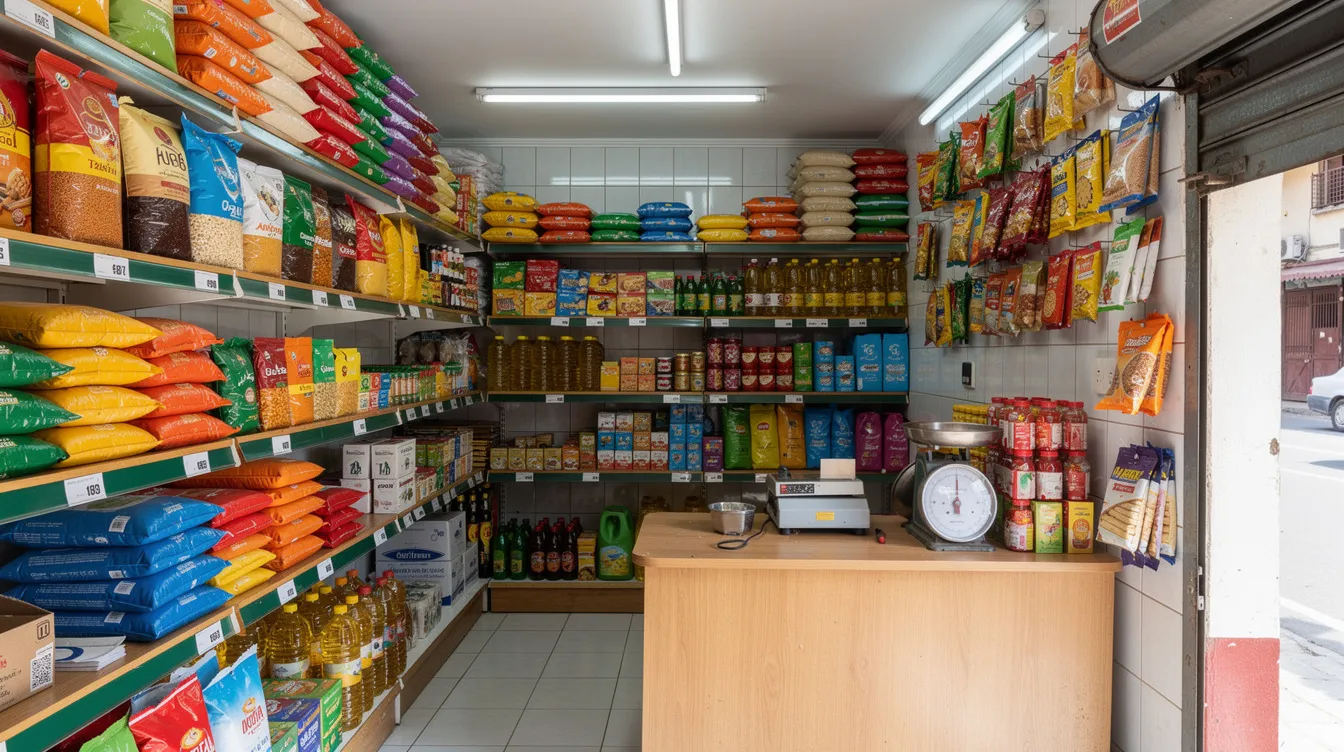
Consider a kirana (grocery) store in a semi-urban area, with the business owner applying for a Mudra Kishore or Tarun loan of ₹5–8 lakh.
Fixed Capital Items:
| Item | Estimated Cost |
|---|---|
| Racks and display shelves (steel/wooden) | ₹45,000 |
| Billing counter | ₹15,000 |
| Weighing machine (electronic) | ₹5,000 |
| Refrigerator (for dairy, cold drinks) | ₹25,000 |
| Computer + printer + billing software | ₹20,000 |
| POS/card swipe machine | ₹3,000 |
| Interior – paint, basic tiling, lighting | ₹25,000 |
| Signboard | ₹8,000 |
| CCTV (2 cameras) | ₹10,000 |
| Fixed Capital Subtotal | ₹1,56,000 |
Working Capital:
| Item | Amount |
|---|---|
| Opening inventory – groceries, FMCG products (1.5 months) | ₹2,80,000 |
| Rent advance + deposit (3 months) | ₹36,000 |
| Helper salary (2 months) | ₹16,000 |
| Electricity and internet (2 months) | ₹6,000 |
| Local marketing (pamphlets, WhatsApp promotions) | ₹5,000 |
| Contingency (5%) | ₹17,000 |
| Working Capital Subtotal | ₹3,60,000 |
Total Project Cost: ₹5,16,000
Means of Finance:
- Owner contribution (~25%): ₹1,30,000
- Bank loan: ₹3,86,000
For a mobile shop, replace grocery inventory with mobile phones and accessories stock (₹3–4 lakh), add glass showcases and display lights instead of racks, and adjust accordingly.
Banks pay special attention to stock value in retail businesses because profit and EMI repayment capacity mainly come from sufficient and fast-moving inventory. If you show only ₹50,000 stock for a shop where typical monthly turnover should be ₹2–3 lakh, the bank will doubt whether the business can survive.
Service Business Example: Beauty Parlour, Coaching Centre, or Repair Workshop
Service businesses depend more on skills and less on physical stock, so the project cost structure is slightly different. Fixed capital may be relatively higher (equipment, setup), while working capital is mainly consumables, rent, and salaries.
Beauty parlour example – Fixed Assets:
| Item | Estimated Cost |
|---|---|
| Parlour chairs (3) | ₹30,000 |
| Mirrors and workstation tables | ₹20,000 |
| Facial steamer and hair dryer | ₹12,000 |
| Hair wash basin | ₹15,000 |
| AC (1 unit) | ₹30,000 |
| Interior decor and lighting | ₹40,000 |
| Signboard and branding | ₹10,000 |
| Computer and billing system | ₹15,000 |
| Towel sterilizer, trolley, tools | ₹10,000 |
| Fixed Capital Subtotal | ₹1,82,000 |
Working Capital:
| Item | Amount |
|---|---|
| Initial cosmetics and consumables (creams, colours, products) | ₹40,000 |
| Rent deposit + 3 months advance | ₹60,000 |
| Helper salary (3 months, 1 helper) | ₹24,000 |
| Electricity and internet (3 months) | ₹12,000 |
| Local advertising, Google My Business listing, pamphlets | ₹10,000 |
| Contingency (8%) | ₹15,000 |
| Working Capital Subtotal | ₹1,61,000 |
Total Project Cost: ₹3,43,000
How this logic applies to other service businesses:
- Coaching centre: Benches, whiteboards, projector, sound system, AC, inverter form fixed capital. Study material, rent, teacher salary, electricity are working capital.
- Two-wheeler repair workshop: Tools, jack, air compressor, tyre changing machine, washing setup form fixed capital. Initial spare parts stock, rent, helper salary are working capital.
- Computer repair shop: Workbench, diagnostic tools, soldering station, UPS form fixed capital. Spare parts, rent, electricity are working capital.
In service businesses, realistic revenue and customer inflow must match the size of investment and the locality. If you invest ₹5 lakh in a beauty parlour in a village with 200 households, the bank will doubt whether enough customers exist to support the business and EMI. The space or land requirement and location must justify the scale of your investment.
Mistakes in Project Cost That Almost Guarantee Mudra Loan Rejection
Some patterns in a mudra loan project cost immediately signal to the bank that the file is weak or prepared only to extract a loan without genuine business intent.
High-risk mistakes to avoid:
- Asking full project cost as bank loan with zero own contribution. This tells the bank you have no skin in the game. Banks expect at least 10–20% promoter margin.
- Machinery cost disproportionately high compared to turnover potential. ₹7 lakh machinery for a business expected to earn ₹30,000 per month makes no commercial sense.
- Very low or zero working capital. The business will run out of cash in the first month. Avoid Loan Rejection: Always show at least 3 months of operating expenses as working capital.
- Unrealistically low rent shown for a prime commercial area. If market rent is ₹15,000 but you show ₹5,000, the bank knows the figures are fake.
- No breakup – just one single figure. “Total project cost ₹8,00,000” with zero detail is not a project report.
- Mixing personal and business expenses. Home renovation, family car, or children’s fees mixed into business cost.
- GST completely ignored on all machinery purchases. Avoid Loan Rejection: Always get GST-inclusive quotations from registered vendors.
- Using old, undated quotations. Quotations should be recent – within 30 to 60 days of application.
- Mismatch between project cost in application form and in project report. Figures must be identical everywhere.
- No clear list of machines – just “machinery lump sum.”
- Too much focus on vehicle purchase when the core business is a shop or service – vehicle should be incidental, not the main expense. Avoid Loan Rejection: If you need a vehicle, justify it clearly as delivery or business logistics.
- Claiming to buy new machinery at prices that are clearly second-hand market rates, or vice versa.
Sometimes the bank does not explicitly write “project cost incorrect” in the rejection note. They may use phrases like “project not viable,” “insufficient justification,” “loan amount not justified by activity,” or simply “not recommended at present.” If you see such language, incorrect project cost is often the underlying reason. You can learn more about how to find the actual reason for your Mudra loan rejection.
How Incorrect Project Cost Damages Financial Projections, DSCR, and Ratios
Financial projections are your estimate of future sales, expenses, and profits for the next 3–5 years. Banks use these to judge whether your business can repay the loan. Financial projections must include a balance sheet and cash flow statement – both of which start from the project cost.
What is DSCR?
DSCR stands for Debt Service Coverage Ratio. Think of it like this:
- Your business earns ₹15,000 per month after all expenses (before EMI)
- Your monthly EMI is ₹9,000
- DSCR = ₹15,000 ÷ ₹9,000 = 1.67
DSCR should be above 1.5 for loan approval. If it falls below that, the bank considers your business too risky.
How wrong project cost breaks everything:
- Inflated project cost → Higher loan → Higher EMI → DSCR drops below 1.5 → Rejection.
- Underestimated cost → Artificially high profits shown → Bank finds projections unrealistic → Questions raised.
- Missing working capital → Cash flow statement shows negative cash in operating months → Business appears unviable.
- Wrong machinery value → Depreciation calculations become wrong → Balance sheet and profit projections both distorted.
- Incorrect inventory → Current assets in balance sheet misrepresented → Ratio analysis becomes unreliable.
In a real grocery store model, correctly structured costs with adequate working capital showed a DSCR of approximately 1.62 – comfortably above the safe threshold. When the same model was tested with inflated fixed costs and reduced working capital, DSCR dropped to 1.1, which most banks would reject.
Your balance sheet, cash flow statement, CMA data (for bigger loans), and all ratio analysis derive from the same base project cost figures. If the base is wrong, every calculation in the full report becomes unreliable in the banker’s eyes. The break even point, profitability timeline, and repayment plan all get distorted.
How to Correct Your Project Cost After Mudra Loan Rejection
Rejection is not the end. Many of my clients have successfully reapplied and received approval after correcting their project cost and revising their project report.
Step-by-step action plan:
- Obtain the specific reason from the bank. Ask the branch manager or credit officer what exactly was wrong. Get it in writing if possible.
- Review your old project cost line by line. Mark every figure that was guessed, copied, inflated, or unsupported.
- Collect fresh market quotations. Visit actual vendors, get new GST-inclusive quotes on letterhead with proper dates.
- Recalculate fixed capital separately. Ensure every asset is listed individually with realistic pricing for your locality.
- Recalculate working capital separately. Cover at least 3–6 months of operating expenses.
- Adjust owner contribution to a reasonable level. Show at least 10–20% of the revised total as your own investment.
- Prepare revised financial projections. Sales, expenses, profit, EMI, DSCR – all must be recalculated based on corrected costs.
- Double-check all totals, GST amounts, and subtotals. Even small arithmetic errors destroy credibility.
- Align every document. Application form, project report, quotations, CMA data (if applicable) – all figures must match exactly.
- Reapproach the same bank or try a different bank with the improved, professionally prepared file.
Mini case – successful reapplication: A client initially applied with ₹8 lakh for a food stall, showing ₹6 lakh for commercial kitchen equipment and only ₹50,000 working capital. Rejected. After rework: machinery reduced to ₹3.5 lakh (right-sized for the stall), working capital increased to ₹2 lakh, and proper quotations attached. Revised total: ₹6.8 lakh. Owner margin: ₹1.2 lakh. Loan requested: ₹5.6 lakh. Approved within 12 working days.
Sometimes the simplest correction – matching project cost to your actual business scale and locality – is all it takes.
Preparing a Bank-Ready Mudra Loan Project Report with Correct Project Cost
A project report is more than just a cost table. It is a complete financial information package that tells the bank everything about your business idea, your background, and your repayment capacity.
What a complete Mudra project report should contain:
- Project summary – business name, activity, location, loan amount requested
- Promoter background – education qualification, experience, achievements export orders (if any), company’s background
- Business details – what products or services you will sell, all the products and services offered, project commercial aspects, project logistics details
- Market analysis – who are your customers, local competition, demand assessment
- Technical details – commercial manufacturing processes (if applicable), equipment used, employees working in the business
- Project cost and means of finance – detailed item-wise breakup with fixed capital and working capital separated
- Implementation schedule – when will each component be purchased and installed
- Profitability projections – year-wise P&L for 3–5 years
- Cash flow statement – monthly for year 1, yearly thereafter
- Projected balance sheet – opening and closing for each projected year
- Key ratios – DSCR, current ratio, break even point
- Repayment plan – how EMI will be paid from business cash flows
- Risk assessment and mitigation
- Social and economic benefits of the project
The project cost section must clearly show item-wise details information, totals, and separation between fixed capital and working capital, cross-referenced with attached quotations.
A detailed project report can be up to 27 pages long, but it should be concise and clear – no unnecessary filler. Include business background and planned activities in the report so the banker understands your project company profile instantly. Well-structured reports matching expectations of most banks – whether SBI, PNB, or private sector banks – reduce the number of queries and speed up decision-making.
Project report preparation costs start at ₹399 for automated tools, while CAs charge between ₹5,000 and ₹15,000 for professionally prepared reports depending on complexity. If you are not comfortable with numbers and financial analysis, consider professional help – but remember, no genuine expert can guarantee 100% loan approval.
Role of CMA Data and Detailed Statements for Larger MSME Loans
Though CMA data is generally required for larger bank loan applications and working capital limits (often above ₹10–25 lakh), the discipline of accurate project cost calculation is the same as in Mudra files. If you plan to grow your business and apply for an MSME loan or working capital loan in the future, learning to prepare correct cost estimates now will serve you for years.
What is CMA data in simple terms?
- CMA stands for Credit Monitoring Arrangement
- It is a structured set of projected balance sheets, profit & loss accounts, and cash flow statements for 5–7 years
- It shows the bank how your business will use the borrowed money and repay it over time
- It is required by most banks for term loan and working capital loan limits above ₹10–25 lakh
How project cost flows into CMA:
- Initial fixed assets from your project cost appear in the opening balance sheet as gross block
- Working capital requirement appears as current assets (inventory, receivables) and current liabilities (payables)
- These determine fund-based limits and ratios like current ratio, MPBF (Maximum Permissible Bank Finance), and DSCR
- Wrong project cost means wrong opening balances, which makes every subsequent year’s projection unreliable
Key CMA items affected by project cost:
- MPBF calculation – determines how much bank can lend for working capital
- Current ratio – must typically be above 1.33
- Working capital cycle – how long money stays locked in stock and receivables
- Debt-equity ratio – how much you owe vs what you own
Even for Mudra loans below ₹10 lakh, some careful bank branches informally use similar logic in their internal appraisal sheets. So accuracy in your basic details and cost estimation matters regardless of loan size. Tarun Plus loans provide from ₹10 lakh to ₹20 lakh for business expansion, and for these, banks definitely expect more detailed CMA data and financial statements.
20 Practical Tips to Get Mudra Loan Approved with Correct Project Cost
Use this as a quick-action checklist before submitting or revising your mudra loan project cost.
- Always use recent quotations – dated within 30–60 days of application.
- Avoid round “guess” figures. ₹98,500 from a real quote is better than ₹1,00,000 from your head.
- Include 3–6 months working capital – never show zero.
- Do not ask for 100% bank finance. Show 10–25% as your own money.
- Match project cost figures everywhere – application form, project report, quotations.
- Keep project size suitable to your experience and locality. A first-time business owner in a small town should not show a ₹20 lakh project for a tea stall.
- Show realistic sales vs investment ratio. If you invest ₹8 lakh, your monthly sales should reasonably justify that level.
- Never mix personal and business needs in the project cost.
- Add GST, transport, and installation on all applicable items.
- Keep contingency at 5–10% of total cost.
- Prepare a simple monthly cash flow for at least the first 12 months.
- Double-check all arithmetic – totals, subtotals, percentages.
- Keep copies of all supporting documents in an organized file.
- Understand which mudra scheme and loan schemes you are applying under – Shishu, Kishore, Tarun, or Tarun Plus. Loan processing fees may be waived for Shishu loans.
- Keep a clear explanation ready for every big-ticket item in your project.
- Be honest during branch interview about how you calculated each cost.
- If you have credit history, ensure it is clean. Banks check your existing EMIs and repayment record.
- Show required third party details and third party details where needed – landlord, supplier, etc.
- Mudra loans offer both secured and unsecured options – for Tarun and above, some banks may ask for light security. Be prepared.
- If possible, get a professionally prepared project report. Reports generated by experienced CAs have higher acceptance rates because they follow the exact project report format banks expect.
CA Manish Gugliya’s Expert Tip: Bank managers see dozens of files every week. A neat, well-organized file with matching numbers across all documents immediately creates a positive first impression. That impression matters more than you think.
CA Manish Gugliya’s Expert Tip: When calculating working capital, think about what happens if your first month has zero customers. Can you still pay rent, salary, and electricity? If yes, your working capital estimate is probably right.
CA Manish Gugliya’s Expert Tip: Different banks have slightly different internal benchmarks. If one bank reduces your project cost significantly, it is worth applying to a different bank with adjusted numbers – but never inflate just because you are trying elsewhere.
Use this list while checking your own draft before meeting the bank manager. Each point addressed is one less reason for the bank to question your file.
Checklists: Self-Audit Your Mudra Project Cost Before Submitting to Bank
Before handing your file to the bank, do a quick self-audit using these simple questions. Catching mistakes at this stage saves weeks of back-and-forth.
Fixed Capital Self-Audit:
- ☐ Do I have quotations for every item above ₹10,000?
- ☐ Is GST included in all machinery and equipment costs?
- ☐ Is machine capacity suitable for my expected daily/monthly sales?
- ☐ Are installation and transport costs listed separately?
- ☐ Is furniture cost realistic for my locality (not too high, not too low)?
- ☐ Have I included signboard, CCTV, POS if my business needs them?
- ☐ Is any item listed twice under different heads?
- ☐ Are all quotations recent (within 30–60 days)?
Working Capital Self-Audit:
- ☐ Have I covered at least 3 months of operating expenses?
- ☐ Is opening stock sufficient to support projected first-month sales?
- ☐ Is monthly rent matching actual market rate for my area?
- ☐ Are salaries realistic for the number of employees working?
- ☐ Have I included electricity, internet, and other utilities?
- ☐ Is rent deposit/security deposit included?
- ☐ Have I included initial marketing or advertising strategies budget?
- ☐ Is contingency of 5–10% added?
Cross-Check Items:
- ☐ Total project cost = Fixed capital + Working capital + Contingency
- ☐ Owner contribution + Bank loan = Total project cost (exact match)
- ☐ Figures in application form = Figures in project report = Figures supported by quotations
- ☐ No personal expense included anywhere in the cost
Warning: If your answer to any question above is “No,” stop and correct your project cost before submitting the file. Even one unchecked item can become the reason for rejection or delay.
Frequently Asked Questions on Mudra Loan Project Cost
These FAQs come from actual doubts raised by small business owners and first-time entrepreneurs during consultations.
Q1: Can I get a Mudra loan without putting any of my own money? Banks may require margin money for Mudra loan applications. For Shishu category (up to ₹50,000), some banks may waive margin. For Kishore and Tarun, expect to contribute 10–25% from your own pocket. Zero contribution usually leads to rejection because the bank wants you to have “skin in the game.”
Q2: How much working capital should I show for a small shop? At minimum, show 3 months of operating expenses – rent, salary, electricity, stock replenishment. For a grocery or retail shop, working capital may be 40–70% of total project cost because inventory is the main investment.
Q3: Is GST on machinery part of project cost? Yes, absolutely. If a machine costs ₹3,00,000 and GST is 18%, your project cost should show ₹3,54,000 – not just ₹3,00,000.
Q4: Can I include my old second-hand machine at new price? No. If you are purchasing a used machine, show the actual used price with honest disclosure. Showing new price for old machinery is misleading and can be caught during verification. You can check eligibility for Mudra loan for used machines separately.
Q5: What if my actual cost becomes different from project report later? Minor variations (5–10%) are normal and generally acceptable. Major deviations should be communicated to the bank proactively. If the nature of expense changes completely, you may need bank approval.
Q6: Do all banks calculate project cost the same way? The basic logic is the same, but different banks may have slightly different eligibility criteria, margin requirements, and internal benchmarks. What works at one bank may need minor adjustment at another.
Q7: Can project cost be changed after loan sanction? Minor adjustments within the same purpose are usually acceptable with bank approval. Major changes (like using machinery money for vehicle) are not allowed and can be treated as misuse.
Q8: Is a professional project report compulsory for Mudra loan? Most banks require it. For Shishu loans, a simple format may suffice. For Kishore and Tarun, a properly structured project report with financial projections is practically essential.
Q9: Do I need CMA data for Mudra loan? CMA data is not formally mandatory for Mudra loans under ₹10 lakh, but for Tarun and Tarun Plus categories, some banks request simplified financial statements that serve the same purpose.
Q10: What should I do if the bank reduced my project cost and loan amount? Understand why they reduced it. If their assessment is reasonable, accept the reduced amount and adjust your business plan accordingly. If you believe the reduction is unfair, collect stronger documentation and either negotiate or approach another bank.
Q11: Can I apply for a Mudra loan and PMEGP loan simultaneously? You can apply to different schemes, but you cannot get both for the same project. Make sure you understand the eligibility criteria and documentation requirements of each scheme.
Q12: How many pages should my project report be? A detailed project report can be up to 27 pages long for complex projects. For simpler Mudra loans, 10–15 pages with clear cost breakups and projections are usually sufficient.
Q13: Does the bank check if I actually have the margin money? Yes. Banks often ask for bank statements showing the balance, or evidence of existing assets that demonstrate your ability to contribute. If you claim ₹2 lakh own contribution but your savings account shows ₹5,000, the bank will question it.
Q14: Can micro units get Mudra loan easily? Mudra loans are specifically designed for micro units development and small business support. The process is the same – realistic project cost, proper project report, clean credit history, and matching documents improve your chances regardless of business size.
Conclusion and Call to Action: Get Expert Help for Correct Mudra Project Cost
Correct and realistic project cost is not about showing the maximum possible figure to get a bigger loan. It is about showing what your business genuinely needs – not a rupee more, not a rupee less. The bank is not your enemy. They want to lend. But they need confidence that their money will be used properly and repaid on time.
Key takeaways from this guide:
- Include all necessary heads – fixed capital, working capital, pre operative expenses, GST, installation, contingency
- Never include personal expenses in business project cost
- Keep cost aligned with your locality, business size, and experience level
- Support every number with recent documents – quotations, estimates, invoices
- Ensure complete consistency across your project report, loan application form, and financial projections
As a Chartered Accountant with nearly two decades of experience preparing project reports and loan project files across different banks, I have seen hundreds of applications succeed after simple corrections to project cost. If you are unsure about how to calculate your project cost, structure your cash flow statement, build balance sheet projections, or prepare CMA data, consider taking professional assistance for a bank-ready project report and Mudra loan file.
Professional help can improve your presentation quality and significantly reduce the chances of rejection due to unrealistic project cost. However, no genuine expert will guarantee 100% loan approval – the final decision always lies with the bank.
Use this article as your checklist every time you prepare or revise any loan project – whether for Mudra, MSME loan, or any other business loan from public sector banks, private banks, or regional rural banks. The principles of honest, realistic, and well-documented project cost estimation remain the same across all loan schemes and different banks.
Your business deserves the right start. Give it the right numbers.
- Mudra Loan Rejected Due to Industry Specific Project Report Mistakes – What Banks Really Expect 2026

- Mudra Loan Rejected Because the Business Model Was Not Viable – How to Improve Your Project Report 2026


- Mudra Loan Rejected Due to Machinery Cost: Practical Guide to Fix & Avoid This Problem (2026)

- Mudra Loan Rejected Due to an Incomplete Business Plan 2026 – What Every Project Report Must Include

- Mudra Loan Rejected Due to Copy Paste Project Report – How Banks Detect Generic DPRs and What to Do Next

- Mudra Loan Rejected Due to Wrong Working Capital Calculation – How Banks Really Assess Your Requirement 2026

- Mudra Loan Rejected Because the Project Cost Was Incorrect – How to Estimate It Properly 2026
- Mudra Loan Rejected Due to Missing or Incorrect CMA Data – Complete Preparation Guide 2026

- Mudra Loan Rejected Because of Incorrect Financial Projections – Common Mistakes to Avoid 2026

- Mudra Loan Rejected Due to Unrealistic Project Report – How to Make It Bank-Ready (2026 Complete Guide)

- How to Improve Your CIBIL Score Before Reapplying for a Mudra Loan (2026 Complete Guide)

- Mudra Loan Rejected Due to Poor Credit History Despite No Current Defaults – Complete Guide 2026 by CA Manish Gugliya
- Mudra Loan Rejected Because of Multiple Loan Enquiries – Does It Really Matter? 2026

- Mudra Loan Rejected Due to CIBIL Report Errors – Detailed Correction Guide 2026 by CA Manish Gugliya

- Mudra Loan Rejected Because of Credit Card Defaults – How to Fix Your Credit Profile